【すきまイングリッシュ】Asking_directions
ポッドキャスト「すきまイングリッシュ」のスクリプト。会話全文です。

さゆり: こんにちは!「Sukima English」へようこそ。ホストのさゆりです。
サラ: Hi everyone! I'm Sarah. Welcome back to Sukima English! (日本語訳: 皆さん、こんにちは!サラです。スキマ英語へようこそ!)
Marc: And I'm Marc! Today I'm playing a local on the street. I know all the shortcuts — trust me! (日本語訳: そして、マークです!今日はその辺にいる地元の人を演じます。近道は全部知ってるよ、マジで!)
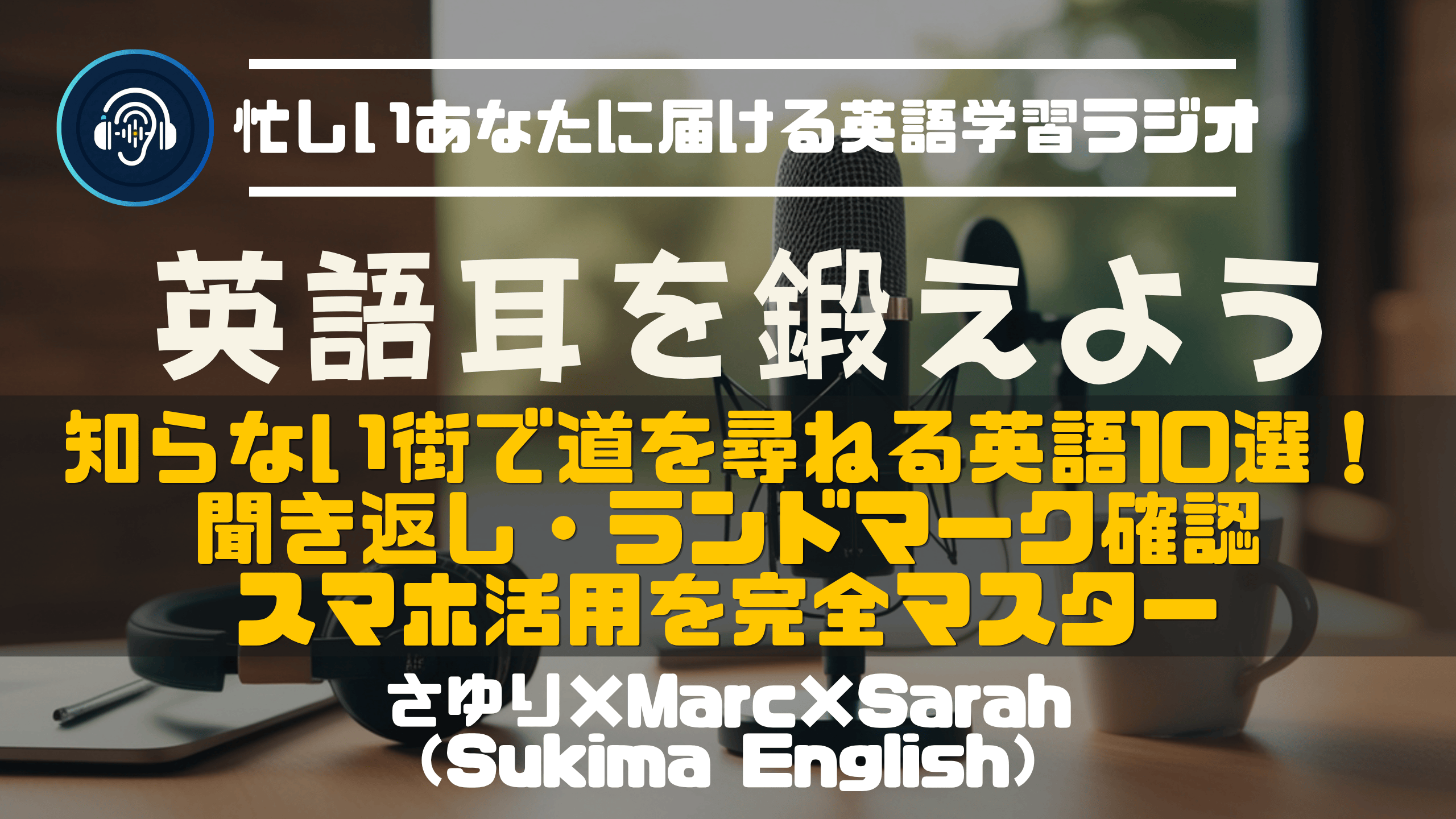
さゆり: 今日のテーマは「道を尋ねる・案内する」です。知らない街で、地図アプリなしで目的地にたどり着けたら最高ですよね。でも、道を聞いて、案内されて、ちゃんと理解できるか。そこが難しいんです。今日はそのやりとりをしっかり練習しましょう!
サラ: The tricky part isn't asking — it's understanding the answer! So today we'll practice both sides of the conversation. (日本語訳: 難しいのは聞くことじゃなくて、答えを理解することなんだよね!だから今日は会話の両側を練習しましょう。)
さゆり: 最初のシチュエーションは「道を尋ねる」場面です。まずは相手に声をかけるところから始めましょう。
サラ: To stop someone politely, start with — "Excuse me, could you help me? I'm looking for the train station." (日本語訳: 人に丁寧に話しかけるには、「すみません、ちょっといいですか?駅を探しているんですが」から始めましょう。)
さゆり: 道を尋ねるときの基本フレーズですね。「Excuse me, could you help me? I'm looking for the train station.」。すみません、助けてもらえますか。駅を探しているんですが、という意味です。「I'm looking for」は「〜を探しています」という意味で、場所の名前を入れ替えるだけでどこでも使えますよ。
Marc: "Excuse me" is the magic opener. It shows you're being polite and not just shouting at someone. People are much more willing to help when you start that way. (日本語訳: 「すみません」は魔法の言葉。礼儀正しく、ただ叫んでいるだけじゃないことを示します。そうやって始めると、みんな喜んで助けてくれるんだ。)
サラ: Let's practice! Sayuri, you're lost near a landmark and Marc is passing by. (日本語訳: 練習しましょう!サユリさんがランドマークの近くで迷子になって、マークが通りかかります。)
さゆり: Excuse me! Could you help me? I'm looking for the City Hall. (日本語訳: すみません!ちょっといいですか?市役所を探しているんですが。)
Marc: Sure! City Hall — yeah, I know it. Are you on foot or do you have a car? (日本語訳: いいですよ!市役所ね、知ってますよ。歩きですか?車ですか?)
さゆり: On foot, please. (日本語訳: 歩きでお願いします。)
Marc: OK! So head down this street, take a left at the traffic light, and it's the big white building on your right. About five minutes' walk. (日本語訳: OK!じゃあ、この道をまっすぐ行って、信号を左に曲がると、右側に大きな白い建物があります。徒歩5分くらいです。)
さゆり: Thank you so much! (日本語訳: 本当にありがとうございます!)
Marc: No problem! You can't miss it. (日本語訳: どういたしまして!すぐわかりますよ。)
サラ: Great! Notice how Marc asked a clarifying question — on foot or by car. Be ready for that kind of back-and-forth. (日本語訳: 素晴らしい!マークが確認の質問をしたことに注目してください。徒歩か車か。そういうやり取りに備えましょう。)
さゆり: 「on foot or by car?」は「歩きですか、車ですか?」という確認ですね。移動手段によってルートが変わることもあるので、自然なやりとりです。次のフレーズをどうぞ!
サラ: You can also ask — "How far is it from here?" to get a sense of the distance. (日本語訳: 「ここからどのくらいですか?」と聞いて、距離感をつかむこともできます。)
さゆり: 距離を確認するフレーズですね。「How far is it from here?」。ここからどのくらいありますか、という意味です。答えとして「about ten minutes on foot」「a five-minute drive」のような形で返ってくることが多いですよ。
Marc: And it's perfectly OK to ask "Is it within walking distance?" if you want a simple yes or no. Sometimes that's all you need to know. (日本語訳: 「歩いて行ける距離ですか?」と聞くのも全然OK。単純にイエスかノーが欲しい場合ね。それで十分なこともあります。)
さゆり: 続いては「道案内を聞き取る」場面です。案内してもらったとき、すべて一度で聞き取れることは少ないです。ここで使えるフレーズを学びましょう。
サラ: If the directions are too fast or complicated — "Sorry, could you say that more slowly?" Always works. (日本語訳: もし道順が速すぎたり複雑すぎたりする場合は、「すみません、もう少しゆっくり話していただけますか?」いつも有効です。)
さゆり: もう少しゆっくり話してもらうフレーズですね。「Sorry, could you say that more slowly?」。すみません、もう少しゆっくり言ってもらえますか、という意味です。前回学んだ「could you say that again?」と組み合わせて使えますよ。
Marc: Nobody is ever annoyed by this. We know directions can be confusing. Just ask — we'd rather repeat than have you walk in the wrong direction for twenty minutes! (日本語訳: これで怒る人はいません。道順が分かりにくいのはみんな知ってるから。遠慮なく聞いてください。20分も間違った方向に歩かれるより、何度でも繰り返しますよ!)
サラ: Let's practice! Marc will give directions at a natural speed, and Sayuri will ask for clarification. (日本語訳: 練習しましょう!マークが自然なスピードで道順を説明し、サユリさんが説明を求めます。)
Marc: OK so — go straight two blocks, turn right at the intersection, then left at the convenience store, cross the bridge, and the museum is on your left past the park. (日本語訳: えっと、まっすぐ2ブロック行って、交差点を右に曲がり、コンビニで左に曲がって、橋を渡ると、公園を過ぎて左側に美術館があります。)
さゆり: Sorry — could you say that more slowly? There were a lot of steps. (日本語訳: すみません、もう少しゆっくり話していただけますか?たくさん手順がありました。)
Marc: Of course! Go straight two blocks. Turn right at the intersection. Then left at the convenience store. Cross the bridge. The museum is on your left, just past the park. (日本語訳: もちろんです!まっすぐ2ブロック行ってください。交差点を右に曲がります。そしてコンビニで左に曲がります。橋を渡ります。美術館はあなたの左側、公園のすぐ先にあります。)
さゆり: Thank you. So — right at the intersection, left at the convenience store, then cross the bridge? (日本語訳: ありがとうございます。えっと、交差点を右に曲がり、コンビニで左に曲がって、橋を渡るんですね?)
Marc: Exactly! You've got it. (日本語訳: そうです!その通りです。)
サラ: Perfect technique! Sayuri repeated the key steps back to confirm. That's a great strategy. (日本語訳: 完璧なテクニック!サユリさんが主要な手順を繰り返して確認しました。それは素晴らしい戦略です。)
さゆり: 「right at the intersection, left at the convenience store, then cross the bridge?」と繰り返して確認しました。これは正確に理解できたかを確かめる、とても大事なやりとりですよ。
サラ: Another phrase — "Could you point me in the right direction?" If you just need a general sense, not the full details. (日本語訳: 別のフレーズは、「あっちの方向を指していただけますか?」もし大まかな方向だけが必要で、詳細な情報はいらない場合。)
さゆり: 大まかな方向を教えてもらうフレーズですね。「Could you point me in the right direction?」。大体の方向を教えてもらえますか、という意味です。詳しいルートより、まず「あっちの方向」と知りたいときに使えますよ。
Marc: Sometimes a simple point is enough. If someone's in a rush, just say this — it takes the pressure off and you still get useful information. (日本語訳: 単純に指し示してもらうだけで十分なこともあります。もし相手が急いでいるなら、こう言えばプレッシャーをかけずに、役立つ情報が得られます。)
さゆり: 続いては「ランドマークを使って確認する」場面です。道案内ではコンビニや銀行など、目印になる建物が頻繁に使われます。
サラ: A very useful phrase is — "Is there a landmark I should look for?" This helps you navigate more confidently. (日本語訳: とても役立つフレーズは、「目印になるものはありますか?」これは、より自信を持って道を歩むのに役立ちます。)
さゆり: ランドマークを確認するフレーズですね。「Is there a landmark I should look for?」。何か目印になるものがありますか、という意味です。「landmark」は「目印になる場所や建物」のことで、案内が複雑なときにこれを聞くと分かりやすくなりますよ。
Marc: Landmarks are everything. "Turn left at the big red building" or "it's next to the 7-Eleven" — way easier to remember than "go 300 meters east." (日本語訳: 目印はとても重要です。「大きな赤い建物を左に曲がる」とか「セブンイレブンの隣」の方が、「東に300メートル進む」よりもずっと覚えやすい。)
サラ: Let's practice! Sayuri wants to make sure she's found the right place. (日本語訳: 練習しましょう!サユリさんは、正しい場所に着いたか確認したいと思っています。)
さゆり: Excuse me — is this the right way to the art museum? (日本語訳: すみません、美術館へはこの道で合っていますか?)
Marc: Yes! Keep going straight. You'll see a big fountain on your left — the museum is right behind it. (日本語訳: はい!このまままっすぐ進んでください。左側に大きな噴水が見えます。美術館はそのすぐ後ろです。)
さゆり: A fountain on the left — got it. And about how long will it take? (日本語訳: 左側に噴水ですね、承知しました。どのくらいかかりますか?)
Marc: Maybe five minutes. You can't miss the fountain, it's pretty big! (日本語訳: 5分くらいかな。噴水はかなり大きいから、すぐわかると思いますよ!)
さゆり: Great. Thank you! (日本語訳: 素晴らしい。ありがとうございます!)
サラ: Smooth! Sayuri confirmed the landmark and asked for the time. Two very practical questions combined. (日本語訳: スムーズ!サユリさんは目印を確認し、時間について尋ねました。非常に実用的な2つの質問を組み合わせましたね。)
さゆり: 「a big fountain on your left」と具体的な目印を確認できましたね。ランドマークが分かると、知らない街でも自信を持って歩けます。次のフレーズをどうぞ!
サラ: Also useful — "Is it on the left side or the right side of the street?" Simple but prevents so many wrong turns. (日本語訳: あと、役立つのは「通りの左側ですか、右側ですか?」っていう質問。簡単だけど、道を間違えるのをすごく防げる。)
さゆり: 左右を確認するフレーズですね。「Is it on the left side or the right side of the street?」。通りの左側ですか、右側ですか、という意味です。案内を聞いたあとに最後にこれを確認しておくと、見落とすリスクがぐっと減りますよ。
Marc: Honestly, left and right is where most confusion happens — especially when someone is giving directions from a different starting point. Always confirm! (日本語訳: 正直、左右で一番混乱するんだよね。特に、相手が違う出発点から道案内してる時。必ず確認して!)
さゆり: 最後は「地図アプリやスマホを使った確認」の場面です。地図を見せながら確認するやりとりも、覚えておきたいですね。
サラ: You can show your phone and say — "I have the address here — does this look right to you?" Very practical. (日本語訳: スマホを見せて「ここに住所があるんですが、これで合ってますか?」って言うと、すごく実用的。)
さゆり: スマホの地図を見せながら確認するフレーズですね。「I have the address here — does this look right to you?」。住所がこちらにあるんですが、合ってますか?という意味です。発音に自信がないときや複雑な住所のときに、画面を見せながら言うと確実に伝わりますよ。
Marc: I love when people do this. It makes everything faster and clearer. Just hold up your phone and say that line — done. (日本語訳: これ、やってくれると助かるんだよね。すべてが早く、分かりやすくなる。スマホを見せて、そのセリフを言うだけ。終わり。)
サラ: Let's practice! Sayuri needs to double-check she's going the right way. (日本語訳: 練習しましょう!さゆりさんが、ちゃんと正しい道を進んでいるか確認する必要があります。)
さゆり: Excuse me — I have the address on my phone. Does this look right to you? (日本語訳: すみません、スマホに住所があるんですが、これで合ってますか?)
Marc: Let me see... yes! That's actually just one block ahead — the building with the blue sign. (日本語訳: ちょっと見せて…はい!それは実はもう1ブロック先ですよ。青い看板のある建物です。)
さゆり: Oh, that close? Thank you so much! (日本語訳: え、そんなに近いんですか?ありがとうございます!)
Marc: You're almost there! Good luck! (日本語訳: もうすぐそこですよ!頑張って!)
サラ: Perfect! Using your phone takes away the stress of pronunciation and spelling. A great real-world tip. (日本語訳: 完璧!スマホを使うことで、発音やスペルのストレスがなくなる。すごく良い実用的なアドバイスです。)
さゆり: スマホの画面を見せてしまえば、住所の発音の心配が要らないですね。とても実用的な方法です。次のフレーズをどうぞ!
サラ: And if you're not sure you're in the right area at all — "Am I in the right area for Central Park?" gives you a quick sanity check. (日本語訳: もし、自分がそもそも正しいエリアにいるか分からない場合は、「セントラルパークの正しいエリアにいますか?」と聞くと、すぐに確認できます。)
さゆり: 大まかな場所を確認するフレーズですね。「Am I in the right area for Central Park?」。セントラルパークに近い場所にいますか?という意味です。完全に迷子のときでも、まず自分が正しい方向にいるか確かめるのに使えますよ。
Marc: This is my favorite phrase for when I know I'm close but not sure exactly where. People usually smile and either say "yes, just around the corner!" or "actually, you need to go that way." (日本語訳: これ、僕が一番好きなフレーズ。もうすぐそこだって分かってるけど、正確な場所が分からない時に使うんだ。大抵の人は笑顔で「ええ、すぐそこですよ!」とか「実は、そっちに行かないといけないですよ」って教えてくれる。)
さゆり: OK! Let's do a full conversation — you're lost in an unfamiliar city, all in English! (日本語訳: よし!完全な会話をやってみよう!見知らぬ街で迷子になった、全部英語で!)
サラ: I love it. Marc, you're a friendly local. (日本語訳: いいね。マーク、あなたは親切な地元の人です。)
Marc: Ready to help! Where are you headed? (日本語訳: 手伝う準備はできてるよ!どこに向かってるんですか?)
さゆり: Excuse me — could you help me? I'm looking for the Central Library. (日本語訳: すみません、助けてもらえますか?セントラル図書館を探しています。)
Marc: The Central Library! Sure. Are you walking? (日本語訳: セントラル図書館!いいですよ。歩いてますか?)
さゆり: Yes, on foot. (日本語訳: はい、徒歩で。)
Marc: OK! So walk straight ahead for about two blocks. At the traffic light, turn left. You'll see a coffee shop on the corner — you can't miss it. (日本語訳: OK!じゃあ、2ブロックほどまっすぐ進んでください。信号で左に曲がります。角にコーヒーショップが見えるはずです。見逃すことはないですよ。)
さゆり: Sorry — could you say that more slowly? There were a few steps. (日本語訳: すみません、もう少しゆっくり言ってもらえますか?いくつかステップがありました。)
Marc: Of course. Two blocks straight. Then left at the traffic light. The coffee shop is the landmark. (日本語訳: もちろんです。2ブロックまっすぐ。そして、信号で左。コーヒーショップが目印です。)
さゆり: Two blocks, then left at the traffic light, and there's a coffee shop. Got it. Is the library on the left or right side of the street? (日本語訳: 2ブロック、それから信号で左、そしてコーヒーショップがあるんですね。分かりました。図書館は通りの左側ですか、右側ですか?)
Marc: It's on the right side — big gray building, three stories. Has the name on the sign out front. (日本語訳: 右側ですよ。大きな灰色の建物で、3階建てです。正面に名前が書いてあります。)
サラ: How far is it from here? (日本語訳: ここからどれくらいですか?)
Marc: About ten minutes on foot. Maybe less if you walk fast! (日本語訳: 徒歩で10分くらいです。早く歩けばもっと短いかも!)
さゆり: I have the address here on my phone — does this look right? (日本語訳: ここにスマホに住所があるんですが、これで合ってますか?)
Marc: Yes, exactly! That's the one. You're going the right way. (日本語訳: はい、その通り!それですよ。正しい方向に向かっています。)
さゆり: Thank you so much. Really appreciate it! (日本語訳: ありがとうございます。本当に助かります!)
Marc: Happy to help! Enjoy the library! (日本語訳: お役に立てて嬉しいです!図書館を楽しんで!)
サラ: That was excellent! Sayuri asked for directions, slowed things down when needed, confirmed a landmark, checked left or right, and used her phone to double-check. Perfect technique! (日本語訳: 素晴らしい!さゆりさんは道を聞いて、必要に応じてゆっくりにしてもらって、目印を確認して、左右を確認して、スマホを使って再確認しました。完璧なテクニック!)
さゆり: 今日は「道を尋ねる・案内する」をテーマに、声のかけ方から、聞き返し、ランドマーク確認、スマホ活用まで、実際のやりとりで練習しましたね。
サラ: The key insight today — it's OK not to understand everything the first time. Ask again, repeat back what you heard, confirm the details. That's what real communication looks like. (日本語訳: 今日の重要なポイントは、初めてで全てを理解できなくても大丈夫だということ。もう一度聞いて、聞いたことを繰り返して、詳細を確認する。それが本当のコミュニケーションです。)
Marc: And from a local's perspective — we genuinely want to help. Don't hesitate to stop someone. Most people are happy to give directions, especially if you're polite about it! (日本語訳: そして、地元の人からすると、私たちは本当に助けたいと思っています。遠慮なく人に声をかけてください。ほとんどの人は、道案内を喜んでしてくれますよ、特にあなたが丁寧にお願いすれば!)
さゆり: マーク、サラ、今日もありがとうございました!次回もまた、実践的な英語表現をたっぷりお届けします。またね!
サラ: See you next time! (日本語訳: また次回!)
Marc: And next time you're lost — you know exactly what to say. Good luck! (日本語訳: そして、次に道に迷った時は、何を言えばいいか正確に分かりますね。頑張って!)