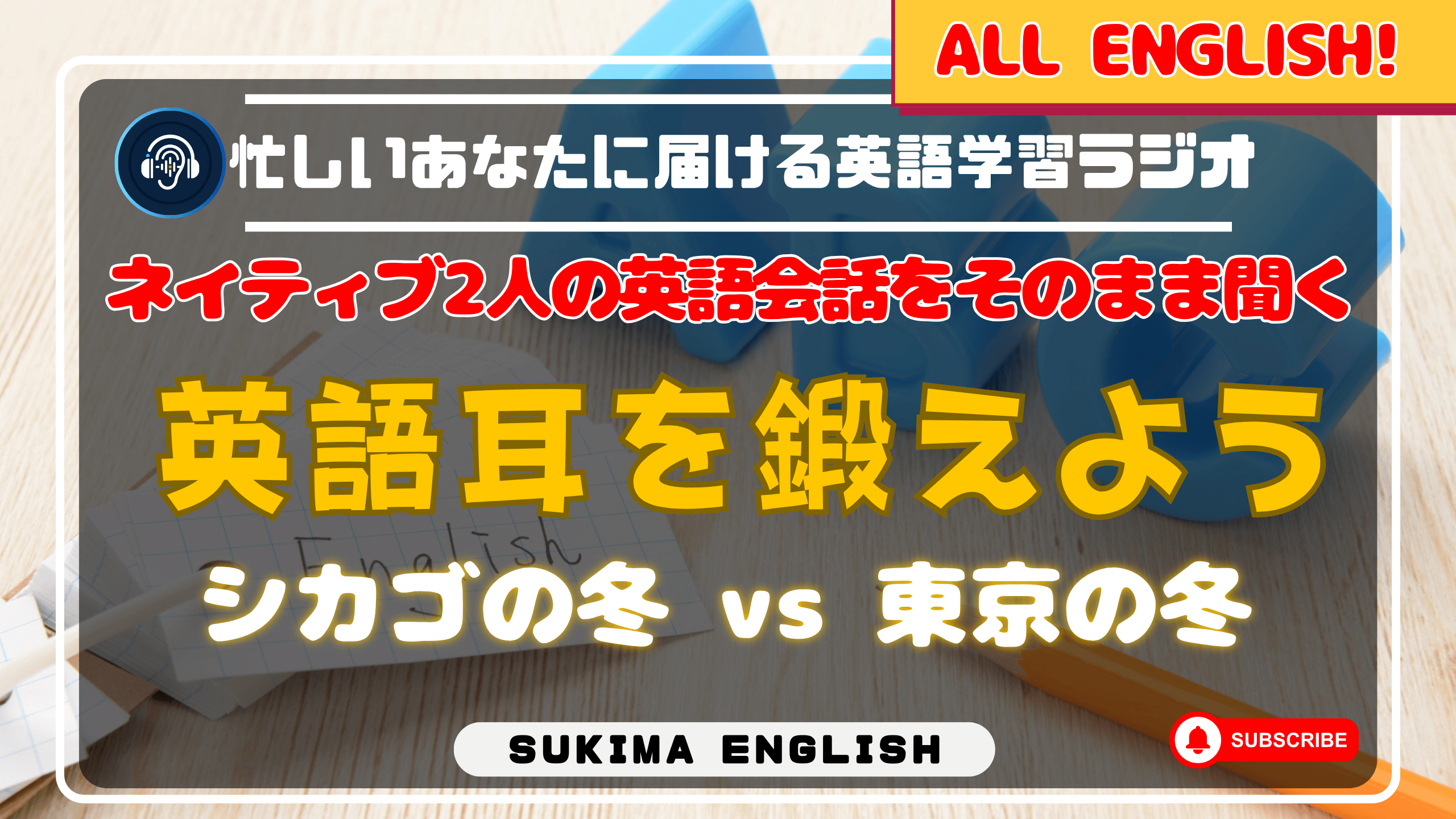
【日常英会話】英語のみ | シカゴの冬 vs 東京の冬 | 英語字幕あり #英語学習 #ネイティブ英語会話 #リスニング強化 #英語耳
ポッドキャスト「すきまイングリッシュ」のスクリプト。「【日常英会話】英語のみ | シカゴの冬 vs 東京の冬 | 英語字幕あり #英語学習 #ネイティブ英語会話 #リスニング強化 #英語耳」の会話全文です。

Marc: Sarah, can I ask you a serious question? (日本語訳: サラ、真面目な質問してもいい?)
サラ: Always. What's up? (日本語訳: いつでもどうぞ。何?)
Marc: Are you cold right now? Right this second? (日本語訳: 今、寒いの?ほんとに今。)
サラ: ...I mean, a little. The studio is kind of chilly. (日本語訳: …まあ、ちょっとね。スタジオ、ちょっと肌寒いんだよね。)
Marc: See, this is what I want to talk about today. (日本語訳: ほら、今日話したいのはこれなんだよ。)
サラ: Okay, where is this going? (日本語訳: はいはい、それで何の話?)
Marc: Today we're talking about winter. Specifically, Chicago winter versus Tokyo winter. And I think you'll have opinions, because— (日本語訳: 今日は冬について話すんだ。具体的には、シカゴの冬と東京の冬。絶対意見があると思うよ、だって—)
サラ: Oh, I have opinions. (日本語訳: ああ、意見ならあるわよ。)
Marc: NY winter is also a thing. (日本語訳: ニューヨークの冬も大変だよね。)
サラ: NY winter is absolutely a thing. But I will say upfront — I think Chicago has me beat. (日本語訳: ニューヨークの冬は絶対大変。でも先に言っとくけど、シカゴには負けると思う。)
Marc: Thank you. That is the correct answer. (日本語訳: ありがとう。それが正解。)
サラ: Okay, set the scene for me. Tell me what Chicago winter actually is. (日本語訳: よし、情景を説明して。シカゴの冬って実際どんな感じなの?)
Marc: So, picture this. You wake up in February. You look at your phone. It says negative ten Fahrenheit. That's about negative twenty-three Celsius for everyone outside the U.S. (日本語訳: じゃあ、想像してみて。2月のある日、目が覚めてスマホを見る。摂氏マイナス23度だって。アメリカ国外の人は華氏マイナス10度ね。)
サラ: Stop. Negative twenty-three? (日本語訳: 待って。マイナス23度?)
Marc: That's not even the cold day. That's a normal Tuesday in February. (日本語訳: しかも、それは寒い日でもないんだ。2月の普通の火曜日だよ。)
サラ: I refuse. (日本語訳: 無理。)
Marc: And then there's the wind chill. Chicago is right on Lake Michigan, so the wind comes off the lake and it's just brutal. You feel like your face is being slapped by a frozen towel. (日本語訳: それに風速寒冷(ウィンドチル)もある。シカゴはミシガン湖のすぐそばだから、湖から風が吹いてきて、とにかくきつい。顔が凍ったタオルで叩かれてるみたいに感じる。)
サラ: That is a very specific image. (日本語訳: すごく具体的なイメージだね。)
Marc: It's a very specific feeling. I had a college friend who said she couldn't feel her face for an entire walk to class. Twenty-minute walk. Couldn't feel her face the whole time. (日本語訳: すごく具体的な感覚だよ。大学の友達が、授業まで歩いてる間、顔の感覚が全くなかったって言ってた。20分の道のり。ずっと顔の感覚がなかったんだ。)
サラ: Did her face come back? (日本語訳: 顔、戻ってきた?)
Marc: Eventually. I'm pretty sure. (日本語訳: たぶん、最終的にはね。)
サラ: Honestly, NY in January is bad, but it's not negative twenty kind of bad. The worst I remember is maybe single digits Fahrenheit. And we complain about that all winter. (日本語訳: いや、ニューヨークの1月はひどいけど、マイナス20度ほどじゃないよ。私が覚えてる最悪は、摂氏マイナス10度くらいかな。それでも冬の間はずっと文句言ってるんだけど。)
Marc: You're allowed to complain. I'm just saying — there's a level above it. (日本語訳: 文句を言うのは許されるよ。俺が言ってるのは、その上のレベルがあるってこと。)
サラ: A level I do not want to visit, apparently. (日本語訳: Apparently, 行きたくないレベルだね。)
Marc: I'll tell you my own version. I went to college outside Chicago. Freshman year, I lived in a dorm that was a fifteen-minute walk from my classes. That doesn't sound like much, right? (日本語訳: 自分の話をするよ。大学はシカゴ郊外だったんだ。1年生の時、授業から徒歩15分の寮に住んでた。たいしたことないように聞こえるだろ?)
サラ: In Chicago February? That sounds like a lot. (日本語訳: シカゴの2月で?それは大変だね。)
Marc: It was a death march. I'd put on the thermals, the hoodie, the hat, the scarf, the gloves, the puffer coat — full gear. By the time I got to class, the inside of my hood was frozen. (日本語訳: 死の行進だったよ。サーマル、パーカー、帽子、マフラー、手袋、ダウンジャケット—完全装備。授業に着く頃には、フードの内側が凍ってたんだ。)
サラ: The inside of your hood? (日本語訳: フードの内側?)
Marc: My breath. Frozen on the inside of the hood. Little ice crystals. (日本語訳: 俺の息だよ。フードの内側で凍ってた。小さな氷の結晶が。)
サラ: That is horror movie material. (日本語訳: それはホラー映画のネタだね。)
Marc: My roommate had a different strategy. He just refused to acknowledge cold. He'd walk to class in shorts. (日本語訳: ルームメイトは違う戦略だった。彼は寒さを認めようとしなかったんだ。彼はショーツで授業に行ってた。)
サラ: In shorts. In Chicago February. (日本語訳: ショーツで。シカゴの2月に。)
Marc: He claimed it built character. He also got frostbite on his ear in March. (日本語訳: 彼はそれで人格が形成されるって言ってた。3月に耳が凍傷になったけどね。)
サラ: Character did not protect him. (日本語訳: 人格は彼を守らなかったわけだ。)
Marc: Character did not protect him at all. (日本語訳: 人格は全く守ってくれなかったよ。)
サラ: So my question is — did you ever skip class because of the weather? (日本語訳: それで、聞きたいんだけど、天候のせいで授業をサボったことはある?)
Marc: Sarah, you don't skip class for the weather in Chicago. If you did, you'd never go to class. You just suffer. (日本語訳: サラ、シカゴで天候のために授業をサボるなんてしないよ。もしそうしたら、授業には絶対行けなくなる。ただ耐えるんだ。)
サラ: That is the most Midwestern thing I've ever heard. (日本語訳: それは私が聞いた中で一番ミッドウェスタンな話だよ。)
Marc: My parents still live in Chicago, and every year I get a video of my dad shoveling the driveway. The snow is up to his waist. He's seventy years old. He just keeps shoveling. (日本語訳: 両親はまだシカゴに住んでて、毎年、父が私道を除雪してるビデオが送られてくるんだ。雪は腰まで積もってる。もう70歳だよ。それでも除雪を続けてる。)
サラ: That is a real Midwestern dad move. (日本語訳: それは本当のミッドウェスタンのお父さんって感じだね。)
Marc: He'd be insulted if I offered to come help. "I've been doing this for fifty years, son." Okay, dad. (日本語訳: 手伝いを申し出たら、彼は気分を悪くするだろうね。「50年もやってるんだぞ、坊や」って。わかったよ、お父さん。)
サラ: My dad would last about ten minutes in that. (日本語訳: うちの父さんなら、あんなところで10分ともたないな。)
Marc: Most people would last ten minutes in that. (日本語訳: ほとんどの人が10分でギブアップするよ。)
サラ: Alright, fast forward. You arrive in Tokyo. First Tokyo winter — what was it like? (日本語訳: よし、早送り。東京に着いた。初めての東京の冬――どんな感じだった?)
Marc: I'll be honest. I thought it was a joke. (日本語訳: 正直に言うと、冗談かと思ったね。)
サラ: A joke? (日本語訳: 冗談?)
Marc: I landed in November. I started feeling the air get cooler, and the people around me were bundling up like it was the apocalypse. Big coats, scarves, gloves. And I'm standing there in a hoodie thinking, "It's like fifty degrees. Are we okay?" (日本語訳: 11月に着いたんだけど、空気が冷たくなってきて、周りの人たちはまるで世界の終わりのみたいに着込んでるんだ。分厚いコート、マフラー、手袋。僕はパーカー1枚で立ってて、「何度くらいだよ?大丈夫か?」って思ってた。)
サラ: Fifty Fahrenheit is like ten Celsius, right? That's hoodie weather to a Chicago person. (日本語訳: 華氏50度って摂氏10度くらいだよね?シカゴの人にとってはパーカーでちょうどいいくらいの気温だよ。)
Marc: That's a normal fall day. So my first Tokyo winter, I felt almost... insulted? (日本語訳: 普通の秋の日だよ。だから、東京での初めての冬は、ほとんど…侮辱されてる?って感じだった。)
サラ: Insulted. (日本語訳: 侮辱?)
Marc: Like, "This is what you're calling cold?" I was strutting around without a coat. People were staring at me. (日本語訳: 「これが寒いってことか?」ってね。コートなしで闊歩してたんだ。みんな僕を見てたよ。)
サラ: Oh, they were definitely staring. (日本語訳: ああ、絶対見てたよ。)
Marc: But — and this is where it gets me — there's a thing about Japanese houses. (日本語訳: でも――ここからが面白いんだけど――日本の家にはちょっとした秘密があるんだ。)
サラ: Oh, here we go. (日本語訳: ああ、来た来た。)
Marc: My first apartment had basically zero insulation. The walls were thin, the windows were thin, the floors were freezing. I'd come inside from the "cold" — air quotes — and somehow it was just as cold inside. (日本語訳: 僕の最初のアパートは、断熱材がほとんどなかったんだ。壁は薄いし、窓も薄いし、床は凍るようだった。外の「寒さ」――(わざとらしく)――から家に入っても、なぜか家の中も同じくらい寒かったんだ。)
サラ: I had this exact experience. My first winter, I genuinely wore a coat indoors. I would put on my heaviest hoodie and my socks and I'd still be shivering. (日本語訳: 私も全く同じ経験したよ。初めての冬は、家の中でもコートを着てたもん。一番厚いパーカーを着て靴下履いても、まだ震えてた。)
Marc: It's the floor for me. The floor specifically. In Chicago, you walk in, you take your shoes off, and the floor is warm because the heating runs through everything. In my Tokyo apartment, the floor was somehow colder than the air. (日本語訳: 僕にとっては床だよ。特に床。シカゴでは、家に入って靴を脱いでも、床は暖かいんだ。暖房が全部に通ってるからね。東京のアパートでは、床がなぜか空気よりも冷たかったんだ。)
サラ: It's like the floor is plotting against you. (日本語訳: まるで床があなたに敵意を抱いてるみたいだね。)
Marc: It is plotting against me. I had to buy a kotatsu my second winter just to survive. (日本語訳: 敵意を抱いてるよ。2年目の冬には、生き残るためにこたつを買うしかなかったんだ。)
サラ: A kotatsu is a real lifestyle change. Once you get under one, you do not get out. (日本語訳: こたつは本当に生活を変えるものだよ。一度入ったら、もう出られなくなるもんね。)
Marc: I missed two phone calls and a delivery the first week I owned that kotatsu. I just couldn't move. (日本語訳: こたつを買った最初の週、電話を2本と配達を1回逃したんだ。動けなかったんだよ。)
サラ: That tracks. The kotatsu owns you, you don't own it. (日本語訳: わかる。こたつに支配されるんだよね、自分がこたつを支配するんじゃなくて。)
Marc: But here's the thing — once I accepted that Japanese houses are cold, I had to build a whole new heating culture. (日本語訳: でもね、日本の家が寒いってことを受け入れたら、全く新しい暖房文化を築かなきゃいけなくなったんだ。)
サラ: A whole new heating culture. (日本語訳: 全く新しい暖房文化。)
Marc: In Chicago, you have central heating, and that is the end of the conversation. In Japan, it's a multi-tool situation. (日本語訳: シカゴだとセントラルヒーティングがあって、それで終わりだ。日本では、色んな道具を使う状況なんだよ。)
サラ: A multi-tool situation. I love that. (日本語訳: 色んな道具を使う状況。それいいね。)
Marc: There's the air conditioner that's also a heater. There's the kotatsu. There's the electric carpet, which I had no idea existed before I got to Japan. (日本語訳: 暖房にもなるエアコン、こたつ、あと電気カーペット。日本に来るまで存在を知らなかったよ。)
サラ: The electric carpet was a revelation. You step on it and your feet are warm. Why doesn't America have this? (日本語訳: 電気カーペットは衝撃だった。それに足を踏み入れると足が暖かい。なんでアメリカにはこれがないんだろう?)
Marc: I have no idea. America needs this immediately. (日本語訳: さっぱりわからない。アメリカはこれ、すぐに必要だよ。)
サラ: And then there's the bath culture. The whole "soak in a hot bath at night to warm your core" thing. (日本語訳: それに、お風呂文化もあるよね。「夜に熱いお風呂に浸かって体の芯から温める」っていうあれ。)
Marc: That changed me. In Chicago, a bath is something you take because you're tired. In Japan, a bath is a survival strategy. (日本語訳: あれは俺を変えたよ。シカゴでは、お風呂は疲れてるから入るものだ。日本では、お風呂は生き残るための戦略なんだ。)
サラ: A spiritual experience. (日本語訳: 精神的な体験。)
Marc: A spiritual experience. I take a bath now and it's almost meditative. The Marc from five years ago would have laughed at present-day Marc. (日本語訳: 精神的な体験。今はお風呂に入ると、ほとんど瞑想みたいだよ。5年前の俺なら、今の俺を笑ってたろうな。)
サラ: Okay, fast forward again. Five years in Japan. How do you feel about cold now? (日本語訳: さて、また早送り。日本に来て5年。今、寒さについてはどう思ってる?)
Marc: This is embarrassing. (日本語訳: 恥ずかしいんだけど。)
サラ: Embarrassing how? (日本語訳: どう恥ずかしいの?)
Marc: I've gotten soft. (日本語訳: 俺、甘くなったんだ。)
サラ: No. (日本語訳: ううん。)
Marc: Yes. Last week, it was eight degrees Celsius outside, and I put on a heavy coat. A heavy coat, Sarah. Eight Celsius. That's basically t-shirt weather in Chicago. (日本語訳: うん。この前、外が摂氏8度だったんだけど、厚着をしちゃったんだ。厚着だよ、サラ。摂氏8度。シカゴじゃTシャツでちょうどいいくらいなのに。)
サラ: I'll never forget the moment I realized I'd gotten soft. I went home to NY for Christmas last year, walked outside, felt the wind, and immediately went back inside. (日本語訳: 自分が甘くなったって気づいた瞬間は忘れられないな。去年のクリスマスにNYに帰省した時、外に出て風を感じて、すぐ家に入ったもん。)
Marc: Yes. Yes. That's exactly it. (日本語訳: うん。そうそう、それだよ、まさに。)
サラ: My mom said, "It's not even cold." And I was like, "Mom, it's freezing." She just looked at me. (日本語訳: 母に「全然寒くないわよ」って言われたんだけど、「お母さん、凍ってるんだけど」って感じで。そしたら母、私をじっと見てた。)
Marc: My dad does this thing where he calls me in February to tell me the temperature in Chicago. Just to make me feel weak. (日本語訳: うちの父は、2月に私に電話してきてシカゴの気温を教えてくるんだ。私を弱気にするためだけに。)
サラ: Why? (日本語訳: なんで?)
Marc: Because that's what dads do. He'll be like, "Negative fifteen here today. Just so you know." I'm like, "Why are you telling me this, dad?" (日本語訳: それが父親ってものだからね。「今日はマイナス15度だぞ。一応な」って感じなんだ。なんでそんなこと言うんだよ、父さんって思うよ。)
サラ: To remind you who raised you. (日本語訳: あなたを育てたのが誰か思い出させるためよ。)
Marc: To remind me who raised me. Exactly. (日本語訳: 俺を育てたのが誰か思い出させるため。まさにそれ。)
サラ: Honestly, I think living in Japan recalibrated my whole sense of cold. I used to think NY was tough. Now I think anything below ten degrees is a personal attack. (日本語訳: 正直、日本に住んでて寒さに対する感覚が全部リセットされたと思う。前はニューヨークの寒さはきついと思ってたけど、今じゃ10度以下は個人的な攻撃だと感じる。)
Marc: It is a personal attack. That's the right word for it. (日本語訳: 個人的な攻撃だよ。それが正しい言葉だ。)
サラ: I've turned into someone who layers up for fifteen-degree weather. The old me would be horrified. (日本語訳: 15度で重ね着する人になっちゃった。昔の私ならゾッとするだろうね。)
Marc: The old me would be horrified by both of us. The old me walked through a Chicago February in a denim jacket once because I "forgot" my coat at a friend's house. (日本語訳: 昔の俺なら、二人とも見てゾッとするだろうな。昔の俺は、コートを友達の家に忘れた「ふり」をして、デニムジャケットだけでシカゴの2月を歩いたことがあるんだ。)
サラ: You walked through a Chicago February in a denim jacket? (日本語訳: デニムジャケットでシカゴの2月を歩いたの?)
Marc: I was twenty-two and stupid. (日本語訳: 22歳で、バカだったんだよ。)
サラ: That's not stupid. That's a death wish. (日本語訳: それはバカじゃない。死にたいだけよ。)
Marc: It was definitely a denim jacket era I do not want back. (日本語訳: あれは絶対に、もう戻りたくないデニムジャケット時代だったね。)
サラ: Okay, last big question. What is your current winter survival kit? What do you actually do now to get through January? (日本語訳: OK、最後の大きな質問。今の冬のサバイバルキットは?1月を乗り切るために、今実際何をしてる?)
Marc: Honestly? I've fully embraced everything I used to think was overkill. (日本語訳: 正直に言うと?昔はやりすぎだと思ってたことを、全部取り入れてるよ。)
サラ: Like what? (日本語訳: 例えば何?)
Marc: Heat tech. Heat tech everything. Heat tech socks, heat tech undershirt, heat tech leggings. (日本語訳: ヒートテック。ヒートテックなら何でも。ヒートテックの靴下、ヒートテックの肌着、ヒートテックのレギンス。)
サラ: You wear heat tech leggings? (日本語訳: ヒートテックのレギンス履いてるの?)
Marc: Sarah. Every person in this country under sixty wears heat tech leggings in January. I joined the club. (日本語訳: サラ。この国では60歳以下の人はみんな1月にヒートテックのレギンスを履いてるよ。私も仲間入りした。)
サラ: I'm not even going to deny it. I have three pairs. (日本語訳: 否定しないわ。3枚持ってるもん。)
Marc: I have a humidifier in every room. I have a small heater that lives next to my desk. I have hand warmers in my coat pockets at all times. (日本語訳: 俺はどの部屋にも加湿器がある。デスクの隣には小型ヒーターを置いてる。コートのポケットには常にカイロを入れてるんだ。)
サラ: The hand warmers are dangerous. Once you start using them, you cannot stop. (日本語訳: カイロは危険よ。使い始めたら、もうやめられない。)
Marc: I have one in my pocket right now. (日本語訳: 今、ポケットに1個入ってるよ。)
サラ: Of course you do. (日本語訳: もっちろん、入ってるんでしょ。)
Marc: My friend from Chicago came to visit last winter, and he walked into my apartment. The kotatsu, the electric carpet, the heater, the humidifier, the heat tech everywhere. He looked at me and said, "Dude, what is going on in here?" (日本語訳: シカゴから友達が去年の冬に遊びに来たんだけど、俺のアパートに入ったんだ。こたつ、電気カーペット、ヒーター、加湿器、どこもかしこもヒートテック。彼は俺を見て、『おい、ここで何が起きてるんだ?』って言ったよ。)
サラ: What did you tell him? (日本語訳: なんて答えたの?)
Marc: I said, "This is what survival looks like now." (日本語訳: 『これが今のサバイバルの姿だ』って言ったよ。)
サラ: That is a beautiful sentence. (日本語訳: それは美しいセリフね。)
Marc: He left wearing one of my pairs of heat tech socks. He said his feet had never been warmer in his life. (日本語訳: 彼は俺のヒートテックの靴下を履いて帰っていったよ。人生で足がこんなに暖かくなったことはないって言ってた。)
サラ: A convert. (日本語訳: 改宗者ね。)
Marc: A full convert. He texted me from the airport and said, "I need to know where to buy these." (日本語訳: 完全な改宗者だよ。空港から『これをどこで買えばいいか教えてくれ』ってメッセージが来たんだ。)
サラ: That's how it always starts. (日本語訳: それがいつも始まり方よね。)
Marc: That's how it always starts. (日本語訳: それがいつも始まり方なんだ。)
サラ: Okay, let's do a quick recap. What did we learn today? (日本語訳: よし、簡単にまとめよう。今日何を学んだ?)
Marc: We learned that Chicago winter is on a different planet from Tokyo winter. (日本語訳: シカゴの冬は東京の冬とは別次元だってことを学んだ。)
サラ: We learned that Tokyo houses are out to get us. (日本語訳: 東京の家は私たちを狙ってるってことを学んだ。)
Marc: We learned that I have officially gotten soft. (日本語訳: 俺が正式に弱くなったってことを学んだ。)
サラ: We learned that NY winter feels brutal until you spend twenty minutes talking to a Chicago person. (日本語訳: NYの冬は、シカゴの人と20分話すまで過酷だってことを学んだ。)
Marc: And we learned the phrase "the wind chill is brutal." That's a good one to walk away with. (日本語訳: 「wind chill is brutal」ってフレーズを習ったんだ。これは覚えておくといいよ。)
サラ: I like "I've gotten soft." That one hit a little close to home. (日本語訳: 私は「I've gotten soft」がいいな。あれ、ちょっと耳が痛かった。)
Marc: "It's a personal attack" is officially entering my regular vocabulary. (日本語訳: 「It's a personal attack」は正式に私の常用語になるよ。)
サラ: Same. Anytime the temperature drops below ten now — personal attack. (日本語訳: 私も。もう10度を下回ったら、いつでも「personal attack」だね。)
Marc: And don't forget — bundle up. Always bundle up. Past me wishes someone had told him that. (日本語訳: あと、忘れないでね。ちゃんと着込むこと。いつも着込んで。)
サラ: Past you was wearing a denim jacket in February. (日本語訳: 昔の自分にそう言ってあげればよかったのに。)
Marc: Past me was deeply unwell. (日本語訳: 昔の自分は、かなりイかれてたね。)
Marc: Alright everyone. That is our winter episode. (日本語訳: さあ、皆さん。これが我々の冬のエピソードです。)
サラ: If you have your own cold weather horror story, drop it in the comments. We need to know we are not alone. (日本語訳: もし皆さんが、寒い時期のひどい話を持っていたら、コメント欄に書き込んでね。私たちだけじゃないって知る必要があるから。)
Marc: Especially if you've ever walked through a Chicago February in a denim jacket. I need to know there are more of us. (日本語訳: 特に、デニムジャケットでシカゴの2月を歩いたことがあるなら。そういう人が他にもいるって知りたいんだ。)
サラ: Please do not actually do that. (日本語訳: 実際にそんなことしないでくださいね。)
Marc: Please do not. Learn from my mistakes. (日本語訳: しないでください。私の失敗から学んで。)
サラ: Thanks for listening, everyone! See you next time on Sukima English. (日本語訳: 聞いてくれてありがとう、皆さん!また次回、「すきまイングリッシュ」でお会いしましょう。)
Marc: Take care, stay warm. Or, you know — bundle up. (日本語訳: 気をつけて、暖かくしてね。それか、まあ、ちゃんと着込んで。)

関連記事
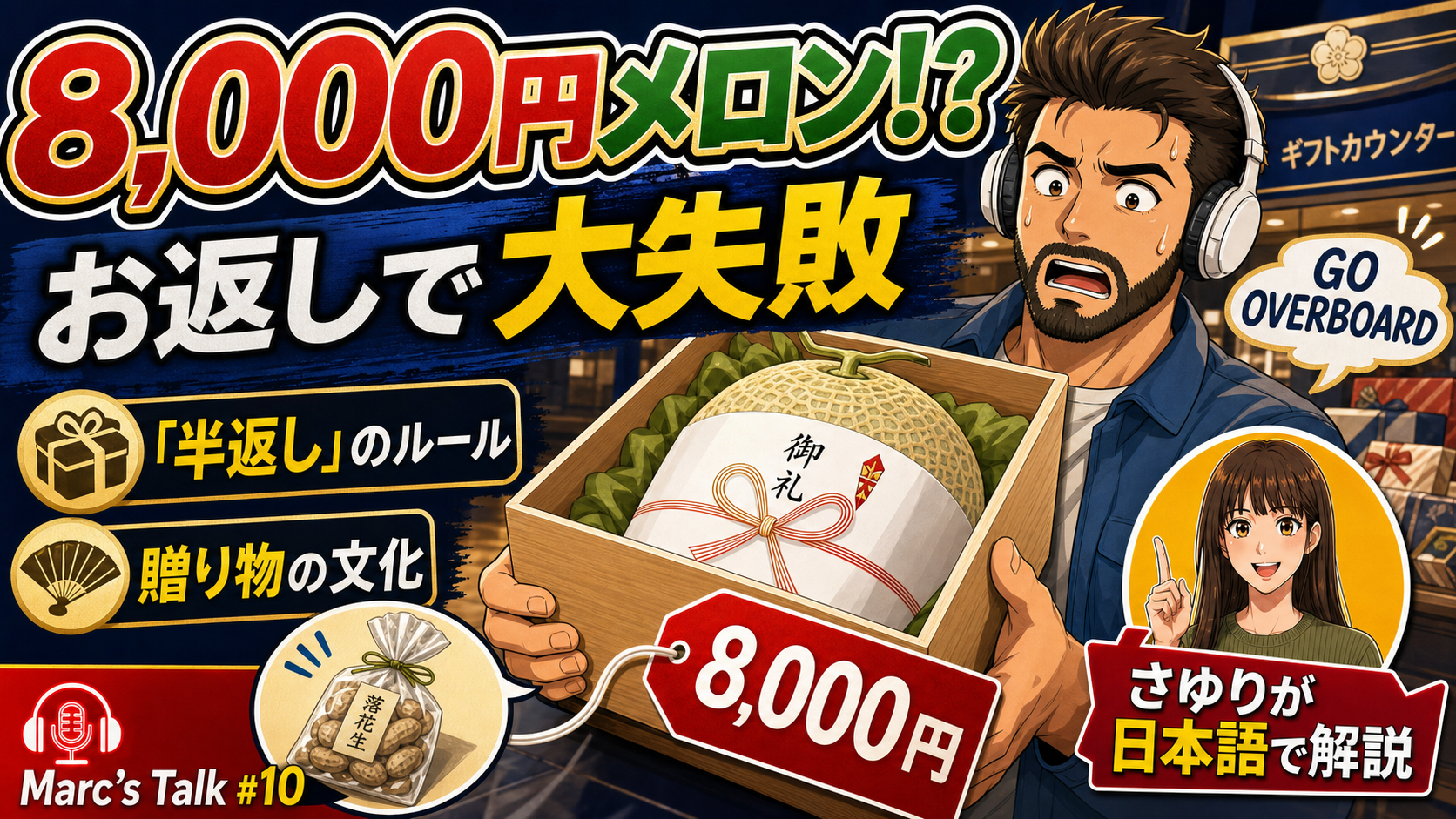
【日常英会話】メロン1個で相手に謝られた?マークが8,000円のメロンでやらかした話 #英語学習 #ネイティブ英語会話 #リスニング強化 #英語耳
ポッドキャスト「すきまイングリッシュ」のスクリプト。「【日常英会話】メロン1個で相手に謝られた?マークが8,000円のメロンでやらかした話 #英語学習 #ネイティブ英語会話 #リスニング強化 #英語耳」の会話全文です。

【英語学習】英語のみ | ここが変だよ日本、1月に自販機で水?温水便座・こたつ・オフィス、日本は「部屋」ではなく「人」を暖める国だった #英語学習 #ネイティブ英語会話 #リスニング強化 #英語耳
ポッドキャスト「すきまイングリッシュ」のスクリプト。「【英語学習】英語のみ | ここが変だよ日本、1月に自販機で水?温水便座・こたつ・オフィス、日本は「部屋」ではなく「人」を暖める国だった #英語学習 #ネイティブ英語会話 #リスニング強化 #英語耳」の会話全文です。

【英語学習】英語のみ | ここが変だよ日本、1月に自販機で水?温水便座・こたつ・オフィス、日本は「部屋」ではなく「人」を暖める国だった #英語学習 #ネイティブ英語会話 #リスニング強化 #英語耳
ポッドキャスト「すきまイングリッシュ」のスクリプト。「【英語学習】英語のみ | ここが変だよ日本、1月に自販機で水?温水便座・こたつ・オフィス、日本は「部屋」ではなく「人」を暖める国だった #英語学習 #ネイティブ英語会話 #リスニング強化 #英語耳」の会話全文です。

【日常英会話】英語のみ | ラーメン屋のカウンターを自分で拭く、トレー返却・スタジアム清掃、なぜ日本人は「自分の仕事じゃないこと」をやるのか #英語学習 #ネイティブ英語会話 #リスニング強化
ポッドキャスト「すきまイングリッシュ」のスクリプト。「【日常英会話】英語のみ | ラーメン屋のカウンターを自分で拭く、トレー返却・スタジアム清掃、なぜ日本人は「自分の仕事じゃないこと」をやるのか #英語学習 #ネイティブ英語会話 #リスニング強化」の会話全文です。
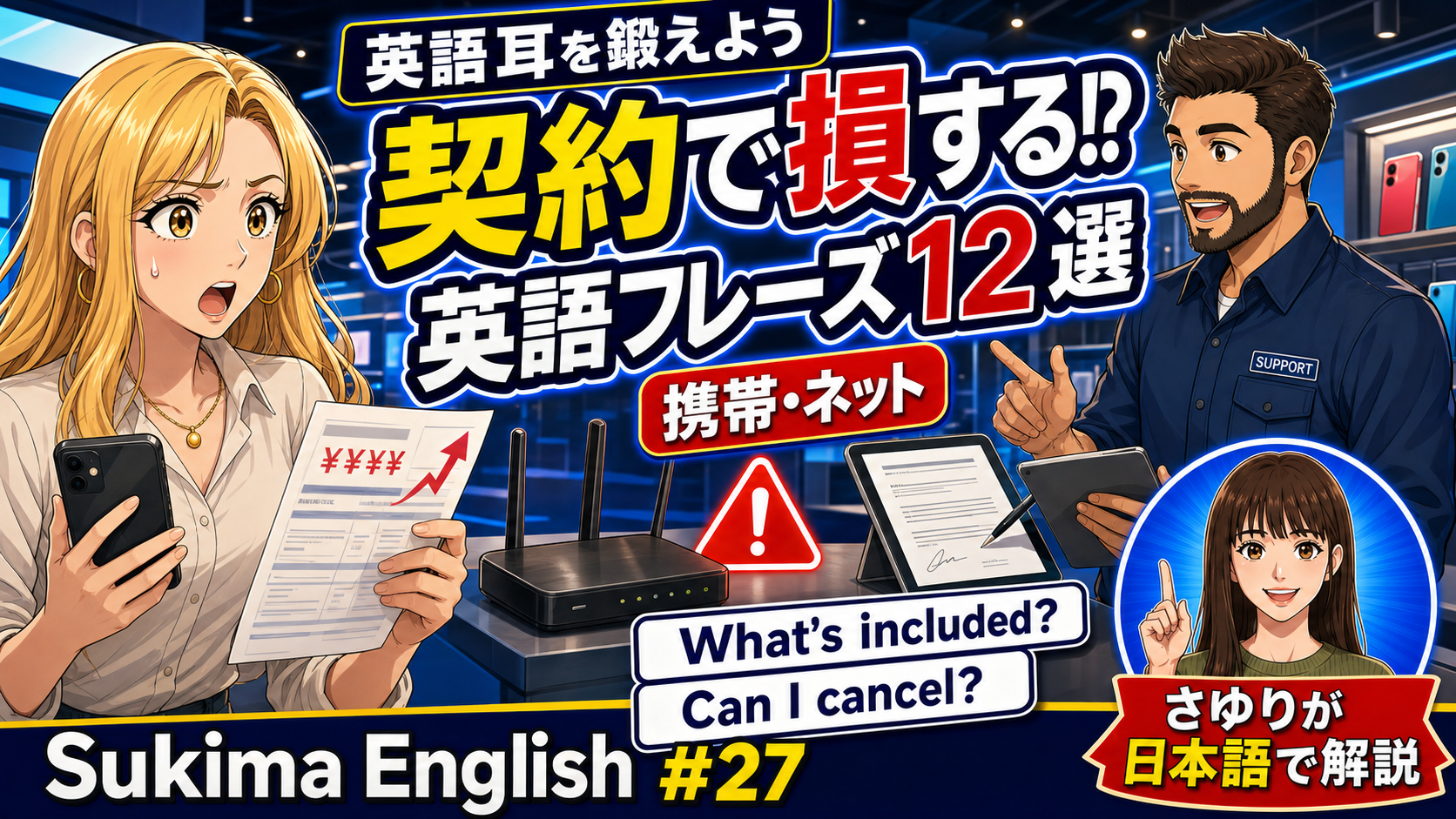
【日常の英語】日本語解説あり | 携帯・ネット契約を英語で乗り切る12フレーズ、申し込み→料金確認→つながらない時→解約・変更まで完全対応 #英語学習 #英語フレーズ #英会話 #英語耳
ポッドキャスト「すきまイングリッシュ」のスクリプト。「【日常の英語】日本語解説あり | 携帯・ネット契約を英語で乗り切る12フレーズ、申し込み→料金確認→つながらない時→解約・変更まで完全対応 #英語学習 #英語フレーズ #英会話 #英語耳」の会話全文です。
【英語学習】英語のみ | 印鑑・FAX・7枚の問診票、日本の「紙の国」で気づいたこと、印鑑がないと銀行口座も作れない #英語学習 #ネイティブ英語会話 #リスニング強化 #英語耳
ポッドキャスト「すきまイングリッシュ」のスクリプト。「【英語学習】英語のみ | 印鑑・FAX・7枚の問診票、日本の「紙の国」で気づいたこと、印鑑がないと銀行口座も作れない #英語学習 #ネイティブ英語会話 #リスニング強化 #英語耳」の会話全文です。