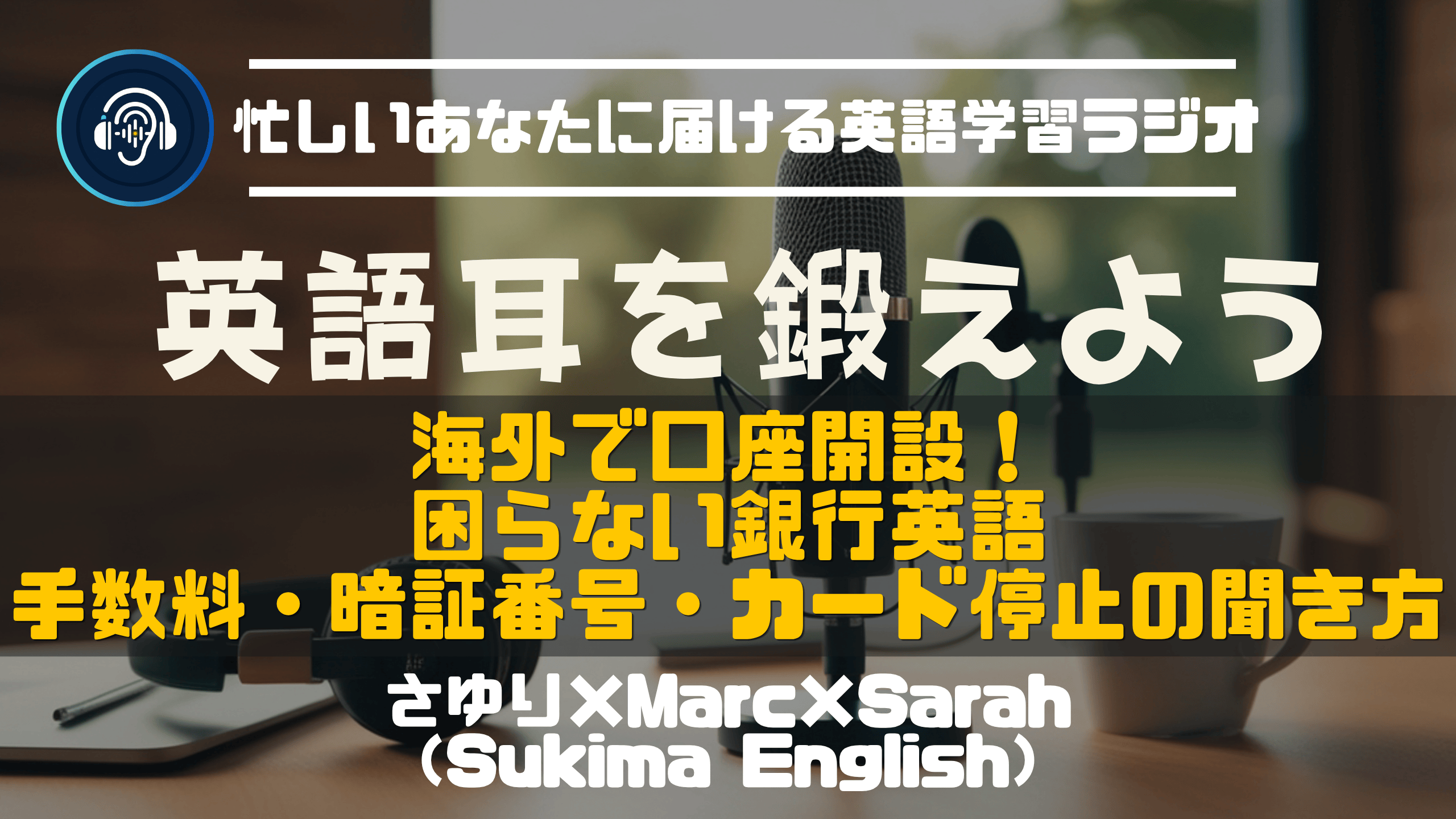
海外で口座開設!困らない銀行英語|手数料・暗証番号・カード停止の聞き方【Sukima English #18】
ポッドキャスト「すきまイングリッシュ」のスクリプト。「海外で口座開設!困らない銀行英語|手数料・暗証番号・カード停止の聞き方【Sukima English #18】」の会話全文です。

さゆり: こんにちは! 「Sukima English」へようこそ。 ホストのさゆりです。
サラ: Hi everyone! I'm Sarah. Welcome back to Sukima English! (日本語訳: 皆さん、こんにちは!サラです。Sukima Englishへようこそ!)
Marc: And I'm Marc! Today I'm playing the bank teller — I'll help you open an account, explain the fees, and walk you through every question you might have at the counter! (日本語訳: そして、マークです!今日は銀行の窓口係を演じます。口座開設のお手伝いをしたり、手数料を説明したり、窓口で疑問に思うことすべてをご案内します!)
さゆり: 今日のテーマは「銀行口座開設・両替」です。 海外に引越したあと、すぐに直面するのが銀行まわりの手続きですよね。 口座を開く、 ATMで引き出す、 円をドルに両替する、 カードをなくしたときに連絡する。 どれも生活に必須なのに、学校では教えてくれない英語ばかり。 今日は「口座開設・ATMとデビットカード・両替と海外送金・カード紛失と不正利用」の4つの場面で、銀行特有のフレーズを一気にマスターしましょう!
サラ: Banking vocabulary feels intimidating at first, but the conversations are actually very predictable. Tellers ask the same questions every day. Once you know the pattern, you'll feel confident walking into any bank. (日本語訳: 最初は銀行の語彙って難しそうに聞こえるけど、会話って実はすごく予測できるんだ。窓口係は毎日同じ質問をするからね。そのパターンがわかれば、どんな銀行に行っても自信が持てるようになるよ。)
さゆり: 最初のシチュエーションは「口座開設」の場面です。 海外に住み始めたら、まず必要になるのが銀行口座。 パスポート、住所証明、社会保障番号など、必要書類を窓口で確認しながら進めていきましょう。
サラ: Start with a clear opener — "I'd like to open a checking account, please." (日本語訳: まず、はっきりと「当座預金口座を開設したいのですが。」と言いましょう。)
さゆり: 口座開設の定番フレーズですね。 「I'd like to open a checking account, please.」。 普通預金口座を開きたいのですが、という意味です。 アメリカでは「checking account」が日常使いの口座、 「savings account」が貯蓄用の口座。 「I'd like to」は「なになに、したい」を丁寧に伝える表現で、窓口で最初の一言として使うとスムーズですよ。
Marc: A checking account is what you'll use for your debit card and everyday spending. A savings account earns a little interest but has monthly withdrawal limits. Most people open both at the same time — it's one application, not two. (日本語訳: 当座預金口座は、デビットカードや日常の支払いに使うもの。普通預金口座は少し利息がつくけど、毎月の引き出し限度額がある。ほとんどの人は両方同時に開設するよ。一度の申し込みで済むんだ、二度手間じゃない。)
サラ: Let's practice! Marc is the bank teller and Sayuri is opening her first account. (日本語訳: 練習してみましょう!マークは銀行の窓口係で、サユリは初めて口座を開設します。)
Marc: Good morning! Welcome to First National Bank. How can I help you today? (日本語訳: おはようございます!ファースト・ナショナル・バンクへようこそ。本日はどのようなご用件でしょうか?)
さゆり: Hi, I'd like to open a checking account, please. (日本語訳: こんにちは、当座預金口座を開設したいのですが。)
Marc: Of course. Do you have a passport and proof of address with you? (日本語訳: かしこまりました。パスポートと住所証明はお持ちですか?)
さゆり: Yes, I have my passport and a lease agreement with my new address. (日本語訳: はい、パスポートと新しい住所の賃貸契約書があります。)
Marc: Perfect, those work. Would you also like to open a savings account while you're here? (日本語訳: 素晴らしい、どちらも有効です。よろしければ、普通預金口座も同時に開設なさいますか?)
さゆり: Yes, please. Is there a minimum deposit to open the account? (日本語訳: はい、お願いします。口座開設の最低預金額はありますか?)
Marc: Twenty-five dollars for checking, and one hundred for savings. Pretty manageable. (日本語訳: 当座預金は25ドル、普通預金は100ドルです。かなり管理しやすい額ですよ。)
さゆり: That's fine. I'd like to deposit two hundred dollars today. (日本語訳: 大丈夫です。今日は200ドル入金したいのですが。)
Marc: Sounds good. Let me get the paperwork started. (日本語訳: 承知いたしました。書類の準備を始めます。)
サラ: Clean exchange! Sayuri asked about the minimum deposit right away — that's the question most people forget, and then they get surprised at the counter. (日本語訳: スムーズなやり取りでしたね!サユリはすぐに最低預金額について尋ねました。これはほとんどの人が忘れがちな質問で、後で窓口で驚くことになるんです。)
さゆり: 「Is there a minimum deposit to open the account?」は、口座開設のときに必ず聞いておきたい質問ですね。 次のフレーズをどうぞ!
サラ: Here's another essential one — "What documents do I need to open an account?" (日本語訳: もう一つ、これは必須の質問です。「口座を開設するには、どのような書類が必要ですか?」)
さゆり: 必要書類の確認フレーズですね。 「What documents do I need to open an account?」。 口座開設に必要な書類は何ですか、という意味です。 国や銀行によって必要書類は違うので、訪問前に電話かウェブで確認するのがベスト。 「documents」は身分証・住所証明・ビザ書類などを全部まとめて指す言葉です。
Marc: Bring more than you think you need. Passport, visa, lease, a utility bill, and a US phone number. If you forget one piece of paper, you'll have to come back another day — and the line is never short. (日本語訳: 必要だと思うものよりも多めに持ってきてください。パスポート、ビザ、賃貸契約書、公共料金の請求書、そしてアメリカの電話番号。書類が一つでも足りないと、また別の日に行かなければならなくなります。そして、列は決して短くありません。)
さゆり: 続いては「ATMとデビットカードの使い方」場面です。 口座を開設すると、その場でデビットカードをもらえることが多いですよね。 暗証番号の設定、引き出し限度額、他行ATMの手数料など、使い始める前に確認しておきたいことがいくつかあります。
サラ: A very practical question — "Is there a daily withdrawal limit?" (日本語訳: とても実用的な質問です。「一日の引き出し限度額はありますか?」)
さゆり: 引き出し限度額の確認フレーズですね。 「Is there a daily withdrawal limit?」。 1日の引き出し限度額はありますか、という意味です。 海外のATMは、1日に引き出せる金額に上限があるのが普通。 初期設定では300ドルや500ドルなど低めに設定されていることが多く、大きな買い物をしたいときに困らないよう、事前に確認しておきましょう。
Marc: The default is usually five hundred dollars a day, but you can ask us to raise it. If you need to pay a deposit or buy furniture, tell us ahead of time — we can temporarily lift the limit for a day or two. (日本語訳: 通常、デフォルトは1日500ドルですが、引き上げを依頼することもできます。保証金や家具の購入などが必要な場合は、事前に教えてください。1日か2日、一時的に限度額を引き下げることができます。)
サラ: Let's practice! Sayuri just got her debit card and has some questions. (日本語訳: 練習しましょう!サユリはデビットカードを受け取ったばかりで、いくつか質問があります。)
Marc: Here's your new debit card. You'll need to activate it and set up your PIN. (日本語訳: こちらが新しいデビットカードです。有効化して、暗証番号を設定する必要があります。)
さゆり: Great, thank you. How do I set up my PIN? (日本語訳: はい、ありがとうございます。暗証番号はどうやって設定するのですか?)
Marc: You can do it at any of our ATMs, or call the number on the back of the card. Four digits, easy to remember — but not your birthday! (日本語訳: ATMで設定するか、カード裏面の番号に電話してください。4桁で覚えやすいものですが、誕生日以外でお願いします!)
さゆり: Got it. Is there a daily withdrawal limit? (日本語訳: わかりました。一日の引き出し限度額はありますか?)
Marc: Yes, five hundred dollars a day at ATMs, and three thousand for debit card purchases. (日本語訳: はい、ATMでは1日500ドル、デビットカードでの購入は3,000ドルまでです。)
さゆり: Okay. And are there any fees for using other banks' ATMs? (日本語訳: なるほど。他の銀行のATMを使う場合、手数料はかかりますか?)
Marc: Three dollars per transaction from our side, plus whatever the other bank charges. So use our ATMs when you can. (日本語訳: 当行からは取引ごとに3ドル、それに加えて相手方の銀行が請求する料金がかかります。ですから、できるだけ当行のATMをご利用ください。)
さゆり: Noted. Can I use my card overseas too? (日本語訳: 承知しました。海外でもカードは使えますか?)
Marc: Yes, but let us know before you travel — otherwise the system might flag it as fraud and block it. (日本語訳: はい、ただし海外旅行の前に私たちに知らせてください。そうしないと、システムが不正利用と判断してカードがブロックされる可能性があります。)
サラ: Really smart follow-up questions! Sayuri asked about PIN, daily limits, other banks' fees, and overseas use — that's the full checklist in about thirty seconds. (日本語訳: とても賢い追加質問でしたね!サユリは暗証番号、日々の限度額、他行の手数料、海外での利用について尋ねました。30秒ほどで、すべてを網羅するチェックリストになります。)
さゆり: 「Are there any fees for using other banks' ATMs?」は、毎回の小さな手数料がじわじわ効いてくるので、早めに知っておきたい情報ですね。 次のフレーズをどうぞ!
サラ: And a phrase everyone should memorize — "How do I set up my PIN?" (日本語訳: そして、誰もが覚えるべきフレーズは、「暗証番号はどうやって設定するのですか?」です。)
さゆり: 暗証番号設定のフレーズですね。 「How do I set up my PIN?」。 暗証番号はどう設定しますか、という意味です。 「PIN」は「Personal Identification Number(個人識別番号)」の略で、「ピン」とそのまま読みます。 「pin number」と言うとネイティブには重複表現に聞こえるので、「PIN」だけで使うのが自然ですよ。
Marc: And please don't use your birthday or one-two-three-four. Fraud starts with easy PINs. Pick something random and write it down somewhere safe — just not in your wallet, right next to the card. (日本語訳: そして、誕生日や1234は絶対に使わないでください。不正利用は簡単な暗証番号から始まります。ランダムなものを選んで安全な場所に書き留めてください。ただし、カードのすぐ隣の財布には入れないでくださいね。)
さゆり: 続いては「両替と海外送金」場面です。 旅行中の両替や、日本の家族にお金を送金したいときに使う場面ですね。 レート、手数料、送金にかかる日数など、確認しておきたいポイントがいくつかあります。
サラ: Start with rates — "What's today's exchange rate for yen to dollars?" (日本語訳: まずはレートから。「今日の円からドルの為替レートはいくらですか?」)
さゆり: 為替レート確認のフレーズですね。 「What's today's exchange rate for yen to dollars?」。 今日の円からドルへの為替レートは、という意味です。 「exchange rate」は「為替レート」、 「yen to dollars」で「円からドルへ」の方向を示しています。 逆なら「dollars to yen」ですね。 銀行によってレートが違うので、2〜3箇所で比較すると差がはっきり見えますよ。
Marc: Banks rarely give the best rate — airports are even worse. If you can, use an ATM with a major network card, or a specialized service like Wise. You'll save a lot over the year, especially on bigger transfers. (日本語訳: 銀行はあまり良いレートを提示しません。空港はさらに悪いです。可能であれば、主要ネットワークカードを備えたATM、またはWiseのような専門サービスを利用してください。年間を通して、特に大きな送金ではかなりの節約になります。)
サラ: Let's practice! Sayuri wants to send money home to her family. (日本語訳: さあ、練習しましょう!サユリさんは、家族にお金を送りたいと思っています。)
さゆり: Hi, I'd like to send a wire transfer to Japan. (日本語訳: こんにちは、海外送金(ワイヤー送金)をしたいのですが。)
Marc: Sure, I can help with that. How much are you sending, and in which currency? (日本語訳: はい、お手伝いします。いくら、どの通貨で送金されますか?)
さゆり: Two thousand dollars, converted to yen. (日本語訳: 2000ドルを日本円に両替して。)
Marc: Got it. Let me check today's rate — one forty-eight yen per dollar. After our margin, you'll get about one forty-six fifty. (日本語訳: 承知しました。今日のレートを確認しますね。1ドルあたり148円です。手数料を引くと、約146円50銭になります。)
さゆり: Okay. How much commission do you charge for the transfer? (日本語訳: わかりました。手数料はいくらですか?)
Marc: Forty-five dollars flat, plus a small receiving bank fee on the other end. Usually under ten dollars. (日本語訳: 一律45ドルと、相手方の銀行でかかる少額の受取手数料です。通常10ドル未満です。)
さゆり: And how long will the transfer take? (日本語訳: 送金にはどれくらいかかりますか?)
Marc: Two to three business days. If you need it faster, we have a same-day option for an extra twenty dollars. (日本語訳: 2日から3営業日です。もっと急ぐ場合は、追加で20ドルで即日送金も可能です。)
さゆり: Standard speed is fine. Let's go ahead with that. (日本語訳: 通常で大丈夫です。それでお願いします。)
サラ: Well-organized request! Sayuri asked the three essentials — rate, commission, and time — before committing. That's exactly the right order. (日本語訳: よく整理された質問ですね!サユリさんは、申し込む前に「レート」「手数料」「所要時間」という3つの必須事項を確認しました。まさに正しい順番です。)
さゆり: 「How much commission do you charge?」は、見えにくい手数料をはっきり確認できる便利なフレーズ。 レートが良く見えても手数料が高いと、結果的に損することもあるので要注意ですね。 次のフレーズをどうぞ!
サラ: Another useful one — "How long will the transfer take?" (日本語訳: もう一つ役立つフレーズは、「送金にはどれくらいかかりますか?」です。)
さゆり: 送金日数の確認フレーズですね。 「How long will the transfer take?」。 送金はどのくらいかかりますか、という意味です。 「transfer」は「送金・振り込み」。 家賃の支払いなど期限のある送金は、想定より余裕を持って手続きしましょう。 週末や祝日を挟むと、さらに時間がかかることもありますよ。
Marc: International wires are slower than people expect. Two to three business days is standard, but if the receiving bank needs extra compliance checks, it can take a full week. Never cut it close with a deadline. (日本語訳: 海外送金は、思ったより時間がかかることがあります。標準は2〜3営業日ですが、受取銀行で追加のコンプライアンスチェックが必要な場合、1週間かかることもあります。締め切りギリギリにならないようにしてください。)
さゆり: 最後は「カード紛失・不正利用」場面です。 これは本当に、誰にでも起こり得るトラブル。 落ち着いてすぐに連絡できるよう、フレーズを押さえておきましょう。 時間との戦いなので、短く、はっきりと伝えるのがポイントです。
サラ: The first thing to say — "I'd like to report my card as lost." (日本語訳: 最初に言うべきことは、「カードを紛失したと届け出たいのですが」です。)
さゆり: カード紛失のフレーズですね。 「I'd like to report my card as lost.」。 カードの紛失を届け出たいです、という意味です。 「report as lost」で「紛失として届け出る」。 盗難の場合は「stolen」を使って「report my card as stolen」となります。 電話でもオンライン手続きでも使える基本表現です。
Marc: Call us the minute you realize it's gone — don't wait until morning. Every minute matters. Once you report it, you're not liable for any new charges. Our line is open twenty-four seven. (日本語訳: なくなったと気づいた瞬間に電話してください。朝まで待たないで。1分1秒が重要です。届け出た時点で、新しい請求に対する責任はあなたにはありません。私たちの電話回線は24時間年中無休で開いています。)
サラ: Let's practice! Sayuri realized her wallet is missing. (日本語訳: さあ、練習しましょう!サユリさんは、財布がないことに気づきました。)
さゆり: Hi, I'd like to report my card as lost. I can't find my wallet anywhere. (日本語訳: こんにちは、カードを紛失したと届け出たいのですが。財布がどこにも見当たらないんです。)
Marc: I'm sorry to hear that. Can I have your name and date of birth for verification? (日本語訳: それはお困りですね。確認のために、お名前と生年月日を教えていただけますか?)
さゆり: Sayuri Tanaka, April third, 1992. (日本語訳: サユリ・タナカ、1992年4月3日です。)
Marc: Thank you. What would you like me to do next? (日本語訳: ありがとうございます。次に何をしましょうか?)
さゆり: Could you freeze my card immediately? And send me a replacement. (日本語訳: すぐにカードを停止してもらえますか?それと、新しいカードを送ってください。)
Marc: Done. The card is frozen as of right now. A new one will arrive in five to seven business days. (日本語訳: 完了しました。カードはただ今停止されています。新しいカードは5日から7営業日でお届けします。)
さゆり: Thank you. Actually, I just checked my statement online — I don't recognize this charge from yesterday. It's for two hundred dollars at some online store. (日本語訳: ありがとうございます。実は、オンラインで明細を確認したのですが、昨日のこの請求は身に覚えがありません。オンラインストアで200ドルです。)
Marc: I'll flag it as a disputed charge and open an investigation. You won't be responsible while we look into it. Usually resolved within seven to ten days. (日本語訳: それを紛争として記録し、調査を開始します。調査中は、あなたは責任を負う必要はありません。通常7日から10日で解決します。)
さゆり: That's such a relief. Thank you so much. (日本語訳: それは本当に安心しました。本当にありがとうございます。)
サラ: Perfectly handled, both sides! Sayuri reported the loss, asked to freeze the card, and raised a disputed charge — all in one calm phone call. That's exactly how to do it. (日本語訳: 両方とも完璧な対応でした!サユリさんは、紛失を届け出て、カードの停止を依頼し、紛争の請求について指摘しました。すべて落ち着いて一つの電話で済ませました。まさにその通りです。)
さゆり: 「Could you freeze my card immediately?」は、紛失や盗難のときに絶対に最初に言うべきフレーズですね。 「freeze」は「凍結する」で、銀行用語としてそのまま通じます。 次のフレーズをどうぞ!
サラ: And one more critical phrase — "I don't recognize this charge on my statement." (日本語訳: そして、もう一つ重要なフレーズは、「明細にこの請求が載っていますが、身に覚えがありません」です。)
さゆり: 不正請求を指摘するフレーズですね。 「I don't recognize this charge on my statement.」。 明細のこの請求に覚えがありません、という意味です。 「statement」は「明細書」、 「charge」は「請求」。 月に一度は明細をチェックして、見覚えのない請求がないか確認する習慣をつけましょう。 60日以内に申し出れば、多くの場合で返金対応してもらえますよ。
Marc: Small unknown charges — five dollars, ten dollars — are often test charges by scammers. If you see one and ignore it, a big charge usually comes next. Report even tiny ones. We'd rather investigate ten harmless charges than miss one real fraud. (日本語訳: 少額の身に覚えのない請求、5ドル、10ドルなどは、詐欺師によるテスト請求であることがよくあります。それを見て無視すると、次に大きな請求が来ることが多いです。たとえ小さなものでも報告してください。私たちは、1件の本当の詐欺を見逃すよりも、10件の無害な請求を調査する方が良いと考えています。)
さゆり: OK! Let's do a full trip to the bank — all in English, start to finish! (日本語訳: OK!銀行への旅行を全部やってみましょう。すべて英語で、最初から最後まで!)
サラ: Marc, you're the bank teller. Sayuri just moved to town and needs to open an account, and I'm her friend helping her ask the right questions. (日本語訳: マーク、あなたは銀行の窓口係です。サユリはこの町に引っ越してきたばかりで、口座を開設したいのですが、私は彼女の友達で、正しい質問をするのを手伝っています。)
Marc: Welcome to First National Bank! What can I do for you today? (日本語訳: ファースト・ナショナル・バンクへようこそ!今日はどのようなご用件でしょうか?)
さゆり: Hi, I'd like to open a checking account, please. And maybe a savings account too. (日本語訳: こんにちは、当座預金口座を開設したいのですが。それと、普通預金口座もできれば。)
Marc: Of course. Do you have a passport and proof of address? (日本語訳: もちろんです。パスポートと住所証明はお持ちですか?)
さゆり: Yes, both right here. What documents do I need exactly? (日本語訳: はい、両方ここにあります。具体的にどのような書類が必要ですか?)
Marc: Passport, proof of address, and a Social Security number or ITIN. You've got the first two — do you have an SSN? (日本語訳: パスポート、住所証明、そして社会保障番号(SSN)またはITINです。最初の2つはお持ちですが、SSNはお持ちですか?)
さゆり: Yes, I got one last week. Here you go. (日本語訳: はい、先週もらいました。どうぞ。)
サラ: Great. And while we're here — is there a minimum deposit to open the account? (日本語訳: いいですね。あと、ついでに聞きたいんですけど、口座開設には最低預金額ってありますか?)
Marc: Twenty-five for checking, one hundred for savings. (日本語訳: 普通預金は25ドル、貯蓄預金は100ドルです。)
さゆり: Let's do two hundred to start. How do I set up my PIN for the debit card? (日本語訳: じゃあ、とりあえず200ドルでお願いします。デビットカードのPIN設定はどうすればいいですか?)
Marc: Any of our ATMs, or a quick phone call to the number on the card. (日本語訳: ATMのどれでもできますし、カードに載ってる番号に電話一本でも大丈夫です。)
サラ: And is there a daily withdrawal limit we should know about? (日本語訳: あと、1日の引き出し限度額とか、知っておくべきことはありますか?)
Marc: Five hundred a day at ATMs, three thousand for debit purchases. You can raise it if needed. (日本語訳: ATMでは1日500ドル、デビットカードでの購入は3000ドルです。必要なら引き上げられますよ。)
さゆり: Great. One more thing — if my card ever gets lost, what should I do? (日本語訳: いいですね。あと一つだけ。もしカードをなくしたら、どうすればいいですか?)
Marc: Call our twenty-four seven line right away. Just say "I'd like to report my card as lost," and we'll freeze it immediately. (日本語訳: すぐに24時間対応の窓口に電話してください。「カードを紛失したと報告したい」と言っていただければ、すぐに凍結します。)
サラ: That's the exact phrase to remember — "I'd like to report my card as lost. Could you freeze my card immediately?" (日本語訳: そのフレーズが重要なんですね。「カードを紛失したと報告したいのですが、すぐに凍結してもらえますか?」ですね。)
さゆり: Perfect. Thank you so much for explaining everything! (日本語訳: 完璧です。色々説明してくれて、本当にありがとうございます!)
サラ: Beautiful! You covered account opening, required documents, minimum deposit, PIN setup, withdrawal limits, and what to do if you lose your card. That's a complete first visit to the bank — all in English! (日本語訳: 素晴らしい!口座開設、必要書類、最低預金額、PIN設定、引き出し限度額、カード紛失時の対応、全部カバーしましたね。銀行への初訪問としては完璧です。しかも全部英語で!)
さゆり: 今日は「銀行口座開設・両替」をテーマに、 口座開設・ATMとデビットカード・両替と海外送金・カード紛失と不正利用の4つの場面で練習しましたね。
サラ: Banking is a conversation you'll have dozens of times over the years — opening accounts, sending money, fixing problems. Once you have these core phrases, the rest is just repetition. You'll feel much more at home abroad the first time you walk out of a bank with a smile. (日本語訳: 銀行とのやり取りは、何年も何十回もすることになる会話です。口座開設、送金、トラブル対応。これらの基本的なフレーズが身につけば、あとは繰り返すだけです。初めて銀行を出るときに笑顔で、海外での生活もずっと居心地よく感じるはずです。)
Marc: And from the teller's side — please don't be shy. We answer the same questions every day. "How do I," "what's the fee," "is there a limit." Those are our favorite questions, because they show you're being careful. That's exactly how you should be with your money. (日本語訳: そして、窓口の側からすると、遠慮しないでください。毎日同じ質問に答えています。「どうすればいいですか?」「手数料はいくらですか?」「限度額はありますか?」そういう質問が大好きなんです。なぜなら、あなたが慎重になっている証拠だからです。それはまさに、お金に対して取るべき姿勢です。)
さゆり: マーク、サラ、今日もありがとうございました! 次回もまた、実践的な英語表現をたっぷりお届けします。 またね!
サラ: See you next time! (日本語訳: また次回!)
Marc: Take good care of your money — in English! (日本語訳: 英語でお金を大切に!)

関連記事
【日常英会話】メロン1個で相手に謝られた?マークが8,000円のメロンでやらかした話 #英語学習 #ネイティブ英語会話 #リスニング強化 #英語耳
ポッドキャスト「すきまイングリッシュ」のスクリプト。「【日常英会話】メロン1個で相手に謝られた?マークが8,000円のメロンでやらかした話 #英語学習 #ネイティブ英語会話 #リスニング強化 #英語耳」の会話全文です。
【英語学習】英語のみ | ここが変だよ日本、1月に自販機で水?温水便座・こたつ・オフィス、日本は「部屋」ではなく「人」を暖める国だった #英語学習 #ネイティブ英語会話 #リスニング強化 #英語耳
ポッドキャスト「すきまイングリッシュ」のスクリプト。「【英語学習】英語のみ | ここが変だよ日本、1月に自販機で水?温水便座・こたつ・オフィス、日本は「部屋」ではなく「人」を暖める国だった #英語学習 #ネイティブ英語会話 #リスニング強化 #英語耳」の会話全文です。

【英語学習】英語のみ | ここが変だよ日本、1月に自販機で水?温水便座・こたつ・オフィス、日本は「部屋」ではなく「人」を暖める国だった #英語学習 #ネイティブ英語会話 #リスニング強化 #英語耳
ポッドキャスト「すきまイングリッシュ」のスクリプト。「【英語学習】英語のみ | ここが変だよ日本、1月に自販機で水?温水便座・こたつ・オフィス、日本は「部屋」ではなく「人」を暖める国だった #英語学習 #ネイティブ英語会話 #リスニング強化 #英語耳」の会話全文です。
【日常英会話】英語のみ | ラーメン屋のカウンターを自分で拭く、トレー返却・スタジアム清掃、なぜ日本人は「自分の仕事じゃないこと」をやるのか #英語学習 #ネイティブ英語会話 #リスニング強化
ポッドキャスト「すきまイングリッシュ」のスクリプト。「【日常英会話】英語のみ | ラーメン屋のカウンターを自分で拭く、トレー返却・スタジアム清掃、なぜ日本人は「自分の仕事じゃないこと」をやるのか #英語学習 #ネイティブ英語会話 #リスニング強化」の会話全文です。
【日常の英語】日本語解説あり | 携帯・ネット契約を英語で乗り切る12フレーズ、申し込み→料金確認→つながらない時→解約・変更まで完全対応 #英語学習 #英語フレーズ #英会話 #英語耳
ポッドキャスト「すきまイングリッシュ」のスクリプト。「【日常の英語】日本語解説あり | 携帯・ネット契約を英語で乗り切る12フレーズ、申し込み→料金確認→つながらない時→解約・変更まで完全対応 #英語学習 #英語フレーズ #英会話 #英語耳」の会話全文です。
【英語学習】英語のみ | 印鑑・FAX・7枚の問診票、日本の「紙の国」で気づいたこと、印鑑がないと銀行口座も作れない #英語学習 #ネイティブ英語会話 #リスニング強化 #英語耳
ポッドキャスト「すきまイングリッシュ」のスクリプト。「【英語学習】英語のみ | 印鑑・FAX・7枚の問診票、日本の「紙の国」で気づいたこと、印鑑がないと銀行口座も作れない #英語学習 #ネイティブ英語会話 #リスニング強化 #英語耳」の会話全文です。