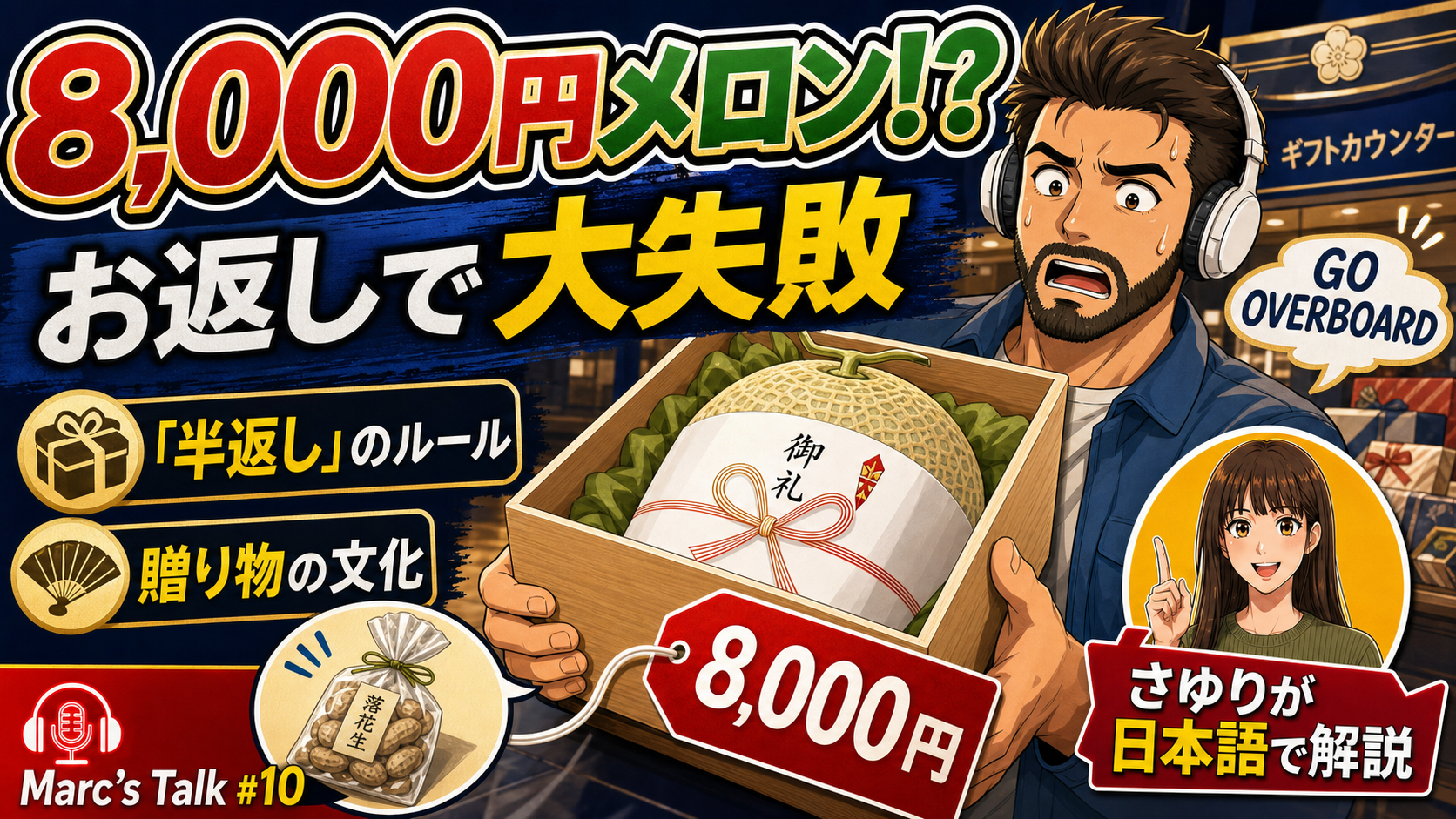
【日常英会話】メロン1個で相手に謝られた?マークが8,000円のメロンでやらかした話 #英語学習 #ネイティブ英語会話 #リスニング強化 #英語耳
ポッドキャスト「すきまイングリッシュ」のスクリプト。「【日常英会話】メロン1個で相手に謝られた?マークが8,000円のメロンでやらかした話 #英語学習 #ネイティブ英語会話 #リスニング強化 #英語耳」の会話全文です。

さゆり: こんにちは、Sukima English へようこそ。今日はマークに、日本で一番てこずった文化のお話を聞いてみます。テーマは、贈り物。
さゆり: 旅行のたびに配るお土産、そして、何かをいただいたら必ず返す「お返し」。マークは5年かけて、ある大失敗の末に、その意味をようやく理解したそうです。
サラ: Okay, I'm already invested. What's the story, Marc? (日本語訳: サラ:よし、もう乗り気になってる。どういう話なの、マーク?)
Marc: So this is the story of how I tried to say thank you, and somehow made everything worse. (日本語訳: マーク:それで、感謝の気持ちを伝えようとしたら、なぜか全部悪化しちゃったっていう話なんだ。)
サラ: That is a very Japan sentence. (日本語訳: サラ:それはすごく日本っぽいセリフだね。)
Marc: It's a very me sentence. I once sent a gift so expensive that the other person had to apologize to me. (日本語訳: マーク:いや、すごく俺っぽいセリフだ。以前、高すぎる贈り物をしたら、相手が俺に謝らなきゃいけなくなったことがあるんだ。)
サラ: Wait. They apologized to you? For a gift you sent them? (日本語訳: サラ:え、謝ってきたの? あなたが贈ったプレゼントに対して?)
Marc: For a gift I sent them. Hold that thought. We have to build up to the melon. (日本語訳: マーク:俺が贈ったプレゼントに対してだよ。それは一旦置いといて。メロンの話まで盛り上げないと。)
サラ: The melon. Okay, now I officially have questions. (日本語訳: サラ:メロン。なるほど、正式に質問が出てきたよ。)
Marc: Everybody does. Let me start at the beginning. Year one. (日本語訳: マーク:みんなそうなるさ。最初から話そう。1年目の頃の話だよ。)
Marc: So year one, I flew back to Chicago for a week. Saw my family, ate my body weight in deep dish, flew back to Tokyo. (日本語訳: マーク:それで1年目の時、1週間シカゴに帰省したんだ。家族に会って、ディープディッシュピザをたらふく食べて、東京に飛んで戻った。)
サラ: As one does. (日本語訳: サラ:まあ、普通はそうするよね。)
Marc: As one does. First morning back at the office, I sit down at my desk, and something feels off. (日本語訳: マーク:そうそう。オフィスに戻って最初の朝、デスクに座ったら、何かがおかしいんだ。)
サラ: Off how? (日本語訳: サラ:どうおかしいの?)
Marc: Everyone around me is quietly unwrapping these little individually-packaged snacks. And a box is going around, desk to desk. (日本語訳: マーク:周りのみんなが、ちっちゃい個包装のお菓子を静かに開けてるんだ。で、箱が回ってきて、デスクからデスクへと。)
Marc: Turns out a coworker had been to Hokkaido over the weekend, and she brought back regional sweets for the entire team. (日本語訳: マーク:聞けば、同僚が週末に北海道に行ってて、チーム全員にお土産のお菓子を買ってきてくれたんだって。)
サラ: For the whole team? Because she took a weekend trip? (日本語訳: サラ:チーム全員に? たった週末旅行に行っただけで?)
Marc: Because she took a weekend trip. And it hits me. I had just traveled too. And I brought back absolutely nothing. (日本語訳: マーク:週末旅行に行っただけでね。それでピンときたんだ。俺も旅行してたのに。お土産を何も買ってきてなかったんだ。)
サラ: But why would you? It was your vacation, not a work thing. (日本語訳: サラ:でも、なんでわざわざ? あなたの休暇だったんでしょ、仕事じゃないのに。)
Marc: That is exactly the American instinct. In Chicago, my trip is my trip. Nobody expects a souvenir out of it. (日本語訳: マーク:それがまさにアメリカ的な考え方だよ。シカゴでは、俺の旅行は俺の旅行。そこからお土産を期待する人は誰もいない。)
Marc: But in Japan there was this quiet little expectation, and I had no idea it even existed. It has a name. Omiyage. (日本語訳: マーク:でも日本だと、そういう静かでちょっとした期待があって、それが存在することすら知らなかったんだ。名前があるんだよ。お土産ってね。)
サラ: Omiyage. So it's basically obligatory souvenirs. (日本語訳: サラ:お土産。つまり、基本的には義務のお土産ってことね。)
Marc: Kind of, yeah. When you travel, you bring back a box of individually-wrapped local snacks for the people around you. (日本語訳: 旅行に行くと、周りの人のために個包装のお土産を箱で買って帰るんだよね。)
Marc: Not some big personal gift. Just a small, shareable thing that quietly says, I was away, and I thought of you. (日本語訳: 誰かへの特別なプレゼントじゃなくて、ちょっとした、みんなで分けられるお土産で、「留守にしてたんだけど、君のこと考えてたよ」って静かに伝えるもの。)
サラ: And nobody told you this. You just had to figure it out. (日本語訳: で、それを誰かに言われたわけでもなく、自分で気づいたってこと?)
Marc: Nobody said a single word. That is the part that got me. There was no lecture, no rule sheet, no warning. (日本語訳: 一言も言われなかったよ。そこが僕を悩ませた点なんだ。講義も、ルール集も、警告もなかった。)
Marc: There was just a box going around the room, politely skipping the one desk that had nothing to add. Mine. (日本語訳: ただ、部屋の中を箱が回ってきて、何も持ってくるものがなかった僕のデスクだけ、丁寧にスルーされたんだ。)
サラ: Oof. The silent skip. (日本語訳: うっわ。静かにスルー。)
Marc: The silent skip. In Japan, nobody corrects you out loud. You just notice, and you fix it. (日本語訳: 静かにスルー。日本では、誰もその場で間違いを指摘しない。自分で気づいて、自分で直すんだ。)
サラ: So what did you do? (日本語訳: で、どうしたの?)
Marc: Next trip home, I came back loaded. Two big tins of Garrett popcorn. The Chicago mix, caramel and cheese. (日本語訳: 次の帰国時、僕は大量に買って帰ったよ。シカゴで有名なギャレットポップコーンの大きな缶を2つ。キャラメルとチーズのミックス。)
サラ: Did it land? (日本語訳: それでうまくいった?)
Marc: It landed. People lined up. For a solid week I was "the popcorn guy," and I finally felt like I got something right. (日本語訳: うまくいったよ。みんな列を作って並んだ。一週間まるまる僕は「ポップコーンの人」で、ついに何か正しいことをしたんだって感じがした。)
サラ: You know, in New York, if you bring in bagels one time, you're basically a legend. But nobody expects it. (日本語訳: ニューヨークだと、一度ベーグルを持って行くだけで、あなたはもう伝説みたいなものだよ。でも、誰もそれを期待してない。)
Marc: Right. Here it is not a heroic gesture. It is just the baseline. And in year one, I had missed the baseline completely. (日本語訳: そう。ここでは、それは英雄的な行動じゃなくて、ただの基本なんだ。で、最初の年に、僕はその基本を完全に逃していた。)
Marc: Okay. So the popcorn was the easy lesson. The really expensive lesson came in year four. (日本語訳: さて、ポップコーンは簡単な教訓だった。本当に高くついた教訓は4年目にやってきた。)
サラ: This is the melon, isn't it. (日本語訳: このメロンのことだよね。)
Marc: This is the melon. You remember my coworker Aiko. (日本語訳: このメロンだよ。僕の同僚のアイコのこと覚えてる?)
サラ: The one who "doesn't take no." She took you to sushi, and to her hometown. (日本語訳: 「ノーとは言わない」人だよね。彼女があなたを寿司に連れて行ったり、彼女の故郷に連れて行ったりした。)
Marc: That's her. So one summer she invites me to stay two nights at her family's place out in Chiba. (日本語訳: そうそう。それで、ある夏、彼女が千葉にある彼女の実家に2泊してくれって招待してくれたんだ。)
Marc: Her mom cooks for me, puts me up, gives me the full guest treatment. Genuinely, deeply kind. (日本語訳: 彼女のお母さんが僕のために料理を作ってくれて、泊めてくれて、本当にお客さん扱いしてくれた。本当に、心の底から親切だった。)
サラ: That's lovely. (日本語訳: それは素敵ね。)
Marc: It really was. So a few weeks later, a box shows up at my apartment. From Aiko's mother. (日本語訳: 本当にそうだよ。それで数週間後、アパートに箱が届いたんだ。愛子さんのお母さんからね。)
サラ: She sent you a gift? After hosting you at her own house? (日本語訳: お母さんがあなたにプレゼントを? 自分のお家であなたをもてなした後に?)
Marc: After hosting me. And that already went against every instinct I have. (日本語訳: もてなしてくれたんだ。それに、それがすでに僕の直感に反してた。)
Marc: Chiba is famous for peanuts, so she sent this beautiful box of local roasted peanuts. Just to say thank you for visiting. (日本語訳: 千葉はピーナッツで有名だから、地元のローストピーナッツのきれいな箱を送ってくれたんだ。ただ、訪ねてくれてありがとう、って。)
サラ: So the host thanks the guest. With a gift. For being a guest. (日本語訳: それで、ホストがゲストに感謝するんだ。プレゼントで。ゲストであることに対して。)
Marc: Welcome to the loop. And this is the moment I decide I am going to handle it correctly. (日本語訳: 「お返し」の世界へようこそ。そして、これが僕がちゃんとやろうと決めた瞬間だ。)
サラ: Uh oh. I do not love where this is heading. (日本語訳: あらら。どうなるか嫌な予感がするわ。)
Marc: You should not. I thought, she did something kind, so I will return the favor. And I will do it properly. Respectfully. (日本語訳: そう思うべきじゃないよ。彼女が親切にしてくれたんだから、僕もお返しをしようと思ったんだ。そして、ちゃんとお返しをしようと。)
サラ: I feel like "properly" is about to mean "way too much." (日本語訳: 「ちゃんとする」が「やりすぎる」って意味になりそうな予感がする。)
Marc: You know me too well. I go to a department store. The fancy kind, with the gift counter down in the basement food hall. (日本語訳: 僕のことよく分かってるね。デパートに行ったんだ。高級な方で、地下の食品売り場にあるギフトカウンターがあるような。)
Marc: And I buy one of those perfect, glowing, hand-grown muskmelons. In a wooden box. With a ribbon on top. (日本語訳: それで、完璧で、輝いてて、丹精込めて作られたマスクメロンを買ったんだ。木箱入りで。リボン付きさ。)
サラ: How much was this melon, Marc? (日本語訳: そのメロン、いくらだったの、マーク?)
Marc: About eight thousand yen. Call it sixty dollars. (日本語訳: 8000円くらいかな。60ドルとでもしておこう。)
サラ: Sixty. Dollars. For one single melon. (日本語訳: 60ドル。たった一つのメロンに?)
Marc: For one single melon. And in my head, this is me being respectful. Bigger gift, bigger thank-you, right? (日本語訳: たった一つのメロンだよ。それで僕の頭の中では、これが敬意を払ってるってことなんだ。プレゼントが大きいほど、感謝も大きいってね。)
Marc: I went completely overboard. (日本語訳: 完全にやりすぎたよ。)
サラ: But hold on. Why is that a problem? A gorgeous melon sounds like a wonderful thank-you. (日本語訳: でもちょっと待って。それがなぜ問題なの? 素晴らしいメロンは、素敵な感謝のしるしじゃない。)
Marc: That is the American read, and it is exactly what I thought. But there is a rule here I did not know. It is called hangaeshi. (日本語訳: それはアメリカ的な見方ね。私がまさにそう思ったことよ。でも、ここには知らなかったルールがあるの。「返し」っていうんだけど。)
Marc: Han means half. The idea is, when you return a gift, you give back around half the value. Not more than the original. (日本語訳: 「返し」ね。返しの意味は、プレゼントをもらったら、その価値の半分くらいを返すんだ。元のものより多くはダメ。)
サラ: Half? Not more? That is the total opposite of how I was raised. (日本語訳: 半分? 多くない? 私が育ったやり方とは真逆だわ。)
Marc: Completely opposite. In Chicago, you go bigger to show you care. Here, if you go bigger, you hand the debt right back to them. (日本語訳: 真逆だね。シカゴだと、気遣いを示すにはもっと盛大にするんだけど、ここでは、盛大にしすぎると相手に借りをそのまま返してることになるんだ。)
サラ: Oh no. So now her mother... (日本語訳: えー、いやだ。じゃあ、お母さんが…)
Marc: Now her mother feels she has to respond to the melon. I did not close the loop. I supersized it. (日本語訳: お母さんが、そのメロンにお返ししなきゃいけないって感じちゃったんだ。俺は話を終わらせなかった。やりすぎちゃったんだよ。)
サラ: So being too generous actually broke the etiquette. (日本語訳: だから、親切すぎることがエチケットを破ることになったんだ。)
Marc: Shattered it. Two days later, Aiko calls me. She is half laughing, half mortified. (日本語訳: ぶち壊しちゃったよ。2日後、アイコから電話がかかってきたんだ。彼女は笑ってるんだけど、恥ずかしそうにもしてた。)
Marc: She goes, "Marc. My mother wants to know what she did to make you send something so expensive." (日本語訳: 「マーク。どうしてそんな高いものを送ったのか、うちの母が知りたいって言ってるんだけど」って。)
サラ: And there it is. The victim of your kindness, apologizing to you. (日本語訳: ほら、それだよ。君の親切の犠牲者が、君に謝ってる。)
Marc: That is the apology. In Japanese, her mom basically said the equivalent of "oh, you shouldn't have." (日本語訳: それが謝罪だよ。日本語で、彼女のお母さんは「あら、そんなにもったいない」って言ったのと同義。)
Marc: But not the happy version. The version that means, this is far too much, and now I am uncomfortable. (日本語訳: でも、喜んでる時の「あら、そんなにもったいない」じゃなくて。「これはあまりにも多すぎるわ、もう私は落ち着けない」っていう意味の。)
サラ: So you completely misjudged it. (日本語訳: 完全に判断を誤ったんだね。)
Marc: I completely missed the mark. I set out to be kind, and I made a warm, generous person feel like she owed me something. (日本語訳: 完全に的外れだったよ。親切にしようとしたのに、親切で温かい人を、私に何か借りがあるように感じさせちゃった。)
サラ: That is a very specific way to fail. You failed by being too nice, in the wrong direction. (日本語訳: それはすごく具体的な失敗の仕方ね。親切すぎたせいで、方向違いの失敗をしたと。)
Marc: The most me failure imaginable. Big heart, wrong manual. (日本語訳: 俺らしい失敗の極みだよ。大きな心、間違ったマニュアル。)
Marc: So after the melon, Aiko finally sits me down and hands me the actual rulebook. Over coffee. (日本語訳: それで、メロンの件の後、アイコがついに私を座らせて、実際のルールブックをくれたんだ。コーヒーを飲みながら。)
サラ: Five years in, and you get the manual with a latte. (日本語訳: 5年も経って、ラテと一緒にマニュアルをもらったわけだ。)
Marc: Better late than never. She says, match the scale. Half-return, not double. And stop obsessing over the price. (日本語訳: 遅いよりはいいよ。彼女は「規模を合わせなさい。倍返しじゃなくて、半返しよ。それに値段ばかり気にするのはやめて」って言った。)
サラ: Okay, if it is not about the price, then what is it about? (日本語訳: なるほど。値段じゃないなら、何が重要なの?)
Marc: Here is the thing that finally clicked for me. In America, a gift kind of ends the sentence. (日本語訳: これがついに腑に落ちた点だよ。アメリカでは、プレゼントって文章を締めくくるようなものなんだ。)
Marc: I gave you a thing, you said thanks, and now we are even. Done. Balanced. Clean. (日本語訳: 君に物をあげて、君がありがとうと言って、これでチャラ。終わり。バランスが取れた。スッキリ。)
サラ: Right. The books are settled. (日本語訳: そうね。帳消しになった、と。)
Marc: Exactly. But in Japan, a gift is more like keeping a conversation open. You give, they return something smaller, and the connection stays alive. (日本語訳: まさに。でも日本では、贈り物は会話を続けるためのものっていう感じなんだ。自分が何かを贈ると、相手はそれより小さいものを返してくれて、そうやってつながりが生き続ける。)
サラ: Huh. So it is not really a transaction. It is more like a thread between two people. (日本語訳: へえ。じゃあ、取引っていうわけじゃないんだ。二人の人間をつなぐ糸みたいなもの?)
Marc: It is a thread. And for four years, I had been treating it like a receipt. (日本語訳: 糸だよ。そして4年間、僕はそれをレシートみたいに扱っていたんだ。)
サラ: That is actually kind of beautiful, once you stop panicking about melon prices. (日本語訳: パニックさえしなければ、それはすごく美しいことだね。メロンの値段とか気にしないで。)
Marc: Right? And there is this whole other layer I did not even know existed. The wrapping. The noshi. (日本語訳: だろ?それで、僕が知らなかった全く別のレイヤーがあったんだ。ラッピングとか、熨斗とか。)
サラ: The what? (日本語訳: 何それ?)
Marc: Noshi. On a formal gift there is a special paper and a decorative cord, and the cord itself follows rules. (日本語訳: 熨斗。フォーマルな贈り物には特別な紙と飾りの紐が付いていて、その紐自体にもルールがあるんだ。)
Marc: Red and white cord for happy occasions. Black and white for funerals. You really, really do not want to mix those two up. (日本語訳: 赤と白の紐はめでたい行事に。黒と白は葬儀用。この二つを間違えるのは、本当に、本当に避けたいね。)
サラ: Please tell me you did not send a funeral melon. (日本語訳: まさか、葬儀用のメロンを送ったりはしなかったよね?)
Marc: I got dangerously close once. I reached for the wrong cord at a shop, and the clerk very gently guided my hand to the right one. (日本語訳: 一度、危なかったんだ。お店で間違った紐に手を伸ばしたら、店員さんがそっと僕の手を正しい方へ導いてくれた。)
Marc: Another silent save. This country has quietly rescued me from myself about a hundred times. (日本語訳: また静かな救済だ。この国は、静かに僕自身から僕を何度救ってくれたことか。)
サラ: So after all of that, honestly, how do you feel about the whole system now? It sounds like a lot to keep track of. (日本語訳: それで、結局、このシステム全体について、正直どう思う?覚えることが多すぎるみたいだけど。)
Marc: It used to feel like a lot. Homework, basically. But now, honestly, I kind of love it. (日本語訳: 前は、たくさんあるように感じてた。基本的には宿題だね。でも今、正直、結構気に入ってるんだ。)
Marc: Because every little gift is a check-in. It is a way of saying, I am still thinking about you. We are still connected. (日本語訳: だって、一つ一つの贈り物がチェックインみたいなものだから。「あなたのこと、まだ考えてますよ。まだつながってますよ」っていう方法なんだ。)
サラ: That is a really nice reframe. (日本語訳: それはすごく良いリフレームだね。)
Marc: And here is what I finally understood, five years and one melon later. It was never really about the melon. (日本語訳: そして、5年と1個のメロンの後に、ようやく理解したことがある。それは、メロンそのものではなかったんだ。)
Marc: It is the thought that counts. That sounds like something printed on a greeting card, but here it is basically the law. (日本語訳: 「気持ちが大事」ってやつだね。それはグリーティングカードに印刷されてそうな言葉だけど、ここでは基本的に法律なんだ。)
Marc: A small, well-chosen gift with a handwritten note beats an expensive one every single time. (日本語訳: 小さくて、よく選ばれた贈り物に手書きのメモが付いている方が、高価なものより毎回勝るんだ。)
サラ: Okay, I need the redemption arc. Did you ever actually get one right? (日本語訳: OK、私にも救済の物語を聞かせて。あなたはついに、ちゃんとできたことある?)
Marc: I did. Last year. Kenji gave up his entire Sunday to help me move some furniture. (日本語訳: あったよ。去年。ケンジが僕の家具の移動を手伝うために、日曜を丸々潰してくれたんだ。)
Marc: So this time, I did not buy a giant anything. I got him a small bag of beans from my coffee roaster in Shibuya. With a note. (日本語訳: それで、今回は何も巨大なものは買わなかったんだ。シブヤのコーヒーロースターから豆を小袋で買って、メッセージを添えてね。)
サラ: And? What did he say? (日本語訳: それで? 何て言ってた?)
Marc: He texted me back exactly one line. "Perfect. Now I owe you a beer." (日本語訳: 「完璧だ。これで君にビールを一杯おごる義務ができたな」ってテキストが来たよ。)
サラ: And that is the thread staying open. (日本語訳: それであの繋がりが続くわけね。)
Marc: That is the thread. From a sixty-dollar disaster to a beer I am, to this day, still waiting on. (日本語訳: そう、繋がり。60ドルの大失敗から、いまだにおごってもらえてないビールへ。)
さゆり: マークの「メロン事件」、聞いていて冷や汗が出ましたね。それでは、今日の贈り物にまつわる7つの表現を、一緒に確認しましょう。
Marc: Alright. "I had no idea." — You use it when something was going on and you completely did not know about it. (日本語訳: なるほど。「全然知らなかったよ」ね。これは、何かが起こっているのに、全くそれに気づいていない時に使うんだ。)
サラ: "There was a surprise party for me? I had no idea!" (日本語訳: 「私のためにサプライズパーティーがあったの? 全然知らなかった!」)
さゆり: "I had no idea" は「全く知らなかった、気づかなかった」。驚きの気持ちも一緒に伝わる表現です。
Marc: "Return the favor." — When someone does something kind for you, and you do something kind back for them. (日本語訳: 「お返しする」ね。誰かが親切にしてくれた時に、あなたも相手に親切にすること。)
サラ: "You covered my shift last week, so let me return the favor this week." (日本語訳: 「先週私のシフトを代わってくれたから、今週はお返しするね」)
さゆり: "return the favor" は「お返しをする、してもらったことに報いる」。日本のお返し文化に、そのまま使える表現です。
Marc: "Go overboard." — To do way, way too much. Like, say, a sixty-dollar melon. (日本語訳: 「やりすぎる」ね。やりすぎること。例えば、60ドルのメロンとかね。)
サラ: "It is just a casual dinner. Please do not go overboard with the cooking." (日本語訳: 「カジュアルなディナーだから、料理のやりすぎはしないでね」)
さゆり: "go overboard" は「やりすぎる、度を超す」。良かれと思って張り切りすぎた時に、ぴったりです。
Marc: "Miss the mark." — When you aim for something but you do not quite hit it. You are a little bit off. (日本語訳: 「期待外れ」ね。何かを目指したけど、ちょっと外れてしまった時。少しずれている感じ。)
サラ: "The gift was sweet, but the timing kind of missed the mark." (日本語訳: 「プレゼントは粋だったけど、タイミングがちょっと期待外れだったわ」)
さゆり: "miss the mark" は「的外れになる、狙いを外す」。惜しくもずれてしまった、という時に使います。
Marc: "You shouldn't have." — What you say when you receive a gift. It is half thank-you, half "this is too much." (日本語訳: 「そんなに気を遣わないで」ね。プレゼントをもらった時に言う言葉。感謝と「これはもらいすぎ」という気持ちが半々。)
サラ: "Oh, flowers? You really shouldn't have!" (日本語訳: 「あら、お花? 本当にそんなに気を遣わないで!」)
さゆり: "you shouldn't have" は、贈り物を受け取る時の決まり文句。「そんな、気を遣わなくてよかったのに」という遠慮混じりの感謝です。
Marc: "It's the thought that counts." — The feeling behind a gift matters more than how much it cost. (日本語訳: 「気持ちが大事」ね。プレゼントの裏にある気持ちは、値段よりも大切だということ。)
サラ: "It is a tiny present, but honestly, it is the thought that counts." (日本語訳: 「小さなプレゼントだけど、正直、気持ちが一番よ」)
さゆり: "it's the thought that counts" は「大切なのは気持ち」。日本語の「気は心」と、とてもよく似た考え方です。
Marc: "I owe you one." — A light, warm way to say thanks when someone does you a favor. (日本語訳: 「一杯おごるよ」ね。誰かが親切にしてくれた時に、感謝を伝える、軽くて温かい言い方。)
サラ: "You saved me a seat in the front row? Thanks, I owe you one." (日本語訳: 「一番前の席を確保してくれたの? ありがとう、一杯おごるよ」)
さゆり: "I owe you one" は「借りができた、恩に着る」。カジュアルで温かい、お礼のひと言です。
さゆり: 贈り物は、ただの品物ではなく、人と人とのつながりを続けていく「糸」。マークが5年かけてたどり着いた答え、素敵でしたね。
さゆり: 今日の7つの表現、ぜひ使ってみてください。それでは、また次回の Sukima English でお会いしましょう。
Marc: And if you ever visit Japan, just remember one thing. Half-return, not double. Save yourself the melon. (日本語訳: で、もし日本を訪れることがあったら、これを一つ覚えておいて。半返しで、倍返しじゃない。メロンは無駄にしないようにね。)
サラ: I am genuinely still thinking about that poor melon. (日本語訳: あの可哀想なメロンのこと、マジでまだ考えてるんだけど。)
Marc: For the record, the melon was reportedly delicious. That is my one silver lining. (日本語訳: ちなみに、そのメロンは美味しかったらしいよ。それが唯一の救いだね。)
サラ: See you next time, everyone! (日本語訳: じゃあ、またね、みんな!)
Marc: Bye, everyone. And go call someone you owe a gift. (日本語訳: バイバイ。で、プレゼントをあげるべき誰かに電話してね。)

関連記事
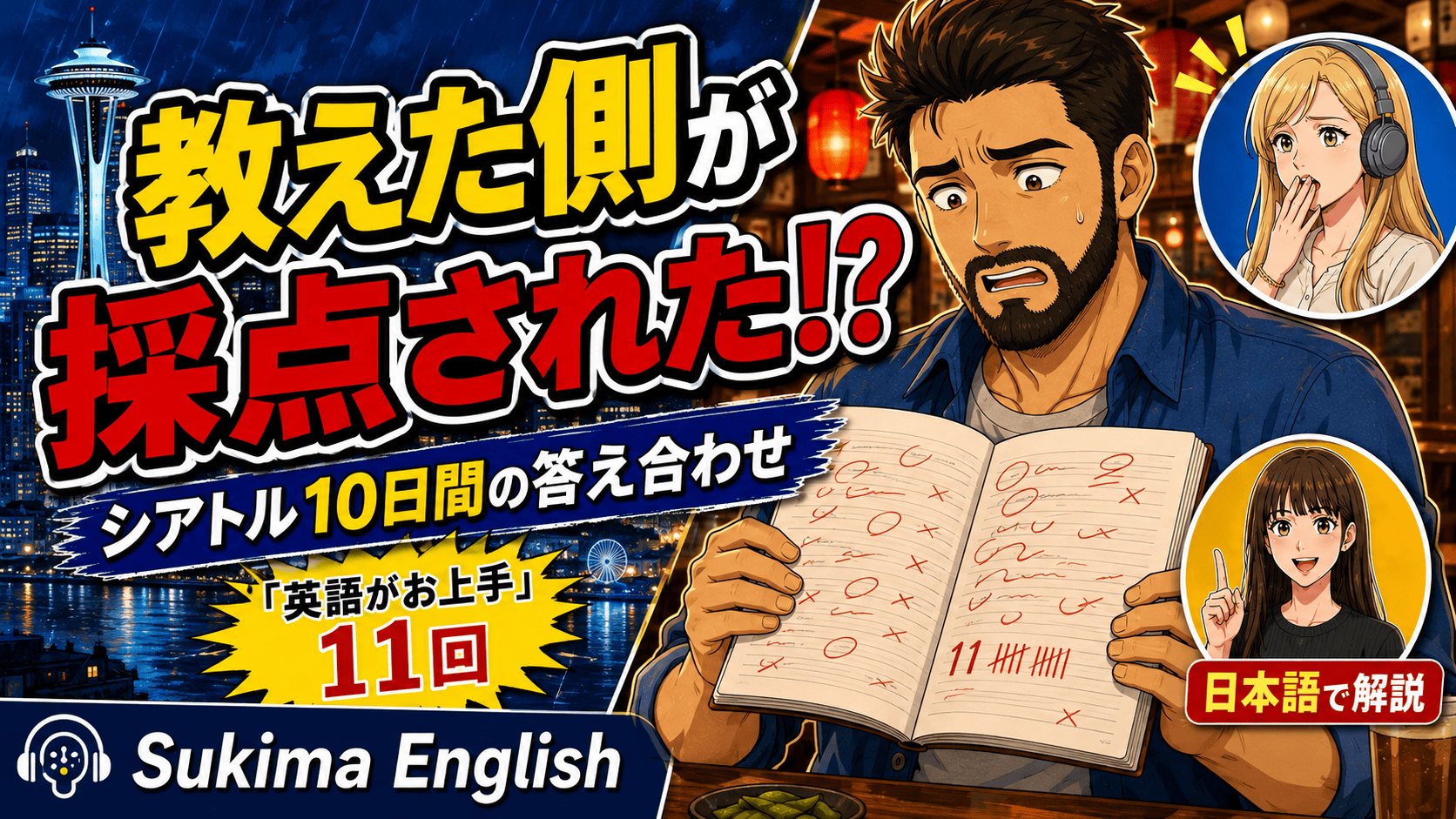
【日常英会話】アドバイスが通じなかった話|口を挟む・そっけなくあしらう・胸にこたえる #英語学習 #ネイティブ英語会話 #リスニング強化 #英語耳
ポッドキャスト「すきまイングリッシュ」のスクリプト。「【日常英会話】アドバイスが通じなかった話|口を挟む・そっけなくあしらう・胸にこたえる #英語学習 #ネイティブ英語会話 #リスニング強化 #英語耳」の会話全文です。

【日常の英語】日本語解説あり | 友達の家に招かれたときの英語12選|手土産・断り方・帰り際のあいさつ #英語学習 #英語フレーズ #英会話 #英語耳
ポッドキャスト「すきまイングリッシュ」のスクリプト。「【日常の英語】日本語解説あり | 友達の家に招かれたときの英語12選|手土産・断り方・帰り際のあいさつ #英語学習 #英語フレーズ #英会話 #英語耳」の会話全文です。

【日常の英語】日本語解説あり | 友達の家に招かれたときの英語12選|手土産・断り方・帰り際のあいさつ #英語学習 #英語フレーズ #英会話 #英語耳
ポッドキャスト「すきまイングリッシュ」のスクリプト。「【日常の英語】日本語解説あり | 友達の家に招かれたときの英語12選|手土産・断り方・帰り際のあいさつ #英語学習 #英語フレーズ #英会話 #英語耳」の会話全文です。
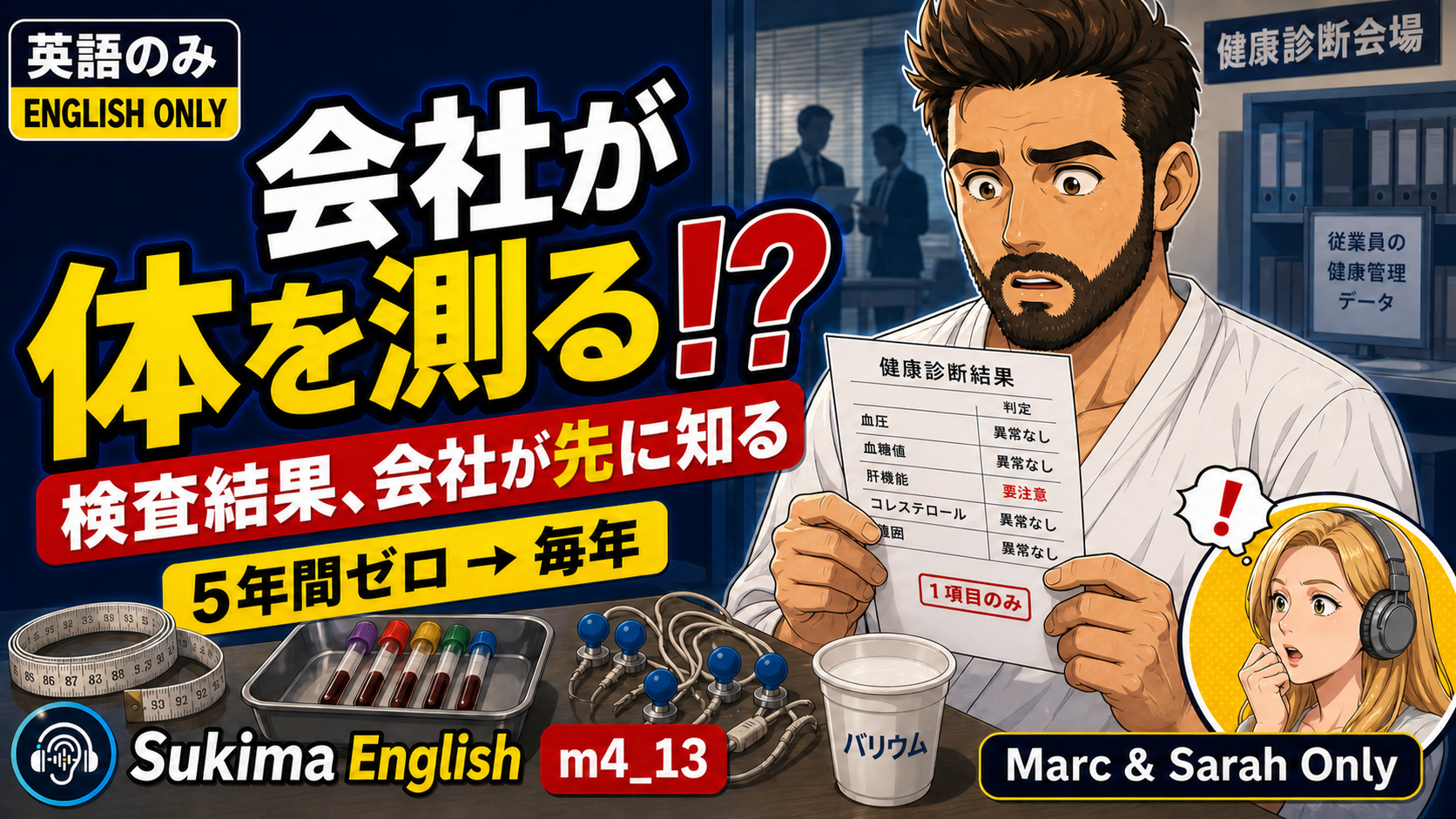
【日常英会話】英語のみ | 会社の健康診断、会社が自分の体の数値を持っている国——ネイティブが英語で語る健康診断 #英語学習 #ネイティブ英語会話 #リスニング強化
ポッドキャスト「すきまイングリッシュ」のスクリプト。「【日常英会話】英語のみ | 会社の健康診断、会社が自分の体の数値を持っている国——ネイティブが英語で語る健康診断 #英語学習 #ネイティブ英語会話 #リスニング強化」の会話全文です。
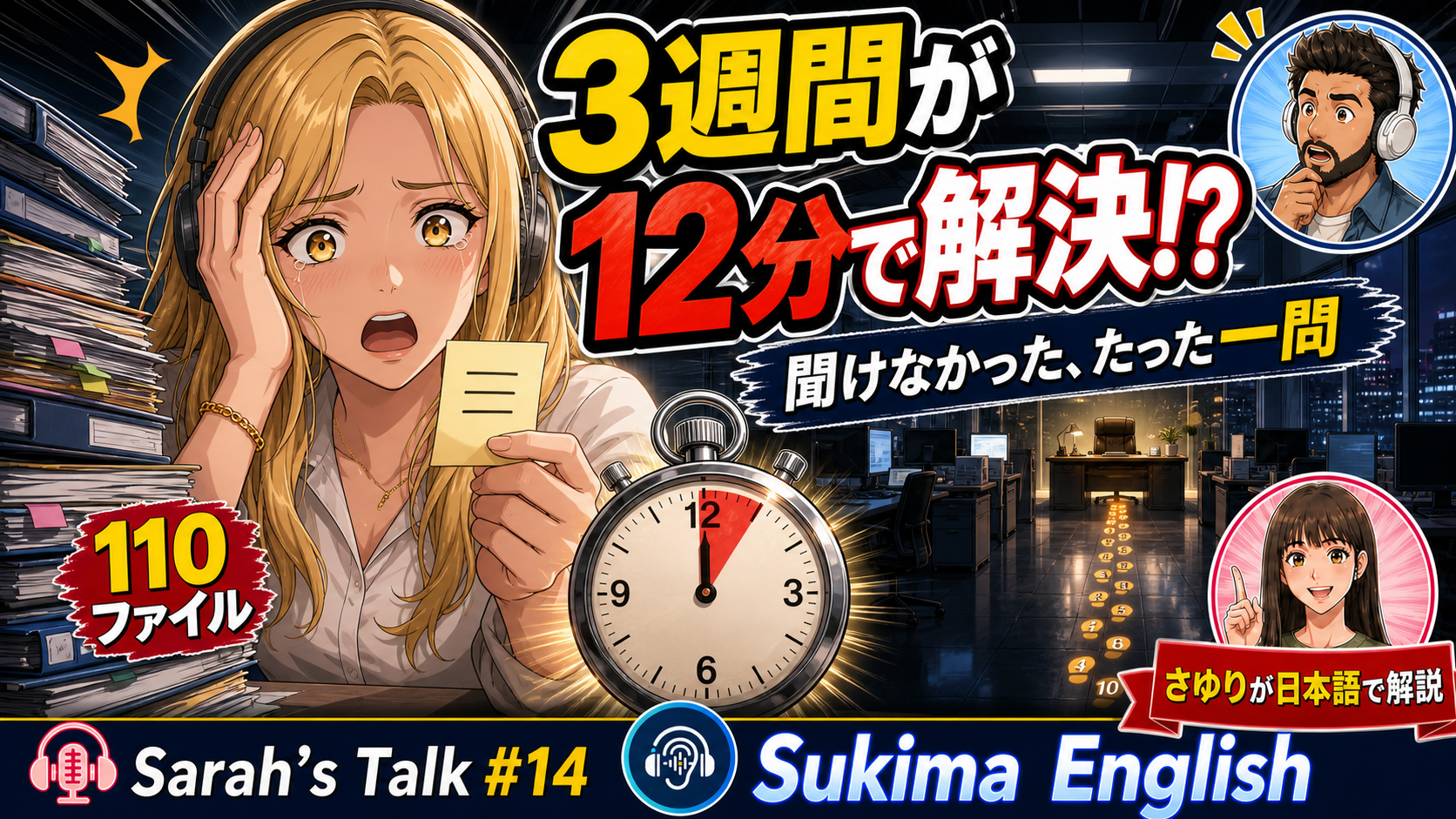
【日常英会話】日本語解説あり | 十歩の距離を渡るのに三週間、英語で「助けて」と言えない人のための7フレーズ #英語学習 #英語フレーズ #英会話 #英語耳
ポッドキャスト「すきまイングリッシュ」のスクリプト。「【日常英会話】日本語解説あり | 十歩の距離を渡るのに三週間、英語で「助けて」と言えない人のための7フレーズ #英語学習 #英語フレーズ #英会話 #英語耳」の会話全文です。

【日常英会話】五年でひとり|アメリカ人が日本で「本当の友達」ができるまでにかかった時間|社交辞令・誘う勇気・疎遠になること #英語学習 #ネイティブ英語会話 #リスニング強化 #英語耳
ポッドキャスト「すきまイングリッシュ」のスクリプト。「【日常英会話】五年でひとり|アメリカ人が日本で「本当の友達」ができるまでにかかった時間|社交辞令・誘う勇気・疎遠になること #英語学習 #ネイティブ英語会話 #リスニング強化 #英語耳」の会話全文です。