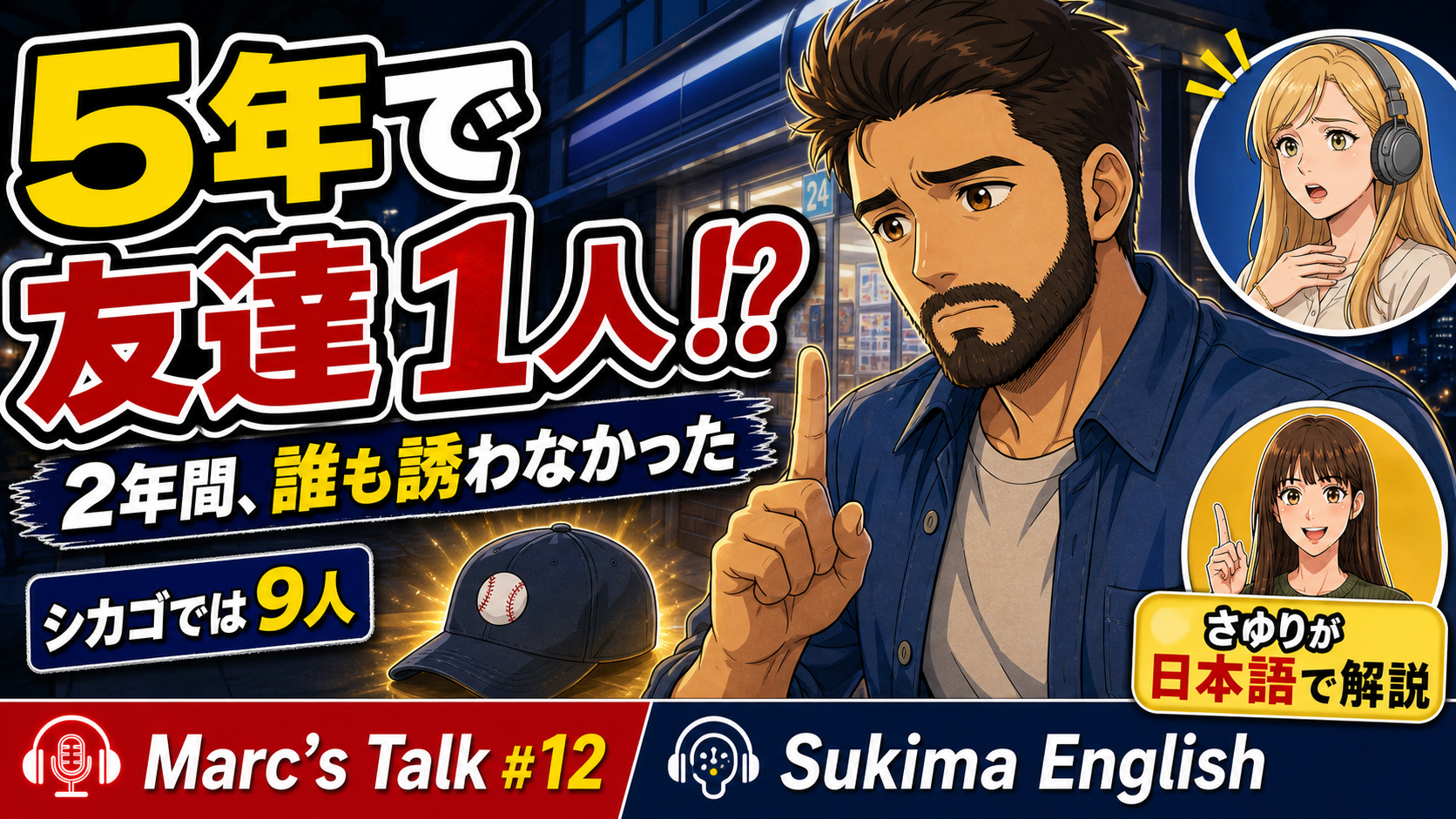
【日常英会話】五年でひとり|アメリカ人が日本で「本当の友達」ができるまでにかかった時間|社交辞令・誘う勇気・疎遠になること #英語学習 #ネイティブ英語会話 #リスニング強化 #英語耳
ポッドキャスト「すきまイングリッシュ」のスクリプト。「【日常英会話】五年でひとり|アメリカ人が日本で「本当の友達」ができるまでにかかった時間|社交辞令・誘う勇気・疎遠になること #英語学習 #ネイティブ英語会話 #リスニング強化 #英語耳」の会話全文です。

さゆり: こんにちは。Sukima English へようこそ。今日は、マークに数を数えてもらうところから始めます。
さゆり: 日本で暮らして五年。夜中の二時に電話できる友達が、今、何人いますか。
Marc: One person. That is the whole list. (日本語訳: 一人。リストはそれで全部。)
サラ: One? You have been here five years. (日本語訳: 一人?ここに5年いるんでしょ?)
Marc: Five years, and there is one name on the list. It took me four of those years to be sure of it. (日本語訳: 5年で、リストに載ってる名前は一人だけ。それを確信するのに、そのうち4年かかったよ。)
サラ: Marc, you are the most social person I know. You know the name of the man who sells you coffee. (日本語訳: マーク、あなたは私が知ってる中で一番社交的な人だよ。コーヒーを売ってくれる人の名前まで知ってるじゃない。)
Marc: I talk to everybody. That is not the same thing. I was social here for two years and I had nobody. (日本語訳: 誰とでも話すよ。でも、それとこれとは別なんだ。ここで2年間社交的にしてたけど、誰もいなかった。)
さゆり: マークは在日五年、サラは在日二年半です。今日は、大人になってから友達を作るという話をします。
サラ: Okay, give me the other number then. Chicago, at twenty-six. Same question. (日本語訳: 分かった、じゃあもう一つの数字を教えて。26歳の時のシカゴ。同じ質問だよ。)
Marc: Nine. I could have named nine people who would have picked up the phone. (日本語訳: 9人。電話に出てくれる人を9人は挙げられた。)
サラ: Nine to one. Marc, that is a loss. (日本語訳: 9人対1人。マーク、それは負けだよ。)
Marc: It looks like a loss. I have had five years to decide whether it really was, and I still do not have a clean answer. (日本語訳: 負けに見えるよね。本当に負けだったのか、5年かけて考えてきたけど、まだすっきりした答えは出てないんだ。)
さゆり: 今日は、きれいな結論には行きません。増えたものと、減ったものの両方を数えます。
サラ: So where do we start? (日本語訳: じゃあ、どこから始める?)
Marc: With the two years where nothing happened. That is the part nobody warns you about. (日本語訳: 何も起きなかった2年間からだよ。そこは誰も前もって教えてくれない部分なんだ。)
Marc: Year one, I did everything right. I went to every nomikai. I learned the names. I laughed in the right places. (日本語訳: 1年目、やるべきことは全部やった。飲み会には全部行ったし、名前も覚えたし、笑うべきところで笑った。)
サラ: That sounds like a person with friends. (日本語訳: 友達がいる人の話に聞こえるけど。)
Marc: It sounds like it. Here is the test I use now. Nobody ever texted me on a Saturday. (日本語訳: そう聞こえるよね。今使ってる判定基準があるんだ。土曜日に誰からも連絡が来なかった。)
サラ: Not once? (日本語訳: 一度も?)
Marc: Not once, for two years. Monday through Friday I was in a hundred conversations. Saturday I was a stranger in a city of fourteen million people. (日本語訳: 一度もね、2年間。月曜から金曜までは何百もの会話をしてたのに、土曜日になると、1400万人の街で、ただの見知らぬ人だった。)
さゆり: 今マークが言った "a stranger" は「知らない人」ですが、ここでは「その街に自分の居場所がない人」という感じです。
Marc: There is one I remember exactly. Year one, November, a Sunday afternoon. I realized I had not said a word out loud since Friday. (日本語訳: 一つ、はっきり覚えてるんだ。1年目、11月の日曜の午後。金曜日から一言も声に出してないことに気づいたんだ。)
サラ: What did you do? (日本語訳: それでどうしたの?)
Marc: I walked to the convenience store and bought something I did not need, so that somebody would say irasshaimase to me. (日本語訳: コンビニまで歩いて、いらないものを買ったんだ。誰かに「いらっしゃいませ」って言ってもらうためにね。)
サラ: Marc, that is bleak. (日本語訳: マーク、それは寂しすぎるよ。)
Marc: I am not being dramatic. That is what I actually did. (日本語訳: 大げさに言ってるんじゃないよ。本当にそうしたんだ。)
さゆり: 一人暮らしをしたことがある方は、少し分かるかもしれません。用がないのにコンビニに行く、あの感じです。
サラ: And to be clear, you are not single. You have a partner. (日本語訳: で、念のため言っておくと、あなたは独り身じゃないよね。パートナーがいる。)
Marc: I have a partner, and I am not going to pretend I was alone in a room. But the person you live with is not a group. Those are two different holes. (日本語訳: パートナーはいるし、部屋に一人きりだったなんてふりをするつもりはないよ。でも、一緒に住んでる人はグループじゃない。それぞれ別の穴なんだよ。)
サラ: So what was Chicago giving you that Tokyo was not? (日本語訳: じゃあ、シカゴにはあって東京にはなかったものって何だったの?)
Marc: At twenty-six in Chicago, somebody was always somewhere, and the message was just, we are here, come. Nobody plans that. (日本語訳: 26歳でシカゴにいた頃は、いつも誰かがどこかにいて、連絡はただ「ここにいるよ、おいで」ってだけ。誰も計画なんかしないんだ。)
サラ: The default plan. (日本語訳: いつもの予定、ってやつね。)
Marc: The default plan. And in Tokyo the default was nothing, and I decided that was Japan's fault. (日本語訳: いつもの予定だよ。でも東京では、いつもの予定なんてなかった。で、それを日本のせいにしてたんだ。)
さゆり: マークは当時、こう思っていました。日本人は人見知りだから。学生時代からの友達がいて、自分が入る隙間はない、と。
サラ: I have said that exact sentence out loud. To my mother. (日本語訳: まったく同じセリフ、声に出して言ったことある。母にね。)
Marc: Everybody says it. And it is not completely wrong. It is just not the reason. (日本語訳: みんな言うよ。で、完全に間違ってるわけでもない。ただ、それが理由じゃないんだ。)
サラ: So what is the reason? (日本語訳: じゃあ、本当の理由は何?)
Marc: I never invited anybody. In two years. Not one time. (日本語訳: 僕は一度も誰かを誘ったことがなかったんだ。2年間。一度も。)
サラ: Wait. Not one single time? (日本語訳: え。一回も?)
Marc: Not one. I was waiting to be included, and I called it being respectful of the culture. That is not what it was. (日本語訳: 一度も。誘われるのを待ってて、それを「文化を尊重してる」って呼んでた。でも、実際はそうじゃなかった。)
さゆり: 英語に "put yourself out there" という言い方があります。断られるかもしれないのに、自分から出ていく、という意味です。
サラ: That is such an uncomfortable phrase. (日本語訳: すごく居心地の悪いフレーズだね。)
Marc: It is supposed to be. The whole phrase is built around the risk. You are going somewhere you might not be wanted. (日本語訳: そういうものなんだよ。このフレーズは、リスクがあること自体が前提なんだ。歓迎されないかもしれない場所に出ていくってことだから。)
サラ: And you did not do it for two years. (日本語訳: で、2年間それをしなかったんだ。)
Marc: I did small talk for two years. That is what you do instead of asking. It is safe, and it goes nowhere. (日本語訳: 2年間、世間話ばかりしてた。誘う代わりにするのが世間話なんだ。安全だけど、どこにもつながらない。)
サラ: And you thought they were the ones keeping their distance. (日本語訳: それで、相手が距離を置いてると思ってたんだね。)
Marc: I thought the whole country was keeping me at arm's length. I was doing the same thing and calling it manners. (日本語訳: 国全体に距離を置かれてると思ってた。自分も同じことをしてたのに、それをマナーと呼んでたんだ。)
さゆり: "keep someone at arm's length" は、相手を一定の距離より内側に入れないこと。日本語の「一線を引く」に近い感覚です。
サラ: Okay. So who moved first? (日本語訳: なるほど。じゃあ、どっちが先に動いたの?)
Marc: Not me. Obviously not me. (日本語訳: 僕じゃないよ。もちろん僕じゃない。)
Marc: Year two, summer, a Tuesday. Kenji is standing next to my desk and he says, do you like baseball. (日本語訳: 2年目の夏、火曜日。ケンジが僕のデスクの横に立って、「野球好き?」って聞いてきたんだ。)
さゆり: ケンジさんはマークの同僚です。東京ヤクルトスワローズの熱心なファンで、これまでも何度か登場しています。
サラ: And you said yes immediately. (日本語訳: あなたはすぐに「はい」って言ったんでしょ。)
Marc: I almost said no. (日本語訳: 危うく断るところだった。)
サラ: You almost said no to baseball? You? (日本語訳: 野球を断りかけたの?あなたが?)
Marc: It was a Tuesday. I was tired. The game was that night. I had a whole sentence ready. Maybe next time. (日本語訳: 火曜日だったんだ。疲れてたし。試合はその夜だった。断るためのセリフも用意してたんだ。「また今度」って。)
さゆり: "Maybe next time" は「また今度」。やわらかい断り方です。
サラ: What stopped you? (日本語訳: 何が決め手になったの?)
Marc: Nothing noble. I had run out of reasons to say no to myself. I had complained for two years that nobody asked me anything, and here was somebody asking. (日本語訳: 大した理由じゃないよ。自分に対して断る理由が尽きちゃったんだ。2年間ずっと「誰も誘ってくれない」って文句を言ってたのに、目の前に誘ってくれる人がいたんだから。)
Marc: I went. And he had a spare cap in his bag. He had already brought it with him. (日本語訳: 行ったよ。そしたら彼、カバンに予備のキャップを入れてたんだ。最初から持ってきてたんだよ。)
サラ: Which means he decided before he asked. (日本語訳: ってことは、聞く前に決めてたってことね。)
Marc: Which means he decided before he asked. He had been carrying that cap around, waiting for a night that would work. (日本語訳: 聞く前に決めてたってこと。あのキャップをずっと持ち歩いて、都合のいい夜を待ってたんだ。)
さゆり: 誘う側にも勇気がいります。日本では特に、断られたらどうしようと思うと、なかなか声をかけられません。
サラ: How long do you think he carried it? (日本語訳: どれくらいの間、持って歩いてたと思う?)
Marc: I have never asked, and I do not want to know. If the answer is months, I have to think about how long I made him wait. (日本語訳: 聞いたことはないし、聞きたくもない。もし「数ヶ月」とかだったら、どれだけ待たせたか考えなきゃいけなくなるだろ。)
さゆり: 英語に "break the ice" という表現があります。氷を割る。その場の固さや、初対面の緊張をほぐすことです。
サラ: And he was the one who had to do it. Not you. (日本語訳: しかも、それをやらなきゃいけなかったのは彼の方。あなたじゃなくて。)
Marc: He did all of it. I was the one who almost said maybe next time. (日本語訳: 全部彼がやってくれた。僕なんて「また今度」って言いかけた側なのに。)
サラ: What happened after the game? (日本語訳: 試合の後、どうなったの?)
Marc: This is the real moment, and it is not the game. On the platform, waiting for the Chuo line, he said, next week, same. (日本語訳: ここが本当の決定的瞬間で、試合じゃないんだ。ホームで中央線を待ってる時に、彼が「来週も、同じで」って言ったんだ。)
サラ: That is not even a question. (日本語訳: それ、質問になってないじゃない。)
Marc: Not a question. Two words and a shrug. And that was the second invitation, and the second one is the one that counts. (日本語訳: 質問じゃない。2語と、肩をすくめただけ。それが2回目の誘いで、大事なのは2回目なんだ。)
さゆり: 一回目の誘いは、社交辞令かもしれません。二回目で、本気だと分かります。
Marc: I went seven times that season. And somewhere in the autumn my phone buzzed and I had been added to a group message with six people in it. (日本語訳: そのシーズン、7回行ったよ。秋も深まる頃、スマホがブルっと鳴って、6人いるグループメッセージに追加されてたんだ。)
サラ: So here is my question. Was the wall real? (日本語訳: それで、私の質問なんだけど。その壁って、本当だったの?)
Marc: The wall was real. It just was not where I thought it was. I thought it stood between strangers and friends. It stands between work and outside of work. (日本語訳: 壁は本当にあった。ただ、思ってた場所になかったんだ。知らない人と友達の間にあると思ってたけど、実際は仕事と仕事以外の間にあるんだよ。)
サラ: And nobody crosses that one alone. (日本語訳: そして、そこは誰も一人では越えられない、と。)
Marc: Somebody has to carry you across. Kenji did that in year two, and I did not notice for two more years, because the door did not look like an American door. (日本語訳: 誰かに連れて渡ってもらわないといけない。ケンジが2年目にそれをしてくれたのに、僕はさらに2年気づかなかった。ドアがアメリカのドアの形をしてなかったからね。)
さゆり: ここが大事なところです。開いていなかったのではなく、開いていたことに気づかなかった。
Marc: In Chicago, a door looks like this. We should get lunch sometime. Big smile, a lot of warmth, and then nothing ever happens. (日本語訳: シカゴだと、ドアってこういう形なんだ。「今度ランチでも行こうよ」。満面の笑みで、温かさもたっぷり。でも結局、何も起こらない。)
サラ: Nothing ever happens. (日本語訳: 結局何も起こらない。)
Marc: Nothing ever happens, and everybody knows it. It is a friendly noise. (日本語訳: 結局何も起こらないし、みんなそれを分かってる。ただの愛想のいい音なんだ。)
さゆり: 日本語の「社交辞令」ですね。辞書には「つきあいをうまく進めるための儀礼的なほめ言葉やあいさつ」とあります。今度ごはんに行きましょう、と言って行かない、あれです。
サラ: We have the exact same thing. Ours is just louder. (日本語訳: うちにもまったく同じのがあるよ。ただ、もっと声が大きいだけ。)
Marc: Kenji did not say we should get lunch sometime. He said, do you like baseball, on a Tuesday, with a cap already in his bag. (日本語訳: ケンジは「今度ランチでも」なんて言わなかった。火曜日に、カバンにもうキャップを入れた状態で、「野球好き?」って言ったんだ。)
サラ: Small door. (日本語訳: 小さなドア。)
Marc: Very small door. Actually open. (日本語訳: すごく小さなドア。でも、ちゃんと開いてる。)
さゆり: 英語に "take someone up on it" という表現があります。相手の誘いに、実際に乗る、という意味です。
Marc: If I had said maybe next time, I would still be counting zero. (日本語訳: もし「また今度」って言ってたら、僕は今もゼロのままだったと思う。)
サラ: Okay. Year two he opens the door. Why did it take until year four to be sure? (日本語訳: なるほど。2年目に彼がドアを開けた。なのに、確信するまで4年目までかかったのはなんで?)
Marc: Because for three years it only went one direction. (日本語訳: だって、3年間はずっと一方通行だったから。)
Marc: He explained this country to me, over and over. The alert sound that goes off on every phone in an earthquake, and where that sound came from. What the phrase about the customer being a god actually meant. (日本語訳: 彼はこの国のことを、何度も何度も説明してくれた。地震の時に全部の携帯から鳴るアラート音と、その音の由来。「お客様は神様」って言葉が、本当はどういう意味なのか。)
さゆり: ケンジさんは、物事の由来を教えてくれる人です。マークはずっと、教わる側でした。
Marc: He moved my furniture on a Sunday. He gave up a Sunday for me. (日本語訳: 彼は日曜日に僕の家具を運んでくれた。僕のために日曜を丸々使ってくれたんだ。)
サラ: And what did you give him? (日本語訳: で、あなたは彼に何をしてあげたの?)
Marc: Coffee beans and a handwritten note. Which was the correct thing to do, and it was also the only thing I ever did. (日本語訳: コーヒー豆と手書きのメッセージ。それは正しい対応だったけど、僕がしたのはそれだけだった。)
サラ: You are being hard on yourself. (日本語訳: 自分に厳しすぎるよ。)
Marc: I am being accurate. Here is the sentence I did not want to say out loud. For three years, I think I was using him as the person who explains Japan to me. (日本語訳: 正確に言ってるだけだよ。声に出して言いたくなかった一文があるんだ。3年間、僕は彼を、日本のことを説明してくれる人として使ってたんだと思う。)
サラ: Did you ever tell him that? (日本語訳: 彼にそれを言ったことある?)
Marc: I do not think he minded. I think he liked it. That does not make it a friendship yet. (日本語訳: 気にしてなかったと思うよ。むしろ楽しんでたんじゃないかな。でも、それでまだ友達ってことにはならない。)
さゆり: 英語に "owe someone one" という言い方があります。借りが一つある、という意味です。マークはずっと、借りる側でした。
サラ: So what flipped it? (日本語訳: それで、何がきっかけになったの?)
Marc: He asked me for something. This year. First time in five years. (日本語訳: 頼みごとをしてきたんだ。今年。5年目にして初めて。)
サラ: What did he ask for? (日本語訳: 何をお願いされたの?)
Marc: We are at the usual izakaya on a Thursday. And he talks about baseball for twenty minutes. The rotation, the bullpen, a rookie he does not trust yet. (日本語訳: 木曜日に、いつもの居酒屋にいたんだ。そしたら彼が20分くらい野球の話をして。ローテーションのこと、ブルペンのこと、まだ信用してないルーキーのこととか。)
サラ: Twenty minutes. (日本語訳: 20分も?)
Marc: Twenty minutes. And then he puts his glass down and says, Marc-san. I am going to Seattle for ten days. For work. I have never been to America. (日本語訳: 20分。それからグラスを置いて、「マークさん。仕事で10日間シアトルに行くんです。アメリカは初めてで」って言ったんだ。)
サラ: Oh, that is a big one. (日本語訳: へえ、それは大ごとだね。)
Marc: And then he says, can you tell me what is rude there. (日本語訳: で、「向こうでは何が失礼にあたるのか、教えてもらえますか」って。)
さゆり: 二十分の野球の話は、前置きです。日本では、頼みごとの前に、こうした時間を長く取ることがあります。すぐ本題に入らないのは、相手に断る余地を残すためでもあります。
サラ: That is the kindest description of being slow to the point that I have ever heard. (日本語訳: なかなか本題に入らないことを、こんなに優しく説明してるのは初めて聞いたよ。)
さゆり: 本当にそうなんです。ただ、その前置きの長さは、ためらいの長さでもあります。
Marc: Three years of him explaining my own life to me, and he needed twenty minutes of bullpen talk before he could ask me one question. (日本語訳: 3年間、僕自身の生活のことを説明してくれてた彼が、僕に質問を一つするのに、20分もブルペンの話が必要だったんだ。)
サラ: What did you tell him? (日本語訳: なんて答えたの?)
Marc: Three things. One. If you go quiet to think, an American will fill the silence. They are not interrupting you. Silence makes them nervous. (日本語訳: 3つ。1つ目。考えるために黙ると、アメリカ人はその沈黙を埋めてくる。邪魔してるわけじゃない。沈黙が落ち着かないんだ。)
Marc: Two. How are you is not a question. Say good, ask it back, keep walking. (日本語訳: 2つ目。「元気?」は質問じゃない。「元気」と答えて、聞き返して、そのまま歩き続ける。)
サラ: Painfully true. (日本語訳: 痛いほどよくわかる。)
Marc: Three. If somebody says we should get lunch sometime, that is not a plan. And if you actually want lunch, name a day. Say Thursday. That is the whole trick. (日本語訳: 3つ目。「今度ランチでも」って言われても、それは予定じゃない。本当にランチしたいなら、日にちを指定する。「木曜日」とかね。コツはそれだけ。)
さゆり: 曜日を言う。今日いちばん実用的なアドバイスかもしれません。
サラ: Did he write it down? (日本語訳: メモした?)
Marc: In a notebook. With a pen. He numbered them. (日本語訳: ノートに。ペンで。番号も振ってあったよ。)
サラ: Of course he did. (日本語訳: やっぱりね。)
Marc: And then he asked me one more thing, and this is the part I have not stopped thinking about. He said, when you came here, who told you these things. (日本語訳: それから、もう一つ聞かれたんだ。ここからが、ずっと頭から離れない部分なんだけど。「日本に来たとき、誰がこういうことを教えてくれたんですか」って。)
サラ: What did you say? (日本語訳: なんて答えたの?)
Marc: I said nobody. I figured it out. (日本語訳: 「誰も。自分で気づいたんだ」って答えた。)
サラ: And what did he say? (日本語訳: それで、彼は何て?)
Marc: He said, that is why it took four years. (日本語訳: 「だから4年かかったんですね」って。)
サラ: He did not. (日本語訳: うそでしょ。)
Marc: He said it into his beer. He was not being cruel. He was doing what he always does. He was explaining where something came from. (日本語訳: ビールに向かってぼそっと言ったんだ。意地悪じゃない。いつもやってることをしただけ。物事の由来を説明してたんだよ。)
さゆり: ここでケンジさんは、マーク自身の由来を説明したわけですね。
サラ: Okay. Now say the cost out loud. One friend in five years. What did that cost you? (日本語訳: なるほどね。じゃあ、その代償を声に出して言ってみて。5年で友達1人。その代償は?)
Marc: Three people in Chicago that I do not talk to anymore. (日本語訳: シカゴにいた友達3人。もう連絡取ってない。)
サラ: Who were they? (日本語訳: 誰?)
Marc: Not Ryan. Not Derek. Three other guys, and I am not saying their names, because they might hear this. (日本語訳: ライアンでもデレクでもない。ほかの3人。名前は言わないよ。これを聞いてるかもしれないから。)
サラ: So what happened? (日本語訳: それで、どうなったの?)
Marc: Nothing happened. Nobody did anything wrong. There was a time difference, and then there was less to talk about, and then there was a birthday I did not call on. (日本語訳: 何も起きなかった。誰も悪いことはしてない。時差があって、話すことが減って、そして誕生日に電話しなかったことがあった。)
さゆり: 英語で "drift apart" と言います。漂って、離れていく。日本語の「疎遠になる」がぴったりです。
サラ: There is no fight to point at. (日本語訳: これが原因って言えるケンカはないんだね。)
Marc: There is nothing to point at. That is what makes it worse. If we had fought, I could go and fix it. (日本語訳: 指させるものが何もないんだ。それが余計につらい。ケンカしてたなら、行って仲直りできるのに。)
サラ: So was it worth it? (日本語訳: それで、それだけの価値はあった?)
Marc: I am not going to tell you the trade was fair. I got one person here and I lost three there. The one is heavier. That does not make it three. (日本語訳: その交換が公平だったとは言わないよ。ここで1人得て、向こうで3人失った。その1人のほうが重い。でも、だからって3人分になるわけじゃない。)
サラ: That is not a happy answer. (日本語訳: それはハッピーな答えじゃないね。)
Marc: It is not a happy question. (日本語訳: ハッピーな質問じゃないからね。)
さゆり: ここは、無理にまとめないでおきます。
サラ: I am two and a half years in. So I am somewhere in your year three. (日本語訳: 私は2年半。つまり、あなたの3年目あたりにいるってことだね。)
Marc: What does your count look like? (日本語訳: 君は何人いる?)
サラ: One. And I brought her with me. (日本語訳: 1人。しかも、一緒に連れてきた子。)
Marc: You mean Mia. (日本語訳: ミアのこと?)
サラ: Mia. You built yours over four years. Mine took a plane ticket. Those are not the same achievement. (日本語訳: ミアよ。マークは4年かけて築いたでしょ。私のは飛行機のチケット1枚。同じ成果じゃないよ。)
Marc: What about Keiko-san? (日本語訳: ケイコさんは?)
サラ: I have been to her wedding. I have never once had dinner with her just because we both wanted to. Only ever because there was a reason. (日本語訳: 結婚式には行ったよ。でも、二人ともそうしたいからって理由だけで夕食に行ったことは、一度もない。いつも何か理由がある時だけ。)
さゆり: 理由があるから会う。会いたいから会う。この二つの間には、線が一本あります。
サラ: So what do I actually do? (日本語訳: じゃあ、私は実際どうすればいいの?)
Marc: Two things, and the second one is the hard one. Say yes to the next thing, even if it is a Tuesday and you are tired. (日本語訳: 2つある。2つ目のほうが難しい。次に誘われたら、火曜日で疲れてても「いいよ」って言うこと。)
サラ: And the second? (日本語訳: で、2つ目は?)
Marc: Ask somebody for something. (日本語訳: 誰かに何かをお願いすること。)
サラ: Ask somebody for something. (日本語訳: 誰かに何かをお願いすること。)
Marc: That one took me five years. It is the only way they find out that you need them. (日本語訳: 僕はそれに5年かかった。そうしないと、相手は君が必要としてることに気づけないんだ。)
サラ: There is a thing at work. I have been figuring it out alone for three weeks, because asking felt like admitting something. (日本語訳: 職場で一つあるんだ。人に頼むと何かを認めちゃう気がして、3週間ずっと一人で何とかしようとしてた。)
Marc: Ask Keiko-san. (日本語訳: ケイコさんに頼んでみなよ。)
サラ: I am going to ask Keiko-san. (日本語訳: ケイコさんに頼んでみる。)
さゆり: それでは、今日の六つの表現を確認しましょう。
Marc: Alright. "Put yourself out there." — Like when you go to the thing where you know nobody, and you go anyway. (日本語訳: よし。「自分から飛び込む」。知り合いが一人もいない集まりにも、それでも行く、みたいなことだね。)
サラ: "I put myself out there and asked the whole team to lunch. Four of them said yes." (日本語訳: 「思い切ってチーム全員をランチに誘った。4人が行くと言ってくれた。」)
さゆり: "put yourself out there" は、断られるかもしれない場所へ自分から出ていくこと。勇気を出して輪に入る、という感覚です。
Marc: "Break the ice." — It is the first thing you do when the room is stiff and nobody has started. (日本語訳: 「場を和ませる」。空気が固くて、誰も話し始めていない時に、最初にすること。)
サラ: "He broke the ice by asking about my terrible bag. I was never so grateful for a rude question." (日本語訳: 「彼が私のひどいカバンのことを聞いて、場を和ませてくれた。失礼な質問に、あんなに感謝したことはない。」)
さゆり: "break the ice" は、場の固さをほぐす最初のひと言。日本語の「打ち解けるきっかけを作る」に近い表現です。
Marc: "Take someone up on it." — Somebody offers something, and you actually say yes. Most people never do. (日本語訳: 「誘いに乗る」。誰かが何かを申し出てくれた時に、本当に「うん」と言うこと。ほとんどの人はそうしない。)
サラ: "She said come over anytime, so I took her up on it. I brought cake. It went fine." (日本語訳: 「いつでも来てって言われたから、本当に行ってみた。ケーキを持っていった。うまくいった。」)
さゆり: "take someone up on it" は、相手の申し出に実際に乗ること。今度ぜひ、で終わらせないという意味です。
Marc: "Keep someone at arm's length." — Close enough to be polite. Never any closer than that. (日本語訳: 「人と距離を置く」。礼儀正しくいられる距離までで、それ以上は近づかないこと。)
サラ: "I kept everyone at arm's length my first year. I told myself it was because I was busy." (日本語訳: 「最初の1年は、みんなと距離を置いていた。忙しいからだと自分に言い聞かせていた。」)
さゆり: "keep someone at arm's length" は、腕の長さの分だけ距離を置くこと。日本語の「一線を引く」がぴったりです。
Marc: "Owe someone one." — Somebody did something for you, so now there is a small debt, and that is a good thing. (日本語訳: 「借りができる」。誰かが何かをしてくれて、小さな借りができること。それはいいことなんだ。)
サラ: "You covered for me on Friday. I owe you one." (日本語訳: 「金曜は私の穴を埋めてくれたよね。借りができた。」)
さゆり: "owe someone one" は「一つ借りができた」。次に返すことが前提になっている表現です。
Marc: "Drift apart." — Nobody fights. You just slowly stop hearing from each other. (日本語訳: 「疎遠になる」。ケンカするわけじゃない。ただ、少しずつ連絡がなくなっていくこと。)
サラ: "We were inseparable in college. We drifted apart after I moved. I still think about it." (日本語訳: 「大学時代はいつも一緒だった。私が引っ越してから疎遠になった。今でも時々考える。」)
さゆり: "drift apart" は、少しずつ離れて関係が薄くなること。日本語の「疎遠になる」。辞書には「音信や訪問が久しく途絶えていること」とあります。
さゆり: 六つ、聞き取れましたか。
さゆり: 今日の話をまとめます。マークは五年で、友達が一人増えました。そして、シカゴで三人減りました。
さゆり: 増えた一人は、二年目の火曜日に、カバンに帽子を入れて声をかけてくれた人でした。
サラ: And the part I keep coming back to is that he had already decided before he asked. (日本語訳: そして、私がずっと考えてしまうのは、聞く前にすでに決めていたってこと。)
Marc: Somebody decides before they ask. That is what an invitation actually is. (日本語訳: 誰かが、聞く前に決めてる。それが、誘いってものの正体なんだよ。)
サラ: What about Koshien? You have been planning that for years. (日本語訳: 甲子園はどうなの? 何年も計画してたんでしょ。)
Marc: Still not booked. He says when he gets back from Seattle, this time we book it. (日本語訳: まだ予約してないんだ。シアトルから帰ったら、今度こそ予約するって言ってる。)
サラ: This time. (日本語訳: 今度こそ。)
Marc: That is the third time he has said this time. I stopped counting and started waiting. (日本語訳: 「今度こそ」って言うのは3回目だよ。もう数えるのはやめて、待つことにしたんだ。)
さゆり: 五年でひとり。少ないと思いますか。マークはこう言っています。
Marc: One friend in five years. I am not going to call that a happy ending. I am going to call it a real one. (日本語訳: 5年間で友達が1人。ハッピーエンドとは言わない。リアルな結末と呼ぶよ。)
サラ: And I have one person to ask one thing. I will report back. (日本語訳: それに私には、一つ頼みごとをする相手が一人いる。また報告するね。)
さゆり: 誰かに何かを頼むところから始まる関係があります。今週、ひとつだけ頼んでみてください。
Marc: See you next time. (日本語訳: じゃあ、また次回。)
サラ: Name a day. That is the whole trick. See you. (日本語訳: 日にちを指定して。コツはそれだけ。じゃあね。)

関連記事
【日常英会話】「感謝していることを一つずつ」アメリカの感謝祭とネイティブの本音 #英語学習 #ネイティブ英語会話 #リスニング強化 #英語耳
ポッドキャスト「すきまイングリッシュ」のスクリプト。「【日常英会話】「感謝していることを一つずつ」アメリカの感謝祭とネイティブの本音 #英語学習 #ネイティブ英語会話 #リスニング強化 #英語耳」の会話全文です。

【日常英会話】英語のみ | ニューヨークと東京のハロウィンを英語で語ると? #英語学習 #ネイティブ英語会話 #リスニング強化
ポッドキャスト「すきまイングリッシュ」のスクリプト。「【日常英会話】英語のみ | ニューヨークと東京のハロウィンを英語で語ると? #英語学習 #ネイティブ英語会話 #リスニング強化」の会話全文です。

【日常の英語】元気のない同僚にかける英語フレーズ12選|声かけから励ましまで #英語学習 #英語フレーズ #英会話 #英語耳
ポッドキャスト「すきまイングリッシュ」のスクリプト。「【日常の英語】元気のない同僚にかける英語フレーズ12選|声かけから励ましまで #英語学習 #英語フレーズ #英会話 #英語耳」の会話全文です。
【日常英会話】住所と道案内を英語で話すと?日本の住所には通りの名前がない #英語学習 #ネイティブ英語会話 #リスニング強化 #英語耳
ポッドキャスト「すきまイングリッシュ」のスクリプト。「【日常英会話】住所と道案内を英語で話すと?日本の住所には通りの名前がない #英語学習 #ネイティブ英語会話 #リスニング強化 #英語耳」の会話全文です。

【日常の英語】日本語解説あり | 席を譲ろうとして、断られた |申し出る英語と、断られたときの英語6つ #英語学習 #英語フレーズ #英会話 #英語耳
ポッドキャスト「すきまイングリッシュ」のスクリプト。「【日常の英語】日本語解説あり | 席を譲ろうとして、断られた |申し出る英語と、断られたときの英語6つ #英語学習 #英語フレーズ #英会話 #英語耳」の会話全文です。

【日常英会話】カウンターには、向かいの椅子がない、「お一人ですか」と聞かれる国 #英語学習 #ネイティブ英語会話 #リスニング強化 #英語耳
ポッドキャスト「すきまイングリッシュ」のスクリプト。「【日常英会話】カウンターには、向かいの椅子がない、「お一人ですか」と聞かれる国 #英語学習 #ネイティブ英語会話 #リスニング強化 #英語耳」の会話全文です。