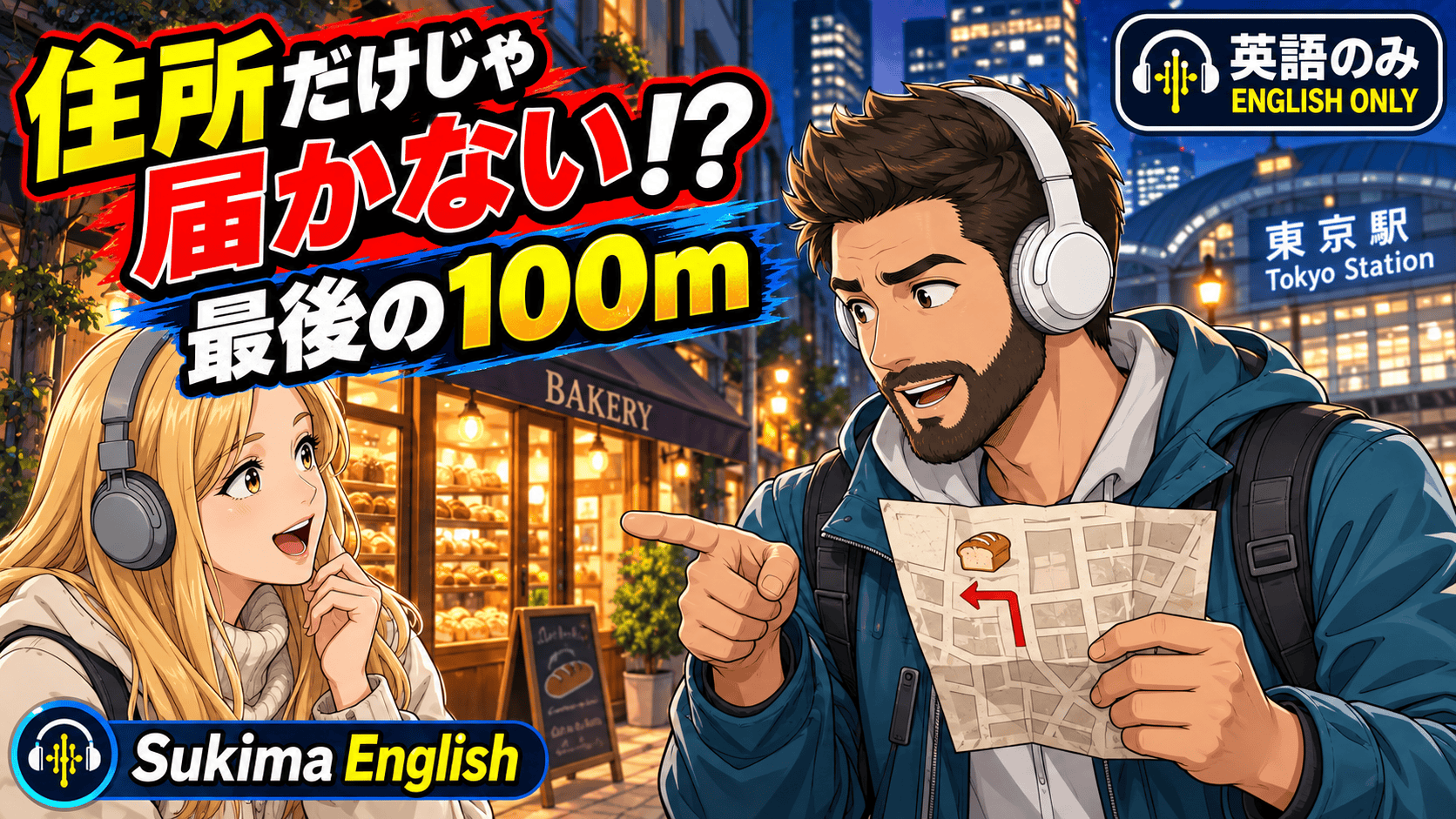
【日常英会話】住所と道案内を英語で話すと?日本の住所には通りの名前がない #英語学習 #ネイティブ英語会話 #リスニング強化 #英語耳
ポッドキャスト「すきまイングリッシュ」のスクリプト。「【日常英会話】住所と道案内を英語で話すと?日本の住所には通りの名前がない #英語学習 #ネイティブ英語会話 #リスニング強化 #英語耳」の会話全文です。

Marc: Last night I walked six minutes to the station to meet a coworker of mine. She was coming to my place for dinner. (日本語訳: 昨日の夜、同僚を迎えに駅まで6分歩いたんだ。うちに夕飯を食べに来ることになってて。)
サラ: Six minutes each way? Did she not have your address? (日本語訳: 片道6分? 住所を知らなかったの?)
Marc: She had my address, a map on her phone, and she has lived in Tokyo her whole life. She did not need me at all. (日本語訳: 住所も知ってたし、スマホに地図もあったし、生まれてからずっと東京に住んでる人なんだ。僕なんてまったく必要なかった。)
サラ: Then why did you go and get her? (日本語訳: じゃあ、なんで迎えに行ったの?)
Marc: She asked me the same thing. And I did not have a good answer. (日本語訳: 彼女にも同じことを聞かれたよ。で、うまく答えられなかった。)
サラ: Honestly, that is a fair question. (日本語訳: 正直、それはもっともな質問だね。)
Marc: It is. I think the answer goes back to my first year here, when a guest of mine got lost for twenty-five minutes. (日本語訳: だよね。たぶん理由は、日本に来て1年目にさかのぼるんだ。うちに来たお客さんが25分も迷ったことがあってね。)
サラ: Twenty-five minutes, trying to find your apartment? (日本語訳: あなたのアパートを探して25分?)
Marc: Twenty-five minutes. And it was completely my fault, because I gave him directions the way we do in Chicago. (日本語訳: 25分。しかも完全に僕のせいなんだ。シカゴのやり方で道を教えちゃったから。)
サラ: Okay. I want the whole story, starting from how you found the apartment yourself. (日本語訳: よし。全部聞かせて。あなたが自分でアパートを見つけたところからね。)
Marc: Deal. But it starts with my address, so bear with me. (日本語訳: いいよ。でも住所の話から始まるから、ちょっと付き合って。)
サラ: I have a few address stories of my own, so be ready for those too. (日本語訳: 私にも住所の話がいくつかあるから、そっちも覚悟しておいてね。)
Marc: My first week here, the real estate agent gave me my new address on a piece of paper. A neighborhood name, and then three numbers with dashes between them. (日本語訳: こっちに来て最初の週に、不動産屋さんが新しい住所を紙に書いて渡してくれたんだ。町の名前と、そのあとにハイフンでつながった数字が3つ。)
サラ: No street name? (日本語訳: 通りの名前はなし?)
Marc: No street. And that is the part I could not accept. In Chicago, every address starts with a street. (日本語訳: 通りの名前はなし。そこがどうしても受け入れられなかった。シカゴでは、住所はどれも通りの名前から始まるから。)
サラ: So what did you do with the three numbers? (日本語訳: で、その3つの数字をどうしたの?)
Marc: I got off the train and started looking for a street sign. I walked for about fifteen minutes, and I never found one. (日本語訳: 電車を降りて、通りの標識を探し始めた。15分くらい歩いたけど、一つも見つからなかった。)
サラ: Because most of the small streets here do not have names. (日本語訳: こっちの細い道は、ほとんど名前がないからね。)
Marc: Right, but I did not know that yet. I thought I was on the wrong street. I was actually on a street with no name at all. (日本語訳: そうなんだけど、そのときはまだ知らなかったんだ。違う通りにいるんだと思ってた。実際は、そもそも名前のない道にいたんだけどね。)
サラ: How does it work in Chicago, then? Give me the short version. (日本語訳: じゃあ、シカゴではどういう仕組みなの? 手短に教えて。)
Marc: The whole city counts out from one corner downtown, State Street and Madison Street. About eight hundred numbers is one mile. (日本語訳: 街全体が、ダウンタウンにある一つの交差点、ステート通りとマディソン通りの角から数えていくんだ。番地がだいたい800進むと1マイル。)
サラ: So the number tells you how far you are from that corner? (日本語訳: じゃあ、番地を見れば、その角からどれくらい離れてるかが分かるってこと?)
Marc: Exactly. If I say twenty-four hundred north, you know it is three miles north of downtown. You can work out where a place is before you leave home. (日本語訳: そのとおり。「北に2400番」って言えば、ダウンタウンから北に3マイルだって分かる。家を出る前に、場所の見当がつくんだよ。)
サラ: That is kind of beautiful, honestly. (日本語訳: 正直、それってちょっと美しいね。)
Marc: It is. Chicago people even give directions that way. Someone will say, it is around twenty-four hundred west on Division. (日本語訳: でしょ。シカゴの人は、道案内までそのやり方でするんだ。「ディビジョン通りの西2400番あたりだよ」って。)
サラ: New York is similar, at least in most of Manhattan. You tell a cab driver two streets, like Fifty-third and Second, and that is the whole conversation. (日本語訳: ニューヨークも似てるよ。少なくともマンハッタンのほとんどはね。タクシーの運転手に通りを2つ、たとえば「53丁目と2番街」って言えば、会話はそれで終わり。)
Marc: Did your neighborhood work like that? (日本語訳: 君が住んでたあたりもそうだった?)
サラ: No. I lived on the Lower East Side, and down there the streets have names instead of numbers, like Orchard and Ludlow. But every single one of them has a name. (日本語訳: ううん。私はローワー・イースト・サイドに住んでたんだけど、あのあたりは通りに番号じゃなくて名前が付いてるの。オーチャード通りとか、ラドロー通りとか。でも、名前がない通りは一本もない。)
Marc: That is my point. In both cities, the street is the first thing you look for. (日本語訳: そこなんだよ。どっちの街でも、まず探すのは通りなんだ。)
サラ: So what do the three numbers here actually mean? (日本語訳: じゃあ、こっちの3つの数字は、実際には何を表してるの?)
Marc: It took me a month to learn it. The first number is a section of the neighborhood. The second is the block. The third is your building's place around that block. (日本語訳: 覚えるのに1か月かかったよ。最初の数字は、町の中の区画。2つ目はブロック。3つ目は、そのブロックの周りで建物がどこにあるか。)
サラ: Around the block? Not along the street? (日本語訳: ブロックの周り? 通り沿いじゃなくて?)
Marc: Around the block. The numbers start at one corner and go around it clockwise. Your number comes from where your front door is on that loop. (日本語訳: ブロックの周り。番号はブロックの角の一つから始まって、時計回りに一周していく。自分の番号は、その一周のどこに玄関があるかで決まるんだ。)
サラ: So two houses next to each other can have numbers that skip. (日本語訳: じゃあ、隣どうしの家でも、番号が飛ぶことがあるんだ。)
Marc: They skip all the time. My building was number seven, and the building next to it was number ten. (日本語訳: しょっちゅう飛ぶよ。僕の建物は7番で、隣の建物は10番だった。)
サラ: And the building across the street? (日本語訳: じゃあ、通りの向かいの建物は?)
Marc: That was the part that really got me. The building across the street was on a completely different block, with a completely different number. (日本語訳: そこが一番やられたところだよ。向かいの建物はまったく別のブロックで、番号もまったく違ってた。)
サラ: Because the street is the edge between two blocks. (日本語訳: 通りが、二つのブロックの境目になってるからだね。)
Marc: Yes. In Chicago, the house across the street from twenty-four hundred is twenty-four oh one. Here, across the street can be the other side of the system. (日本語訳: そう。シカゴなら、2400番の向かいは2401番。こっちだと、通りの向かいは仕組みのまったく反対側だったりする。)
サラ: So how did you finally find your building that first week? (日本語訳: それで、最初の週はどうやって自分の建物を見つけたの?)
Marc: I gave up on the paper. I went back to the station and showed the address to the man at the ticket window. (日本語訳: 紙はあきらめた。駅に戻って、切符売り場の男の人に住所を見せたんだ。)
サラ: And he explained the system to you? (日本語訳: で、その人が仕組みを説明してくれたの?)
Marc: No. He drew me a little map on the back of a train schedule. The station, a bakery, a left turn, and a box with a star in it. (日本語訳: ううん。時刻表の裏に、小さな地図を描いてくれた。駅、パン屋、左に曲がる、それから星印の入った四角。)
サラ: A map with no numbers on it at all. (日本語訳: 数字が一つも入ってない地図だね。)
Marc: Not one number. And I found the building in six minutes. (日本語訳: 数字は一つもなし。それで、6分で建物が見つかったんだ。)
サラ: Now tell me about the guest who got lost. (日本語訳: じゃあ、迷子になったお客さんの話をして。)
Marc: That was a few months later, in the fall of my first year. A guy from my office was coming over to borrow some books. (日本語訳: それは何か月かあとの、1年目の秋。会社の同僚が、本を借りにうちに来ることになったんだ。)
サラ: And you gave him Chicago directions. (日本語訳: で、シカゴ式の道案内をしちゃったんだね。)
Marc: I gave him the address and nothing else. I knew better by then, but old habits die hard. I said, just put it in your phone and you will be fine. (日本語訳: 住所だけ渡して、ほかは何も教えなかった。そのころにはもう分かってたはずなのに、長年の癖はなかなか抜けないんだよね。「スマホに入れれば大丈夫だよ」って言っちゃった。)
サラ: And the phone got him to the right block, I assume. (日本語訳: で、スマホはちゃんとそのブロックまでは連れてきてくれたんでしょ。)
Marc: It got him to the right block. Then he walked around that block for twenty-five minutes, because the pin was on the wrong side of it. (日本語訳: ブロックまではね。そこから彼は、そのブロックの周りを25分も歩き回ったんだ。ピンがブロックの反対側に立ってたから。)
サラ: Oh no. Did he call you? (日本語訳: うわあ。電話はかかってきたの?)
Marc: He finally called me from a convenience store a stone's throw from my building. And the first thing he did was apologize to me. (日本語訳: 最後に、うちの建物から目と鼻の先のコンビニから電話してきた。しかも、第一声で僕に謝ったんだよ。)
サラ: He apologized? You were the one who sent him out with no directions. (日本語訳: 謝った? 道案内もなしに送り出したのは、あなたのほうでしょ。)
Marc: I know. I ran down to the store to get him, and on the way back he said something I still remember. (日本語訳: そうなんだよ。走ってコンビニまで迎えに行ったんだけど、その帰り道に彼が言ったことを、今でも覚えてるんだ。)
サラ: What did he say? (日本語訳: なんて言ったの?)
Marc: He said, next time, just tell me which store to turn at. Here, nobody gives directions with numbers. They give you things you can see. (日本語訳: 「次からは、どの店で曲がるかだけ教えて。こっちでは、誰も数字で道案内なんかしないよ。目に見えるものを教えてくれるんだ」って。)
サラ: Like the bakery on your map. (日本語訳: あなたの地図に描いてあったパン屋みたいにね。)
Marc: Exactly like that. Now I tell people, go out the east exit, turn left at the bakery, walk past the dentist, and it is the white building behind the parking lot. (日本語訳: まさにそれ。今はこう教えてるよ。「東口を出て、パン屋を左に曲がって、歯医者を過ぎたら、駐車場の奥の白い建物」って。)
サラ: I know that kind of direction very well. It took me about a year to trust it. (日本語訳: そういう道案内、すごくよく知ってる。信用できるようになるまで1年くらいかかったけどね。)
Marc: Why a year? (日本語訳: なんで1年も?)
サラ: Because in New York, I would say walk two blocks east. Here, I did not even know which way east was. I got turned around every single time I came out of a big station. (日本語訳: ニューヨークなら「東に2ブロック歩いて」って言うでしょ。こっちでは、どっちが東かも分からなかったの。大きな駅から出るたびに、毎回方向が分からなくなってた。)
Marc: Some of those stations have more than twenty exits. That does not help anyone. (日本語訳: 出口が20以上ある駅もあるからね。あれは誰にとっても助けにならないよ。)
サラ: My first month here, a friend from work invited me to her place. She sent me a list of shops to follow, and I followed them in the wrong direction. (日本語訳: こっちに来て最初の月に、職場の友達が家に招いてくれたの。道順になるお店のリストを送ってくれたんだけど、私はそれを逆方向にたどっちゃって。)
Marc: Because you came out of the wrong exit. (日本語訳: 違う出口から出ちゃったんだね。)
サラ: The wrong exit. So every shop on her list was on the other side of the station. I went around in circles for half an hour before I called her. (日本語訳: 違う出口。だから、リストのお店が全部、駅の反対側にあったの。電話するまで30分もぐるぐる回ってた。)
Marc: And she came to get you. (日本語訳: で、彼女が迎えに来てくれた。)
サラ: She came out in her slippers, which I found very kind and also very embarrassing. (日本語訳: スリッパのまま出てきてくれたの。すごく優しいと思ったし、すごく恥ずかしかった。)
Marc: Did you learn to read the signs on the poles? (日本語訳: 電柱の表示は読めるようになった?)
サラ: Which signs? (日本語訳: どの表示?)
Marc: On a lot of utility poles, there is a small plate with the name of the neighborhood and the block number. Once I noticed them, I could at least get my bearings. (日本語訳: 電柱の多くに、町の名前と番地が書かれた小さな板が付いてるんだ。それに気づいてからは、少なくとも自分がどこにいるかの見当はつくようになった。)
サラ: I have seen those plates. I can read the numbers, but the neighborhood names are in kanji, so they were not much help to me at first. (日本語訳: その板なら見たことある。数字は読めるけど、町の名前が漢字だから、最初はあまり役に立たなかったな。)
Marc: That is fair. The numbers are the easy part. (日本語訳: それはそうだね。数字は簡単なほうだから。)
サラ: Here is my favorite direction problem, though. It started this spring, when a shop on my corner closed. (日本語訳: でも、私の一番のお気に入りの道案内問題はこれ。この春、うちの角のお店が閉まったところから始まったの。)
Marc: Go ahead. (日本語訳: どうぞ。)
サラ: For two years, my directions home always ended the same way. Turn left at the vegetable shop on the corner. (日本語訳: 2年間、私の家までの道案内は、いつも同じ締めくくりだった。「角の八百屋を左に曲がって」。)
Marc: Tanaka-san's shop, right? (日本語訳: 田中さんのお店だよね?)
サラ: Yes. The shop is gone, but the shutter is still down on that corner, and it is still the easiest thing to see on that street. (日本語訳: そう。お店はなくなったけど、その角にはシャッターが下りたまま残ってて、今でもあの通りで一番目につくの。)
Marc: So what do you tell people now? (日本語訳: じゃあ、今はなんて教えてるの?)
サラ: I tell them to turn left at the closed shutter. And it works. People find it every time. (日本語訳: 「閉まったシャッターのところを左に」って。それで通じるの。みんな毎回ちゃんと見つけてくれる。)
Marc: That might be the most Tokyo thing I have ever heard. (日本語訳: それ、今まで聞いた中で一番東京っぽい話かもしれない。)
サラ: I keep giving directions to a shop that is not there anymore, and nobody has gotten lost yet. (日本語訳: もうないお店を目印に道案内し続けてるのに、まだ誰も迷ってないんだよ。)
Marc: That is how the whole system works, really. It is not really about the address. It is about what people in the neighborhood can see. (日本語訳: 結局、仕組み全体がそうなってるんだよね。大事なのは住所じゃなくて、近所の人に何が見えるかなんだ。)
サラ: Which means you have to know the neighborhood first. (日本語訳: ってことは、まずその町を知ってないといけないんだね。)
Marc: Right. You cannot follow landmark directions until you know the lay of the land a little. (日本語訳: そう。ちょっとでも土地勘がないと、目印で道案内されてもたどれないんだ。)
サラ: Back to last night, then. Why did you walk to the station for somebody who did not need you? (日本語訳: じゃあ、昨日の夜の話に戻ろう。迎えなんか必要なかった人のために、なんで駅まで歩いたの?)
Marc: After that first guest, I made a rule for myself. Anybody who comes to my place for the first time, I meet them at the station. (日本語訳: 最初のお客さんのことがあってから、自分にルールを作ったんだ。初めてうちに来る人は、誰でも駅まで迎えに行く。)
サラ: That is a five-year rule. (日本語訳: 5年続いてるルールだね。)
Marc: Five years, and I have never broken it. My apartment is only six minutes from that station, and I still go every time. (日本語訳: 5年間、一度も破ってない。うちは駅からたった6分なのに、今でも毎回行ってる。)
サラ: Did your coworker last night say anything when she saw you there? (日本語訳: 昨日の同僚は、駅であなたを見て何か言ってた?)
Marc: She laughed a little. She held up her phone and said, I had the map, Marc-san. (日本語訳: ちょっと笑ってた。スマホを持ち上げて「地図ならありましたよ、マークさん」って。)
サラ: And what did you say to that? (日本語訳: それで、あなたはなんて返したの?)
Marc: I said, I know, I just wanted to walk. Which was not really true. (日本語訳: 「知ってる。ちょっと歩きたかっただけ」って。本当はそうじゃなかったんだけど。)
サラ: So what is true, then? (日本語訳: じゃあ、本当のところは?)
Marc: I think I am still trying to make up for that first guest. In my head, a guest getting lost on the way to my place is my failure, not theirs. (日本語訳: たぶん、今でも最初のお客さんへの埋め合わせをしようとしてるんだと思う。僕の頭の中では、うちに来る途中でお客さんが迷ったら、それは相手じゃなくて僕の失敗なんだ。)
サラ: That is a very Tokyo way to think about it. (日本語訳: それ、すごく東京っぽい考え方だね。)
Marc: I know. In Chicago, if you meet a grown adult at the train station, you are telling them you think they cannot read a map. (日本語訳: 分かってる。シカゴでいい大人を駅まで迎えに行ったら、「地図も読めないと思ってます」って言ってるようなものだから。)
サラ: In New York, too. If I offered to meet a friend at the subway, she would ask me what was wrong. (日本語訳: ニューヨークもそう。友達に地下鉄の駅まで迎えに行こうかって言ったら、「何かあったの?」って聞かれると思う。)
Marc: Here, it just means you are being a good host. At least, that is how it feels to me now. (日本語訳: こっちだと、いいホストだってことになる。少なくとも、今の僕にはそう感じられるんだ。)
サラ: Can I push back on the nice version of this, though? (日本語訳: でも、そのいい話に、ちょっと反論してもいい?)
Marc: Please do. (日本語訳: ぜひ。)
サラ: This whole system only works if there is somebody to help you. The shop list, the map on the back of a schedule, the person who comes out in her slippers. (日本語訳: この仕組みって、助けてくれる人がいて初めて成り立つんだよね。お店のリストも、時刻表の裏の地図も、スリッパのまま出てきてくれる人も。)
Marc: You mean it depends on other people. (日本語訳: ほかの人頼みってことだね。)
サラ: Completely. If you are new, and you do not know anybody, and you cannot read the neighborhood names, the address alone does not get you there. (日本語訳: 完全にね。来たばかりで、知り合いもいなくて、町の名前も読めなかったら、住所だけじゃたどり着けないの。)
Marc: That is true. My first week, I did not have anybody to call. I had a man at a ticket window. (日本語訳: そのとおりだね。最初の週、僕には電話できる相手がいなかった。いたのは切符売り場の男の人だけ。)
サラ: And you were lucky he had a pen. (日本語訳: その人がペンを持っててラッキーだったね。)
Marc: I was lucky. And my guest that first year was lucky he had my number. (日本語訳: 運がよかった。1年目のお客さんも、僕の番号を知っててラッキーだった。)
サラ: In Chicago, you would not need that luck. The number does the whole job. (日本語訳: シカゴなら、そんな運はいらないよね。番地が全部やってくれるんだから。)
Marc: That is the real difference, I think. In Chicago, the address gets you to the door. Here, the address gets you to the block, and a person gets you to the door. (日本語訳: それが本当の違いだと思う。シカゴでは、住所が玄関まで連れていってくれる。こっちでは、住所が連れていってくれるのはブロックまでで、玄関までは人が連れていくんだ。)
サラ: And for five years, you have been the person. (日本語訳: で、この5年間、その人をやってきたのがあなたなんだね。)
Marc: For five years, I have been the person. Even for people who could have done it themselves. (日本語訳: 5年間、僕がその人をやってきた。自分でたどり着ける人に対してもね。)
サラ: Here is the other possibility, though. Maybe you just like the walk. (日本語訳: でも、別の可能性もあるよ。単に歩くのが好きなだけかもしれない。)
Marc: What do you mean? (日本語訳: どういうこと?)
サラ: Six minutes from the station to your door. That is six minutes of talking before anybody sits down to dinner. (日本語訳: 駅から玄関まで6分。夕飯の席に着く前に、6分おしゃべりできるってことでしょ。)
Marc: Honestly, that is part of it. Last night, she told me about her commute and her cat, and by the time we got to my door, the evening had already started. (日本語訳: 正直、それもある。昨日の夜は、彼女が通勤の話と飼ってる猫の話をしてくれて、うちの玄関に着くころには、もう夜のひとときが始まってたんだ。)
サラ: So it is not all about fixing your first year. (日本語訳: じゃあ、1年目の埋め合わせだけってわけじゃないんだ。)
Marc: No. It is probably half guilt and half enjoying the walk. I cannot tell you which half is bigger. (日本語訳: うん。たぶん半分は罪悪感で、半分は歩くのが楽しいから。どっちの半分が大きいかは分からないな。)
サラ: So after five years, could you find a new address here with no phone and no map? (日本語訳: じゃあ、5年たった今なら、スマホも地図もなしで、こっちの知らない住所を見つけられる?)
Marc: Probably not. I would ask around, and somebody would point me to a shop, and I would go from there. (日本語訳: たぶん無理。周りの人に聞いて、誰かにどこかのお店を教えてもらって、そこから探すと思う。)
サラ: That is exactly what you did the first week. (日本語訳: それ、最初の週にやったこととまったく同じじゃない。)
Marc: It is. The difference is that now I do not panic when there is no street sign. (日本語訳: そうなんだよ。違うのは、今は通りの標識がなくても慌てないってことだね。)
サラ: Could you still use the Chicago system if you went back? (日本語訳: シカゴに戻ったら、まだシカゴの仕組みは使えそう?)
Marc: I think so. But I noticed something when I gave a tourist directions last month. (日本語訳: 使えると思う。でも、先月観光客に道案内したときに、あることに気づいたんだ。)
サラ: What happened? (日本語訳: 何があったの?)
Marc: He was American. He asked me for the name of the street, and I said, I do not know, turn left at the pharmacy. (日本語訳: アメリカ人だったんだけど、通りの名前を聞かれて、僕は「分からない。薬局を左に曲がって」って答えたんだ。)
サラ: You gave him Tokyo directions. (日本語訳: 東京式の道案内をしちゃったんだ。)
Marc: I gave him Tokyo directions. He looked at me like I was speaking another language. (日本語訳: 東京式の道案内をしちゃった。その人、僕が外国語でもしゃべってるみたいな顔で見てたよ。)
サラ: Do you know your own address off the top of your head? (日本語訳: 自分の住所って、すぐに言える?)
Marc: The three numbers, yes. The name of my street, no, because it does not have one. (日本語訳: 3つの数字は言える。通りの名前は言えない。そもそも名前がないからね。)
サラ: Mine is the same. I know my numbers. Past that, all I know is the shutter. (日本語訳: 私も同じ。数字は分かる。それ以外で分かるのは、あのシャッターだけ。)
Marc: So neither of us really thinks in addresses anymore. (日本語訳: つまり、僕たちはもう二人とも、住所で考えてないってことだね。)
サラ: No. We think in bakeries and dentists and closed shops. (日本語訳: そうだね。パン屋とか歯医者とか、閉まったお店で考えてる。)
Marc: And for the next guest, I am still going to walk to the station. (日本語訳: それでも、次のお客さんのときも、僕は駅まで歩いて迎えに行くよ。)
サラ: I know. I would not expect anything else from you. (日本語訳: 知ってる。あなたならそうすると思ってた。)
Marc: One question for you before we go. When you give someone directions to your home, do you use the address or the things they will see on the way? (日本語訳: 最後に一つ質問。家までの道を誰かに教えるとき、住所を使う? それとも、途中で目に入るものを使う?)
サラ: Tell us the one landmark you always give. Ours are a bakery and a closed shutter. (日本語訳: いつも使う目印を一つ教えてね。私たちの目印は、パン屋と閉まったシャッター。)
Marc: And if your city has a grid, tell us how you give directions there. I still miss it a little. (日本語訳: それと、碁盤の目みたいな街に住んでる人は、そこでどう道案内してるか教えてほしいな。僕はまだ少し恋しいんだ。)
サラ: Just a little, though. You have not asked for a street name in years. (日本語訳: 少しだけ、でしょ。もう何年も、通りの名前なんて聞いてないじゃない。)
Marc: Fair enough. I stopped looking for them a long time ago. (日本語訳: それはそうだね。通りの名前を探すのは、とっくにやめちゃったよ。)

関連記事

【日常の英語】日本語解説あり | 席を譲ろうとして、断られた |申し出る英語と、断られたときの英語6つ #英語学習 #英語フレーズ #英会話 #英語耳
ポッドキャスト「すきまイングリッシュ」のスクリプト。「【日常の英語】日本語解説あり | 席を譲ろうとして、断られた |申し出る英語と、断られたときの英語6つ #英語学習 #英語フレーズ #英会話 #英語耳」の会話全文です。

【日常英会話】カウンターには、向かいの椅子がない、「お一人ですか」と聞かれる国 #英語学習 #ネイティブ英語会話 #リスニング強化 #英語耳
ポッドキャスト「すきまイングリッシュ」のスクリプト。「【日常英会話】カウンターには、向かいの椅子がない、「お一人ですか」と聞かれる国 #英語学習 #ネイティブ英語会話 #リスニング強化 #英語耳」の会話全文です。
【日常英会話】英語のみ | 台風と計画運休を英語で語ると?台風が来る前の二日間 #英語学習 #ネイティブ英語会話 #リスニング強化
ポッドキャスト「すきまイングリッシュ」のスクリプト。会話全文です。
【日常の英語】日本語解説あり | 財布をなくしたときの英語フレーズ12選|駅・警察・カード会社への電話まで #英語学習 #英語フレーズ #英会話 #英語耳
ポッドキャスト「すきまイングリッシュ」のスクリプト。「【日常の英語】日本語解説あり | 財布をなくしたときの英語フレーズ12選|駅・警察・カード会社への電話まで #英語学習 #英語フレーズ #英会話 #英語耳」の会話全文です。
【日常英会話】英語のみ | なぜ日本人は10分前に着くのか?時間に正確な国の、終わらない会議 #英語学習 #ネイティブ英語会話 #リスニング強化
ポッドキャスト「すきまイングリッシュ」のスクリプト。「【日常英会話】英語のみ | なぜ日本人は10分前に着くのか?時間に正確な国の、終わらない会議 #英語学習 #ネイティブ英語会話 #リスニング強化」の会話全文です。

【日常英会話】日本語解説あり | 二年半、顔を知らない隣人|六時十分の目覚ましが鳴りやまなかった朝 #英語学習 #英語フレーズ #英会話 #英語耳
ポッドキャスト「すきまイングリッシュ」のスクリプト。「【日常英会話】日本語解説あり | 二年半、顔を知らない隣人|六時十分の目覚ましが鳴りやまなかった朝 #英語学習 #英語フレーズ #英会話 #英語耳」の会話全文です。