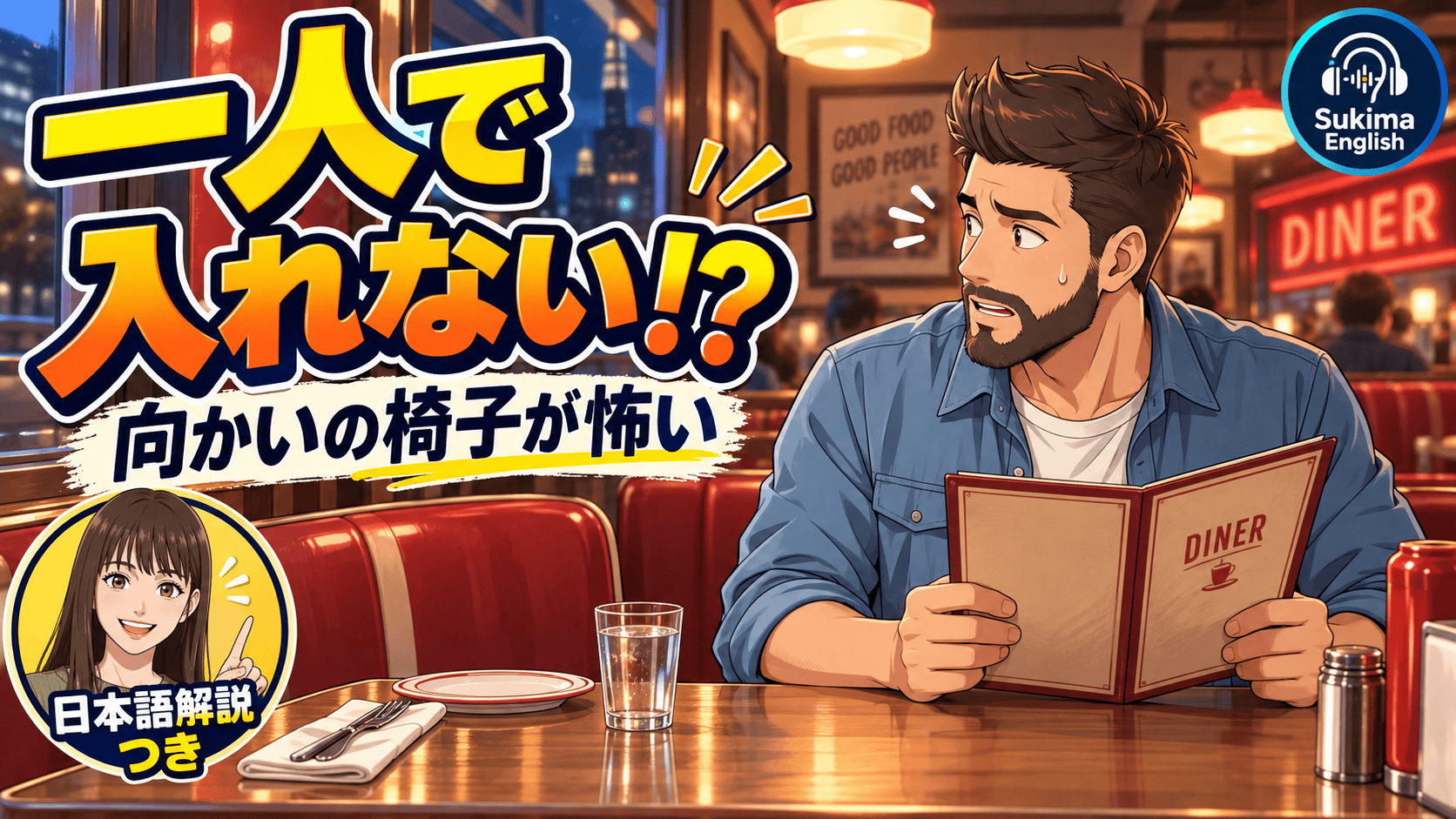
【日常英会話】カウンターには、向かいの椅子がない、「お一人ですか」と聞かれる国 #英語学習 #ネイティブ英語会話 #リスニング強化 #英語耳
ポッドキャスト「すきまイングリッシュ」のスクリプト。「【日常英会話】カウンターには、向かいの椅子がない、「お一人ですか」と聞かれる国 #英語学習 #ネイティブ英語会話 #リスニング強化 #英語耳」の会話全文です。

さゆり: マークが、東京で身につけたことの話を聞きます。ただ本人は、それを身についたと呼びたくないそうです。
さゆり: 今日のテーマは、一人で外食をすること。一人でラーメン、一人で定食、カウンターの端の席。マークが最初に戸惑ったのは、そこでした。
さゆり: でも、マークが育ったシカゴでは、少し事情が違ったようです。
サラ: Marc, last week you told me you eat lunch alone four days out of five. (日本語訳: マーク、先週、週に5日のうち4日は一人でランチを食べてるって言ってたじゃない。)
Marc: Four out of five. Some weeks five. (日本語訳: 週に4日。週によっては5日だよ。)
サラ: And you said it the way you would tell me it had rained. (日本語訳: で、まるで雨が降ったって私に報告するみたいに言ってたよね。)
Marc: Because here that is what it is. That is the whole thing I want to get at today. (日本語訳: だって、それが普通だから。今日話したいのは、そういうことなんだ。)
サラ: Then give me the shape of it first. (日本語訳: じゃあ、まず全体像を教えて。)
Marc: Three pieces. What eating alone meant in Chicago. What Tokyo actually does about it, which is not the nice version. And a diner I could not walk into last spring. (日本語訳: 3つのパートだよ。シカゴで一人で食事をするってどういうことだったか。東京では実際どうなのか、それはきれいな話じゃない方ね。それと、この春、私入れなかったダイナーの話。)
サラ: You could not walk into a diner. (日本語訳: ダイナーに入れなかったの?)
Marc: I stood outside it twice and went home. (日本語訳: 2回、外に立って家に帰ったよ。)
サラ: The diner is the one I want. Start at the front. (日本語訳: そのダイナーの話が聞きたい。最初から話して。)
Marc: In Chicago, if you walk into a restaurant by yourself, somebody asks you a question at the door. And it is not how many. (日本語訳: シカゴでは、一人でレストランに入ると、ドアで誰かが質問してくるんだ。人数を数えるんじゃなくてね。)
サラ: What is the question? (日本語訳: なんていう質問なの?)
Marc: Just you? (日本語訳: 「お一人ですか?」)
サラ: Oh. That is a completely different question. (日本語訳: あー。それは全く違う質問だね。)
Marc: Two words, friendly, and nobody means anything by it. But it is a question about you, not about the table. (日本語訳: 2つの単語で、フレンドリーだし、誰も何も気にしてない。でも、それはテーブルについてじゃなくて、あなたについての質問なんだ。)
サラ: And here? (日本語訳: で、ここでは?)
Marc: Somebody holds up one finger, you nod, and that is the entire conversation. (日本語訳: 誰かが指を1本立てて、それに頷けば、それで会話はおしまい。)
サラ: In New York you can eat alone anywhere and nobody blinks. But I would not call it neutral. You need equipment. (日本語訳: ニューヨークだと、どこでも一人で食べられるし、誰も何も言わないよ。でも、それはニュートラルとは言えないね。装備が必要なんだ。)
Marc: Equipment. (日本語訳: 装備?)
サラ: A book. A phone. Headphones. Something on the table that accounts for why you are by yourself. (日本語訳: 本とか、スマホとか、ヘッドホンとか。テーブルの上で、一人でいる理由を説明できるもの。)
Marc: I carried the same equipment in Chicago. I was twenty-two when I noticed I was carrying it. (日本語訳: シカゴでも同じ装備を持っていってたよ。それに気づいたのは22歳の時だったな。)
サラ: What happened at twenty-two? (日本語訳: 22歳で何があったの?)
Marc: A diner four blocks from my apartment. A movie at seven, nobody to go with, so I ate first, on a Tuesday. (日本語訳: アパートから4ブロックのダイナーだよ。7時の映画で、一緒に行く人もいなかったから、火曜日に先に食事を済ませたんだ。)
サラ: And then? (日本語訳: それで?)
Marc: They put me in a four-person booth, because that is what was open. The waitress set down two glasses of water, then reached back and took one away. (日本語訳: 4人掛けのブースに案内された。空いてたのがそこしかなかったからね。ウェイトレスが水を2つ置いて、それから手を伸ばして1つ持っていったんだ。)
サラ: She took the water. (日本語訳: 水を引いたんだ。)
Marc: She was not being unkind. She was clearing a place setting that nobody was going to use, and it took her half a second. (日本語訳: 意地悪してたわけじゃないんだ。誰も使わない席の準備を片付けてただけで、ほんの一瞬のことだよ。)
サラ: But you were still looking at it. (日本語訳: でも、あなたはまだそれを見てたんでしょ?)
Marc: I looked at it for the rest of the meal. I ate in eleven minutes. I did not want dessert. I wanted to be a man who was leaving. (日本語訳: 食事の間ずっと見てたよ。11分で食べ終えた。デザートはいらなかった。帰り支度をする男になりたかったんだ。)
さゆり: 今のマークの I wanted to be a man who was leaving. は、もう席を立つところの人間に見えたかった、という言い方です。恥ずかしいと言わずに、恥ずかしさを説明しています。
Marc: Now my second week in Tokyo. I walked past a ramen place in Shinjuku six times before I went in. (日本語訳: 今度は東京に来て2週目。新宿でラーメン屋の前を6回通り過ぎてから入ったよ。)
サラ: Six times. (日本語訳: 6回も?)
Marc: Six. And what got me through the door was seeing that nobody in there was at a table. (日本語訳: 6回。そして、中に入れたきっかけは、誰もテーブルについてないのを見たことなんだ。)
サラ: Because there were no tables. (日本語訳: テーブルがなかったから?)
Marc: No tables. Eight seats, a counter, a wall, and a ticket machine I stood in front of for a long time pretending to read it. (日本語訳: テーブルはなかった。カウンター8席、壁、それに食券機。しばらくそれを読んでるふりをして立ってたよ。)
サラ: And when you sat down? (日本語訳: で、座った時は?)
Marc: Eight seats, eight people, and not one of them was with anybody. Everybody keeping to themselves, facing the wall, including me. (日本語訳: 8席、8人。でも、誰かと一緒の人はいなかった。みんな壁に向かって、自分だけの世界に入ってた。僕も含めてね。)
サラ: Did anybody say anything to you? (日本語訳: 誰かあなたに話しかけた?)
Marc: The machine asked me what I wanted. I handed a ticket to a man who did not look up from what he was doing. (日本語訳: 機械が何が欲しいか聞いてきた。やってることから顔を上げない男にチケットを渡したよ。)
サラ: I would love to tell you that felt like freedom. (日本語訳: それが自由だと感じたって、言えたらいいんだけど。)
Marc: Not the first time. The first time I thought I had walked in somewhere I was not supposed to be. It took months to work out that nothing was happening to me at all. (日本語訳: 最初の一回はそうじゃなかった。場違いなところに入ってしまったと思ったんだ。何も起こってないって腑に落ちるまで数ヶ月かかったよ。)
サラ: Nothing was happening to you. (日本語訳: 何もあなたには起こってなかった。)
Marc: In Chicago I stuck out like a sore thumb. Here I was one of eight people doing the same thing. (日本語訳: シカゴでは、僕はすごく浮いていたんだ。ここでは、同じことをしている人が8人もいた。)
さゆり: stick out like a sore thumb は、周りから浮いて自分だけが目立ってしまう状態です。マークはそれを、シカゴ側の感覚として使いました。
さゆり: それから、日本語の「おひとりさま」にちょうど当たる英語の一語はありません。だから英語では a table for one のように、人ではなく席の数で言います。
Marc: Now the second piece, and here I have to be careful, because there is a nice version and it is not true. (日本語訳: 次に、2つ目のポイントなんだけど、ここは慎重にならなきゃいけない。なぜなら、良いバージョンと、そうじゃないバージョンがあるからだ。)
サラ: Start with the nice version. (日本語訳: 良いバージョンから始めて。)
Marc: That Tokyo is kind to people on their own. Counters, ticket machines, single portions, a blind so you cannot see anybody. (日本語訳: 東京は一人でいる人に優しい、というものだ。カウンター席、券売機、一人前のポーション、そして誰とも顔を合わせなくて済むようにブラインドがある。)
サラ: A blind? (日本語訳: ブラインド?)
Marc: At one chain there is a partition on both sides, a blind in front of you, and you write your order on paper. I went from the door to the street without saying one word. (日本語訳: あるチェーン店では、両側に仕切りがあって、正面にブラインドがあって、紙に注文を書くんだ。僕は一言も話さずに、ドアから通りに出た。)
サラ: Not one word. (日本語訳: 一言も?)
Marc: And I stood outside afterwards thinking, somebody thought about me. (日本語訳: その後、外に立って、誰かが僕のことを考えてくれたんだと思った。)
サラ: But that is the nice version. (日本語訳: でも、それが良いバージョンなんだね。)
Marc: Nobody thought about me. That room was built to seat as many people as possible and get them back out the door fast. (日本語訳: 誰も僕のことを考えてなんていなかった。あの部屋は、できるだけ多くの人を座らせて、すぐにドアから送り出すために作られたんだ。)
サラ: So the comfort is a side effect. (日本語訳: じゃあ、快適さは副産物だったんだ。)
Marc: The comfort is a side effect of moving people through a room. I will take it. I am not going to tell you a city was being tender with me. (日本語訳: 快適さは、人を部屋から移動させることの副産物なんだ。それでもいいけどね。都市が僕に優しくしてくれたなんて言うつもりはないよ。)
サラ: It is still easier than New York, which does care and is worse at it. We have counters, but there is a bartender, and you end up in a conversation you did not choose. (日本語訳: それでもニューヨークよりは楽だよ。ニューヨークは気にかけてくれるけど、そのやり方が下手なんだ。カウンターはあるんだけど、バーテンダーがいて、選んでない会話に巻き込まれちゃう。)
Marc: Whereas here you can sit at a counter for forty minutes and exchange nine words, all of them about food. (日本語訳: それに比べてここは、40分カウンターに座って9単語くらいしか交わさなくて、その全部が食べ物に関するものなんだ。)
サラ: And nobody reads that as sad. (日本語訳: そして誰もそれを悲しいことだとは思わない。)
Marc: Nobody reads it as anything. That is the part I still find remarkable. (日本語訳: 誰もそれを何とも思わない。それがまだ驚くべきことだと感じている点だ。)
サラ: What else is on the list. (日本語訳: 他にリストには何があるの?)
Marc: A standing soba place near my station with no chairs, where you can grab a bite in four minutes. And the one that took longest, the lunch place where you share a table. (日本語訳: 駅の近くにある、椅子がない立ち食いそば屋で、4分でさっと食べられる。そして一番時間がかかったのが、相席するランチの店だ。)
さゆり: 今のマークの grab a bite は、軽く何か食べることです。食事の予定を軽く持ちかけるときにもよく出てきます。
サラ: You share a table with a stranger. (日本語訳: 知らない人とテーブルをシェアするんだ。)
Marc: Both of you eating, neither of you speaking, and it is completely fine. The first time, I thought I was in trouble. (日本語訳: 二人とも食事をしていて、どちらも話さず、それで完全に大丈夫なんだ。初めての時は、まずいことになったかと思ったよ。)
サラ: In trouble for what? (日本語訳: 何で捕まるんだよ?)
Marc: No idea. I just knew that in Chicago, if a stranger sits down across from you, something is about to happen. (日本語訳: 全然。シカゴでは、見知らぬ人が目の前に座ってきたら、何か起こるって分かってたんだ。)
サラ: Something is always about to happen. (日本語訳: 何かはいつだって起こるもんだよ。)
Marc: Here nothing was. He ate, he said one thing to the owner on his way out, and he was gone in nine minutes. (日本語訳: ここでは何もなかった。彼は食べて、出ていくときに店主に一言だけ言って、9分でいなくなった。)
サラ: And you stayed. (日本語訳: それで、あなたは居残った。)
Marc: I stayed, and I ate slowly on purpose for the first time since I got to this country. I was in no rush and nobody needed me to be. (日本語訳: 居残ったよ。この国に来てから初めて、わざとゆっくり食事をしたんだ。急ぐ必要もなかったし、誰も急かす人もいなかった。)
さゆり: in no rush は、急いでいない、という言い方です。I am not in a hurry より少し軽く、会話でよく使われます。
Marc: So. Last spring I was in Chicago for two weeks, at my parents' place, the trip around my brother's birthday. (日本語訳: それでね。去年の春、2週間シカゴにいたんだ。兄の誕生日を祝う旅行で、実家にいたときの話。)
サラ: This is the trip where your body kept bowing at people. (日本語訳: 体が勝手に人に頭を下げまくってたって旅行のこと?)
Marc: That is the one. This is a different thing from the same two weeks, and I have not told anybody. (日本語訳: そうだよ。でも、それは同じ2週間の出来事とは別の話で、まだ誰にも話してないんだ。)
サラ: Go ahead. (日本語訳: どうぞ。)
Marc: Thursday afternoon. Everybody was out. There is a diner four blocks from the house, one I have eaten at a hundred times. (日本語訳: 木曜の午後。みんな外出してた。家から4ブロックのところにダイナーがあって、そこには100回は行ったことがある。)
サラ: The same one as at twenty-two? (日本語訳: 22の時と同じ店?)
Marc: A different one. Better, honestly. I walked over, got to the door, and stopped and read the menu in the window. (日本語訳: 違う店。正直、あっちの方が美味い。そこまで歩いて、ドアに着いて、立ち止まって、窓のメニューを読んだんだ。)
サラ: You know that menu. (日本語訳: そのメニュー、知ってるくせにね。)
Marc: I read it anyway. Then I walked around the block, came back, and read it again. (日本語訳: それでも読んだんだ。それから1ブロック歩いて、戻ってきて、もう一度読んだ。)
サラ: Marc. Really. (日本語訳: マーク。マジで?)
Marc: And then I went to the grocery store on the corner, bought a sandwich, and ate it standing up in my parents' kitchen. (日本語訳: それで、角のスーパーに行って、サンドイッチを買って、実家のキッチンで立ち食いしたんだ。)
サラ: Were you self-conscious? Standing there with a menu you know by heart. (日本語訳: 立ち食いしてた時、意識してた? 知ってるメニューを目の前にして。)
Marc: That is what I assumed. But standing in that kitchen I could not have told you. I talked myself out of it in ninety seconds and could not name one reason. (日本語訳: そう思ったんだけど。でも、あのキッチンに立ってた時、自分でもよく分からなかった。90秒で自分を納得させたけど、理由は一つも挙げられなかった。)
サラ: When did you work it out? (日本語訳: いつ納得したんだ?)
Marc: Weeks later, at a counter here, and it came all at once. In five years in this country I have never once eaten alone facing another person. (日本語訳: 数週間後、ここでカウンター席に座ったんだけど、それが一気に全部来たんだ。この国に5年住んでて、誰かと向かい合って一人で食事したことなんて一度もなかったよ。)
サラ: Not once in five years. (日本語訳: 5年間で一度も?)
Marc: A counter, a wall, a partition, or standing up. Not one meal across from an empty chair. (日本語訳: カウンター席、壁、仕切り、立って食べるのも。空席と向かい合った食事なんて一度もなかった。)
サラ: And a booth has a chair across from you. (日本語訳: で、ブース席だと向かいに椅子があるもんね。)
Marc: There is no way to sit in a booth that hides it. (日本語訳: ブース席だと、それを隠す座り方はできないもんね。)
サラ: So it was not the diner. (日本語訳: じゃあ、ダイナーじゃなかったんだ。)
Marc: It was not the diner and it was not Chicago. I had not gotten braver. I had gotten used to a room where nobody is across from you. (日本語訳: ダイナーじゃなかったし、シカゴでもなかった。俺が勇気を出したわけじゃない。誰とも向かい合わない部屋に慣れていただけなんだ。)
サラ: Then the skill does not travel. (日本語訳: じゃあ、そのスキルは(他の場所では)通用しないってことね。)
Marc: The skill does not travel. (日本語訳: 通用しないんだよ。)
サラ: It is still a skill. It just does not fold up and go in a bag. (日本語訳: それでもスキルではあるよ。ただ、たたんでカバンに入れられないだけ。)
Marc: If I cannot carry it, I do not want to call it a skill. I want to call it an address. (日本語訳: 持ち運べないなら、スキルなんて呼びたくないな。住所と呼びたいよ。)
さゆり: talk yourself out of something は、やろうとしていたことを、自分で自分に言い聞かせてやめてしまうことです。マークは、九十秒でそうなったと言っています。
サラ: Did you tell anybody at the time? (日本語訳: その時、誰かに話した?)
Marc: I told my brother that night. I said I had a sandwich, and he said, you used to eat at that place by yourself all the time. (日本語訳: その夜、兄貴に話したよ。サンドイッチ食べたんだって言ったら、兄貴が「お前、昔あそこの店でいつも一人で食べてたじゃん」って。)
サラ: Oh, that is a hard sentence. (日本語訳: うわ、それはキツい一言だね。)
Marc: It is a true one, which is worse. He was not making a point. He was remembering something, and he was right. (日本語訳: 本当のことだから、もっとキツい。兄貴は別に指摘してるわけじゃないんだ。何かを思い出してただけで、それが正しかったんだ。)
サラ: So what do you do with it. (日本語訳: じゃあ、その経験をどうするの?)
Marc: Nothing yet. I keep going back to it and I do not have an ending for it. (日本語訳: まだ何もしないよ。何度もその話に戻ってしまうんだけど、まだ結論が出ないんだ。)
サラ: Try one anyway. (日本語訳: とにかく、一つの結末を試してみてよ。)
Marc: I do not know whether I lost something or set it down somewhere. And I am not calling any of this growth. I got good at one room. (日本語訳: 何かを失くしたのか、どこかに置き忘れたのか分からない。これを成長なんて呼んでない。一つの部屋で上手くなっただけなんだ。)
さゆり: サラが使った self-conscious は、人目が気になって落ち着かない状態です。マーク自身も最初はそれだと思っていて、違ったと言っています。
サラ: For what it is worth, I do not think that one is supposed to have an ending. (日本語訳: 参考までに言うと、それは一つの終わりを持つべきものじゃないと思うよ。)
Marc: I am starting to agree with you, and I do not like it. (日本語訳: 君の言うことに同意し始めてるんだけど、それが嫌なんだ。)
さゆり: それでは、今日の会話に出てきた表現を七つ、順番に見ていきます。
Marc: First one. "A table for one." — It is what you say at the door when you are by yourself. (日本語訳: 最初の一つ。「A table for one.」一人でいる時にドアで言う言葉だね。)
サラ: "Hi, a table for one, please. By the window if you have it." (日本語訳: 「すみません、一人です。もし窓際があれば、窓際がいいです。」)
さゆり: 「一人です」と伝えるときの言い方です。人数ではなく席の数で伝えるのが英語らしい言い方です。
Marc: "Grab a bite." — Quick and unplanned. You would not use it for a birthday dinner. (日本語訳: 「Grab a bite.」手早く、計画なしに。誕生日のディナーには使わないかな。)
サラ: "I have got twenty minutes. Do you want to grab a bite before the meeting?" (日本語訳: 「20分しかないんだけど、ミーティングの前に軽く何かどう?」)
さゆり: 軽く何か食べる、という言い方です。きちんとした食事の約束には使いません。
Marc: "Stick out like a sore thumb." — When you are the one thing in the room that does not match. (日本語訳: 「Stick out like a sore thumb.」その部屋で、自分だけ場違いなこと。)
サラ: "I wore a suit and everybody else was in jeans. I stuck out like a sore thumb." (日本語訳: 「スーツを着ていったんだけど、周りはみんなジーンズだったんだ。本当に場違いだったよ。」)
さゆり: 自分だけが浮いて目立ってしまう状態です。sore thumb は、腫れて痛む親指のこと。隠しようがない、というイメージです。
Marc: "Self-conscious." — Aware of being looked at, and not liking it. It is about the feeling, not about the room. (日本語訳: 「Self-conscious.」見られていることを意識していて、それが嫌なこと。部屋のことじゃなくて、感情のことだ。)
サラ: "I get self-conscious eating in front of people I have just met." (日本語訳: 「初めて会った人の前で食べるのって、すごく意識しちゃうんだよね。」)
さゆり: 人目が気になって落ち着かない状態を言います。日本語の「意識しすぎる」に近い言葉です。
Marc: "Keep to yourself." — You do not go looking for other people. Not an insult, and not praise either. (日本語訳: 「Keep to yourself.」自分から他の人を探しに行かないこと。侮辱でも褒め言葉でもない。)
サラ: "He keeps to himself at work, but he is nice when you talk to him." (日本語訳: 「彼は仕事ではあまり人と関わらないけど、話しかけるといい人だよ。」)
さゆり: 人と関わろうとせず、自分のところにいる状態です。責める言葉ではありませんが、褒め言葉でもありません。
Marc: "Talk yourself out of something." — You were going to do it, then argued yourself out of it. (日本語訳: 「Talk yourself out of something.」やろうと思っていたけど、自分で自分を説得してやめたこと。)
サラ: "I was going to sign up for the class, and I talked myself out of it in the parking lot." (日本語訳: 「クラスに申し込もうと思ってたんだけど、駐車場でやっぱりやめようって思ったんだ。」)
さゆり: やろうとしていたことを、自分で自分に言い聞かせてやめてしまうことです。逆は talk yourself into something です。
Marc: Last one. "In no rush." — You have got time, and you are not going to hurry. (日本語訳: 最後。「In no rush.」時間がある、急がないってことだね。)
サラ: "Take as long as you need. I am in no rush." (日本語訳: 「いくらでも時間かけていいよ。私は急いでないから。」)
さゆり: 急いでいません、という言い方です。相手に、急がなくていいと伝えるときにも使えます。
さゆり: 今日の話は、一人で食べられるようになった話ではありませんでした。一つの部屋に慣れた、という話です。
さゆり: そして、慣れたものは持ち運べないことがあります。マークはそれを、身についたと呼びたくないと言いました。
サラ: If you eat alone, I want to know which seat you take. The counter, or the table. (日本語訳: 一人でご飯を食べるなら、どの席につくか知りたいな。カウンターかテーブルか。)
Marc: The counter. The end of the counter, if it is open. (日本語訳: カウンター。もし空いてれば、カウンターの端っこ。)
サラ: That is it for us today. Go and eat something standing up. (日本語訳: 今日はここまで。何か立って食べるものを探しに行って。)
Marc: And if somebody at the door asks whether it is just you, that is not a complaint. It took me five years to hear it as a question about a table. (日本語訳: そして、もし誰かがドアで「あなた一人ですか?」と尋ねてきたら、それは文句じゃない。俺は5年かかって、それがテーブルについての質問だと理解したんだ。)

関連記事
【日常英会話】英語のみ | 台風と計画運休を英語で語ると?台風が来る前の二日間 #英語学習 #ネイティブ英語会話 #リスニング強化
ポッドキャスト「すきまイングリッシュ」のスクリプト。会話全文です。
【日常の英語】日本語解説あり | 財布をなくしたときの英語フレーズ12選|駅・警察・カード会社への電話まで #英語学習 #英語フレーズ #英会話 #英語耳
ポッドキャスト「すきまイングリッシュ」のスクリプト。「【日常の英語】日本語解説あり | 財布をなくしたときの英語フレーズ12選|駅・警察・カード会社への電話まで #英語学習 #英語フレーズ #英会話 #英語耳」の会話全文です。
【日常英会話】英語のみ | なぜ日本人は10分前に着くのか?時間に正確な国の、終わらない会議 #英語学習 #ネイティブ英語会話 #リスニング強化
ポッドキャスト「すきまイングリッシュ」のスクリプト。「【日常英会話】英語のみ | なぜ日本人は10分前に着くのか?時間に正確な国の、終わらない会議 #英語学習 #ネイティブ英語会話 #リスニング強化」の会話全文です。

【日常英会話】日本語解説あり | 二年半、顔を知らない隣人|六時十分の目覚ましが鳴りやまなかった朝 #英語学習 #英語フレーズ #英会話 #英語耳
ポッドキャスト「すきまイングリッシュ」のスクリプト。「【日常英会話】日本語解説あり | 二年半、顔を知らない隣人|六時十分の目覚ましが鳴りやまなかった朝 #英語学習 #英語フレーズ #英会話 #英語耳」の会話全文です。
【日常英会話】アドバイスが通じなかった話|口を挟む・そっけなくあしらう・胸にこたえる #英語学習 #ネイティブ英語会話 #リスニング強化 #英語耳
ポッドキャスト「すきまイングリッシュ」のスクリプト。「【日常英会話】アドバイスが通じなかった話|口を挟む・そっけなくあしらう・胸にこたえる #英語学習 #ネイティブ英語会話 #リスニング強化 #英語耳」の会話全文です。

【日常の英語】日本語解説あり | 友達の家に招かれたときの英語12選|手土産・断り方・帰り際のあいさつ #英語学習 #英語フレーズ #英会話 #英語耳
ポッドキャスト「すきまイングリッシュ」のスクリプト。「【日常の英語】日本語解説あり | 友達の家に招かれたときの英語12選|手土産・断り方・帰り際のあいさつ #英語学習 #英語フレーズ #英会話 #英語耳」の会話全文です。