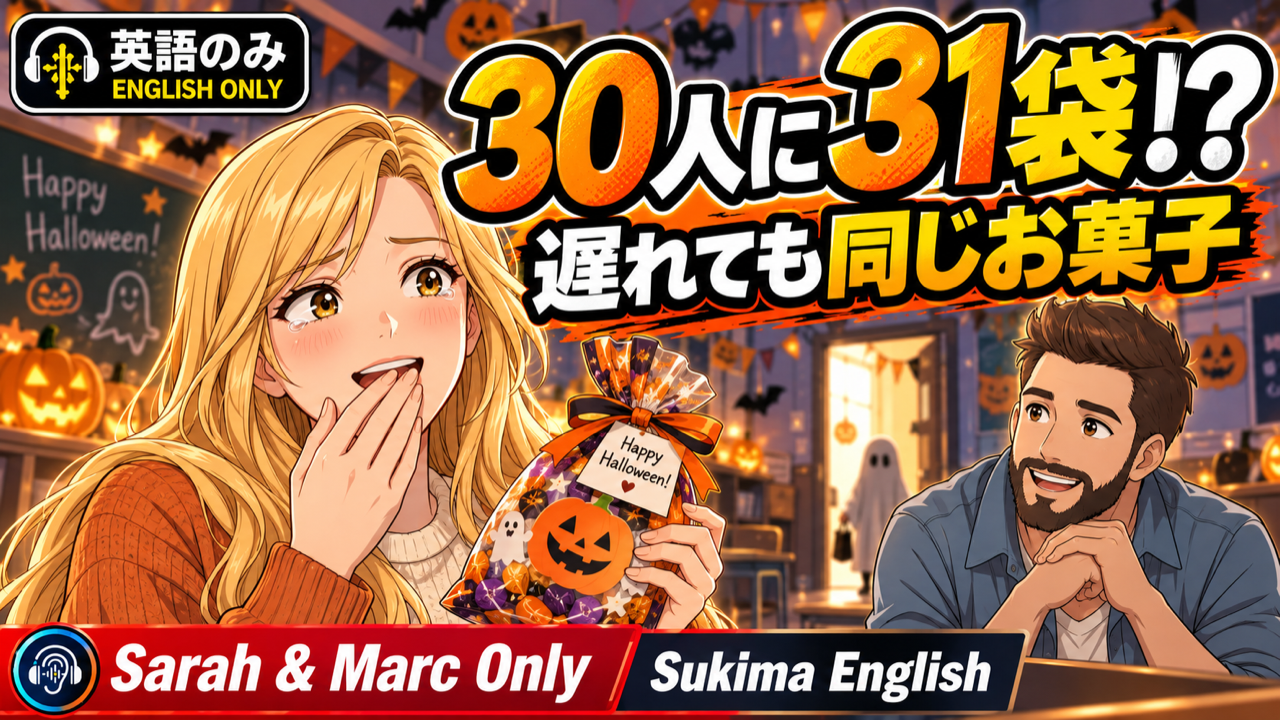
【日常英会話】英語のみ | ニューヨークと東京のハロウィンを英語で語ると? #英語学習 #ネイティブ英語会話 #リスニング強化
ポッドキャスト「すきまイングリッシュ」のスクリプト。「【日常英会話】英語のみ | ニューヨークと東京のハロウィンを英語で語ると? #英語学習 #ネイティブ英語会話 #リスニング強化」の会話全文です。

サラ: Halloween is at the end of this month, and for the second year in a row, I said yes to helping with a Halloween party at work. (日本語訳: ハロウィンが今月末にあるんだけど、2年続けて、職場のハロウィンパーティーの手伝いを引き受けちゃったの。)
Marc: A Halloween party at an English school. I guess that makes sense. (日本語訳: 英会話スクールのハロウィンパーティーか。まあ、そうなるよね。)
サラ: It is for the kids' classes we have on Saturdays. About thirty kids, all in costumes. (日本語訳: 土曜日にある子ども向けクラスのパーティーなの。子どもが30人くらい、みんな仮装してくる。)
Marc: And they asked you because you are from New York. (日本語訳: で、君がニューヨーク出身だから頼まれたんだ。)
サラ: That was the whole reason. Last year somebody said, "You are American, so you must know Halloween." (日本語訳: 理由はそれだけ。去年、誰かに「アメリカ人なんだから、ハロウィンのことは分かるでしょ」って言われて。)
Marc: And did you? (日本語訳: で、分かってたの?)
サラ: I thought I did. But I only knew New York Halloween, and that turned out to be a very different thing. (日本語訳: 分かってるつもりだった。でも、私が知ってたのはニューヨークのハロウィンだけで、それが全然別物だったんだよね。)
Marc: I know that feeling. In five years here, nobody has ever knocked on my door on Halloween. (日本語訳: その感じ、分かるよ。こっちに来て5年、ハロウィンにうちのドアをノックした人は一人もいないんだ。)
サラ: Not once? (日本語訳: 一度も?)
Marc: Not once. I used to buy candy just in case, and then I stopped. (日本語訳: 一度も。念のためにお菓子を買ってたんだけど、そのうちやめたよ。)
サラ: Then let me start with my building in New York. After that, my first Halloween here, and then the party. (日本語訳: じゃあ、まずニューヨークの私のマンションの話から。そのあと、こっちで最初のハロウィン、それからパーティーの話ね。)
Marc: Start with the building. I have always wondered how trick-or-treating works in an apartment building. (日本語訳: マンションの話からどうぞ。集合住宅でトリック・オア・トリートがどうなってるのか、ずっと気になってたんだ。)
サラ: About a week before Halloween, somebody taped a sheet of paper up next to the elevator in our lobby. (日本語訳: ハロウィンの1週間くらい前に、誰かがロビーのエレベーターの横に紙を1枚貼ったの。)
Marc: A sheet of paper for what? (日本語訳: 何のための紙?)
サラ: A sign-up sheet. If you wanted trick-or-treaters, you wrote your apartment number on it. (日本語訳: 申し込みの紙。お菓子をもらいに来てほしい家は、そこに部屋番号を書くの。)
Marc: So the kids only knocked on the doors that were on the list. (日本語訳: じゃあ、子どもたちはその紙に載ってるドアだけをノックしたんだ。)
サラ: Right. You did not knock on a stranger's door just because it was Halloween. You checked the sheet first. (日本語訳: そう。ハロウィンだからって、知らない人のドアはノックしないの。まず紙を確認するんだよ。)
Marc: That is so organized. I always pictured New York kids just running wild in the hallways. (日本語訳: すごくきちんとしてるね。ニューヨークの子どもって、廊下を好き放題に走り回ってるイメージだったよ。)
サラ: The kids were organized. Some of the parents were the wild ones. A few families went all out. (日本語訳: 子どもたちはきちんとしてたよ。はしゃいでたのは親のほうでね。とことんやる家族もいたの。)
Marc: How far did they go? (日本語訳: どこまでやったの?)
サラ: The woman on the ninth floor turned her front door into a haunted house. She had a fog machine, and a recording of a creaking door that played over and over. (日本語訳: 9階の女の人は、自分の玄関をお化け屋敷にしてた。スモークマシンまで置いて、ドアがきしむ音を何度も何度も流してたの。)
Marc: In a hallway? What did the neighbors think of that? (日本語訳: 廊下で? 近所の人はどう思ってたの?)
サラ: The neighbors loved it. That haunted house was the reason the ninth floor was always crowded. (日本語訳: みんな大喜び。9階がいつも混んでたのは、そのお化け屋敷のせいだったんだから。)
Marc: So who did you go trick-or-treating with? (日本語訳: で、トリック・オア・トリートには誰と行ったの?)
サラ: My brother Jake. He is two years older than me, so he was in charge. (日本語訳: 兄のジェイク。私より2つ年上だから、仕切るのはジェイクだった。)
Marc: What was his plan? (日本語訳: 彼の作戦は?)
サラ: Start at the top floor, work your way down, and get there early, because the best candy went first. (日本語訳: 最上階から始めて、下に降りていく。それから、早めに行く。一番いいお菓子から先になくなるから。)
Marc: What counted as the best candy? (日本語訳: 一番いいお菓子って、どんなの?)
サラ: Full-size chocolate bars. One family on the twelfth floor gave them out, and only to the first ten kids or so. (日本語訳: 普通サイズの板チョコ。12階のある家族が配ってて、それも最初の10人くらいまでだったの。)
Marc: And everyone after that? (日本語訳: それより後の子は?)
サラ: Everyone after that got whatever was left. And the dentist on the fourth floor gave out toothbrushes. (日本語訳: 残り物をもらうだけ。それに、4階の歯医者さんは歯ブラシを配ってた。)
Marc: Toothbrushes? On Halloween? (日本語訳: 歯ブラシ? ハロウィンに?)
サラ: Every single year. We still went to the dentist's door, because you did not skip anybody on the sheet. (日本語訳: 毎年欠かさずね。それでも歯医者さんのドアにも行ったよ。紙に載ってる家を飛ばしちゃいけなかったから。)
Marc: So every door was a surprise. (日本語訳: じゃあ、どのドアも開けてみるまで分からないんだ。)
サラ: Exactly. You never knew if you were going to get a chocolate bar or a toothbrush. It was the luck of the draw. (日本語訳: そのとおり。板チョコがもらえるか、歯ブラシがもらえるか、行ってみるまで分からない。完全に運次第だったの。)
Marc: And then you went home and ate all the candy? (日本語訳: で、家に帰ってお菓子を全部食べたの?)
サラ: No. Jake and I poured everything out on the living room floor and traded. (日本語訳: ううん。ジェイクと二人で、リビングの床に全部広げて交換したの。)
Marc: How did the trading work? (日本語訳: 交換って、どうやってたの?)
サラ: Two small pieces for one big one, usually. Jake always got the better deal, because he was older and he knew what everything was worth. (日本語訳: だいたい、小さいの2つと大きいの1つ。いつもジェイクのほうが得してた。年上だし、どのお菓子がどれくらいの価値か分かってたから。)
Marc: Maybe that is where New Yorkers learn to negotiate. (日本語訳: ニューヨークの人は、そこで交渉を覚えるのかもね。)
サラ: Maybe. I lost every trade with him until I was about nine. (日本語訳: かもね。9歳くらいまで、ジェイクとの交換は全部負けてたよ。)
Marc: In Chicago, we had houses, so it worked a little differently. (日本語訳: シカゴは一軒家だったから、ちょっとやり方が違ったよ。)
サラ: How did you know which doors to knock on? (日本語訳: どのドアをノックすればいいか、どうやって分かったの?)
Marc: The porch light. If the light was on, you could knock. If it was off, you walked past. (日本語訳: 玄関の明かり。明かりがついてればノックしていい。消えてたら素通りする。)
サラ: That is the same idea as our sheet. (日本語訳: 私たちの申し込みの紙と同じ考え方だね。)
Marc: Same idea, but with more walking, and a lot more cold. In every picture of me on Halloween, I am wearing a winter coat. (日本語訳: 考え方は同じ。ただ、もっと歩くし、ずっと寒いんだ。ハロウィンの僕の写真は、どれも冬のコートを着てるよ。)
サラ: Over your costume? (日本語訳: 仮装の上に?)
Marc: Over my costume. One year I went as a pirate, and nobody could tell, because all you could see was my coat. (日本語訳: 仮装の上に。ある年は海賊の格好をしたんだけど、コートしか見えないから、誰にも海賊だと分かってもらえなかった。)
サラ: So what did your house give out? (日本語訳: で、あなたの家は何を配ってたの?)
Marc: My mother gave out little boxes of raisins. (日本語訳: 母は小さな箱入りのレーズンを配ってた。)
サラ: Oh no. You were the raisin house. (日本語訳: うわあ。レーズンの家だったんだ。)
Marc: We were the raisin house. Every kid on our street knew it, and some of them skipped us. (日本語訳: レーズンの家だったよ。通りの子どもはみんな知ってて、うちを飛ばす子もいた。)
サラ: So for the kids on your street, you were like our dentist with the toothbrushes. (日本語訳: じゃあ、あなたの通りの子どもたちにとっては、うちの歯ブラシの歯医者さんみたいなものだったんだね。)
Marc: Exactly. Every street has one house like that. (日本語訳: そのとおり。どの通りにも、そういう家が一軒はあるんだよ。)
サラ: Later, when I was in college at NYU, Halloween meant the parade on Sixth Avenue. (日本語訳: そのあと、ニューヨーク大学に通ってたころは、ハロウィンといえば6番街のパレードだったな。)
Marc: The Village Halloween Parade. I have seen pictures of it. Did you ever go? (日本語訳: ヴィレッジ・ハロウィン・パレードだね。写真で見たことあるよ。行ったことはある?)
サラ: I walked in it once. Anyone in a costume can just show up and march. (日本語訳: 一度、パレードで歩いたよ。仮装してれば、誰でもふらっと来て一緒に行進できるの。)
Marc: What did you dress up as? (日本語訳: 何の仮装をしたの?)
サラ: I dressed up as a yellow taxi, made out of a cardboard box. (日本語訳: 段ボール箱で作った、黄色いタクシー。)
Marc: Of course you did. (日本語訳: 君らしいね。)
サラ: So that was Halloween to me. Knocking on doors, and never knowing what you were going to get. (日本語訳: だから、私にとってのハロウィンはそういうものだった。ドアをノックして、何がもらえるか分からないもの。)
Marc: So you brought all of that with you to Tokyo. (日本語訳: で、それを全部抱えて東京に来たわけだ。)
サラ: I did. My first Halloween here came a few months after I moved. (日本語訳: そう。こっちで最初のハロウィンは、引っ越してきて数か月後だったの。)
Marc: What were you expecting? (日本語訳: 何を期待してた?)
サラ: I was expecting kids at the door. So a few days before, I stocked up on candy. Two big bags of it. (日本語訳: 子どもがドアをノックしに来ると思ってた。だから数日前に、お菓子を買いだめしたの。大袋を2つ。)
Marc: Oh, Sarah. (日本語訳: ああ、サラ。)
サラ: On Halloween night, I sat in my apartment and waited, with a bowl of candy by the door. (日本語訳: ハロウィンの夜、ドアのそばにお菓子を入れたボウルを置いて、部屋で待ってたの。)
Marc: And how many kids came? (日本語訳: で、何人来たの?)
サラ: Zero. Not one knock. I ate those two bags of candy by myself, a little every night, for about two weeks. (日本語訳: ゼロ。ノックは一回もなし。その大袋2つは、毎晩少しずつ、2週間くらいかけて一人で食べたよ。)
Marc: I did the same thing in my first year. Only one bag, though. (日本語訳: 僕も1年目に同じことをやったよ。僕は1袋だけだったけど。)
サラ: Did nobody tell you either? (日本語訳: あなたも誰にも教えてもらえなかったの?)
Marc: Nobody. There is no sign-up sheet here, and no porch light. Nobody hands out candy at the door, so kids do not go door to door. (日本語訳: 誰にも。こっちには申し込みの紙も、玄関の明かりもないからね。玄関でお菓子を配る人がいないから、子どもも家を回らないんだ。)
サラ: But the shops were full of Halloween. Orange packages and pumpkin candy everywhere. (日本語訳: でも、お店はハロウィン一色だったよ。どこもオレンジのパッケージと、かぼちゃのお菓子だらけで。)
Marc: Every October, the convenience stores are full of orange. (日本語訳: 毎年10月になると、コンビニはオレンジだらけになるよね。)
サラ: So I kept asking myself, where is everybody? And then, on the weekend of Halloween, I found out, on the train. (日本語訳: だから、みんなどこにいるんだろうって、ずっと思ってたの。そしたらハロウィンの週末に、電車の中で答えが分かった。)
Marc: What did you see on the train? (日本語訳: 電車で何を見たの?)
サラ: It was full of adults in costumes. A group of nurses with fake blood, two Marios, and a man dressed as a vending machine. (日本語訳: 仮装した大人でいっぱいだったの。血のりを付けたナースの集団に、マリオが2人、それに自動販売機の格好をした男の人。)
Marc: Heading to Shibuya. (日本語訳: 渋谷に向かってたんだね。)
サラ: Every one of them. I asked a woman dressed as a witch where everybody was going, and she just pointed at the map above the door. (日本語訳: 全員ね。魔女の格好をした女の人に、みんなどこに行くのか聞いたら、ドアの上の路線図を指さすだけだった。)
Marc: I went to Shibuya for Halloween once, in my first year. (日本語訳: 僕も1年目に一度、ハロウィンの渋谷に行ったよ。)
サラ: How was it? (日本語訳: どうだった?)
Marc: It was too crowded to move. At the big crossing, I was stuck in the same spot for about twenty minutes. (日本語訳: 混みすぎて身動きが取れなかった。スクランブル交差点で、20分くらい同じ場所から動けなかったよ。)
サラ: That sounds a little scary. (日本語訳: それはちょっと怖いね。)
Marc: It was. Some years the crowd really got out of hand. These days, Shibuya asks people not to come for Halloween at all. (日本語訳: 怖かった。手がつけられないほど人が集まった年もあってね。最近は、渋谷区がハロウィンには来ないでほしいって呼びかけてるんだ。)
サラ: Shibuya asks people to stay away? I cannot imagine New York asking people to stay away from the parade. (日本語訳: 渋谷が来ないでって呼びかけてるの? ニューヨークがパレードに来ないでなんて言うのは、想像できないな。)
Marc: The difference is that nobody planned the Shibuya crowd. People just started showing up there every year. (日本語訳: 違いは、渋谷の人だかりは誰も計画してないってことなんだ。毎年、みんなが勝手に集まるようになっただけで。)
サラ: So that is what I learned that year. Here, Halloween is something adults go out for, not something kids knock on doors for. (日本語訳: それが、その年に私が学んだこと。こっちのハロウィンは、大人が出かけるもので、子どもがドアをノックするものじゃないんだって。)
Marc: Mostly. Kids have Halloween too, but at events, at kindergartens and at schools like yours. (日本語訳: だいたいはね。子どもにもハロウィンはあるけど、イベントとか、幼稚園とか、君のところみたいなスクールでやるんだ。)
サラ: Schools like mine. That is how I ended up at the party. (日本語訳: 私のところみたいなスクール。それで私がパーティーを手伝うことになったわけ。)
Marc: So you really ate both bags of candy by yourself. (日本語訳: で、本当に大袋2つを一人で食べたんだ。)
サラ: Every piece, alone, in front of the TV. It was a far cry from trading on the living room floor with Jake. (日本語訳: 一つ残らず、一人で、テレビの前でね。リビングの床でジェイクと交換してたころとは大違いだったよ。)
Marc: That is a sad picture. (日本語訳: 寂しい光景だね。)
サラ: It was sad. I did not tell anyone at work about the candy until last year. (日本語訳: 寂しかった。お菓子のことは、去年まで職場の誰にも話してなかったの。)
Marc: So tell me about last year's party. (日本語訳: じゃあ、去年のパーティーの話を聞かせて。)
サラ: A coworker of mine, Keiko-san, was running it. She has been at the company for seven years. (日本語訳: 仕切ってたのは、同僚のケイコさん。会社に7年いる人なの。)
Marc: And she asked you to help. (日本語訳: で、手伝ってほしいって頼まれたんだ。)
サラ: She asked me to help. And by the time I said yes, she already had a schedule for the whole afternoon. (日本語訳: そう、頼まれた。で、私が引き受けたときには、もう午後全体の予定表ができてたの。)
Marc: What was on the schedule? (日本語訳: 予定表には何が書いてあったの?)
サラ: Costume parade at two. Games at two twenty. Trick-or-treating at two forty. Everyone goes home at three. (日本語訳: 2時に仮装パレード。2時20分にゲーム。2時40分にトリック・オア・トリート。3時に全員解散。)
Marc: She leaves nothing to chance. (日本語訳: 抜かりがないね。)
サラ: Nothing. The day before the party, we put the candy bags together in the staff room. (日本語訳: まったくね。パーティーの前の日に、職員室でお菓子の袋を詰めたの。)
Marc: Bags with what in them? (日本語訳: 袋には何を入れたの?)
サラ: Every bag had the same five pieces. Two chocolates and three gummies. (日本語訳: どの袋にも同じ5個。チョコが2つと、グミが3つ。)
Marc: Every bag was the same? (日本語訳: 全部同じ袋?)
サラ: Exactly the same. I told her the surprise was the whole point. Some doors give you a chocolate bar and some give you a toothbrush. (日本語訳: まったく同じ。驚きこそが醍醐味なんだって、ケイコさんに言ったの。板チョコをくれるドアもあれば、歯ブラシをくれるドアもあるって。)
Marc: What did she say to that? (日本語訳: ケイコさんは何て?)
サラ: She said, "Then some children go home with less." And honestly, I did not have a good answer. (日本語訳: 「それだと、少ない子が出ちゃいますよね」って。正直、うまく言い返せなかった。)
Marc: Because she was right. In your building, some kids did go home with less. (日本語訳: ケイコさんが正しかったからね。君のマンションでも、少ない量で帰る子はいたわけだし。)
サラ: I was one of them, every time I traded with Jake. (日本語訳: 私がその一人だった。ジェイクと交換するたびにね。)
Marc: So did you give up on the New York way of doing Halloween? (日本語訳: じゃあ、ニューヨーク流のハロウィンはあきらめたの?)
サラ: Not completely. We found a compromise. The kids would go around to four classrooms and knock on each door, with a teacher waiting inside. (日本語訳: 完全にはあきらめてない。妥協案を見つけたの。子どもたちが4つの教室を回って、それぞれのドアをノックする。中では先生が待ってるの。)
Marc: So they still got to knock. (日本語訳: じゃあ、ノックはできたんだ。)
サラ: They got to knock and say "Trick or treat," and they loved that part. But the candy came at the last door, where every kid got one of Keiko-san's bags. (日本語訳: ノックして「トリック・オア・トリート」って言える。子どもたちはそこが大好きだったよ。でもお菓子は最後のドアで、全員がケイコさんの袋を一つずつもらうの。)
Marc: That sounds like a fair deal. (日本語訳: 公平なやり方だね。)
サラ: It was. Then I counted the bags, and there were thirty-one. (日本語訳: そうだった。で、袋を数えたら、31個あったの。)
Marc: How many kids had signed up? (日本語訳: 申し込んでた子どもは何人?)
サラ: Thirty. I thought she had made a mistake, so I asked her about the extra bag. (日本語訳: 30人。ケイコさんが数え間違えたんだと思って、余分な袋のことを聞いたの。)
Marc: What did she tell you? (日本語訳: 何て言われた?)
サラ: She just said, "I always make one more." I did not understand why until later that afternoon. (日本語訳: 「いつも一つ多く作るんです」って、それだけ。その理由は、その日の午後まで分からなかった。)
Marc: What happened later? (日本語訳: 午後に何があったの?)
サラ: At ten past three, after the party was over, a girl came running in with her mother. (日本語訳: 3時10分、パーティーが終わったあとに、女の子がお母さんと一緒に駆け込んできたの。)
Marc: She had missed the whole thing. (日本語訳: 全部終わっちゃってたんだ。)
サラ: The whole thing. Her swimming lesson had finished at two thirty, and they came straight from the pool. She was dressed up as a ghost, in a sheet with two holes cut in it, and her hair was still wet. (日本語訳: 全部ね。水泳教室が2時半に終わって、プールからまっすぐ来たんだって。穴を2つ開けたシーツをかぶったお化けの仮装で、髪はまだ濡れてた。)
Marc: Oh, that poor kid. (日本語訳: ああ、かわいそうに。)
サラ: In my building, that kid would have gotten whatever was left. If you were late, the good candy was gone. (日本語訳: 私のマンションだったら、その子は残り物をもらうだけだった。遅れたら、いいお菓子はもうないんだよ。)
Marc: So what did Keiko-san do? (日本語訳: で、ケイコさんはどうしたの?)
サラ: She went to the cabinet and took out the thirty-first bag. Then she went into the last classroom and waited, so the girl could knock and say "Trick or treat," just like everybody else. (日本語訳: 戸棚から31個目の袋を出してきたの。それから最後の教室に入って待ってた。その子もほかの子と同じように、ノックして「トリック・オア・トリート」って言えるように。)
Marc: So she ran the trick-or-treating again, just for one kid. (日本語訳: じゃあ、その子一人のために、トリック・オア・トリートをもう一回やったんだ。)
サラ: Yes. And the girl went home with exactly the same bag as the other thirty. (日本語訳: そう。で、その子は、ほかの30人とまったく同じ袋を持って帰ったの。)
Marc: I really like that part. (日本語訳: その話、すごくいいね。)
サラ: Me too. Afterward, I asked Keiko-san if she had known that girl would be late. She said no. Every year, she makes one extra bag, and some years nobody needs it. (日本語訳: 私も好き。あとでケイコさんに、あの子が遅れてくるって知ってたのか聞いたの。知らなかったって。毎年一つ余分に作ってて、誰も使わない年もあるんだって。)
Marc: So the extra bag is not for anyone in particular. (日本語訳: じゃあ、余分な袋は、特定の誰かのためのものじゃないんだね。)
サラ: No. It is for whoever comes late. Before that, I thought making every bag the same was about control. (日本語訳: そう。遅れてきた誰かのためのものなの。それまでは、全部の袋を同じにするのは管理したいからだと思ってた。)
Marc: And now? (日本語訳: 今は?)
サラ: Now I think she makes every bag the same, plus one extra, so that a child who comes late does not go home with less. (日本語訳: 今は、全部の袋を同じにして、さらに一つ余分に作るのは、遅れてきた子が少ない量で帰らなくて済むようにするためなんだと思ってる。)
Marc: That is a very different reason. (日本語訳: 理由がまったく違うね。)
サラ: It is. But I still have not given up on the luck of the draw. (日本語訳: 本当に。でも、運次第の楽しさも、まだあきらめてないんだ。)
Marc: You still want the chocolate bar and the toothbrush. (日本語訳: まだ板チョコと歯ブラシが欲しいんだ。)
サラ: I want the surprise. I learned a lot from those toothbrushes and chocolate bars, with Jake, on the living room floor. (日本語訳: 私が欲しいのは驚き。あの歯ブラシと板チョコから、リビングの床でジェイクと一緒に、たくさんのことを学んだから。)
Marc: So what are you doing differently this year? (日本語訳: じゃあ、今年は何を変えるの?)
サラ: I asked Keiko-san if we could add one thing from New York. After the kids get their bags, they have ten minutes to trade. (日本語訳: ニューヨークから一つ取り入れられないか、ケイコさんに聞いたの。子どもたちが袋をもらったあと、10分間の交換タイムを作るの。)
Marc: Trading. Like you and Jake. (日本語訳: 交換か。君とジェイクみたいに。)
サラ: Like me and Jake, but with a teacher watching, so nobody loses every trade. (日本語訳: 私とジェイクみたいに。でも先生が見てるから、全部負ける子は出ないの。)
Marc: What did Keiko-san say? (日本語訳: ケイコさんは何て?)
サラ: She said yes, and then she put the trading time on the schedule. Two fifty, for ten minutes. (日本語訳: いいですよって言って、交換タイムを予定表に入れてくれた。2時50分から10分間。)
Marc: Of course she did. (日本語訳: さすがだね。)
サラ: And I asked her for one more thing. This year, I want to make the extra bag myself. (日本語訳: それと、もう一つお願いしたの。今年は、余分な袋を私に作らせてほしいって。)
Marc: The thirty-first bag. (日本語訳: 31個目の袋だね。)
サラ: The thirty-first bag. I have no idea if anybody will need it. (日本語訳: 31個目の袋。誰かが必要になるかどうかは、まったく分からないけど。)
Marc: But you are making it anyway. (日本語訳: でも、それでも作るんだ。)
サラ: Yes. In New York, I would never have thought of making an extra bag. (日本語訳: うん。ニューヨークにいたら、余分な袋を作ろうなんて、思いもしなかっただろうな。)
Marc: You know, I think I am going to buy candy again this year. (日本語訳: 実はさ、今年はまたお菓子を買おうと思ってるんだ。)
サラ: Even though nobody has knocked on your door in five years? (日本語訳: 5年間、誰もドアをノックしに来てないのに?)
Marc: Even though. I will put a bowl of candy by my door, just in case. (日本語訳: それでもね。念のために、ドアのそばにお菓子を入れたボウルを置いておくよ。)
サラ: Then fill the bowl with raisins. (日本語訳: じゃあ、ボウルはレーズンでいっぱいにしてね。)
Marc: My mother would be proud of me. (日本語訳: 母が誇りに思ってくれるだろうな。)
サラ: If you have kids, or if you were a kid not that long ago, tell us what Halloween looks like where you live. (日本語訳: お子さんがいる人も、ちょっと前まで子どもだった人も、あなたの住んでいる所のハロウィンがどんな感じか教えてね。)
Marc: And tell us which house on your street gave out the raisins. (日本語訳: それと、あなたの通りでレーズンを配ってたのはどの家だったかも教えて。)
サラ: Or the toothbrushes. Somebody always does. (日本語訳: 歯ブラシでもいいよ。必ずどこかにあるから。)
Marc: Have a good Halloween, everybody. Knock on the right doors. (日本語訳: みんな、楽しいハロウィンを。ノックするドアを間違えないでね。)
サラ: And if you are running a party this year, make one more bag than you need. (日本語訳: それと、今年パーティーを仕切る人は、必要な数より一つ多く袋を作ってね。)

関連記事
【日常の英語】元気のない同僚にかける英語フレーズ12選|声かけから励ましまで #英語学習 #英語フレーズ #英会話 #英語耳
ポッドキャスト「すきまイングリッシュ」のスクリプト。「【日常の英語】元気のない同僚にかける英語フレーズ12選|声かけから励ましまで #英語学習 #英語フレーズ #英会話 #英語耳」の会話全文です。
【日常英会話】住所と道案内を英語で話すと?日本の住所には通りの名前がない #英語学習 #ネイティブ英語会話 #リスニング強化 #英語耳
ポッドキャスト「すきまイングリッシュ」のスクリプト。「【日常英会話】住所と道案内を英語で話すと?日本の住所には通りの名前がない #英語学習 #ネイティブ英語会話 #リスニング強化 #英語耳」の会話全文です。
【日常の英語】日本語解説あり | 席を譲ろうとして、断られた |申し出る英語と、断られたときの英語6つ #英語学習 #英語フレーズ #英会話 #英語耳
ポッドキャスト「すきまイングリッシュ」のスクリプト。「【日常の英語】日本語解説あり | 席を譲ろうとして、断られた |申し出る英語と、断られたときの英語6つ #英語学習 #英語フレーズ #英会話 #英語耳」の会話全文です。
【日常英会話】カウンターには、向かいの椅子がない、「お一人ですか」と聞かれる国 #英語学習 #ネイティブ英語会話 #リスニング強化 #英語耳
ポッドキャスト「すきまイングリッシュ」のスクリプト。「【日常英会話】カウンターには、向かいの椅子がない、「お一人ですか」と聞かれる国 #英語学習 #ネイティブ英語会話 #リスニング強化 #英語耳」の会話全文です。
【日常英会話】英語のみ | 台風と計画運休を英語で語ると?台風が来る前の二日間 #英語学習 #ネイティブ英語会話 #リスニング強化
ポッドキャスト「すきまイングリッシュ」のスクリプト。会話全文です。
【日常の英語】日本語解説あり | 財布をなくしたときの英語フレーズ12選|駅・警察・カード会社への電話まで #英語学習 #英語フレーズ #英会話 #英語耳
ポッドキャスト「すきまイングリッシュ」のスクリプト。「【日常の英語】日本語解説あり | 財布をなくしたときの英語フレーズ12選|駅・警察・カード会社への電話まで #英語学習 #英語フレーズ #英会話 #英語耳」の会話全文です。