【日常英会話】「感謝していることを一つずつ」アメリカの感謝祭とネイティブの本音 #英語学習 #ネイティブ英語会話 #リスニング強化 #英語耳
ポッドキャスト「すきまイングリッシュ」のスクリプト。「【日常英会話】「感謝していることを一つずつ」アメリカの感謝祭とネイティブの本音 #英語学習 #ネイティブ英語会話 #リスニング強化 #英語耳」の会話全文です。

さゆり: 十一月の第四木曜日は、アメリカの感謝祭です。今日は、マークが二年前に東京で初めて七面鳥を焼いた話を聞きます。
さゆり: 家族が集まって大きな七面鳥を囲む日、というイメージですよね。でもマークの話は、オーブンの扉が閉まらなかったところから始まります。
サラ: Marc, you told me you are cooking a turkey again this November. (日本語訳: マーク、この11月にまた七面鳥を焼くって言ってたよね。)
Marc: Again. It will be the second turkey of my life. The first one was two years ago, here in Tokyo. (日本語訳: また焼くよ。人生で2羽目の七面鳥になるんだ。1羽目は2年前、ここ東京で焼いた。)
サラ: And how did the first one go? (日本語訳: で、1羽目はどうだったの?)
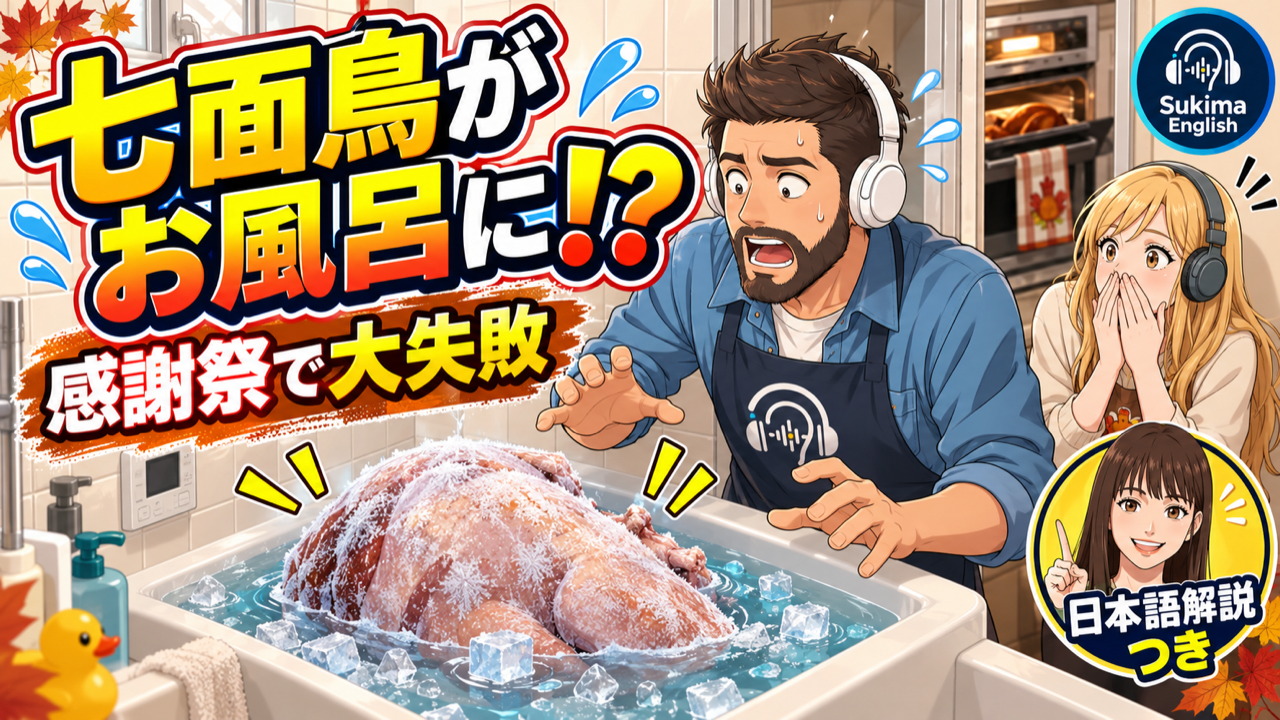
Marc: The turkey spent a whole morning in my bathtub, and then the oven door would not close. (日本語訳: 七面鳥が午前中ずっとうちのバスタブに(解凍のために)浸かってて、そのあとオーブンの扉が閉まらなかった。)
サラ: I need to hear all of that. (日本語訳: それ、全部聞かせて。)
Marc: You will. But the turkey is not really the story. The story is a question my mother asks every Thanksgiving. (日本語訳: 話すよ。でも、本題は七面鳥じゃないんだ。母が感謝祭のたびにする質問の話なんだよ。)
サラ: What question? (日本語訳: どんな質問?)
Marc: "What are you thankful for?" Before anybody eats, everybody at the table has to answer it. (日本語訳: 「何に感謝してる?」って。食べ始める前に、テーブルの全員がそれに答えなきゃいけないんだ。)
サラ: We did that in my family too. So tell me about Thanksgiving at your mom's, then. (日本語訳: うちの家族もやってたよ。じゃあ、お母さんの家の感謝祭の話を聞かせて。)
Marc: Thanksgiving at my parents' house in Chicago was about fifteen people, and one dining table with eight chairs. So the kids ate at a folding table in the living room. (日本語訳: シカゴの実家の感謝祭は、だいたい15人いて、ダイニングテーブルは1つで椅子が8脚。だから子どもたちは、リビングの折りたたみテーブルで食べてたんだ。)
サラ: The kids' table. We had one in Queens too. (日本語訳: 子ども用テーブルね。クイーンズのうちにもあったよ。)
Marc: I sat at the kids' table until I was nineteen. (日本語訳: 僕は19歳まで子ども用テーブルだったよ。)
サラ: Nineteen? You were in college by then. (日本語訳: 19歳? もう大学生じゃない。)
Marc: I was in college, eating mashed potatoes next to my twelve-year-old cousin. (日本語訳: 大学生なのに、12歳のいとこの隣でマッシュポテトを食べてた。)
サラ: So how did you finally get a seat at the big table? (日本語訳: で、どうやってやっと大人のテーブルに座れたの?)
Marc: One of my older cousins got married and started going to her husband's family for Thanksgiving. I got her chair. (日本語訳: 年上のいとこの一人が結婚して、感謝祭は旦那さんの家族のところに行くようになったんだ。その椅子を僕がもらった。)
サラ: So somebody had to leave before you could move up. (日本語訳: じゃあ、誰かが抜けないと、上には上がれなかったんだ。)
Marc: That is how it works. Nobody ever buys a ninth chair. (日本語訳: そういう仕組みなんだよ。9脚目の椅子は、誰も絶対に買わないんだ。)
Marc: And before anybody touched the food, my mother made us go around the table. One thing each. (日本語訳: それで、料理に手をつける前に、母が全員に順番に言わせるんだ。一人一つずつ。)
サラ: What did you say? (日本語訳: あなたは何て言ったの?)
Marc: Pie. From about the age of seven, every single year. I am thankful for pie. (日本語訳: パイ。7歳くらいから毎年欠かさず。「パイに感謝してます」って。)
サラ: Every year? (日本語訳: 毎年?)
Marc: It got a laugh the first time, so I kept it. By the time I was twenty, the whole table said it with me. (日本語訳: 最初の年にウケたから、そのまま続けたんだ。20歳になるころには、テーブルのみんなが一緒に言ってたよ。)
Marc: And my Aunt Linda would shake her head and tell me, "Marcus, one day you are going to have to say something real." (日本語訳: で、リンダおばさんが首を振って言うんだ。「マーカス、いつかは本当のことを言わなきゃいけない日が来るのよ」って。)
さゆり: 食べる前に一人ずつ感謝していることを言う家庭は、アメリカでは珍しくないそうです。こうして順番に話していくことを、英語では go around the table と言います。
サラ: My mother did it too, but she made us write it on a card first, so nobody could copy the person before them. (日本語訳: うちの母もやってたけど、先にカードに書かせてたの。前の人の答えをまねできないように。)
Marc: That is a very organized way to be thankful. (日本語訳: ずいぶんきっちりした感謝の仕方だね。)
サラ: That is my mother. And then everybody stuffs themselves for three hours. (日本語訳: それがうちの母なの。で、そのあとはみんなで3時間、お腹がはち切れるまで食べるんだよね。)
Marc: Three hours of eating, then football on TV, then leftovers at ten at night. (日本語訳: 3時間食べて、テレビでアメフトを見て、夜10時に残り物を食べる。)
さゆり: サラの everybody stuffs themselves は、stuff yourself の形で使う表現で、お腹がはち切れそうになるまで食べることです。感謝祭の日は、それが最初からの予定なんですね。
Marc: Then I moved here in the summer. In my first November, I found out that Japan has a holiday that month, and its English name is Labor Thanksgiving Day. (日本語訳: それから夏に、僕はこっちに引っ越してきた。最初の11月に、日本にもその月に祝日があるって知ったんだ。しかも英語名が「Labor Thanksgiving Day」。)
サラ: Wait. Is that the real name? (日本語訳: 待って。それ、本当の名前なの?)
Marc: That is the real name. I saw it on the calendar at work and got very excited. (日本語訳: 本当の名前だよ。職場のカレンダーで見つけて、すごくわくわくしたんだ。)
サラ: I can see where this is going. What did you do? (日本語訳: 先が読めてきた。で、どうしたの?)
Marc: I asked a coworker what people here eat on Labor Thanksgiving Day. (日本語訳: 同僚に、勤労感謝の日にはみんな何を食べるのか聞いたんだ。)
サラ: And what did your coworker tell you? (日本語訳: で、同僚は何て?)
Marc: She thought about it for a long time, and then she said, "Most people sleep in." (日本語訳: しばらく考えてから、「たいていの人は寝坊します」って。)
Marc: The holiday is a day off to thank people for their work. There is no turkey, and nobody goes around the table. (日本語訳: 働いている人に感謝するための休みの日なんだ。七面鳥もないし、順番に感謝を言うこともない。)
さゆり: 勤労感謝の日は、私たちにとってはお休みの日ですよね。英語名の Labor Thanksgiving Day は、マークが期待した感謝祭とは別の祝日です。
サラ: So what happened on the real Thanksgiving that year? (日本語訳: じゃあ、その年の本物の感謝祭はどうなったの?)
Marc: The real one was a normal Thursday here. I went to work, came home, and forgot all about it. (日本語訳: 本物のほうは、こっちでは普通の木曜日だった。仕事に行って、帰ってきて、すっかり忘れてたよ。)
サラ: You forgot Thanksgiving. (日本語訳: 感謝祭を忘れてたの。)
Marc: Until my phone rang at seven the next morning. In Chicago it was four in the afternoon on Thursday, and my whole family was at the table. (日本語訳: 次の日の朝7時に電話が鳴るまではね。シカゴは木曜の午後4時で、家族全員がテーブルについてたんだ。)
サラ: So they called you right in the middle of dinner. (日本語訳: じゃあ、夕飯の真っ最中にかかってきたんだ。)
Marc: Right before dinner. My mother put her phone in the middle of the table and said, "We are going around, and Marc goes too." (日本語訳: 夕飯の直前だよ。母がテーブルの真ん中にスマホを置いて、「順番に言っていくわよ。マークもね」って。)
Marc: I was standing in my kitchen in a work shirt, eating toast, with fifteen people looking at me through a phone. (日本語訳: 僕はワイシャツ姿でキッチンに立って、トーストをかじってた。スマホ越しに15人がこっちを見てたんだ。)
サラ: What did everybody say? (日本語訳: みんな何て言ったの?)
Marc: One cousin was thankful for her new job. My dad was thankful that the Bears had won on Sunday. Then it was my turn. (日本語訳: いとこの一人は、新しい仕事に感謝してた。父は、日曜にベアーズが勝ったことに感謝してた。それから僕の番になった。)
サラ: Oh no. Not the pie. (日本語訳: うわ。まさか、パイ?)
Marc: I had a piece of toast in my hand, and I said, "I am thankful for pie." (日本語訳: トーストを手に持ったまま、「パイに感謝してます」って言っちゃった。)
サラ: You did not even have any pie. (日本語訳: パイなんて食べてもいないのに。)
Marc: Aunt Linda said exactly that. "Marcus, you do not even have any pie." (日本語訳: リンダおばさんも、まさにそう言ったよ。「マーカス、あなたパイなんて食べてもいないじゃない」って。)
サラ: So you had nothing real ready to say. (日本語訳: じゃあ、本当のことを言う準備は何もなかったんだ。)
Marc: Nothing. Fifteen people were waiting, and the only thing in my head was the old joke. They put me on the spot, and the joke came out. (日本語訳: 何もなかった。15人が待ってて、頭に浮かぶのはいつもの冗談だけ。いきなり話を振られて、冗談が口から出ちゃったんだ。)
さゆり: マークの put me on the spot は、準備のないところで急に答えを求められて、困ってしまう状況です。日本語の「いきなり話を振られる」に近い言い方です。
サラ: So two years ago, you decided to cook a turkey yourself. (日本語訳: それで2年前に、自分で七面鳥を焼こうって決めたんだ。)
Marc: Two years ago, I invited four people from work over for dinner on the Saturday after Thanksgiving. My partner agreed before I could change my mind. (日本語訳: 2年前、感謝祭のあとの土曜日に、職場の4人を夕飯に招いたんだ。僕の気が変わる前に、パートナーが賛成してくれた。)
さゆり: マークが言った partner は、奥さんのことです。英語の partner は、結婚している相手にも、付き合っている相手にも使える言葉です。
サラ: Where do you even buy a turkey in Tokyo? (日本語訳: そもそも、東京のどこで七面鳥なんて買うの?)
Marc: You can order a frozen one online. The website had smaller ones, but I picked the biggest one, ten pounds, because I wanted a real Thanksgiving turkey. (日本語訳: 冷凍のをネットで注文できるんだ。サイトには小さいのもあったけど、僕は一番大きい4.5キロのを選んだ。本物の感謝祭の七面鳥がよかったから。)
サラ: Ten pounds is small back home. Did you measure your oven first? (日本語訳: 4.5キロなんて、アメリカじゃ小さいほうだよ。先にオーブンのサイズは測った?)
Marc: My partner measured the oven with a tape measure. She told me a ten-pound turkey would not fit. (日本語訳: パートナーがメジャーでオーブンを測ってくれた。4.5キロの七面鳥は入らないって言われたよ。)
サラ: And you ordered it anyway. (日本語訳: それでも注文したんだ。)
Marc: I ordered it anyway. I told her we would make it work. (日本語訳: それでも注文した。なんとかするよって言ってね。)
サラ: Marc, you bit off more than you could chew. (日本語訳: マーク、それは手に余ることを抱え込んだね。)
Marc: I did. I did not know that a frozen turkey needs two or three days in the fridge to thaw. On Saturday morning, it was still frozen solid. (日本語訳: そうなんだよ。冷凍の七面鳥は、冷蔵庫で解凍するのに2、3日かかるって知らなかったんだ。土曜の朝になっても、まだカチカチに凍ってた。)
サラ: On the day of the dinner? (日本語訳: 夕飯の当日に?)
Marc: So I put the turkey in the bathtub, in cold water. You are supposed to change the water every thirty minutes. (日本語訳: だから七面鳥をバスタブに入れて、冷たい水に浸けたんだ。30分ごとに水を替えなきゃいけないんだよ。)
サラ: For how long? (日本語訳: どれくらいの時間?)
Marc: About five hours. I set an alarm on my phone and changed the water ten times. (日本語訳: 5時間くらい。スマホでアラームをかけて、10回水を替えた。)
サラ: And where did you two take a shower that day? (日本語訳: で、その日、二人はどこでシャワーを浴びたの?)
Marc: We did not. For one morning, the bathroom belonged to the turkey. (日本語訳: 浴びなかった。その日の午前中だけは、お風呂場は七面鳥のものだったんだ。)
サラ: And then the oven. (日本語訳: で、次はオーブンだね。)
Marc: Then the oven. I put the turkey in, and the door would not close. It stopped about an inch short. (日本語訳: 次はオーブン。七面鳥を入れたら、扉が閉まらなかった。あと2.5センチくらい足りなかったんだ。)
Marc: My partner did not say anything. She just held up the tape measure. (日本語訳: パートナーは何も言わなかった。黙ってメジャーを掲げただけ。)
サラ: Oh, that is worse than saying something. (日本語訳: うわ、何か言われるより、そっちのほうがきついね。)
Marc: Much worse. It was two in the afternoon, and our guests were coming at six. (日本語訳: ずっときついよ。もう午後2時で、お客さんは6時に来ることになってた。)
サラ: So what did you do? (日本語訳: で、どうしたの?)
Marc: I found a video on how to cut the backbone out of a turkey and flatten it. I did it with kitchen scissors, and my partner held the legs. (日本語訳: 七面鳥の背骨を切り取って平らにする動画を見つけたんだ。キッチンばさみでやって、パートナーが脚を押さえてくれた。)
サラ: And then did the turkey fit? (日本語訳: で、それで七面鳥は入ったの?)
Marc: Flat, it was too wide. So I cut it in half and roasted one half, and then the other. The second half came out of the oven while the doorbell was ringing. (日本語訳: 平らにしたら、今度は幅が広すぎた。だから半分に切って、片方ずつ焼いたんだ。2つ目の半分がオーブンから出てきたとき、ちょうど玄関のチャイムが鳴ってた。)
サラ: You cut it very close. (日本語訳: ぎりぎりだったね。)
さゆり: cut it close は、時間ぎりぎりでなんとか間に合わせることです。
さゆり: その前にサラが言った bite off more than you can chew は、自分の手に負えないことを引き受けてしまうこと。日本語の「手に余ることを抱え込む」に近い言い方です。
サラ: Then the dinner. Did you go around the table? (日本語訳: で、夕飯は? 順番に感謝を言ったの?)
Marc: I did. I explained the rule to my guests and told them it was fine to keep it short. In my family, I said, people say "pie." (日本語訳: 言ったよ。お客さんにルールを説明して、短くていいからって伝えた。うちの家族は「パイ」って言うんだよ、ってね。)
サラ: So you gave them the joke in advance. (日本語訳: じゃあ、あらかじめ冗談を教えておいたんだ。)
Marc: I gave them an easy answer, and nobody used it. (日本語訳: 簡単な答えを用意してあげたのに、誰も使わなかったよ。)
サラ: What did they say? (日本語訳: みんな何て言ったの?)
Marc: The first person was thankful that her mother's surgery had gone well. The next guy was thankful for a coworker who covered for him when his son was born. (日本語訳: 最初の人は、お母さんの手術がうまくいったことに感謝してた。次の人は、息子さんが生まれたときに仕事を代わってくれた同僚に感謝してた。)
サラ: Wow. Those are real answers. (日本語訳: わあ。本当の答えだね。)
Marc: Every answer was real, and every answer was long. It took about forty minutes, and the turkey got cold. (日本語訳: どの答えも本当のことで、どの答えも長かった。40分くらいかかって、七面鳥は冷めちゃったよ。)
サラ: After a whole day of work on that turkey. (日本語訳: 一日がかりで準備した七面鳥なのに。)
Marc: After a whole day, and I did not mind at all. Then it was my turn. (日本語訳: 一日がかりだったけど、まったく気にならなかった。それから僕の番になった。)
サラ: And you could not say pie. (日本語訳: で、パイとは言えなかった。)
Marc: I could not say pie. Four people had just told me real things at my table, in their second language. (日本語訳: パイとは言えなかった。うちのテーブルで、4人が母語じゃない言葉で、本当のことを話してくれたばかりだったから。)
サラ: So what did you say? (日本語訳: で、何て言ったの?)
Marc: I started to answer, and I got choked up. That had never happened to me at a table before. (日本語訳: 答えようとしたら、胸がいっぱいになって言葉に詰まった。テーブルでそんなことになったのは初めてだったよ。)
サラ: Marc. What did you say? (日本語訳: マーク。何て言ったの?)
Marc: I am not going to tell you. I said it once, to the people at that table, and once felt like enough. (日本語訳: それは言わないよ。あのテーブルの人たちに一度言った。一度で十分だと思ったんだ。)
サラ: That is fair. (日本語訳: それはそうだね。)
Marc: The next morning my mother called and asked me what I said, and I did not tell her either. (日本語訳: 次の朝、母から電話があって何て言ったのか聞かれたけど、母にも言わなかった。)
サラ: Your Aunt Linda is going to find out. (日本語訳: リンダおばさんにはばれるよ。)
Marc: Aunt Linda finds out everything. (日本語訳: リンダおばさんには何でもばれるんだよ。)
さゆり: マークの got choked up は、胸がいっぱいになって、言葉が出なくなることです。泣いたとまでは言っていないところが、マークらしいですね。
サラ: So this November, you are cooking again. (日本語訳: じゃあ、この11月にまた料理するんだ。)
Marc: Again, but this time I am making do with a turkey breast. My partner measured the oven again in September, and a turkey breast fits with room to spare. (日本語訳: またね。でも今回は、七面鳥の胸肉で間に合わせるよ。パートナーが9月にもう一度オーブンを測ってくれて、胸肉なら余裕で入るんだ。)
サラ: And the phone call at seven in the morning? (日本語訳: で、朝7時の電話は?)
Marc: That one is easy. I am thankful for pie. (日本語訳: それは簡単。「パイに感謝してます」。)
サラ: Still pie? (日本語訳: まだパイなの?)
Marc: If I said anything else on the phone, my mother would worry. Pie is how she knows I am fine. (日本語訳: 電話でほかのことを言ったら、母が心配するからね。パイって言えば、僕が元気だって母に分かるんだ。)
さゆり: ここからは、今日の話に出てきた表現を七つ、まとめて聞いていきます。
Marc: First, "go around the table." — Everybody takes a turn, one person after another. (日本語訳: まずは「go around the table」(順番に一人ずつ話す)。全員が一人ずつ、順番に話すこと。)
サラ: "Before we start the meeting, let's go around the table and say our names." (日本語訳: 「会議を始める前に、順番に名前を言っていきましょう」。)
さゆり: 一人ずつ順番に話していくことです。会議の最初の自己紹介でも使えます。
サラ: Let me take this one. "Stuff yourself." — You eat until you cannot eat anything else. (日本語訳: これは私が言うね。「stuff yourself」(お腹いっぱい詰め込む)。もう何も入らなくなるまで食べること。)
Marc: "Do not stuff yourself with bread before the main dish comes out." (日本語訳: 「メインの料理が出てくる前に、パンでお腹いっぱいにしちゃだめだよ」。)
さゆり: 感謝祭の夕食のように、お腹がはち切れるまで食べるときに使います。stuff は、もともと「中に詰め込む」という動詞です。
Marc: "Put someone on the spot." — You ask somebody a question in front of other people, and they have no time to think. (日本語訳: 「put someone on the spot」(いきなり話を振る)。人前で質問して、相手に考える時間を与えないこと。)
サラ: "Sorry, I did not mean to put you on the spot. You do not have to answer that." (日本語訳: 「ごめん、困らせるつもりじゃなかったんだ。答えなくていいよ」。)
さゆり: 準備のないところで、急に答えを求めることです。サラの例のように、謝るときにもよく出てきます。
Marc: "Bite off more than you can chew." — You take on something that is too big for you. A ten-pound turkey, for example. (日本語訳: 「bite off more than you can chew」(手に余ることを抱え込む)。自分には大きすぎることを引き受けること。たとえば、4.5キロの七面鳥とか。)
サラ: "I said yes to three projects at once. I bit off more than I could chew." (日本語訳: 「3つのプロジェクトを一度に引き受けちゃった。手に余ることを抱え込んじゃったよ」。)
さゆり: 自分の力では手に負えないことを、引き受けてしまったときの言い方です。
サラ: Here is one I use a lot. "Cut it close." — You make it in time, but just barely. (日本語訳: これは私がよく使うやつ。「cut it close」(ぎりぎりで間に合う)。間に合うけど、本当にぎりぎりのこと。)
Marc: "The doors closed right behind me as I got on the train. That was cutting it close." (日本語訳: 「電車に乗ったら、すぐ後ろでドアが閉まった。ぎりぎりだったよ」。)
さゆり: ぎりぎりで間に合った、というときの言い方です。時間だけでなく、お金が足りるかどうかぎりぎりのときにも使います。
Marc: "Get choked up." — You get so emotional that you cannot talk for a moment. You are not crying, but you are close. (日本語訳: 「get choked up」(胸がいっぱいで言葉に詰まる)。感情があふれて、少しのあいだ話せなくなること。泣いてはいないけど、泣きそうな状態。)
サラ: "I got choked up at my brother's wedding, and I was not even giving a speech." (日本語訳: 「兄の結婚式で、胸がいっぱいになっちゃった。スピーチをしたわけでもないのに」。)
さゆり: 泣いてはいないけれど、胸がいっぱいで言葉に詰まる状態です。
Marc: Last one. "Make do with something." — You do not have what you wanted, so you use what you have. (日本語訳: 最後。「make do with something」(あるもので間に合わせる)。欲しかったものがないから、手元にあるものを使うこと。)
サラ: "We did not have a big pan, so we made do with two small ones." (日本語訳: 「大きな鍋がなかったから、小さいのを2つで間に合わせた」。)
さゆり: 手元にあるもので間に合わせることです。マークの今年の七面鳥が、まさにそれです。
さゆり: 今年の感謝祭も、マークの実家では、食べる前に一人ずつ感謝していることを言います。
さゆり: 朝七時の東京で電話に出るマークの答えは、たぶん今年もパイです。
サラ: If your family has a question that everybody answers before dinner, tell us what it is. (日本語訳: あなたの家にも、夕飯の前にみんなが答える質問があったら、教えてね。)
Marc: If you give the same joke answer every year, we want to hear the joke too. (日本語訳: 毎年同じ冗談で答えてる人は、その冗談も聞かせてほしいな。)
サラ: Have a good November, everybody. Measure your oven before you buy anything. (日本語訳: みんな、いい11月を。何か買う前に、オーブンのサイズを測ってね。)
Marc: Or buy a smaller bird. I learned that one the hard way. (日本語訳: それか、小さめの鳥を買うこと。僕は痛い目にあって、それを学んだよ。)

関連記事

【日常英会話】英語のみ | ニューヨークと東京のハロウィンを英語で語ると? #英語学習 #ネイティブ英語会話 #リスニング強化
ポッドキャスト「すきまイングリッシュ」のスクリプト。「【日常英会話】英語のみ | ニューヨークと東京のハロウィンを英語で語ると? #英語学習 #ネイティブ英語会話 #リスニング強化」の会話全文です。
【日常の英語】元気のない同僚にかける英語フレーズ12選|声かけから励ましまで #英語学習 #英語フレーズ #英会話 #英語耳
ポッドキャスト「すきまイングリッシュ」のスクリプト。「【日常の英語】元気のない同僚にかける英語フレーズ12選|声かけから励ましまで #英語学習 #英語フレーズ #英会話 #英語耳」の会話全文です。
【日常英会話】住所と道案内を英語で話すと?日本の住所には通りの名前がない #英語学習 #ネイティブ英語会話 #リスニング強化 #英語耳
ポッドキャスト「すきまイングリッシュ」のスクリプト。「【日常英会話】住所と道案内を英語で話すと?日本の住所には通りの名前がない #英語学習 #ネイティブ英語会話 #リスニング強化 #英語耳」の会話全文です。

【日常の英語】日本語解説あり | 席を譲ろうとして、断られた |申し出る英語と、断られたときの英語6つ #英語学習 #英語フレーズ #英会話 #英語耳
ポッドキャスト「すきまイングリッシュ」のスクリプト。「【日常の英語】日本語解説あり | 席を譲ろうとして、断られた |申し出る英語と、断られたときの英語6つ #英語学習 #英語フレーズ #英会話 #英語耳」の会話全文です。
【日常英会話】カウンターには、向かいの椅子がない、「お一人ですか」と聞かれる国 #英語学習 #ネイティブ英語会話 #リスニング強化 #英語耳
ポッドキャスト「すきまイングリッシュ」のスクリプト。「【日常英会話】カウンターには、向かいの椅子がない、「お一人ですか」と聞かれる国 #英語学習 #ネイティブ英語会話 #リスニング強化 #英語耳」の会話全文です。
【日常英会話】英語のみ | 台風と計画運休を英語で語ると?台風が来る前の二日間 #英語学習 #ネイティブ英語会話 #リスニング強化
ポッドキャスト「すきまイングリッシュ」のスクリプト。会話全文です。