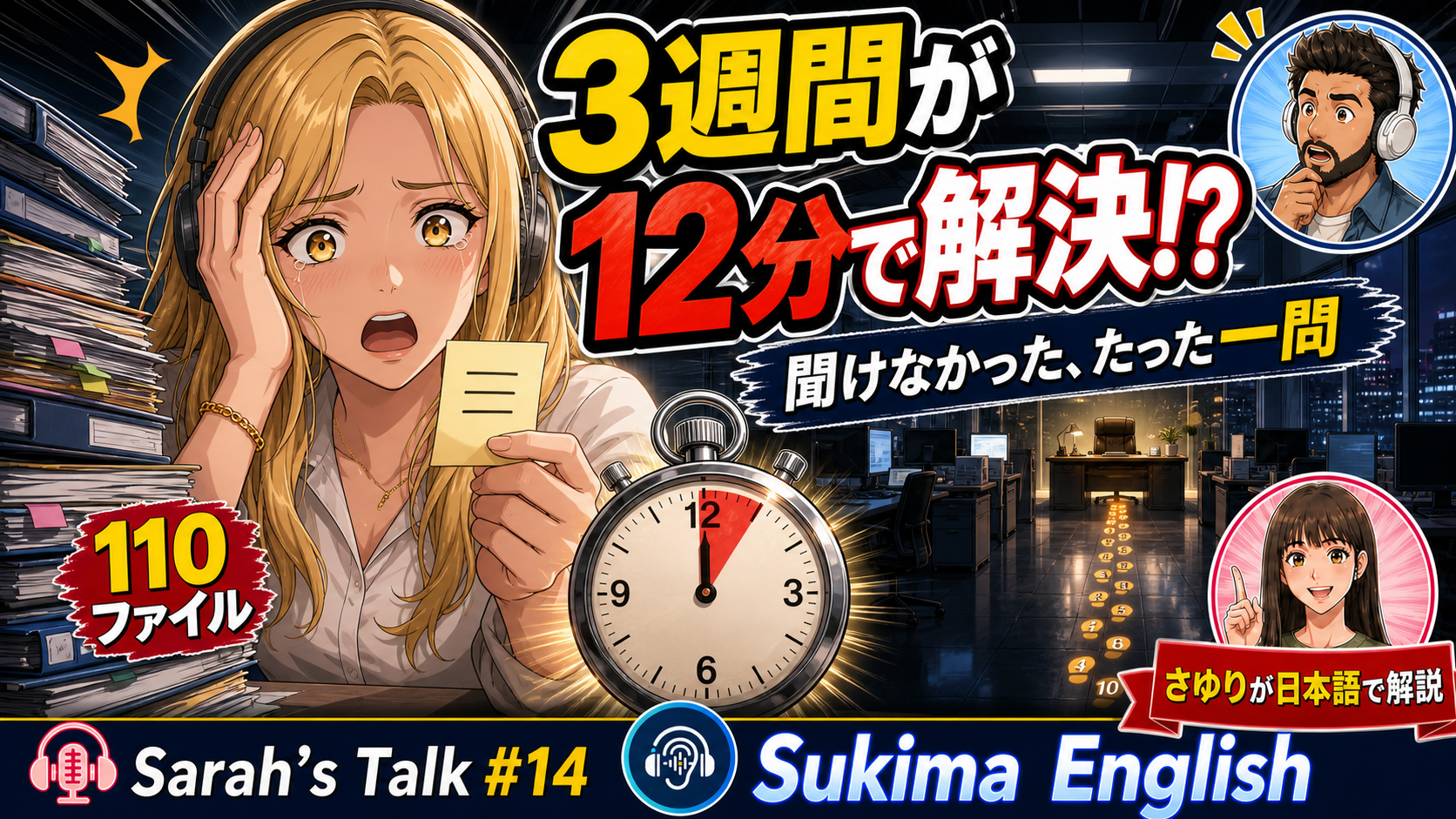
【日常英会話】日本語解説あり | 十歩の距離を渡るのに三週間、英語で「助けて」と言えない人のための7フレーズ #英語学習 #英語フレーズ #英会話 #英語耳
ポッドキャスト「すきまイングリッシュ」のスクリプト。「【日常英会話】日本語解説あり | 十歩の距離を渡るのに三週間、英語で「助けて」と言えない人のための7フレーズ #英語学習 #英語フレーズ #英会話 #英語耳」の会話全文です。

さゆり: 今日は、サラが職場で三週間、誰にも言えなかった仕事のお話です。
Marc: Three weeks. That is a long time to sit on something. (日本語訳: 3週間か。何かを抱え込むには長い時間だね。)
サラ: It was a problem that took twelve minutes to solve. I carried it for three weeks. (日本語訳: 解決するのに12分しかかからなかった問題なのに、3週間も抱え込んでたんだ。)
Marc: Twelve minutes. Are you sure about that number? (日本語訳: 12分?その数字、確か?)
サラ: I am sure. I checked the clock afterward, because I wanted to know exactly how bad it was. (日本語訳: 確かだよ。後で時計を確認したんだ。どれだけひどかったのか、正確に知りたかったから。)
Marc: Okay. Start at the beginning, because right now that is just a math problem. (日本語訳: なるほど。最初から話してくれる?今のところ、ただの計算問題にしか聞こえないから。)
さゆり: 出てくるのは、以前サラに仕事を教えてくれた、職場の先輩のケイコさんです。
さゆり: 説明はほとんどせず、三週間そばで見せることで仕事を渡した、あの方ですね。
Marc: The one who let you watch until you were ready, and then handed it to you in one sentence. (日本語訳: 君が準備できるまで見学させて、それから一言で仕事を任せてくれた人だね。)
サラ: Same person. And that is part of why this was hard, which makes no sense out loud. (日本語訳: その人。それも、これが難しかった理由の一つなんだ。口に出すと意味不明だよね。)
Marc: Why would that make it hard? She sounds like the easiest person there to ask. (日本語訳: それでどうして難しくなるの? 職場で一番頼みやすい人みたいに聞こえるけど。)
サラ: She is. That is what makes it worse. I did not have one single good reason. (日本語訳: そうなの。だから余計にたちが悪い。まともな理由が一つもなかったんだから。)
さゆり: 今日のテーマは「頼む」。三週間ためらって、十二分で終わるまでのお話です。
さゆり: 助けを求めるときの英語の言い方も、七つ出てきます。最後にまとめますね。
サラ: Okay, so picture this. Monday morning, my manager puts a project on my desk with only my name on it. (日本語訳: じゃあ、想像してみて。月曜の朝、マネージャーが私の机にプロジェクトを置いたの。担当者は私の名前だけ。)
サラ: We have a whole set of English lessons, and every one of them has to move into a new in-house format. A hundred and ten files. (日本語訳: 英語のレッスン一式があって、それを全部、新しい社内フォーマットに移さなきゃいけないの。110ファイル。)
Marc: That is either a two-day job or a two-month job. There is nothing in the middle. (日本語訳: それは2日で終わる仕事か、2か月かかる仕事かのどっちかだね。その中間はない。)
サラ: The first week it was a two-day job. I was flying. I had built myself a system by Tuesday afternoon. (日本語訳: 最初の週は、2日で終わる仕事だった。絶好調だったよ。火曜の午後には、自分なりのやり方を作り上げてた。)
サラ: And then week two started, and week two was where it stopped being about English at all. (日本語訳: でも2週目に入ったら、もう英語の話じゃなくなったの。)
Marc: How does an English project stop being about English? (日本語訳: 英語のプロジェクトが、どうして英語の話じゃなくなるの?)
サラ: Because half of every file is the Japanese side. And Japanese has rules about how you write it. (日本語訳: どのファイルも半分は日本語だから。日本語には、書き方のルールがあるでしょ。)
Marc: Sure. Kanji, kana, all of that. (日本語訳: そうか。漢字とか仮名とか、そういうのだね。)
サラ: Smaller than that. Whether two words take a middle dot. Whether a borrowed word keeps its long vowel mark. (日本語訳: もっと細かいこと。二つの単語の間に中黒を入れるかどうか。外来語の長音符号を残すかどうか。)
サラ: Which numbers stay half-width and which ones go full-width. There is a correct answer every time, and I could not see it. (日本語訳: どの数字を半角のままにして、どれを全角にするか。毎回正解があるのに、私にはそれが見えなかった。)
Marc: Okay, but that is what the internet is for. Somebody has written it down. (日本語訳: なるほど。でも、そのためにネットがあるんじゃない? 誰かが書いてるはずだよ。)
サラ: That is the trap. I looked it up and found three different answers, and my company uses a fourth one. (日本語訳: そこが落とし穴なの。調べたら3通りの答えが出てきて、しかもうちの会社は4つ目のやり方を使ってるんだから。)
Marc: Ah. So it is house style. (日本語訳: ああ。つまり、社内ルールってことだね。)
サラ: House style. And nobody writes it down, because everyone in the building already has it in their hands. (日本語訳: 社内ルール。誰も書き残してないんだよ。社内の人はみんな、もう体で覚えてるから。)
さゆり: 今出てきた「house style」、聞こえましたか。
さゆり: 辞書では「その会社が独自に持っている表記の決まり」。調べても出てこない、社内だけのルールのことです。
Marc: So what did you actually do with the files? (日本語訳: で、実際ファイルはどうしたの?)
サラ: I guessed. Then I went back and changed the guess. Then I guessed differently on the next file. (日本語訳: 推測した。それから戻って修正した。次のファイルではまた違う推測をした。)
サラ: By the end of week two I had forty files finished, and I did not trust one of them. (日本語訳: 2週目の終わりには40ファイル終わってたけど、どれ一つ信用できなかった。)
Marc: And you told nobody. (日本語訳: で、誰にも言わなかったと。)
サラ: I told nobody. (日本語訳: 誰にも言わなかった。)
Marc: Sarah, that is a factual question. Somebody in that room had the answer. (日本語訳: サラ、それは事実を確かめるだけの質問だよ。その部屋の誰かが答えを知ってたはずだ。)
サラ: Ten steps away. I counted them later. Keiko-san sits diagonally across the aisle from my desk. (日本語訳: 10歩先だよ。後で数えたんだ。ケイコさんは、通路を挟んで私の席の斜め向かいに座ってるの。)
Marc: Ten steps. That makes it worse, not better. (日本語訳: 10歩か。それだと、かえってつらいね。)
サラ: Every night I thought, I will crack this tomorrow, and then I can walk over and say it is finished. (日本語訳: 毎晩、明日にはきっと解決できる、そしたら歩いて行って、終わりましたって言えるって思ってた。)
さゆり: この「明日やろう」を英語では「put it off」と言います。「先延ばしにする」という意味です。
さゆり: やることを後ろへずらす感じの言葉で、宿題にも、歯医者にも、電話にも使えます。
サラ: Monday I told myself Tuesday. Tuesday I told myself Thursday. By Thursday I was putting off the putting off. (日本語訳: 月曜日には、火曜日にやろうと自分に言い聞かせた。火曜日には、木曜日。木曜日には、先延ばしを先延ばしにしてた。)
サラ: Week three I stayed late every night. An hour and a half, sometimes two. Empty office, one light. (日本語訳: 3週目は毎晩残業した。1時間半、ときには2時間。誰もいないオフィスに、明かりが一つ。)
サラ: And on the Tuesday of week three I was the last one out, and I stopped in the doorway and did the math. (日本語訳: 3週目の火曜日、最後にオフィスを出るとき、戸口で立ち止まって計算してみたの。)
サラ: Three weeks in. Forty-one files finished. (日本語訳: 3週間経って、終わったのは41ファイル。)
Marc: Forty-one. You just said forty at the end of week two. (日本語訳: 41? 2週目の終わりに40って言ってたよね。)
サラ: One file in seven days. That was the night I could not tell myself it was going fine anymore. (日本語訳: 7日で1ファイル。あの夜、もう順調だなんて自分に言い聞かせられなくなった。)
サラ: I was in over my head. Not on the English. On a formatting rule that a first-year employee knows by heart. (日本語訳: 完全に手に負えなくなってた。英語じゃなくて、1年目の社員でもそらで覚えてるフォーマットのルールで。)
さゆり: 今の「in over my head」が、今日の一つ目の表現です。
さゆり: 「自分の手に負えないところまで来てしまった」という意味です。仕事でも人間関係でも、引き返せないところまで進んでしまったときに使います。
Marc: And that is the part that got you. It was not hard. It was just unknown. (日本語訳: そこが君にはこたえたんだね。難しかったんじゃなくて、ただ知らなかっただけ。)
サラ: If it had been hard I would have asked on day one. It was easy, and easy is embarrassing. (日本語訳: もし大変だったら初日から聞いてるよ。簡単だったから、かえって恥ずかしいんだ。)
Marc: I want to push on that. Where does it come from? You are not a shy person. (日本語訳: そこをもう少し掘り下げたいな。それってどこから来てるの? 君は人見知りじゃないよね。)
サラ: I am not shy at all. That is why it took me so long to see what this actually was. (日本語訳: 全然人見知りじゃないよ。だからこそ、これが本当は何なのか、気づくのにすごく時間がかかったの。)
サラ: I waited tables in Manhattan the whole time I was at university. Four years. (日本語訳: 大学の間ずっと、マンハッタンでウェイトレスをしてたの。丸4年。)
サラ: In a restaurant, asking for help is a public announcement that you are behind. (日本語訳: レストランでは、助けを求めるのは、自分が遅れてますってみんなに宣言するようなものなの。)
サラ: And if you are behind, they move a table out of your section and give it to somebody else. (日本語訳: 遅れてると、自分の担当エリアからテーブルを外されて、ほかの誰かに回されちゃう。)
Marc: So asking costs you money. Actual money. (日本語訳: つまり、頼むとお金を失うわけだ。本物のお金を。)
サラ: Actual money. Twenty-two years old, and I learned that looking fine beat being right. (日本語訳: 本物のお金。22歳で、正しくあることより、平気そうに見せるほうが大事だって覚えたの。)
さゆり: サラが今話しているのは、性格ではなく、身についてしまった癖のほうですね。
サラ: Then I moved into offices, and the same rule had a nicer name. Confidence was the currency. (日本語訳: それからオフィス勤めになったんだけど、同じルールがもっと上品な名前で呼ばれるようになった。自信が通貨になったんだ。)
サラ: You said yes, and then you went home and worked out how to make yes true. (日本語訳: 「イエス」と言って、家に帰ってから、そのイエスを本当にする方法を考えるの。)
Marc: I know that trade. I ran it for years. (日本語訳: その取引、分かるよ。僕も何年もそうやってきた。)
サラ: So by the time I got here I had been practicing for a decade. Do not ask. Absorb it. Deliver. (日本語訳: だから、ここに来た頃には、もう10年もそれを練習してきたわけ。聞かない。吸収する。結果を出す。)
さゆり: 英語には「have a lot on my plate」という言い方があります。「抱えているものが多い」「手一杯だ」という意味です。
さゆり: 「plate」はお皿。載りきらないほど載っている、という比喩の表現ですね。
Marc: The thing is, in Chicago that habit got me in trouble from the other side. (日本語訳: でもね、シカゴでは、その癖のせいで逆の立場から困ったことになったんだ。)
Marc: My first office job, right after university, I sat on a broken number for three days and fixed it myself. (日本語訳: 大学を出てすぐの最初の会社で、間違った数字を3日間抱え込んで、自分で直したんだ。)
サラ: And your manager was thrilled with you. (日本語訳: で、上司は大喜びだったんでしょ。)
Marc: My manager asked me why he had to hear about it on day four. Not angry. Just genuinely confused. (日本語訳: 上司には、なんで4日目になって聞かされるんだって聞かれたよ。怒ってたんじゃなくて、本当に不思議そうだった。)
Marc: He said, you spent three days of the team's time so that nobody would know you needed twenty minutes. (日本語訳: 「20分助けが必要だったことを誰にも知られないために、チームの時間を3日使ったんだね」って言われた。)
サラ: Did that land, or did you argue with him? (日本語訳: それは響いた? それとも言い返したの?)
Marc: It is a terrible sentence to hear at twenty-three. It took me years to agree with it. (日本語訳: 23歳で聞くにはきつい言葉だよ。納得できるまで何年もかかった。)
さゆり: マークも「頼めない側」の人だった、というのがここでの発見ですね。
サラ: But here is the part I did not understand until much later. It was not only pride. (日本語訳: でも、ずっと後になるまで分からなかったことがあるの。プライドだけじゃなかったんだ。)
Marc: What else was in there? (日本語訳: ほかに何があったの?)
サラ: I could not say what I wanted. That sounds small. It is not small. (日本語訳: 何を頼みたいのか、言葉にできなかったの。小さなことに聞こえるけど、小さくないんだ。)
サラ: Every time I rehearsed it, the sentence in my head was, I need help with the format. (日本語訳: 何度練習しても、頭の中の文は「フォーマットのことで手伝ってほしい」だった。)
Marc: That sounds reasonable to me. (日本語訳: それで十分まともに聞こえるけど。)
サラ: It is not a request. It is a status update with no question in it. What does she do with that? (日本語訳: それは依頼じゃないの。質問の入ってない、ただの状況報告。言われた彼女は、どうすればいいの?)
Marc: She would have to ask you four questions before she could even start. (日本語訳: 彼女は、手をつける前に君に4つくらい質問しなきゃいけないね。)
サラ: Which means I was not asking for help. I was handing her a piece of work. (日本語訳: つまり、私は助けを求めてたんじゃなくて、彼女に仕事を丸投げしてたってこと。)
さゆり: 日本語だと「ちょっとご相談があるのですが」から入りますよね。英語は、先に「何を」「どれくらい」を出します。
さゆり: 「Do you have ten minutes?」が先で、事情はそのあと。日本語とは順番が逆、と覚えておくと使いやすいです。
Marc: Did somebody tell you that, or did you get there alone? (日本語訳: 誰かに言われたの?それとも自分で気づいたの?)
サラ: Mia told me. Of course it was Mia. We get dinner once or twice a month and she does not do comfort. (日本語訳: ミアだよ。当然ミア。月に1、2回ごはんを食べるんだけど、彼女は慰めたりしないの。)
サラ: I explained the whole thing for about eight minutes and she put her chopsticks down. (日本語訳: 私が8分くらいかけて全部説明したら、彼女は箸を置いたんだ。)
Marc: What did she say? (日本語訳: 何て言ったの?)
サラ: She said, you do not need help. You need one answer to one question, and you have not written it yet. (日本語訳: 「あなたに必要なのは助けじゃない。一つの質問への一つの答え。しかも、その質問をまだ書いてないでしょ」って言われた。)
サラ: She was completely right, which is the annoying thing about her. (日本語訳: 完全に正しかったの。そこが彼女の腹立たしいところなんだけど。)
さゆり: 「助けてください」ではなく「これを教えてください」。頼みごとを一文にする、ということですね。
サラ: There is an expression for the moment right before you do it. Swallow your pride. (日本語訳: それをする直前の瞬間を表す言い方があるの。「swallow your pride(プライドを飲み込む)」。)
サラ: You do not stop having the pride. You push it down far enough to get one sentence out. (日本語訳: プライドがなくなるわけじゃない。一文を口に出せるところまで、ぐっと押し込むの。)
さゆり: 「swallow your pride」は「恥を忍ぶ」「プライドを飲み込む」。捨てるでも負けるでもなく、飲み込む、という動詞を選んでいるのが面白いところです。
Marc: So did you go? That Friday? (日本語訳: それで、行ったの?金曜日に?)
サラ: I went on Friday at five in the evening. I stood up from my desk and I walked over there. (日本語訳: 金曜の夕方5時に行ったよ。席から立ち上がって、そっちへ歩いていった。)
Marc: Ten steps. (日本語訳: 10歩だね。)
サラ: Seven. I turned around at seven. Three times. (日本語訳: 7歩。7歩目で引き返したの。3回も。)
Marc: Three times in one evening? (日本語訳: 一晩に3回も?)
サラ: Three times. The third time I picked up the recycling on the way back so it would look like an errand. (日本語訳: 3回。3回目は、用事があったように見せたくて、戻る途中でリサイクルごみを拾ったの。)
Marc: Sarah, that is a lot of effort to avoid ten steps. (日本語訳: サラ、10歩を避けるために、ずいぶん頑張ったね。)
サラ: I know. I was angry at myself the whole train ride home, which is twelve minutes. (日本語訳: でしょ。帰りの電車の中、ずっと自分に腹が立ってた。12分間ね。)
さゆり: ここから月曜の朝の場面です。
サラ: Keiko-san gets in at eight thirty every day. I got in at eight twenty for the first time in my life. (日本語訳: ケイコさんは毎日8時半に来るの。私は人生で初めて8時20分に出社した。)
サラ: I wanted no audience. And I had done what Mia said. I had written the question down. (日本語訳: 誰にも見られたくなかったから。それに、ミアに言われた通り、質問を書いてあった。)
Marc: Say it out loud, the way you wrote it. (日本語訳: 書いた通りに声に出してみて。)
サラ: One question. When a borrowed word ends in a long vowel, do we keep the mark or drop it. That was all. (日本語訳: 質問は一つ。外来語が長音で終わるとき、長音符号は残す? それとも取る? それだけ。)
サラ: And underneath it, the two choices I could not decide between, and how many files each one would change. (日本語訳: その下に、決めきれなかった二つの案と、それぞれで何ファイル変わるか。)
Marc: So you brought her a decision, not a problem. (日本語訳: 問題じゃなくて、選ぶだけの選択肢を持っていったんだね。)
サラ: I brought her a decision. It took twenty minutes to write and it was the best thing I did in three weeks. (日本語訳: 選ぶだけの形にしたの。書くのに20分かかったけど、この3週間で一番いい仕事だった。)
サラ: Eight forty. I stood up. Ten steps. And I said, do you have ten minutes. (日本語訳: 8時40分。立ち上がって、10歩。そして「10分ありますか」って言ったの。)
Marc: In Japanese or in English? (日本語訳: 日本語で?英語で?)
サラ: Japanese. Badly. I had practiced it in the shower for two days, which tells you everything. (日本語訳: 日本語で。たどたどしくね。2日間シャワーを浴びながら練習したって言えば、分かるでしょ。)
Marc: And what happened? (日本語訳: それでどうなったの?)
サラ: She said yes. And then she added one word that I was not ready for. (日本語訳: 「はい」って言ってくれた。それから、私が心の準備をしていなかった一言を付け足したの。)
Marc: Which word? (日本語訳: どんな一言?)
サラ: She said, finally. (日本語訳: 「やっと」だって。)
Marc: Finally. (日本語訳: やっと。)
サラ: Not unkindly. Not sarcastic. Just, ah, finally. (日本語訳: 意地悪じゃなくて。皮肉でもなくて。ただ「あー、やっと」って感じ。)
さゆり: サラはこのとき、責められると思ったんですね。
サラ: I braced for it. Three weeks, you should have come sooner, why did you not say anything. (日本語訳: 身構えたよ。3週間も、もっと早く来ればよかったのに、なんで何も言わなかったの、とか言われると思って。)
Marc: And that is not what came. (日本語訳: でも、そうはならなかったんだ。)
サラ: She turned her monitor toward me and said, if you had come three weeks ago this would have taken five minutes. (日本語訳: モニターを私の方に向けて、彼女が「3週間前に来てくれていたら、5分で終わったのに」って言ったの。)
サラ: And then she said the sentence I have thought about every week since. (日本語訳: そして、それ以来毎週思い出すことになるセリフを言ったんだ。)
Marc: Go ahead. (日本語訳: どうぞ。)
サラ: She said, when you stop, my side stops too. I have been waiting on those files. (日本語訳: 「あなたが止まると、私の仕事も止まるの。あのファイル、ずっと待ってたのよ」って。)
Marc: Oh. That reframes the entire thing. (日本語訳: ああ。それで話がまるで違って見えるね。)
Marc: You were not protecting her. You were blocking her. (日本語訳: 君は彼女を守ってたんじゃなくて、彼女の足を止めてたんだ。)
サラ: For three weeks. She had work that could not start until my files were done, and she never came to ask. (日本語訳: 3週間もね。私のファイルが終わらないと始められない仕事があったのに、彼女は一度も聞きに来なかった。)
Marc: Why not? She knew. (日本語訳: なんで? 知ってたんでしょ。)
サラ: Because she assumed I would come when I was ready. She was giving me room. That is how she works. (日本語訳: 私が準備できたら来るだろうって思ってたから。余地をくれてたの。それが彼女のやり方なんだ。)
さゆり: 三週間そばで見せてから仕事を渡した、あのやり方と同じですね。待つ人なんです。
サラ: She gave me room and I filled it with silence. We were both being considerate, and it cost three weeks. (日本語訳: 彼女は余地をくれて、私はそれを沈黙で埋めた。二人とも気をつかってたのに、そのせいで3週間かかった。)
さゆり: 英語には「give someone a heads-up」という言い方があります。
さゆり: 「前もってひと言知らせる」という意味です。「heads-up」は名詞なので、「give」と組み合わせて使うのが基本の形です。
サラ: That is exactly what was missing. Not a meeting. Not a confession. One line on day three. (日本語訳: まさにそれが足りなかったの。会議でもない。打ち明け話でもない。3日目に一言、それだけ。)
Marc: So what did the actual answer turn out to be? (日本語訳: それで、肝心の答えは結局何だったの?)
サラ: She opened a drawer and took out a sticky note and wrote three lines on it. (日本語訳: 彼女は引き出しを開けて、付箋を取り出して、そこに3行書いたんだ。)
Marc: Three lines. (日本語訳: 3行。)
サラ: Three lines. The rule for the long vowel mark. The rule for the middle dot. And the rule for numbers. (日本語訳: 3行よ。長音符のルール、中黒のルール、数字のルール。)
Marc: The entire three weeks. (日本語訳: 3週間分が全部。)
サラ: The entire three weeks, on a piece of paper the size of my palm. She said, I made this for myself when I started. (日本語訳: 3週間分が全部、手のひらサイズの紙1枚に。彼女は「これ、入社したときに自分用に作ったの」って言ってた。)
サラ: She has had it in that drawer for seven years. She never had a reason to hand it to anybody. (日本語訳: 7年間、あの引き出しに入れっぱなしだったんだって。誰かに渡す理由がなかったのよ。)
さゆり: ケイコさんは以前も、敬語の言い回しを付箋に書いてサラに渡していますね。
さゆり: 同じ人が、同じやり方で、また助けている。ただ今回は、サラのほうから先に声をかけました。
Marc: How long did the whole conversation take? (日本語訳: 会話全体でどれくらい時間がかかったの?)
サラ: Twelve minutes. I checked the clock when I sat down again, because I knew I was going to hate the number. (日本語訳: 12分。席に戻ったときに時計を見たの。その数字が嫌になるって分かってたけどね。)
Marc: Three weeks and twelve minutes. (日本語訳: 3週間と12分。)
さゆり: こちらから声をかけることを、英語では「reach out」と言います。
さゆり: 「手を伸ばす」から来た言い方で、連絡を取る、相談を持ちかける、という意味で仕事の場面によく出てきます。
Marc: Did you thank her? The full New York thank you? (日本語訳: お礼は言った?ニューヨーク流のちゃんとしたお礼は?)
サラ: I wanted to. There is a phrase I use with everybody at home. I owe you one. (日本語訳: 言いたかった。地元ではみんなに使うフレーズがあるの。「I owe you one(借りができたね)」。)
サラ: It is the right phrase in English and the wrong phrase in that room, and I knew it while it was in my mouth. (日本語訳: 英語では正しいフレーズだけど、あの場では間違ったフレーズで、口から出かかったところで、それが分かったの。)
Marc: Because she would not take it. (日本語訳: 彼女は受け取らないだろうからね。)
サラ: Because she does not think anything happened. To her it was twelve minutes and a sticky note. (日本語訳: だって、彼女は何も起きてないと思ってるんだもん。彼女にとっては、たった12分と付箋一枚のことなんだから。)
さゆり: 「I owe you one」は「借りができた」「恩に着る」。助けてもらった直後に、その場で軽く返す一言です。
さゆり: 目上の方や、あらたまった場面では使いません。そこは日本語の感覚とよく似ていますね。
Marc: So what did you say instead? (日本語訳: じゃあ、代わりに何て言ったの?)
サラ: I said thank you, I took the sticky note back to my desk, and I finished sixty-nine files in nine days. (日本語訳: 「ありがとうございます」って言って、付箋を自分の席に持ち帰って、9日間で69ファイルを終わらせたの。)
Marc: Okay. Now the part I actually want. Did anything change between you two? (日本語訳: なるほど。じゃあ、ここからが本当に聞きたいところ。二人の間で何か変わった?)
サラ: I asked her to get lunch. (日本語訳: ランチに誘ってみたんだ。)
Marc: And what did she say? (日本語訳: それで、彼女は何て?)
サラ: She said, that sounds nice. (日本語訳: 「いいわね」って。)
Marc: And then you went. (日本語訳: それで、二人で行ったんだね。)
サラ: We did not go. There was no date. There is still no date. (日本語訳: 行ってないの。日にちも決まらなかったし、今も決まってない。)
サラ: I want to be honest about that, because I could tell you a better story and it would not be true. (日本語訳: そこは正直に言いたいの。もっといい話にもできるけど、それは本当じゃないから。)
さゆり: ここできれいに終わらせないのが、今日のお話のいいところです。
サラ: But something did happen the week after, small enough that I almost walked past it. (日本語訳: でも、その翌週にちょっとしたことがあったの。見過ごしそうになるくらい小さなこと。)
Marc: Tell me. (日本語訳: 聞かせて。)
サラ: She came by my desk on a Tuesday and asked what I did over the weekend. (日本語訳: 火曜日に彼女が私のデスクに来て、週末に何してたか聞いてきたんだ。)
Marc: That is it? (日本語訳: それだけ?)
サラ: That is it. No work reason. No file in her hand. She asked, I answered, and she went back. (日本語訳: それだけ。仕事の用事もないし、ファイルも持ってない。彼女が聞いて、私が答えて、彼女は戻っていった。)
Marc: And before that, every conversation between you two had a reason attached. (日本語訳: それまで、君たち二人の会話には全部、何かしら用があったんだね。)
サラ: Every single one. Two and a half years of that. And then one Tuesday, a question with nothing attached. (日本語訳: 一つ残らずね。2年半ずっとそう。それが、ある火曜日に、何の用もない質問が来たの。)
さゆり: 用のない質問が一つ。それだけです。
サラ: We are not friends. I am not going to call it more than it was. She asked, and that is the whole thing. (日本語訳: 友達になったわけじゃない。実際以上に大げさに言うつもりはないよ。彼女が聞いてくれた、それだけ。)
Marc: That is the honest version. (日本語訳: それが正直なバージョンだね。)
サラ: That is the size of it. And I will take it. (日本語訳: そのくらいの大きさの話。でも、それで十分。)
さゆり: では、今日出てきた表現をまとめましょう。サラとマークに、使い方を見せてもらいます。
サラ: "In over my head." (日本語訳: 「In over my head.(手に負えない)」)
Marc: When a situation has gone past what you can handle, and you know it. (日本語訳: 自分の処理能力を超えてしまって、自分でもそれが分かっている状況のことだよ。)
サラ: I was in over my head on a formatting rule. Not on the work. On one rule. (日本語訳: フォーマットのルールで手に負えなくなってたの。仕事全体じゃなくて、一つのルールで。)
さゆり: 「in over my head」は「自分の手に負えないところまで来ている」。水が深くて足がつかない、という比喩の表現です。
サラ: "Have a lot on my plate." (日本語訳: 「Have a lot on my plate.(手一杯だ)」)
Marc: When you are carrying more tasks than you have room for right now. (日本語訳: 今、余裕がないほどたくさんの仕事を抱えている状態のことだね。)
サラ: If somebody has a lot on their plate, that is the moment to ask what you can take. (日本語訳: 誰かが手一杯なら、それはこっちが何を引き受けられるか聞くタイミングだよ。)
さゆり: 「have a lot on my plate」は「抱えているものが多い」「手一杯だ」。今は余裕がない、と伝えたいときの定番です。
サラ: "Put it off." (日本語訳: 「Put it off.(先延ばしにする)」)
Marc: To keep pushing something to a later day instead of dealing with it. (日本語訳: 向き合う代わりに、何かを先の日へずらし続けること。)
サラ: I put it off for fifteen working days. I counted, and I do not recommend counting. (日本語訳: 15営業日、先延ばしにしたの。数えたけど、数えるのはおすすめしない。)
さゆり: 「put it off」は「先延ばしにする」。「今日はやめておく」を何度も繰り返している状態です。
サラ: "Swallow your pride." (日本語訳: 「Swallow your pride.(プライドを飲み込む)」)
Marc: To push your pride down far enough to do the thing you do not want to do. (日本語訳: やりたくないことをするために、プライドをぐっと押さえ込むこと。)
サラ: I had to swallow my pride to walk ten steps. The pride is still there. It just moved. (日本語訳: 10歩歩くために、プライドを飲み込まなきゃいけなかった。プライドはまだある。場所が移っただけ。)
さゆり: 「swallow your pride」は「恥を忍ぶ」「プライドを飲み込む」。どうしても頭を下げなければならない場面で使います。
サラ: "Reach out." (日本語訳: 「Reach out.(こちらから連絡する)」)
Marc: To make contact with somebody, usually because you need something or want to offer something. (日本語訳: 誰かに連絡を取ること。たいていは、何か必要なときか、何かを申し出たいときだね。)
サラ: I should have reached out on day three. I reached out on day twenty-two. (日本語訳: 3日目に声をかけるべきだった。実際に声をかけたのは22日目。)
さゆり: 「reach out」は「こちらから声をかける」「連絡を取る」。待つのではなく自分から動く、というところが要点です。
サラ: "Give someone a heads-up." (日本語訳: 「Give someone a heads-up.(前もって知らせる)」)
Marc: To let somebody know in advance so that nothing surprises them later. (日本語訳: 後で相手を驚かせないように、事前に知らせるってことだね。)
サラ: One line on day three would have been a heads-up. Silence for three weeks was not. (日本語訳: 3日目に1行送っていれば、それが前もって知らせるってことだった。3週間の沈黙は、そうじゃなかった。)
さゆり: 「give someone a heads-up」は「前もってひと言知らせる」。報告ではなく、一声かけておく、という感じです。
サラ: And the last one. "I owe you one." (日本語訳: そして最後。「I owe you one.(借りができたね)」)
Marc: A casual way of saying you are in somebody's debt after they helped you. (日本語訳: 助けてもらった後に、相手に借りができたって伝えるカジュアルな言い方。)
サラ: I say it constantly at home. Use it with friends, not with your boss. (日本語訳: 地元ではこればっかり言ってる。友達には使っていいけど、上司には使わないでね。)
さゆり: 「I owe you one」は「借りができた」「恩に着る」。親しい間柄で使う言い方で、あらたまった場面には向きません。
さゆり: 今日は、十歩の距離を渡るのに三週間かかったお話でした。
Marc: Sarah, will you be different next time? Honest answer. (日本語訳: サラ、次は違うやり方ができる? 正直に答えて。)
サラ: No. I will do this again. I am almost sure of it. (日本語訳: いや、またやると思う。ほぼ確実。)
Marc: That is not the ending I was set up for. (日本語訳: 僕が思ってた結末とは違うな。)
サラ: I know. But I do not think it will be three weeks. I think it will be four days, and I will hate them. (日本語訳: 分かってる。でも、3週間にはならないと思う。4日くらいかな。で、その4日間が嫌でたまらないと思う。)
さゆり: 「もう頼めるようになりました」で終わらないのが、サラらしいですね。
Marc: If something is sitting on your desk that you have not mentioned to anybody, that is your ten steps. (日本語訳: もし机の上に、まだ誰にも話してないことがあるなら、それが君の10歩だよ。)
サラ: And the thing that helped was not courage. It was writing the question down first. (日本語訳: そして、助けになったのは勇気じゃなくて、まず質問を書き出すことだったんだ。)
さゆり: それでは、また次回お会いしましょう。

関連記事

【日常英会話】「感謝していることを一つずつ」アメリカの感謝祭とネイティブの本音 #英語学習 #ネイティブ英語会話 #リスニング強化 #英語耳
ポッドキャスト「すきまイングリッシュ」のスクリプト。「【日常英会話】「感謝していることを一つずつ」アメリカの感謝祭とネイティブの本音 #英語学習 #ネイティブ英語会話 #リスニング強化 #英語耳」の会話全文です。

【日常英会話】英語のみ | ニューヨークと東京のハロウィンを英語で語ると? #英語学習 #ネイティブ英語会話 #リスニング強化
ポッドキャスト「すきまイングリッシュ」のスクリプト。「【日常英会話】英語のみ | ニューヨークと東京のハロウィンを英語で語ると? #英語学習 #ネイティブ英語会話 #リスニング強化」の会話全文です。

【日常の英語】元気のない同僚にかける英語フレーズ12選|声かけから励ましまで #英語学習 #英語フレーズ #英会話 #英語耳
ポッドキャスト「すきまイングリッシュ」のスクリプト。「【日常の英語】元気のない同僚にかける英語フレーズ12選|声かけから励ましまで #英語学習 #英語フレーズ #英会話 #英語耳」の会話全文です。

【日常英会話】住所と道案内を英語で話すと?日本の住所には通りの名前がない #英語学習 #ネイティブ英語会話 #リスニング強化 #英語耳
ポッドキャスト「すきまイングリッシュ」のスクリプト。「【日常英会話】住所と道案内を英語で話すと?日本の住所には通りの名前がない #英語学習 #ネイティブ英語会話 #リスニング強化 #英語耳」の会話全文です。

【日常の英語】日本語解説あり | 席を譲ろうとして、断られた |申し出る英語と、断られたときの英語6つ #英語学習 #英語フレーズ #英会話 #英語耳
ポッドキャスト「すきまイングリッシュ」のスクリプト。「【日常の英語】日本語解説あり | 席を譲ろうとして、断られた |申し出る英語と、断られたときの英語6つ #英語学習 #英語フレーズ #英会話 #英語耳」の会話全文です。

【日常英会話】カウンターには、向かいの椅子がない、「お一人ですか」と聞かれる国 #英語学習 #ネイティブ英語会話 #リスニング強化 #英語耳
ポッドキャスト「すきまイングリッシュ」のスクリプト。「【日常英会話】カウンターには、向かいの椅子がない、「お一人ですか」と聞かれる国 #英語学習 #ネイティブ英語会話 #リスニング強化 #英語耳」の会話全文です。