【日常英会話】英語のみ | 東京の部屋探しで3回落ちた話 | ニューヨークのアパート vs 東京のワンルーム|英語字幕あり・日本語解説なし #英語学習 #ネイティブ英語会話 #リスニング強化
ポッドキャスト「すきまイングリッシュ」のスクリプト。「【日常英会話】英語のみ | 東京の部屋探しで3回落ちた話 | ニューヨークのアパート vs 東京のワンルーム|英語字幕あり・日本語解説なし #英語学習 #ネイティブ英語会話 #リスニング強化」の会話全文です。

Marc: Sarah, you are holding an envelope like it insulted you. (日本語訳: サラ、その封筒、まるで侮辱でもされたみたいな持ち方してるね。)
サラ: My lease is up. There is a renewal fee. (日本語訳: 賃貸契約が満了なの。更新料がかかるんだって。)
Marc: Ah. One month of rent. (日本語訳: ああ。家賃1ヶ月分だ。)
サラ: One month of rent, to stay exactly where I already am. (日本語訳: 家賃1ヶ月分。今いる場所にそのまま住み続けるためにね。)
Marc: To not move. (日本語訳: 引っ越さないため、か。)
サラ: To not move. I am being charged a month of rent for the privilege of staying put. (日本語訳: そうよ。ここにとどまらせてもらうためだけに、家賃1ヶ月分を請求されてるの。)
Marc: I have paid that three times. You just pay it, every two years, like weather. (日本語訳: 俺は3回払ったよ。2年ごとに、天気みたいなものだと思って、とにかく払うんだ。)
サラ: I have been carrying this envelope around for two weeks. (日本語訳: この封筒、2週間持ち歩いてるんだ。)
Marc: And thinking about every room you have ever lived in. (日本語訳: で、今まで住んだ部屋のことを片っ端から思い出してる。)
サラ: How did you know that? (日本語訳: どうしてわかったの?)
Marc: Because that is what a lease renewal does to a person. Also, you owe me a story. (日本語訳: だって、賃貸の更新って人をそういう気分にさせるんだよ。それに、俺に話す約束の話があるだろ。)
サラ: I owe you a story. (日本語訳: 話す約束、ね。)
Marc: You said, out loud, that you owed me your New York roommate horror story. I have been holding onto that. (日本語訳: ニューヨークのルームメイトのホラー話を俺に聞かせるって、はっきり口にしたよね。ずっと覚えてたんだ。)
サラ: You have been holding onto that for a very long time. (日本語訳: ずいぶん長いこと覚えてたんだね。)
Marc: I said I would. Today you are in the hot seat. (日本語訳: 覚えておくって言っただろ。今日は君が質問される番だ。)
サラ: Fine. But I have to start with the floor plan, because the floor plan is the horror story. (日本語訳: わかった。でも間取りから話さないと。間取りがホラーストーリーなんだから。)
Marc: Okay. Where were you living? (日本語訳: よし。どこに住んでたの?)
サラ: Lower East Side. Four of us, in a railroad apartment. (日本語訳: ロウアー・イースト・サイド。4人で、鉄道長屋に住んでた。)
Marc: I have heard the term. I have never been inside one. (日本語訳: その言葉は聞いたことある。入ったことはないけど。)
サラ: The rooms are in one straight line. Each room opens into the next one, like the cars of a train. That is where the name comes from, and there is no hallway anywhere in it. (日本語訳: 部屋が一直線に並んでるの。各部屋が次の部屋につながってて、まるで電車の車両みたい。それが名前の由来で、廊下なんてどこにもないのよ。)
Marc: So how do you get to your bedroom? (日本語訳: それで、どうやって寝室に行くの?)
サラ: You walk through the other bedrooms. That is the only route. (日本語訳: 他の寝室を通っていくんだよ。それが唯一のルート。)
Marc: Hold on. You walked through somebody else's bedroom to reach yours. (日本語訳: ちょっと待って。自分の部屋に行くのに、他の誰かの寝室を通ったってこと?)
サラ: Two of them. Mine was the third car. (日本語訳: 二つだよ。私の部屋が三つ目の車両だった。)
Marc: The third car. (日本語訳: 三つ目の車両。)
サラ: If I came home at eleven at night, two people knew I came home at eleven at night. (日本語訳: 夜11時に帰ったら、私が夜11時に帰ったことを2人が知ってるわけ。)
Marc: What was your share of the rent? (日本語訳: 家賃の君の負担分はいくらだったの?)
サラ: Nineteen hundred dollars a month. One room, in the third car, with no closet. (日本語訳: 月1900ドル。三つ目の車両の一部屋で、クローゼットなし。)
Marc: No closet at all. (日本語訳: クローゼットが全くなかったの?)
サラ: There was a doorway that had been bricked up at one end, with a rod screwed across it. I hung my coats inside a wall. (日本語訳: 片側がレンガで塞がれた出入口があって、そこに棒がねじ止めしてあったの。壁の中にコートを掛けてたんだよ。)
Marc: And the heat, in a building that old. Steam? (日本語訳: それで、あんな古い建物で暖房はどうしてたの?スチーム?)
サラ: Steam radiator. It came on when the building decided, and it could not be turned off. (日本語訳: スチームラジエーター。建物の都合でつくし、自分では止められなかった。)
Marc: So what happens in January? (日本語訳: じゃあ1月はどうしてたの?)
サラ: You open the window. In February, in New York, I controlled my temperature by opening a window. (日本語訳: 窓を開けるんだよ。2月のニューヨークで、窓を開けて室温を調節してたの。)
Marc: That is the most expensive way to heat a street I have ever heard of. (日本語訳: それは今まで聞いた中で、一番お金のかかる通りの暖め方だね。)
サラ: It was a shoebox with a furnace in it. (日本語訳: ボイラー付きの靴箱だったよ。)
Marc: A shoebox. That is the right word for it, and I mean it literally. A very small living space. (日本語訳: 靴箱。まさにぴったりの言葉だよ。しかも文字どおりの意味でね。すごく狭い住まい。)
サラ: A shoebox I paid nineteen hundred dollars a month to stand in the middle of. (日本語訳: 月1900ドル払って、その真ん中に突っ立ってた靴箱ね。)
Marc: You promised me a horror story, and so far this is architecture. (日本語訳: ホラー話を約束してくれたのに、今のところ建築の話だね。)
サラ: The architecture is what makes the horror story possible. One of my roommates had a boyfriend, and he started staying over. (日本語訳: その造りのせいで、ホラー話が成り立つの。ルームメイトの一人に彼氏がいて、その人が泊まるようになったんだ。)
Marc: Normal so far. (日本語訳: 今のところ普通だね。)
サラ: He slept on the couch. And the couch was in the first car. (日本語訳: 彼はソファで寝てたんだ。しかもそのソファは、一つ目の車両にあったの。)
Marc: The first car. Which everybody has to walk through. (日本語訳: 一つ目の車両。みんなが通らなきゃいけないところだ。)
サラ: Every morning, to leave my own apartment, I stepped past a man I had not agreed to live with, asleep, with his shoes on. (日本語訳: 毎朝、自分の家を出るたびに、一緒に住むことに同意した覚えのない男が靴を履いたまま寝てる横を、またいで通ってたの。)
Marc: How long did that go on? (日本語訳: それ、どれくらい続いたの?)
サラ: Four months. (日本語訳: 4ヶ月。)
Marc: Four months of a fifth roommate that nobody voted on. (日本語訳: 誰も選んでない5人目のルームメイトが4ヶ月もいたってことか。)
サラ: He got mail there. He had a shelf. He never paid a dollar. (日本語訳: 郵便物もそこに来てたし、棚もあった。1ドルも払わなかったんだよ。)
Marc: Did anybody say anything? (日本語訳: 誰か何か言わなかったの?)
サラ: Nobody said anything. Four adults, one line of rooms, and not one of us could get the sentence out. (日本語訳: 誰も何も言わなかった。大人4人、一列に並んだ部屋で、私たち一人も、その一言を口にできなかったんだ。)
Marc: In Chicago somebody would have said it in week two. (日本語訳: シカゴだったら、2週目には誰かが言ってたはずだよ。)
サラ: In Chicago you have a hallway. You can be annoyed at somebody from a different room. (日本語訳: シカゴなら廊下があるでしょ。別の部屋からイライラできる。)
Marc: True. My first place off campus was a two bedroom, and the rent was still too high for one person. (日本語訳: それはそうだな。初めて大学の外で借りた部屋は2ベッドルームで、それでも一人で払うには家賃が高すぎたんだ。)
サラ: Which is how you got Trevor. (日本語訳: それでトレバーが来たわけね。)
Marc: Which is how I got Trevor. But there was a hallway, and a door that closed and meant it. (日本語訳: それでトレバーが来たわけだ。でも、廊下はあったし、ドアも閉めたらちゃんと閉まった。)
サラ: Here is the part I did not understand until much later. We lived at close quarters. There was no way to be in that apartment without being near somebody. (日本語訳: ここからが、ずっと後になるまで理解できなかった部分なんだけど。私たちはものすごく狭いところで暮らしてた。誰かのそばにいずに、あのアパートにいる方法なんてなかったんだ。)
Marc: You were twenty-one. That sounds fun. (日本語訳: 21歳だったんだろ?楽しそうだね。)
サラ: It was better than fun. I did not eat one meal alone in three years. (日本語訳: 楽しかったどころじゃなかった。3年間、一人で食事を摂ったことなんて一度もなかったよ。)
Marc: Not one meal. (日本語訳: 一度も?)
サラ: Not a single one. Somebody was always at the table, or on the floor, or eating out of a container over the sink. (日本語訳: 一回もなかった。誰かがいつもテーブルにいたか、床にいたか、シンクの上で容器から食べてたか、だった。)
Marc: And that is the good version of the story. (日本語訳: で、それがこの話のいい方のバージョンってわけだ。)
サラ: For years I told it as the good version. Now I think I was never alone, and I called that closeness. (日本語訳: 何年も、いい話として話してた。でも今思うと、私は一度も一人になれなかっただけで、それを「親密さ」と呼んでたんだ。)
Marc: And it was not. (日本語訳: そうじゃなかったんだね。)
サラ: It was proximity. Those are different things, and it took a much smaller apartment to teach me the difference. (日本語訳: あれはただの「距離の近さ」だった。二つは別物で、その違いを知るには、もっとずっと小さな部屋が必要だったんだ。)
Marc: So you land in Tokyo. Where do you sleep on night one? (日本語訳: それで東京に着いたわけだ。最初の夜はどこで寝たの?)
サラ: Mia's floor. I slept on Mia's floor for five weeks. (日本語訳: ミアの床。5週間、ミアの床で寝たんだ。)
Marc: Five weeks is a real friendship. (日本語訳: 5週間泊めてくれるなんて、本物の友情だね。)
サラ: Five weeks is a friendship with a clock on it. I could hear it ticking. (日本語訳: 5週間は、タイムリミット付きの友情だよ。チクタクいう音が聞こえてた。)
Marc: And then you go and find an apartment. (日本語訳: それでアパートを探しに行ったんだね。)
サラ: Mia found me the agent. A small office by the station, four desks, and a wall covered in paper listings I could not read. (日本語訳: ミアが不動産屋を見つけてくれた。駅の近くの小さなオフィスで、デスクが4つ。読めない物件情報の紙が壁一面に貼ってあった。)
Marc: But you could read the numbers. (日本語訳: でも数字は読めたんだね。)
サラ: I could read the numbers, and that was the whole of it. Five apartments in one afternoon, and then he sat me down and explained the money. (日本語訳: 数字は読めた。それだけ。午後だけで5軒見て、それから彼が私を座らせて、お金のことを説明してくれた。)
Marc: Walk me through it. (日本語訳: 詳しく教えて。)
サラ: There is a deposit. The kind I understand. You put it down, and if you have not wrecked the place, you get it back at the end. (日本語訳: 敷金がある。これは私にもわかるタイプ。払っておいて、部屋をめちゃくちゃにしてなければ、最後に戻ってくる。)
Marc: That one exists everywhere. (日本語訳: それはどこにでもあるものだね。)
サラ: Then there is a second payment. Same size. One more month of rent, and that one does not come back. (日本語訳: それから、もう一つ支払いがある。同じ額。家賃もう1ヶ月分で、こっちは戻ってこない。)
Marc: And you asked why. (日本語訳: それで理由を聞いたんだね。)
サラ: So I asked what it was for. He said it is a gift. To the owner. (日本語訳: 何のためのお金か聞いたの。そしたら「お礼です」って。オーナーへの。)
Marc: That is genuinely what it is called. (日本語訳: 本当にそういう名前なんだよ。)
サラ: I have paid a lot of strange fees in my life. I had never paid one that was described to me as a gift. (日本語訳: 人生でいろんな変わった手数料を払ってきたけど、お礼だと説明された手数料は初めてだった。)
Marc: And nothing is attached to it. That is the part that gets people. (日本語訳: しかも、見返りは何もない。みんなが引っかかるのはそこなんだ。)
サラ: It is money you hand to a stranger so that he will let you pay him more money every month. (日本語訳: 知らない人にお金を渡して、そのうえ毎月もっとお金を払わせてもらうってことだよね。)
Marc: And then the agent's fee on top of all of it. (日本語訳: さらにその上に仲介手数料まで。)
サラ: And then he said one more word, and that is where the afternoon stopped. (日本語訳: そしたら彼がもう一言だけ言って、その午後はそこで止まったの。)
Marc: Guarantor. (日本語訳: 保証人。)
サラ: Guarantor. A person who signs, and who pays if I do not. (日本語訳: 保証人。サインして、私が払わなければ代わりに払ってくれる人。)
Marc: And you did not have one. (日本語訳: で、保証人がいなかったと。)
サラ: I did not have one, and I did not know anybody who could be one. My parents are seven thousand miles away. (日本語訳: いなかったし、なれるような知り合いもいなかった。両親は7000マイルも離れているし。)
Marc: In Chicago you get a co-signer for your first apartment, at twenty-two, with no credit. (日本語訳: シカゴでも、22歳で信用履歴がなくて初めて部屋を借りるなら、連帯保証人をつけるよ。)
サラ: Right. It is a starter thing. You outgrow it. (日本語訳: そう。最初だけのもの。そのうち必要なくなる。)
Marc: Here it is not a starter thing. It is the normal shape of a rental, at any age. (日本語訳: ここでは最初だけじゃないんだ。何歳になっても、それが賃貸の普通の形なんだよ。)
サラ: So somebody has to vouch for me. Somebody has to personally guarantee me, in writing, to a landlord I have never met. (日本語訳: だから誰かが私のために保証してくれなきゃいけない。会ったこともない大家さんに、私を個人的に、書面で保証してくれる人が必要。)
Marc: And the solution is a company. (日本語訳: で、その解決策が会社なんだ。)
サラ: You pay a guarantee company a fee, and the company becomes the person you do not have. (日本語訳: 保証会社に手数料を払うと、その会社が、いない保証人の代わりになってくれるの。)
Marc: You buy the relative. (日本語訳: 親戚を買うんだ。)
サラ: You buy the relative. And I was relieved. I thought, fine, I have solved it with money, that is a thing I know how to do. (日本語訳: 親戚を買う。それでほっとしたの。よし、お金で解決した、それなら私にもできることだ、って。)
Marc: But it did not solve it. (日本語訳: でも、それで解決はしなかった。)
サラ: Three of the five apartments turned me down. (日本語訳: 5軒のうち3軒に断られた。)
Marc: Three out of five. (日本語訳: 5軒中3軒。)
サラ: Three out of five. And I had the guarantee company, and the job, and the deposit sitting in an account. (日本語訳: 5軒中3軒。保証会社も、仕事も、口座に用意した敷金もあったのに。)
Marc: What reason did they give? (日本語訳: どんな理由だったの?)
サラ: None of them gave one. (日本語訳: どれも理由なんて言われなかったよ。)
Marc: None at all. (日本語訳: 全然?)
サラ: The agent would come back from a phone call and say that this time it had not worked out. That there had not been a connection. (日本語訳: 不動産屋さんが電話から戻ってきては、今回はうまくいかなかった、ご縁がなかった、って言うの。)
Marc: There is a phrase for that. (日本語訳: そういう言い方あるよね。)
サラ: There is a very polite phrase for that. At the time I did not know it, so I sat there nodding. (日本語訳: すごく丁寧な言い方があるんだよ。当時は知らなかったから、うんうんって頷いて座ってた。)
Marc: For what it is worth, it happened to me twice in year one. (日本語訳: 参考までに言うと、俺も1年目に2回あったよ。)
サラ: With a company behind you. (日本語訳: 会社の後ろ盾があっても?)
Marc: With a company behind me, a Japanese colleague on the phone, and a salary slip. Twice. (日本語訳: 会社の後ろ盾も、電話口に日本語ができる同僚も、給料明細だってあったのに。2回も。)
サラ: So what is the actual reason? (日本語訳: じゃあ、本当の理由は何なの?)
Marc: I have theories. The owner is eighty and has never rented to a foreigner. Or he is worried about the language if a pipe bursts at two in the morning. (日本語訳: 俺なりの仮説はあるよ。大家さんが80歳で、外国人に貸したことが一度もないとか。夜中の2時に水道管が破裂したら、言葉が通じるか心配してるとか。)
サラ: Those are reasons. (日本語訳: それなら理由になるじゃない。)
Marc: They are reasons. (日本語訳: 理由にはなるね。)
サラ: They are not an answer. Nobody said any of it to me. Somebody looked at a page and decided, and I never got to hear what the deal-breaker was. (日本語訳: でも、それは答えじゃない。誰一人として私には何も言わなかった。誰かが書類を見て決めて、何が決め手だったのか、私は聞かせてもらえなかった。)
Marc: And you still do not know. (日本語訳: 今でも分からないまま?)
サラ: I still do not know. Almost everything else about this move I have made peace with. That one I do not get to. (日本語訳: 今でも分からない。この引っ越しのことは、ほとんど全部受け入れられたんだけど、それだけはどうしても無理なんだ。)
Marc: So the fourth apartment says yes. (日本語訳: じゃあ、4軒目のアパートはOKが出たんだ。)
サラ: The fourth one says yes. It was the one Mia had circled. Nakano, fourth floor, room four zero two. (日本語訳: 4軒目がOKだった。ミアが丸をつけてたところ。中野の4階、402号室。)
Marc: Is there an elevator? (日本語訳: エレベーターはある?)
サラ: There is no elevator. I carried a mattress up four flights in August and sat down on the landing and laughed. (日本語訳: エレベーターはない。8月にマットレスを4階まで運んで、踊り場で座り込んで笑っちゃったわ。)
Marc: How big is it? (日本語訳: どれくらいの大きさなの?)
サラ: Twenty-five square meters. That is about two hundred and seventy square feet, for everything. (日本語訳: 25平米。約270平方フィートで、これが全部。)
Marc: Kitchen, bed, table, all of it. (日本語訳: キッチンとかベッドとかテーブルとか、全部?)
サラ: All of it. My share of the New York apartment was bigger than my entire Tokyo apartment, and now I am alone in it for the first time in my adult life. (日本語訳: 全部。ニューヨークのアパートの私の部屋のほうが、東京のアパート全体より広かったんだ。しかも今は、大人になって初めての一人暮らし。)
Marc: What was the first thing that confused you? (日本語訳: 最初に混乱したことは何だった?)
サラ: The broken closet. (日本語訳: 壊れたクローゼット。)
Marc: Go on, describe it. (日本語訳: 詳しく聞かせて。)
サラ: There is a cupboard, deep, the full height of the wall, with one shelf across the middle. (日本語訳: 奥行きがあって、壁の高さいっぱいまである戸棚で、真ん中に棚板が一枚渡してあるの。)
Marc: And no rail. (日本語訳: で、ハンガーポールがない。)
サラ: No rail. Nowhere to hang anything. I decided somebody had taken it out and never put it back. (日本語訳: ないの。何も掛けられない。誰かが外して、そのまま戻さなかったんだと思ってた。)
Marc: So what did you do? (日本語訳: それで、どうしたの?)
サラ: I put a bookshelf inside it. For six months I had a bookshelf standing inside a cupboard. (日本語訳: 本棚を中に入れたんだ。6ヶ月間、戸棚の中に本棚が立ってたの。)
Marc: Six months. (日本語訳: 6ヶ月も?)
サラ: Then my landlady came up to check the smoke alarm, saw it, and went very quiet. (日本語訳: そしたら大家さんが火災報知器の点検に上がってきて、それを見て、黙り込んじゃって。)
Marc: Watanabe-san. (日本語訳: 渡辺さん。)
サラ: Watanabe-san. She opened the doors, mimed folding something, and put the folded something on the bottom half. (日本語訳: 渡辺さん。戸を開けて、何かをたたむ仕草をして、たたんだものを下の段に置いたの。)
Marc: Bedding. That is what the depth is for. (日本語訳: 寝具だね。だからあの奥行きがあるんだ。)
サラ: That is what the depth is for. The whole thing is a bed, folded away every morning. (日本語訳: そう、あの奥行きはそのため。ベッドまるごとを、毎朝たたんでしまうんだよ。)
Marc: So the shelf is not a mistake either. (日本語訳: じゃあ、棚も間違いじゃなかったんだ。)
サラ: The closet was not broken. My assumptions were broken. I had been handed a completely reasonable object and I could not read it. (日本語訳: クローゼットは壊れてなかったんだ。私の思い込みが壊れてた。完全に合理的なものを渡されたのに、それが読めなかったんだ。)
Marc: All right. The walls. (日本語訳: よし。壁だね。)
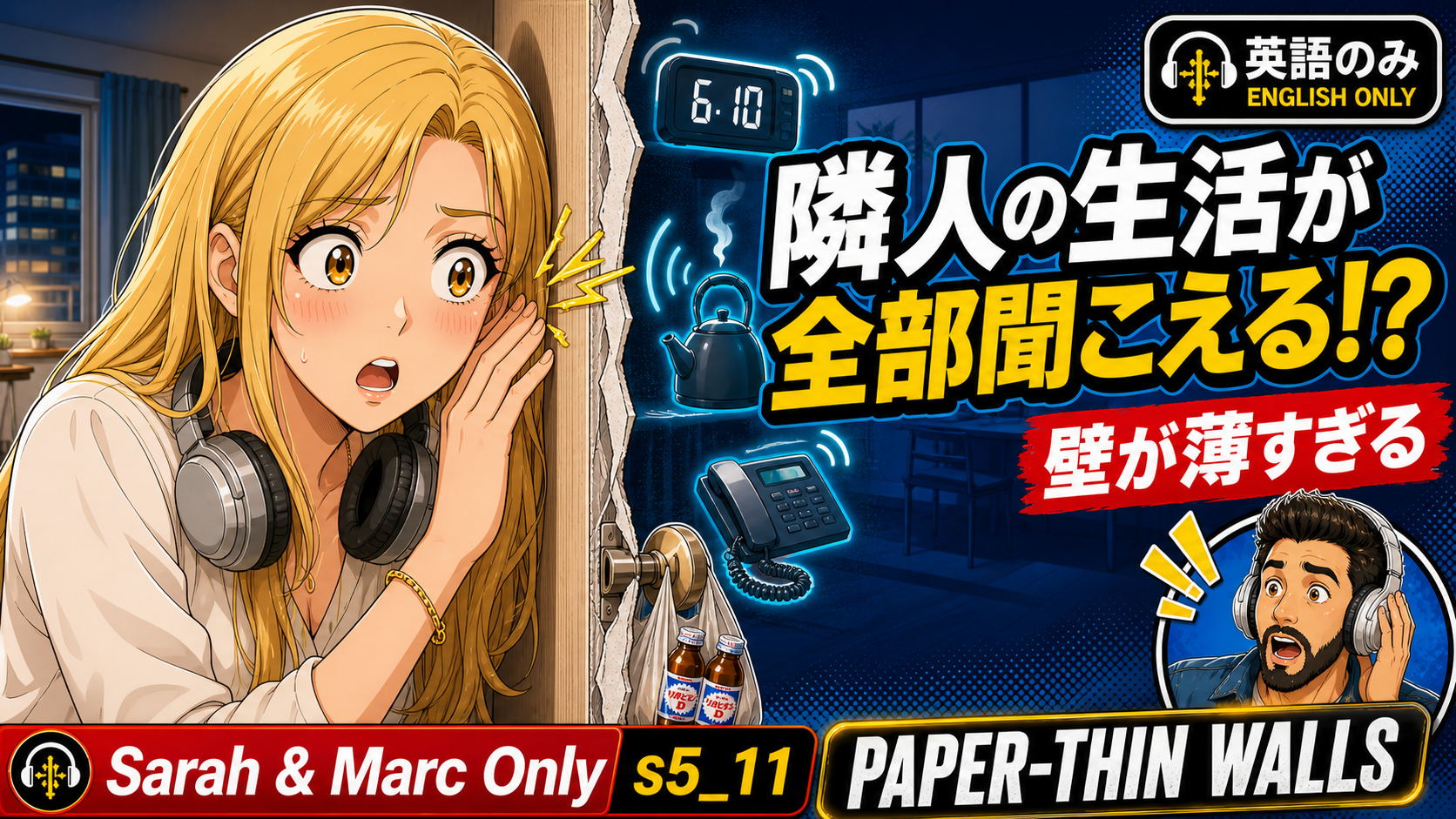
サラ: Paper-thin. And I do not mean that as a figure of speech. (日本語訳: 紙みたいに薄いよ。たとえじゃなくて、本当に。)
Marc: What can you actually hear? (日本語訳: 具体的に何が聞こえるの?)
サラ: My neighbor's alarm goes off at six ten. Then his kettle. On Sunday evenings he makes one phone call and it runs about twenty minutes. (日本語訳: 隣の人のアラームが6時10分に鳴るんだ。それからやかんの音。日曜の夜には電話を一本かけて、それが20分くらい続くの。)
Marc: You know his week. (日本語訳: 彼の1週間がわかるんだね。)
サラ: Better than I know some of my friends' weeks. (日本語訳: 友達の何人かの1週間より、よっぽどわかってる。)
Marc: And here is the part people back home never think about. He can hear you too. (日本語訳: で、ここが地元の人たちが絶対に考えないところなんだ。向こうにも君の音が聞こえてるってこと。)
サラ: He can hear me too. That took about a year to actually feel. (日本語訳: 向こうにも私の音が聞こえてる。それを本当に実感するまで、1年くらいかかったな。)
Marc: What made it land? (日本語訳: 何がきっかけで実感したの?)
サラ: My second winter here I got sick. The kind of flu where you lose a week, and I was not quiet about it, because you cannot be quiet about that. (日本語訳: ここで2度目の冬に体調を崩したの。1週間まるごと寝込むようなインフルエンザで、静かになんてしてられなかった。そういう時って無理でしょ。)
Marc: And then what? (日本語訳: それで?)
サラ: On the third day there was a bag hanging on my door handle. Two of those little medicine drinks from the convenience store. No note. (日本語訳: 3日目、ドアノブに袋がかかってた。コンビニの小さい栄養ドリンクが2本。メモはなし。)
Marc: From him. (日本語訳: 彼から?)
サラ: It has to have been him. There is nobody else on that side of the wall. (日本語訳: 彼しかいないよ。壁のそっち側には、他に誰もいないんだから。)
Marc: Did you go and say thank you? (日本語訳: お礼を言いに行ったの?)
サラ: I have never met him. (日本語訳: 会ったことないんだ。)
Marc: Two and a half years. (日本語訳: 2年半も?)
サラ: Two and a half years, one wall, and I do not know his face. I know his alarm, his kettle, and his Sunday phone call. (日本語訳: 2年半、壁一枚隔てて、顔も知らない。アラームも、やかんの音も、日曜の電話も知ってるけどね。)
Marc: And that is enough for you. (日本語訳: それで十分なんだね。)
サラ: I have decided that it is. It grew on me. It really did not at first, and then it did. (日本語訳: そう決めたの。だんだん好きになったんだよ。最初は全然だめだったけど、そのうちにね。)
Marc: So how do you live in two hundred and seventy square feet? (日本語訳: で、270平方フィートでどうやって暮らすの?)
サラ: You do not. That is the actual answer. You cannot live in it, so you go outside. (日本語訳: 暮らさないの。それが本当の答え。中では暮らせないから、外に出るんだ。)
Marc: Meaning what, concretely. (日本語訳: 具体的にはどういうこと?)
サラ: The bathhouse three blocks over is my bathtub. I go twice a month and I do not think of it as an outing. It is the tub. (日本語訳: 3ブロック先の銭湯が、うちのお風呂なの。月に2回行くけど、お出かけだとは思ってない。あれがお風呂。)
Marc: And the park. (日本語訳: それに、公園。)
サラ: The park is my living room. If I want to sit somewhere that is not one foot from my own bed, I leave the building. (日本語訳: 公園はうちのリビング。自分のベッドから1フィートも離れてないところじゃなくて、どこか別の場所に座りたいときは、建物を出るの。)
Marc: And the shopping street. (日本語訳: それに、商店街。)
サラ: The shopping street was my pantry. I bought two days of food at a time, because there was nowhere to put more. (日本語訳: 商店街がうちの食品庫だった。一度に2日分の食べ物を買ってたの。それ以上置く場所がなかったから。)
Marc: You said was. (日本語訳: 過去形にしたね。)
サラ: The greengrocer on the corner closed this spring. Forty years. I still walk that way sometimes. (日本語訳: 角の八百屋さんがこの春で閉店したんだ。40年続いたお店。今でも時々そっちの道を通るよ。)
Marc: I am not going to make you tell that one again. (日本語訳: その話をもう一回させるつもりはないよ。)
サラ: Thank you. But it belongs here, because that is exactly what I mean. The apartment is not the apartment. (日本語訳: ありがとう。でも、ここで話すべきなんだ。まさに私が言いたいことだから。家は、部屋のことじゃないの。)
Marc: The neighborhood is the apartment. (日本語訳: 近所全体が家なんだね。)
サラ: The neighborhood is the apartment. The room is where I sleep and keep my coats. (日本語訳: 近所全体が家。部屋は、寝てコートをしまっておく場所。)
Marc: So which one was better? (日本語訳: で、どっちのほうがよかった?)
サラ: I am not answering that. It is the wrong question and I am refusing it on principle. (日本語訳: 答えない。それは間違った質問だし、原則として拒否する。)
Marc: Then give me the right question. (日本語訳: じゃあ、正しい質問を教えて。)
サラ: What each room did to me. That is the one. (日本語訳: それぞれの部屋が私に何をしたか。それが正しい質問。)
Marc: All right. What did they do? (日本語訳: よし。何をしたの?)
サラ: New York gave me a small room and a very large life, and the life was so loud that I never noticed I was hiding inside it. (日本語訳: ニューヨークは私に小さな部屋と、とても大きな人生を与えてくれた。そしてその人生はあまりにも騒がしかったから、自分がその中に隠れていることにも気づかなかったんだ。)
Marc: Hiding from what? (日本語訳: 何から隠れてたの?)
サラ: Four people, no hallway, never one meal alone. You do not have to find out who you are when there is always somebody in the next car. (日本語訳: 4人で、廊下もなくて、一人で食べる食事は一度もない。隣の車両にいつも誰かいたら、自分が何者なのか向き合わなくて済むんだよ。)
Marc: And Tokyo. (日本語訳: で、東京は。)
サラ: Tokyo gave me a room too small to hide in, and then made the city do the rest of the work. (日本語訳: 東京は、隠れるには狭すぎる部屋をくれて、残りの仕事は街に任せたの。)
Marc: So you would not go back. (日本語訳: じゃあ、もう戻らないんだね。)
サラ: I did not say that. I would go back tomorrow if the reason were good enough. I am saying I needed the second room to understand the first one. (日本語訳: そうとは言ってないわ。理由が十分なら明日だって戻るわよ。言いたいのは、最初の部屋を理解するために2つ目の部屋が必要だったってこと。)
Marc: Last thing. Did you ever find out why those three said no? (日本語訳: 最後に。あの3軒が断った理由は、わかった?)
サラ: No, I never did. (日本語訳: ううん、結局わからなかった。)
Marc: And you are not going to. (日本語訳: で、これからもわからないと。)
サラ: I am not going to. Some of this country has let me all the way in. That one door is still shut and nobody is going to explain it to me. (日本語訳: わからないと思う。この国のいくつかの場所は、私を奥まで受け入れてくれた。でもあのドアだけはまだ閉まってて、誰も説明してくれない。)
Marc: That is a very honest place to stop. (日本語訳: 話を終えるには、すごく正直なところだね。)
サラ: It is the only honest place to stop. (日本語訳: 正直に終われるのは、ここしかないよ。)
Marc: So what happens to the envelope? (日本語訳: じゃあ、封筒はどうなるの?)
サラ: I am paying it. One month of rent to not move, and I am paying it without complaining, which is the most Tokyo sentence I have ever said out loud. (日本語訳: 払うよ。引っ越さないための家賃1ヶ月分を、文句も言わずに払う。今まで口にした中で、一番東京らしいセリフだわ。)
Marc: You have come a long way from the third car. (日本語訳: 三つ目の車両から、ずいぶん遠くまで来たね。)
サラ: Four floors up and seven thousand miles over. Thanks for holding me to the story. (日本語訳: 4階分上って、7000マイル越えてね。話すまで逃がさないでくれてありがとう。)
Marc: I said I would. See you next time. (日本語訳: 約束したからね。また次回。)
サラ: See you next time. (日本語訳: また次回。)

関連記事
【日常英会話】「感謝していることを一つずつ」アメリカの感謝祭とネイティブの本音 #英語学習 #ネイティブ英語会話 #リスニング強化 #英語耳
ポッドキャスト「すきまイングリッシュ」のスクリプト。「【日常英会話】「感謝していることを一つずつ」アメリカの感謝祭とネイティブの本音 #英語学習 #ネイティブ英語会話 #リスニング強化 #英語耳」の会話全文です。

【日常英会話】英語のみ | ニューヨークと東京のハロウィンを英語で語ると? #英語学習 #ネイティブ英語会話 #リスニング強化
ポッドキャスト「すきまイングリッシュ」のスクリプト。「【日常英会話】英語のみ | ニューヨークと東京のハロウィンを英語で語ると? #英語学習 #ネイティブ英語会話 #リスニング強化」の会話全文です。

【日常の英語】元気のない同僚にかける英語フレーズ12選|声かけから励ましまで #英語学習 #英語フレーズ #英会話 #英語耳
ポッドキャスト「すきまイングリッシュ」のスクリプト。「【日常の英語】元気のない同僚にかける英語フレーズ12選|声かけから励ましまで #英語学習 #英語フレーズ #英会話 #英語耳」の会話全文です。

【日常英会話】住所と道案内を英語で話すと?日本の住所には通りの名前がない #英語学習 #ネイティブ英語会話 #リスニング強化 #英語耳
ポッドキャスト「すきまイングリッシュ」のスクリプト。「【日常英会話】住所と道案内を英語で話すと?日本の住所には通りの名前がない #英語学習 #ネイティブ英語会話 #リスニング強化 #英語耳」の会話全文です。

【日常の英語】日本語解説あり | 席を譲ろうとして、断られた |申し出る英語と、断られたときの英語6つ #英語学習 #英語フレーズ #英会話 #英語耳
ポッドキャスト「すきまイングリッシュ」のスクリプト。「【日常の英語】日本語解説あり | 席を譲ろうとして、断られた |申し出る英語と、断られたときの英語6つ #英語学習 #英語フレーズ #英会話 #英語耳」の会話全文です。

【日常英会話】カウンターには、向かいの椅子がない、「お一人ですか」と聞かれる国 #英語学習 #ネイティブ英語会話 #リスニング強化 #英語耳
ポッドキャスト「すきまイングリッシュ」のスクリプト。「【日常英会話】カウンターには、向かいの椅子がない、「お一人ですか」と聞かれる国 #英語学習 #ネイティブ英語会話 #リスニング強化 #英語耳」の会話全文です。