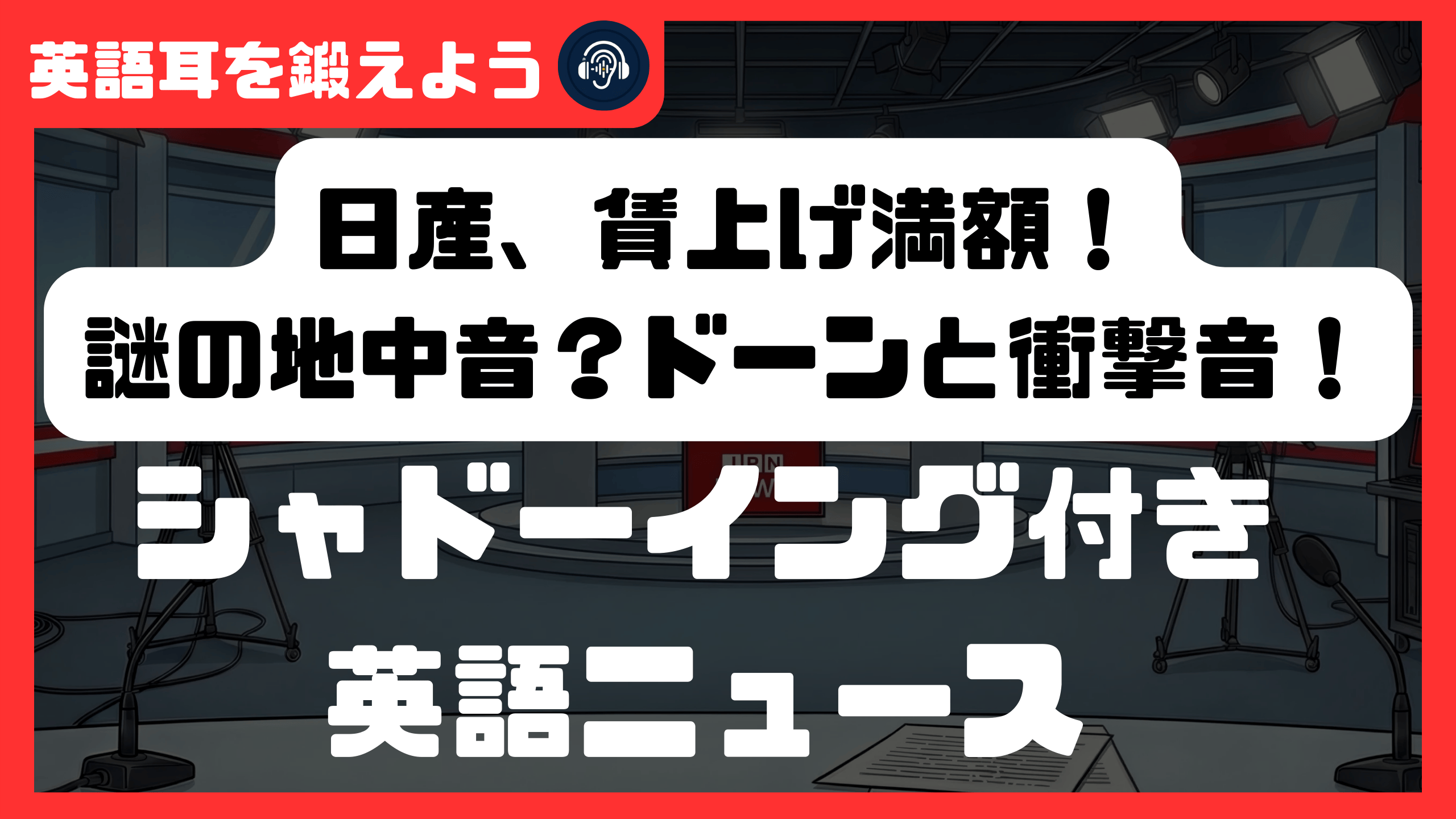
【シャドーイング付き英語ニュース】日産 賃上げ!地中から謎の音?市制見送りへ? | リスニング強化
【シャドーイング付き英語ニュース】日産 賃上げ!地中から謎の音?市制見送りへ? | リスニング強化
YouTube「スキマ時間で英語を学ぼう」の英語ニュース解説です。
動画と合わせてリスニング・シャドーイングにご利用ください。
今日のキーワード
Now let's look at some key vocabulary from today's stories. (さて、今日のニュースから重要な語彙を見ていきましょう。)
The first phrase is "shunto." (最初のフレーズは「春闘」です。)
"Shunto" refers to the annual spring wage negotiations in Japan. For example, "The company's shunto offer was lower than the union's expectations." (「春闘」っていうのは、日本の春の賃上げ交渉のことですね。例えば、「会社の春闘の提示額は、組合の要求を下回った」とか。)
Next, we have "net loss." (次は、「純損失」です。)
A "net loss" is when a company's expenses are greater than its income, resulting in a financial loss. For instance, "Despite increased sales, the company reported a net loss due to high operating costs." (「純損失」っていうのは、会社の費用が収入を上回って、赤字になることですね。例えば、「売上は伸びたものの、運営コストがかさんで純損失を計上した」とか。)
Our third term is "erupt." (3つ目の言葉は、「噴出」です。)
"Erupt" means to burst forth suddenly and violently. We often use it with volcanoes, but in this case, a pipe. "The volcano could erupt at any time, so residents were evacuated." (「噴出」っていうのは、突然激しく吹き出すことですね。火山によく使いますが、今回はパイプの場合です。「火山はいつ噴火してもおかしくないので、住民は避難しました。」)
The fourth phrase is "traffic jams." (4つ目の言葉は、「交通渋滞」です。)
"Traffic jams" refer to heavy congestion on roads, causing vehicles to move very slowly or stop. "The accident on the highway caused massive traffic jams that lasted for hours." (「交通渋滞」っていうのは、道路がひどく混んで、車がノロノロ運転になったり、止まったりすることですね。「高速道路での事故で、何時間も続く大規模な交通渋滞が発生しました。」)
Finally, we have "autonomy." (最後は、「自主性」です。)
"Autonomy" means the ability to govern oneself or control one's own affairs; independence. "The new department was given autonomy to make its own decisions without needing approval from headquarters." (「自主性」っていうのは、自分で自分を治めたり、自分のことを自分でコントロールできる能力、つまり独立性ですね。「新しい部署には、本社からの承認なしに、独自の判断を下せる自主性が与えられました。」)
スクリプト

Welcome to Sukima English News! I'm Sarah. (スキマ English Newsへようこそ!サラです。)
And I'm Marc. (マークです。)
Today, Nissan's wage hike, a giant pipe, and... (今日は、日産の賃上げ、巨大パイプ、そして…)
...a town delaying city status. (…市制施行を延期する町、です。)
Stay with us! (チャンネルはそのままで!)
Our first story is about Nissan's recent wage increase agreement. (最初のニュースは、日産の最近の賃上げ合意についてです。)
Nissan agreed to the labor union's demand for a 10,000 yen monthly pay raise in the 2026 shunto. (日産は、2026年の春闘で、労働組合の月額1万円の賃上げ要求に応じました。)
That's interesting, especially since the spring wage negotiation period is still a little ways off, right? (それは興味深いですね。春闘の時期にはまだ少し早いですよね?)
Exactly. It's unusual to settle this early. (そうなんです。こんなに早く決まるのは珍しいですね。)
Last year, the union asked for 18,000 yen, but only got 16,500. This year, they lowered their demand. (去年、組合は1万8千円を要求しましたが、1万6千5百円しか得られませんでした。今年は要求額を下げたんですね。)
So, what's behind this decision, given Nissan's financial situation? (それで、日産の財政状況を考えると、この決定の背景には何があるのでしょうか?)
Nissan is still implementing its "Re:Nissan" recovery plan. They're projecting a huge net loss. (日産はまだ「Re:Nissan」の再建計画を実施しています。巨額の最終赤字を予測しています。)
This follows a large loss the previous year. (これは、前年度の大きな損失に続くものです。)
Wow, that's significant. So why agree to a pay raise at all? (へえ、それは大きいですね。それなら、なぜ賃上げに合意したのでしょうか?)
It's a response to rising prices, to help employees cope with inflation. (物価上昇への対応で、従業員がインフレに対処できるよう支援するためです。)
Second, it's to reward employees for their contribution to the recovery efforts. (2つ目は、再建努力への貢献に対する従業員への報酬です。)
Also, other auto companies have agreed to wage increases. (また、他の自動車会社も賃上げに合意しています。)
It sounds like Nissan is balancing financial realities with employee needs. Can you give us some more context about their financial performance? (日産は、財政的な現実と従業員のニーズのバランスを取っているようですね。彼らの財務実績について、もう少し詳しく教えていただけますか?)
Sales were down 6.2% from the same period last year. (売上高は前年同期比で6.2%減でした。)
They had an operating loss, and their global retail sales were down. (営業損失を計上し、グローバル小売販売も減少しました。)
Those numbers certainly paint a picture. What about the wage increase itself? What percentage increase is it? (これらの数字は確かに状況を表していますね。賃上げ自体はどうですか?何パーセントの増加ですか?)
The 10,000 yen raise is about a 2.7% increase. Employees will also receive bonuses. (1万円の賃上げは約2.7%の増加です。従業員はボーナスも受け取ります。)
Okay, so it's a relatively modest increase, but still a significant gesture. How does this compare to wage trends across Japan? (なるほど、比較的控えめな増加ですが、それでも重要なジェスチャーですね。これは、日本全体の賃金動向と比べてどうですか?)
Private sector surveys predict an average wage increase of 4.69%. (民間部門の調査では、平均賃上げ率は4.69%と予測されています。)
Rengo is targeting a base pay increase of at least 3%, and a total increase of over 5%. (連合は、ベースアップ3%以上、総額5%以上の賃上げを目標としています。)
So Nissan's 2.7% is a bit below the national target. What are the experts saying about overall wage trends in Japan? (つまり、日産の2.7%は、国の目標を少し下回っているんですね。専門家は、日本全体の賃金動向についてどう言っていますか?)
The Dai-ichi Life Research Institute is predicting a 5.45% wage increase. (第一生命経済研究所は、5.45%の賃上げを予測しています。)
A survey indicates that listed companies are planning for a 4.69% increase. (ある調査によると、上場企業は4.69%の賃上げを計画しています。)
Teikoku Databank found that most companies expect to improve wages in 2026. (帝国データバンクは、ほとんどの企業が2026年に賃金を改善すると予想していることを明らかにしました。)
It sounds like momentum is building for wage increases across the board. (全体的に賃上げの勢いが増しているようですね。)
Exactly. The expected wage increase for small and medium-sized enterprises is around 3.03%. (ええ、そうです。中小企業の賃上げ見込みは、およそ3.03%です。)
So, circling back to Nissan, what are the potential impacts of this wage increase, both positive and negative? (それで、日産の話に戻りますが、今回の賃上げは、プラスとマイナス、それぞれどんな影響が考えられますか?)
On the positive side, it could boost employee morale. (プラスの面としては、従業員の士気向上につながるかもしれません。)
However, it could also put additional pressure on their finances. (ただ、財務状況へのさらなるプレッシャーにもなりかねません。)
And what about Nissan's suppliers? How might this affect them? (それで、日産のサプライヤーはどうでしょうか?どんな影響があると思われますか?)
A survey suggests that Nissan's recovery plan could negatively impact about half of its suppliers. (ある調査によると、日産の再建計画は、サプライヤーの約半数に悪影響を与える可能性があるそうです。)
Some companies are even considering revising their own wage increase plans. (中には、自社の賃上げ計画の見直しを検討している企業もあるようです。)
So, it's a complex situation with potential ripple effects. How does this all relate to our listeners in Japan? (つまり、波及効果が予想される複雑な状況なんですね。これが、日本のリスナーの皆さんにどう関係してくるのでしょうか?)
It highlights the ongoing economic pressures of inflation and the efforts companies are making to address them. (インフレという経済的なプレッシャーが続いており、企業がそれに対処しようと努力していることを示しています。)
It also shows the importance of wage negotiations and their impact on the economy. (また、賃上げ交渉の重要性と、それが経済に与える影響も示しています。)
It seems like a lot of people are watching to see if this trend of wage increases will continue. (この賃上げのトレンドが続くかどうか、多くの人が注目しているようですね。)
Now, let's discuss an unusual incident in Osaka. (さて、ここからは大阪で起きた珍しい出来事についてお話しましょう。)
A massive steel pipe burst out of the ground, causing disruption. (巨大な鋼管が地面から噴き出し、混乱を引き起こしました。)
A pipe bursting? Tell us more. (鋼管が噴き出したんですか?詳しく教えてください。)
On March 11th, on Route 423, a huge steel pipe, part of a sewage project, shot up 13 meters. (3月11日、国道423号線で、下水道工事に使われていた巨大な鋼管が、13メートルも吹き上がったんです。)
Thirteen meters high! Where was this? (13メートルも!どこで起きたんですか?)
In Umeda, near Chayamachi. This pipe, a "立坑", is 3.5 meters in diameter and 27 meters long. It's for drainage and flood prevention. (梅田の茶屋町付近です。この「立坑」と呼ばれる鋼管は、直径3.5メートル、長さ27メートル。排水と洪水防止のためのものです。)
So, it protects the city. What caused it to erupt? (つまり、街を守るものなんですね。何が原因で噴き出したんですか?)
The Osaka City Construction Bureau is investigating. The pipe was buried with steel plates. They had just finished pumping out groundwater. (大阪市建設局が調査中です。鋼管は鋼板で埋められていました。地下水の汲み上げが終わったばかりだったそうです。)
Pumping groundwater might be connected. What happened immediately? (地下水の汲み上げが関係しているかもしれませんね。直後には何が起きましたか?)
No one was hurt. But Shin-Midosuji closed, causing 10-kilometer traffic jams. (けが人はいませんでした。しかし、新御堂筋が閉鎖され、10キロの渋滞が発生しました。)
Ten kilometers! How long was the road closed? (10キロも!道路はどれくらい閉鎖されていたんですか?)
The fire department pumped water back in, and by 4:30 PM, it had sunk 2 meters. (消防が水を入れ戻し、午後4時半までに2メートル沈下しました。)
They got it partially down. What's the economic impact? (部分的に沈下したんですね。経済的な影響はどうですか?)
There's the cost of delays, business disruption, and project delays. It's a considerable amount. (遅延によるコスト、事業の中断、プロジェクトの遅延などがあります。かなりの額になるでしょう。)
What about long-term implications? (長期的な影響はどうでしょうか?)
There are concerns about other underground structures and preventing similar incidents. We also need to consider groundwater and contamination. (他の地下構造物への懸念や、同様の事故の防止策が必要です。地下水や汚染についても考慮する必要があります。)
It raises questions about infrastructure safety. What's being done? (インフラの安全性に疑問が生じますね。どんな対策が取られているんですか?)
The Bureau is investigating the cause, looking at ground conditions and construction. They'll need preventative measures and improved designs. (建設局が原因を調査中で、地盤の状態や工事方法などを調べています。予防策や設計の改善が必要になるでしょう。)
Transparency is key. Is the city keeping the public informed? (透明性が重要ですね。市は情報を公開しているのでしょうか?)
Yes, timely information about the cause, repairs, and prevention is crucial to maintain public trust. (ええ、原因、修理、そして予防に関するタイムリーな情報は、国民の信頼を維持するために不可欠です。)
This highlights the importance of maintaining infrastructure. Many cities face this. (これはインフラの維持がいかに重要かを示していますね。多くの都市が同じ問題を抱えています。)
Precisely. This is a wake-up call for stronger measures for aging infrastructure, like inspections and maintenance. (その通りです。これは老朽化したインフラに対する、点検やメンテナンスといった、より強力な対策を講じるべきだという警鐘ですね。)
It's a reminder that unseen infrastructure is critical. How does this affect listeners? (目に見えないインフラが非常に重要だということを改めて認識させられます。これはリスナーの皆さんにどう影響するでしょうか?)
For those in Osaka, it shows potential disruptions. More broadly, support policies that prioritize infrastructure maintenance for safety and minimal disruption. (大阪にお住まいの方にとっては、混乱が起こりうることを示唆しています。より広く言えば、安全性と最小限の混乱のために、インフラのメンテナンスを優先する政策を支持しましょう。)
Good point. Investing in infrastructure is investing in our future. (いい点ですね。インフラへの投資は、私たちの未来への投資です。)
Let's move on to our third story, Marc. It's about a town in Ibaraki Prefecture postponing its plans to become a city. (さて、マルク、3つ目のニュースに移りましょう。茨城県のある町が市になる計画を延期したというニュースです。)
The town, Ami, aimed to become a city by November 2027, anticipating a population of 50,000. (阿見町は、人口5万人を見込んで、2027年11月までに市になることを目指していました。)
What happened? (何があったんですか?)
A census in October 2025 showed 49,689 residents. Ami announced on March 11th that they're abandoning their city status plans. (2025年10月の国勢調査で、住民は4万9689人でした。阿見町は3月11日に、市制移行計画を断念すると発表しました。)
Disappointing. What does becoming a city do? (残念ですね。市になることにはどんな意味があるんですか?)
City status brings increased autonomy. Responsibilities shift from Ibaraki Prefecture to Ami. For example, managing welfare programs would become Ami's responsibility. (市になると、自治権が拡大します。責任が茨城県から阿見町に移ります。例えば、福祉プログラムの管理は阿見町の責任になります。)
Ami's population trends are interesting. Until 1995, births exceeded deaths. Since 2010, deaths have been higher. In 2022, 320 births and 554 deaths. (阿見町の人口動態は興味深いですね。1995年までは出生数が死亡数を上回っていました。2010年以降は、死亡数の方が多くなっています。2022年には、出生数が320人、死亡数が554人でした。)
More deaths than births. Common in rural areas? (出生数よりも死亡数が多いんですね。地方ではよくあることですか?)
Yes. However, Ami also saw a positive social increase – more people moving in – starting around 2012. In 2022, this was about 1,000 people. (ええ。しかし、阿見町では2012年頃から、転入者が増えるという社会増も起きています。2022年には、約1000人でした。)
People are moving to Ami, but it's not enough? (人は阿見町に引っ越してきているけれど、それだけでは足りないということですか?)
Precisely. The overall population increase was only 766 in 2022. Ami's total fertility rate is lower than national averages. (その通りです。2022年の総人口増加数はわずか766人でした。阿見町の合計特殊出生率は、全国平均よりも低いんです。)
From 2018 to 2022, it dropped to 1.29. Compare that to the national rate of 1.20 and Ibaraki Prefecture's 1.22 in 2023. (2018年から2022年にかけて、1.29に低下しました。2023年の全国平均1.20、茨城県の1.22と比較してみてください。)
Attracting people, but not families. What's their plan now? (人は呼び込めているけれど、家族連れはそうではないんですね。彼らの今後の計画は?)
They'll continue as a town, and the welfare office is on hold. The bigger picture is addressing population decline. A research institute projects 43,596 by 2050. (町として存続し、福祉事務所の設置は見送りとなります。より大きな問題は、人口減少への対応です。ある研究機関は、2050年までに4万3596人になると予測しています。)
Since 2015, Ami has been working on population strategies: increasing births, attracting residents, and preventing people from moving away. (2015年以降、阿見町は出生数の増加、住民の誘致、転出の防止といった人口戦略に取り組んでいます。)
What are they doing? (具体的に何をしているんですか?)
Ami has improved access to Tokyo via the Ken-O Expressway, leading to more logistics facilities. Ami had the highest "net migration" nationwide in 2022. (阿見町は圏央道経由で東京へのアクセスを改善し、物流施設が増加しました。阿見町は2022年に全国で最も高い「社会増」を記録しました。)
How are they leveraging that? (それをどのように活用しているんですか?)
They're trying to attract young families and boost the local economy. They even considered merging with Ushiku. (若い家族連れを誘致し、地域経済を活性化しようとしています。牛久市との合併も検討したほどです。)
Merging could be a solution. Why should someone in Tokyo care? (合併は解決策の一つになりえますね。東京の人が気にするべき理由は?)
It's a microcosm of a national issue: Japan's declining population. Ami reflects challenges faced by many towns. (これは、日本の人口減少という国家的な問題の縮図なんです。阿見町は、多くの町が直面している課題を反映しています。)
If these areas decline, it impacts everything from tax revenue to the availability of services, even affecting larger cities. It underscores the need for national policies that support local communities. (これらの地域が衰退すると、税収からサービスの利用可能性まで、あらゆるものに影響を与え、大都市にさえ影響を及ぼします。地方コミュニティを支援する国家政策の必要性を強調しています。)
That's all for today's Sukima English News. (今日のスキマEnglishニュースは以上です。)
Don't forget to subscribe and keep practicing! (チャンネル登録と練習を忘れずに!)
See you next time! (また次回!)
Bye for now! (それでは!)
シャドーイング用セクション
A: Time for our shadowing practice! Let's review 5 key sentences. (さあ、シャドーイング練習の時間です!重要な文を5つ復習しましょう。)
A: Nissan agreed to the labor union's demand for a 10,000 yen monthly pay raise in the 2026 shunto. (日産は、2026年の春闘で、労働組合の要求である月額1万円の賃上げを受け入れました。)
B: Let's try that one more time at normal speed. (もう一度、普通のスピードでやってみましょう。)
A: Nissan agreed to the labor union's demand for a 10,000 yen monthly pay raise in the 2026 shunto. (日産は、2026年の春闘で、労働組合の要求である月額1万円の賃上げを受け入れました。)
A: It's a response to rising prices, to help employees cope with inflation. (物価上昇に対応して、従業員がインフレに対処できるようにするためです。)
B: Now, one more time a little faster. (さあ、もう一度、少し速く。)
A: It's a response to rising prices, to help employees cope with inflation. (物価上昇に対応して、従業員がインフレに対処できるようにするためです。)
A: On March 11th, on Route 423, a huge steel pipe, part of a sewage project, shot up 13 meters. (3月11日、国道423号線で、下水道工事に使われていた巨大な鋼管が13メートルも吹き上がりました。)
B: Okay, let's try that again at a normal pace. (はい、もう一度、普通のペースでやってみましょう。)
A: On March 11th, on Route 423, a huge steel pipe, part of a sewage project, shot up 13 meters. (3月11日、国道423号線で、下水道工事に使われていた巨大な鋼管が13メートルも吹き上がりました。)
A: The fire department pumped water back in, and by 4:30 PM, it had sunk 2 meters. (消防が水を入れ直したところ、午後4時半までに2メートル沈みました。)
B: Let's give that another shot at full speed. (もう一度、フルスピードでやってみましょう。)
A: The fire department pumped water back in, and by 4:30 PM, it had sunk 2 meters. (消防が水を入れ直したところ、午後4時半までに2メートル沈みました。)
A: Ami announced on March 11th that they're abandoning their city status plans. (阿見町は3月11日、市制移行計画を断念すると発表しました。)
B: Alright, one last time at a regular tempo. (はい、最後にもう一度、普通のテンポで。)
A: Ami announced on March 11th that they're abandoning their city status plans. (阿見町は3月11日、市制移行計画を断念すると発表しました。)

関連記事
【シャドーイング付き英語ニュース】人材重視企業は伸び悩み?危険運転に数値基準!埼玉地下鉄25周年 | リスニング強化
【シャドーイング付き英語ニュース】人材重視企業は伸び悩み?危険運転に数値基準!埼玉地下鉄25周年 | リスニング強化
【シャドーイング付き英語ニュース】生活制度変更!空港開業延期?高市首相のSNS発言! | リスニング強化
【シャドーイング付き英語ニュース】生活制度変更!空港開業延期?高市首相のSNS発言! | リスニング強化
【シャドーイング付き英語ニュース】広島城ガイド85歳!石炭火力増強へ?イージス艦トマホーク発射能力! | リスニング強化
【シャドーイング付き英語ニュース】広島城ガイド85歳!石炭火力増強へ?イージス艦トマホーク発射能力! | リスニング強化