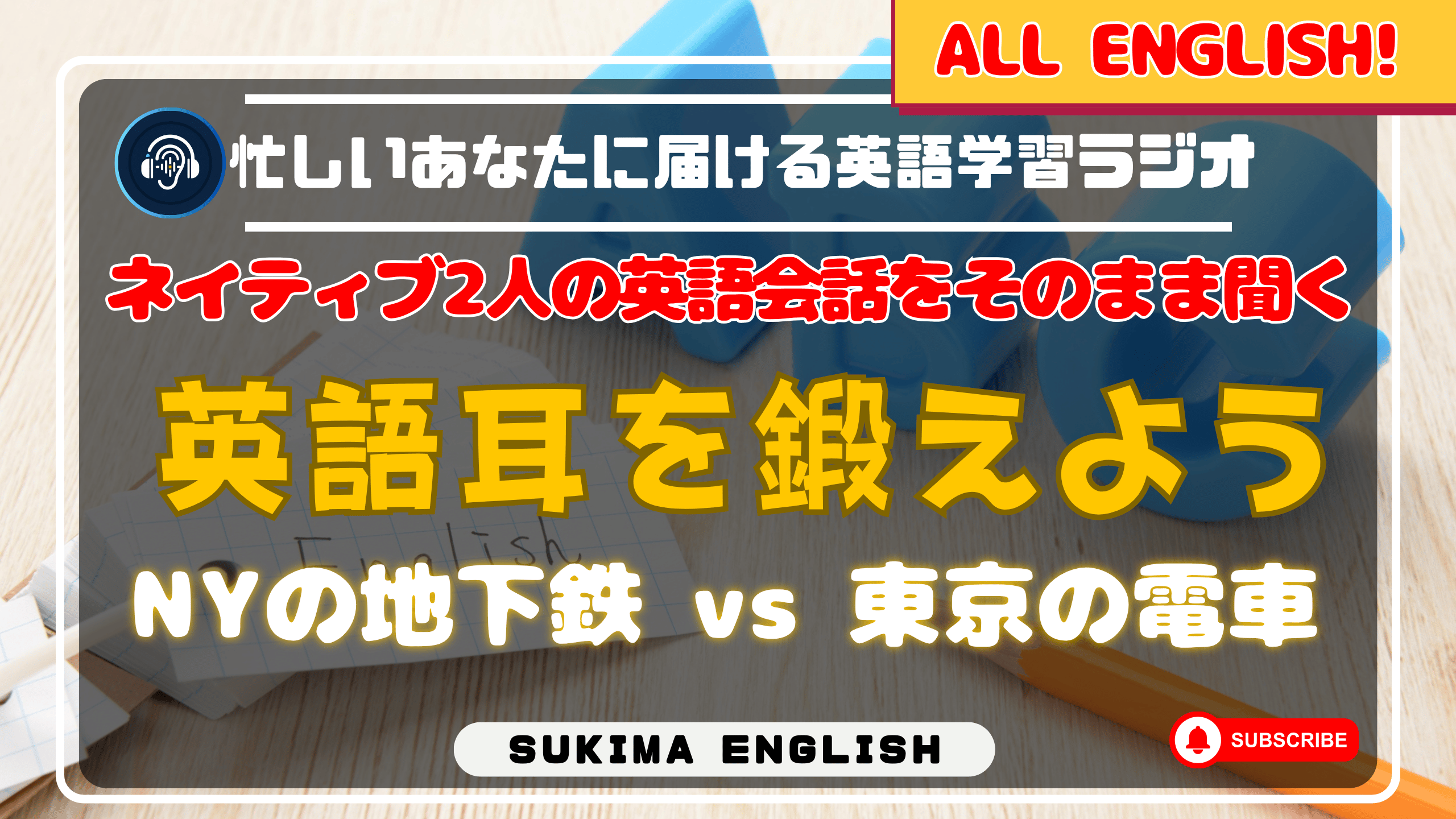
NYの地下鉄 vs 東京の電車 | 英語字幕あり・日本語解説なしのイマージョンリスニング
ポッドキャスト「すきまイングリッシュ」のスクリプト。「NYの地下鉄 vs 東京の電車 | 英語字幕あり・日本語解説なしのイマージョンリスニング」の会話全文です。

サラ: Marc, can I get something off my chest? (日本語訳: マーク、ちょっと言いたいことがあるんだけど、いい?)
Marc: That sounds ominous. Always. (日本語訳: それは不吉な響きね。いつものことだけど。)
サラ: I went home to New York for a long weekend two months ago. And I had a moment on the subway that I cannot stop thinking about. (日本語訳: 2ヶ月前に、長い週末でニューヨークに帰省したんだ。で、地下鉄に乗ってる時に、ずっと頭から離れない出来事があって。)
Marc: Oh, here we go. (日本語訳: あー、始まった。)
サラ: Today I want to talk about subways and trains. Specifically, the New York subway versus the Tokyo train system. (日本語訳: 今日は地下鉄と電車について話したいんだ。具体的には、ニューヨークの地下鉄と東京の鉄道システムを比べて。)
Marc: This feels like a setup. You're going to make me defend Chicago, aren't you? (日本語訳: これは罠だよ。僕にシカゴを擁護させようとしてるんだろ?)
サラ: I am not making you defend anything. But I will say this — the Tokyo train system has officially ruined me. (日本語訳: 何も擁護させようとしてるわけじゃないよ。でもこう言わせてもらうと、東京の鉄道システムは僕を完全にダメにした。)
Marc: Oh, it's ruined me too. I'm right there with you. (日本語訳: ああ、私もダメになったよ。君の気持ち、よくわかる。)
サラ: Then this episode is going to be a real come-to-Jesus moment for both of us. (日本語訳: じゃあ、このエピソードは、僕たち二人にとって、まさに神との対面みたいな瞬間になるね。)
Marc: A two-person therapy session. (日本語訳: 二人だけのセラピーセッション。)
サラ: Exactly that. (日本語訳: まさにそれ。)
Marc: Okay. Let's start in NY. Set the stage. What is the New York subway like, for anyone who has never been? (日本語訳: さて、ニューヨークから始めよう。状況設定を。ニューヨークの地下鉄って、行ったことない人にとってどんな感じなんだろう?)
サラ: Okay so picture this. You walk down a flight of stairs that smells like — and I cannot even describe it — but you know it when you smell it. (日本語訳: よし、想像してみて。階段を降りていくんだけど、その匂いがさ…なんというか、説明できないんだけど、嗅いだらすぐわかる匂い。)
Marc: I know it. I have been there once. It is a smell. (日本語訳: わかるよ。一度だけ行ったことがある。あれは匂いだ。)
サラ: It is a smell. You swipe your MetroCard. Or you tap your phone now, because we have finally entered the future. And then you are standing on a platform, and there is an entire universe happening down there. (日本語訳: 匂いだよ。メトロカードをスワイプして。今はスマホでタッチするようになったけどね、ついに未来に進んだんだ。で、プラットフォームに立って、そこには地下に広がる宇宙があるんだ。)
Marc: A universe. (日本語訳: 宇宙。)
サラ: There is a guy playing a saxophone. There is a guy preaching. There is a rat the size of a small dog. There is water dripping from somewhere. You do not know where. You do not want to know where. (日本語訳: サックスを吹いてる奴がいる。説教してる奴がいる。子犬くらいの大きさのネズミがいる。どこからか水が滴ってる。どこかわからない。知りたくもない。)
Marc: This is so accurate. (日本語訳: すごく的確だ。)
サラ: And then the train comes — eventually — and it is screaming. Metal on metal. The doors open and there are forty different vibes happening inside that one car. (日本語訳: で、電車が来るんだ…やっと。そして、それは悲鳴を上げてる。金属が擦れる音。ドアが開いて、一つの車両の中に40種類の違うエネルギーが渦巻いてる。)
Marc: Forty different vibes. (日本語訳: 40種類の違うエネルギー。)
サラ: Someone is eating Chinese food. Someone is sleeping. Someone is doing a full TikTok dance routine. A couple is having a real argument. A baby is crying. And you just have to find your spot in this chaos and survive your stop. (日本語訳: 誰かが中華料理を食べてる。誰かが寝てる。誰かが本格的なTikTokダンスを踊ってる。カップルが本気で言い争ってる。赤ちゃんが泣いてる。君はただ、このカオスの中で自分の場所を見つけて、降りる駅まで生き延びるしかないんだ。)
Marc: I felt every word of that. (日本語訳: その言葉、全部身にしみたよ。)
サラ: And the announcements! "Stand clear of the closing doors." That is the one consistent thing in my life. I hear that sentence in my dreams. (日本語訳: そしてアナウンス!「ドアが閉まります。お手を触れないでください。」あれが僕の人生で唯一変わらないものだ。夢の中でもあのセリフを聞くんだ。)
Marc: Honestly, that line is iconic at this point. (日本語訳: 正直、あのセリフも今や象徴的だよね。)
サラ: Oh, and the delays. Let us not forget the delays. You sit on the train, the doors close, and the train just... does not move. For ten minutes. No announcement. No explanation. Just vibes. (日本語訳: ああ、それに遅延。遅延を忘れてはいけない。電車に乗って、ドアが閉まって、電車が…動かない。10分間。アナウンスなし。説明なし。ただただ、雰囲気。)
Marc: Just vibes. (日本語訳: ただただ、雰囲気。)
サラ: And then a voice comes on and says, "We are being held momentarily by the train's dispatcher." And that is it. That is all the information you get. (日本語訳: そしてアナウンスがあって、「係員により一時停車しています」って言うんだ。それだけ。得られる情報はそれだけ。)
Marc: I love that the New York subway treats you like an adult. "We are not going to explain. Figure it out." (日本語訳: ニューヨークの地下鉄は、僕たちを大人扱いしてるのが好きだよ。「説明しないよ。自分で考えろ。」って。)
サラ: Yes! Exactly! They do not owe you anything. (日本語訳: そう!まさに!彼らは僕たちに何もする義務はないんだ。)
Marc: But here is the thing — I love it. There is a chaotic charm to it. (日本語訳: でもね、これだけは言っておく。私はそれが好きなんだ。あのカオスな魅力がある。)
サラ: There is. I am not saying it is bad. I am saying it is a whole experience. (日本語訳: あるね。悪いとは言ってないんだ。ただ、まるごと一つの体験だって言ってるんだ。)
Marc: That is the right word for it. Experience. (日本語訳: それがぴったりの言葉だね。体験。)
サラ: You do not ride the New York subway. You survive it. (日本語訳: ニューヨークの地下鉄には乗らない。生き延びるんだ。)
Marc: Did you ever have a really wild moment? Like a moment that you still tell people about? (日本語訳: 何かすごく面白い出来事とかあった?人に話すような出来事。)
サラ: Oh, I have a hundred. The one that lives in my head — I was on the L train, like, midnight on a Saturday, and a guy walked into my car carrying a full live chicken. (日本語訳: ああ、百個くらいあるよ。私の頭に残ってるのはこれ。L線に乗ってたんだけど、土曜の深夜で、男が本物のニワトリを抱えて車両に入ってきたんだ。)
Marc: A live chicken. (日本語訳: 生きたニワトリ)
サラ: A live, real, clucking chicken. Under his arm. He sat down. The chicken was fine. He was fine. Nobody on that train asked a single question. (日本語訳: 生きてる、本物の、コッコ鳴くニワトリ。腕の下に。彼は座った。ニワトリは元気だった。彼は元気だった。その電車で誰も一つも質問しなかった。)
Marc: Nobody asked. That is the New York part. (日本語訳: 誰も聞かなかった。それがニューヨークらしいところ。)
サラ: That is the New York part. (日本語訳: それがニューヨークらしいところ。)
Marc: And honestly — that is just a Tuesday for you, right? (日本語訳: で、正直、それはあなたにとってただの火曜日だよね?)
サラ: That is a Tuesday. The chicken is not even my weirdest story. I just lead with it because it is the most quotable. (日本語訳: それが火曜日。ニワトリは私の奇妙な話の中で一番じゃない。引用しやすいから、まずそれで話すだけ。)
Marc: Okay, what is the weirdest then? (日本語訳: なるほど、じゃあ一番奇妙なのは?)
サラ: I once watched a man do the entire choreography from "Single Ladies" on the platform at Fourteenth Street. Full routine. He was alone. He was not asking for money. He was just doing it. (日本語訳: 14丁目駅のプラットフォームで、ある男が『シングル・レディース』の振り付け全部やってるのを見たことがある。フルバージョン。一人で。お金を求めてるわけでもない。ただやってただけ。)
Marc: For the joy of it. (日本語訳: 楽しむために。)
サラ: For the joy of it. And nobody was looking at him. That is the part that makes it New York. Everyone just lets him cook. (日本語訳: 楽しむために。で、誰も見てない。そこがニューヨークらしいところ。みんな彼にやらせてる。)
Marc: Lets him cook. (日本語訳: やらせてる。)
サラ: "Lets him cook" is the whole spirit of New York, honestly. (日本語訳: 「やらせてる」は、正直、ニューヨークの精神そのもの。)
Marc: Okay. Now flip it. First time on a Tokyo train. Tell me everything. (日本語訳: なるほど。じゃあ、逆はどう?初めて東京の電車に乗った時。全部話して。)
サラ: Marc. Marc. I almost lost my mind. (日本語訳: マーク。マーク。気が狂いそうになった。)
Marc: How so? (日本語訳: どうやって?)
サラ: I walked into the station — Shinjuku, by the way, which was a terrible choice for a first try. (日本語訳: 駅に入ったんだ。新宿だよ、ちなみに、初めてなのに最悪な場所だった。)
Marc: Oh no. Shinjuku is the deep end. (日本語訳: ああ、それは…。新宿はディープエンドだ。)
サラ: Oh yes, the deep end. And it was rush hour. So you would think it would be the New York version of rush hour, but louder. Right? (日本語訳: そう、ディープエンド。しかもラッシュアワーだった。だから、ニューヨークのラッシュアワーを想像するだろうけど、もっとうるさい感じ?そうだろ?)
Marc: Right. (日本語訳: そうだろ。)
サラ: It was silent. (日本語訳: 静かだった。)
Marc: That is the part that gets everyone. (日本語訳: そこがみんなを驚かせる点。)
サラ: There were thousands — literally thousands — of people. All moving in perfectly choreographed patterns. No one bumping into each other. No one yelling. No one even talking on the phone. (日本語訳: 何千人って…文字通り何千人って人がいた。みんな完璧に振り付けられたパターンで動いてた。ぶつかる人もいない。叫ぶ人もいない。電話で話す人もいない。)
Marc: It is like a ballet. (日本語訳: バレエみたいだ。)
サラ: It is a ballet. And I, the New Yorker, am the one tourist standing in the middle of the ballet trying to figure out which line goes to Roppongi. (日本語訳: バレエだよ。で、私、ニューヨーカーは、六本木行きの列がどれか探してるバレエの真ん中に立ってる観光客。)
Marc: Did you ask someone? (日本語訳: 誰かに聞いた?)
サラ: I tried! But I felt so loud just opening my mouth. The volume of normal NY conversation in a Tokyo station feels like screaming. (日本語訳: 聞いてみた!でも、口を開くだけで自分がすごくうるさく感じた。東京の駅での普通のニューヨークの会話の音量が、叫んでるみたいに聞こえる。)
Marc: I had this exact same feeling. The first month, I would whisper. (日本語訳: 全く同じ感覚になったことがある。最初の1ヶ月はささやいていたよ。)
サラ: I whispered for months. Months, Marc. (日本語訳: 数ヶ月、ささやいたよ。数ヶ月、マーク。)
Marc: Then there is the train itself. (日本語訳: それから電車自体。)
サラ: The train arrives. It pulls in exactly on time. To the second. The doors line up exactly with the marks on the platform. And everyone lines up. Like, before the train arrives. They have already formed neat columns. (日本語訳: 電車が来る。正確な時間に到着する。秒単位で。ドアがプラットフォームの線にぴったり合う。で、みんな並ぶ。電車が来る前に。すでにきれいな列ができてる。)
Marc: It hit me hard the first time I saw that. In Chicago, you are just clumped together near where you think the doors will be. (日本語訳: それ初めて見た時、衝撃だった。シカゴだと、ドアが来そうな場所にただ群がってるだけ。)
サラ: Same in NY. It is a free-for-all. But in Tokyo, you respect the line. You earn your place. And then everyone gets on calmly, and finds a spot, and just... rides. (日本語訳: ニューヨークも同じ。フリーフォーオール。)
Marc: No food. (日本語訳: でも東京では、列を尊重する。自分の場所を勝ち取る。そしてみんな静かに乗り込んで、場所を見つけて、ただ…乗る。)
サラ: No food. No drinks. No phone calls. Sometimes I would just sit on the train and listen to the silence and feel like I was in a library that was moving. (日本語訳: 食べ物なし。)
Marc: A moving library. That is a good way to put it. (日本語訳: 食べ物なし。飲み物なし。電話なし。時々、電車に乗って、静けさを聞いて、動いてる図書館にいるみたいだって思った。)
サラ: And the announcements. They are so polite. So gentle. "We apologize for the inconvenience as the train will be delayed by approximately one minute." (日本語訳: アナウンスもね。すごく丁寧なの。すごく穏やか。「1分ほど遅延いたします。ご迷惑をおかけいたします」って。)
Marc: One minute. (日本語訳: 1分。)
サラ: ONE MINUTE. They apologize for one minute! In NY, the train can be twenty minutes late and the announcement is "Sorry for any inconvenience" and that is the whole thing. (日本語訳: 1分! 1分遅れるだけで謝るんですよ? ニューヨークだと、電車が20分遅れてもアナウンスは「ご迷惑おかけします」だけ。)
Marc: A blanket apology. (日本語訳: 包括的な謝罪。)
サラ: A blanket apology that does not actually apologize for anything specific. (日本語訳: 何にも具体的に謝ってない、包括的な謝罪。)
Marc: What was your first thought when you got off that first Shinjuku train? Like, sitting in your apartment that night. (日本語訳: 最初の新宿の電車を降りた時、何て思った? あの夜、アパートにいて。)
サラ: I sat on the floor of my new place and I said out loud, to no one, "I do not know how to live here yet." (日本語訳: 新しい家の床に座って、誰にも聞かれないのに声に出して言ったんだ。「ここでの暮らし方、まだわからない」って。)
Marc: That is such a real moment. (日本語訳: すごくリアルな瞬間。)
サラ: It was real. And then I cried for ten minutes. And then I went and got a convenience store onigiri. And I felt better. (日本語訳: リアルだった。で、10分泣いた。それからコンビニでおにぎりを買って食べた。それで元気になった。)
Marc: The onigiri is the answer to so many problems. (日本語訳: おにぎりは、たくさんの問題の答え。)
Marc: Okay so we know how Tokyo blew your mind on day one. What about now? Two and a half years in. How do you feel? (日本語訳: OK、東京に初日で度肝を抜かれたのはわかった。じゃあ今は? 2年半住んでみて、どう?)
サラ: This is where it gets embarrassing. (日本語訳: ここからが恥ずかしいところ。)
Marc: I love this part of every episode we do. (日本語訳: このパート、毎回エピソードでやるのが好きなんだ。)
サラ: Two months ago, I went back to NY. And I got on the subway at Bryant Park. (日本語訳: 2ヶ月前、ニューヨークに帰ったんだ。で、ブライアントパークで地下鉄に乗った。)
Marc: Okay. (日本語訳: うん。)
サラ: And — out of nowhere — a woman started yelling. At no one in particular. She was just yelling. About... I do not know, the price of milk? Something about the mayor? It was a whole thing. (日本語訳: そしたら、突然、女性が叫び始めたの。誰にとはなしに。ただ叫んでた。牛乳の値段とか? 市長のこととか? なんか色々。)
Marc: Classic. (日本語訳: 定番。)
サラ: And here is the part that broke me. The old me, NY-Sarah, would have just put in her headphones and ignored her. Standard subway behavior. (日本語訳: で、ここからが私を打ち砕いた部分。昔の私、NYサラなら、ヘッドホンをして彼女を無視してた。それが普通の地下鉄の振る舞い。)
Marc: Right. (日本語訳: そうね。)
サラ: But Tokyo-Sarah panicked. I was looking around for someone to do something. I was making eye contact with strangers. I almost said, "Excuse me, ma'am, are you okay?" (日本語訳: でも東京サラはパニックになった。誰かが何かしてくれるんじゃないかって周りを見回した。見知らぬ人とアイコンタクトを取った。思わず「すみません、大丈夫ですか?」って言いそうになった。)
Marc: Out loud? (日本語訳: 声に出して?)
サラ: I almost did. And the woman next to me — a fellow New Yorker — looked at me like I was the problem. Like I was the weird one for caring. (日本語訳: 言いそうになった。で、隣にいた女性、同じニューヨーク出身なのに、私を問題児を見るような目で見てきたの。気にしてる私が変だって。)
Marc: You were no longer reading the room as a New Yorker. (日本語訳: もうニューヨーカーとしての場の読み方をしてなかったんだね。)
サラ: I was reading the room like someone who has lived in Tokyo too long. And that is when I realized — Japan has rewired my subway brain. (日本語訳: 東京に長すぎた人のように場の空気を読んでた。その時気づいたんだ、日本が私の地下鉄脳を再配線したって。)
Marc: A rewired subway brain. That should be the title of this episode. (日本語訳: 再配線された地下鉄脳。このエピソードのタイトルにすべきだ。)
サラ: My family noticed it too. My brother said, "You jump every time someone slams a door now." (日本語訳: 家族も気づいてた。兄が「ドアが閉まるたびに飛び跳ねるようになったね」って言ってた。)
Marc: I noticed it in myself last time I went to Chicago. I was at the airport and someone behind me sneezed really loudly and I almost turned around to apologize. (日本語訳: この前シカゴに行った時、自分でも気づいたんだ。空港で、後ろの人がすごく大きな声でくしゃみをして、思わず振り返って謝りそうになった。)
サラ: Apologize for what? (日本語訳: 何に?)
Marc: I do not know! I just felt like I should bow. (日本語訳: わからない! でも、お辞儀しなきゃいけない気がしたんだ。)
サラ: We are deeply unwell. (日本語訳: 私たちは根本的に壊れてる。)
Marc: Deeply. (日本語訳: 根本的に。)
サラ: Now when I am on the Tokyo train and someone takes a phone call, even a quiet one — I feel personally offended. (日本語訳: 今、東京の電車で誰かが電話に出ると、たとえ静かな電話でも、個人的に腹が立つ。)
Marc: A personal attack. (日本語訳: 個人的な攻撃。)
サラ: It is a personal attack. The hand warmer of social violations. (日本語訳: 個人的な攻撃よ。社会的違反のハンドウォーマー。)
Marc: Calling back to last week's vocabulary list. (日本語訳: 先週の語彙リストに戻ってくるね。)
サラ: I cannot even hear someone's earbuds leak music without going, "Excuse me, sir." In my head. Never out loud. (日本語訳: earbudsから漏れる音聞くだけで、心の中で「すみません」って言っちゃうんだよ。もちろん口には出さないけど。)
Marc: Never out loud. (日本語訳: 口には出さないけどね。)
サラ: I am not that brave yet. (日本語訳: まだそこまで勇気ないよ。)
Marc: I have turned into someone who side-eyes a person for opening a chip bag too loudly on the train. (日本語訳: 電車でポテチの袋をデカい音で開ける人に、心の中で睨みつける人になっちゃったんだ。)
サラ: I have turned into someone who feels guilty for sneezing. (日本語訳: くしゃみするのに罪悪感感じる人になっちゃった。)
Marc: We need an intervention. (日本語訳: 私たち、誰か介入してくれない?)
サラ: We need a New York friend to fly in and remind us how to be loud. (日本語訳: 誰かにニューヨークから飛んできてもらって、どうやって大声出すか思い出させてほしい。)
Marc: Okay, before we wrap, I want to do a fun one. Each train line has a personality. NY first. (日本語訳: さて、締めに入る前に、面白いことをやりたいな。各路線に個性があるんだ。まずはニューヨークから。)
サラ: Oh, I have so many thoughts. (日本語訳: あー、色々思いついちゃった。)
Marc: Go. (日本語訳: どうぞ。)
サラ: The L train is the cool kid. Goes through Brooklyn, lots of art-school energy. The L train passenger is wearing thrifted clothes and has a podcast. (日本語訳: L線はクールな子。ブルックリンを通ってて、アートスクールっぽいエナジーが満ちてる。L線の乗客は古着を着てて、ポッドキャスト聞いてる。)
Marc: Of course they do. (日本語訳: そりゃそうだろうね。)
サラ: The 6 train is the workhorse. Manhattan east side. Lots of suits. Lots of people late to a meeting. The 6 train passenger is checking their email aggressively. (日本語訳: 6線は働き者。マンハッタンの東側。スーツ姿が多くて、会議に遅刻しそうな人がいっぱい。6線の乗客は、メールを攻撃的にチェックしてる。)
Marc: Aggressive emailing. (日本語訳: 攻撃的なメールチェックね。)
サラ: The G train is the misunderstood artist. Brooklyn-only, runs less often, nobody really gets it, but G-train people are extremely loyal. (日本語訳: G線は理解されないアーティスト。ブルックリン限定で、運行頻度も低くて、誰も本当には理解してないけど、G線利用者はすごく忠実。)
Marc: A cult. (日本語訳: カルトだね。)
サラ: A small loyal cult. And the A train is the marathon. It goes from way uptown all the way down to Far Rockaway. If you are on the A, you are committed. (日本語訳: 小さくて忠実なカルト。で、A線はマラソン。アッパーマンハッタンの端から、ファー・ロッカウェイまでずっと行く。A線に乗ってるってことは、覚悟を決めてるってこと。)
Marc: Committed. (日本語訳: 覚悟を決めてる。)
サラ: And the 1 train is the local-only commuter who stops at every single station even if you are dying. There are people who only ride the 1 train and they have made peace with this. (日本語訳: で、1線は各駅停車のローカル線。死にそうでも、全ての駅に止まる。1線しか乗らない人たちがいて、彼らはそれでいいって思ってる。)
Marc: A philosophical commitment. (日本語訳: 哲学的な覚悟だね。)
サラ: A philosophical commitment. What about Tokyo? Have you noticed train-line personalities? (日本語訳: 哲学的な覚悟。東京はどう?鉄道の路線の個性に気づいたことはある?)
Marc: Oh, absolutely. The Yamanote is the popular one. Loops around the city, goes everywhere people want to go. Tourist-friendly, always green, always reliable. The Yamanote is your high school student council president. (日本語訳: ああ、絶対。山手線は人気者。街をぐるぐる回ってて、みんなが行きたいところに行く。観光客に優しくて、いつも緑で、いつも信頼できる。山手線は高校の生徒会長だよ。)
サラ: Perfect. (日本語訳: 完璧。)
Marc: The Marunouchi line is the businesswoman in heels. Red, fast, gets you between Tokyo Station and Shinjuku. No nonsense. (日本語訳: 丸の内線はハイヒールを履いたビジネスウーマン。赤くて、速くて、東京駅と新宿の間を繋ぐ。無駄がない。)
サラ: I see her. (日本語訳: 彼女、見えるよ。)
Marc: The Hibiya line is the older sibling. Reliable but a little tired. Connects too many places. Always crowded. (日本語訳: 日比谷線は、お兄ちゃん、お姉ちゃん。信頼できるけど、ちょっと疲れてる。色んな所を繋ぎすぎてて、いつも混んでる。)
サラ: And the Oedo line? (日本語訳: で、大江戸線は?)
Marc: The Oedo line lives so deep underground that you take three escalators to reach it. It is the weird cousin who lives in the basement. (日本語訳: 大江戸線は、地下深くに住んでて、そこに着くのにエスカレーターを3回も乗るんだ。地下に住んでる変わったいとこみたいな感じ。)
サラ: That is exactly the Oedo line. The escalator descent feels like a journey to the center of the earth. (日本語訳: まさに大江戸線だね。エスカレーターで降りるのが、地底旅行みたい。)
Marc: I always feel like I should pack a snack before going down there. (日本語訳: あそこに行く前に、おやつを詰めなきゃいけない気がいつもする。)
サラ: Pack a snack and tell someone where you are going. (日本語訳: おやつを詰めて、どこに行くか誰かに伝えるべきだね。)
Marc: And the Chuo line is the workaholic. Orange, dependable, takes you to the suburbs and back. The Chuo passenger has been awake since five in the morning. (日本語訳: で、中央線は働き者。オレンジ色で、頼りになる。郊外まで行って帰ってくる。中央線の乗客は朝5時から起きてる。)
サラ: That is so specific. (日本語訳: めっちゃ具体的だね。)
Marc: It is specific because I was once that passenger. For three months. (日本語訳: 具体的、なぜなら私もかつてその乗客だったから。3ヶ月間。)
サラ: And the Tsukuba Express? (日本語訳: じゃあ、つくばエクスプレスは?)
Marc: The Tsukuba Express is the overachiever. So fast you barely process the ride. By the time you sit down you are already halfway to Saitama. (日本語訳: つくばエクスプレスは、やりすぎなくらい速い。乗ってるって実感する暇もないくらい。座ったと思ったら、もう埼玉の半分まで来てるんだから。)
サラ: Overachiever, exactly. (日本語訳: やりすぎ、まさにその通り。)
サラ: Okay. What did we learn today? (日本語訳: さて、今日は何を学びましたか?)
Marc: We learned that the NY subway is a whole experience. (日本語訳: ニューヨークの地下鉄は、まるごと一つの体験だってことを学びました。)
サラ: We learned that the Tokyo train is a moving library. (日本語訳: 東京の電車は、動く図書館だってことを学びました。)
Marc: We learned that you, Sarah, almost asked a yelling subway lady if she was okay. (日本語訳: サラさんは、叫んでる地下鉄の女性に大丈夫か聞いそうになったってことを学びました。)
サラ: I will never live that down. (日本語訳: それは一生忘れられないだろうな。)
Marc: We learned that the Oedo line is in the basement of the world. (日本語訳: 都営大江戸線は、世界の地下にあるってことを学びました。)
サラ: And we learned the phrase "It is a whole experience." That one covers a lot of ground. (日本語訳: そして、「まるごと一つの体験」というフレーズ。これは色々なことに使えるね。)
Marc: We also got "lose your mind." Shinjuku at rush hour will do that to you on day one. (日本語訳: あと「気が狂う」っていうのもね。新宿のラッシュアワーは、初日からそうなるよ。)
サラ: "Out of nowhere" — for everything that happens on the NY subway. (日本語訳: 「予期せぬ出来事」――ニューヨークの地下鉄で起こること全部に使える。)
Marc: "I have turned into..." — when you realize you are not who you used to be. (日本語訳: 「~になってしまった」――自分が昔の自分じゃなくなったって気づいた時に。)
サラ: "I cannot even." That one is permanent in my vocabulary. (日本語訳: 「もう無理」――これは私の語彙に永久に定着したよ。)
Marc: And "you get used to it." The phrase that explains every culture shock ever. (日本語訳: そして「慣れる」ってこと。カルチャーショックの全てを説明するフレーズだ。)
サラ: You get used to it. Until you go home and realize you do not, in fact, get used to going back. (日本語訳: 慣れる。でも家に帰ると、戻ってくることには実際慣れてないって気づく。)
サラ: That is the episode, everyone. Drop your best or worst subway story in the comments. We need to know we are not alone. (日本語訳: はい、ということで今日のエピソードはここまでです。あなたの最高の、あるいは最悪の地下鉄体験談をコメント欄に投稿してください。私たちだけじゃないって知りたいんです。)
Marc: Especially if you have ever almost asked a screaming subway passenger if they were okay. (日本語訳: 特に、叫んでる乗客に大丈夫か聞いそうになったことがあるなら、ね。)
サラ: Please do not actually do that, by the way. (日本語訳: ちなみに、本当にやらないでくださいね。)
Marc: Do not do that. Just put your headphones in like a normal person. (日本語訳: やらないで。普通の人みたいにヘッドフォンをしましょう。)
サラ: Headphones in, eyes down. New York 101. (日本語訳: ヘッドフォンをして、視線は下に。ニューヨークの基本です。)
Marc: See you next time on Sukima English. (日本語訳: また次回、スキマ英語でお会いしましょう。)
サラ: Take care, ride safe, and may all your trains be on time. (日本語訳: 気をつけて、安全に、そしてあなたの電車が all on time でありますように。)

関連記事

【日常英会話】日本語解説あり | 二年半、顔を知らない隣人|六時十分の目覚ましが鳴りやまなかった朝 #英語学習 #英語フレーズ #英会話 #英語耳
ポッドキャスト「すきまイングリッシュ」のスクリプト。「【日常英会話】日本語解説あり | 二年半、顔を知らない隣人|六時十分の目覚ましが鳴りやまなかった朝 #英語学習 #英語フレーズ #英会話 #英語耳」の会話全文です。

【日常英会話】アドバイスが通じなかった話|口を挟む・そっけなくあしらう・胸にこたえる #英語学習 #ネイティブ英語会話 #リスニング強化 #英語耳
ポッドキャスト「すきまイングリッシュ」のスクリプト。「【日常英会話】アドバイスが通じなかった話|口を挟む・そっけなくあしらう・胸にこたえる #英語学習 #ネイティブ英語会話 #リスニング強化 #英語耳」の会話全文です。

【日常の英語】日本語解説あり | 友達の家に招かれたときの英語12選|手土産・断り方・帰り際のあいさつ #英語学習 #英語フレーズ #英会話 #英語耳
ポッドキャスト「すきまイングリッシュ」のスクリプト。「【日常の英語】日本語解説あり | 友達の家に招かれたときの英語12選|手土産・断り方・帰り際のあいさつ #英語学習 #英語フレーズ #英会話 #英語耳」の会話全文です。

【日常の英語】日本語解説あり | 友達の家に招かれたときの英語12選|手土産・断り方・帰り際のあいさつ #英語学習 #英語フレーズ #英会話 #英語耳
ポッドキャスト「すきまイングリッシュ」のスクリプト。「【日常の英語】日本語解説あり | 友達の家に招かれたときの英語12選|手土産・断り方・帰り際のあいさつ #英語学習 #英語フレーズ #英会話 #英語耳」の会話全文です。
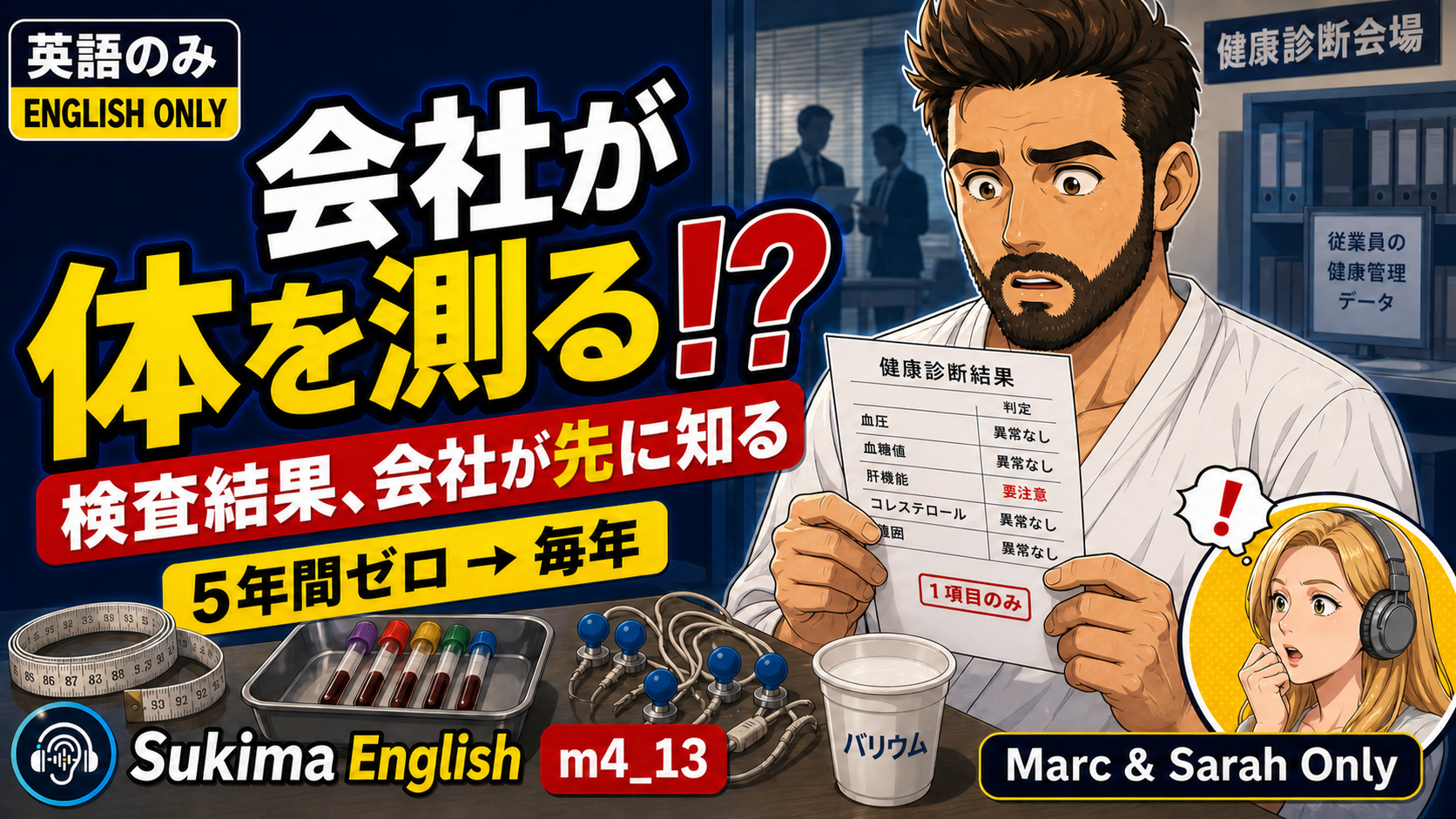
【日常英会話】英語のみ | 会社の健康診断、会社が自分の体の数値を持っている国——ネイティブが英語で語る健康診断 #英語学習 #ネイティブ英語会話 #リスニング強化
ポッドキャスト「すきまイングリッシュ」のスクリプト。「【日常英会話】英語のみ | 会社の健康診断、会社が自分の体の数値を持っている国——ネイティブが英語で語る健康診断 #英語学習 #ネイティブ英語会話 #リスニング強化」の会話全文です。
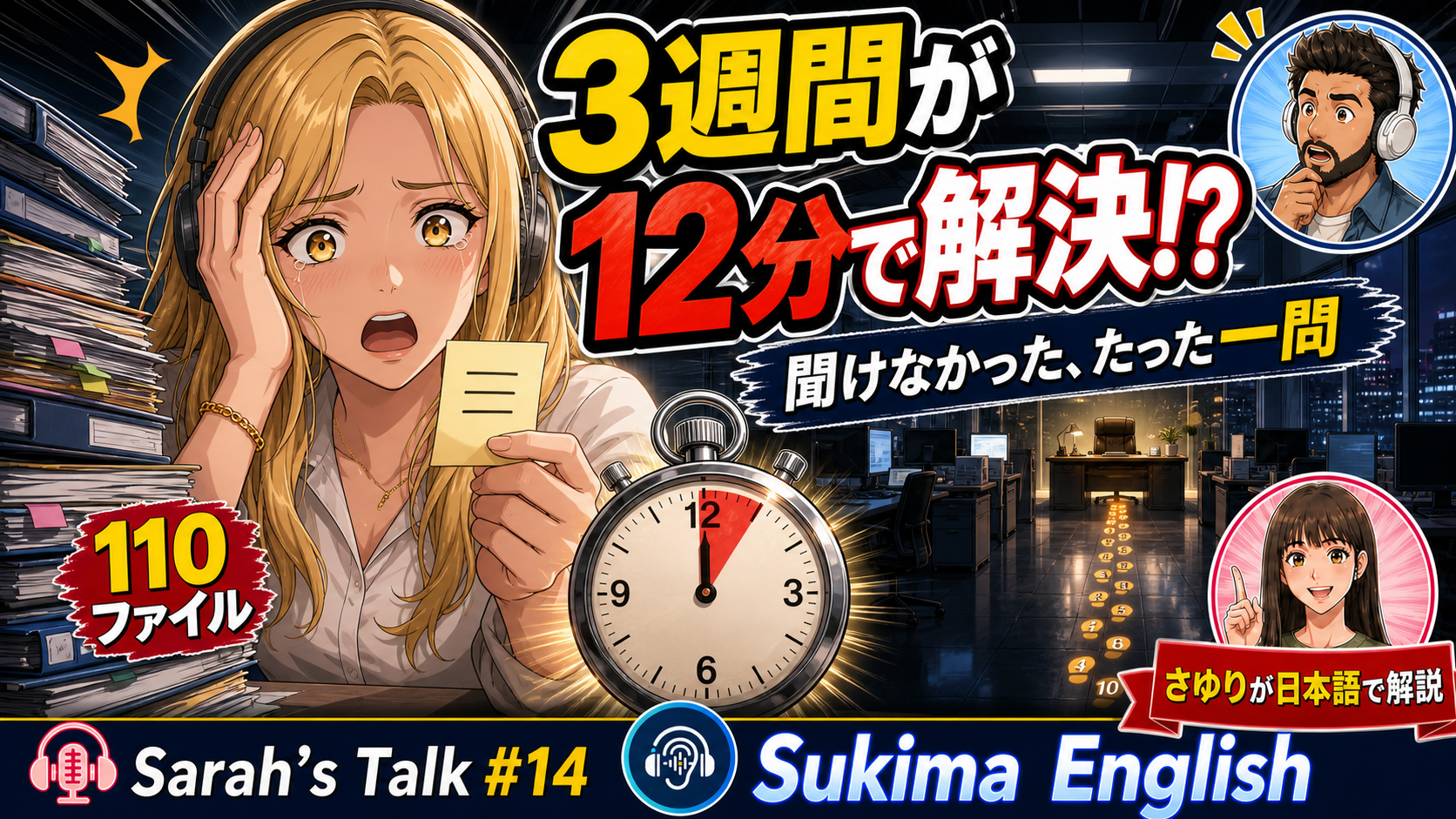
【日常英会話】日本語解説あり | 十歩の距離を渡るのに三週間、英語で「助けて」と言えない人のための7フレーズ #英語学習 #英語フレーズ #英会話 #英語耳
ポッドキャスト「すきまイングリッシュ」のスクリプト。「【日常英会話】日本語解説あり | 十歩の距離を渡るのに三週間、英語で「助けて」と言えない人のための7フレーズ #英語学習 #英語フレーズ #英会話 #英語耳」の会話全文です。