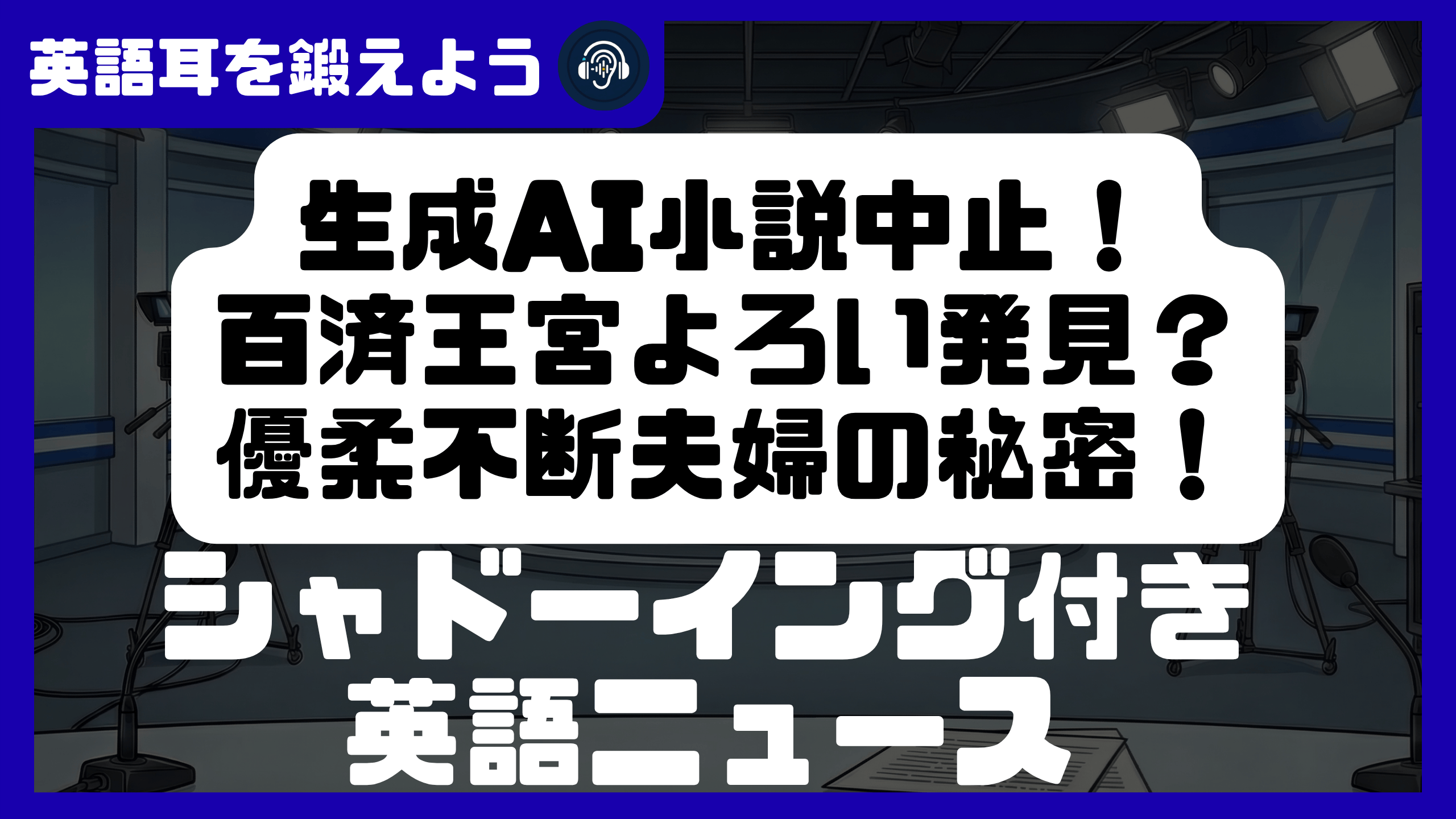
【シャドーイング付き英語ニュース】今日の英語ニュースで学ぼう | リスニング強化
【シャドーイング付き英語ニュース】今日の英語ニュースで学ぼう | リスニング強化
YouTube「スキマ時間で英語を学ぼう」の英語ニュース解説です。
動画と合わせてリスニング・シャドーイングにご利用ください。
スクリプト
Welcome to Sukima English News! I'm Sarah. (スキマ英語ニュースへようこそ!サラです。)
And I'm Marc. (そして、マークです。)
Today, we're looking at AI and a novel, ancient armor, and a marital dynamic. (今日は、AI、古代の珍しい鎧、そして夫婦の力関係について見ていきます。)
Our first story today is about a novel whose release was canceled due to suspicions of using generative AI. (今日の最初のニュースは、生成AIの使用疑惑で出版が中止された小説についてです。)
Oh, that sounds like a significant development. What happened? (へえ、それは重大な展開ですね。何があったんですか?)
The US publisher Hachette Book Group halted the release of "Shy Girl" due to suspicions of AI-generated content. (アメリカの出版社、Hachette Book Groupは、「Shy Girl」という小説について、AI生成コンテンツの疑惑があるとして出版を中止しました。)
So, a major publisher is stopping a book release because of AI? Is this the first time? (つまり、大手出版社がAIを理由に本の出版を止めたんですか?初めてのことなんですか?)
It appears to be the first case where a major publisher has withdrawn a title specifically because of potential AI content. This sparks new discussions about copyright, ethics, and creativity. (大手出版社が、AIコンテンツの可能性を理由にタイトルを取り下げたのは、これが初めてのケースのようです。これは著作権、倫理、創造性についての新たな議論を巻き起こしています。)
It's concerning that AI might be used without disclosure. How widespread is AI use in content creation? (AIが無断で使用されている可能性があるのは懸念されますね。コンテンツ制作におけるAIの使用はどのくらい広まっているんですか?)
The generative AI market is growing rapidly. In 2023, its market size was around 36.8 billion dollars, a 35% increase. Projections suggest it could reach 1.7 trillion dollars by 2030. (生成AI市場は急速に成長しています。2023年の市場規模は約368億ドルで、35%増加しました。2030年には1兆7000億ドルに達すると予測されています。)
That's a huge number. And in creative fields specifically? (それはすごい数字ですね。特にクリエイティブ分野ではどうですか?)
Yes, about 40% of creative professionals are using AI tools. Text and image generation are areas with high AI adoption. (はい、クリエイティブ分野の専門家の約40%がAIツールを使用しています。テキストや画像の生成は、AIの導入率が高い分野です。)
With so much AI use, I imagine copyright is a big issue. What's the current legal situation? (AIの使用が多いとなると、著作権は大きな問題でしょうね。現在の法的な状況はどうなっていますか?)
Copyright for AI-generated content is still being worked out globally. The US Copyright Office stated that content solely generated by AI is not eligible for copyright protection. (AI生成コンテンツの著作権は、世界中でまだ整備中です。アメリカ著作権局は、AIのみで生成されたコンテンツは著作権保護の対象にならないと述べています。)
That makes sense. The "originality" of the work is key. How do you think this cancellation will impact the publishing industry? (なるほど。作品の「独創性」が鍵なんですね。この中止は出版業界にどのような影響を与えると思いますか?)
This case highlights the risks of AI use in publishing. It's likely to accelerate the development of guidelines for AI use within the industry. Publishers and author groups will need clearer rules. (このケースは、出版におけるAI使用のリスクを浮き彫りにしています。業界内でのAI使用に関するガイドラインの開発を加速させるでしょう。出版社や作家団体は、より明確なルールを必要とするでしょう。)
So, we might see more transparency requirements or even AI detection tools? (では、透明性の要求や、AI検出ツールの導入が進むかもしれませんね?)
Exactly. There could be demands for authors to disclose AI assistance, and publishers will likely implement stricter vetting processes. This could also change how authorship is defined. (その通りです。作家にAIの支援を受けたことを開示するよう求める声や、出版社がより厳格な審査プロセスを導入する可能性があります。これは、作者権の定義も変えるかもしれません。)
It’s a complex issue. On one hand, AI can be a powerful tool for writers. (複雑な問題ですね。一方では、AIは作家にとって強力なツールになり得ます。)
Absolutely. AI can offer efficiency and new creative possibilities. However, ethical considerations and potential misuse are significant. (まったくです。AIは効率性や新たな創造的な可能性を提供できます。しかし、倫理的な考慮事項や悪用の可能性は大きいです。)
I wonder if this will also affect how readers perceive books. Will there be a preference for human-authored works? (これが読者の本の受け止め方にも影響するのかしら。人間が書いた作品への好みが生まれるでしょうか?)
That's a possibility. Readers might become more curious about the creative process. There could be a growing appreciation for the human element and unique voice. (それはあり得ますね。読者は創造的なプロセスにますます興味を持つようになるかもしれません。人間的な要素や独自の声への評価が高まる可能性があります。)
And looking at Japan, how might this situation affect Japanese authors or publishers? (日本ではどうでしょう?この状況は日本の作家や出版社にどのような影響を与える可能性がありますか?)
For Japanese publishers, this serves as a crucial warning. They'll likely review their policies on AI use. There's a need to protect the integrity of Japanese literature and author rights. (日本の出版社にとっては、これは重要な警告となります。AIの使用に関する方針を見直すでしょう。日本の文学の品位と作家の権利を守る必要があります。)
So, it’s a global issue with local implications. It seems like we're just at the beginning of understanding how AI will shape creative industries. (つまり、これは世界的な問題であり、地域的な影響もあるということですね。AIがクリエイティブ産業をどのように形作っていくのか、まだ始まったばかりの段階のようです。)
Indeed. The "Shy Girl" incident is a wake-up call, pushing the industry to define boundaries and ensure technology serves creativity without undermining trust. We'll be watching this closely. (まさに。この「Shy Girl」の件は警鐘を鳴らし、業界が境界線を定め、テクノロジーが信頼を損なうことなく創造性を支援するように促しています。私たちはこれを注意深く見守っていきます。)
Alright, let's move on to our second news story, an archaeological discovery in ancient East Asia that could shed new light on historical ties between Japan and Korea. (さて、2つ目のニュースに移りましょう。古代東アジアでの考古学的な発見で、日本と韓国の歴史的なつながりに新たな光を当てる可能性のあるものです。)
History and international connections, I'm all ears. What's the news? (歴史と国際的なつながり、興味津々です。どんなニュースですか?)
On December 4th, 2023, archaeologists in Buyeo, South Korea, discovered remains of a large building, over 60 meters long. They believe it was part of the royal court of the Baekje kingdom, dating back to the 7th century. This site, Gwanbukni, is thought to be a significant royal palace from Baekje's Sabi period. (2023年12月4日、韓国の扶余で考古学者が、長さ60メートルを超える大きな建物の遺構を発見しました。これは7世紀の百済王国の王宮の一部だったと考えられています。この官北里(クァンブクニ)という場所は、百済の泗沘(サビ)時代の重要な王宮だったと考えられています。)
A major discovery in Korea. How does it connect to Japan? (韓国での大きな発見ですね。それが日本とどうつながるんですか?)
It's interesting. This Baekje royal palace site is considered a potential prototype for Japan's Naniwa Palace. But a more direct connection comes from an artifact found in Japan. (面白いですね。この百済の王宮跡が、日本の難波宮の原型かもしれないと言われているんですが、もっと直接的な繋がりは、日本で見つかったある遺物なんですよ。)
An artifact? What kind? (遺物?どんなものですか?)
In Asuka Village, Nara Prefecture, at the Asukadera Temple site, an iron suit of armor, estimated to be from the early 7th century, was unearthed. Researchers in both countries note its remarkable similarity in shape and construction to iron lamellar armor found at Gongsanseong Fortress in Gongju, South Korea, another Baekje royal site. (奈良県の明日香村、飛鳥寺の跡地で、7世紀初頭と推定される鉄製の鎧が出土したんです。日韓両国の研究者は、これが韓国・公州の熊津百済王宮跡である公山城で見つかった鉄製ラメラーアーマーと、形や作りが驚くほど似ていると指摘しています。)
That's a very specific and compelling similarity. More than a coincidence, I'd say. (それは、とても具体的で説得力のある類似性ですね。偶然の一致というより、もっと深い繋がりがあるように思えます。)
Exactly. And it aligns with historical records. The Nihon Shoki states Asukadera Temple construction began in 588 with technicians dispatched from Baekje, suggesting Baekje's technology and styles were influential. (まさにその通りです。それに、歴史的な記録とも一致するんですよ。『日本書紀』には、飛鳥寺の建設が588年に始まり、百済から技術者が派遣されたと記されており、百済の技術や様式が影響を与えていたことが示唆されています。)
So, physical evidence like this armor supports those historical accounts. (つまり、この鎧のような物的証拠が、そういった歴史的な記述を裏付けているんですね。)
Precisely. Artifacts at Asukadera, including armor and horse trappings, are thought to reflect technologies transmitted from Baekje. The similarity between the newly discovered Baekje royal court building and the Asukadera armor is archaeologically significant. (その通りです。鎧をはじめ、飛鳥寺の遺物は、百済から伝わった技術を反映していると考えられています。今回発見された百済の王宮建築と飛鳥寺の鎧の類似性は、考古学的に見て非常に重要です。)
It's like a historical puzzle piece fitting into place. This could confirm the Nihon Shoki's accounts of the relationship and cultural exchange between Japan and Baekje. (まるで歴史のパズルが一つに組み合わさるような感じですね。これで、『日本書紀』に書かれている日本と百済の関係や文化交流についての記述が裏付けられるかもしれません。)
That's the implication. While direct statistical data isn't available yet, the archaeological findings are compelling. The potential royal court building in Buyeo provides valuable information about Baekje's royal palace scale and structure in the 7th century. (そういうことになりますね。直接的な統計データはまだありませんが、考古学的な発見は説得力があります。扶余で見つかった王宮建築の可能性のある建物は、7世紀の百済の王宮の規模や構造について貴重な情報を提供してくれます。)
And the Asukadera armor, with its Baekje similarities, points to active exchange. (そして、百済との類似性を持つ飛鳥寺の鎧は、活発な交流を示唆していますね。)
Absolutely. The documented connection of Asukadera's construction to Baekje technicians, along with stylistic similarities in roof tiles and temple layouts, further strengthens this idea of cultural transmission. For example, Asukadera roof tiles resemble those found in Buyeo, suggesting Baekje tile makers were involved. (まったくです。飛鳥寺の建設に百済の技術者が関わったという記録や、瓦や寺院の配置といった様式的な類似性は、文化伝播という考えをさらに強固なものにします。例えば、飛鳥寺の瓦は扶余で見つかったものと似ており、百済の瓦職人が関わっていた可能性を示唆しています。)
So, these findings strongly indicate vibrant cultural exchange between the Japanese archipelago and the Korean peninsula, particularly Baekje, during that era. (つまり、これらの発見は、当時の日本列島と朝鮮半島、特に百済との間で、活発な文化交流があったことを強く示唆しているわけですね。)
Yes, they do. The potential confirmation of historical accounts from the Nihon Shoki through these findings is very important. It can deepen our understanding of ancient Japan-Korea relations. (ええ、そうですね。『日本書紀』の記述が、これらの発見によって裏付けられる可能性は、非常に重要です。古代の日朝関係についての理解を深めることができます。)
It's fascinating to think how these ancient connections might have shaped Japan. Any specific ways this might affect modern Japan or its people? (こういった古代の繋がりが、どのように今の日本を形作ってきたのかと考えると、興味深いですね。これが現代の日本や人々に、具体的にどのような影響を与える可能性があるのでしょうか?)
It reinforces a shared cultural heritage. Understanding these deep historical roots fosters greater appreciation for the complex relationship between Japan and Korea throughout history. It highlights that these connections are not new but have a very long foundation. (それは、共有された文化遺産を再認識させることにつながります。こうした深い歴史的ルーツを理解することで、歴史を通じての日本と韓国の複雑な関係への理解が深まります。これらの繋がりが新しいものではなく、非常に長い基盤を持っていることを浮き彫りにします。)
That's a great point. It helps us understand the present by looking at the past. (それは素晴らしい視点ですね。過去を見ることで現在を理解する助けになります。)
Indeed. This kind of archaeological evidence moves historical understanding from mere textual accounts to tangible proof, making history more accessible. It's a testament to ongoing discoveries enriching our understanding of the world. (まさに。こうした考古学的な証拠は、歴史の理解を単なる文字記録から、具体的な証拠へと移行させ、歴史をより身近なものにします。これは、私たちの世界への理解を豊かにする、継続的な発見の証です。)
Now, let's turn to our third story today, about a fascinating aspect of modern relationships in Japan.
This story highlights a couple who married later in life, and their different decision-making styles. (このニュースは、晩婚のカップルと、それぞれの意思決定スタイルについて取り上げています。)
The article sets the scene at a long-established oden restaurant in Asakusa, Tokyo. The wife, 48, was waiting in a private room. Her husband, 52, joined her. (記事は、東京・浅草にある老舗のおでん屋さんを舞台にしています。48歳の妻が個室で待っていて、そこに52歳の夫が合流しました。)
So, right from the start, we get a sense of their dynamic. The husband is 52, the wife 48, a four-year age difference with the husband older, which is common. (なるほど、最初から二人の関係性が伝わってきますね。夫が52歳、妻が48歳で、夫の方が4歳年上というのは、よくあるパターンです。)
Indeed. They are a "late-marrying" couple. In Japan, the average age for first marriage in 2024 is about 31.1 for men and 29.8 for women. (そうですね。彼らは「晩婚」のカップルです。日本では、2024年の初婚の平均年齢は男性が約31.1歳、女性が29.8歳です。)
So, this couple is marrying significantly later than average. What does the article say about their decision-making styles? (ということは、このカップルは平均よりもかなり遅い結婚ということですね。意思決定スタイルについては、記事ではどのように書かれていますか?)
The wife makes decisions quickly and decisively, while the husband is more indecisive. This contrast is a key theme. (妻は迅速かつ断固として意思決定をするのに対し、夫は優柔不断な傾向があるとのことです。この対比が、記事の重要なテーマとなっています。)
That sounds like it could lead to interesting situations. How does this relate to broader trends in Japan? (それは、面白い状況を生み出しそうですね。これは、日本全体のより広い傾向とどのように関連しているのでしょうか?)
The trend of late marriage, or "bankonka," is very clear. Average ages have been steadily rising. In 2005, the average was around 30 for men and 28 for women. (晩婚化、つまり「晩婚」という傾向は非常に明確です。平均年齢は着実に上昇しています。2005年には、男性が約30歳、女性が28歳でした。)
So, even in under twenty years, there's been a noticeable shift. And what about the age gap between spouses? (つまり、20年弱で顕著な変化が見られるわけですね。そして、夫婦の年齢差についてはどうでしょうか?)
Data shows that in 2023, the average age difference for newlyweds was about 2.1 years, with the husband typically older. About 70% of couples fit this. (データによると、2023年の新婚夫婦の平均年齢差は約2.1歳で、夫の方が年上であることが一般的です。約70%のカップルがこれに当てはまります。)
So, while our couple's four-year difference is a bit larger than average, the husband being older fits the general pattern. (ですから、このカップルの4歳差は平均より少し大きいですが、夫の方が年上というのは一般的なパターンに合致していますね。)
Exactly. Now, for expensive purchases, most couples decide together. However, around 40% of the time, the husband is the one involved. (ええ、その通りです。さて、高額な買い物については、ほとんどのカップルが一緒に決めるのですが、夫が関与しているのは約40%のケースだそうです。)
That's interesting. So, it's not always an equal split. What about managing household finances? (へえ、面白いですね。つまり、必ずしも均等な分担ではないんですね。家計の管理はどうですか?)
That's where the wife often takes the lead. Over 60% of the time, wives are the primary managers of household finances. This is also true for childcare and extended family relationships. (そこは奥さんが主導権を握ることが多いんですね。家計の管理は、6割以上で奥さんが主な担当者です。育児や親戚付き合いも同様です。)
It seems wives often have a more central role in many key household decisions. (家の重要な決定事項の多くで、奥さんが中心的な役割を担っているようですね。)
Yes, and while younger couples might discuss things more, older couples like this one, who married later, may have ingrained decision-making styles from years of individual habits. (ええ、若い夫婦はもっと話し合うかもしれませんが、このご夫婦のように遅れて結婚された年配のご夫婦は、長年の個人の習慣からくる意思決定スタイルが根付いているかもしれません。)
So, the husband's indecisiveness and the wife's quick decision-making could really define their daily life. (では、旦那さんの優柔不断さと奥さんの素早い意思決定が、二人の日常生活を形作っていると言えそうですね。)
It certainly could. The article also mentions the husband works for a nationwide sports-related company. (まさにそうですね。記事では、旦那さんが全国的なスポーツ関連企業に勤めているとも書かれています。)
That gives us a fuller picture. It’s a reminder that even within common societal trends, individual relationships have unique dynamics. (それで全体像がよりはっきりしました。一般的な社会の傾向の中でも、個々の関係には独自の力学があることを思い出させてくれますね。)
Absolutely. This story highlights how societal shifts, like later marriages, interact with personal characteristics to shape relationships in modern Japan. (本当にそうですね。この話は、晩婚化のような社会の変化が、個人の特性とどのように相互作用して、現代日本の人間関係を形作っているのかを浮き彫りにしています。)
It’s a great example of how English can help us understand different cultural perspectives. (英語が、異なる文化的な視点を理解するのに役立つ良い例ですね。)
Indeed. That brings us to the end of our news segment for today. Thank you for joining us on Sukima English News. (ええ、そうですね。これで今日のニュースコーナーは終わりです。Sukima English Newsにご参加いただき、ありがとうございました。)
今日のキーワード

Now let's look at some key vocabulary from today's stories. (さて、今日のニュースからいくつかの重要な語彙を見てみましょう。)
First, from our story about generative AI, we have "halted the release" . This means to stop something from happening, especially a product launch or event. For example: The company decided to halt the release of the new smartphone due to unexpected technical issues. (まず、生成AIに関する記事から、「halted the release」です。これは、特に製品の発売やイベントなど、何かを中止することを意味します。例えば、「予期せぬ技術的な問題のため、会社は新しいスマートフォンの発売を中止することを決定しました。」)
So, it's like putting the brakes on something that was already planned. (つまり、すでに計画されていたことをブレーキをかけるようなものですね。)
Exactly. Next, we have "sparks new discussions" . This means to cause or initiate new conversations or debates about a topic. For example: The discovery of the ancient artifact sparks new discussions about early trade routes. (その通りです。次に、「sparks new discussions」です。これは、あるトピックについて新しい会話や議論を引き起こしたり、始めたりすることを意味します。例えば、「古代の遺物の発見は、初期の交易ルートについての新たな議論を呼び起こしています。」)
That's a good way to describe how an event can get people talking. (ある出来事が人々を話し始めさせる様子をうまく表していますね。)
Moving on, we have "AI adoption" . This refers to the process of companies or individuals starting to use artificial intelligence technology. For example: The rapid AI adoption in the healthcare sector is improving patient care. (次に、「AI adoption」です。これは、企業や個人が人工知能技術を使い始めるプロセスを指します。例えば、「医療分野でのAIの急速な導入は、患者のケアを改善しています。」)
So, it's about how widely AI is being used. (つまり、AIがどれだけ広く使われているかということですね。)
Now, from our archaeology story, we have "shed new light on" . This means to provide new information or understanding about something that was previously unclear or unknown. For example: New research findings will shed new light on the migration patterns of ancient birds. (さて、考古学の記事から、「shed new light on」です。これは、以前は不明瞭だったり知られていなかったりしたことについて、新しい情報や理解を提供するという意味です。例えば、「新しい研究結果は、古代鳥類の渡りのパターンに新たな光を当てるでしょう。」)
I like that phrase, it suggests revealing something hidden. (そのフレーズは好きです。隠されたものを明らかにするような響きがありますね。)
Indeed. Next is "potential prototype" . This refers to something that could serve as an early model or example for something else that is developed later. For example: This early sketch is a potential prototype for the final building design. (ええ。次に「potential prototype」です。これは、後で開発される別のものの初期モデルや例として役立つ可能性のあるものを指します。例えば、「この初期のスケッチは、最終的な建物のデザインの潜在的なプロトタイプです。」)
So, it's like a first version that influences later ones. (つまり、後のものに影響を与える最初のバージョンのようなものですね。)
Precisely. And then we have "remarkable similarity" . This describes a likeness between two or more things that is very noticeable and surprising. For example: The twins displayed a remarkable similarity in their facial features and mannerisms. (まさに。そして「remarkable similarity」です。これは、2つ以上のものの間に、非常に顕著で驚くべき類似性があることを表します。例えば、「双子は、顔立ちや仕草に驚くほどの類似性を示しました。」)
That emphasizes how alike two things are. (それは、2つのものがどれほど似ているかを強調しますね。)
Now, from our relationship story, we have "decision-making styles" . This refers to the different ways people go about making choices, whether quickly or slowly, logically or emotionally. For example: Understanding each other's decision-making styles is crucial for a healthy relationship.
This is very relevant for understanding how people function. (これは、人々がどのように機能するかを理解するのに非常に役立ちますね。)
Absolutely. And then we have "late-marrying couple" . This describes a couple who get married at an older age than the average. For example: The trend of late-marrying couples is becoming more common in many countries. (まったくです。そして「late-marrying couple」です。これは、平均よりも年配で結婚するカップルを指します。例えば、「晩婚化の傾向は、多くの国でますます一般的になっています。」)
That's a very direct and useful term. (とても直接的で役立つ言葉ですね。)
And our last phrase is "key theme" . This refers to the main idea or subject that is discussed or explored in a piece of writing, a speech, or a conversation. For example: The author's use of symbolism is a key theme throughout the novel. (そして最後のフレーズは「key theme」です。これは、文章、スピーチ、会話などで議論されたり探求されたりする主なアイデアや主題を指します。例えば、「作者の象徴の使用は、小説全体を通しての主要なテーマです。」)
So, it's the central point that keeps coming up. (つまり、繰り返し出てくる中心的なポイントということですね。)
Exactly. That wraps up our vocabulary for today. (その通りです。これで今日の語彙は終わりです。)
シャドーイング用セクション
B: Now for our shadowing practice! Let's reinforce those new phrases. (さあ、シャドーイングの練習を始めましょう!新しいフレーズを定着させましょう。)
B: The company decided to halt the release of the experimental drug after early test results showed unexpected side effects. (実験薬の初期検査結果で予期せぬ副作用が示されたため、会社はその薬の発売を中止することを決定しました。)
A: Let's try that one more time at normal speed. (では、もう一度通常のスピードでやってみましょう。)
B: The company decided to halt the release of the experimental drug after early test results showed unexpected side effects. (実験薬の初期検査結果で予期せぬ副作用が示されたため、会社はその薬の発売を中止することを決定しました。)
B: The discovery of the new species of deep-sea fish sparks new discussions about the biodiversity of our oceans. (新種の深海魚の発見は、私たちの海の生物多様性についての新たな議論を巻き起こしています。)
A: Okay, let's say that again, a little faster. (はい、ではもう少し速く、もう一度言ってみましょう。)
B: The discovery of the new species of deep-sea fish sparks new discussions about the biodiversity of our oceans. (新種の深海魚の発見は、私たちの海の生物多様性についての新たな議論を巻き起こしています。)
B: Increased AI adoption in customer service is leading to faster response times for many online shoppers. (カスタマーサービスにおけるAI導入の増加は、多くオンラインショッパーの応答時間を短縮させています。)
A: Good, now let's practice that one again. (よし、ではもう一度練習しましょう。)
B: Increased AI adoption in customer service is leading to faster response times for many online shoppers. (カスタマーサービスにおけるAI導入の増加は、多くオンラインショッパーの応答時間を短縮させています。)
B: The unearthed ancient scrolls will shed new light on the daily lives of people in that historical period. (発掘された古代の巻物は、その歴史的時代の生活について新たな光を当てるでしょう。)
A: Let's try that sentence one more time. (その文をもう一度やってみましょう。)
B: The unearthed ancient scrolls will shed new light on the daily lives of people in that historical period. (発掘された古代の巻物は、その歴史的時代の生活について新たな光を当てるでしょう。)
B: This early blueprint is considered a potential prototype for the revolutionary new engine design. (この初期の設計図は、革新的な新エンジンの設計の潜在的なプロトタイプと見なされています。)
A: Okay, let's practice that one again at regular speed. (はい、では通常のスピードで、もう一度練習しましょう。)
B: This early blueprint is considered a potential prototype for the revolutionary new engine design. (この初期の設計図は、革新的な新エンジンの設計の潜在的なプロトタイプと見なされています。)
B: There was a remarkable similarity between the two suspect descriptions, which helped the police narrow down their search. (2人の容疑者の描写には顕著な類似点があり、警察が捜索範囲を絞り込むのに役立ちました。)
A: Let's try that one more time. (では、もう一度やってみましょう。)
B: There was a remarkable similarity between the two suspect descriptions, which helped the police narrow down their search. (2人の容疑者の描写には顕著な類似点があり、警察が捜索範囲を絞り込むのに役立ちました。)
B: Understanding their different decision-making styles was crucial for the success of their joint project. (彼らの異なる意思決定スタイルを理解することは、共同プロジェクトの成功にとって非常に重要でした。)
A: Let's say that again, please. (もう一度言ってみましょうか。)
B: Understanding their different decision-making styles was crucial for the success of their joint project. (彼らの異なる意思決定スタイルを理解することは、共同プロジェクトの成功にとって非常に重要でした。)
B: The historical records indicate that they were a late-marrying couple, both in their early forties when they wed. (歴史記録によると、彼らは晩婚のカップルで、結婚したときはお互いに40代前半でした。)
A: Let's practice that one more time. (では、もう一度練習しましょう。)
B: The historical records indicate that they were a late-marrying couple, both in their early forties when they wed. (歴史記録によると、彼らは晩婚のカップルで、結婚したときはお互いに40代前半でした。)
B: The author's exploration of personal identity is a key theme that runs through all of her novels. (作者の自己同一性の探求は、彼女のすべての小説に共通する主要なテーマです。)
A: Let's try that last one again at normal speed. (では、最後のものをもう一度、通常のスピードでやってみましょう。)
B: The author's exploration of personal identity is a key theme that runs through all of her novels. (作者の自己同一性の探求は、彼女のすべての小説に共通する主要なテーマです。)
That's all for today's Sukima English News. (今日のスキマ英語ニュースはここまでです。)
We hope you enjoyed learning with us and practicing your English. (私たちと一緒に学習し、英語の練習を楽しんでいただけたなら幸いです。)
Remember, consistent practice is key to fluency. (忘れないで、継続的な練習が流暢さの鍵ですよ。)
So keep listening, keep speaking, and keep improving. (だから、聞き続けて、話し続けて、向上し続けてくださいね。)
Don't forget to subscribe for more lessons! (もっとレッスンを見るために、チャンネル登録を忘れないでくださいね!)
See you next time, everyone! (それでは皆さん、また次回お会いしましょう!)

関連記事
【シャドーイング付き英語ニュース】人材重視企業は伸び悩み?危険運転に数値基準!埼玉地下鉄25周年 | リスニング強化
【シャドーイング付き英語ニュース】人材重視企業は伸び悩み?危険運転に数値基準!埼玉地下鉄25周年 | リスニング強化
【シャドーイング付き英語ニュース】生活制度変更!空港開業延期?高市首相のSNS発言! | リスニング強化
【シャドーイング付き英語ニュース】生活制度変更!空港開業延期?高市首相のSNS発言! | リスニング強化
【シャドーイング付き英語ニュース】広島城ガイド85歳!石炭火力増強へ?イージス艦トマホーク発射能力! | リスニング強化
【シャドーイング付き英語ニュース】広島城ガイド85歳!石炭火力増強へ?イージス艦トマホーク発射能力! | リスニング強化