【日常英会話】英語のみ | シカゴ出身マークが告白「日本のラーメンに改宗しました」|ネイティブ2人の食論争を英語で聞こう #英語学習 #ネイティブ英語会話 #リスニング強化 #英語耳
ポッドキャスト「すきまイングリッシュ」のスクリプト。「【日常英会話】英語のみ | シカゴ出身マークが告白「日本のラーメンに改宗しました」|ネイティブ2人の食論争を英語で聞こう #英語学習 #ネイティブ英語会話 #リスニング強化 #英語耳」の会話全文です。

サラ: Marc, I want to ask you something. (日本語訳: マーク、あなたに聞きたいことがあるんだけど。)
Marc: Uh oh. Whenever you start with that, something is coming. (日本語訳: おっと。サラがそうやって切り出すときは、大抵何かあるんだよな。)
サラ: I want to know — do you think I've gotten quieter since I moved to Japan? (日本語訳: あのね、私って日本に来てから静かになったと思う?)
Marc: ... (日本語訳: ……)
サラ: Marc? (日本語訳: マーク?)
Marc: I am picking my words very carefully right now. (日本語訳: 今、言葉を選んでるんだ。)
サラ: Oh god. So the answer is yes. (日本語訳: あーもう。つまり、そういうことね。)
Marc: The answer is — yes. Significantly. But in a good way. (日本語訳: そういうこと……まあ、すごくね。でも、いい意味でだよ。)
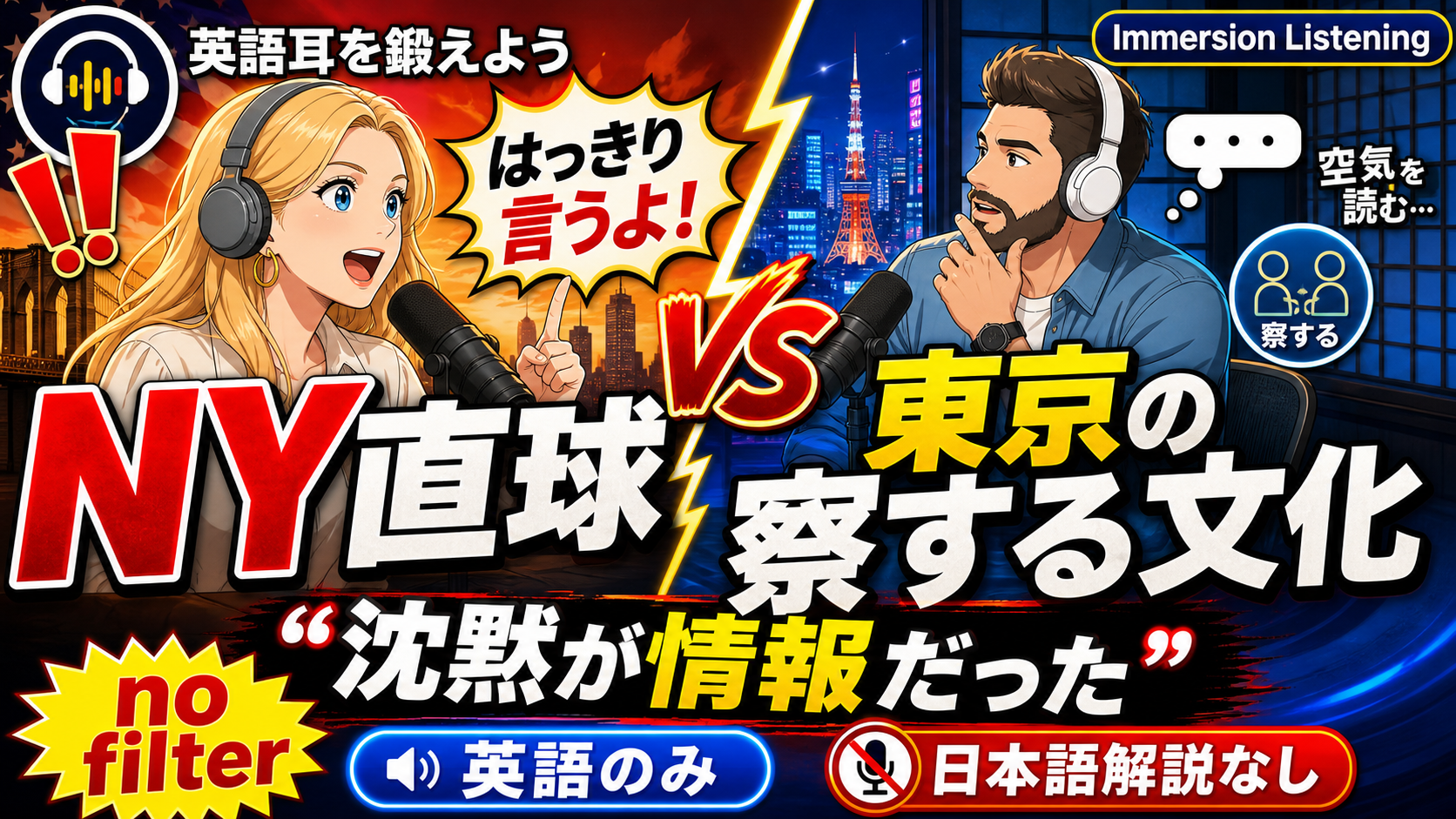
サラ: This is what we're talking about today. Today I want to talk about communication style. Specifically, the New York "say it directly" culture versus the Tokyo "read the room" culture. And what happens when you grow up in one and move to the other. (日本語訳: 今日話したいのはまさにこれなんだ。コミュニケーションスタイルについて話したい。具体的には、ニューヨークの「直接言う」文化と、東京の「空気を読む」文化。そして、片方で育って、もう片方に移ったらどうなるか。)
Marc: This is going to be a personal one. (日本語訳: これは個人的な話になりそうだね。)
サラ: This is going to be a deeply personal one. Buckle up. (日本語訳: これはね、すごく個人的な話になるよ。覚悟して。)
Marc: Okay so set the scene. NY-Sarah. Five years ago. What was she like? (日本語訳: OK、じゃあ、状況設定をお願い。5年前のニューヨークのサラ。どんな感じだった?)
サラ: NY-Sarah was — and I'm not proud of all of it — basically a person with no filter. If I thought it, it came out of my mouth. Within five seconds. (日本語訳: ニューヨークのサラはね――その全部を誇りに思ってるわけじゃないんだけど――基本的にフィルターのない人間だった。もし私が何かを考えたら、それが口から出てた。5秒以内に。)
Marc: Five seconds. (日本語訳: 5秒以内。)
サラ: Five seconds, generously. Sometimes zero seconds. Sometimes the thought came out before I had finished thinking it. (日本語訳: まあ、せいぜい5秒ね。時には0秒。考えるのを終える前に、もう口に出てた。)
Marc: What does that look like in real life? (日本語訳: それが具体的にどういうことか教えて。)
サラ: Okay, example. I'm at a restaurant in Manhattan, the food is bad. I tell the waiter — directly, calmly, but clearly — "this is bad, can I order something else?" In NY, that's normal. (日本語訳: OK、例ね。マンハッタンのレストランにいて、食事がまずかったとする。店員さんに――直接、冷静に、でもはっきり――「これ、まずいんだけど、何か別のものを注文できる?」って言うんだ。ニューヨークでは、それが普通。)
Marc: That is normal. The waiter doesn't even react. (日本語訳: 普通だね。店員も何も言わない。)
サラ: Doesn't react. Maybe rolls his eyes. Brings me something else. Done. (日本語訳: 何も言わない。たぶん、目を一回ひんむくだけ。それで、何か別のものを持ってきてくれる。終わり。)
Marc: How about with friends? (日本語訳: 友達といるときはどうだった?)
サラ: Same energy. If a friend got a haircut I didn't like, I would say, "I don't love it, what do you think?" And we would talk about it. (日本語訳: 同じテンションでね。もし友達が私の好みじゃない髪型にしてきたら、「そんなに好きじゃないかも。どう思う?」って聞いて、話し合うんだ。)
Marc: That's bold. (日本語訳: 大胆だね。)
サラ: My mom would say it's not bold, it's just rude. She has been telling me to "soften my edges" since I was twelve. (日本語訳: うちのお母さんだったら、それは大胆じゃなくてただの失礼だって言うわ。12歳からずっと「角を丸めなさい」って言われてるの。)
Marc: And how did young Sarah respond to that? (日本語訳: で、若いサラはどう反応してたの?)
サラ: Young Sarah said, "Mom, my edges are who I am." Which is exactly what a sixteen-year-old NYer with no filter would say. (日本語訳: 若いサラは「お母さん、私の角こそが私自身よ」って言ってた。まさにフィルターなしの16歳のNYerが言いそうなことね。)
Marc: Of course. (日本語訳: なるほどね。)
サラ: But here's the thing about NY. Everyone is like that. The directness isn't aggressive — it's the default. You're not trying to hurt anyone. You're just saying what's there. (日本語訳: でもNYの良いところは、みんなそんな感じなの。直接的な物言いは攻撃的なんじゃなくて、それが普通なのよ。誰かを傷つけようとしてるんじゃなくて、ただそこにあるものを言ってるだけ。)
Marc: I get that. Chicago is similar but with a softer edge. Midwest nice is a real thing. (日本語訳: それは分かるよ。シカゴも似てるけど、もう少し角が丸いかな。中西部のおもてなしって本当にあるからね。)
サラ: Right. Chicago says, "Oh, that's interesting." NY says, "I disagree, here's why." The same thought, two different translations. (日本語訳: そうそう。シカゴは「へえ、それは興味深いね」って言うけど、NYは「同意しない。理由はこうだよ」って言う。同じ考えでも、訳し方が違う。)
Marc: That is a good way to put it. (日本語訳: それはいい表現だね。)
サラ: NY has no patience for hidden meaning. We don't have time to read between the lines. The lines are already very long. (日本語訳: NYには隠された意味なんて待ってられないのよ。行間を読む時間なんてない。すでに線はすごく長いんだから。)
Marc: The lines are already very long. (日本語訳: 線はすでにすごく長い。)
サラ: Have you been on the BQE at rush hour? We do not have time for subtext. We need information delivered at speed. (日本語訳: ラッシュアワーのBQE(ブルックリン・クイーンズ・エクスプレスウェイ)に乗ったことある?サブテキストなんて構ってる暇ないの。情報はスピード重視で伝達されなきゃ。)
Marc: Alright. Fast forward. You land in Tokyo. NY-Sarah meets the office. (日本語訳: よし。早送りして、東京に到着。NYスタイル・サラとオフィスが出会う。)
サラ: NY-Sarah meets the office. The first three months were... educational. (日本語訳: NYスタイル・サラとオフィスが出会う。最初の3ヶ月は…勉強になったわ。)
Marc: A diplomatic word. (日本語訳: 外交的な言葉だね。)
サラ: Diplomatic was something I had to learn. The first big incident was during a brainstorm meeting. Someone — a senior person — proposed an idea. The idea was bad. (日本語訳: 外交的であることは、私が学ばなきゃいけなかったことなのよ。最初の大きな出来事はブレインストーミング会議でのこと。誰か、えらい人が、アイデアを出したんだけど。そのアイデアはダメだった。)
Marc: The idea was bad and you said so. (日本語訳: アイデアがダメで、君はそう言ったんだね。)
サラ: I said, "I don't think this will work because of A, B, and C." Calm. Reasoned. NY style. (日本語訳: 「A、B、Cの理由で、これはうまくいかないと思う」って言ったの。冷静に、論理的に。NYスタイルで。)
Marc: Yes. (日本語訳: うん。)
サラ: The room went silent. Marc, I am not exaggerating. Silent. I could hear the air conditioner. People were looking at the table. Someone was looking very intensely at their pen. (日本語訳: 部屋がシーンとなったんだよ。サラ、大げさじゃなく。シーン。エアコンの音だけ聞こえて。みんなテーブル見てて。誰かはペンの先をじっと見てたり。)
Marc: That's the worst silence. (日本語訳: それは最悪の沈黙だ。)
サラ: That is the worst silence. And then my manager, very kindly, said something in Japanese that translated to "let's take a short break." We took a fifteen-minute break. (日本語訳: 最悪の沈黙よ。で、マネージャーがすごく親切に日本語で何か言ってくれて、それが「ちょっと休憩しましょう」って意味だったの。15分休憩したんだ。)
Marc: For your reset. (日本語訳: リセットするためにね。)
サラ: For everyone's reset, I'm pretty sure. After the break, the senior person quietly modified his idea. The meeting moved on. Nobody mentioned what had happened. (日本語訳: みんなのリセットのためよ、きっと。休憩の後、その上司の人が静かにアイデアを修正したんだ。会議は続いた。誰も何が起こったか触れなかった。)
Marc: Nobody mentioned it. That's the part that gets foreigners. (日本語訳: 誰も触れなかった。そこが外国人は戸惑うところなんだ。)
サラ: That is the part that I could not handle. In NY, after a moment like that, people would TALK ABOUT IT. We'd debrief. Someone would joke. Someone would say "yeah that was awkward." Here? Nothing. The thing happened. We don't acknowledge that the thing happened. We move on. (日本語訳: そこが私には耐えられなかったところ。NYなら、ああいう瞬間があったら、みんなで話すよ。「あの後どうだった?」って。デブリーフィングする。誰かがジョークを言う。「うん、あれ気まずかったね」って言う。ここでは?何もない。その出来事はあった。でも、あったことには触れない。次に進む。)
Marc: That's the silent treatment with extra steps. (日本語訳: それは追加ステップ付きの無視だよ。)
サラ: It's not silent treatment, exactly. It's more like — there's a layer of communication happening that I couldn't see. People were saying things by not saying things. (日本語訳: 無視ってわけじゃないのよ、正確には。もっとこう…見えないコミュニケーションの層があった感じ。言わないことで言ってるんだよ。)
Marc: The reading-between-the-lines layer. (日本語訳: 行間を読む層だね。)
サラ: The reading-between-the-lines layer. I had no idea how to read it. Everything had to be spelled out for me. (日本語訳: 行間を読む層よ。私にはそれが全く読めなかった。全部、文字通りに説明してもらわないと。)
Marc: I had this exact experience. The first month, I would ask my colleague after every meeting, "Wait, what just happened?" And he would explain, like, four layers of subtext. (日本語訳: 全く同じ経験したことがある。最初の1ヶ月、毎回の会議の後、同僚に「待って、今何が起こった?」って聞いてた。そしたら彼は、サブテキストを4層くらい説明してくれたよ。)
サラ: Right. Like, "When the senior manager said 'we should consider this carefully,' he meant 'absolutely not.' When he said 'this is interesting,' he meant 'this might work.' And when he said nothing, that was the strongest opinion of all." (日本語訳: そうそう。「上司が『慎重に検討すべきです』って言った時は、『絶対ダメ』って意味で、『これは興味深い』って言った時は、『これはうまくいくかもしれない』って意味で、何も言わなかった時は、それが一番強い意見だってことだよね。」)
Marc: Silence was data. (日本語訳: 沈黙はデータだったんだ。)
サラ: Silence was data. NY-Sarah had no idea silence could be data. NY-Sarah thought silence was just empty space waiting to be filled. With words. From me. Quickly. (日本語訳: 沈黙はデータだった。NYのサラには、沈黙がデータになりうるなんて全く分からなかった。NYのサラは、沈黙はただ埋められるのを待ってる空白だって思ってた。言葉で。私からの。すぐに。)
Marc: That tracks. (日本語訳: ありそう。)
サラ: I felt so loud my first six months. Every time I opened my mouth, I could feel the room flinching. And not in a mean way. Just — I was the volume knob set to NY in a room set to Tokyo. (日本語訳: 最初の半年間、自分がすごくうるさく感じた。口を開くたびに、部屋がびくっとしてるのが分かった。悪意のある意味じゃなく。ただ…NYに設定された音量ノブが、東京に設定された部屋にあったみたいな。)
Marc: Did you have a second incident? Or did you learn from the first one? (日本語訳: 2回目の事件があったの?それとも最初のから学んだ?)
サラ: Oh, I had many incidents. Plural. Continuous. (日本語訳: あー、たくさんの事件があったわ。複数形よ。継続的に。)
Marc: Plural and continuous. Tell me one. (日本語訳: 複数形と継続的。一つ教えて。)
サラ: Okay, here's a smaller one but it taught me a lot. Welcome dinner, like four months in. Nice restaurant. The team is feeding me, in the most generous Japanese way. The food keeps coming. Plate after plate. (日本語訳: まあ、これはもっと小さいんだけど、すごく勉強になったわ。歓迎会ね、日本に来て4ヶ月くらいたった頃。いいレストランで。チームが私をご馳走してくれて、日本のとても親切なやり方でね。料理がどんどん出てくるの。お皿に次ぐお皿に。)
Marc: I know where this is going. (日本語訳: ああ、わかってる、どうなるか。)
サラ: At one point, my boss asks, "Sarah-san, would you like another order of sashimi?" And I say — politely, I thought — "No thank you, I'm full." (日本語訳: それで、ある時、上司が「サラさん、お刺身、もう一品いかがですか?」って聞いてきて。で、私は、丁寧に言ったつもりだったんだけど、「結構です、お腹いっぱいです」って答えたの。)
Marc: NY-Sarah honesty. (日本語訳: NYサラの正直さってわけね。)
サラ: NY-Sarah honesty. Polite. Direct. Truthful. (日本語訳: NYサラの正直さ。丁寧で、直接的で、真実を言う。)
Marc: And the table? (日本語訳: それで、その場は?)
サラ: The table went a little quiet. Not silent like the meeting. But there was a small re-adjustment. Later, my colleague — a really kind woman — pulled me aside and explained. In Japan, when someone is hosting you, you don't just say "I'm full." You say, "I really appreciate it, this is more than enough." (日本語訳: その場はちょっと静かになったの。会議みたいにシーンとするわけじゃないけど、ちょっとした空気の再調整があったわ。後で、同僚がね、すごく親切な女性なんだけど、私を脇に引っ張って行って説明してくれたの。日本では、誰かがあなたをもてなしてくれている時、ただ「お腹いっぱいです」って言うだけじゃダメなんだって。あなたは「ありがとうございます、もう十分すぎるくらいいただいています」って言うべきなんだって。)
Marc: The grace layer. (日本語訳: その「配慮の層」ってやつね。)
サラ: The grace layer. The "I'm not just turning down food, I'm thanking you for offering" layer. NY-Sarah didn't even know that layer existed. NY-Sarah thought "no thanks" was a complete sentence. (日本語訳: 「配慮の層」。ただ食べ物を断ってるんじゃなくて、「申し出てもらって感謝しています」っていう層ね。NYサラには、その層が存在することすら知らなかった。NYサラは「ノーサンクス」がそれだけで完結する言葉だと思ってたの。)
Marc: It is in NY. (日本語訳: NYではそうだけど。)
サラ: It is the gold standard in NY. "No thanks" is poetry in NY. Two syllables, full meaning, conversation closed. (日本語訳: NYではそれがゴールドスタンダードよ。「ノーサンクス」は詩なのよ、NYでは。2音節で、意味は完結、会話終了。)
Marc: But not here. (日本語訳: でもここでは違うと。)
サラ: But not here. Here, "no thanks" is a draft. The final version requires gratitude, acknowledgment, softening, and a closing flourish. By the end of my first year I had a mental script for declining food. (日本語訳: ここでは、「ノーサンクス」は下書きみたいなもの。最終版には感謝、認識、和らげ、そして締めの言葉が必要なの。1年が終わる頃には、食べ物を断るための心の台本ができていたわ。)
Marc: A mental script for declining food. (日本語訳: 食べ物を断るための心の台本。)
サラ: A four-line script. "Thank you so much. I have really enjoyed this. I am completely satisfied. Please, you should have the next plate." Four lines. To say no. (日本語訳: 4行の台本よ。「本当にありがとうございます。とても美味しかったです。もう満腹です。どうぞ、次のお皿はあなたたちが召し上がってください」。4行よ。断るために。)
Marc: That's a haiku. (日本語訳: それは俳句だね。)
サラ: It is a haiku of decline. And the funny part is, now? It feels normal. It feels right. NY-Sarah's "no thanks" feels rude to me when I hear it back home. (日本語訳: 断るための俳句よ。で、面白いのは、今?それが普通に感じられるの。正しいことのように。NYサラの「ノーサンクス」を、里帰りした時に聞くと、失礼に聞こえるくらいよ。)
Marc: Okay so fast forward. Five years in for me. Two and a half years for you. How are you reading the room now? (日本語訳: なるほど。じゃあ早送りして。僕が5年、君が2年半。今、場の空気をどう読んでる?)
サラ: This is the embarrassing part. I'm actually reading it really well. (日本語訳: ここからが恥ずかしいところなんだけど。実は、すごくよく読めてるの。)
Marc: You catch yourself doing it. (日本語訳: 自分でそうしてるのに気づくんだ。)
サラ: I catch myself doing it. I had this moment last week — I was on a phone call with my mom. She was telling me about my brother's wedding planning, and she said, "Your brother and his fiancée had a small disagreement about the venue." (日本語訳: 自分でそれをやっていることに気づくんだ。先週そういうことがあってね。お母さんと電話で話していたんだけど、母が私の兄の結婚式の準備について話していて、「あなたのお兄さんと婚約者は、会場についてちょっとした意見の相違があったのよ」って言ったんだ。)
Marc: Okay. (日本語訳: なるほど。)
サラ: And I said, "Oh, what was that about?" And my mom said, "Sarah, did I just tell you it was a small disagreement?" (日本語訳: それで私が「え、何について?」って聞いたら、母が「サラ、だから『ちょっとした意見の相違』だって言ったでしょ?」って言ったんだよ。)
Marc: Translation: "Don't ask." (日本語訳: つまり、「聞くな」ってことだな。)
サラ: Translation: "Don't ask." And the OLD me, NY-Sarah, would have completely missed that. NY-Sarah would have said, "What was the disagreement? Were they fighting? Is everything okay?" Like, NY-Sarah did not know how to take a hint. (日本語訳: 「聞くな」ってこと。それで、昔の私、NYサラだったら完全にそれに気づかなかった。「何で意見が違ったの?喧嘩してるの?大丈夫?」みたいにね。NYサラは、暗に示されても全く分からなかったんだ。)
Marc: But Tokyo-Sarah does. (日本語訳: でも東京サラは分かるんだね。)
サラ: Tokyo-Sarah heard "small disagreement" and knew that meant "this is a topic we are not exploring further." I said, "Okay, well I'm sure they'll figure it out." And we moved on. (日本語訳: 東京サラは「ちょっとした意見の相違」って聞いて、それは「これ以上掘り下げるべき話題ではない」ってことだと理解したの。それで「そっか、きっとうまくいくよ」って言って、話をそらしたんだ。)
Marc: Your mom must have noticed. (日本語訳: お母さんもそれに気づいたんじゃない?)
サラ: My mom noticed immediately. She said, "Honey, you didn't push back. Are you feeling okay?" (日本語訳: 母はすぐに気づいたわ。「あなた、食い下がってこなかったわね。体調でも悪いの?」って言われた。)
Marc: She thinks you're sick. (日本語訳: 体調が悪いと思ってるんだ。)
サラ: She thinks I'm physically unwell. And I had to explain to her — "Mom, I read the room. The room said don't ask." (日本語訳: 私が体調不良だと思ってるのよ。それで説明しなきゃならなかったんだ。「お母さん、場の空気を読んだの。空気が『聞くな』って言ってたんだよ」って。)
Marc: That is a sentence I never thought I'd hear from you. (日本語訳: 君からそんなセリフを聞く日が来るとは思わなかったよ。)
サラ: I never thought I'd say it. I am a person who reads the room now. I have layers. I have nuance. (日本語訳: 私も言うとは思わなかった。私、今や空気を読む人間なんだよ。層があるんだ。ニュアンスがあるんだ。)
Marc: You have a filter. (日本語訳: フィルターができたんだな。)
サラ: I have a filter, Marc. NY-Sarah is rolling in her grave. Which is dramatic, because I'm not dead. But you know what I mean. (日本語訳: フィルターができたんだよ、マーク。NYサラは墓の中で転げ回ってるわ。冗談みたいだけど、私は死んでないからね。でも、言いたいことは分かるでしょ。)
Marc: You know what I mean. The phrase that proves you've adapted. (日本語訳: 言いたいことは分かるよ。それが君が適応したことを証明するフレーズだ。)
サラ: The phrase that proves I've adapted. I went from "spell it out for me" to "I'll read between the lines, thanks." (日本語訳: 適応したことを証明するフレーズ。私は「私に説明して」から「線と線の間を読むことにします、ありがとう」に変わったんだ。)
Marc: It's a complete identity shift. (日本語訳: それは完全なアイデンティティの変化だな。)
サラ: It's a partial identity shift. NY-Sarah is still in there. She's just sleeping. Or, more accurately, she's getting good rest in Tokyo and only wakes up when I land at JFK. (日本語訳: 部分的よ。NYサラはまだ中にいる。ただ眠っているだけ。もっと正確に言うと、東京でしっかり休んでいて、JFKに着陸した時だけ目を覚ますの。)
Marc: Okay but here's a question. Have you lost something? Has the directness gone away? (日本語訳: なるほど、でも質問がある。何か失ったか?その直接さは失われてしまったのか?)
サラ: That's the question I'm asking myself a lot these days. Honestly? No. The directness is still there. It's just... in a different room of my house. (日本語訳: 最近、自分にずっと問いかけてる質問なんだ。正直に言うと、違うね。直接的な物言いはまだある。ただ、家の違う部屋に移動しただけ。)
Marc: A different room of your house. I like that. (日本語訳: 家の違う部屋に移動しただけ。いいね。)
サラ: When I'm with NY friends, I can switch back instantly. Within five minutes I'm in NY-mode. We're complaining about the subway, I'm critiquing someone's outfit, we're being mean about the price of milk. (日本語訳: NYの友達といるときは、すぐに元に戻れるんだ。5分もすればNYモードだよ。地下鉄について文句を言ったり、誰かの服をけなしたり、ミルクの値段にケチつけたりね。)
Marc: Beautiful. (日本語訳: 最高だね。)
サラ: Beautiful. But when I'm at work, in a Tokyo meeting, I'm a different person. I'm careful. I phrase things gently. I lead with "I might be wrong about this, but..." which is something NY-Sarah would rather have died than say. (日本語訳: 最高よ。でも、東京のミーティングで仕事をしているときは、別人になる。慎重になる。言葉を丁寧に選ぶ。「これが間違ってたらごめんね」みたいな前置きをするんだけど、これはNYのサラなら死んでも言わないことね。)
Marc: You have two operating systems. (日本語訳: 君は2つのOSを持ってるんだね。)
サラ: I have two operating systems. And I think — and this might be the most important thing I've learned in five years — being able to switch between them is a skill that took two and a half years to build. And it took messing up dozens of times. (日本語訳: 2つのOSを持ってるわ。そして思うんだけど――これは5年間で学んだ一番大事なことかもしれない――その2つを切り替えられるようになるのは、2年半かかったスキルなんだ。それに、何十回も失敗したわ。)
Marc: Dozens of meetings going silent. (日本語訳: 何十回もミーティングで黙り込んだんだね。)
サラ: Dozens of meetings going silent before I learned to read the air before I spoke into it. (日本語訳: 話す前に空気を読むことを学んで、何十回も黙り込むミーティングがあったわ。)
Marc: That is wisdom right there. (日本語訳: まさに賢者の言葉だ。)
サラ: That is the wisdom of a former NY brat who got humbled by Japan. (日本語訳: それが、日本に謙虚にさせられた元NYの生意気小娘の知恵よ。)
Marc: I have a similar version. Chicago me was less direct than you, but more direct than what's expected in Tokyo. I had to dial it down. But also — when I go back to Chicago, I find myself feeling almost rude with how direct people are. I have to consciously turn the directness back on. (日本語訳: 僕も似たような感じだよ。シカゴの僕よりも君の方が直接的じゃなかったけど、東京で期待されるよりは直接的だった。僕はそれを抑えなきゃいけなかった。でもまた――シカゴに帰ると、みんなの直接的な物言いがほとんど失礼に感じるんだ。意識的に直接的な物言いに戻さなきゃいけない。)
サラ: Same. When I go to NY, the first day, I feel like everyone is yelling at me. By day three, I'm yelling at them. (日本語訳: 私もよ。NYに行くと、初日はみんな私に怒鳴ってる気がするの。3日目になると、私が彼らに怒鳴ってる。)
Marc: Day three is the recalibration. (日本語訳: 3日目が再調整の時期なんだね。)
サラ: Day three I'm a New Yorker again. Day eight I'm fluent in NY again. Day nine I'm back on a plane to Tokyo, where I have to deflate it all in flight. (日本語訳: 3日目はまたニューヨーカーよ。8日目にはNY流の話し方がまた流暢になってる。9日目にはまた飛行機に乗って東京に戻って、飛行機の中で全部しぼませなきゃいけないの。)
Marc: That's the foreigner's burden. (日本語訳: それが外国人の宿命だね。)
サラ: That's the foreigner's burden, but it's also a superpower. I can communicate with anyone. I can read three different rooms. NY directness, Tokyo subtlety, and Chicago somewhere in between. (日本語訳: 外国人の宿命だけど、スーパーパワーでもあるわ。誰とでもコミュニケーションが取れる。3つの違う部屋の空気が読めるの。NYの直接さ、東京の繊細さ、そしてその中間にあるシカゴの話し方。)
Marc: I will take that as a compliment. (日本語訳: それは褒め言葉として受け取ろう。)
サラ: It is a compliment. You're the calibration model. The Chicago middle. (日本語訳: 褒め言葉よ。あなたは標準モデル。シカゴの中間。)
Marc: I'm a benchmark culture. I'll add that to my resume. (日本語訳: 僕はベンチマーク文化なんだね。履歴書に追記しておこう。)
サラ: But here's the thing I didn't expect. The hardest part isn't switching between cultures. It's that the people who knew me in NY don't always know how to read the new me. (日本語訳: でも、予想外だったのはここからなんだ。一番大変なのは、文化の違いに戸惑うことじゃない。ニューヨークにいた頃の私を知っている人たちが、今の私をうまく読み取れないことがあるってこと。)
Marc: Your friends notice. (日本語訳: 友達も気づくんだ。)
サラ: Mia noticed. The first time I came back to NY after a year here, Mia and I went to dinner. We talked for four hours like we always do. But on the walk home, she said, "You take longer to answer questions now." (日本語訳: ミアは気づいてくれた。日本に1年住んでから初めてニューヨークに帰った時、ミアと食事に行ったんだ。いつものように4時間も話したんだけど、帰り道でミアが「あなた、前より質問に答えるのに時間がかかるようになったね」って言ったんだ。)
Marc: Longer to answer questions. (日本語訳: 質問に答えるのに時間がかかる?)
サラ: Longer. NY-Sarah answered every question in about a second. New Sarah pauses. New Sarah considers. New Sarah picks her words. (日本語訳: そう。ニューヨークのサラなら、どんな質問にも1秒くらいで答えてた。今のサラは、ちょっと考える。言葉を選ぶんだ。)
Marc: Mia must have had thoughts. (日本語訳: ミアも色々思っただろうね。)
サラ: Mia loved it, actually. She said, "It's like you're listening twice now. Once to what's being said, and once to what's underneath." (日本語訳: それが、ミアは気に入ってくれたんだ。「あなた、前より2倍聞いてるみたい。一度は言葉を、もう一度は言葉の裏を読んでる」って言ってた。)
Marc: That's a beautiful observation from a best friend. (日本語訳: 親友からの、なんて美しい観察眼だろう。)
サラ: It made me cry, honestly. The fact that someone who's known me for fifteen years could see the new layer. (日本語訳: 正直、泣いちゃったよ。15年会ってる友達が、新しい一面を見てくれたことが嬉しくて。)
Marc: That's the test of a real friend. They notice the changes you barely notice in yourself. (日本語訳: それが本当の友達の証拠だね。自分でも気づかないような変化に気づいてくれる。)
サラ: Right. And then — and this is the perfect Mia move — she said, "But please don't get too soft. I still need someone to tell me when my outfit is bad." (日本語訳: そう。それで、ミアらしいんだけど、彼女はこう言ったの。「でも、あまり丸くなりすぎないでね。まだ、私の服がダサい時に言ってくれる人が必要なんだから。」)
Marc: That's the balance, right there. (日本語訳: まさに、バランスだね。)
サラ: That's the balance. I keep my edges sharp for the people who need sharp edges. And I keep them dull for everyone else. (日本語訳: そうなんだ。私は、シャープなエッジが必要な人のためには、尖ったままにしておく。他の人には、丸く接する。)
サラ: Okay. Quick recap. What did we actually learn today? (日本語訳: さて。簡単なまとめ。今日は結局何がわかったんだっけ?)
Marc: We learned that NY-Sarah had no filter and proudly destroyed many a Manhattan dinner. (日本語訳: ニューヨークのサラはフィルターがなくて、マンハッタンのディナーをたくさん台無しにしてたってこと。)
サラ: We learned that I made a senior Japanese executive's idea visibly bad in front of his team in my first three months. Sorry, sir, wherever you are. (日本語訳: 私が日本に来て3ヶ月で、日本の偉い役員さんのアイデアを、チームの前で明らかにダメなものにしたってこと。どこにいても、その節はすみません。)
Marc: We learned that "read the room" is now a skill you have. Something I never thought I'd say about you. (日本語訳: 「空気を読む」スキルが身についたってこと。あなたにそんなことを言う日が来るなんて、想像もできなかった。)
サラ: I read the room now. With layers. With nuance. (日本語訳: 私、今、空気を読むんだよ。層を読んで、ニュアンスも察して。)
Marc: We learned that "between the lines" is where most of the communication actually lives in Japan. (日本語訳: 「行間を読む」ことが、日本ではコミュニケーションの大部分なんだってこと。)
サラ: Reading between the lines has gone from "what does that even mean" to "obviously, of course." (日本語訳: 行間を読むことが、「それってどういう意味?」から「明らかじゃん、当たり前だよ」に変わったんだ。)
Marc: We learned that "spell it out" is what NY does and Tokyo does not. (日本語訳: 「スペルアウトする」がニューヨーク式で、東京にはないって学んだね。)
サラ: NY says spell it out. Tokyo says "you'll figure out what I mean." (日本語訳: ニューヨークは「スペルアウトする」って言う。東京は「言いたいことは分かるでしょ?」って感じ。)
Marc: We learned that "I had no filter" is a thing Sarah was proudly, until she very much wasn't. (日本語訳: 「フィルターがなかった」っていうのは、サラが誇らしげに言ってたことだけど、そうじゃなくなったって学んだね。)
サラ: NY-Sarah had no filter. Tokyo-Sarah has a filter and a backup filter. (日本語訳: ニューヨークにいた頃のサラにはフィルターがなかった。今の東京のサラには、フィルターと、さらに予備のフィルターがある。)
Marc: We learned "lost in translation" — for when meaning slips through the gap. (日本語訳: 「翻訳で失われた」っていうのは、意味がすり抜けてしまう時の表現だって学んだ。)
サラ: A lot of my early Tokyo months were lost in translation. Both ways. (日本語訳: 東京に来たばかりの頃の私なんて、この「翻訳で失われた」状態だったよ。お互いにね。)
Marc: And we learned "I caught myself" — which Sarah did, on a phone call with her own mother, just last week. (日本語訳: そして「ハッとした」っていう表現も学んだね。サラが、たった一週間前に、実の母親との電話でそれをやったんだ。)
サラ: I caught myself reading the room. With my own mom. While she was on the other side of the planet. (日本語訳: 実の母親に、電話越しに、部屋の空気を読んで「ハッとした」んだよ。)
Marc: That's a heavy moment. (日本語訳: それは重い瞬間だね。)
サラ: It is. NY-Sarah would have been so confused. (日本語訳: そうなんだ。ニューヨークにいた頃のサラだったら、すごく混乱してたと思う。)
サラ: That is the episode, everyone. If you've gone through this kind of communication shift — moving between cultures, code-switching, learning to soften your edges or sharpen them — drop your story in the comments. (日本語訳: ということで、エピソードはここまでです。もし、このようなコミュニケーションの変化を経験したことがあるなら――文化間を移動したり、コードスイッチングしたり、自分の角を丸めることや尖らせることを学んだり――あなたのストーリーをコメント欄に書き込んでください。)
Marc: Especially if you're a New Yorker who's been humbled by another culture. Solidarity. (日本語訳: 特に、他の文化に打ちのめされた経験のあるニューヨーク出身の人はね。連帯しよう。)
サラ: Solidarity. I see you. I am you. We are getting humbled together. (日本語訳: 連帯しよう。あなたの気持ち、分かるよ。私もそうだから。一緒に打ちのめされていこう。)
Marc: And if you're an introvert who's been humbled by NY directness, also drop your story. We need range. (日本語訳: そして、ニューヨークの直接的な物言いに打ちのめされた内向的な人も、ストーリーを書き込んでね。表現の幅が必要だから。)
サラ: We need range. The communication spectrum is vast and beautiful. (日本語訳: 表現の幅が必要だね。コミュニケーションのスペクトラムは広大で美しい。)
Marc: See you next time on Sukima English. (日本語訳: また次回、すきまイングリッシュでお会いしましょう。)
サラ: Take care, read your room, and pick your battles wisely. (日本語訳: 気をつけて、空気を読んで、賢く戦う相手を選んでね。)
Marc: Pick your battles wisely. Words to live by. (日本語訳: 賢く戦う相手を選ぶ。生きる上での格言だね。)

関連記事

【日常の英語】日本語解説あり | 財布をなくしたときの英語フレーズ12選|駅・警察・カード会社への電話まで #英語学習 #英語フレーズ #英会話 #英語耳
ポッドキャスト「すきまイングリッシュ」のスクリプト。「【日常の英語】日本語解説あり | 財布をなくしたときの英語フレーズ12選|駅・警察・カード会社への電話まで #英語学習 #英語フレーズ #英会話 #英語耳」の会話全文です。

【日常英会話】英語のみ | なぜ日本人は10分前に着くのか?時間に正確な国の、終わらない会議 #英語学習 #ネイティブ英語会話 #リスニング強化
ポッドキャスト「すきまイングリッシュ」のスクリプト。「【日常英会話】英語のみ | なぜ日本人は10分前に着くのか?時間に正確な国の、終わらない会議 #英語学習 #ネイティブ英語会話 #リスニング強化」の会話全文です。

【日常英会話】日本語解説あり | 二年半、顔を知らない隣人|六時十分の目覚ましが鳴りやまなかった朝 #英語学習 #英語フレーズ #英会話 #英語耳
ポッドキャスト「すきまイングリッシュ」のスクリプト。「【日常英会話】日本語解説あり | 二年半、顔を知らない隣人|六時十分の目覚ましが鳴りやまなかった朝 #英語学習 #英語フレーズ #英会話 #英語耳」の会話全文です。

【日常英会話】アドバイスが通じなかった話|口を挟む・そっけなくあしらう・胸にこたえる #英語学習 #ネイティブ英語会話 #リスニング強化 #英語耳
ポッドキャスト「すきまイングリッシュ」のスクリプト。「【日常英会話】アドバイスが通じなかった話|口を挟む・そっけなくあしらう・胸にこたえる #英語学習 #ネイティブ英語会話 #リスニング強化 #英語耳」の会話全文です。

【日常の英語】日本語解説あり | 友達の家に招かれたときの英語12選|手土産・断り方・帰り際のあいさつ #英語学習 #英語フレーズ #英会話 #英語耳
ポッドキャスト「すきまイングリッシュ」のスクリプト。「【日常の英語】日本語解説あり | 友達の家に招かれたときの英語12選|手土産・断り方・帰り際のあいさつ #英語学習 #英語フレーズ #英会話 #英語耳」の会話全文です。

【日常の英語】日本語解説あり | 友達の家に招かれたときの英語12選|手土産・断り方・帰り際のあいさつ #英語学習 #英語フレーズ #英会話 #英語耳
ポッドキャスト「すきまイングリッシュ」のスクリプト。「【日常の英語】日本語解説あり | 友達の家に招かれたときの英語12選|手土産・断り方・帰り際のあいさつ #英語学習 #英語フレーズ #英会話 #英語耳」の会話全文です。