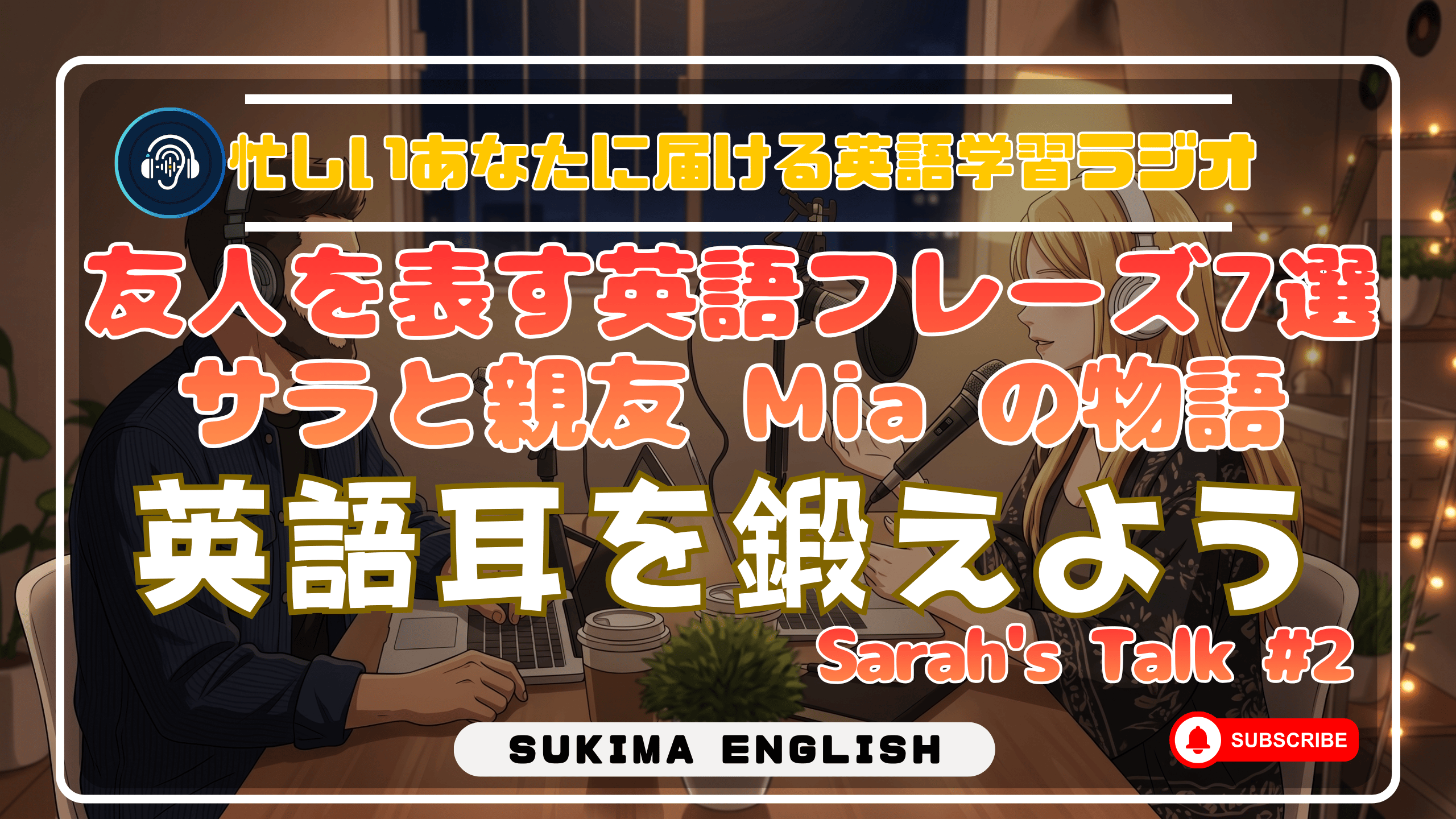
友人を表す英語フレーズ7選|サラと親友 Mia の物語【Sukima English Sarah's Talk #2】
ポッドキャスト「すきまイングリッシュ」のスクリプト。「友人を表す英語フレーズ7選|サラと親友 Mia の物語【Sukima English Sarah's Talk #2】」の会話全文です。

さゆり: こんにちは!「Sukima English」へようこそ。 ホストのさゆりです。 今日はサラのトークシリーズ「Sarah's Talk」第2弾。 テーマは「親友 Mia との15年友情ストーリー」についてです。
サラ: Hey everyone, Sarah here. Today is going to be a little different. I'm going to talk about my best friend, Mia. We've been friends for fifteen years. (日本語訳: 皆さん、こんにちは、サラです。今日はちょっといつもと違う話をします。親友のミアについて話そうと思います。私たちはもう15年来の友達です。)
Marc: Marc here. I've heard the name Mia about a hundred times since I met you. Today I finally get the full story. (日本語訳: マークです。君と会ってからミアっていう名前を100回は聞いたよ。今日、ついに全部聞かせてもらうんだ。)
サラ: You have heard the name. I talk about her constantly. (日本語訳: 名前は聞いたことあるでしょ。いつも話してるんだから。)
Marc: Constantly. So, who is Mia, really? (日本語訳: いつもね。それで、ミアって一体どんな人なの?)
サラ: We'll get there. Slow down. (日本語訳: そこまで行くよ。落ち着いて。)
さゆり: サラの来日のきっかけにもなった親友 Mia さん。 エピソード1 で「来日のきっかけは Mia の誘い」と話していましたね。 今日はその二人の友情を、出会いから今まで時系列で聞いていきましょう。 サラの話の中から、日常英会話で使える「友情・人間関係」を表現するフレーズも一緒に拾っていきます。
さゆり: まず最初のトピック。 サラと Mia が出会ったのは、NYU 1年生のオリエンテーションだそうです。
サラ: Okay, take it back to NYU. First week of college. Orientation week. (日本語訳: じゃあ、NYUまで戻ろう。大学1年生の最初。オリエンテーションウィーク。)
Marc: Like, day one? (日本語訳: 初日とか?)
サラ: Day three. We were in this huge auditorium with like a thousand other freshmen. And there was this icebreaker thing where you had to find someone who matched a fact on a list. (日本語訳: 3日目。すごく広い講堂に、1000人くらいの新入生がいてさ。それで、リストにある事実に合う人を見つけるっていうアイスブレイカーがあって。)
Marc: Oh no. (日本語訳: まさか。)
サラ: Oh yes. The worst kind of icebreaker. And the fact on my list was, "find someone who has lived in New York their whole life." So I'm walking around the room, and I see this girl in the corner, looking exactly as miserable as I felt. (日本語訳: そう、最悪のアイスブレイカー。私のリストの項目は、「ニューヨークでずっと育った人を見つける」だったの。だから部屋を歩き回って、隅っこにいる女の子を見つけた。私と同じくらい不幸そうな顔をしてた。)
Marc: That's a connection right there. (日本語訳: そこで繋がったわけだ。)
サラ: That's a connection. I walked up to her and I said, "Have you lived in New York your whole life?" She looked at me, deadpan, and said, "Yes, and I hate this icebreaker." (日本語訳: そう、繋がった。彼女に近づいて、「ニューヨークでずっと育ったの?」って聞いた。彼女は無表情で私を見て、「ええ、そしてこのアイスブレイカー、大嫌い。」って言ったの。)
Marc: She had me at "I hate this icebreaker." (日本語訳: 「このアイスブレイカー、大嫌い」で完全に心を持っていかれたね。)
サラ: That was Mia. We've been best friends ever since. (日本語訳: それがミア。それ以来、親友になったんだ。)
Marc: So you guys go way back. (日本語訳: じゃあ、すごく昔からの知り合いなんだね。)
サラ: We go way back. Fifteen years. (日本語訳: すごく昔から。15年。)
さゆり: マークが言った 「we go way back」という表現、聞こえましたか? 「古くからの友達」「長い付き合い」という、温かみのあるフレーズですね。 長年の友情を表現するときの定番です。
サラ: And the second day after that icebreaker, we found out we both lived three blocks from each other in Manhattan. Both NYU. Both first-year. Both into the same indie music. Both broke. (日本語訳: それで、あの後、2日目には、マンハッタンの近所3ブロックに住んでるって分かったんだ。二人ともNYU。二人とも1年生。二人とも同じインディーミュージックが好き。二人ともお金がなかった。)
Marc: A friendship made in spreadsheets. (日本語訳: スプレッドシートで生まれた友情だね。)
サラ: A friendship made in spreadsheets. And we just clicked. There was no awkward "are we friends yet" period. We jumped over the whole thing. (日本語訳: スプレッドシートで生まれた友情。そしてすぐに意気投合した。ぎこちない「私たち友達?」みたいな期間はなかった。その段階はまるごと飛び越えたんだ。)
Marc: That doesn't happen often. (日本語訳: そんなことは滅多にないよね。)
サラ: It really doesn't. From day one, it felt like we'd known each other forever. (日本語訳: 本当にない。初日から、ずっと昔から知ってるような気がしたんだ。)
さゆり: サラがさっき言った 「we just clicked」もよく使われるフレーズです。 「すぐ意気投合した」「パズルがハマるようにすっと合った」というニュアンス。 出会いが特別だった時の一言で、ロマンスにも友情にも使えますよ。
サラ: And from that point on, we did everything together. NYU classes, study sessions, late-night Manhattan walks. We became regulars at this terrible diner near campus that served burnt coffee. (日本語訳: そしてその時以来、私たちはいつも一緒だった。NYUの授業、勉強会、夜遅くのマンハッタンの散歩。キャンパス近くのひどいダイナーに、焦げたコーヒーを出すところがあったんだけど、そこによく通ってた。)
Marc: Burnt coffee is part of the friendship. (日本語訳: 焦げたコーヒーも友情の一部だね。)
サラ: Burnt coffee was a personality trait of that friendship. We'd sit there for hours, talking about life, future plans, everything. We thought we were going to take over the world. (日本語訳: 焦げたコーヒーは、その友情の個性だった。何時間もそこに座って、人生のこと、将来の計画、全部話した。世界を征服できるって思ってたんだ。)
Marc: A lot of college friendships start that way. (日本語訳: 大学の友情って、そういう風に始まることが多いよね。)
サラ: A lot of college friendships also end that way. But ours didn't. (日本語訳: 大学の友情の多くは、そういう風に終わるんだ。でも、私たちの友情はそうじゃなかった。)
さゆり: 続いては、大学を卒業してから、二人がそれぞれの道を歩んだ時期、 そして Mia の来日と、サラの来日についてです。
サラ: Okay, so after graduation, things got real. Mia got into media. Like, magazine and digital journalism. I went into education and English teaching. We both stayed in NY, but suddenly our schedules were completely different. (日本語訳: さて、卒業後、現実は厳しくなった。ミアはメディアの世界に進んだ。雑誌とかデジタルジャーナリズムね。私は教育と英語教師になった。二人ともNYに残ったけど、突然、スケジュールが全く違ったんだ。)
Marc: Same city, different worlds. (日本語訳: 同じ街、違う世界。)
サラ: Exactly. We saw each other less. Like, way less. From every day to maybe every two weeks. Then once a month. (日本語訳: まさに。会う回数が減った。すごく減った。毎日から、2週間に1回くらいに。そして月に1回。)
Marc: That's how it goes when life kicks in. (日本語訳: 人生が動き出すと、そうなっていくものだよね。)
サラ: It is. We drifted a little. Not in a bad way. Just... life happens. (日本語訳: そうなんだ。少しずつ距離ができた。悪い意味じゃない。ただ…人生ってそういうもの。)
Marc: But you never lost touch. (日本語訳: でも、連絡は途絶えなかったんだね。)
サラ: Never. Because here's the thing — every single time we met up, even after weeks of nothing, we picked up right where we left off. (日本語訳: 一度も。だって、すごいのはこれなんだ — 何週間も会ってなくても、次に会うたびに、まるで昨日会ったかのように話が弾んだんだ。)
Marc: That's the sign of a real friend. (日本語訳: それが本当の友達の証拠だね。)
サラ: A real friend. No catching up needed. No awkwardness. Just straight back to making fun of each other and ordering too much food. (日本語訳: 本当の友達。昔話をする必要もない。ぎこちなさもない。ただ、すぐにお互いをからかったり、食べすぎたりするだけ。)
さゆり: 「we picked up right where we left off」というフレーズに注目してください。 「久しぶりに会っても、自然に元の関係に戻れる」という、長く続く友情を表現する素敵なフレーズです。
サラ: And then. Mia gets a job offer. In Tokyo. Some media company doing English-language content. She tells me on the phone, and I'm like, "Wait, Tokyo? Like, the actual Tokyo? Across the ocean?" (日本語訳: それでね、ミアが仕事のオファーをもらったんだ。東京で。英語のコンテンツを扱うメディア会社なんだ。電話で私に話してくれて、私は「え、東京?あの、本当の東京?海を渡るっていう?」って感じだった。)
Marc: She didn't visit first? (日本語訳: 先に下見とかしなかったの?)
サラ: She did, like, twice on vacation. But this was a real move. And I remember sitting in my Manhattan apartment, listening to her tell me about this opportunity. And feeling really happy for her. And really, really sad for me. (日本語訳: バケーションで2回ぐらいは行ったことあるよ。でも、これは本格的な移住だからね。マンハッタンのアパートに座って、彼女がそのチャンスについて話してくれるのを聴いたのを覚えてる。彼女のためにすごくハッピーな気持ちになった。そして、私自身はすごく、すごく悲しかった。)
Marc: That's brutal. (日本語訳: それはキツいね。)
サラ: It was brutal. The day she left, we had this whole goodbye dinner. Cried. Hugged. The classic. (日本語訳: キツかったよ。彼女が出ていく日、私たち、お別れのディナーをしたんだ。泣いて、ハグして。定番だよね。)
Marc: How did long distance go? (日本語訳: 遠距離恋愛はどうだった?)
サラ: Surprisingly... fine? Different time zones, different lives, but we kept in touch. She'd send me random photos of her commute. I'd send her photos of bagels she missed. (日本語訳: 意外と…大丈夫だった?時差も、生活も違ったけど、連絡は取り合ってた。彼女は通勤途中のランダムな写真を送ってきてくれた。私は、彼女が恋しがってるベーグルの写真を送ってた。)
Marc: The bagel-based long distance. (日本語訳: ベーグルが繋ぐ遠距離恋愛。)
サラ: The bagel-based long distance. And then, like a year in, she started asking, "When are you coming to visit?" And I kept saying, "Soon." (日本語訳: ベーグルが繋ぐ遠距離恋愛。それで、1年くらい経った頃、彼女が「いつ会いに来てくれるの?」って聞き始めたんだ。私はずっと「もうすぐ」って言ってた。)
Marc: And then? (日本語訳: それで?)
サラ: And then one day, she called me and said, "Sarah, I found a teaching job opening here. You'd be perfect. And there's an apartment opening up in my neighborhood." And the way she said it — she really wanted me there. She had been planning for me. (日本語訳: それで、ある日、彼女から電話があって「サラ、ここ、教員の募集が出てるわよ。あなたにぴったりよ。それに、私の近所でアパートも空きが出るの」って言ったの。彼女の言い方から、本当に私に来てほしかったんだなってわかった。私のために計画してくれてたんだ。)
Marc: Wait. She lined up a job AND an apartment for you? (日本語訳: え、仕事とアパート、両方手配してくれたってこと?)
サラ: Lined them up. Sent me the listings. Made the case. Mia is a project manager when it comes to my life decisions. (日本語訳: 手配してくれた。リストを送ってきて、説得してくれた。ミアは私の人生の決断において、プロジェクトマネージャーなんだ。)
Marc: That is having someone's back on a different level. (日本語訳: それは、誰かのことを全く別のレベルで支えてるね。)
サラ: She had my back. Completely. I was so scared to come. The whole "I don't speak Japanese, I don't have anything lined up" thing. But she made it possible. (日本語訳: 彼女は私のことを支えてくれた。完全に。来るのがすごく怖かったんだ。「日本語話せないし、何も決まってないし」っていう状況だったから。でも、彼女がそれを可能にしてくれた。)
さゆり: サラが言った 「she had my back」は「私の味方になってくれた・私を支えてくれた」という、信頼関係を表すフレーズです。 「back」は背中。 誰かが後ろから守ってくれている、というイメージですね。
サラ: And here's the thing. The day I landed at Narita, she was right there at arrivals. She helped me sign the apartment paperwork. She walked me to the convenience store and taught me how to read the rice ball labels. (日本語訳: そしてね、重要なのは。私が成田に着いた日、彼女は到着ロビーにいてくれたんだ。アパートの書類手続きを手伝ってくれて、コンビニに連れて行ってくれて、おにぎりのラベルの読み方を教えてくれた。)
Marc: Which onigiri to avoid. (日本語訳: どれを避けるべきか。)
サラ: Which onigiri to avoid. Critical knowledge. She literally walked me through my new life for the first month. (日本語訳: どれを避けるべきかっていうね。超重要知識。彼女は文字通り、最初の1ヶ月、私の新しい人生を案内してくれたんだ。)
Marc: That's a real friend. (日本語訳: それは本当の友達だね。)
サラ: That's a ride or die. (日本語訳: まさに「生死を共にする」レベルの友達だ。)
さゆり: 「ride or die」は、「何があっても一緒にいる、最強の親友」を意味するスラング表現。 元々はヒップホップ文化から広がりましたが、今では幅広く「特別な親友」を表現するフレーズとして使われていますよ。
さゆり: 最後のトピックは、今の二人の関係性についてです。 同じ東京に住んで2年半、二人はどんな距離感で会っているのでしょうか。
サラ: So we've both been in Tokyo for two and a half years now. Same city. We both have jobs, lives, schedules. We meet up, what, like once or twice a month? (日本語訳: それで、私たちは今、二人とも2年半、東京にいるんだ。同じ街に。二人とも仕事も、生活も、スケジュールもある。会うのは、何回くらいだろう、月に1、2回?)
Marc: That's less than NYU days. (日本語訳: NYU時代より少ないね。)
サラ: Way less. But it's different now. We're adults. We have our own routines. We can't just hang out every night like we did in college. (日本語訳: ずっと少ない。でも、今は違う。私たちは大人だから。それぞれ自分のルーティンがある。大学時代みたいに毎晩のように遊んでるわけにはいかない。)
Marc: Did that change the friendship? (日本語訳: それは友情を変えた?)
サラ: It changed the form, not the substance. When we do meet up, it's the same as it was at NYU. We find a tiny izakaya in some back alley, we order too much food, we talk for four hours. (日本語訳: 形は変わったけど、本質は変わらない。会う時は、NYU時代と同じだよ。裏路地の小さな居酒屋を見つけて、食べすぎるくらい注文して、4時間話し込むんだ。)
Marc: The Mia and Sarah brand. (日本語訳: ミアとサラのブランド。)
サラ: The brand is consistent across decades. (日本語訳: ブランドは、何十年経っても一貫してる。)
Marc: Has Mia changed? Have you? (日本語訳: ミアは変わった?あなたは?)
サラ: Of course we have. She's calmer. She used to be the louder one of the two of us, and now she's the steady one. And I've gotten — I don't know — more reflective? Less hustle, hustle, hustle. Tokyo did that to both of us. (日本語訳: もちろん変わったよ。彼女は落ち着いた。昔は私たちのうちで彼女の方が声が大きかったのに、今はしっかりしてる。私は…どうかな、もっと内省的になった?「ハッスル、ハッスル」っていう感じが薄れた。東京が二人ともそうさせたんだ。)
Marc: Tokyo softens everyone eventually. (日本語訳: 東京は、最終的にみんなを丸くする。)
サラ: It really does. And Marc, here's the thing — I owe her so much. I literally would not be in Japan if it weren't for Mia. The whole life I've built here? She started that. (日本語訳: 本当だよ。そしてマーク、本当に言いたいのは、私は彼女にすごく恩があるんだ。ミアがいなかったら、文字通り日本には来てなかった。私がここで築いた人生全部?彼女が始めたんだ。)
Marc: Have you told her that? (日本語訳: 彼女にそう伝えた?)
サラ: I've tried. She always brushes it off. She says, "You'd have done the same for me." Which is annoyingly true. (日本語訳: 伝えようとはした。でも、彼女はいつもそれを軽く流すんだ。「あなただって私にしてくれたはずよ」って言う。それが、腹立たしいけど、本当なんだ。)
さゆり: 「I owe her one」というフレーズも素敵ですね。 「彼女に借りがある」「彼女に感謝している」という意味です。 「I owe her everything」と言うと、もっと深い感謝になりますね。
サラ: And looking forward — like, ten years from now? I don't know where either of us will be. Maybe back in NY. Maybe still in Tokyo. Maybe somewhere completely new. (日本語訳: そして、これから先、10年後とか?二人ともどこにいるかわからない。もしかしたらNYに戻ってるかもしれないし、まだ東京にいるかもしれない。全く新しい場所かもしれない。)
Marc: But? (日本語訳: でも?)
サラ: But I know that wherever Mia is, when we meet up, we're going to find some terrible diner or some hole-in-the-wall izakaya, and we're going to talk for four hours. (日本語訳: でも、ミアがどこにいても、会えば、ひどいダイナーか、どこか片隅の居酒屋で、4時間も話し込むんだろうなってことはわかるよ。)
Marc: She's family at this point. (日本語訳: もう家族みたいなもんだよ。)
サラ: She's family at this point. The kind of family you actually want to spend time with. (日本語訳: もう家族みたいなもんだよ。一緒にいたいって思える家族の方ね。)
さゆり: マークの 「she's family at this point」は、「もう家族みたいなもの」という、親密度の最上級を表すフレーズです。 長年の友人を「家族」と表現する、英語の温かい言い方ですね。
Marc: I have someone like that too. Ryan. We've been friends since we were nineteen. He's the reason I came to Japan. Different story, same energy. (日本語訳: 僕にもそういう人がいる。ライアン。19歳からの友達だよ。彼が僕を日本に連れてきた理由なんだ。話は違うけど、同じノリ。)
サラ: Mia and Ryan should meet. (日本語訳: ミアとライアンは会うべきだね。)
Marc: They would either become best friends or destroy the city. (日本語訳: 二人は親友になるか、街を破壊するかのどっちかだろうね。)
サラ: Both feel possible. (日本語訳: どっちもありえそうだ。)
さゆり: それでは今日のエピソードで出てきたキーフレーズを、サラとマークに使ってもらいながら振り返りましょう。
サラ: Okay. Marc, kick us off. (日本語訳: じゃあ、マーク、始めようか。)
Marc: Alright. "We go way back." — Like when you've known someone forever and there's no need to explain. (日本語訳: 「昔からの知り合い」ってやつだね。もうずっと知っていて、説明はいらないような間柄。)
サラ: "Mia and I go way back. We met during the worst icebreaker of all time." (日本語訳: 「ミアとは昔からの知り合い。最悪のきっかけで知り合ったんだ。」)
さゆり: 「we go way back」は「古くから知っている」。 長年の友情を表す温かいフレーズ。
サラ: Next — "we just clicked." It's when you meet someone and the friendship is just instant. (日本語訳: 次。「気が合った」ってやつ。初めて会ったのに、すぐに友情が芽生えること。)
Marc: "I met Ryan at a college party, and we just clicked. Same humor, same music, same everything." (日本語訳: 「ライアンとは大学のパーティーで出会って、すぐに気が合った。ユーモアも音楽も、全部同じなんだ。」)
さゆり: 「we just clicked」は「すぐ意気投合した」。 出会いが特別だった瞬間を表現します。
Marc: "We picked up right where we left off." — When time apart doesn't change anything. (日本語訳: 「久しぶりでも、すぐに元通り」ってやつ。しばらく会っていなくても、何も変わらないこと。)
サラ: "I hadn't seen Mia in three months once, and we picked up right where we left off in five seconds." (日本語訳: 「ミアとは一度3ヶ月会ってなかったんだけど、5秒で元通りになったんだ。」)
さゆり: 「we picked up right where we left off」は、長く会っていなくても自然に元の関係に戻れる、という関係性を表すフレーズです。
サラ: "She had my back." — When someone has your support, no matter what. (日本語訳: 「彼女は私の味方だった」ってこと。どんな時でも味方でいてくれる人。)
Marc: "When I first moved to Japan, Ryan had my back the whole way. Couldn't have done it without him." (日本語訳: 「日本に初めて引っ越してきた時、ライアンはずっと私の味方でいてくれた。彼がいなかったら無理だったよ。」)
さゆり: 「she had my back」は「私の味方になってくれた」。 背中を守ってくれる、というイメージですね。
Marc: "Ride or die." — The friend who's there through everything. (日本語訳: 「命を共にする」ってやつ。どんな時でもそばにいてくれる友達。)
サラ: "Mia is my ride or die. She literally lined up a life for me in Tokyo." (日本語訳: 「ミアは私の命を共にする友達。東京での生活を文字通り整えてくれたんだ。」)
さゆり: 「ride or die」は、何があっても一緒にいる「最強の親友」を意味するスラング表現。
サラ: "I owe her one." — When someone has done something huge for you. (日本語訳: 「彼女には借りがある」ってこと。誰かがあなたのためにすごく大きなことをしてくれた時。)
Marc: "She covered my shift when my dad was in the hospital. I owe her one." (日本語訳: 「父が入院してた時、彼女が私のシフトを代わってくれたんだ。彼女には借りがあるよ。」)
さゆり: 「I owe her one」は「彼女に借りがある」。 感謝を伝える定番表現です。
Marc: And the last one — "she's family at this point." (日本語訳: そして最後は、「もう家族みたいなもんだ」)
サラ: "Ryan and Mia — at this point, they're not just friends. They're family at this point." (日本語訳: 「ライアンとミアは、もう友達というだけじゃない。もう家族みたいなもんだ。」)
さゆり: 「she's family at this point」は、長年の友人を「もう家族みたいなもの」と表す、親密さの最上級フレーズです。
さゆり: サラ、今日も素敵なお話をありがとうございました。 Mia さんとの15年の友情、本当に温かいエピソードでしたね。
サラ: Thanks for letting me get sentimental, you guys. Mia, if you're listening — yeah, I owe you everything. (日本語訳: 感傷的になるのを許してくれてありがとう。ミア、もし聞いてたら、君には全部借りてる。)
Marc: And if you have a friend like Mia in your life, send them this episode. They'll know what you mean. (日本語訳: もし君の人生にミアみたいな友達がいたら、このエピソードを送ってあげて。きっとわかってくれるよ。)
サラ: Send it to your ride or die. (日本語訳: 命を共にする友達に送ってあげて。)
Marc: Send it to your ride or die. That's the real call to action. (日本語訳: 命を共にする友達に送ってあげて。それが本当のコールトゥアクションだよ。)
さゆり: 長く続く友情を表す英語フレーズは、大切な人について話すときにこそ使ってみてほしいですね。 次回もまた、サラとマークの日常エピソードと一緒に、すぐ使える英語フレーズをお届けします。 最後まで聞いてくださってありがとうございました。
サラ: See you next time, everyone! (日本語訳: また次回ね、みんな!)
Marc: Take care! (日本語訳: 気をつけてね!)

関連記事
【日常英会話】英語のみ | なぜ日本人は10分前に着くのか?時間に正確な国の、終わらない会議 #英語学習 #ネイティブ英語会話 #リスニング強化
ポッドキャスト「すきまイングリッシュ」のスクリプト。「【日常英会話】英語のみ | なぜ日本人は10分前に着くのか?時間に正確な国の、終わらない会議 #英語学習 #ネイティブ英語会話 #リスニング強化」の会話全文です。

【日常英会話】日本語解説あり | 二年半、顔を知らない隣人|六時十分の目覚ましが鳴りやまなかった朝 #英語学習 #英語フレーズ #英会話 #英語耳
ポッドキャスト「すきまイングリッシュ」のスクリプト。「【日常英会話】日本語解説あり | 二年半、顔を知らない隣人|六時十分の目覚ましが鳴りやまなかった朝 #英語学習 #英語フレーズ #英会話 #英語耳」の会話全文です。
【日常英会話】アドバイスが通じなかった話|口を挟む・そっけなくあしらう・胸にこたえる #英語学習 #ネイティブ英語会話 #リスニング強化 #英語耳
ポッドキャスト「すきまイングリッシュ」のスクリプト。「【日常英会話】アドバイスが通じなかった話|口を挟む・そっけなくあしらう・胸にこたえる #英語学習 #ネイティブ英語会話 #リスニング強化 #英語耳」の会話全文です。

【日常の英語】日本語解説あり | 友達の家に招かれたときの英語12選|手土産・断り方・帰り際のあいさつ #英語学習 #英語フレーズ #英会話 #英語耳
ポッドキャスト「すきまイングリッシュ」のスクリプト。「【日常の英語】日本語解説あり | 友達の家に招かれたときの英語12選|手土産・断り方・帰り際のあいさつ #英語学習 #英語フレーズ #英会話 #英語耳」の会話全文です。

【日常の英語】日本語解説あり | 友達の家に招かれたときの英語12選|手土産・断り方・帰り際のあいさつ #英語学習 #英語フレーズ #英会話 #英語耳
ポッドキャスト「すきまイングリッシュ」のスクリプト。「【日常の英語】日本語解説あり | 友達の家に招かれたときの英語12選|手土産・断り方・帰り際のあいさつ #英語学習 #英語フレーズ #英会話 #英語耳」の会話全文です。
【日常英会話】英語のみ | 会社の健康診断、会社が自分の体の数値を持っている国——ネイティブが英語で語る健康診断 #英語学習 #ネイティブ英語会話 #リスニング強化
ポッドキャスト「すきまイングリッシュ」のスクリプト。「【日常英会話】英語のみ | 会社の健康診断、会社が自分の体の数値を持っている国——ネイティブが英語で語る健康診断 #英語学習 #ネイティブ英語会話 #リスニング強化」の会話全文です。