【日常英会話】英語のみ | 日本人はなぜ四季を「生きている」のか|コンビニの棚でわかる季節、ネイティブ2人が英語だけで語る #英語学習 #ネイティブ英語会話 #リスニング強化
ポッドキャスト「すきまイングリッシュ」のスクリプト。「【日常英会話】英語のみ | 日本人はなぜ四季を「生きている」のか|コンビニの棚でわかる季節、ネイティブ2人が英語だけで語る #英語学習 #ネイティブ英語会話 #リスニング強化」の会話全文です。

Marc: Sarah, I did something last week that made me feel like a completely different person than I was five years ago. (日本語訳: サラ、この前さ、5年前の自分とは全然違うなって思ったことをしたんだ。)
サラ: Okay. What did you do? (日本語訳: へえ。何したの?)
Marc: I got genuinely excited about a convenience store poster. (日本語訳: コンビニのポスターに心から感動しちゃったんだ。)
サラ: A poster. (日本語訳: ポスター?)
Marc: A poster. I walked into the Lawson by my place, and there was a big sign up. The autumn menu had started. Chestnut this, sweet potato that. And I actually felt happy. Like, oh good, it is here. (日本語訳: そう。近所のローソンに入ったら、でっかい告知があってね。秋メニューが始まったって。栗とか、さつまいもとか。それを見て、思わず嬉しくなっちゃったんだ。『ああ、来たか』って。)
サラ: You felt happy that a store changed its snacks. (日本語訳: お店がおやつを変えただけで嬉しくなった、と。)
Marc: I felt happy that the season had changed. And the store was just the thing that told me. (日本語訳: 季節が変わったことが嬉しかったんだ。お店はそれを教えてくれるただのきっかけにすぎなかった。)
サラ: Explain that, because the Marc from five years ago would not have cared at all. (日本語訳: 5年前のサラなら全然気にしなかっただろうから、説明してみて。)
Marc: The Marc from five years ago would have walked right past it. In Chicago, the seasons happen to you. It gets cold, you get a coat. It gets hot, you turn on the air conditioning. (日本語訳: 5年前の自分だったら、そのまま通り過ぎていただろうな。シカゴでは、季節は自然に訪れるものだ。寒くなればコートを着る。暑くなればエアコンをつける。)
Marc: But nobody announces it. The store does not throw a little party for fall. (日本語訳: でも、誰もそれを告知しない。お店が秋のためにちょっとしたパーティーを開くわけじゃない。)
サラ: And here they do. (日本語訳: ここではやるんだね。)
Marc: Here the whole country seems to keep a calendar in its head. And the strange thing is, once you start living by it, you cannot go back. It gets into you. (日本語訳: ここでは、国全体が頭の中にカレンダーを持っているかのようだ。そして不思議なことに、それに沿って生活し始めると、元には戻れない。体に染み付いてしまうんだ。)
サラ: This sounds like another one for the series. (日本語訳: これは「シリーズ」のネタになりそうだね。)
Marc: It is completely one for the series. The four seasons are not just weather here. They are baked into everything. The food, the stores, the language, the way people plan their whole year. (日本語訳: まさにシリーズのネタだよ。四季はここでは単なる天気じゃない。すべてに織り込まれているんだ。食べ物、お店、言葉、一年を計画するやり方。)
サラ: Baked in. Where it is part of the thing and you cannot pull it back out. (日本語訳: 織り込まれている、だって。それがそのものの一部になって、もう取り出せないってこと?)
Marc: You cannot separate the season from the ordinary day. And most people living it do not even notice they are doing it. (日本語訳: 普通の日常から季節を切り離すことはできない。そして、それを体験しているほとんどの人は、自分がそれをやっていることにすら気づいていない。)
サラ: Hidden in plain sight. (日本語訳: 見えそうで見えない、と。)
Marc: There it is. Welcome back. (日本語訳: それだ。おかえり。)
サラ: Today, the seasons. Or really, how the seasons run everything without anyone saying so. (日本語訳: 今日は、季節。いや、正確には、季節が誰にも言われずにすべてを動かしていることについてだね。)
Marc: The calendar nobody prints, but everybody follows. (日本語訳: 印刷されないけど、みんなが従うカレンダー。)
サラ: Let's get into it. (日本語訳: 早速始めよう。)
サラ: Start with the store, since that is where it hit you. (日本語訳: まずは店からだね。サラに一番衝撃があった場所だから。)
Marc: The convenience store is the clearest place to see it. The shelves change with the season like clockwork. (日本語訳: コンビニはそれが一番分かりやすい場所だね。棚が季節ごとに決まったように変わるんだ。)
サラ: Like clockwork meaning right on schedule, every single time. (日本語訳: 決まったように、って?まさに予定通り、毎回ってこと?)
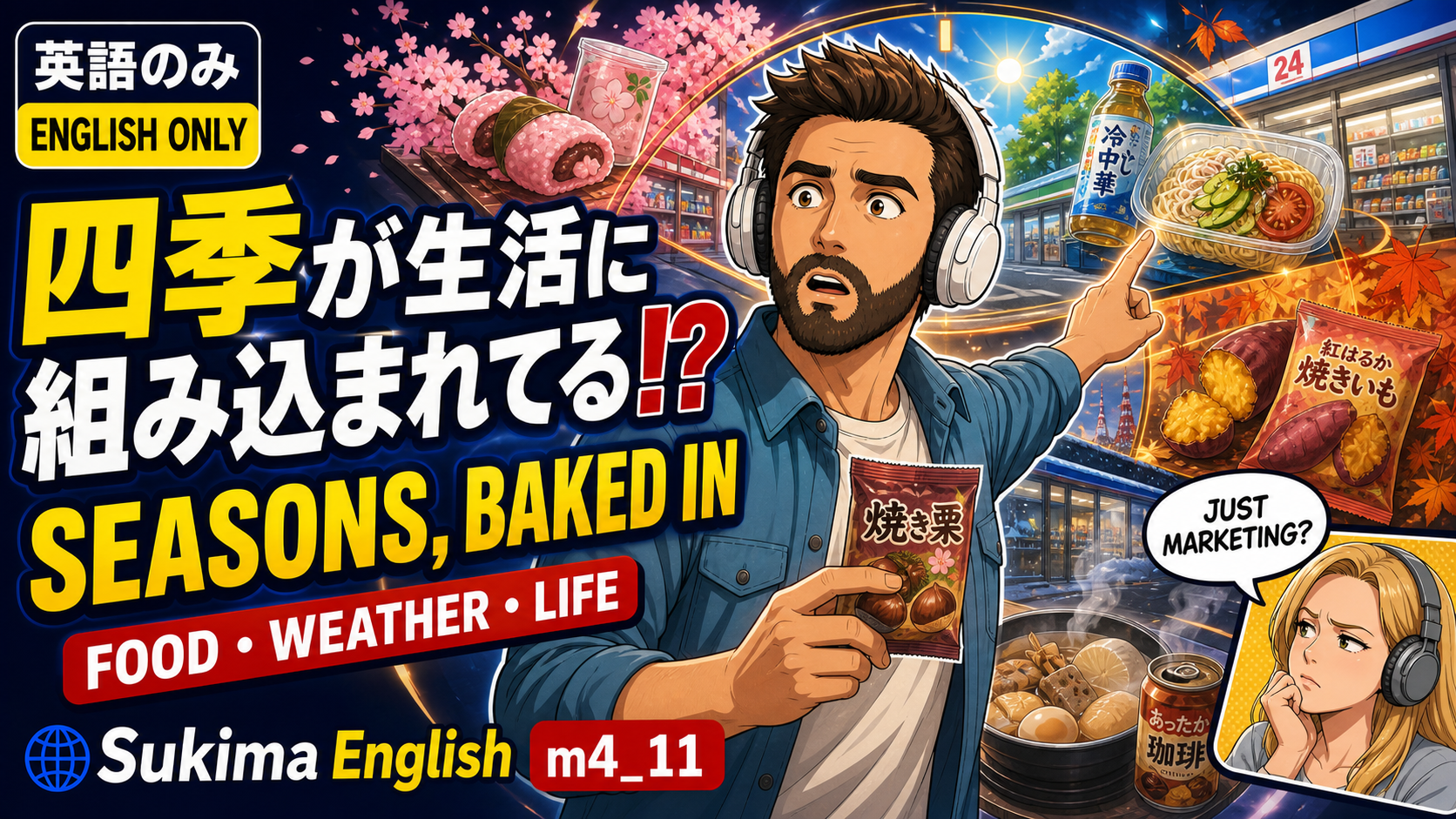
Marc: Every year, the same rhythm, almost to the week. Spring comes, and everything turns pink. Sakura flavor everywhere. Sakura latte, sakura mochi, pink packaging on things that have no business being pink. (日本語訳: 毎年、同じリズムで、ほぼ週単位でね。春が来ると、全部ピンク色になる。桜フレーバーがそこら中にある。桜ラテ、桜もち、本来ピンクであるはずのないものまでピンクのパッケージになる。)
サラ: Cherry blossom potato chips. (日本語訳: 桜味のポテトチップス。)
Marc: I have genuinely seen it. Then spring ends, and overnight it all switches. Summer shows up and it is cold noodles, hiyashi chuka, everything built to help you survive the heat. Shops literally put up a sign. Cold noodles have started. (日本語訳: 本当にあるんだよ。で、春が終わると、一夜にして全部切り替わる。夏が来て、冷やし中華とか、暑さを乗り切るために作られたもの一色になる。店には普通、看板まで出るんだ。「冷やし中華始めました」って。)
サラ: They announce that the cold noodles are back. (日本語訳: 冷やし中華が始まったことをお知らせしてるんだね。)
Marc: Like a holiday. And then fall, and it is the chestnut and sweet potato wave I told you about. Plus mushroom everything. (日本語訳: お祭りのようだね。で、秋になると、前に話した栗とサツマイモの波が来る。それにキノコ全般。)
Marc: And winter, the hot stuff moves to the front counter. Steamed buns, oden simmering by the register, hot canned coffee in the machines. (日本語訳: そして冬、温かいものがレジ前に移動する。肉まん、レジ横でおでんが煮えてる、自動販売機にはホット缶コーヒー。)
サラ: So the store is basically a seasonal clock. (日本語訳: じゃあ、店は基本的に季節の時計なんだね。)
Marc: You could walk in blindfolded, feel what is sitting by the register, and tell me the month. Oden means winter. Cold noodles mean summer. (日本語訳: 目隠しして入っても、レジ横に何があるか触れば、何月か分かるよ。おでんなら冬。冷やし中華なら夏。)
サラ: Now, in New York we have a little of this. Pumpkin spice shows up in fall. (日本語訳: ニューヨークでも、そういうのは少しだけあるよ。秋になるとパンプキンスパイスが出てくる。)
Marc: Right, pumpkin spice is your one big seasonal thing. (日本語訳: そう、パンプキンスパイスが君たちの唯一の大きな季節のイベントだね。)
サラ: It is basically our entire seasonal menu in one flavor. But it is a marketing event. A company decided pumpkin spice season is a thing, and we all roll our eyes about it a little. (日本語訳: あれは、ほぼ私たちの季節限定メニュー全体を1つのフレーバーで表してるようなもの。でも、あれはマーケティングイベントなんだ。どこかの会社が「パンプキンスパイスの季節」はそういうものだと決めただけで、私たちはちょっとうんざりする。)
Marc: That is the difference I keep hitting. Back home, seasonal flavor is a campaign. One chain running a promotion. Here it is not one company. It is every store, every brand, all moving together, every year. (日本語訳: それが僕がずっと言ってる違いなんだ。地元では、季節のフレーバーはキャンペーンなんだ。1つのチェーン店がプロモーションをやってる。ここでは、1社じゃない。全ての店、全てのブランドが、毎年、一斉に動いてる。)
サラ: So it does not feel like marketing. (日本語訳: だから、マーケティングみたいに感じないんだね。)
Marc: It feels like the weather. It feels like the shelves are just responding to the season the way the trees are. And after a while, you start waiting for it. By late summer I am already thinking, the chestnut stuff is coming soon. (日本語訳: 天気みたいに感じるんだ。木々が季節に反応するように、棚もただ季節に反応してるように感じる。で、しばらくすると、君もそれを待つようになる。夏の終わりには、もう「栗のやつがもうすぐ来るな」って考えてる。)
サラ: You have a craving on a schedule. (日本語訳: あなたは予定通りの渇望を抱くんだね。)
Marc: I have a craving on a schedule I did not choose. That is how deep it goes. Wanting the fall flavor the moment fall arrives is second nature to me now. (日本語訳: 僕が選んでない予定通りの渇望だよ。それくらい根深いんだ。秋のフレーバーを秋が始まる瞬間に欲しくなるのが、もう僕にとっては第二の天性だよ。)
サラ: Second nature. You do not think about it, you just do it. (日本語訳: 当たり前だよ。いちいち考えてるんじゃなくて、ただやるだけでしょ。)
Marc: I do not decide to want it. The season turns and the wanting shows up on its own. (日本語訳: 欲しようと決めるわけじゃないんだ。季節が変わって、欲する気持ちが自然に現れるんだよ。)
サラ: Okay, but let me push on that, because this is where I get skeptical. (日本語訳: OK、でもそこにちょっと突っ込んでいい?ここが私が疑い深くなるところなんだ。)
Marc: I figured you would. Go ahead. (日本語訳: そうなるだろうなって思ってたよ。どうぞ。)
サラ: Is this not just an enormous marketing machine? Companies love a reason to sell you a new product. New season, new flavor, buy the limited edition before it is gone. (日本語訳: これって、巨大なマーケティング戦略なんじゃないの?企業は新しい商品を売る理由が大好きでしょ。新しい季節、新しいフレーバー、限定品はなくなっちゃう前に買ってね、って。)
サラ: Maybe the seasons are not baked into the culture. Maybe they are baked into the sales strategy. (日本語訳: もしかしたら、季節って文化に根ざしてるんじゃなくて、販売戦略に根ざしてるのかもね。)
Marc: That is the strongest version of the objection. And there is money in it, no question. The limited-edition thing is absolutely a sales tactic. (日本語訳: それが一番強力な反論だね。それに、それに金がかかってるのは間違いない。限定品ってのは、まさに販売戦略だよ。)
サラ: Get it now, it disappears next month. That is pure marketing. (日本語訳: 今すぐ買って、来月にはなくなる。それって純粋なマーケティングでしょ。)
Marc: For sure. But here is what makes me think the season comes first and the selling comes second. Look at all the season stuff that has no product attached to it at all. (日本語訳: 確かに。でも、季節が先にあって、販売が後だって思わせる理由があるんだ。商品とは全く関係ない季節のものがたくさんあるのを見てよ。)
サラ: Like what? (日本語訳: 例えば何?)
Marc: Like the weather report. On the news, in spring, they track the cherry blossom front moving north across the whole country. Where the blossoms are opening, day by day, like a weather system. (日本語訳: 例えば天気予報だよ。ニュースで、春になると、桜前線が全国を北上していくのを追うんだ。どこで花が開いてるか、日ごとに、まるで天気システムみたいに。)
サラ: A national blossom forecast. (日本語訳: 全国的な桜の予報なんだ。)
Marc: Nobody is selling you a blossom. And in fall they do the same thing with the autumn leaves moving south. And there is an official announcement when the rainy season begins and when it ends. (日本語訳: 誰も桜を売ってるわけじゃない。そして秋には、紅葉が南下していくのと同じことをやる。そして梅雨入りと梅雨明けには公式発表があるんだ。)
サラ: An official start to a season. Not a store thing. (日本語訳: 季節の公式な始まり。お店のものじゃないね。)
Marc: Not a store thing at all. And then there is the language itself. When you write a letter, the polite way to open it is with a line about the season. The warmth of spring, the lingering heat of late summer. (日本語訳: 全くお店のもんじゃない。そして言葉そのものもある。手紙を書くとき、失礼のないように始めるには、季節の挨拶を一言添えるんだ。春の暖かさ、晩夏の残暑。)
サラ: The greeting itself is seasonal. (日本語訳: 挨拶そのものが季節にちなんでるんだね。)
Marc: It is built into how you are supposed to be polite. And people swap their entire wardrobe on a schedule. There is a word for it, koromogae. A day where you change your closet over from summer clothes to winter clothes. (日本語訳: それが丁寧さの形に組み込まれてるんだ。そして人々はスケジュールに従って、衣替えをする。それには言葉があって、衣替えっていうんだ。夏服から冬服にクローゼットを切り替える日。)
サラ: A scheduled day to change your clothes over. (日本語訳: 服を切り替えるための、決められた日なんだね。)
Marc: And it is not only the official stuff. The season announces itself. In summer, the cicadas start up, this huge wall of sound, and everyone just knows, okay, summer is really here. (日本語訳: それに公式なものだけじゃない。季節は自分で知らせてくるんだ。夏になると、セミが鳴き始めて、この巨大な音の壁ができて、みんなすぐにわかるんだ、ああ、夏が本当に来たんだって。)
サラ: The bugs are the start signal. (日本語訳: 虫が合図なんだね。)
Marc: The bugs are the calendar. And then in early fall the cicadas go quiet, and at night you start hearing these delicate little insects instead. And that sound means autumn, to everybody. (日本語訳: 虫はカレンダーなんだ。それで、初秋になるとセミの声が聞こえなくなり、夜には代わりに繊細な小さな虫の音が聞こえ始める。そして、あの音は、みんなにとって秋を意味するんだ。)
サラ: So you hear the season change before you even see it. (日本語訳: つまり、季節の変化を目にする前に、その音で季節の変化を感じ取るんだね。)
Marc: You hear it coming. Nobody sells you a cicada. There is no cricket corporation running a campaign. It is just the year turning, and everybody reading the same signs. (日本語訳: やってくるのを音で聞くんだ。セミを売ってる人はいない。キャンペーンをやってる会社なんてないんだ。ただ、時が巡ってるだけで、みんな同じサインを読み取ってる。)
サラ: Okay, that one really lands. That is about as far from marketing as you can get. (日本語訳: なるほど、それはすごく腑に落ちるわ。マーケティングとは正反対って感じね。)
Marc: So none of that is a company selling anything. The weather report, the letter greeting, the closet switch, the sound of the bugs. That is the season baked into daily life at a level way below shopping. (日本語訳: だから、そのどれも企業が何かを売ってるわけじゃない。天気予報、手紙の挨拶、クローゼットの入れ替え、虫の声。それらは、買い物よりずっと下のレベルで、日々の生活に焼き付いた季節なんだ。)
サラ: Okay. So the marketing is real, but it is riding on top of something that was already there. (日本語訳: なるほど。じゃあ、マーケティングは本物だけど、それは元々あったものの上に成り立ってるってことね。)
Marc: That is exactly how I see it now. The companies did not invent the seasons mattering. They plugged into a rhythm that was already running. The rhythm is baked in. The marketing just sells against it. (日本語訳: それがまさに今、私がそう見てるものだ。企業が季節を大切にすることを発明したわけじゃない。元々流れてるリズムに接続したんだ。リズムは焼き付いてる。マーケティングはただ、それに対抗して売ってるだけなんだ。)
サラ: The season is the river. The marketing is just the guy renting out the boats. (日本語訳: 季節は川で、マーケティングはその川でボートを貸し出す人、みたいな感じね。)
Marc: That is a great way to put it. He did not make the river. He is just charging you to float on it. (日本語訳: それは素晴らしい表現だ。彼は川を作ったんじゃない。ただ、そこに浮かぶために料金を請求してるだけなんだ。)
サラ: So if the rhythm is real, and not just sold to you, it should show up in how people actually live. Not only in what they buy. (日本語訳: だから、そのリズムが本物で、単に売りつけられたものじゃないなら、人々が実際にどう生きてるかに現れるはずよね。買ってるものだけじゃなくて。)
Marc: And it does. That is the deepest layer. Take food. There is this idea of shun, which is the peak season for a particular food. The few weeks when something is at its absolute best. (日本語訳: そうなんだ。それが一番深い層だ。食べ物を見てみよう。旬っていう考え方がある。特定の食べ物の旬の時期のことだ。そのものが絶対的に最高になる数週間。)
サラ: We have "in season" too. Tomatoes in season, corn in season. (日本語訳: 私たちにも「旬」はあるよ。旬のトマト、旬のトウモロコシ。)
Marc: You do, but here it is sharper. People will genuinely get excited that it is the season for a specific fish, or bamboo shoots in spring, or the first catch of bonito. Eating the thing at its exact moment is part of the pleasure. (日本語訳: 君たちにもあるけど、ここはもっとシャープなんだ。人々は、特定の魚や春のタケノコ、初カツオの季節だって本気で興奮する。その瞬間に食べるっていうことが、楽しみの一部なんだ。)
サラ: So the timing is the flavor, almost. (日本語訳: つまり、タイミングが味、みたいなものなんだね。)
Marc: The timing is half the flavor. And the sweets do it too. The little seasonal wagashi, the ones shaped like a maple leaf in fall or a cherry blossom in spring. You literally eat the season. (日本語訳: タイミングが味の半分だ。お菓子もそうだよ。秋は紅葉の形、春は桜の形をした小さな季節の和菓子。文字通り、季節を食べるんだ。)
サラ: We do have pumpkin everything in the fall, to be fair. (日本語訳: まあ、正直に言うと、秋にはカボチャのものがたくさんあるけどね。)
Marc: You do, but think about how narrow that is. One vegetable, one season, mostly in a latte. Here it is the whole calendar. (日本語訳: 君たちにはあるけど、その狭さを考えてみてほしい。一つの野菜、一つの季節、ほとんどがラテの中だ。ここでは、カレンダー全体なんだ。)
Marc: Spring is bamboo shoots and strawberries. Early summer is plums and eel. Fall is the mushrooms and the chestnuts and the new rice. (日本語訳: 春はタケノコとイチゴ。初夏は梅とウナギ。秋はキノコと栗と新米だ。)
サラ: New rice is a thing? (日本語訳: 新米って、そんなのあるの?)
Marc: Shinmai. The first rice of the harvest. People genuinely look forward to it. There is a banner up. The new rice is in. (日本語訳: 新米だ。収穫された最初のお米だ。人々は本気でそれを楽しみにしている。旗が立ってるんだ。「新米が入荷しました」って。)
サラ: A banner for rice. (日本語訳: 米の垂れ幕。)
Marc: A banner for rice. Because it is the season, and the season is the event. (日本語訳: 米の垂れ幕。季節だから、そして季節がイベントだから、だ。)
サラ: Okay, that is charming, I will admit. (日本語訳: まあ、それは魅力的だとは認めよう。)
Marc: And then the festivals. They come around like clockwork, the same one every year at the same time. And when one is in full swing, the whole neighborhood is in it. The summer festivals especially. The whole street turns out. (日本語訳: そしてお祭りだよ。時計仕掛けみたいにやってきて、毎年同じ時期に同じものがある。そしてそれが本番の時、地域全体がそれに加わるんだ。特に夏祭り。通り全体が繰り出す。)
サラ: In full swing meaning at its absolute peak, everyone out. (日本語訳: 本番っていうのは、まさにピークで、みんな外に出ているってこと?)
Marc: Full energy, food stalls, everybody there. And here is the part that gets me now. A season here has a shape. It arrives, it hits its peak, and then it runs its course and people let it go. (日本語訳: 全開のエネルギー、屋台、みんなそこにいる。そしてここが今、私を惹きつける部分なんだ。ここの季節は形がある。やってきて、ピークを迎え、そしてそのコースを走り、人々はそれを手放す。)
サラ: Run its course. It finishes naturally and you move on. (日本語訳: コースを走る。自然に終わって、次に進む。)
Marc: The cherry blossoms are the perfect example. They bloom, everyone goes a little crazy for one week while it is in full swing, and then the petals fall, and that is the whole point. (日本語訳: 桜が完璧な例だ。咲いて、みんな一週間ほど夢中になって、それが本番の時、そして花びらが散って、それが全てなんだ。)
サラ: The fact that it does not last is part of why it matters. (日本語訳: それが続かないという事実が、それが重要である理由の一部なんだ。)
Marc: The ending is baked right into why people love it. And the moment it ends, nobody stays sad for long, because the next thing is already just around the corner. (日本語訳: 終わりが、人々がそれを愛する理由に組み込まれている。そして終わった瞬間、誰も長く悲しむことはない、なぜなら次のものがもうすぐそこにあるからだ。)
Marc: Blossoms finish, and here comes fresh green and the rainy season. That ends, here comes summer. (日本語訳: 花が終わり、ここに新緑と梅雨が来る。それが終わり、夏が来る。)
サラ: Just around the corner. The next season is always right there waiting. (日本語訳: すぐそこ。次の季節がいつも待っている。)
Marc: There is always a next one loading. So you are never really at the end of anything. You are just handed from one season to the next, all year long. (日本語訳: 常に次のものがロードされている。だからあなたは決して何かの終わりにはいない。一年中、ただある季節から次の季節へと手渡されているだけだ。)
サラ: Now compare that to Chicago, because Chicago has four real seasons too. Brutal winter, hot summer. Just as much weather as here. (日本語訳: さて、シカゴと比較して。シカゴにも本物の四季があるからね。厳しい冬、暑い夏。ここと同じくらい天候がある。)
Marc: More weather, honestly. Chicago will hurt you. But here is the thing. In Chicago, the seasons happen, but we do not really do anything with them. Winter is just a thing to get through. We complain and wait for it to be over. (日本語訳: 正直、もっと天候がある。シカゴはあなたを傷つける。でも、ここが重要なこと。シカゴでは、季節は起こるけど、私たちはそれについて何もしていない。冬はただ乗り越えるもの。文句を言って、終わるのを待つ。)
サラ: You endure the season. You do not celebrate it. (日本語訳: あなたは季節を耐える。あなたはそれを祝わない。)
Marc: We endure it. Here, people turn the season into something. They go see the leaves on purpose. They make a whole trip out of the blossoms. The season is an event you take part in, not just weather you survive. (日本語訳: 私たちは耐える。ここでは、人々が季節を何かに変える。わざわざ葉を見に行く。花見に旅行をする。季節は、あなたが生き残る天気ではなく、あなたが参加するイベントなんだ。)
サラ: So it is the same four seasons, a completely different relationship to them. (日本語訳: だから、同じ四季で、それらに対する関係は全く違うと。)
Marc: Same seasons, completely different relationship. And once you pick up the local relationship, you feel a little empty without it. (日本語訳: 同じ季節、全く違う関係。そして一度地元の関係を身につけると、それなしでは少し空虚に感じる。)
Marc: My first fall back in Chicago after moving here, I kept waiting for the country to do something about it. The chestnut stuff, the leaf reports. (日本語訳: ここに引っ越してきて初めてシカゴに戻った秋、国がそれについて何かしてくれるのを待ち続けていた。栗のこと、紅葉情報。)
サラ: And nothing. (日本語訳: で、何もなし。)
Marc: And nothing. Fall just showed up and sat there. And I actually missed the whole ceremony of it. (日本語訳: 何もなし。秋がただやってきて、そこに座ってただけ。その儀式みたいなのを全部見逃しちゃったよ。)
サラ: You missed being told what season it was. (日本語訳: 季節を教えられるのを逃したってこと?)
Marc: I missed living on the schedule. Which sounds completely insane for a guy from Chicago to say out loud. (日本語訳: 生活のスケジュールを逃したんだ。シカゴ出身の人間が口にするには完全にクレイジーに聞こえるな。)
サラ: So where do you land? Because I came in thinking this was mostly a marketing story. (日本語訳: で、どういう結論に至ったの? 私はこれ、マーケティングの話だって思ってたから。)
Marc: You came in with the it-is-all-being-sold-to-you theory. (日本語訳: 「全部あなたに売られてるんだ」理論で来たんだね。)
サラ: And I am walking out somewhere softer on it. The selling is real. But underneath the selling there is a genuine rhythm that people live by, that has nothing to do with money. (日本語訳: そしたら、なんだかちょっと柔らかい気持ちでいる自分がいる。売るっていうのは本当。でも、その売ることの下には、お金とは全く関係ない、人々が生きている本物のリズムがあるんだ。)
Marc: The weather report does not sell you anything. The letter greeting does not. The closet-change day does not. That is the rhythm underneath. (日本語訳: 天気予報は何も売らない。手紙の挨拶もそうじゃない。クローゼットの衣替えの日もそうじゃない。それが下にあるリズムなんだ。)
サラ: And the companies just surf it. (日本語訳: そして企業はそれをただサーフィンするだけ。)
Marc: They surf the wave. They did not make the ocean. (日本語訳: 波に乗るんだ。海を作ったんじゃない。)
サラ: The thing I keep coming back to is that it is not really about having four seasons. Tons of places have four seasons. (日本語訳: 私がずっと考えてるのは、本当は四季があること自体じゃないってこと。たくさんの場所で四季はあるんだもん。)
Marc: That is the whole point. Chicago has four seasons and does almost nothing with them. Having the seasons is not the thing. (日本語訳: それがポイントなんだ。シカゴにも四季はあるけど、ほとんど何も活用してない。四季があること自体は、たいしたことじゃない。)
サラ: Paying attention to them is the thing. (日本語訳: それに気づくことが大事なんだ。)
Marc: Paying attention is the thing. Weaving them into the food, the language, the calendar, the way you plan a single weekend. That is what is actually baked in. Not the weather. The attention. (日本語訳: それに気づくことが大事なんだ。それを食べ物、言葉、カレンダー、週末の計画の仕方、そういうものに織り込むこと。それが実際に組み込まれていることなんだ。天気じゃなくて。その気づきだよ。)
サラ: And nobody there would ever call it that. Nobody thinks, ah yes, I am practicing my rich seasonal awareness today. (日本語訳: そして、誰もそれをそのように呼んだりしない。誰も「ああ、そうだ、今日は豊かな季節感の実践をしてるんだ」なんて考えない。)
Marc: Nobody thinks about it at all. They just know the chestnut stuff is coming and it is almost time to swap the closet. It is second nature. It is invisible to the people doing it. (日本語訳: 誰もそんなこと考えないよ。ただ、栗のものがもうすぐ来て、クローゼットを替える時期が近いってことだけは知ってる。それが当たり前になってる。やっている本人たちには見えないんだ。)
サラ: Hidden in plain sight. Again. (日本語訳: すぐそこにあるのに隠れてる。また。)
Marc: Every single time. It looks like the country just happens to have pretty seasons. But it is millions of people quietly keeping the same calendar in their heads, all year, without anyone ever telling them to. (日本語訳: 毎回そうだよ。この国はただ綺麗な季節があるだけのようだけど、それは何百万人もの人々が、誰にも指示されることなく、頭の中で同じカレンダーを静かに守ってるからなんだ。)
サラ: A whole culture living on a schedule that nobody actually printed. (日本語訳: 誰も実際には印刷してないスケジュールで生きている文化全体。)
Marc: And it took me leaving and coming back to even see it. When it is around you every day, it just feels like the weather. (日本語訳: そして、それを見るためには、一度離れて戻ってくる必要があったんだ。毎日当たり前にあると、ただの天気のように感じてしまうんだよ。)
サラ: So next time you are in a convenience store here, look at what is sitting by the register. (日本語訳: だから今度、日本のコンビニに来たら、レジの横に何が置いてあるか見てみて。)
Marc: Read the season right off the shelf. Oden means winter. Cold noodles mean summer. Chestnut means fall has arrived. (日本語訳: 棚から季節を読み取るんだ。おでんは冬。冷やし中華は夏。栗は秋が来たってこと。)
サラ: And if you are somewhere that has seasons but does not do much with them, try it yourself. Pick one seasonal food, eat it only when it is actually in season, and see if it tastes a little better. (日本語訳: そして、もし四季があっても、それをあまり活用しない国にいるなら、自分で試してみて。旬の食べ物を一つ選んで、それが本当に旬の時にだけ食べて、少しでも美味しくなるかどうか見てみて。)
Marc: It will. The timing does something to it. I promise. (日本語訳: 美味しくなるよ。タイミングが味に何かをもたらすんだ。約束する。)
サラ: If your country has its own version of this, a season that suddenly takes over the stores, tell us about it. (日本語訳: もしあなたの国にもこれに似た、突然お店を席巻する季節があったら、教えてね。)
Marc: I want to know what your pumpkin spice is. Everybody has one. (日本語訳: あなたの国の「パンプキンスパイス」が何なのか知りたい。みんなそれぞれあるはずだよ。)
サラ: Thanks for listening. (日本語訳: 聴いてくれてありがとう。)
Marc: See you next season. (日本語訳: また次のシーズンに会いましょう。)

関連記事

【日常英会話】英語のみ | なぜ日本人は10分前に着くのか?時間に正確な国の、終わらない会議 #英語学習 #ネイティブ英語会話 #リスニング強化
ポッドキャスト「すきまイングリッシュ」のスクリプト。「【日常英会話】英語のみ | なぜ日本人は10分前に着くのか?時間に正確な国の、終わらない会議 #英語学習 #ネイティブ英語会話 #リスニング強化」の会話全文です。

【日常英会話】日本語解説あり | 二年半、顔を知らない隣人|六時十分の目覚ましが鳴りやまなかった朝 #英語学習 #英語フレーズ #英会話 #英語耳
ポッドキャスト「すきまイングリッシュ」のスクリプト。「【日常英会話】日本語解説あり | 二年半、顔を知らない隣人|六時十分の目覚ましが鳴りやまなかった朝 #英語学習 #英語フレーズ #英会話 #英語耳」の会話全文です。
【日常英会話】アドバイスが通じなかった話|口を挟む・そっけなくあしらう・胸にこたえる #英語学習 #ネイティブ英語会話 #リスニング強化 #英語耳
ポッドキャスト「すきまイングリッシュ」のスクリプト。「【日常英会話】アドバイスが通じなかった話|口を挟む・そっけなくあしらう・胸にこたえる #英語学習 #ネイティブ英語会話 #リスニング強化 #英語耳」の会話全文です。

【日常の英語】日本語解説あり | 友達の家に招かれたときの英語12選|手土産・断り方・帰り際のあいさつ #英語学習 #英語フレーズ #英会話 #英語耳
ポッドキャスト「すきまイングリッシュ」のスクリプト。「【日常の英語】日本語解説あり | 友達の家に招かれたときの英語12選|手土産・断り方・帰り際のあいさつ #英語学習 #英語フレーズ #英会話 #英語耳」の会話全文です。

【日常の英語】日本語解説あり | 友達の家に招かれたときの英語12選|手土産・断り方・帰り際のあいさつ #英語学習 #英語フレーズ #英会話 #英語耳
ポッドキャスト「すきまイングリッシュ」のスクリプト。「【日常の英語】日本語解説あり | 友達の家に招かれたときの英語12選|手土産・断り方・帰り際のあいさつ #英語学習 #英語フレーズ #英会話 #英語耳」の会話全文です。
【日常英会話】英語のみ | 会社の健康診断、会社が自分の体の数値を持っている国——ネイティブが英語で語る健康診断 #英語学習 #ネイティブ英語会話 #リスニング強化
ポッドキャスト「すきまイングリッシュ」のスクリプト。「【日常英会話】英語のみ | 会社の健康診断、会社が自分の体の数値を持っている国——ネイティブが英語で語る健康診断 #英語学習 #ネイティブ英語会話 #リスニング強化」の会話全文です。