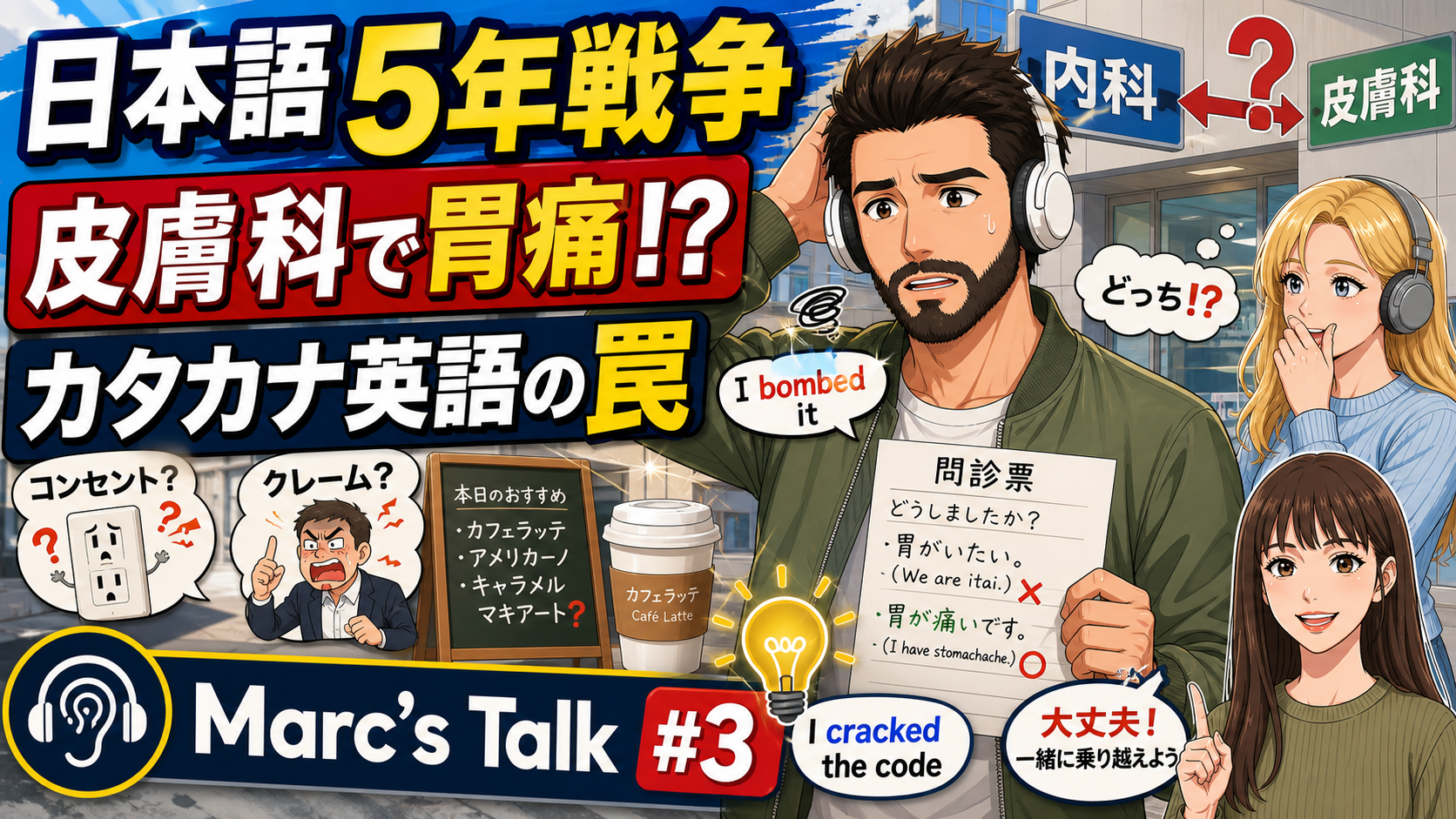
マークの「日本語、5年戦争」|皮膚科で胃痛を訴えた話と6つのリアル英語フレーズ【Sukima English Marc's Talk #3】
ポッドキャスト「すきまイングリッシュ」のスクリプト。「マークの「日本語、5年戦争」|皮膚科で胃痛を訴えた話と6つのリアル英語フレーズ【Sukima English Marc's Talk #3】」の会話全文です。

さゆり: こんにちは!「Sukima English」へようこそ。 ホストのさゆりです。 今日はマークのトークシリーズ「Marc's Talk」第3弾。 テーマは「マークの日本語、5年戦争」。 マークが在日5年の中で日本語と戦ってきたエピソードを、 ぜんぶ正直に語ってもらいます。
サラ: Hey everyone, Sarah here. Marc, this episode might be the most exposing one yet. (日本語訳: 皆さん、こんにちは。サラです。マーク、今回はこれまでで一番赤裸々な回になるかもね。)
Marc: Hi everyone, Marc here. Today's episode is — five years of trying to learn Japanese. Five years of small wins, big losses, and one specific incident at a hospital that I will never forget. (日本語訳: 皆さん、こんにちは。マークです。今日のテーマは、日本語学習に挑んだ5年間。小さな勝利と大きな敗北、そして一生忘れられない、ある病院での出来事の話だよ。)
サラ: Oh, I want to hear the hospital story. (日本語訳: あー、その病院の話、聞きたい!)
Marc: We'll get to it. Trust me. You will hear the hospital story. (日本語訳: 後で話すよ。約束する。病院の話は聞かせてあげる。)
さゆり: マークは在日5年で、日常会話は問題なくこなせるレベル。 でも、敬語や専門的な漢字、カタカナ英語の罠など、まだまだ苦戦することもあるそうですよ。 今日は3つのトピックを通して、 マークの日本語学習の道のりを聞いていきましょう。
さゆり: まず最初のトピックは、 漢字との戦いです。 マークが日本に来てから、 漢字でどんな失敗をしたのか。
サラ: Okay Marc. Take us back. Day one with kanji. What was it like? (日本語訳: じゃあマーク、当時の話を聞かせて。漢字との初日、どんな感じだった?)
Marc: So when I got to Japan, I knew zero kanji. Zero. I could read hiragana and katakana, sort of. But kanji was just — visual chaos. Just shapes that meant something to everyone but me. (日本語訳: 日本に来た時、漢字は全く分からなかった。ゼロだよ。ひらがなとカタカナは、まあ、読めたけど。漢字は、とにかく…視覚的なカオス。みんなには意味があるんだろうけど、僕にはただの形だった。)
サラ: How did you survive the first few weeks? (日本語訳: 最初の数週間はどうやって乗り切ったの?)
Marc: I survived through, basically, three weapons. Pictures on menus. The Google Translate camera. And vibes. (日本語訳: 基本的には、3つの武器で乗り切った。メニューの写真。Google翻訳のカメラ。そして、雰囲気。)
サラ: Vibes. (日本語訳: 雰囲気。)
Marc: Vibes. You stand in front of a sign and you decide what it probably means based on context. Sometimes you're right. Sometimes you're wrong. (日本語訳: 雰囲気だよ。看板の前に立って、文脈から、これがおそらくこういう意味だろうって決めるんだ。たまに当たる。たまに外れる。)
サラ: When were you wrong? (日本語訳: 外れたのはいつ?)
Marc: Okay. The hospital story. About three months in. I had a stomach issue. I went to a clinic in my neighborhood. There were two signs at the entrance. One said Naika. The other said Hifuka. (日本語訳: よし。病院の話。あれは3ヶ月くらい経った頃かな。胃の調子が悪かったんだ。近所のクリニックに行った。入り口に看板が2つあった。一つは「内科」。もう一つは「皮膚科」。)
サラ: Internal medicine versus dermatology. (日本語訳: 内科か皮膚科か。)
Marc: Internal medicine versus dermatology. I had no idea. I picked the one with prettier kanji. (日本語訳: 内科か皮膚科か。全く分からなかった。漢字がきれいな方を選んだんだ。)
サラ: You picked dermatology. (日本語訳: 皮膚科を選んだんだね。)
Marc: I picked dermatology. And I spent fifteen minutes trying to explain my stomach pain to a confused dermatologist. (日本語訳: 皮膚科を選んだ。そして、胃の痛みを、困惑した皮膚科医に説明しようと15分も格闘した。)
サラ: Marc. (日本語訳: マーク。)
Marc: I bombed it. Completely bombed it. He was very kind. He gave me a piece of paper with directions to internal medicine, three doors down. With a small map. (日本語訳: 大コケだよ。完全に大コケ。先生はすごく親切だった。3つ先のドアにある内科までの道順を、小さな地図付きで紙に書いてくれたんだ。)
サラ: A pity map. (日本語訳: 同情の地図。)
Marc: A pity map. That is the technical term for the map he gave me. The receptionist told me, and I think she said this because she felt bad for me, "next time, please look at the signs more carefully." (日本語訳: 同情の地図。それが、彼がくれた地図の正式名称だよ。受付の人が、「次回からは、もっと看板をよく見てくださいね」と言ってくれた。おそらく、僕がかわいそうだから、そう言ってくれたんだと思う。)
サラ: Sound advice. (日本語訳: もっともなアドバイスだね。)
Marc: Sound advice. I went home and signed up for a kanji learning app that night. (日本語訳: もっともなアドバイス。その夜、家に帰って、漢字学習アプリに登録した。)
さゆり: マークが言った "I bombed it" という表現に注目してください。 「大失敗した」という意味の口語フレーズです。 「bomb」は試験や演劇、プレゼンなどで「コケる」という意味で使われます。 「I bombed the test」試験を大失敗した、 「I bombed the presentation」プレゼンで大コケした、 のように使えますよ。
Marc: After that, I started studying. Slowly. Like an embarrassed seven-year-old. Children's books. Hiragana flashcards. Slow practice writing. (日本語訳: それから、勉強を始めたんだ。ゆっくりと。まるで恥ずかしがっている7歳児みたいに。子供向けの絵本。ひらがなのフラッシュカード。ゆっくりした書き取り練習。)
サラ: Did anything stick in the early days? (日本語訳: 初期の頃、何か身についたことはあった?)
Marc: I winged it for the first six months. I just guessed my way through life. I'd point at things on menus. I'd ask, "kore wa nan desu ka?" — what is this? I'd nod at the answer like I understood, even when I didn't. (日本語訳: 最初の半年は、その場しのぎで乗り切った。人生を勘で切り抜けていったんだ。メニューのものを指差して、「これは何ですか?」って聞く。返事を聞いたら、分からなくても、理解したふうに頷いた。)
サラ: Classic survival mode. (日本語訳: 典型的なサバイバルモードだね。)
Marc: Classic survival mode. And to be fair, you can survive in Tokyo on "kore wa nan desu ka" and a smile for a long time. (日本語訳: 典型的なサバイバルモード。でも実際、「これは何ですか?」と笑顔があれば、東京ではかなり長いこと生きていけるよ。)
サラ: That has been my entire life for two and a half years. (日本語訳: それ、私のこの2年半の生活そのものだよ。)
Marc: You and me both. (日本語訳: 僕もだよ。)
さゆり: もうひとつ、 マークが言った "I winged it" というフレーズも便利です。 「その場で何とかした」という意味で、 準備なしで行き当たりばったりで対処した時に使う口語表現。 「I winged the presentation」ぶっつけ本番でプレゼンした、 のように使えます。
Marc: How long did it take to feel okay with kanji? (日本語訳: 漢字に慣れるまで、どれくらいかかった?)
サラ: Yeah, when did you stop being scared of menus? (日本語訳: うん、メニューを見るのが怖くなくなったのはいつ?)
Marc: I'd say two years. Two full years before I could walk into a restaurant and actually read the menu without using a translation app. (日本語訳: 2年かな。レストランに入って、翻訳アプリを使わずにメニューをちゃんと読めるようになるまで、丸2年。)
サラ: That's a long road. (日本語訳: 長い道のりだね。)
Marc: It is a long road. And I'm still learning. I'd say I know maybe nine hundred kanji now. Educated Japanese readers know two thousand and beyond. (日本語訳: 長い道のりだよ。そして、今も勉強中。今はたぶん900字くらいかな。教養のある日本人は2000字以上知ってる。)
サラ: You're not behind. You're on a journey. (日本語訳: 遅れてるわけじゃない。旅の途中だよ。)
Marc: I am very much on a long, slow journey. (日本語訳: すごく長くて、ゆっくりな旅の途中だよ。)
さゆり: 続いてトピック2は、 カタカナ英語との戦いです。 日本に来た外国人が必ず一度は引っかかる、あの罠ですね。
Marc: Okay. So this is the part of Japanese that should have been easy for me, because I speak English. Right? (日本語訳: よし。で、ここは英語を話せる僕にとっては、簡単なはずの部分だったんだよ。でしょ?)
サラ: Right. I thought katakana would be the easy zone. (日本語訳: そうそう。カタカナは楽勝ゾーンだと思ってたんだ。)
Marc: It is not. It is a trap. (日本語訳: そうじゃない。あれは罠だよ。)
サラ: Tell me. (日本語訳: 聞かせて。)
Marc: First incident. I'm at my new apartment, day three. The real estate agent says, "konsento wa koko desu." She points at the wall. (日本語訳: 最初の事件。新しいアパートに入って3日目。不動産屋さんが「コンセントはここです」って言って、壁を指差したんだ。)
サラ: She showed you the konsento. (日本語訳: コンセントを見せてくれたんだね。)
Marc: She pointed at the wall. I look. I see a hole. A small hole. With two slots. (日本語訳: 壁を指差すから、見てみると、穴がある。小さな穴が。差し込み口が2つあるやつ。)
サラ: A power outlet. (日本語訳: 電源コンセント。)
Marc: A power outlet. And I'm standing there thinking — konsento? What does that mean? Concent? Like, consent? Did she just give me consent for something? (日本語訳: 電源コンセント。それで僕は突っ立ったまま考えてた。コンセント?どういう意味?「concent」?「consent」、つまり同意?何かに同意してくれたってこと?)
サラ: Marc. (日本語訳: マーク。)
Marc: I spent three weeks of my life confused about konsento. I had it on a list of words I needed to look up. Three weeks. For the word "outlet." (日本語訳: コンセントの意味が分からないまま、人生の3週間を過ごしたんだ。調べる単語リストに入れてた。3週間も。「outlet」、つまりただのコンセントのためにね。)
サラ: That is the most foreigner story I've ever heard. (日本語訳: それは今まで聞いた中で一番外国人っぽい話だよ。)
Marc: It gets worse. The same week, my colleague says, "do you have a kureimu?" And I'm thinking, claim? What claim? Insurance claim? Legal claim? (日本語訳: もっとひどいんだ。同じ週に、同僚が「クレームある?」って聞いてきた。それで僕は、「claim」?何の?保険金の請求?法的な権利の主張?って考えてた。)
サラ: Complaint. (日本語訳: 苦情。)
Marc: It means complaint. Kureimu in Japanese is a complaint about a product or service. Not "claim" the way we use it. I had been confidently saying "no kureimu" for two weeks, thinking I was telling people I had no insurance issues, when actually I was telling them I had no complaints about my apartment. (日本語訳: 苦情って意味なんだ。日本語の「クレーム」は、商品やサービスへの苦情のこと。僕たちが使う「claim」とは違うんだ。僕は2週間、自信満々に「クレームないです」って言ってて、保険のトラブルはないって伝えてるつもりだったのに、実際は部屋に不満はないって言ってたんだ。)
サラ: Lost in translation. (日本語訳: まさに「ロスト・イン・トランスレーション」だね。)
Marc: Completely lost in translation. The English word, the Japanese meaning, the Marc-in-the-middle confused brain. (日本語訳: 完全にロスト・イン・トランスレーション。英語の単語と、日本語の意味と、その間で混乱してるマークの頭。)
さゆり: 「lost in translation」、 まさに今のマークのエピソードにぴったりのフレーズですね。 「翻訳の途中で意味が失われる」という、 文化や言語の違いで起きるすれ違いを表す言葉。 映画のタイトルにもなっている表現で、 海外で生活する人なら誰でも一度は経験する感覚です。
Marc: There were so many of these. Baikingu — viking — actually means buffet. Smart phone is "sumaho." Computer is "pasokon." A senior woman is "obaasan" but my mother is "okaasan." And those two words sound dangerously similar to a foreigner. (日本語訳: そういうのがたくさんあった。「バイキング」は、英語だとヴァイキングのことだけど、実際はビュッフェのこと。「スマートフォン」は「スマホ」、「コンピューター」は「パソコン」。年配の女性は「おばあさん」だけど、母親は「おかあさん」。この2つ、外国人には危ないくらい似て聞こえるんだ。)
サラ: Oh no, here we go. (日本語訳: あーあ、始まった。)
Marc: Year one. I'm at a coworker's house for dinner. His mother answers the door. Lovely woman. Sixties. I want to say "good evening, mother." I say, "konbanwa, obaasan." Granny, good evening. (日本語訳: 1年目。同僚の家で夕食をごちそうになったんだ。彼のお母さんが玄関に出てくれて。素敵な人で、60代くらい。僕は「こんばんは、お母さん」って言いたかったのに、「こんばんは、おばあさん」って言っちゃった。おばあさん、こんばんは、って。)
サラ: Marc. (日本語訳: マーク。)
Marc: She paused. She smiled politely. My coworker pretended he hadn't heard it. I did not realize what I had said until two days later, when I was reviewing my own performance in my head, and the word "obaasan" surfaced. (日本語訳: 彼女は一瞬止まって、丁寧に微笑んだ。同僚は聞こえなかったふりをしてくれた。自分が何を言ったのか気づいたのは2日後。頭の中で自分の振る舞いを振り返ってたら、「おばあさん」って単語が浮かんできたんだ。)
サラ: That's the worst kind of delayed embarrassment. (日本語訳: それって最悪の、あとから来る恥ずかしさだね。)
Marc: That's the worst kind. The one that hits you while you're brushing your teeth at midnight, two days late. (日本語訳: 最悪のタイプだよ。真夜中に歯を磨いてる時に、2日遅れで襲ってくるやつ。)
サラ: Did you ever apologize? (日本語訳: 謝ったの?)
Marc: I never had the courage to bring it up. The mother and I are now friendly. She invites me for dinner once a year. We do not speak of the granny incident. (日本語訳: 言い出す勇気がなかったんだ。お母さんとは今は仲良くしてて、年に一度、夕食に招いてくれる。あの「おばあさん事件」については話さない。)
サラ: It is a sealed agreement of silence. (日本語訳: それは沈黙の密約だね。)
Marc: A sealed agreement of silence. (日本語訳: 沈黙の密約。)
さゆり: 最後のトピックは、 5年経った今のマークの日本語との関係についてです。 何がコツをつかめて、 何をあきらめたのか。
Marc: Okay. Five years in. Honest assessment time. (日本語訳: よし。5年目。正直に自己評価する時間だ。)
サラ: Lay it on us. (日本語訳: 聞かせて。)
Marc: Some things I cracked the code on. Other things I gave up halfway and I am, honestly, at peace with it. (日本語訳: コツをつかめたこともあれば、途中で諦めたこともある。正直、それで納得してるんだ。)
サラ: What did you crack? (日本語訳: 何のコツをつかんだの?)
Marc: I cracked daily conversation. If I'm at a restaurant, a coffee shop, a convenience store, a bank — I'm fine. I can have a real conversation. I can joke. I can read the menu. I can ask follow-up questions. (日本語訳: 日常会話はコツをつかんだ。レストランでも、カフェでも、コンビニでも、銀行でも大丈夫。ちゃんと会話ができる。冗談も言える。メニューも読める。追加の質問もできる。)
サラ: That's huge. (日本語訳: それはすごいことだよ。)
Marc: That is huge. It took five years, but I cracked the code on the day-to-day rhythm of Japanese. (日本語訳: すごいことだよ。5年かかったけど、日本語の日々のリズムのコツをつかんだんだ。)
サラ: When did it click? (日本語訳: いつ腑に落ちたの?)
Marc: Honestly? Around year three. Year three is when something shifted. I stopped translating in my head every word. I started just — responding. The way you do in your own language. (日本語訳: 正直?3年目くらいかな。3年目に何かが変わったんだ。頭の中で単語を一つ一つ翻訳するのをやめて、ただ…反応するようになった。母国語で話す時みたいに。)
さゆり: マークが言った "I cracked the code" というフレーズ、素敵な表現ですね。 「コツをつかんだ」「秘密の扉を開けた」という意味の口語フレーズ。 難しいことをついに理解できるようになった瞬間に使う、 達成感のある言い方です。
Marc: That's also when I got the hang of how Japanese people pause and pace conversations. The rhythm. The way you nod and say "hai, hai, hai" while someone is talking. The way you lean in slightly. The way you trail off your sentence on purpose to let the other person fill in the rest. (日本語訳: あと、その頃に日本人が会話をどう区切って、どういうペースで話すのかも分かってきたんだ。リズムとか、相手が話してる時に「はい、はい、はい」って頷く様子とか、ちょっと身を乗り出す感じとか。相手に続きを埋めてもらうために、わざと文を途中で終わらせる感じ。)
サラ: That last one took me forever. (日本語訳: 最後のやつ、私はものすごく時間がかかったよ。)
Marc: Took me forever. I used to finish all my sentences with full stops. Now I let them drift. I got the hang of trailing off. (日本語訳: 僕もものすごく時間がかかった。昔は文を全部きっちり言い切ってたんだ。今は語尾をぼかしてる。言いさしのコツをつかんだんだよ。)
さゆり: もうひとつ、 "I got the hang of it" もよく使うフレーズです。 「コツがわかってきた・慣れてきた」という、 慣習や技術に徐々に適応していく感覚を表す表現。 新しい仕事、 新しい街、 新しい文化、 なんでも当てはまります。
サラ: Okay so that's what you cracked. What did you give up halfway on? (日本語訳: なるほど、それがコツをつかんだことね。じゃあ、途中で諦めたことは?)
Marc: Keigo. The full formal honorific system. I gave up halfway and I am at peace. (日本語訳: 敬語。あのフォーマルな敬語の体系全部。途中で諦めて、それで納得してる。)
サラ: Marc, no. (日本語訳: マーク、うそでしょ。)
Marc: Marc, yes. I can do polite Japanese. "desu" "masu" — I can do that all day. But the deeper layers — sonkeigo, kenjogo — the elevated and humble forms — I tried for two years. I read the books. I did the practice. And one day, I just decided that I would speak respectfully but without the highest formal layer. (日本語訳: そのまさかだよ。丁寧な日本語はできるよ。「です」「ます」なら一日中でもいける。でも、もっと深い層、尊敬語とか謙譲語、つまり相手を高める言い方と自分を低める言い方は、2年間頑張ったんだ。本も読んだし、練習もした。でもある日、敬意を持って話しはするけど、一番格式の高い層までは使わないって決めたんだ。)
サラ: That's a real choice. (日本語訳: それはちゃんとした選択だね。)
Marc: It is a real choice. My Japanese colleagues now use slightly less formal language with me, and we communicate. I am not climbing the keigo mountain. I am at base camp, sipping tea, accepting my altitude. (日本語訳: ちゃんとした選択だよ。今、日本人の同僚は僕に少しだけくだけた言葉遣いをしてくれて、それで十分通じ合えてる。敬語の山には登らない。ベースキャンプでお茶を飲みながら、今の高度を受け入れてるんだ。)
サラ: Camp Polite-But-Casual. (日本語訳: 「丁寧だけどカジュアル」キャンプだね。)
Marc: Camp Polite-But-Casual. I have a lot of friends here. (日本語訳: 「丁寧だけどカジュアル」キャンプ。そこに友達がたくさんいるんだ。)
サラ: Anything else you gave up? (日本語訳: 他に諦めたことは?)
Marc: Reading legal contracts. Apartment leases. Cell phone contracts. I read maybe sixty percent of those documents. The other forty percent I just trust the agent on. (日本語訳: 契約書。賃貸契約とか、携帯電話の契約とか。そういう書類は6割くらいは読むけど、残りの4割は担当者を信じて任せてる。)
サラ: That's most adults in their second language. (日本語訳: 第二言語だと、ほとんどの大人がそうだよ。)
Marc: That's most adults in their second language. And honestly — I'd rather be wrong about clause 12.4 than miserable trying to parse it. (日本語訳: 第二言語だと、ほとんどの大人がそうだよね。正直、12.4条を必死に読み解こうとして惨めになるくらいなら、そこを勘違いしてるほうがまし。)
さゆり: マークの 「I gave up halfway」 というフレーズも、 無理せず諦める潔さを表す素敵な表現です。 「途中で諦めた」という意味ですが、 ここでは「無理に完璧を目指さず、 ある程度で線を引く」というポジティブなニュアンスで使われていますね。
Marc: And here's the thing, Sarah. The five-year version of me has made peace with all of it. I cracked daily Japanese. I gave up keigo. I'm still learning kanji. I will, embarrassingly, mistake an obaasan for an okaasan again at some point. (日本語訳: それでね、サラ、ここが大事なところなんだけど、5年目の僕は、これ全部と折り合いをつけてるんだ。日常の日本語はコツをつかんだ。敬語は諦めた。漢字はまだ勉強中。そして恥ずかしながら、いつかまた誰かのお母さんを「おばあさん」って呼んじゃうんだろうね。)
サラ: Probability one. (日本語訳: 確率100%だよ。)
Marc: Probability one. And I will laugh about it. And then I will move on with my Tokyo life. (日本語訳: 確率100%。で、それを笑い飛ばして、また東京での生活を続けていくんだ。)
サラ: That is the actual goal of language learning, by the way. (日本語訳: ちなみに、それこそが言語学習の本当の目標なんだよ。)
Marc: That is the actual goal. Communicating. Connecting. Being okay when you mess up. (日本語訳: それが本当の目標だよ。コミュニケーションを取ること。繋がること。失敗しても大丈夫でいること。)
さゆり: それでは今日のエピソードで出てきたキーフレーズを、 マークとサラに使ってもらいながら振り返りましょう。
サラ: Okay. Marc, kick us off. (日本語訳: じゃあ、マーク、始めようか。)
Marc: Alright. "I bombed it." — Like when you completely failed at something. (日本語訳: よし。「I bombed it.」は、何かに完全に失敗した時に使うんだ。)
サラ: "I bombed my driving test the first time. I had to retake it twice." (日本語訳: 「I bombed my driving test the first time. I had to retake it twice.」(初めての運転免許の試験で大失敗した。2回も受け直さなきゃいけなかった。))
さゆり: 「I bombed it」は「大失敗した」。 試験、面接、プレゼンなどで使える口語表現。
サラ: Next — "I winged it." It's when you go in unprepared and just figure it out as you go. (日本語訳: 次は「I winged it.」。準備なしで臨んで、その場でなんとかする時に使うの。)
Marc: "I winged my entire first year of Japanese conversations. Pointed at things, smiled, hoped." (日本語訳: 「I winged my entire first year of Japanese conversations. Pointed at things, smiled, hoped.」(日本語の会話は、最初の1年ずっとその場しのぎだった。指差して、笑って、祈ってた。))
さゆり: 「I winged it」は「ぶっつけ本番で何とかした」。 準備なしで切り抜けた時の口語表現。
Marc: "Lost in translation." — When the meaning gets lost between two languages. (日本語訳: 「Lost in translation.」は、2つの言語の間で意味が失われてしまう時に使うんだ。)
サラ: "I tried to explain a New York joke to my Japanese friend. Lost in translation." (日本語訳: 「I tried to explain a New York joke to my Japanese friend. Lost in translation.」(日本の友達にニューヨークのジョークを説明しようとした。意味が伝わらなかった。))
さゆり: 「lost in translation」は文化や言語の違いで意味が伝わらない状況を表すフレーズ。 映画のタイトルでも有名ですね。
サラ: "I gave up halfway." — When you start something and accept that you won't finish. (日本語訳: 「I gave up halfway.」は、何かを始めたけど、最後までやらないって受け入れる時に使うの。)
Marc: "I gave up halfway on learning keigo. I am okay with being polite-casual forever." (日本語訳: 「I gave up halfway on learning keigo. I am okay with being polite-casual forever.」(敬語の勉強は途中で諦めた。ずっと「丁寧だけどカジュアル」のままでいい。))
さゆり: 「I gave up halfway」は「途中であきらめた」。 ネガティブにも、潔さを表すポジティブにも使えます。
Marc: "I cracked the code." — When you finally figure something out after struggling. (日本語訳: 「I cracked the code.」は、苦労した末に、ついに何かが分かった時に使うんだ。)
サラ: "I cracked the code on the Tokyo subway map after about a year. Now I can transfer in my sleep." (日本語訳: 「I cracked the code on the Tokyo subway map after about a year. Now I can transfer in my sleep.」(1年くらいかけて、東京の地下鉄の路線図のコツをつかんだ。今では寝てても乗り換えできる。))
さゆり: 「I cracked the code」は「コツをつかんだ・秘密を解いた」という達成感のあるフレーズ。
サラ: And the last one — "I got the hang of it." (日本語訳: そして最後は、「I got the hang of it.」だよ。)
Marc: "I got the hang of pour-over coffee, ramen ordering, and bowing to phones. In that order." (日本語訳: 「I got the hang of pour-over coffee, ramen ordering, and bowing to phones. In that order.」(ハンドドリップのコーヒー、ラーメンの注文、電話しながらのお辞儀のコツをつかんだ。この順番で。))
さゆり: 「I got the hang of it」は「コツがわかってきた・慣れてきた」。 徐々に適応する感覚を表す日常表現です。
さゆり: マーク、 今日もたくさんの正直なエピソードをありがとうございました。 日本語学習に終わりはないですし、 完璧を目指さなくてもいい。 マークの「Camp Polite-But-Casual」という表現、 私はとても好きです。
Marc: It's a comfortable camp. Lots of friends, lots of tea. Highly recommend. (日本語訳: 快適なキャンプだよ。友達もたくさん、お茶もたくさん。すごくおすすめ。)
サラ: And honestly, this episode reminds me — the goal isn't fluency. It's just to keep showing up. (日本語訳: そして正直、今回のエピソードで改めて思ったのは、目標は流暢さじゃないってこと。とにかく続けること。)
Marc: Just to keep showing up. And to laugh at yourself when you call someone's mother a granny. (日本語訳: とにかく続けること。それと、誰かのお母さんを「おばあさん」って呼んじゃったときに、自分を笑い飛ばすこと。)
サラ: Especially that. (日本語訳: 特にそれね。)
さゆり: 次回もまた、 マークとサラの日常エピソードと一緒に、 すぐ使える英語フレーズをお届けします。 最後まで聞いてくださってありがとうございました。
サラ: Thanks everyone! See you next time. (日本語訳: みんな、ありがとう!また次回。)
Marc: Take care, and forgive yourself when you mess up a word. We've all been there. (日本語訳: じゃあね。言葉を間違えても、自分を許してあげて。みんな通ってきた道だから。)

関連記事
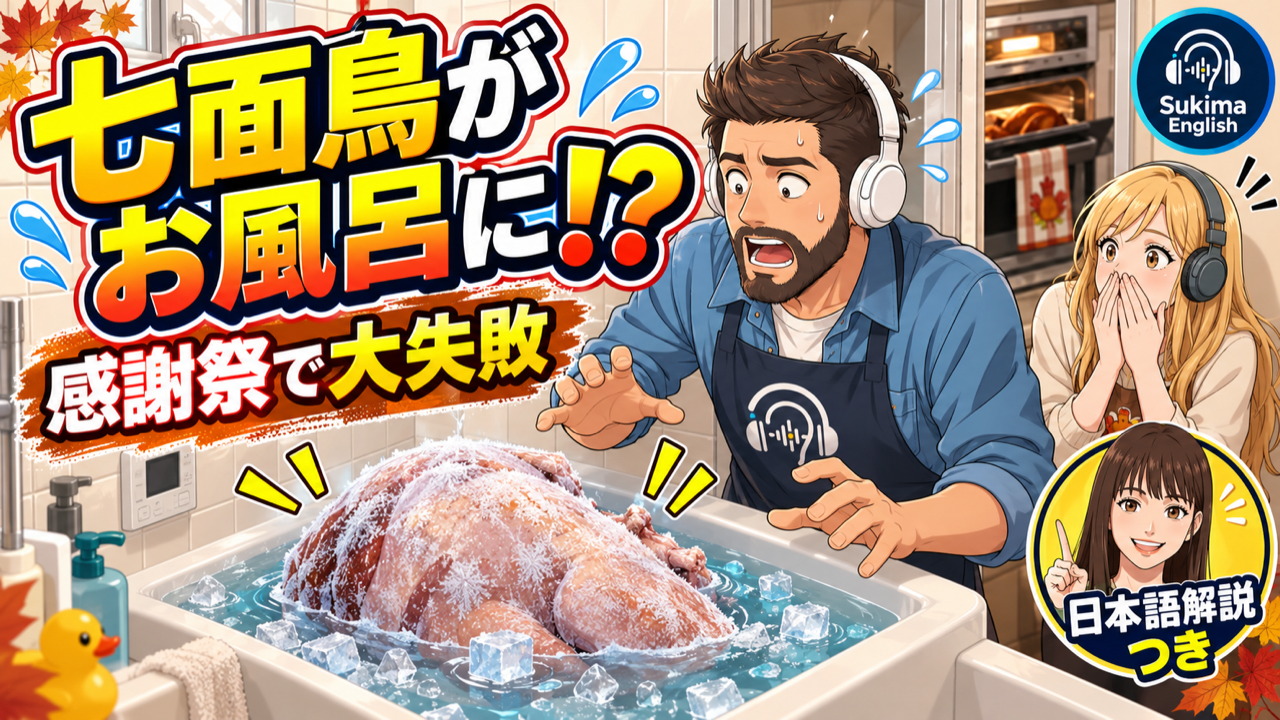
【日常英会話】「感謝していることを一つずつ」アメリカの感謝祭とネイティブの本音 #英語学習 #ネイティブ英語会話 #リスニング強化 #英語耳
ポッドキャスト「すきまイングリッシュ」のスクリプト。「【日常英会話】「感謝していることを一つずつ」アメリカの感謝祭とネイティブの本音 #英語学習 #ネイティブ英語会話 #リスニング強化 #英語耳」の会話全文です。

【日常英会話】英語のみ | ニューヨークと東京のハロウィンを英語で語ると? #英語学習 #ネイティブ英語会話 #リスニング強化
ポッドキャスト「すきまイングリッシュ」のスクリプト。「【日常英会話】英語のみ | ニューヨークと東京のハロウィンを英語で語ると? #英語学習 #ネイティブ英語会話 #リスニング強化」の会話全文です。

【日常の英語】元気のない同僚にかける英語フレーズ12選|声かけから励ましまで #英語学習 #英語フレーズ #英会話 #英語耳
ポッドキャスト「すきまイングリッシュ」のスクリプト。「【日常の英語】元気のない同僚にかける英語フレーズ12選|声かけから励ましまで #英語学習 #英語フレーズ #英会話 #英語耳」の会話全文です。

【日常英会話】住所と道案内を英語で話すと?日本の住所には通りの名前がない #英語学習 #ネイティブ英語会話 #リスニング強化 #英語耳
ポッドキャスト「すきまイングリッシュ」のスクリプト。「【日常英会話】住所と道案内を英語で話すと?日本の住所には通りの名前がない #英語学習 #ネイティブ英語会話 #リスニング強化 #英語耳」の会話全文です。

【日常の英語】日本語解説あり | 席を譲ろうとして、断られた |申し出る英語と、断られたときの英語6つ #英語学習 #英語フレーズ #英会話 #英語耳
ポッドキャスト「すきまイングリッシュ」のスクリプト。「【日常の英語】日本語解説あり | 席を譲ろうとして、断られた |申し出る英語と、断られたときの英語6つ #英語学習 #英語フレーズ #英会話 #英語耳」の会話全文です。

【日常英会話】カウンターには、向かいの椅子がない、「お一人ですか」と聞かれる国 #英語学習 #ネイティブ英語会話 #リスニング強化 #英語耳
ポッドキャスト「すきまイングリッシュ」のスクリプト。「【日常英会話】カウンターには、向かいの椅子がない、「お一人ですか」と聞かれる国 #英語学習 #ネイティブ英語会話 #リスニング強化 #英語耳」の会話全文です。