マークと日本食|おにぎりにハマって納豆に苦戦した話|日常英会話フレーズ8選【Sukima English Marc's Talk #4】
ポッドキャスト「すきまイングリッシュ」のスクリプト。「マークと日本食|おにぎりにハマって納豆に苦戦した話|日常英会話フレーズ8選【Sukima English Marc's Talk #4】」の会話全文です。

さゆり: こんにちは! 「Sukima English」へようこそ。 ホストのさゆりです。
サラ: Hey everyone! I'm Sarah. Welcome back to another Marc episode. (日本語訳: 皆さん、こんにちは!サラです。今回もマークの回へようこそ。)
Marc: And I'm Marc. Today we're talking about food. Which means I might get a little emotional. (日本語訳: 僕はマーク。今日は食べ物の話。ってことは、ちょっと感情的になるかもしれない。)
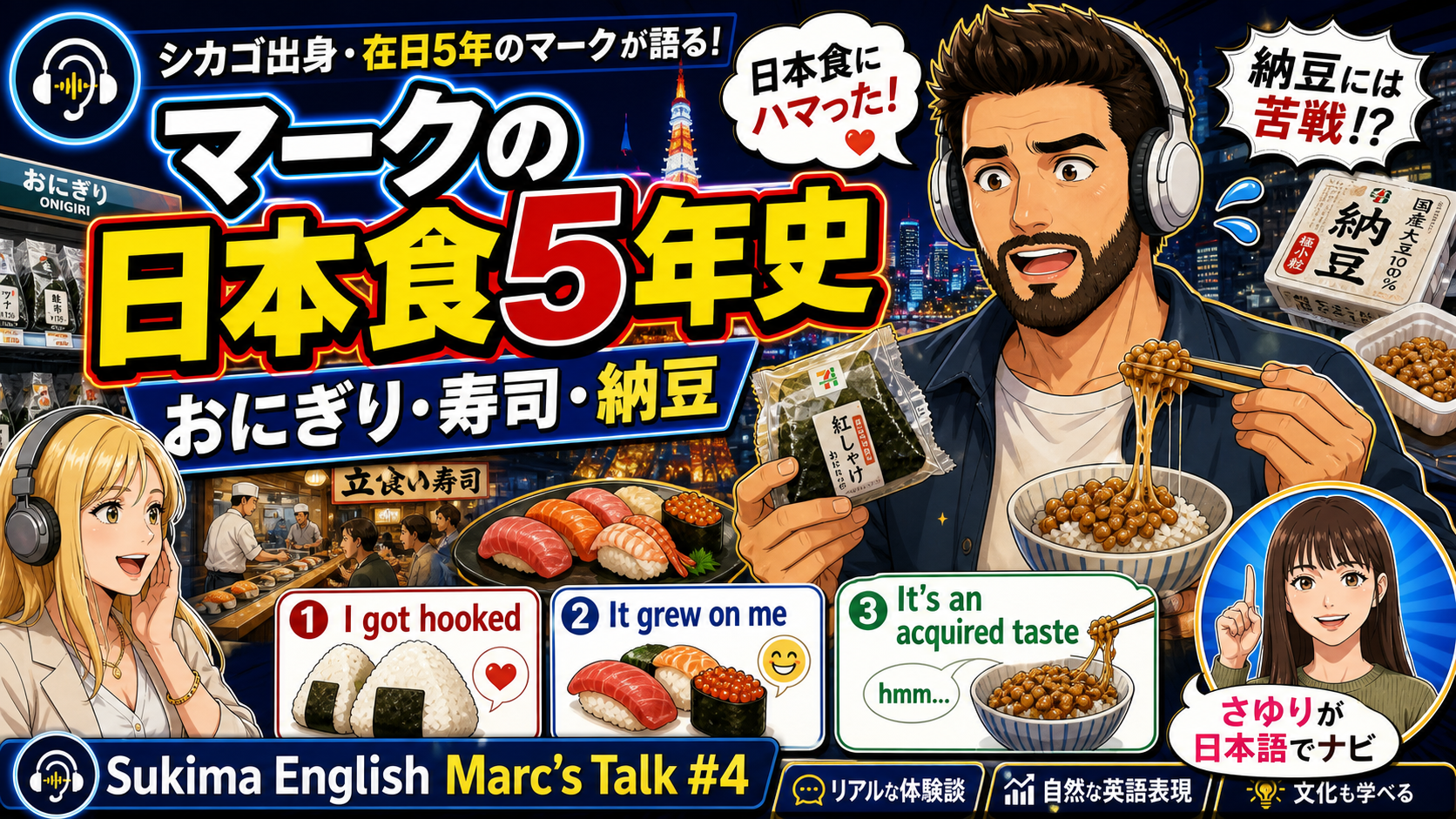
さゆり: 今日のテーマは「マークの日本食5年史」。 シカゴ育ちのマークが、 在日5年でどんな日本食にハマって、 何に苦戦してきたのか。 コンビニのおにぎりに目覚めた話から、 5年経っても克服できない納豆の話まで、 3つのトピックで聞いていきます。 英語学習としては、 「ハマる」「合わなかった」 を言うときの自然な表現と、 食について語るときのリアクションのバリエーションを一緒に覚えていきましょう。
サラ: Marc, real talk. Five years in Japan. What's your honest food map look like right now? (日本語訳: マーク、ぶっちゃけ聞くね。日本に来て5年。今の正直な食の地図って、どんな感じ?)
Marc: Okay. Honest answer. Two religions, one acquired-taste enemy, and a thousand small love affairs in between. (日本語訳: よし。正直に答えるね。信仰レベルのものが2つ、慣れが必要な宿敵が1つ、その間に小さな恋がたくさん。)
サラ: That's a lot to unpack. (日本語訳: それ、話すこといっぱいだね。)
Marc: Yeah, and I'm not even joking. Let me walk you through it. (日本語訳: そう、冗談抜きでね。説明させて。)
さゆり: まずは最初のトピックです。 マークが日本食にハマった、 最初のきっかけ。 それが、 なんとコンビニのおにぎりだったんです。 来日初週の話から聞いてみましょう。
サラ: Wait, week one ? Not even a proper restaurant meal? (日本語訳: え、1週目?まだまともなレストランの食事もしてないのに?)
Marc: Nope. Week one, day three. Hotel breakfast had broken me already. (日本語訳: うん。1週目の3日目。もうホテルの朝食でやられてたんだ。)
サラ: What was wrong with the hotel breakfast? (日本語訳: ホテルの朝食、何が悪かったの?)
Marc: Nothing was wrong. It was just the same plate every morning. Scrambled eggs, a sausage, white toast. I'd flown all the way to Tokyo for that. So on day three, I walked out of the hotel at 7 a.m., turned the corner, and saw a Family Mart. (日本語訳: 何も悪くなかったんだ。ただ、毎朝まったく同じ内容だった。スクランブルエッグ、ソーセージ、白い食パンのトースト。わざわざ東京まで来て、それだよ。だから3日目の朝7時にホテルを出て、角を曲がったら、ファミリーマートがあったんだ。)
サラ: And you went in. (日本語訳: それで入ったんだね。)
Marc: I went in. And I stood in front of the onigiri shelf for, I think, four full minutes. Just staring. Triangles wrapped in plastic, all labeled in kanji I couldn't read. I had no idea what I was buying. I grabbed three different ones, took them back to the hotel, and sat on the bed. (日本語訳: 入ったよ。で、おにぎりの棚の前に、たぶん丸4分は立ってた。ただじっと見てた。フィルムに包まれた三角形に、全部読めない漢字のラベル。何を買ってるのか全然分からなかった。違うのを3つ取って、ホテルに持ち帰って、ベッドに座った。)
さゆり: マークがさっき言った「Hotel breakfast had broken me already」、 聞こえましたか。 「break me」 で「私の心を折る」「飽きさせる」 という表現になります。 同じものを3日続けて食べて、 もう限界、 というニュアンスです。
サラ: So you sit on the hotel bed with three mystery triangles. Then what? (日本語訳: それで、ホテルのベッドで、謎の三角形3つを前に座ってたと。で、どうなったの?)
Marc: I opened the first one. Salmon. Pretty straightforward. I liked it. I opened the second one. Tuna mayo. Okay, that one knocked me sideways. It was so simple, and it was so good. And then I opened the third one. (日本語訳: 1つ目を開けた。鮭。これは想像どおり。気に入った。2つ目はツナマヨ。あれには、本当にやられた。シンプルなのに、すごくおいしかった。そして3つ目を開けた。)
サラ: Mentaiko, maybe ? (日本語訳: 明太子とか?)
Marc: Mentaiko. I didn't know it was mentaiko at the time. I just bit in, and my mouth went, "oh." That spicy roe with the rice. I sat on the hotel bed and I think I said, out loud, "what just happened." (日本語訳: 明太子。その時は明太子だって知らなかった。一口かじったら、口の中が「おお」ってなった。あのピリ辛の魚卵とご飯。ホテルのベッドに座ったまま、たぶん声に出して「今の何?」って言ったと思う。)
サラ: You had a moment. (日本語訳: 感動の瞬間があったんだね。)
Marc: I had a moment. I got hooked that morning. From day four onward, I skipped the hotel breakfast entirely. I went to the same Family Mart every morning. Salmon, tuna mayo, mentaiko. Sometimes konbu. The clerk started recognizing me by the end of week one. (日本語訳: 感動の瞬間があった。その朝にハマったんだ。4日目からは、ホテルの朝食は完全にスキップ。毎朝同じファミリーマートに行った。鮭、ツナマヨ、明太子。たまに昆布。1週目の終わりには、店員さんに顔を覚えられてた。)
サラ: That's wild. Like, in New York, I never thought of convenience store food as something you'd get emotional about. The bodega is great, but it's not poetry. (日本語訳: それ、すごいね。ニューヨークでは、コンビニの食べ物で感情的になるなんて考えたこともなかったよ。街角の商店もいいけど、詩じゃないもん。)
Marc: Right? That's the thing. The onigiri is poetry. It's three ingredients. Rice, filling, seaweed. And it's perfect. It blew my mind that something this simple could be this good. (日本語訳: だろ?そこなんだよ。おにぎりは詩なんだ。材料は3つ。米、具、海苔。それで完璧なんだ。こんなにシンプルなものがこんなにおいしいなんて、衝撃だったよ。)
さゆり: ここで一つ取り上げたい表現があります。 「It blew my mind」。 直訳すると「私の頭を吹き飛ばした」 ですが、 つまり「衝撃を受けた」「想像をはるかに超えていた」 という意味です。 食べ物・映画・体験、 いろんな場面で使えますよ。
Marc: And by the end of that first month, I'd gone all in. I tried every onigiri variant I could find. Umeboshi, that was a tough one for me. Kombu, I love it. Okaka, the bonito flakes one, that's my dark horse favorite. (日本語訳: で、最初の1ヶ月が終わる頃には、完全にのめり込んでた。見つけられるおにぎりは全種類試したよ。梅干しは、僕にはきつかった。昆布は大好き。おかか、つまり鰹節のやつは、ダークホース的なお気に入り。)
サラ: You went on a triangle quest. (日本語訳: 三角形探しの旅に出たんだね。)
Marc: I went on a triangle quest. And I'll tell you something. Five years later, my breakfast on a busy work morning ? It's still a Family Mart onigiri. The exact same routine. (日本語訳: 三角形探しの旅に出たんだ。それで、一つ言わせて。5年経った今でも、仕事が忙しい朝の朝食は?いまだにファミリーマートのおにぎり。まったく同じルーティンだよ。)
サラ: That's beautiful, actually. That's your Tokyo origin story. (日本語訳: それ、素直にいいね。君の東京は、そこから始まってる。)
Marc: That's my Tokyo origin story. A plastic triangle on a hotel bed. (日本語訳: そこから始まってる。ホテルのベッドの上の、プラスチックの三角。)
さゆり: 次のトピックです。 コンビニのおにぎりは初週で出会ったけれど、 ここからは、 たどり着くまでに時間がかかった食の話。 マークが本気で寿司にハマったのは、 なんと来日3年目だそうです。
サラ: Wait, three years? You'd been here three years before you really got into sushi? (日本語訳: え、3年?本格的に寿司にハマるまで、3年もここにいたの?)
Marc: I'd been eating sushi, sure. Conveyor belt sushi. Supermarket sushi. The kind you can get without talking to anyone. That part I figured out in year one. (日本語訳: 寿司は食べてたよ、もちろん。回転寿司。スーパーの寿司。誰とも話さずに手に入るやつ。そこまでは1年目で覚えた。)
サラ: So what changed in year three? (日本語訳: じゃあ3年目に何が変わったの?)
Marc: A coworker. Aiko. She'd joined our team in my second year. We'd grab lunch sometimes, but mostly cafeteria stuff. And then one day she said, "Marc, you've been here long enough. We're going to a standing sushi bar tonight." (日本語訳: 同僚のアイコ。彼女は僕の2年目にチームに入ってきたんだ。たまにランチに行ったけど、たいてい社食だった。そしたらある日、彼女が言ったんだ。「マーク、もう十分長くいるでしょ。今夜は立ち食い寿司に行くよ」って。)
サラ: A standing sushi bar ? (日本語訳: 立ち食い寿司?)
Marc: Tachigui-zushi. You stand at a counter. You eat ten, twelve pieces, you pay, you leave. The whole thing takes twenty-five minutes if you're not rushing. And the chef is right in front of you, watching what you eat, deciding what to make you next. (日本語訳: 立ち食い寿司。カウンターで立って食べるんだ。10貫、12貫食べて、払って、出る。急がなくても全部で25分。しかも目の前に職人さんがいて、こっちが何を食べてるか見ながら、次に何を握るか決めてくれるんだ。)
サラ: That sounds terrifying. (日本語訳: それ、怖そう。)
Marc: It was terrifying. The first time, I was so nervous I just kept saying "omakase" because it was the only word I trusted. And the chef looked at me, half smiled, and started handing me things. Tuna. Hirame. Some white fish I couldn't identify. Uni. (日本語訳: 怖かったよ。初めて行った時は緊張しすぎて、「おまかせ」ってひたすら言ってた。信頼できる言葉がそれしかなかったから。そしたら職人さんが僕を見て、少し笑って、次々に出してくれた。マグロ。ヒラメ。名前の分からない白身魚。ウニ。)
サラ: How was the uni? (日本語訳: ウニはどうだった?)
Marc: The uni broke me. In a good way. I'd had uni in New York before, and it was always this weird, oceanic mush. This one tasted like sweet cream. I just stood there blinking. (日本語訳: ウニにやられた。良い意味で。ニューヨークでもウニを食べたことはあったけど、いつも変な、磯臭いどろっとしたものだったんだ。でもこれは、甘いクリームみたいな味がした。ただ立ったまま、目をぱちぱちさせてた。)
さゆり: ここでマークが「The uni broke me. In a good way.」 と言いましたよね。 「broke me」 を「In a good way」 で挟むパターン。 最初に出てきた「break me」 は「飽きさせる」 でしたが、 こちらは「強烈な体験で打ちのめされた」 という、 ポジティブな衝撃に転じる使い方です。 状況で意味が変わるので、 文脈で読み取る練習になりますね。
サラ: So one trip to a standing bar, and you were sold ? (日本語訳: じゃあ、立ち食い寿司に一回行っただけで、もう虜になったの?)
Marc: Not one trip. That was the beginning. Aiko took me three more times that month. Each time I tried something I'd been afraid of. Saba. Aji. Iwashi. The shiny fish. The stuff I thought I didn't like. (日本語訳: 一回じゃないよ。それが始まり。アイコがその月、あと3回連れて行ってくれたんだ。行くたびに、怖くて避けてたものを試した。サバ、アジ、イワシ。光り物。苦手だと思い込んでたやつ。)
サラ: And it grew on you. (日本語訳: それがだんだん好きになっていったと。)
Marc: It grew on me. By the end of year three, I was going on my own. By year four, I had a place I'd walk to alone after work, and the chef there knew me. I wouldn't say a regular, exactly. But familiar. (日本語訳: そう。3年目の終わりには、一人で行くようになってた。4年目には、仕事帰りに一人で歩いて行く店ができて、そこの職人さんが僕のことを覚えてくれてた。常連とまでは言えないけど、顔なじみ、って感じかな。)
サラ: Is there a phrase for that? Below regular but above stranger? (日本語訳: そういうの、なんて言うんだっけ?常連より下だけど、見知らぬ人より上、みたいな。)
Marc: I don't know the word for it in English. In Japan there's a feeling that doesn't need a word. He nods at me. I nod at him. He makes me what he thinks I should eat. I eat it. I pay. I leave. We don't really talk. (日本語訳: 英語でなんて言うのかは分からない。日本には、言葉がいらない感覚があるんだ。彼が僕に頷いて、僕も頷き返す。僕が食べるべきだと思うものを握ってくれて、僕はそれを食べて、お金を払って、帰る。ほとんど話さないんだ。)
サラ: That's so different from New York. In New York, I'd be expected to chat. Tell the chef I like his shirt. Compliment the tuna. (日本語訳: それがニューヨークとは全然違うね。ニューヨークだったら、おしゃべりするのを期待されるよ。シェフにシャツいいねって言ったり、マグロを褒めたり。)
Marc: Right. Here, the silence is part of the meal. It took me a while to be okay with it. But once I was, it was honestly perfect. (日本語訳: そうなんだ。ここでは、静けささえも食事の一部なんだ。それに慣れるまで時間がかかったけど、慣れてしまえば、正直、完璧だった。)
さゆり: マークがいま言った「It's honestly perfect」 のような表現は、 感想に温度を一段乗せたい時に便利です。 「honestly」 を入れると「正直なところ」「ほんとに」 という強調になります。 普通の「It's perfect」 とはちょっと違うんですね。
Marc: And here's the part that surprised me. Year four. I flew back to New York for a visit. My family wanted sushi. So we went to this place I used to like a lot when I lived there. Decent reputation, not cheap. (日本語訳: それで、驚いたのがここから。4年目。ニューヨークに一時帰国したんだ。家族が寿司を食べたいって言うから、昔よく行っていた店に行った。評判も悪くなくて、安くもない店。)
サラ: Uh oh, this is going to hurt. (日本語訳: うわあ、これは痛い話になりそう。)
Marc: Yeah. I took one bite of the tuna. And something tasted off. It wasn't bad. It just wasn't quite right. (日本語訳: うん。マグロを一口食べたら、何かがおかしい味だった。まずいわけじゃない。ただ、ちょっと違ったんだ。)
サラ: You'd ruined yourself. (日本語訳: もう元には戻れない体になってたんだね。)
Marc: I'd ruined myself. I sat there in midtown Manhattan, eating sushi I would have loved five years ago, and all I could think was, "I want to go home to Tokyo and walk to that standing bar." (日本語訳: そう、もう戻れない体になってた。マンハッタンのミッドタウンで、5年前なら大好きだったはずの寿司を食べながら、頭の中は「東京に帰って、あの立ち食い寿司に歩いて行きたい」でいっぱいだった。)
サラ: Marc. That's the most converted-citizen sentence you've ever said. (日本語訳: マーク。それ、今までで一番「改宗しきった人」のセリフだよ。)
Marc: I'm a convert. I'll say it. I'm a sushi convert. And it's to die for when you get the real thing. (日本語訳: 改宗したよ。はっきり言う。寿司に改宗したんだ。本物を食べたら、死ぬほどおいしいんだよ。)
サラ: Even calling Tokyo "home" in that story, by the way. I caught that. (日本語訳: ちなみに、その話で東京を「帰る場所」って言ってたね。聞き逃さなかったよ。)
Marc: Yeah, I caught that too, after I said it. (日本語訳: ああ、言った後に自分でも気づいたよ。)
さゆり: 最後のトピックは、 ハマった話の逆。 5年経っても、 どうしても克服できなかった食べ物の話です。 実は、 リスナーの方の中にも、 納豆を「ちょっと苦手」 という方、 いらっしゃるんじゃないでしょうか。 マーク、 いきましょう。
サラ: Oh, we're going there. Natto. (日本語訳: おお、その話にいくんだ。納豆。)
Marc: We're going there. Natto. Year one, I tried it. Hated it. Year two, I tried it again, thinking my palate had grown up. Hated it. Year three, I officially announced to myself, "I am giving up on natto. It's an acquired taste I have not acquired." (日本語訳: その話にいくよ。納豆。1年目に試した。嫌いだった。2年目に、味覚が大人になったと思ってまた試した。やっぱり嫌いだった。3年目、自分に正式に宣言したんだ。「納豆は諦める。慣れが必要な味だけど、僕は慣れられなかった」って。)
サラ: I remember you saying that on the ramen episode. (日本語訳: ラーメンのエピソードでそれ言ってたの覚えてるよ。)
Marc: I said it on the ramen episode. I stand by it. It is the one wall in Japanese food I have not climbed. (日本語訳: ラーメンのエピソードで言ったんだ。今でもそう思ってる。日本の食べ物で、まだ越えられていない唯一の壁だ。)
サラ: What is it about it for you? Is it the smell ? The texture ? (日本語訳: 納豆の何がダメなの?匂い?それとも食感?)
Marc: Honestly, the texture. The smell I can handle, mostly. But the strings. The slimy strings. My brain does not want to recognize that as food. It's an acquired taste, and I have not acquired it. (日本語訳: 正直、食感。匂いは、まあだいたい我慢できる。でも、あの糸。ネバネバした糸。僕の脳が、あれを食べ物だと認めたがらないんだ。慣れが必要な味なんだけど、僕は慣れられてない。)
さゆり: 「It's an acquired taste」、 これは本当によく使うフレーズです。 「慣れが必要な味」「最初は苦手でも、 慣れたら好きになるかもしれない味」 という意味。 納豆、 ブルーチーズ、 コーヒー、 ビール、 こういうものを説明する時に英語ネイティブがよく使います。
サラ: Okay so I'm assuming this peaceful coexistence with natto continued forever. (日本語訳: じゃあ、納豆との平和な共存は、そのままずっと続いたんだろうね。)
Marc: It did. Until year four. Summer. Aiko, the sushi coworker, invited me to her parents' place out in Chiba. Two-night stay. Hospitable, very kind people. Her mom cooked dinner. It was incredible. Tempura, grilled fish, the works. (日本語訳: 続いたよ。4年目までね。夏。寿司仲間のアイコが、千葉の実家に招待してくれたんだ。2泊。すごく親切で、優しい人たち。お母さんが夕食を作ってくれた。素晴らしかった。天ぷら、焼き魚、何から何まで。)
サラ: I sense a "but." (日本語訳: 「でも」が聞こえる気がする。)
Marc: But. The next morning. Breakfast. I came down to the table. Rice. Miso soup. A small grilled fish. Pickles. And a little bowl. With a wooden spoon. Sitting there. Steam coming off. (日本語訳: でも。次の日の朝。朝食。テーブルについた。ご飯。味噌汁。小さな焼き魚。漬物。そして、小さなボウル。木のスプーン付き。そこにあった。湯気が出てる。)
サラ: Oh no, please don't say it. (日本語訳: やだ、言わないで。)
Marc: Oh yes. Natto. With the lid already off. Mixed. Ready to go. On my placemat. As a guest. (日本語訳: そうだよ。納豆。蓋はもう開いてて、混ぜてあって、すぐ食べられる状態。僕の席のランチョンマットの上に。お客として出されてるんだよ。)
サラ: What did you do? (日本語訳: どうしたの?)
Marc: I froze. I had about four seconds. And I ran through every option in my head. Option one, pretend I had a stomach issue. Option two, eat it and lie. Option three, eat it and tell the truth. Option four, try to politely decline. (日本語訳: 固まった。4秒くらいあったかな。頭の中で、すべての選択肢を検討した。選択肢1、お腹の調子が悪いふりをする。選択肢2、食べて、嘘をつく。選択肢3、食べて、本当のことを言う。選択肢4、丁寧に断ってみる。)
サラ: Walk me through your math. (日本語訳: どう計算したのか聞かせて。)
Marc: Option one, dishonest, and rude because she'd cooked everything. Option four, also potentially rude in someone's home. Option two, I'm a bad liar. So I went with three. I ate it. (日本語訳: 選択肢1は、不誠実だし、全部作ってくれたのに失礼。選択肢4も、人の家では失礼になるかもしれない。選択肢2は、僕は嘘が下手。だから、3を選んだ。食べたんだ。)
サラ: All of it? (日本語訳: 全部?)
Marc: All of it. With white rice. I had to force myself. I'm not ashamed to say I struggled. But I got through the bowl. (日本語訳: 全部。白いご飯と一緒に。無理して食べたよ。苦戦したことは、恥ずかしがらずに言う。でも、ちゃんと一杯食べきった。)
サラ: And then what? (日本語訳: それで、どうなったの?)
Marc: And then her mom looked at me, smiled, and said, in Japanese, "Marc-san, you don't really like natto, do you?" (日本語訳: そしたら、お母さんが僕を見て、笑って、日本語で「マークさん、納豆、あまり好きじゃないでしょう?」って言ったんだ。)
サラ: She saw you the whole time. (日本語訳: ずっと見てたんだね。)
Marc: She saw me the entire time. She'd watched my face. And she was so kind about it. She brought me an extra piece of grilled fish to take the taste away. I almost cried, honestly. Not because of the natto. Because of the fish. (日本語訳: ずっと見てたんだ。僕の顔を見てたんだよ。でも、すごく優しかった。口直しに焼き魚をもう一切れくれたんだ。正直、泣きそうになったよ。納豆のせいじゃない。魚のせいだよ。)
さゆり: 「I had to force myself」、 無理して食べた、 というフレーズですね。 これは食べ物以外にも、 運動を頑張った、 難しいメールに返信した、 苦手な人と話した、 いろんな場面で使えます。 「気が進まなかったけど、 なんとかやった」 というニュアンスです。
サラ: Marc, did you ever try it again after that? (日本語訳: マーク、あれからまた試したことは?)
Marc: I've tried it twice since. Same result. The wall is still there. (日本語訳: それから2回試したけど、結果は同じ。壁はまだそこにあるよ。)
サラ: So natto is just... your one unfinished battle. (日本語訳: つまり、納豆は…君の唯一の未解決の戦いなんだね。)
Marc: It's my one unfinished battle. And honestly, at five years in, I've made peace with that. You don't have to win every food battle. You just have to know which ones aren't yours. (日本語訳: 僕の唯一の未解決の戦いだ。正直、5年経って、もうそれでいいと思ってる。食べ物の戦いに全部勝つ必要はないんだ。どの戦いが自分のものじゃないかを知っていればいい。)
サラ: That's actually deep. (日本語訳: それ、すごく深いね。)
Marc: It's deeply about beans. (日本語訳: 豆の話としては、かなり深いよ。)
さゆり: ここからは今日の8つのキーフレーズを、 マークとサラに英語で軽くおさらいしてもらいます。
Marc: Alright. Phrase one. "I got hooked." Like when you start something and you just can't stop. Could be a food, a show, a hobby. (日本語訳: よし。フレーズ1。「ハマっちゃった」。何かを始めたら止まらなくなる時とかね。食べ物でも、番組でも、趣味でも。)
サラ: "I got hooked on Korean dramas last winter. I watched four shows back-to-back." (日本語訳: 「去年の冬、韓国ドラマにハマっちゃった。4作品を立て続けに観た。」)
さゆり: 「I got hooked」 で「ハマった」「抜けられなくなった」。 何かに夢中になった瞬間を伝える定番です。
Marc: Phrase two. "It blew my mind." Strong, dramatic surprise. Best for moments where your expectations got crushed in a good way. (日本語訳: フレーズ2。「衝撃を受けた」。強い、ドラマチックな驚き。期待が良い意味で裏切られた時に使うのが一番。)
サラ: "I watched the documentary you recommended. The ending blew my mind." (日本語訳: 「君が勧めてくれたドキュメンタリーを観たよ。エンディングに衝撃を受けた。」)
さゆり: 「It blew my mind」、 想像をはるかに超えて衝撃を受けた、 という時の表現。 料理にも、 映画にも、 体験にも使えます。
Marc: Phrase three. "I went all in." Means I committed fully. No half measures. (日本語訳: フレーズ3。「全力で飛び込んだ」。完全に腹をくくったってこと。中途半端はなし。)
サラ: "When I moved to Tokyo, I went all in. I sold my New York apartment before I even had a place here." (日本語訳: 「東京に引っ越してきた時は、全力で飛び込んだ。ここに住む場所も決まってないうちに、ニューヨークのアパートを売った。」)
さゆり: 「I went all in」、 どっぷりハマる、 または全力でコミットする、 という意味です。 ポーカーの「all in」 がそのまま日常会話に来た表現ですね。
Marc: Phrase four. "It grew on me." Like when you didn't love something at first, but it got better with time. (日本語訳: フレーズ4。「だんだん好きになった」。最初は好きじゃなかったけど、時間が経つにつれて良くなっていった時。)
サラ: "I didn't like my coworker at first, but he grew on me. Now we get lunch every week." (日本語訳: 「最初は同僚のことが好きじゃなかったけど、だんだん好きになった。今では毎週一緒にランチに行っている。」)
さゆり: 「It grew on me」 は「だんだん好きになった」。 最初の印象はそうでもなかった、 というニュアンスを含めて使えます。
Marc: Phrase five. "It's to die for." Means it's so good, it's almost ridiculous. (日本語訳: フレーズ5。「死ぬほどおいしい」。ばかばかしいくらいおいしいってこと。)
サラ: "The cheesecake at the corner cafe is to die for. I dream about it." (日本語訳: 「角のカフェのチーズケーキ、死ぬほどおいしい。夢に見る。」)
さゆり: 「It's to die for」、 直訳は「そのために死ねる」 ですが、 つまり「死ぬほど美味しい」「ヤバいくらい良い」。 食べ物・服・場所、 何にでも使える誇張表現です。
Marc: Phrase six. "I'm a convert." When you used to be skeptical, and now you're a believer. (日本語訳: フレーズ6。「改宗した」。前は懐疑的だったけど、今は信者になった時。)
サラ: "I used to make fun of pour-over coffee. Now I'm a convert. I won't go back to drip." (日本語訳: 「昔はハンドドリップのコーヒーをばかにしてた。今では改宗した。もうコーヒーメーカーのドリップには戻らない。」)
さゆり: 「I'm a convert」、 もともと懐疑的だったけど、 今では完全に「信者」 になった、 という意味です。 宗教用語ですが、 食・趣味・テクノロジーなど、 何にでも使えます。
Marc: Phrase seven. "It's an acquired taste." Means you might need time and practice to like it. (日本語訳: フレーズ7。「慣れが必要な味」。好きになるのに時間と練習が必要かもしれないってこと。)
サラ: "Black coffee is an acquired taste. I drank it for a year before I started liking it." (日本語訳: 「ブラックコーヒーは慣れが必要な味だ。好きになるまで1年飲んだ。」)
さゆり: 「It's an acquired taste」、 慣れが必要な味。 最初は苦手でも、 繰り返し試すうちに好きになるかも、 というニュアンス。 納豆、 ブルーチーズ、 コーヒーなどの説明にぴったりです。
Marc: Phrase eight. "I had to force myself." When you didn't want to, but you did it anyway. (日本語訳: フレーズ8。「無理してやった」。やりたくなかったけど、それでもやった時。)
サラ: "I had to force myself to go to the gym this morning. I'm glad I did." (日本語訳: 「今朝、無理してジムに行った。行ってよかった。」)
さゆり: 「I had to force myself」、 気が進まなかったけど無理してやった、 という時の表現。 食べ物、 運動、 人付き合い、 いろんな場面で使えます。
さゆり: 今日はマークの日本食5年史を、 3つのトピックで聞いてきました。 コンビニのおにぎりに目覚めた来日初週、 3年かけてたどり着いた立ち食い寿司、 そして5年経っても越えられない納豆の壁。 「ハマる」「合わない」 を行き来する表現、 覚えておくと自分の体験を語るときにそのまま使えますよ。
サラ: Marc, after all that, what's your one piece of food advice for someone moving to Japan? (日本語訳: マーク、いろいろあったけど、日本に引っ越してくる人に、食べ物のアドバイスを一つするなら?)
Marc: Don't decide too fast. Things grew on me that I thought I'd never touch. And one thing I was sure I'd love is still sitting in the corner of my refrigerator, untouched, sealed in a styrofoam container. (日本語訳: すぐに決めつけないこと。絶対に手をつけないと思ってたものが、だんだん好きになったりする。逆に、絶対好きになると思ってたものが、今も冷蔵庫の隅に、手つかずのまま、発泡スチロールのパックに入って置いてあるんだ。)
サラ: That's a very poetic way to say "natto is in your fridge right now." (日本語訳: 「冷蔵庫に納豆が入ってる」っていう、すごく詩的な言い方だね。)
Marc: It's in my fridge right now. My partner buys it. I respect her choice. (日本語訳: 今、冷蔵庫に入ってるよ。パートナーが買ってるんだ。彼女の選択を尊重してる。)
さゆり: 次回もマークの話を聞いていきます。 今日のフレーズの中で、 一番使ってみたいものをコメントで教えてくださいね。 それでは、 また次回お会いしましょう。
サラ: Thanks for listening, everyone. Try the onigiri. Skip the natto if you want. No judgment. (日本語訳: 皆さん、聴いてくれてありがとうございました。おにぎりは試してみて。納豆は、嫌ならパスしていいよ。誰も責めないから。)
Marc: See you in the next one. And if you're brave, eat the beans. (日本語訳: 次回の放送でまたね。もし勇気があるなら、豆を食べてみて。)

関連記事
【日常英会話】「感謝していることを一つずつ」アメリカの感謝祭とネイティブの本音 #英語学習 #ネイティブ英語会話 #リスニング強化 #英語耳
ポッドキャスト「すきまイングリッシュ」のスクリプト。「【日常英会話】「感謝していることを一つずつ」アメリカの感謝祭とネイティブの本音 #英語学習 #ネイティブ英語会話 #リスニング強化 #英語耳」の会話全文です。

【日常英会話】英語のみ | ニューヨークと東京のハロウィンを英語で語ると? #英語学習 #ネイティブ英語会話 #リスニング強化
ポッドキャスト「すきまイングリッシュ」のスクリプト。「【日常英会話】英語のみ | ニューヨークと東京のハロウィンを英語で語ると? #英語学習 #ネイティブ英語会話 #リスニング強化」の会話全文です。

【日常の英語】元気のない同僚にかける英語フレーズ12選|声かけから励ましまで #英語学習 #英語フレーズ #英会話 #英語耳
ポッドキャスト「すきまイングリッシュ」のスクリプト。「【日常の英語】元気のない同僚にかける英語フレーズ12選|声かけから励ましまで #英語学習 #英語フレーズ #英会話 #英語耳」の会話全文です。

【日常英会話】住所と道案内を英語で話すと?日本の住所には通りの名前がない #英語学習 #ネイティブ英語会話 #リスニング強化 #英語耳
ポッドキャスト「すきまイングリッシュ」のスクリプト。「【日常英会話】住所と道案内を英語で話すと?日本の住所には通りの名前がない #英語学習 #ネイティブ英語会話 #リスニング強化 #英語耳」の会話全文です。

【日常の英語】日本語解説あり | 席を譲ろうとして、断られた |申し出る英語と、断られたときの英語6つ #英語学習 #英語フレーズ #英会話 #英語耳
ポッドキャスト「すきまイングリッシュ」のスクリプト。「【日常の英語】日本語解説あり | 席を譲ろうとして、断られた |申し出る英語と、断られたときの英語6つ #英語学習 #英語フレーズ #英会話 #英語耳」の会話全文です。

【日常英会話】カウンターには、向かいの椅子がない、「お一人ですか」と聞かれる国 #英語学習 #ネイティブ英語会話 #リスニング強化 #英語耳
ポッドキャスト「すきまイングリッシュ」のスクリプト。「【日常英会話】カウンターには、向かいの椅子がない、「お一人ですか」と聞かれる国 #英語学習 #ネイティブ英語会話 #リスニング強化 #英語耳」の会話全文です。