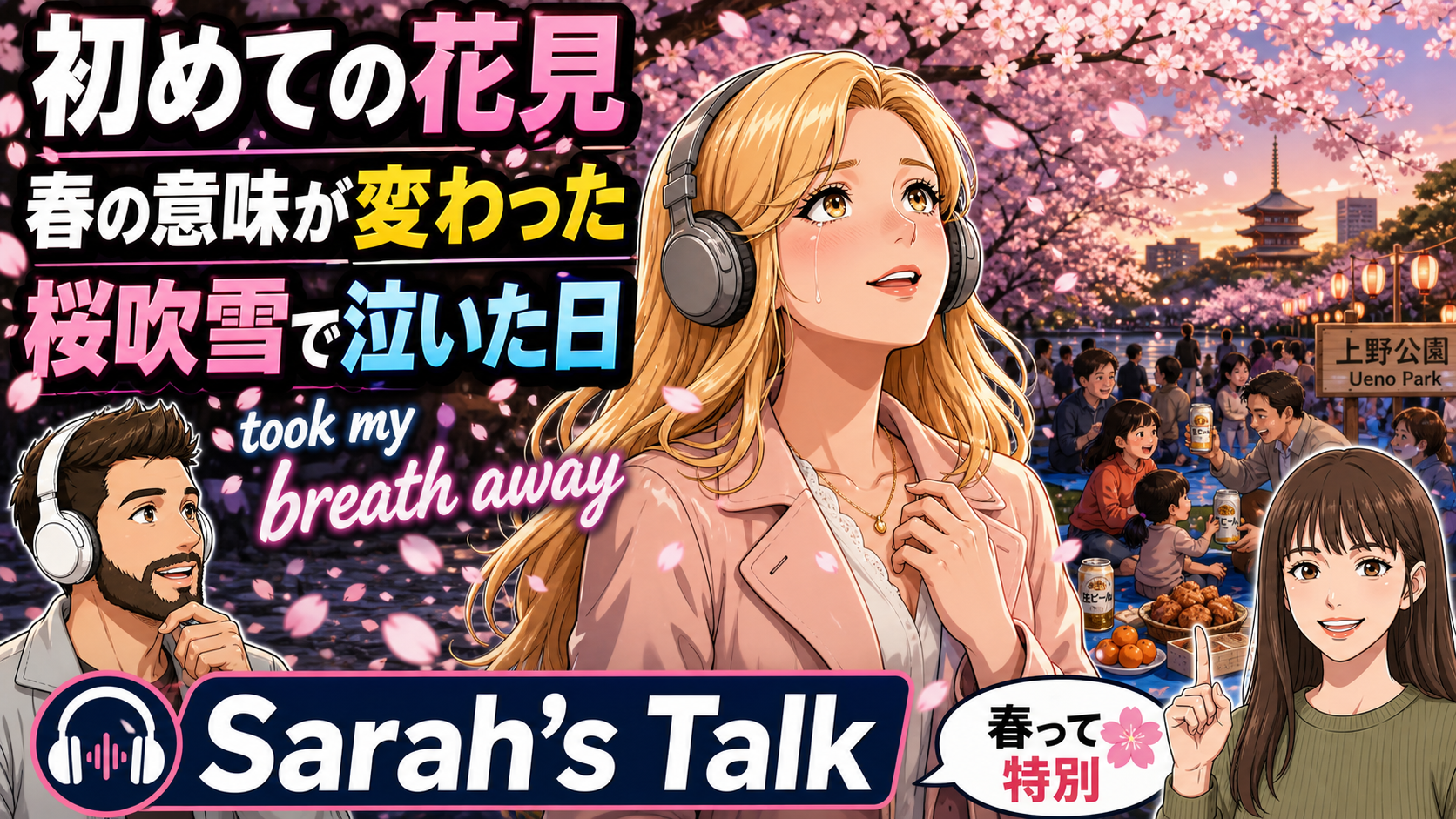
サラの「初めての花見」|上野で見知らぬ家族にビールをもらった話 【Sukima English Sarah's Talk #s03】
ポッドキャスト「すきまイングリッシュ」のスクリプト。「サラの「初めての花見」|上野で見知らぬ家族にビールをもらった話 【Sukima English Sarah's Talk #s03】」の会話全文です。

さゆり: こんにちは、「Sukima English」のさゆりです。今日のテーマは、サラの「初めての花見」のお話。今は満開の桜が当たり前に見られる日本ですが、ニューヨーク育ちのサラにとって、桜のある春は最初まったく別物だったそうです。
Marc: Sarah, what's the topic today? You said you wanted to go somewhere new. (日本語訳: サラ、今日のトピックは何?新しいところに行きたいって言ってたよね。)
サラ: I want to talk about the first time spring really meant something to me. And it happened in Tokyo. Not in New York. (日本語訳: 春が初めて自分にとって特別なものになった時のことを話したいんだ。それは東京でのことだった。ニューヨークじゃなくて。)
Marc: That is a strong way to open. Spring meant nothing to you in New York? (日本語訳: すごい切り出し方だね。ニューヨークでは、春は何の意味もなかったの?)
サラ: Honestly, not really. Spring in Manhattan was just "the part of the year where you stop wearing a coat." That was it. It was a function, not an event. (日本語訳: 正直、あんまり。マンハッタンの春は、ただの「コートを着なくてよくなる時期」だった。それだけ。機能であって、イベントじゃなかったんだ。)
Marc: A function, not an event. (日本語訳: 機能であって、イベントじゃない。)
サラ: A function. So today I want to talk about my first hanami. The day Tokyo taught me what spring could actually be. (日本語訳: そう、機能。だから今日は、私の初めての花見について話したい。春って本当はこういうものなんだって、東京が教えてくれた日のこと。)
さゆり: いいテーマですね。ニューヨーク育ちのサラが、日本の桜にどう打ちのめされたか。Marc も合いの手を入れながら聞いていきましょう。
サラ: Okay, let me set the stage. Spring in New York. You walk outside one morning, and the air is just slightly warmer. The trees in Central Park start getting green again. People sit on blankets and read. Bryant Park has tulips. That is it. That is the spring program. (日本語訳: じゃあ、状況を説明するね。ニューヨークの春。ある朝外に出ると、空気がほんの少し暖かくなってる。セントラルパークの木々がまた緑になり始める。みんな敷物の上に座って本を読む。ブライアントパークにはチューリップが咲く。それだけ。それが春のプログラムのすべて。)
Marc: That is honestly the same in Chicago. Maybe one weekend everyone goes to the lakefront, and we call it a season. (日本語訳: それ、正直シカゴでも同じだよ。週末に一度みんなで湖畔に行って、それで春ってことにしてる。)
サラ: Right. There is no "we all go look at one specific tree together" tradition. There is no national news story about a flower front moving north. (日本語訳: そう。「みんなで特定の木を一緒に見に行く」みたいな伝統はない。花の前線が北上してるなんて全国ニュースもない。)
Marc: Wait, there is a flower front? (日本語訳: ちょっと待って、花の前線なんてあるの?)
サラ: There is a sakura front. I learned this in year one. The news shows a map of Japan with a pink wave moving up the country. Like a weather forecast, but for flowers. (日本語訳: あるんだよ、桜前線。1年目に知ったんだ。ニュースで日本地図が映って、ピンクの波が国を北へ上がっていくの。天気予報みたいなんだけど、花の予報なんだよ。)
Marc: A weather forecast for flowers. That is genuinely incredible. (日本語訳: 花の天気予報。それは本当にすごいね。)
サラ: I remember staring at the TV thinking, "this country takes one specific tree extremely seriously." And I did not get it yet. (日本語訳: テレビを見つめながら、「この国は一本の特別な木をものすごく真剣に扱ってるんだな」って思ったのを覚えてる。でも、そのときはまだピンときてなかった。)
さゆり: ここで一つ聞き取れましたか?「This country takes one specific tree extremely seriously.」 サラが「日本人は桜という一本の木に異常な熱量を注ぐんだ」と気づいた瞬間の表現です。take something seriously は「真剣に扱う」ですが、ここでは少しユーモアを込めた驚きの言い方になっています。
Marc: And you didn't get it. Until you actually went. (日本語訳: で、君はピンときてなかった。実際に行くまでは。)
サラ: Until I actually went. Mia called me one Saturday in April. She said, "I'm taking you to Ueno today. Bring socks you can sit on." That was the only instruction. (日本語訳: 実際に行くまではね。4月のある土曜日、ミアから電話があったんだ。「今日は上野に連れてくよ。座るとき用の靴下を持ってきて」って。指示はそれだけ。)
Marc: Bring socks you can sit on. That is a very Tokyo instruction. (日本語訳: 座るとき用の靴下を持ってきて、か。すごく東京っぽい指示だね。)
サラ: A very Tokyo instruction. I had no frame of reference for what I was about to walk into. (日本語訳: すごく東京っぽい指示。比べられるものが何もなくて、これから何が待ってるのか、まったく想像がつかなかった。)
さゆり: 「I had no frame of reference」も自然な英語です。「比較対象がなくて何が起きるか想像できなかった」というニュアンス。初めての文化に飛び込むときの感覚を一言で表せます。
サラ: We get off at Ueno. Mia walks me up the stairs out of the station, and I stop. I just stop walking. (日本語訳: 上野で電車を降りる。ミアに連れられて駅の階段を上がって外に出たら、私、止まっちゃったの。足が動かなくなったんだ。)
Marc: Wait, what happened? (日本語訳: え、何があったの?)
サラ: Because the entire park is pink. Not "some trees have flowers." The whole sky is pink. There is a pink ceiling over thousands of people sitting on blue tarps eating from convenience store bags. (日本語訳: 公園全体がピンクなんだよ。「木に花が咲いてる」なんてレベルじゃない。空全体がピンクなの。青いシートに座ってコンビニの袋から食べてる何千人もの人たちの上に、ピンクの天井があるんだ。)
Marc: A pink ceiling over thousands of people. (日本語訳: 何千人もの人々の上にピンクの天井。)
サラ: It was show-stopping. I genuinely just stood there. Mia had to grab my elbow and say, "keep moving, we need a spot." I do not know how long I stood there. I lost track of time within the first twenty seconds of arriving. (日本語訳: 圧巻だった。本当にただ立ち尽くしてた。ミアが私のひじをつかんで、「ほら歩いて、場所を取らなきゃ」って言うまで。どれくらい立ってたのか分からない。着いて最初の20秒で、時間の感覚がなくなってたから。)
さゆり: 「show-stopping」という単語が出てきました。「圧巻」「思わず動きが止まる」という意味で、舞台のショーを止めてしまうほどのインパクトを表します。サラのように、初めて見て言葉を失う場面で使えます。
Marc: Did Mia get a spot? (日本語訳: ミアは場所を確保できたの?)
サラ: Mia is a professional. She had a tarp folded in her bag, she had picked the spot two hours earlier, and she had snacks already laid out. I just stood at the edge of the tarp like an extra in someone else's movie. (日本語訳: ミアはプロだから。バッグにたたんだシートを入れてて、2時間前に場所を選んであって、お菓子ももう並べてあった。私はシートの端っこで、他人の映画のエキストラみたいに突っ立ってた。)
Marc: An extra in someone else's movie. I have been that extra. (日本語訳: 他人の映画のエキストラ。私もそのエキストラだったことがあるよ。)
サラ: Everyone has been that extra in their first year. So we sit. And the next thing that happens — I will remember this until I die. (日本語訳: 1年目は、誰だってそのエキストラなんだよ。それで座って。次に起きたことは、死ぬまで忘れないと思う。)
Marc: Setting it up. (日本語訳: おっ、前振りだね。)
サラ: The Japanese family on the tarp next to ours. Four people. Probably a dad, a mom, a son in his twenties, and a grandmother. They had so much food. Like, a banquet. They had been there since morning. (日本語訳: 隣のシートにいた日本人の家族。4人。たぶん、お父さん、お母さん、20代の息子さん、それにおばあちゃん。食べ物がものすごくたくさんあって。宴会みたいだった。朝からそこにいたんだって。)
Marc: A real setup. (日本語訳: 本格的な陣取りだね。)
サラ: A real setup. And the dad looks over, sees us with our small convenience store haul, and out of nowhere he leans across with two cans of beer. He says, "dozo." That is the only word. He just hands them to us. (日本語訳: 本格的だった。そしたらお父さんがこっちを見て、私たちのコンビニで買ったささやかな食べ物を見て、いきなり缶ビールを2本持って身を乗り出してきたの。「どうぞ」って。その一言だけ。それで、ただ渡してくれたんだ。)
Marc: Wait, a stranger gave you beer? (日本語訳: え、見知らぬ人がビールをくれたの?)
サラ: A stranger gave us beer. And then his wife handed over a small plate of what I now know was karaage. And the grandmother gave us mikan. We did not ask. They just decided we were part of their hanami now. (日本語訳: 見ず知らずの人が、ビールをくれたの。それから奥さんが小皿を渡してくれて、今思えばあれは唐揚げだった。おばあちゃんはみかんをくれた。頼んでもいないのに。いつの間にか、私たちもその家族の花見の一員ってことになってたんだ。)
さゆり: 「out of nowhere」 もここで使えていますね。「突然、前触れもなく」という意味で、予期しなかった出来事を語るときの定番。サラは何度も日本のこの「気軽な分け合い」 に驚かされたそうです。
Marc: This would not happen in Chicago. This would not happen in New York. People in New York will physically lean away from you on a park bench. (日本語訳: そんなこと、シカゴじゃ起きないよ。ニューヨークでも起きない。ニューヨークの人なんて、公園のベンチで体ごと君から離れていくからね。)
サラ: They will lean. So I tried to thank them with my year-one Japanese. Which was, I am being generous, garbage. But the dad just smiled and said, "hanami." Like that explained everything. Like, today we share. Today is a hanami day. (日本語訳: 離れていくよね。それで、1年目の日本語でお礼を言おうとしたの。甘く見積もっても、ひどいものだったけど。でもお父さんはただにっこりして、「花見」って言ったんだ。それですべて説明がつくみたいに。つまり、今日はみんなで分け合う日。今日は花見の日なんだって。)
Marc: Today is a hanami day. (日本語訳: 今日は花見の日。)
サラ: We ended up talking to that family for over an hour. Mia did the heavy translation. The mom showed me pictures of their son's wedding. The grandmother taught me how to peel a mikan with one hand. (日本語訳: 結局、その家族とは1時間以上話し込んじゃったんだ。通訳はほとんどミアがしてくれた。お母さんは息子さんの結婚式の写真を見せてくれた。おばあちゃんは、片手でみかんの皮をむく方法を教えてくれた。)
Marc: Wedding pictures from a stranger. (日本語訳: 見ず知らずの人からの結婚式の写真。)
サラ: From a stranger. After an hour they felt like family. (日本語訳: 見ず知らずの人から。1時間経ったら、家族みたいに感じたよ。)
さゆり: ここでサラが言った「they felt like family」 もネイティブらしい言い方です。「家族のように感じた」 を素直に伝える短い言い回し。日本語の「家族みたいだった」 に近いです。
サラ: And then. Then the moment that broke me. (日本語訳: そして、そのあと。私がこらえきれなくなった瞬間が来たの。)
Marc: Setting up the moment. (日本語訳: その瞬間への前振りだね。)
サラ: It was around five in the afternoon. The light was starting to go orange. Mia was on the phone. The family next to us was packing up. A wind came through the park. (日本語訳: 午後5時ごろだった。光がオレンジ色に変わり始めていた。ミアは電話に出ていた。隣の家族は片付けをしていた。公園に風が吹いてきた。)
Marc: A wind came through the park. (日本語訳: 公園に風が吹いてきた。)
サラ: And the petals went up. Not like a few falling. The whole sky moved. It was a storm of pink. The air was full of them. I stood up because I did not know what else to do, and the petals were in my hair, on the tarp, on my shoulders. People all around the park stopped what they were doing. Phones came out. A small kid screamed in joy. (日本語訳: 花びらが舞い上がったの。何枚か散る、なんてものじゃない。空全体が動いた。ピンクの嵐だった。空気が花びらでいっぱいになった。どうしていいか分からなくて立ち上がったら、髪にも、シートにも、肩にも花びらがついてた。公園中の人が、していたことの手を止めた。みんなスマホを取り出して。小さな子どもが歓声をあげた。)
Marc: A small kid screamed in joy. (日本語訳: 小さな子どもが歓声をあげた。)
サラ: It took my breath away. I want to be careful here. I am not exaggerating. I have used that phrase a hundred times in my life. This was the first time I meant it literally. I forgot to breathe for a second. (日本語訳: 息をのんだ。ここは慎重に言いたいんだけど、大げさに言ってるわけじゃないの。この言葉は人生で百回は使ってきた。でも文字どおりの意味で使ったのは、あれが初めて。一瞬、息をするのを忘れたんだ。)
さゆり: 「took my breath away」 はここがハイライトですね。直訳は「息を奪った」ですが、感動で一瞬呼吸を忘れるような美しい光景を表します。サラが「文字通りに使えたのはあの瞬間が初めて」と言っているのが印象的です。
Marc: And then? (日本語訳: それで?)
サラ: I got emotional. I cried a little. Not big crying. Just the kind where your eyes get wet and you do not really know why. Mia saw me, smiled, did not say anything, and handed me a tissue she already had ready in her pocket. Like she had been waiting for me to break. (日本語訳: 感情があふれちゃった。少し泣いたんだ。大泣きじゃなくて、目がうるんで、自分でもなぜだかよく分からない、そういう感じ。ミアは私を見て、にっこりして、何も言わずに、ポケットに用意してあったティッシュを渡してくれた。私がこらえきれなくなるのを待ってたみたいに。)
Marc: Like she had been waiting for it. (日本語訳: それを待っていたみたいに。)
サラ: She had. She told me later that everyone breaks at their first real hanami. She just did not know which moment would do it for me. (日本語訳: そうだったの。あとで教えてくれたんだけど、初めてのちゃんとした花見では、みんなこらえきれなくなるんだって。ただ、私の場合どの瞬間でそうなるかは分からなかったって。)
さゆり: 「I got emotional」 は「思わず涙ぐんだ」「感情があふれた」 という日常的な言い回し。「I cried」 と直接言うより少し控えめで、大人っぽい印象になります。
サラ: Okay, fast forward. This year was my fifth hanami in Tokyo. (日本語訳: さて、話を一気に進めるね。今年は、東京で5回目の花見だった。)
Marc: Five years already? (日本語訳: もう5年?)
サラ: Five years. And here is the part that made me want to do this episode. I went back to Ueno. Same park. Same general area, even. And I noticed something about myself. (日本語訳: 5年。それで、このエピソードをやりたいと思ったのは、ここからの話なんだ。上野にまた行ったの。同じ公園。だいたい同じあたり。そこで、自分についてあることに気づいたんだ。)
Marc: Tell me. (日本語訳: 教えて。)
サラ: I was not waiting for the trees to be at full bloom anymore. In fact, full bloom felt almost too much for me this year. It felt loud. What I was actually waiting for was the next part. The falling part. (日本語訳: もう、満開になるのを待ってなかったの。それどころか、今年は満開がちょっと強すぎるくらいに感じた。にぎやかすぎるっていうか。本当に待ってたのは、その次。散るところ。)
Marc: The falling part. (日本語訳: 散るところ。)
サラ: The petal storm. The end. The week where you can see the green leaves starting to come through the pink. That part used to feel like the season ending. This year it felt like the best part. (日本語訳: 花吹雪。終わりの時期。ピンクの間から緑の葉が見え始める、あの1週間。前は、季節が終わっていくように感じてた部分。それが今年は、一番いいところに感じたんだ。)
さゆり: ここでサラが感じている感覚は、日本語で言うと「散り際の美しさ」 ですね。日本人にとっては馴染みのある美意識ですが、それを後天的に身につけたサラの観察として面白い瞬間です。
Marc: That is a Japanese feeling. You caught it. (日本語訳: それは日本的な感覚だね。身についたんだ。)
サラ: I caught it. Without trying. I was not studying it. It just moved into my system at some point in the last five years. (日本語訳: 身についた。意識しないうちにね。勉強してたわけじゃない。この5年のどこかで、いつの間にか体に入り込んでたんだ。)
Marc: When did it move in? (日本語訳: いつ入り込んだの?)
サラ: I do not know. That is the strange part. There was no specific moment. I just looked up at the trees this April and realized I was not the person who walked into Ueno that first year anymore. (日本語訳: 分からない。そこが不思議なところ。これっていう瞬間はなかった。ただ、今年の4月に桜を見上げて、1年目に上野に足を踏み入れたときの私とは、もう別人なんだって気づいたんだ。)
Marc: A different person. (日本語訳: 別人か。)
サラ: A different person. The Sarah from year one would have been disappointed that the bloom was past peak. Year-five Sarah sat on a bench for two hours and just watched petals fall. I had nowhere to be. I just wanted to soak it up. (日本語訳: 別人。1年目のサラだったら、満開を過ぎてたらがっかりしてたと思う。5年目のサラは、ベンチに2時間座って、ただ花びらが散るのを眺めてた。行かなきゃいけない場所もなかった。ただ、その時間を噛みしめたかったんだ。)
さゆり: 「soak it up」 もこのエピソードのキーフレーズの一つ。「全身で味わい尽くす」「浸る」 という意味です。スポンジのように吸収するイメージ。風景や雰囲気をじっくり感じたいときの英語らしい表現です。
Marc: That is a real shift. From "function, not event" to sitting on a bench watching petals fall for two hours. (日本語訳: それは大きな変化だね。「機能であって、イベントじゃない」から、ベンチに座って2時間花びらが散るのを眺めるところまで。)
サラ: It is a complete reversal. And the wild part is, I did not even decide to change. The country just did it to me. (日本語訳: 完全に逆転したよ。しかもすごいのは、自分で変わろうと決めたわけじゃないってこと。この国が、私をそうさせたんだ。)
Marc: The country did it to you. (日本語訳: この国が君をそうさせた。)
サラ: The country did it to me. The cherry blossoms did it to me. Mia did it to me. The family next to us in year one with the beer did it to me. They all worked together over five years. (日本語訳: この国が、私をそうさせた。桜がそうさせた。ミアがそうさせた。1年目に隣でビールをくれた家族がそうさせた。5年かけて、みんなで一緒にそうしてくれたんだ。)
さゆり: 5年かけて少しずつ「日本の春」が体に染み込んでいった、という感覚ですね。マークもシカゴでは桜を見ますか?
Marc: Honestly, not really. Chicago skips spring. We go from cold to humid in about ten days. If you want cherry blossoms in the U.S., you fly to Washington D.C. for the festival. But that is a different thing. It is more of a tourist event. It is not embedded in everyday life like hanami is here. (日本語訳: 正直、あんまり。シカゴには春がないようなものなんだ。10日くらいで、寒いのから蒸し暑いのに変わる。アメリカで桜を見たいなら、飛行機でワシントンD.C.の桜まつりに行くことになる。でも、それは別物なんだ。どちらかというと観光イベントで、ここの花見みたいに日常生活に根付いてるわけじゃない。)
サラ: That is the word. Embedded. Hanami is embedded in everyday life. The convenience store has sakura mochi. The Starbucks has sakura latte. The train station plays sakura music. The whole country leans into it for two weeks. (日本語訳: それだよ。根付いてる。花見は日常生活に根付いてるの。コンビニには桜餅があって、スタバには桜ラテがあって、駅では桜の曲が流れる。国全体が2週間、どっぷり桜モードになるんだ。)
Marc: Two weeks of national focus on flowers. (日本語訳: 2週間、国全体が花に注目する。)
サラ: Two weeks. And then it is over. And somehow that makes it more powerful, not less. (日本語訳: 2週間。それで終わり。でもなぜか、だからこそ余計に心に響くんだよね。)
さゆり: それでは、今日サラの話に出てきたキーフレーズを6つ振り返っていきましょう。
サラ: Okay. "Show-stopping." It is what you say when something is so visually impressive it makes you stop walking. Like — "I turned the corner in Ueno and the view was absolutely show-stopping." (日本語訳: うん。「show-stopping」ね。見た目があまりにすごくて、思わず足が止まるようなときに使うんだ。例えば、「上野で角を曲がったら、景色が本当に圧巻だった。」)
Marc: "The bakery on my corner does this strawberry shortcake in spring. It is show-stopping. People line up around the block." (日本語訳: 「うちの近所の角にあるパン屋さんが、春になるとイチゴのショートケーキを出すんだ。もう圧巻だよ。ぐるっと一区画ぶん行列ができるんだから。」)
さゆり: 「show-stopping」 は「圧巻」「思わず立ち止まるほど印象的」 という意味の形容詞です。風景・料理・パフォーマンスなど、視覚的に強いインパクトがあるものに使えます。
サラ: "Took my breath away." It is for that one second where you forget how to breathe because something is too beautiful. Like — "The view from the top of Mount Takao at sunset took my breath away." (日本語訳: 「息をのんだ」。何かが美しすぎて、一瞬息をするのを忘れるような時に使うんだ。例えば、「高尾山の山頂から見た夕焼けは、息をのむほどだったよ。」)
Marc: "The first time I saw Lake Michigan from the top of the Hancock Building, it took my breath away. I was twelve." (日本語訳: 「初めてハンコック・ビルのてっぺんからミシガン湖を見たとき、息をのんだ。12歳だった。」)
さゆり: 「took my breath away」 は「息をのむほど美しい」 という感動を伝える定番表現。サラが言った通り、本当に呼吸を忘れる瞬間に使うと印象が強くなります。
サラ: "I got emotional." It is a softer way of saying you cried. Like — "My friend played me a song his late grandmother used to sing, and I got emotional." (日本語訳: 「感情があふれた」。泣いたことを、もっと柔らかく言う言い方だね。例えば、「友達が、亡くなったおばあさんがよく歌っていた歌を聞かせてくれて、感情があふれた。」)
Marc: "I got emotional at the end of the season finale, and my brother absolutely will not let me live it down." (日本語訳: 「シーズン最終話のラストで感情があふれちゃってさ。弟にずっとそのことでからかわれてるんだ。」)
さゆり: 「I got emotional」 は「思わず涙ぐんだ」「感情があふれた」 という言い方。「I cried」 と直接言うよりも控えめで、大人っぽいニュアンスになります。
サラ: "Soak it up." It is when you do not just look at something — you let it fully sink in. Like — "I sat on the bench for two hours just to soak it up." (日本語訳: 「噛みしめる」。ただ見るだけじゃなくて、心の奥までじっくり染み込ませることだね。例えば、「2時間ベンチに座って、ただその時間を噛みしめてた。」)
Marc: "Whenever I go home to Chicago, the first thing I do is walk along the lake for an hour just to soak it up." (日本語訳: 「シカゴに帰ると、まず1時間くらい湖沿いを歩いて、その景色を噛みしめるんだ。」)
さゆり: 「soak it up」 は「全身で味わい尽くす」「浸る」 という英語らしい表現。スポンジが水を吸うイメージで、雰囲気や風景を時間をかけて吸収する感覚です。
サラ: "I lost track of time." It is what you say when you were so absorbed you did not notice hours passing. Like — "I sat down with that book at three, and the next time I looked up it was dark. I completely lost track of time." (日本語訳: 「時間を忘れていた」。夢中になりすぎて、時間が経つのに気づかなかった時に使うんだ。例えば、「3時にあの本を読み始めて、次に顔を上げた時はもう真っ暗だった。完全に時間を忘れてた。」)
Marc: "I went into a record store in Shimokitazawa one Saturday. I lost track of time so badly I missed dinner with friends." (日本語訳: 「ある土曜日、下北沢のレコード屋に入ったら、すっかり時間を忘れちゃって、友達との夕食に行きそびれたんだ。」)
さゆり: 「I lost track of time」 は「時間を忘れた」「気づいたら何時間も経っていた」 という意味。何かに没頭していたことを伝える日常的な言い回しです。
サラ: "Out of nowhere." It is for things that happen with zero warning. Like — "I was minding my business on the tarp, and out of nowhere a stranger handed me a beer." (日本語訳: 「突然」。まったく前触れなく起きたことに使うんだ。例えば、「シートの上でのんびりしてたら、突然、知らない人がビールをくれたんだ。」)
Marc: "I was on the train last week, and out of nowhere a guy asked me if I knew where to buy good ramen near Shibuya. I gave him my whole list." (日本語訳: 「先週電車に乗ってたら、突然ある人に、渋谷の近くでおいしいラーメンが食べられる店を知らないかって聞かれたんだ。自分のリストを全部教えてあげたよ。」)
さゆり: 「out of nowhere」 は「突然」「前触れもなく」 という意味。物理的にも比喩的にも使えて、予期しなかった出来事を語るときに便利です。
さゆり: いかがでしたか?ニューヨーク育ちのサラが、上野公園で「春」 という季節の意味そのものを書き換えられた話でした。文化が体に染み込むのに5年かかったというサラの実感が、印象的でしたね。
サラ: I genuinely did not see it coming. Spring used to mean nothing to me. Now it is the season I look forward to most. (日本語訳: 本当に予想外だったんだ。昔は春なんてどうでもよかった。今は一番楽しみにしている季節だよ。)
Marc: It snuck up on her over five years. (日本語訳: 5年かけて、いつの間にか彼女の中に入り込んでたんだね。)
サラ: It snuck up on me. And the moment I noticed, it was already done. (日本語訳: いつの間にか入り込んでたの。気づいたときには、もう変わり終わってた。)
さゆり: 皆さんも、初めて誰かと花見をした日、あるいは桜が散る瞬間に立ち会った日のことを思い出してみてください。次回もお楽しみに。
Marc: See you next time, everyone. (日本語訳: それでは皆さん、また次回。)
サラ: Take care, and go sit under a tree this April. (日本語訳: 気をつけてね。この4月は、ぜひ木の下に座ってみて。)

関連記事
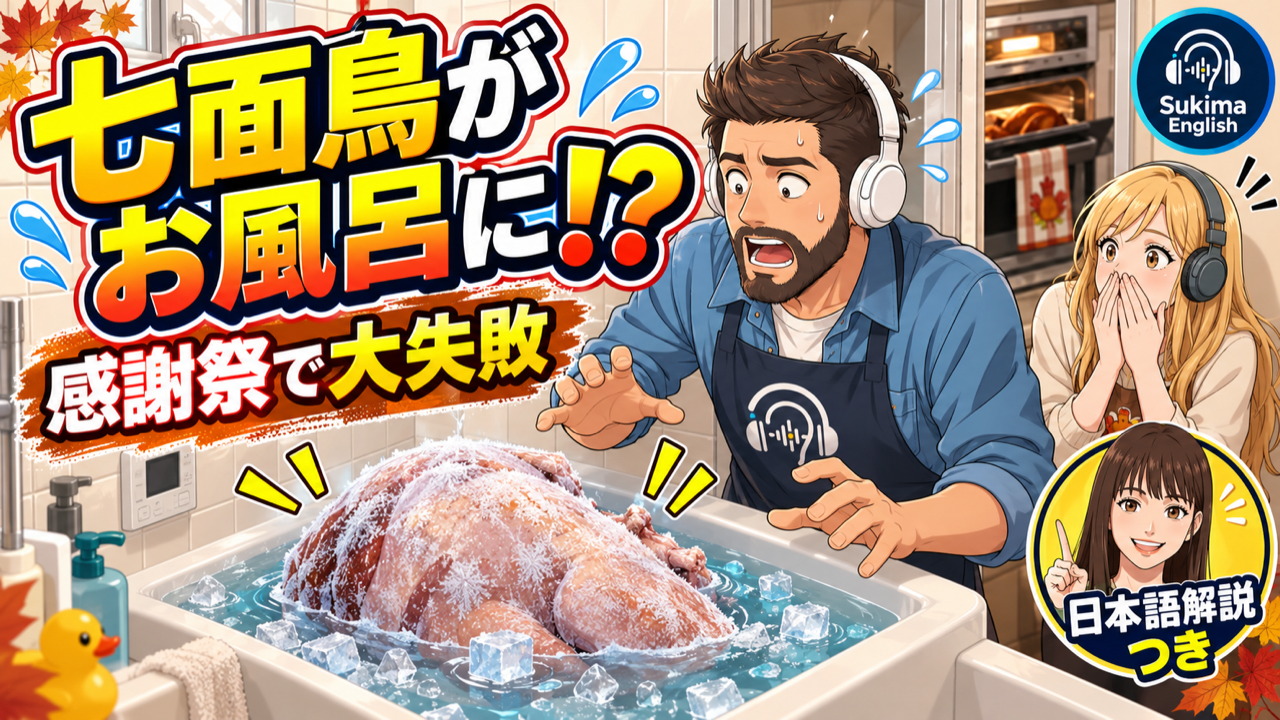
【日常英会話】「感謝していることを一つずつ」アメリカの感謝祭とネイティブの本音 #英語学習 #ネイティブ英語会話 #リスニング強化 #英語耳
ポッドキャスト「すきまイングリッシュ」のスクリプト。「【日常英会話】「感謝していることを一つずつ」アメリカの感謝祭とネイティブの本音 #英語学習 #ネイティブ英語会話 #リスニング強化 #英語耳」の会話全文です。

【日常英会話】英語のみ | ニューヨークと東京のハロウィンを英語で語ると? #英語学習 #ネイティブ英語会話 #リスニング強化
ポッドキャスト「すきまイングリッシュ」のスクリプト。「【日常英会話】英語のみ | ニューヨークと東京のハロウィンを英語で語ると? #英語学習 #ネイティブ英語会話 #リスニング強化」の会話全文です。
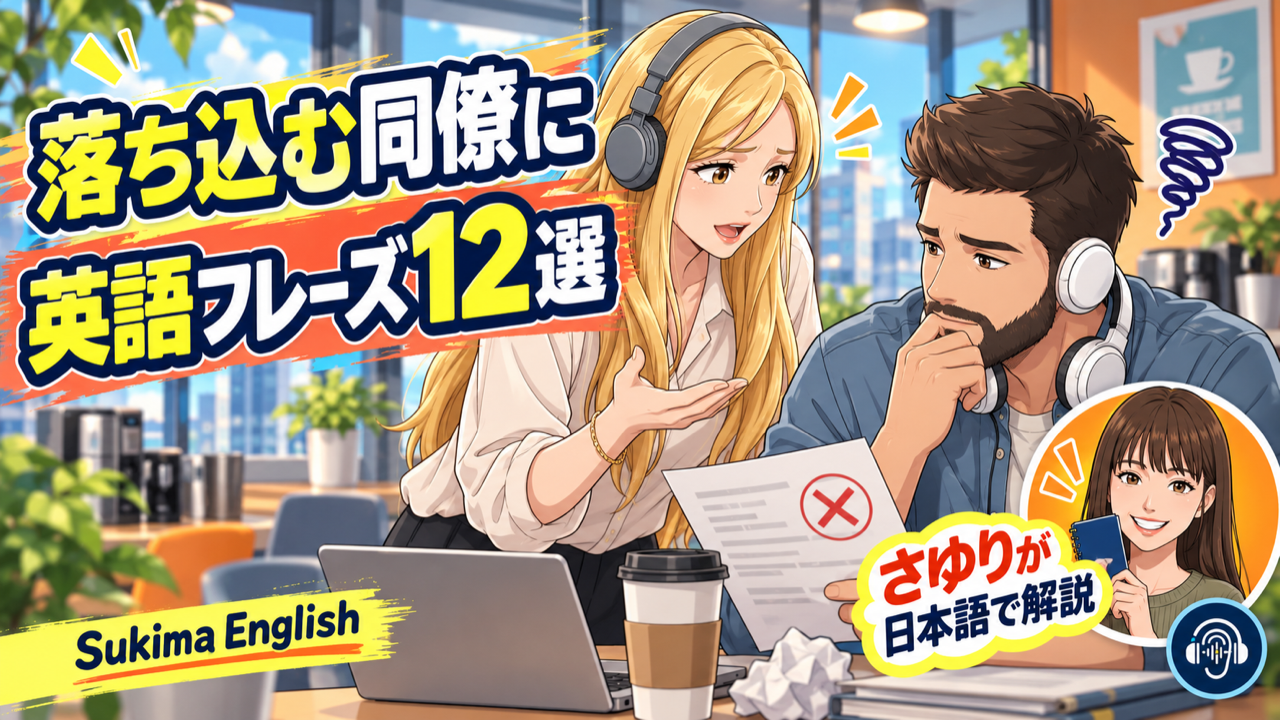
【日常の英語】元気のない同僚にかける英語フレーズ12選|声かけから励ましまで #英語学習 #英語フレーズ #英会話 #英語耳
ポッドキャスト「すきまイングリッシュ」のスクリプト。「【日常の英語】元気のない同僚にかける英語フレーズ12選|声かけから励ましまで #英語学習 #英語フレーズ #英会話 #英語耳」の会話全文です。
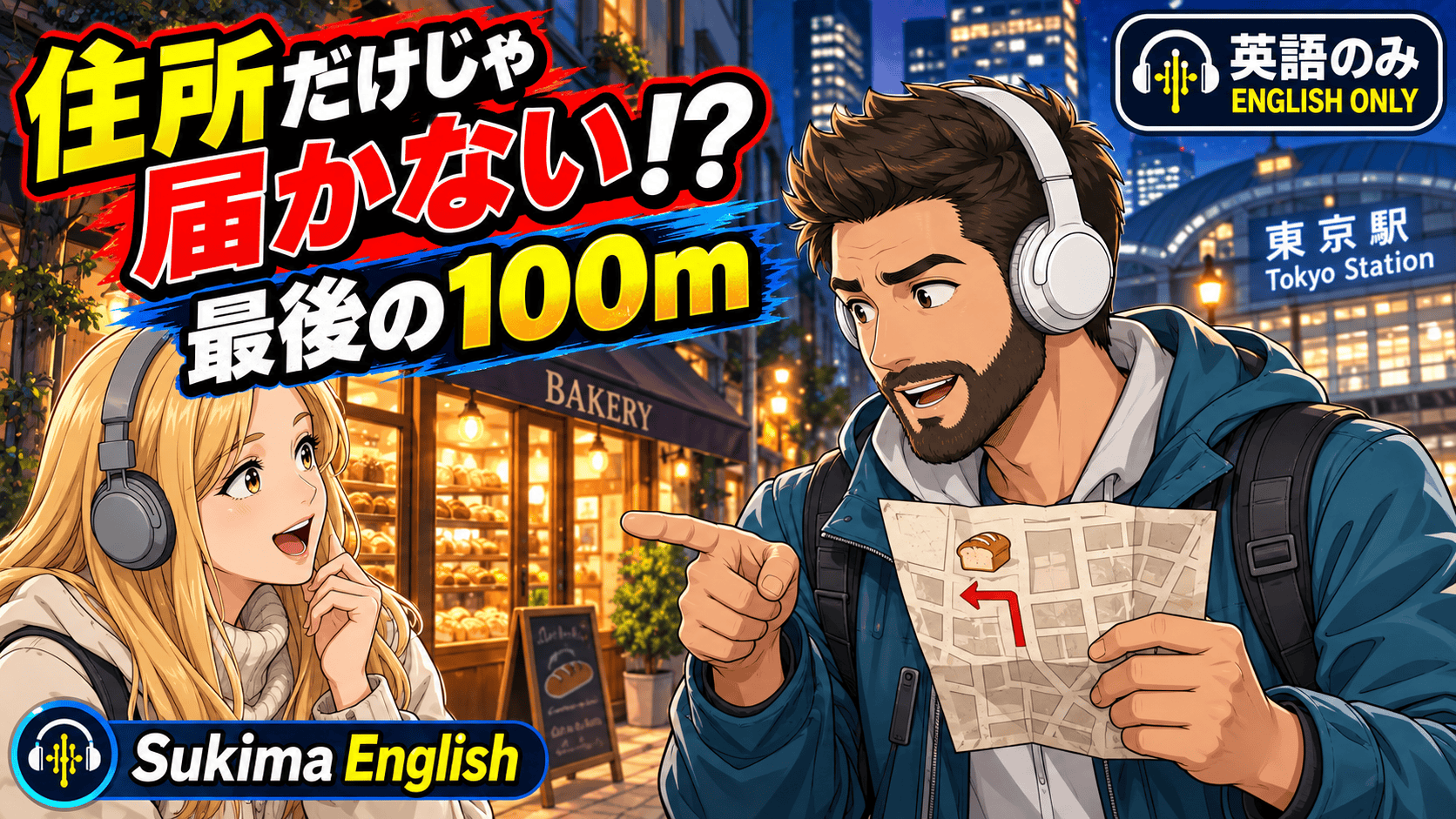
【日常英会話】住所と道案内を英語で話すと?日本の住所には通りの名前がない #英語学習 #ネイティブ英語会話 #リスニング強化 #英語耳
ポッドキャスト「すきまイングリッシュ」のスクリプト。「【日常英会話】住所と道案内を英語で話すと?日本の住所には通りの名前がない #英語学習 #ネイティブ英語会話 #リスニング強化 #英語耳」の会話全文です。

【日常の英語】日本語解説あり | 席を譲ろうとして、断られた |申し出る英語と、断られたときの英語6つ #英語学習 #英語フレーズ #英会話 #英語耳
ポッドキャスト「すきまイングリッシュ」のスクリプト。「【日常の英語】日本語解説あり | 席を譲ろうとして、断られた |申し出る英語と、断られたときの英語6つ #英語学習 #英語フレーズ #英会話 #英語耳」の会話全文です。

【日常英会話】カウンターには、向かいの椅子がない、「お一人ですか」と聞かれる国 #英語学習 #ネイティブ英語会話 #リスニング強化 #英語耳
ポッドキャスト「すきまイングリッシュ」のスクリプト。「【日常英会話】カウンターには、向かいの椅子がない、「お一人ですか」と聞かれる国 #英語学習 #ネイティブ英語会話 #リスニング強化 #英語耳」の会話全文です。