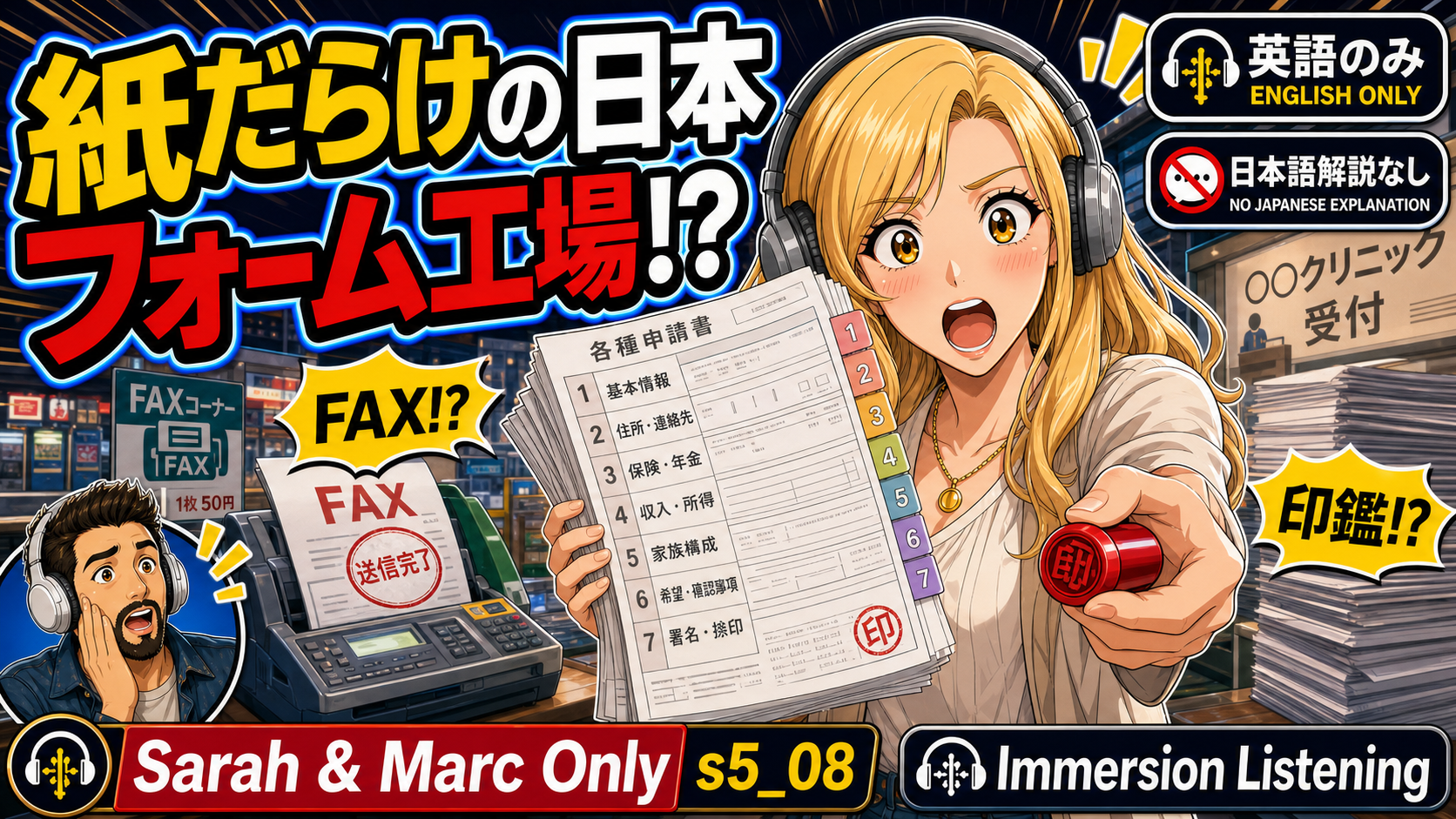
【英語学習】英語のみ | 印鑑・FAX・7枚の問診票、日本の「紙の国」で気づいたこと、印鑑がないと銀行口座も作れない #英語学習 #ネイティブ英語会話 #リスニング強化 #英語耳
ポッドキャスト「すきまイングリッシュ」のスクリプト。「【英語学習】英語のみ | 印鑑・FAX・7枚の問診票、日本の「紙の国」で気づいたこと、印鑑がないと銀行口座も作れない #英語学習 #ネイティブ英語会話 #リスニング強化 #英語耳」の会話全文です。

Marc: Sarah. Can I ask you something? (日本語訳: サラ。ちょっと聞きたいんだけど。)
サラ: Sure. (日本語訳: どうぞ。)
Marc: When did you last fill out a paper form? By hand. Pen and paper. (日本語訳: 最後に紙の書類に手書きで記入したのはいつ?ペンと紙で。)
サラ: Last week. At the clinic. (日本語訳: 先週。病院で。)
Marc: What was it for? (日本語訳: 何の用件で?)
サラ: I had a sore throat. They handed me a clipboard. A physical clipboard, with a pen attached on a string. (日本語訳: 喉が痛かったの。そしたらクリップボードを渡されてね。紐でペンがつながってる、本物のクリップボード。)
Marc: The classic. (日本語訳: 定番だね。)
サラ: And I am looking at this form and I'm thinking — name, date of birth, sure. But then it keeps going. Insurance number. Emergency contact. Previous surgeries. Family medical history. (日本語訳: それで、この書類を見ながら思ったの。名前、生年月日、まあそれはいい。でも、まだ続くんだよ。保険証の番号。緊急連絡先。手術歴。家族の病歴。)
Marc: The full history. (日本語訳: 何から何までだね。)
サラ: On paper. By hand. Seven sections. (日本語訳: 紙で。手書きで。全部で7項目。)
Marc: I did my address change at the ward office last week. Four pages. (日本語訳: 俺も先週、区役所で住所変更したんだけど。4ページあったよ。)
サラ: Four pages for an address change. (日本語訳: 住所変更で4ページも。)
Marc: Front and back. (日本語訳: しかも両面。)
サラ: I genuinely thought I had walked into a different decade. (日本語訳: マジで違う時代に迷い込んだかと思ったよ。)
Marc: Welcome to Japan, You're Weird, episode four. (日本語訳: 『日本、君はおかしい』エピソード4へようこそ。)
サラ: The Form Factory. (日本語訳: 書類工場だね。)
Marc: How long did it take you? (日本語訳: どれくらい時間かかった?)
サラ: I was in the waiting room for about twelve minutes. I spent eleven of them filling out that form. (日本語訳: 待合室に12分くらいいたんだけど、そのうち11分はその書類を書いてた。)
Marc: That tracks. (日本語訳: まあ、そんなもんか。)
サラ: My hand actually cramped. I do not know the last time my hand cramped from writing. (日本語訳: 本当に手が攣っちゃった。書いてて手が攣ったのなんて、いつ以来か思い出せないよ。)
Marc: In Chicago, I walked into urgent care a few years ago. There was an iPad mounted on a stand near the door. (日本語訳: 数年前、シカゴで救急外来に行ったんだ。ドアの近くのスタンドに、iPadが取り付けてあってさ。)
サラ: Yeah. (日本語訳: うん。)
Marc: You tapped your name, scanned your ID, answered three questions. Done in three minutes. (日本語訳: 名前をタップして、身分証をスキャンして、3つの質問に答える。3分で終わったよ。)
サラ: That is how it works everywhere I have been. You fill in your information once. It saves. You do not do it again. (日本語訳: 私がいたところは、どこもそうだよ。情報は一度入力すれば保存される。二度と入力しなくていい。)
Marc: Here you fill it in every time. (日本語訳: ここでは毎回入力するんだね。)
サラ: Every single time. I went back to the same clinic two months later. Different problem, same doctor. (日本語訳: 毎回だよ。2か月後に同じクリニックにまた行ったの。症状は違ったけど、先生は同じ。)
Marc: And? (日本語訳: それで?)
サラ: Same clipboard. Same pen on a string. (日本語訳: 同じクリップボード。同じ紐でつながったペン。)
Marc: Did they still have your old information on file? (日本語訳: 前の情報は記録に残ってた?)
サラ: In a paper folder in a physical filing cabinet. (日本語訳: 紙のフォルダーに入って、本物のファイルキャビネットにしまってあったよ。)
Marc: I have seen those cabinets. (日本語訳: あのキャビネット、見たことあるよ。)
サラ: And I respect the commitment. But I did not understand why my emergency contact needed to be handwritten again. (日本語訳: そのこだわりは尊敬するよ。でも、緊急連絡先をまた手書きで書かないといけない理由が分からなかった。)
Marc: There is something almost ceremonial about it. (日本語訳: どこか儀式めいたところがあるよね。)
サラ: That is one word for it. It felt stuck in time. (日本語訳: ものは言いようだね。私には、時代に取り残されてる感じがした。)
Marc: "Stuck in time." Yeah. (日本語訳: 「時代に取り残されてる」。うん。)
サラ: Like someone had stopped the clock in 2003 and decided this was fine. (日本語訳: まるで誰かが2003年で時計を止めて、これでいいって決めたみたい。)
Marc: The strange thing is, in other areas, Japan is completely cutting-edge. (日本語訳: 不思議なのは、他の分野では日本は完全に最先端だってこと。)
サラ: That is the thing. The train I took to the clinic ran within three seconds of schedule. (日本語訳: そこなんだよ。クリニックに行くのに乗った電車は、時刻表から3秒もずれずに走ってたのに。)
Marc: And then you walk into the waiting room. (日本語訳: それなのに、待合室に入ると。)
サラ: Clipboard. Pen on a string. (日本語訳: クリップボード。紐でつながったペン。)
Marc: Where else have you run into the paper problem? (日本語訳: 他にどこで紙の問題にぶつかった?)
サラ: The ward office. I needed to update my registration. (日本語訳: 区役所だよ。住民票の更新が必要だったんだ。)
Marc: The ward office is a whole experience. (日本語訳: 区役所って、それだけでひとつの体験だよね。)
サラ: I went in thinking: twenty minutes, in and out. I left forty-five minutes later. (日本語訳: 20分でさっと済ませるつもりで行ったのに、出てきたのは45分後だったよ。)
Marc: What happened? (日本語訳: 何があったの?)
サラ: I filled out one form. They checked it. Then they gave me another form with mostly the same information. (日本語訳: 書類を一枚書いたんだ。それをチェックして、ほとんど同じ情報が載ってる別の書類を渡された。)
Marc: The duplicate form. (日本語訳: 同じことを二回書かせる書類だ。)
サラ: Is there a reason for the duplicate? (日本語訳: 重複させる理由ってあるのかな?)
Marc: I have asked this. I do not have a satisfying answer. (日本語訳: 俺も聞いたことあるよ。でも、納得のいく答えはもらえてないんだ。)
サラ: The woman at the counter was incredibly kind. She walked me through everything. But at one point she apologized for the number of forms. (日本語訳: 窓口の女性は信じられないくらい親切だった。全部教えてくれた。でも、途中で書類の多さについて謝られたんだ。)
Marc: And you thought — (日本語訳: それで君はこう思ったんだろ…)
サラ: I thought: you do not need to apologize. But also yes, this is a lot of forms. (日本語訳: 「謝る必要ないのに」って。でも同時に、「そうね、これは多すぎるわ」とも思った。)
Marc: Everything has to be written in a specific way. In the right boxes. In the right characters. (日本語訳: 全部、特定の方法で、正しいマスに、正しい文字で書かないといけないんだ。)
サラ: I had to write my name in katakana. (日本語訳: 私の名前をカタカナで書かなきゃいけなかったんだ。)
Marc: First time I had to do that, I spent about ten minutes looking up how to write each character on my phone. (日本語訳: 俺が初めてそれをやる羽目になった時、スマホで各文字の書き方を調べるのに10分くらいかけたよ。)
サラ: The woman waited very patiently. (日本語訳: 女性はすごく辛抱強く待ってくれた。)
Marc: The patience is remarkable, by the way. Nobody seems surprised that it takes time. (日本語訳: ところで、あの辛抱強さはすごいよね。時間がかかることに、誰も驚いてないみたいだし。)
サラ: There is an expectation built into the system that this is how long it takes. (日本語訳: このシステムには、これくらい時間がかかるものだっていう前提が組み込まれてるんだね。)
Marc: And somehow that makes the whole thing feel less frustrating than it should. (日本語訳: しかも、そのおかげで、なぜか本来ほどイライラしないんだよね。)
サラ: Somehow. Not completely. But somehow. (日本語訳: どういうわけかね。完全にではないけど。でも、どういうわけか。)
Marc: Now. The fax. (日本語訳: で、ファックス。)
サラ: The fax. (日本語訳: ファックスね。)
Marc: Tell me your fax story. (日本語訳: ファックスの話を聞かせて。)
サラ: I signed my apartment lease last year. The agency sent over the contract. (日本語訳: 去年、アパートの賃貸契約を結んだんだ。不動産屋が契約書を送ってきてね。)
Marc: By email? (日本語訳: メールで?)
サラ: By fax. (日本語訳: ファックスで。)
Marc: There it is. (日本語訳: 出たね。)
サラ: By fax. And the agent said — very naturally, like this was completely normal — "Could you please send back the signed copy by fax?" (日本語訳: ファックスでね。そしたら担当者が、すごく自然に、まるでそれが当たり前みたいに、「署名したものをファックスで返送していただけますか?」って言ってきたんだ。)
Marc: And you had no fax machine. (日本語訳: で、君はファックス機を持ってなかったんだ。)
サラ: I had no fax machine. I was standing in my kitchen thinking: does anyone still have a fax machine? Is this something people have? (日本語訳: 持ってなかった。キッチンに立ったまま考えてたよ。「今どき、ファックス機を持ってる人なんているの? みんな普通に持ってるものなの?」って。)
Marc: I went through the exact same thing. Year one. (日本語訳: 俺もまったく同じ経験をしたよ。1年目に。)
サラ: What did you do? (日本語訳: どうしたの?)
Marc: The FamilyMart near my old apartment has a fax service. The guy at the counter showed me how to use it. (日本語訳: 昔住んでたアパートの近くのファミマにファックスサービスがあったんだ。店員さんが使い方を教えてくれたよ。)
サラ: There is a fax service at FamilyMart. (日本語訳: ファミマにファックスサービスがあるの?)
Marc: It is a thing. It works. I still think about it. (日本語訳: あるんだよ。ちゃんと使える。今でもときどき思い出すよ。)
サラ: I did the same thing. Different konbini. And there was a line. (日本語訳: 私も同じことした。違うコンビニだったけど。そしたら行列ができてて。)
Marc: A fax queue. (日本語訳: ファックスの列。)
サラ: Other people were also faxing documents. I stood in a fax queue. (日本語訳: 他の人も書類をファックスしてたんだよ。私もファックスの列に並んだの。)
Marc: I have been in that queue. (日本語訳: 俺もその列に並んだことあるよ。)
サラ: And the machine makes that sound — (日本語訳: で、あの機械が鳴らす音とか…)
Marc: The fax sound. (日本語訳: ファックスの音。)
サラ: That grinding, mechanical fax sound. I have not heard that sound since I was maybe eight years old at my dad's office. (日本語訳: あのガリガリいう、機械っぽいファックスの音。たぶん8歳のころに父のオフィスで聞いて以来だよ。)
Marc: And now you are standing in a konbini at eleven at night sending your lease. (日本語訳: それが今じゃ、夜11時にコンビニで賃貸契約書を送ってるわけだ。)
サラ: At eleven, because the agency needed it before nine the next morning. (日本語訳: 夜11時だよ。だって、翌朝9時までに必要だって言われたんだもん。)
Marc: They also process faxes during business hours, by the way. (日本語訳: ちなみに向こうも、ファックスは営業時間内にしか処理しないんだけどね。)
サラ: Fax business hours. (日本語訳: ファックスの営業時間。)
Marc: Fax business hours. (日本語訳: ファックスの営業時間。)
サラ: I am adding that to the list of sentences I never expected to say. (日本語訳: 一生言うことはないと思ってたセリフのリストに追加だわ。)
Marc: It is like a time warp. (日本語訳: タイムワープみたいだね。)
サラ: An actual time warp. There is no other phrase for it. (日本語訳: 文字通りのタイムワープだよ。他に言いようがない。)
Marc: You know what I think actually keeps the fax alive here? (日本語訳: ここでファックスが生き残ってる本当の理由、何だと思う?)
サラ: Tell me. (日本語訳: 教えて。)
Marc: Liability. Every transaction needs a verifiable paper trail. And a fax creates a timestamp and a record that is very hard to dispute in a legal context. (日本語訳: 責任の問題だよ。あらゆる取引に、確認できる書面の記録が必要なんだ。ファックスならタイムスタンプと記録が残って、法的な場面で異議を唱えるのがすごく難しい。)
サラ: More so than email? (日本語訳: メールよりも?)
Marc: In the Japanese legal and corporate context — historically, yes. Email can be claimed as unsent, unread, modified. A fax is harder to argue with. (日本語訳: 日本の法律や企業の世界では、昔からそうなんだ。メールなら、送られていない、読んでいない、書き換えられた、と主張できる。ファックスには反論しにくいんだよ。)
サラ: So the fax is legally safer. (日本語訳: じゃ、ファックスの方が法的には安全なんだ。)
Marc: In certain categories. Real estate, medical records, government documents. There is a reason those sectors held on. (日本語訳: ある種の分野ではね。不動産、医療記録、公的書類。そういう分野が手放さなかったのには、理由があるんだ。)
サラ: That is actually — I did not know that. (日本語訳: へえ、それは知らなかった。)
Marc: Year two for me. A lawyer friend explained it. After I had complained about faxes for a full year. (日本語訳: 俺が2年目の時だね。弁護士の友達が説明してくれたんだ。まる1年、ファックスの文句を言い続けたあとでね。)
サラ: And after that explanation, did the fax bother you less? (日本語訳: その説明を聞いて、ファックスは気にならなくなった?)
Marc: About forty percent less. (日本語訳: 40パーセントくらいは、ましになったかな。)
サラ: But you still do not own a fax machine. (日本語訳: でも、まだファックス機は持ってないんだ。)
Marc: Neither of us owns a fax machine. (日本語訳: 俺たち、どっちもファックス機を持ってないよね。)
サラ: And yet we have both used one. (日本語訳: なのに、どっちも使ったことがある。)
Marc: That is the modern compromise. (日本語訳: それが現代の妥協点だね。)
Marc: And then the postal service. (日本語訳: それから、郵便。)
サラ: A few weeks after the lease — different document — the agency asked me to return something by mail. Physical mail. Postal service. With a stamp. (日本語訳: 契約の数週間後、別の書類だったんだけど、不動産屋から何かを郵送で返してほしいって言われたんだ。本物の郵便。郵便局の。切手を貼って。)
Marc: Not email. (日本語訳: メールじゃなくて?)
サラ: Not email. Not fax. Postal service. (日本語訳: メールでも、ファックスでもなく。郵便。)
Marc: You had to buy a stamp. (日本語訳: 切手を買わないといけなかったんだ。)
サラ: I had to find the post office. Which took longer than expected because I had not been in a while. Then I found a mailbox. (日本語訳: まず郵便局を探さないといけなかった。しばらく行ってなかったから、思ったより時間がかかったよ。それから、ポストを見つけたの。)
Marc: Very red. (日本語訳: すごく赤い。)
サラ: Very red. But also small, and easy to walk past four times before you realize what you are looking at. (日本語訳: すごく赤かった。でも小さくて、それが何なのか気づくまでに、4回は素通りしちゃうんだよね。)
Marc: I have done that. (日本語訳: 俺もやったことあるよ。)
サラ: I dropped in the envelope. And then I spent three days — there is no tracking for a standard letter. (日本語訳: 封筒を投函したの。それから3日間……普通郵便には追跡がないからね。)
Marc: Just faith. (日本語訳: 信じて待つしかないね。)
サラ: Just faith that it arrived. I am from New York. I need a confirmation. A read receipt. Something. (日本語訳: 届いたと信じて待つだけ。私はニューヨーク出身だから、確認がほしいの。開封確認とか。何かしら。)
Marc: Faith is not in the New York vocabulary when documents are involved. (日本語訳: 書類のこととなると、ニューヨーカーの辞書に「信じて待つ」なんて言葉はないからね。)
サラ: Not at all. (日本語訳: 全然ない。)
Marc: It arrived, though? (日本語訳: でも、届いたんでしょ?)
サラ: It arrived. The agency confirmed. But I had no way of knowing that until they told me. (日本語訳: 届いたよ。不動産屋も確認してくれた。でも、言われるまでは知りようがなかったんだ。)
Marc: That is a very particular kind of uncertainty. (日本語訳: それはまた、独特な不安だね。)
Marc: We have to talk about the hanko. (日本語訳: ハンコの話をしないといけないね。)
サラ: We do. (日本語訳: そうね。)
Marc: When did you first hear about it? (日本語訳: 初めてハンコのことを聞いたのはいつ?)
サラ: Third week here. I went to open a bank account. I had everything I thought I needed — passport, residence card, cash. (日本語訳: ここに来て3週目。銀行口座を開きに行ったの。必要だと思うものは全部持ってた。パスポート、在留カード、現金。)
Marc: And? (日本語訳: それで?)
サラ: The woman at the counter said very politely that I also needed my personal seal. (日本語訳: 窓口の女性がとても丁寧に、印鑑も必要ですって言ったの。)
Marc: And you had no personal seal. (日本語訳: で、印鑑は持ってなかったと。)
サラ: I did not know what a personal seal was. I Googled it while standing at her window. (日本語訳: 印鑑が何なのかも知らなかった。窓口の前に立ったまま、ググったよ。)
Marc: I have done that exact thing. (日本語訳: 俺も全く同じことしたことある。)
サラ: A hanko is a small carved stamp. You press it in red ink, you put it on documents instead of — or alongside — a signature. (日本語訳: ハンコっていうのは、小さく彫られたスタンプのこと。朱肉をつけて、サインの代わりに、あるいはサインと一緒に書類に押すんだ。)
Marc: Depending on what it is. (日本語訳: 書類によるけどね。)
サラ: Right. So I went to the hanko shop. (日本語訳: そう。それで、ハンコ屋さんに行ったんだ。)
Marc: There is a whole shop for this. (日本語訳: そのための専門店まであるんだよね。)
サラ: A whole shop. They carve your name. You leave with a small cylindrical piece of wood and a little case for it. (日本語訳: 専門店があるの。名前を彫ってくれて、小さな円筒形の木のハンコと、それを入れる小さなケースを持って帰るんだ。)
Marc: How long did it take? (日本語訳: どれくらいかかった?)
サラ: About twenty minutes. They made it while I waited. (日本語訳: 20分くらいかな。待ってる間に作ってくれたよ。)
Marc: I have had mine for five years. (日本語訳: 俺のはもう5年になるよ。)
サラ: How does it feel after five years? (日本語訳: 5年経って、どう?)
Marc: Honestly? I feel incomplete without it at this point. If I need to sign a contract and I have left it at home, I feel unprepared. Like leaving without my wallet. (日本語訳: 正直に言うと、今じゃ、ないと何か欠けてる気がするんだ。契約書にサインしなきゃいけないのに家に置いてきたら、準備不足な気がする。財布を忘れて出かけたみたいに。)
サラ: That is the wildest sentence. (日本語訳: 今のが一番ぶっ飛んだセリフだよ。)
Marc: I know. But it is true. (日本語訳: だろ? でも本当なんだ。)
サラ: I used mine last month on an official form. And it felt — kind of right, actually. Like pressing a wax seal on a letter. (日本語訳: 私は先月、公的な書類で使ったんだけど。なんだか、しっくりきたんだよね。手紙にシーリングワックスを押すみたいに。)
Marc: Old-school in a way that feels intentional. (日本語訳: わざとそうしてる感じの、昔ながらのやり方だね。)
サラ: "Old-school." That is how I would describe the whole paper system. (日本語訳: 「昔ながら」。紙のシステム全体を表すなら、その言葉だね。)
Marc: Not accidental. Intentional. (日本語訳: 偶然じゃなくて、意図的。)
サラ: Which is what changed my thinking on all of it. (日本語訳: まさにそこで、全部に対する私の考えが変わったんだ。)
Marc: What changed it? (日本語訳: 何がきっかけで?)
サラ: I was complaining about the forms — again — to a colleague. Not Keiko-san, someone else. And she said something that stopped me. (日本語訳: また書類のことで同僚に文句を言ってたんだ。圭子さんじゃなくて、別の人にね。そしたら彼女が、思わずハッとすることを言ったの。)
Marc: What did she say? (日本語訳: 何て言ったの?)
サラ: She said: "The paper is backup." (日本語訳: 「紙はバックアップよ」って言ったんだ。)
Marc: Huh. (日本語訳: へえ。)
サラ: She meant it literally. When a system goes down. A blackout, a server failure, a network outage. (日本語訳: 文字どおりの意味でね。システムがダウンした時。停電とか、サーバーの故障とか、ネットワーク障害とか。)
Marc: The paper exists. (日本語訳: 紙は残ってるわけだ。)
サラ: You can always go back to the paper. The digital record is the convenient version. The paper is the permanent one. (日本語訳: いつでも紙に戻れる。デジタルの記録は便利な版。紙は永久保存版。)
Marc: That is a complete inversion of how I have always thought about it. (日本語訳: それって、俺がずっと考えてきたことと完全に逆だね。)
サラ: It stopped me. Because in New York, paper is the thing you scan and throw away. Digital is the real version. (日本語訳: ハッとしたよ。ニューヨークでは、紙はスキャンして捨てるもの。本物はデジタルのほうだから。)
Marc: Here, paper is the real version. (日本語訳: ここでは、紙が本物なんだ。)
サラ: Paper does not crash. Paper does not get a software update. Paper does not get deprecated. (日本語訳: 紙はクラッシュしない。ソフトウェアのアップデートもない。サポートが終わることもない。)
Marc: It does not get hacked. (日本語訳: ハッキングもされない。)
サラ: It does not get sent to spam. And a fax — under this logic — creates a physical record in two places. Someone sent, someone received. (日本語訳: 迷惑メールに振り分けられることもない。それにこの理屈だと、ファックスは2か所に物理的な記録を残す。送った側と、受け取った側に。)
Marc: There is a method to the madness. (日本語訳: なるほど、理にかなってるんだ。)
サラ: There is a method to the madness. I do not think it is always more efficient. But it is not irrational. It is a different logic. (日本語訳: 理にかなってる。常に効率的だとは限らないけどね。でも、非合理的ってわけじゃない。違う論理なんだよ。)
Marc: Japan has extremely advanced technology in the areas where speed and volume matter. (日本語訳: 日本は、スピードや量が重要な分野では、ものすごく進んだ技術を持ってる。)
サラ: And then keeps paper for permanence and trust. (日本語訳: そのうえで、永続性と信頼のために紙を残してる。)
Marc: Two separate tracks running at the same time. (日本語訳: 2本の別々の路線が、同時に走ってるんだ。)
サラ: Same country. Same morning. Train runs to the second, clinic hands you a clipboard. (日本語訳: 同じ国。同じ朝。電車は秒単位で走るのに、クリニックではクリップボードを渡される。)
Marc: The Form Factory. Clinic clipboard. Fax contract. Hanko. Ward office duplicate forms. Postal faith. (日本語訳: 書類工場。クリニックのクリップボード。ファックスでの契約。ハンコ。区役所の二度書き書類。郵便を信じて待つこと。)
サラ: A complete collection. (日本語訳: 全部そろったね。)
Marc: Where are you now with all of it? (日本語訳: で、今は全部についてどう思ってる?)
サラ: The hanko — I am here for it. It has a kind of satisfying weight to it. (日本語訳: ハンコは、アリ。ずっしりした手応えが気持ちいいんだ。)
Marc: Physical permanence. (日本語訳: 物理的な永続性。)
サラ: The forms — I have made my peace with. I carry a pen now. Always. (日本語訳: 書類は、もう受け入れた。今はペンを持ち歩いてる。いつもね。)
Marc: Good habit. (日本語訳: いい習慣だね。)
サラ: The fax — not yet. I will not say I am here for the fax. (日本語訳: ファックスは、まだ。ファックスがアリとは言えないな。)
Marc: Give it another year. (日本語訳: あと1年様子を見てよ。)
サラ: I will report back. (日本語訳: また報告するよ。)
Marc: The thing that I think about now — in year five — is that I just went with it. (日本語訳: 5年目の今思うのは、俺はただ流れに身を任せたってこと。)
サラ: "I just went with it." Which I think is the only reasonable response when something makes no sense on paper — (日本語訳: 「ただ流れに身を任せた」。紙の上では筋が通らないことに対しては、それが唯一まともな対応だと思うんだけど――)
Marc: Very literal use of "on paper" — (日本語訳: 「紙の上では」を、文字どおりの意味で使ってるね――)
サラ: Very literal — but works in practice. (日本語訳: 文字どおりだけど、実際にもぴったりでしょ。)
Marc: "It makes no sense on paper." (日本語訳: 「紙の上では筋が通らない」。)
サラ: Said while holding paper. (日本語訳: 紙を手に持ちながらね。)
Marc: That might be the most Japan, You're Weird sentence we have said. (日本語訳: 今までで一番『日本、君はおかしい』らしいセリフかもね。)
サラ: I think it is. (日本語訳: そうだと思う。)
Marc: And I will say — I am more here for the paper system than I ever expected to be. (日本語訳: それに、この紙のシステム、思ってた以上に気に入ってるよ。)
サラ: Even the fax? (日本語訳: ファックスですら?)
Marc: Not the fax. (日本語訳: ファックスは別。)
サラ: There it is. (日本語訳: ほら、やっぱり。)
Marc: But the hanko. The physical folder. The stamp in red ink. There is something grounded about it. (日本語訳: でもハンコ。紙のファイル。朱肉で押すハンコ。なんだか地に足がついた感じがあるんだ。)
サラ: Like it is saying: this matters. We are keeping a record. (日本語訳: 「これは大事なものです。記録を残しています」って言ってるみたいだね。)
Marc: And the record exists somewhere you can hold. (日本語訳: しかもその記録は、手に取れるところにある。)
サラ: I can get behind that. (日本語訳: それには賛成かな。)
Marc: "I'm here for it." (日本語訳: 「アリだね」ってやつだ。)
サラ: Cautiously. But yes. I am here for it. (日本語訳: 慎重にね。でも、うん。アリだね。)
Marc: If you have a form story — a fax queue, a hanko moment, a form filled out in triplicate — tell us in the comments. (日本語訳: 書類にまつわるエピソード、ファックスの行列とか、ハンコを押した瞬間とか、3枚複写の書類に記入したとか、あったらコメントで教えてください。)
サラ: We want to know how long your hand cramped. (日本語訳: 手がどれくらい攣ったか、知りたいな。)
Marc: See you next time. (日本語訳: じゃあ、また次回。)
サラ: See you next time. (日本語訳: また次回ね。)

関連記事

【日常英会話】「感謝していることを一つずつ」アメリカの感謝祭とネイティブの本音 #英語学習 #ネイティブ英語会話 #リスニング強化 #英語耳
ポッドキャスト「すきまイングリッシュ」のスクリプト。「【日常英会話】「感謝していることを一つずつ」アメリカの感謝祭とネイティブの本音 #英語学習 #ネイティブ英語会話 #リスニング強化 #英語耳」の会話全文です。

【日常英会話】英語のみ | ニューヨークと東京のハロウィンを英語で語ると? #英語学習 #ネイティブ英語会話 #リスニング強化
ポッドキャスト「すきまイングリッシュ」のスクリプト。「【日常英会話】英語のみ | ニューヨークと東京のハロウィンを英語で語ると? #英語学習 #ネイティブ英語会話 #リスニング強化」の会話全文です。

【日常の英語】元気のない同僚にかける英語フレーズ12選|声かけから励ましまで #英語学習 #英語フレーズ #英会話 #英語耳
ポッドキャスト「すきまイングリッシュ」のスクリプト。「【日常の英語】元気のない同僚にかける英語フレーズ12選|声かけから励ましまで #英語学習 #英語フレーズ #英会話 #英語耳」の会話全文です。

【日常英会話】住所と道案内を英語で話すと?日本の住所には通りの名前がない #英語学習 #ネイティブ英語会話 #リスニング強化 #英語耳
ポッドキャスト「すきまイングリッシュ」のスクリプト。「【日常英会話】住所と道案内を英語で話すと?日本の住所には通りの名前がない #英語学習 #ネイティブ英語会話 #リスニング強化 #英語耳」の会話全文です。

【日常の英語】日本語解説あり | 席を譲ろうとして、断られた |申し出る英語と、断られたときの英語6つ #英語学習 #英語フレーズ #英会話 #英語耳
ポッドキャスト「すきまイングリッシュ」のスクリプト。「【日常の英語】日本語解説あり | 席を譲ろうとして、断られた |申し出る英語と、断られたときの英語6つ #英語学習 #英語フレーズ #英会話 #英語耳」の会話全文です。

【日常英会話】カウンターには、向かいの椅子がない、「お一人ですか」と聞かれる国 #英語学習 #ネイティブ英語会話 #リスニング強化 #英語耳
ポッドキャスト「すきまイングリッシュ」のスクリプト。「【日常英会話】カウンターには、向かいの椅子がない、「お一人ですか」と聞かれる国 #英語学習 #ネイティブ英語会話 #リスニング強化 #英語耳」の会話全文です。