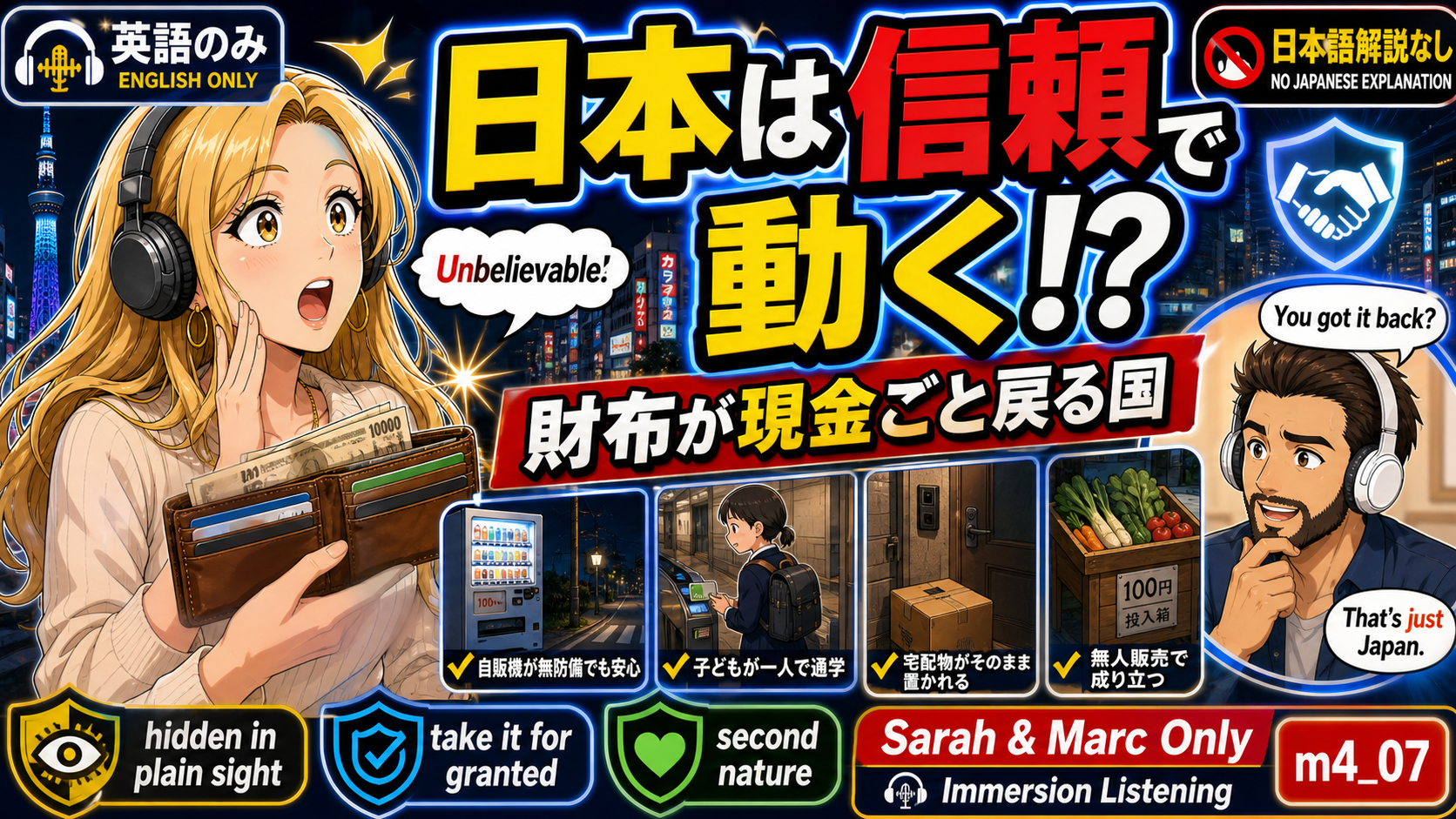
【英語学習】英語のみ | 日本人が気づかない日本のすごさ|落とし物が戻る国 #英語学習 #ネイティブ英語会話 #リスニング強化 #英語耳
ポッドキャスト「すきまイングリッシュ」のスクリプト。「【英語学習】英語のみ | 日本人が気づかない日本のすごさ|落とし物が戻る国 #英語学習 #ネイティブ英語会話 #リスニング強化 #英語耳」の会話全文です。

Marc: Sarah, you look like you've seen a ghost. What happened? (日本語訳: サラ、顔色が真っ青だよ。どうしたの?)
サラ: Okay, so. I have to tell you something, and I need you to react appropriately. (日本語訳: えっとね。話したいことがあって、ちゃんとリアクションしてほしいんだけど。)
Marc: I will do my absolute best. What is going on? (日本語訳: 全力でやるよ。何があったの?)
サラ: I left my wallet on the train yesterday. (日本語訳: 昨日、電車に財布を忘れちゃって。)
Marc: Oh no, not your wallet. (日本語訳: えー!財布?)
サラ: Full wallet. Cash, cards, my residence card, everything. I realized about an hour later, and I genuinely wanted to cry. (日本語訳: 全部入ってたの。現金、カード、在留カード、全部。1時間後くらいに気づいて、本当に泣きたくなったよ。)
Marc: Okay. And? (日本語訳: そっか。それで?)
サラ: And I got it back. This morning. Everything still inside. Every single yen. (日本語訳: それで、戻ってきたの。今朝。全部そのまま入ってた。一円も。)
Marc: Yeah. That sounds about right. (日本語訳: うん。まあ、そういうもんだよね。)
サラ: "That sounds about right"? Marc, that is not a normal reaction to that story. (日本語訳: 「そういうもんだよね」? マーク、その話に対するリアクションとしては普通じゃないよ。)
Marc: I mean, I am happy for you. I am just not shocked. (日本語訳: いや、嬉しいよ。ただ、別に驚いてないっていうか。)
サラ: See, this is the thing. You have lived here five years and you have gone numb. I have been here two and a half years and I am still losing my mind over stuff like this. (日本語訳: ほら、そこが違うんだよ。あなたは5年住んでいて、感覚が麻痺してるんだ。私はまだ2年半で、こういうことにまだいちいち頭に来るんだから。)
Marc: Okay, that is fair. That is actually a really fair point. (日本語訳: なるほど。それは確かに、すごく的を射た指摘だね。)
サラ: So that is what I want to talk about today. All the stuff in Japan that quietly runs on trust, and that you have completely stopped noticing. (日本語訳: だから、今日話したいのはそこなんだ。日本で、信頼で成り立ってるのに、あなたはもう全く気にも留めなくなったこと。)
Marc: Ah. The stuff that is hidden in plain sight. (日本語訳: ああ。そこにあるのに見えなくなってるもの、か。)
サラ: Exactly that. And we are starting with my wallet. (日本語訳: まさにそれ。で、私の財布から始める。)
サラ: So walk me through your head for a second. When I said "I lost my wallet," what did you actually assume was going to happen? (日本語訳: じゃあ、ちょっと頭の中を説明してみて。私が「財布をなくした」って言った時、実際どうなるって思った?)
Marc: Honestly? My first thought was, "She will get it back." That was it. (日本語訳: 正直? まず思ったのは、「サラは財布を取り戻すだろうな」って。それだけ。)
サラ: And that is wild to me. Because my first thought was, "It is gone. I am never seeing that again." (日本語訳: で、それが私には信じられないわけ。「もうダメだ、二度と見られない」って思ったもん。)
Marc: Right. Because that is the New York brain. And to be clear, that is the default almost everywhere else. (日本語訳: だよね。だって、それがニューヨークの思考回路だから。はっきり言っておくけど、それは他のほとんどの場所のデフォルトだよ。)
サラ: In New York, if you leave your wallet on the subway, you do not file a report. You hold a small funeral. You go straight to the bank and cancel everything. (日本語訳: ニューヨークじゃ、地下鉄に財布を置き忘れちゃったら、届けなんて出さないんだから。ちょっとしたお葬式をするんだよ。すぐ銀行に行って、全部止める。)
Marc: Same in Chicago. A wallet left on the train is a wallet you have donated to the city. (日本語訳: シカゴでも同じだよ。電車に置き忘れた財布は、街に寄付したも同然だからね。)
サラ: But here, I walked into the station office, the guy opened a drawer, and there it was. He just had it. Sitting in a drawer. With the cash still in it. (日本語訳: なのに、駅事務所に入ったら、係の人が引き出しを開けて、そこにあったんだよ。そこにあったんだ。現金が入ったまま。)
Marc: And that is the part that gets everybody. The cash is still in it. (日本語訳: で、それがみんなを驚かせる部分なんだよな。現金が入ったままっていう。)
サラ: How? How is the cash still in it? (日本語訳: どうやって? どうして現金が入ったままなんだよ?)
Marc: Because somebody found it, and keeping it did not even cross their mind. They picked it up and walked it over to the nearest koban, or handed it to a station attendant. (日本語訳: 見つけた人が、これをくすねるなんて考えもしなかったからだよ。拾って、一番近い交番に持っていったか、駅員に渡したんだ。)
サラ: A koban being the little neighborhood police box. (日本語訳: 交番っていうのは、あの近所の小さい警察ボックスのことね。)
Marc: The little police box on the corner, yeah. They are everywhere. And turning in a lost wallet is just what you do. Nobody agonizes over it. (日本語訳: そう、角にある小さい警察ボックスのこと。どこにでもあるんだ。で、落とし物を届けるのは、当たり前のことなんだよ。誰も悩んだりしない。)
サラ: Okay, but here is my real question. Did this used to amaze you? Back when you first arrived? (日本語訳: うん、でも、ここからが本当の質問なんだけど。これって、昔はあなたも驚いた? 最初に来た頃は?)
Marc: Oh, completely. My first year, I left my phone in a taxi. An actual taxi, Sarah. I had zero hope. (日本語訳: ああ、完全にね。最初の頃、タクシーに携帯を置き忘れたんだ。本物のタクシーだよ、サラ。もう希望はゼロだった。)
サラ: A phone in a taxi is gone. That is a law of physics. (日本語訳: タクシーの中のスマホなんて、もうダメ。それは物理法則みたいなものだから。)
Marc: I got a call two hours later. The driver had finished his shift, found it in the back seat, and drove it all the way back to my apartment building. He would not even take money for the trip. (日本語訳: 2時間後に電話がかかってきたんだ。運転手さんがシフトを終えて、後部座席でそれを見つけて、俺のアパートまでわざわざ運転してきてくれたんだ。タクシー代すら受け取らなかった。)
サラ: Stop it. (日本語訳: 嘘でしょ。)
Marc: And I remember standing in the lobby, holding my phone, feeling like I had just witnessed a miracle. My heart was pounding. (日本語訳: で、ロビーに立って、スマホを手に持って、まるで奇跡を目撃したかのような気分だったのを覚えてるよ。心臓がバクバクしてた。)
サラ: Okay, and now? Same situation today? (日本語訳: うん、で、今は? 今も同じ状況?)
Marc: And now, if I lost my phone today, I would be annoyed. But somewhere in the back of my head I would just assume it is coming back. (日本語訳: 今、もし今日スマホを失くしても、腹は立つだろうけど。でも頭の片隅では、まあ、戻ってくるだろうなって思うんだ。)
サラ: So it does not even feel like an emergency. (日本語訳: だから、もう緊急事態とも感じないわけね。)
Marc: It does not even register as a real emergency anymore. That is the honest truth. (日本語訳: もう本当の緊急事態とは認識されないんだ。それが正直なところだよ。)
サラ: That is the phrase, though. "It does not register." You have recalibrated. (日本語訳: それがフレーズだね。「認識されない」。あなたは再調整されたんだ。)
Marc: I have completely recalibrated. The miracle quietly became the baseline. And once it is the baseline, you stop seeing it at all. (日本語訳: 完全に再調整されたよ。奇跡が静かに当たり前になったんだ。そして、それが当たり前になると、もう全く見なくなるんだ。)
サラ: Okay, let us widen this out. Because it is not just lost-and-found, right? Once you start looking, it is everywhere. (日本語訳: さて、もっと広げてみようか。だって、落とし物だけじゃないでしょ? 探し始めると、どこにでもあるんだから。)
Marc: It is genuinely everywhere. Where do you want to go first? (日本語訳: 本当にどこにでもある。まずどこから話したい?)
サラ: The vending machines. Can we please talk about the vending machines? (日本語訳: 自動販売機。自動販売機について話してもいい?)
Marc: Yes. There is a vending machine on basically every corner in this entire country. (日本語訳: うん。この国は基本的にどの角にも自動販売機があるからね。)
サラ: On corners. On empty streets. Halfway up a mountain with nobody around for miles. Full of drinks, full of coins, just standing there in the open all night long. (日本語訳: 角にね。人通りのない道にも。何マイルも誰もいない山の中腹にも。飲み物がいっぱい入って、小銭もいっぱい入って、夜通しそのままそこにあるんだよ。)
Marc: And nobody touches them. Nobody kicks them in, nobody pries them open for the cash inside. (日本語訳: そして誰も触らない。誰も蹴ったり、中のお金を取り出そうとしたりしない。)
サラ: In New York, a machine like that on a quiet street lasts one night. Maybe. (日本語訳: ニューヨークだったら、そんな静かな道にある自販機は、まあ、一晩ももたないよ。)
Marc: In Chicago, you would find it tipped over on its side by morning. (日本語訳: シカゴだったら、朝には横倒しになっているのを見つけることになるだろうね。)
サラ: So why does it actually work here? What is the mechanism? (日本語訳: じゃあ、どうしてここではちゃんと機能するんだろう? その仕組みは?)
Marc: I think the whole thing runs on one shared assumption. Everyone assumes that everyone else will leave it alone. And because everyone assumes it, everyone actually does it. (日本語訳: 全体がひとつの共通の前提で成り立っているんだと思う。誰もが、他の誰もがそれに手を出さないだろうと前提にしている。そして、みんながそう前提にするから、みんな実際にそうするんだ。)
サラ: So it is self-fulfilling. (日本語訳: つまり、自己成就予言なんだ。)
Marc: It is completely self-fulfilling. The trust itself is the infrastructure. It is holding the whole street up, and you cannot even see it. (日本語訳: 完全に自己成就予言だよ。その信頼そのものがインフラなんだ。道路全体を支えているんだけど、目には見えない。)
サラ: Hidden in plain sight. Again. (日本語訳: また、これも、見ればわかる隠し方。)
Marc: Hidden in plain sight. The vending machine is just the part you can see. (日本語訳: 見ればわかる隠し方。自動販売機は、見える部分にすぎないんだ。)
サラ: And it is not just the machines. What about those little roadside farm stands? (日本語訳: そして、自販機だけじゃない。あの小さな道端の農産物スタンドはどう?)
Marc: Oh, the unmanned vegetable stands. Out in the countryside. Yes. (日本語訳: ああ、無人の野菜スタンドね。田舎にある。うん。)
サラ: A little wooden stall, fresh vegetables laid out, a handwritten price on each pile, and then just a box. A box with a slot in the top for your coins. (日本語訳: 小さな木の屋台に、新鮮な野菜が並んでて、山ごとに手書きの値札があって、そしてただの箱がある。上部に小銭を入れるスリットがある箱。)
Marc: A pure honor-system box. No camera, no attendant, nothing watching you. You take the daikon, you drop three hundred yen in the box, and you walk away. (日本語訳: 完全な信頼システムだよ。カメラも、店員も、誰も見ていない。大根を取って、箱に300円入れて、立ち去るんだ。)
サラ: And that box is sitting outside, on a public road, slowly filling up with cash all day long. (日本語訳: そして、その箱は外の公道に置かれて、一日中、現金でゆっくり満杯になっていくんだ。)
Marc: And the farmer simply trusts that the numbers will roughly work out by the end of the week. And they mostly do. The whole thing just quietly functions. (日本語訳: そして農家は、週の終わりには大体、数字が合うだろうと単純に信じている。そして、大抵は合うんだ。全体が静かに機能している。)
サラ: I cannot think of one place in New York where you could leave an open cash box on the street for eight hours and come back to find money in it. (日本語訳: ニューヨークで、現金が入った箱を8時間も路上に放置して、お金が入ったまま戻ってくるなんて場所、一つも思いつかないね。)
Marc: There is no version of that in Chicago either. The box would be gone. The vegetables would be gone. Honestly, the table would probably be gone too. (日本語訳: シカゴだってそんな場所はないよ。箱は消えるし、野菜も消える。正直、テーブルごとなくなってるかもね。)
サラ: Oh, and here is another one. People sleeping on the train. Dead asleep. (日本語訳: あー、あとこれも。電車で寝てる人たち。ぐっすり。)
Marc: Fully unconscious. Bag wide open, phone loose in one hand, mouth open, riding three stops past their station. (日本語訳: 完全に意識不明。カバンは全開、スマホは手に持ったまま、口も開けて、乗り過ごしてる。)
サラ: In New York, falling asleep on the subway is how you wake up without your bag. Or your phone. Or, on a really bad day, a shoe. (日本語訳: ニューヨークだと、地下鉄で寝ちゃうのは、カバンがなくなる覚悟ってこと。スマホもね。運が悪いと、靴一足なくなるかも。)
Marc: In Chicago, you keep one eye open the entire ride. Here, you have got a businessman asleep across two seats, briefcase unzipped, and absolutely nothing happens to him. (日本語訳: シカゴじゃ、乗ってる間はずっと片目を開けてるよ。ここでは、ビジネスマンが2席にまたがって寝てて、ブリーフケースも開けっ放なしなのに、何も起きない。)
サラ: Nobody touches him. (日本語訳: 誰も触らない。)
Marc: Nobody touches him. The worst thing that happens is a station attendant gently waking him up at the very last stop. (日本語訳: 誰も触らない。一番ひどいのは、駅員さんが終点ですって優しく起こしてくれるくらいだよ。)
サラ: Okay, but the one that genuinely breaks my brain, and I know you have stopped noticing it, is the kids. (日本語訳: でも、本当に信じられないのが、もう気にならなくなったと思うけど、子供たちよ。)
Marc: Ah. The kids commuting. (日本語訳: ああ。一人で通学する子供たちね。)
サラ: The kids commuting! Six, seven years old. Tiny backpack, little hat, a train pass on a string around their neck. Riding the train completely alone. (日本語訳: 一人で通学!6歳、7歳だよ。小さなリュックに、小さな帽子、首には切符につけたストラップ。完全に一人で電車に乗ってるの。)
Marc: First-graders. Yeah. Walking to school on their own, too. (日本語訳: 小学一年生くらいね。一人で学校まで歩いたりもするし。)
サラ: I watched a kid who could not have been older than seven change trains by himself. Correctly. He knew exactly which platform. (日本語訳: 7歳くらいに見える子が、自分で乗り換えてたのを見たわ。ちゃんと。どっちのホームか完璧にわかってた。)
Marc: They run little errands, too. There is a whole tradition where parents send a five-year-old to the corner store to buy milk, alone, as a kind of rite of passage. (日本語訳: ちょっとした買い物もするんだよ。親が5歳の子を一人で近所の店に牛乳を買いに行かせるっていう習慣があって、それが一種の通過儀礼になってるんだ。)
サラ: In New York, you do not let a seven-year-old out of arm's reach. And that is not me being dramatic. That is the baseline. A kid alone on the subway, and somebody is calling someone. (日本語訳: ニューヨークじゃ、7歳の子を腕の届く範囲から離さない。大げさじゃなくて、それが当たり前。一人で地下鉄に乗ってる子を見かけたら、誰かが通報するよ。)
Marc: Right. And here, the kid on the train is safe partly because the whole train car is quietly keeping half an eye on him. A stranger will step in the second something looks wrong. (日本語訳: うん。で、こっちだと、電車に乗ってる子供は安全なんだ。それは、車内の乗客みんなが、ぼんやりと子供のことを見ててくれるからでもある。何かおかしいと思ったら、すぐに誰かが見守ってくれる。)
サラ: So the kid is not actually alone. (日本語訳: じゃあ、実際は一人じゃないんだ。)
Marc: The kid is never actually alone. The whole neighborhood is the babysitter. And, again, people here take it completely for granted. Ask a Japanese parent about it and they just shrug. (日本語訳: 実際、一人じゃないんだ。地域全体がベビーシッターみたいなもの。で、また、こういう人たちはそれを当たり前だと思ってる。日本の親に聞いても、ただ肩をすくめるだけだよ。)
サラ: "Take it for granted." That is the one, right? They do not see it as remarkable at all. (日本語訳: 「当たり前だと思ってる」。それよ、それ!全然すごいことだと思ってない。)
Marc: They genuinely do not. It is just the water they swim in. You only ever notice the water if you came from a place where the water is different. (日本語訳: 本当にそう思ってないんだ。彼らが泳いでる水そのものなんだよ。水が違う場所から来たときだけ、その水に気づくようなもんさ。)
サラ: Alright, last big one. And I want to make this one personal. Because I think you have become part of the experiment. (日本語訳: よし、最後の大物だよ。これは個人的な話にしたいんだ。君もこの実験の一部になったと思うからね。)
Marc: Uh oh. Where is this going? (日本語訳: おっと。何の話になるんだ?)
サラ: When did the trust thing stop being something you observe, and start being something you do? (日本語訳: 信頼っていうのが、観察するだけのものじゃなくて、君自身がやるものになったのはいつから?)
Marc: That is a really good question. Honestly? The cafe thing. (日本語訳: それはすごくいい質問だね。正直?カフェのことだよ。)
サラ: The cafe thing. (日本語訳: カフェのこと?)
Marc: You know how here, you can put your phone or your laptop down on a table to save your seat, and then walk up to the counter to order? And just leave it there? (日本語訳: ほら、日本ではテーブルに携帯とかラップトップを置いて席を確保して、カウンターに注文しに行ったりするだろ?そのまま置いておく。)
サラ: I do it constantly. I have left my laptop on a table and gone to the bathroom. (日本語訳: 私もしょっちゅうやるよ。ラップトップをテーブルに置いたままトイレに行ったこともある。)
Marc: Right. So have I. For years now. I leave my laptop open on the table, walk to the back, use the restroom, come back, and it is exactly where I left it. (日本語訳: そうだよな。俺もずっとそうしてきた。何年も。テーブルにラップトップを開いたまま置いて、後ろに行って、トイレに行って、戻ってきても、置いた場所のままなんだ。)
サラ: And that is the dangerous part. Because that becomes a habit. (日本語訳: そこが危ないところなんだよ。それが習慣になるから。)
Marc: It becomes total muscle memory. It is second nature. I do not even think about it anymore. I set the laptop down, I walk away, and my brain does not flag it at all. (日本語訳: 完全に身についてしまうんだ。第二の天性になる。もう何も考えない。ラップトップを置いて、離れて、脳が全く何も警告しないんだ。)
サラ: And then you leave the country. (日本語訳: そして国を出る。)
Marc: And then I flew home to Chicago. I am in a coffee shop with an old friend, I get up to grab some napkins, and I just leave my phone sitting on the table. I walk away. (日本語訳: そしてシカゴの家へ帰ったんだ。昔の友達とコーヒーショップにいたんだけど、ナプキンを取りに行こうと立ち上がって、携帯をテーブルに置いたままにしてしまった。離れたんだ。)
サラ: Oh no. I know where this is going. (日本語訳: あーあ。どうなるか分かってる。)
Marc: And my friend grabs the phone, grabs my bag, pulls it all toward him, and goes, "Dude. What are you doing? You cannot do that here." (日本語訳: そしたら友達が携帯を掴んで、俺のバッグも掴んで、全部自分の方に引き寄せて、「おい、何してんの?ここではそんなことできないぞ」って言ったんだ。)
サラ: Because in his world, you genuinely cannot do that. (日本語訳: だって、友達の世界では、そんなことは絶対にできないからね。)
Marc: And the thing is, he was right. I was the crazy one. But for a second I honestly did not understand what I had done wrong. The habit was so deep that I had forgotten it was even a habit. (日本語訳: それで、彼は正しかったんだ。俺がおかしかったんだ。でも一瞬、何が悪かったのか本当に分からなかった。習慣が染みつきすぎて、それが習慣だということさえ忘れていたんだ。)
サラ: That is exactly it. The trust got into your body. It is second nature, and you cannot just switch it off at the border. (日本語訳: まさにそれだよ。信頼が君の体に染み付いたんだ。第二の天性になって、国境で簡単にスイッチを切れるものじゃないんだ。)
Marc: I had to consciously re-learn how to guard my own stuff. A grown adult, re-learning how to be a little paranoid. It felt genuinely awful. (日本語訳: 自分の物を自分で守る方法を意識的に学び直さなきゃいけなかった。いい年した大人が、ちょっと疑り深くなることを学び直すんだ。本当に嫌な気分だったよ。)
サラ: The deliveries are the same thing, too. The whole leave-the-box-at-the-door situation. (日本語訳: 配達も同じだよ。ドアのところに箱を置いたままにするっていう、あの状況。)
Marc: Oh, the delivery box. Yeah. Packages just sit in the box by the entrance, or sometimes right at your door. And nobody takes them. (日本語訳: ああ、配達の箱。そうだよ。荷物は入り口のそばの箱に、あるいはドアのところにそのまま置いておく。誰も盗まないんだ。)
サラ: In New York, package theft is its own genre of video. People install cameras just to watch their stuff get stolen. (日本語訳: ニューヨークだと、荷物の盗難はそれ自体が映像のジャンルになってるんだ。カメラを設置して、自分の荷物が盗まれるのをただ見てるような人もいる。)
Marc: I know. And here I have got boxes sitting in the lobby for a full day, and it just never occurs to me to worry about it. Which, again, I did not even notice I had stopped worrying. (日本語訳: わかる。それなのに僕、ここに荷物の箱をロビーに一日中放置しても、心配するなんて全く頭に浮かばないんだ。というか、心配するのをやめたってことにすら気づいてなかった。)
サラ: Because it is hidden in plain sight. (日本語訳: それは、あからさまに隠されてるからだよ。)
Marc: Because it is hidden in plain sight. The whole entire time. (日本語訳: まさに、あからさまに隠されてるんだ。ずっと、ずっとそうだった。)
サラ: Okay, but I do have to push back on one thing. Because it is not a total fairy tale here. (日本語訳: わかった、でも一つだけ反論させて。だって、ここは完全に絵に描いたようなおとぎ話じゃないから。)
Marc: No, it is not. Please, go ahead. (日本語訳: いや、そうじゃない。どうぞ、言ってごらん。)
サラ: Cheap umbrellas. The clear plastic ones. You leave one in the rack outside a store, and sometimes you come out and it is just gone. (日本語訳: 安い傘。あの透明なビニールのだ。お店の外の傘立てに置いておくと、時々戻ってきたらなくなってるんだ。)
Marc: Ha. The umbrella exception. Yes. That one is completely real. The plastic umbrella is the one thing that quietly walks off. (日本語訳: ハハ。傘の例外ね。うん。あれは完全に現実だ。ビニール傘だけは静かに持ち去られる唯一のもの。)
サラ: So the trust does have a limit. (日本語訳: つまり、信頼には限界があるってことね。)
Marc: It has one very specific limit. I think people half-treat those cheap umbrellas as communal property. Somebody gets caught in the rain, your umbrella is right there, and the line gets a little blurry. (日本語訳: そういう、すごく限られた限界がある。あの安い傘を、人々は半分共有物みたいに扱ってるんじゃないかな。誰かが雨に降られて、君の傘がちょうどそこにあって、その境界線がちょっと曖昧になる。)
サラ: So it is not actually magic. It is a system, and the system has edges. (日本語訳: じゃあ、実際には魔法じゃないんだ。システムがあって、そのシステムには限界があるってことね。)
Marc: It has edges. And honestly, that makes it more interesting to me, not less. It is not that nobody here would ever take anything. It is that the line just sits in a completely different place than it does back home. (日本語訳: 限界はある。正直、それは僕にとって、ないよりあった方が面白いんだ。こっちで誰も何も盗まないわけじゃない。ただ、その境界線が、故郷にいる時とは全く違う場所にあるだけなんだ。)
サラ: Okay. Recap time. What did we actually land on today? (日本語訳: OK。まとめの時間だよ。今日は結局何がわかったんだっけ?)
Marc: We landed on the fact that a huge part of daily life here runs on trust, and trust happens to be invisible. (日本語訳: 僕たちは、ここの日常の大部分が信頼で成り立っていて、その信頼は目に見えないものだって結論に至った。)
サラ: It is infrastructure. Like roads, or power lines, except you cannot see any of it. (日本語訳: それはインフラだね。道路とか、電線みたいに、でもそのどれも見えない。)
Marc: Right. The wallet comes back, the vending machine survives the night, the kid gets to school, the package waits at the door. And every one of those is the same thing wearing a different costume. (日本語訳: そう。財布が戻ってきて、自販機が夜を乗り越えて、子供が学校に行って、荷物がドアのところに置かれたままでいる。それら全部が、違う格好をした同じものなんだ。)
サラ: And the people living inside it mostly do not see it. They take it for granted. (日本語訳: そして、そこに住んでる人たちのほとんどは、それに気づかない。当たり前のことだと思ってる。)
Marc: They take it completely for granted. Which is not a criticism. That is just what happens when something becomes second nature for an entire society. (日本語訳: 完全に当たり前のことだと思ってる。それは批判じゃないよ。社会全体でそれが当たり前になったら、そうなるものだ。)
サラ: And the scary part, for you, is that you joined them. (日本語訳: そして、あなたにとって怖いのは、あなたもそれに加わったってことだね。)
Marc: I joined them completely. The miracle stopped registering. I had to fly six thousand miles and nearly lose my phone in a Chicago cafe just to see it again. (日本語訳: 完全に加わったよ。その奇跡はもう認識できなくなってた。それを見直すためには、6000マイル飛んで、シカゴのカフェで携帯をなくしかける必要があったんだ。)
サラ: I think that is the real lesson. You do not notice the water until you are a fish out of it. (日本語訳: それが本当の教訓だと思うよ。魚が水から出ないと、その水を意識しないもんね。)
Marc: That is a good way to put it. And honestly, doing this episode made me notice it all over again. For about a week now I am going to deeply appreciate the vending machines. (日本語訳: うまいこと言うね。正直、今回のエピソードを作っていて、またそれを強く意識させられたよ。これから1週間くらいは、自販機に深く感謝すると思う。)
サラ: And then it goes right back to being invisible. (日本語訳: そして、またすぐに、見えなくなるんだろうね。)
Marc: And then it is hidden in plain sight all over again. (日本語訳: また、ごく普通の場所に隠れてしまうんだ。)
サラ: Alright, that is our episode. And here is our question for you listening right now. (日本語訳: さて、今回のエピソードはここまで。リスナーの皆さんに質問です。)
Marc: Have you ever gotten something back that you were completely sure was gone forever? A wallet, a phone, a bag? (日本語訳: あなたは、もう永遠に失くしたと確信していたものを、取り戻したことがありますか?財布とか、スマホとか、カバンとか?)
サラ: Or the opposite. What is something in your country that quietly runs on trust, that you never think about until it is suddenly gone? (日本語訳: それとも、その逆。あなたの国で、なくなったら初めて気づくような、信頼で静かに成り立っているものって何かある?)
Marc: Tell us in the comments. We genuinely want to know what is hidden in plain sight where you live. (日本語訳: コメントで教えてください。皆さんの住む場所で、当たり前のようにそこにあるものを、私たちは本当に知りたいです。)
サラ: It is different everywhere, and that is the fun part. (日本語訳: 場所によって違うし、それが面白いところだよね。)
Marc: Thanks for hanging out with us today. (日本語訳: 今日は付き合ってくれてありがとう。)
サラ: See you next time on Sukima English. And take care of your wallets out there. (日本語訳: また次回のすきまイングリッシュで。そして、皆さん、財布には気をつけてくださいね。)
Marc: And maybe, just maybe, do not leave your laptop on the table when you get back home. (日本語訳: そして、もしかしたら、家に帰ったらノートパソコンをテーブルに置きっぱなしにしないように。なんてね。)

関連記事

【日常英会話】日本語解説あり | 二年半、顔を知らない隣人|六時十分の目覚ましが鳴りやまなかった朝 #英語学習 #英語フレーズ #英会話 #英語耳
ポッドキャスト「すきまイングリッシュ」のスクリプト。「【日常英会話】日本語解説あり | 二年半、顔を知らない隣人|六時十分の目覚ましが鳴りやまなかった朝 #英語学習 #英語フレーズ #英会話 #英語耳」の会話全文です。
【日常英会話】アドバイスが通じなかった話|口を挟む・そっけなくあしらう・胸にこたえる #英語学習 #ネイティブ英語会話 #リスニング強化 #英語耳
ポッドキャスト「すきまイングリッシュ」のスクリプト。「【日常英会話】アドバイスが通じなかった話|口を挟む・そっけなくあしらう・胸にこたえる #英語学習 #ネイティブ英語会話 #リスニング強化 #英語耳」の会話全文です。

【日常の英語】日本語解説あり | 友達の家に招かれたときの英語12選|手土産・断り方・帰り際のあいさつ #英語学習 #英語フレーズ #英会話 #英語耳
ポッドキャスト「すきまイングリッシュ」のスクリプト。「【日常の英語】日本語解説あり | 友達の家に招かれたときの英語12選|手土産・断り方・帰り際のあいさつ #英語学習 #英語フレーズ #英会話 #英語耳」の会話全文です。

【日常の英語】日本語解説あり | 友達の家に招かれたときの英語12選|手土産・断り方・帰り際のあいさつ #英語学習 #英語フレーズ #英会話 #英語耳
ポッドキャスト「すきまイングリッシュ」のスクリプト。「【日常の英語】日本語解説あり | 友達の家に招かれたときの英語12選|手土産・断り方・帰り際のあいさつ #英語学習 #英語フレーズ #英会話 #英語耳」の会話全文です。
【日常英会話】英語のみ | 会社の健康診断、会社が自分の体の数値を持っている国——ネイティブが英語で語る健康診断 #英語学習 #ネイティブ英語会話 #リスニング強化
ポッドキャスト「すきまイングリッシュ」のスクリプト。「【日常英会話】英語のみ | 会社の健康診断、会社が自分の体の数値を持っている国——ネイティブが英語で語る健康診断 #英語学習 #ネイティブ英語会話 #リスニング強化」の会話全文です。
【日常英会話】日本語解説あり | 十歩の距離を渡るのに三週間、英語で「助けて」と言えない人のための7フレーズ #英語学習 #英語フレーズ #英会話 #英語耳
ポッドキャスト「すきまイングリッシュ」のスクリプト。「【日常英会話】日本語解説あり | 十歩の距離を渡るのに三週間、英語で「助けて」と言えない人のための7フレーズ #英語学習 #英語フレーズ #英会話 #英語耳」の会話全文です。