
【日常英会話】日本語解説あり | ニューヨーカーが東京で手放した3つの習慣と、譲らなかった1つ #英語学習 #英語フレーズ #英会話 #英語耳
ポッドキャスト「すきまイングリッシュ」のスクリプト。「【日常英会話】日本語解説あり | ニューヨーカーが東京で手放した3つの習慣と、譲らなかった1つ #英語学習 #英語フレーズ #英会話 #英語耳」の会話全文です。

さゆり: 「Sukima English」へようこそ。今日のテーマは「手放したもの」。ニューヨーカーとして当然持ち歩いていた習慣を、サラが東京で少しずつ手放していった話です。歩く速さ、メッセージへの即レス、何かをしながら食べる癖。でも、本人は「諦めた」とは思っていません。
さゆり: 今日のキーワードは「I made my peace with it」。「諦めた」とは少し違う、もう少し温かい言葉。日本語の「折り合いをつけた」に近い感覚を、サラの口から3つのエピソードで聞いていきます。
さゆり: それと、もう一つ。最近マークが、自分の運転免許を東京で諦めた話を別のエピソードで語っていました。今日のサラの話は、その「手放しシリーズ」のもう一冊の本のような立て付けになっています。ぜひ続きとしてマーク回も聴いてみてください。
さゆり: では、サラとマーク、お願いします。
Marc: So Sarah. Today is your "things I have made my peace with" episode. I just did mine. The whole driving thing. The license. The two failed tests. Now it's your turn. (日本語訳: さあ、サラ。今日はあなたの「諦められたこと」エピソードだね。僕はさっきやったよ。運転のこと。免許のこと。二回の失敗。次は君の番だ。)
サラ: Marc. I told you last week, after I listened to your episode, I sat at the kitchen table for like thirty minutes. Because I realized I have my own version of that story. I just never said it out loud. You let go of the steering wheel. (日本語訳: マーク。先週話したじゃない。君のエピソードを聞いた後、テーブルに30分くらい座ってたんだ。だって、私にも同じような話があるって気づいたんだもん。ただ、口に出したことがなかっただけで。君はハンドルの力を抜いた。)
サラ: I let go of a few other things. (日本語訳: 私は他にもいくつか手放したことがあるんだ。)
Marc: Honestly that was the part of my episode I didn't expect. People wrote in. They all had their own thing they had stopped doing. Their car. Their gym membership. Their identity from a previous city. (日本語訳: 正直、僕のエピソードで一番意外だった部分だ。みんなメールをくれたんだ。みんな、やめたこと、それぞれの「手放したもの」があった。車とか。ジムの会員権とか。前の街でのアイデンティティとか。)
サラ: Exactly. So today, three of mine. The walking-speed one. The texting-back-instantly one. And the eating-while-doing-three-things one. And at the end, one thing I refused to let go of. Because making peace is not the same as surrender. (日本語訳: そう。だから今日は3つ。歩くスピードのこと。すぐに返信すること。そして、3つのことをしながら食べること。最後に、手放すのを拒否したことが1つ。だって、諦めることと降参することは同じじゃないからね。)
さゆり: いいテーマですね。今日の合言葉は「make my peace with」と「let it go」。早速、最初のトピックに行きましょう。
サラ: Okay. So picture this. Manhattan-era me. Pre-Tokyo. I walked about twenty percent faster than the average New Yorker. Which is already an aggressive baseline. I was the person passing you on the sidewalk. I took stairs two at a time. (日本語訳: OK。想像してみて。東京に来る前のマンハッタン時代の私。平均的なニューヨーカーより20%速く歩いてたんだ。それはすでに攻撃的な基準値なんだけどね。私は歩道ですれ違う人を追い越す側だった。階段は2段飛ばしで上ってた。)
サラ: I had a personal rule. If I was not five minutes early, I was already late. (日本語訳: 私には個人的なルールがあった。5分早く着いていなかったら、すでに遅刻だ、とね。)
Marc: That tracks. Every time I visited New York, I felt like I was walking inside a video on 1.5x speed and I was the slow one. (日本語訳: それ、すごくわかるよ。ニューヨークに行くたびに、1.5倍速のビデオの中を歩いてるみたいで、自分が遅い方だって感じてたんだ。)
サラ: Right. And I brought that to Tokyo with me. The first six months, I was a menace on the sidewalks. I weaved around people. I huffed when a tour group blocked the crosswalk. I muttered "let's go, let's go" under my breath at the Yamanote line gate. (日本語訳: そう。で、それを東京に持ち込んだわけ。最初の半年間、歩道では迷惑な存在だった。人を縫うように歩いてた。交差点でツアー客が塞いでると舌打ちしたり。山手線の改札で「行こう、行こう」って心の中で呟いたり。)
サラ: I was, basically, the person Tokyo politely tolerates and quietly schools. (日本語訳: 要するに、東京が丁寧に寛容して、静かに私を躾けてくれた人だったわけ。)
Marc: Tokyo schools you slowly though. It doesn't yell at you. (日本語訳: でも、東京はゆっくり君を躾けるんだ。君に怒鳴ったりはしない。)
サラ: It does not. It just lets you arrive at the same place as everyone else and then look at your watch and realize you did not actually save any time. (日本語訳: しないわ。ただ、みんなと同じ場所に到着させて、時計を見て、実際には時間を節約できていなかったことに気づかせるだけ。)
さゆり: ここで一つ表現を拾っておきましょう。サラが言った「Tokyo schools you slowly」。これは「東京がじっくり、静かにあなたに教える」というニュアンスです。「school」を動詞として使うと「教えて気づかせる」になります。覚えておきたい用法ですね。
サラ: So there was a specific morning. Month seven. Monday. Ginza. I was walking to a meeting and I was, of course, three minutes early, which to me meant on time. There was a woman in front of me. Maybe in her fifties. Beige coat. Calm steps. (日本語訳: だから、ある特定の朝があったの。7ヶ月目。月曜日。銀座。会議に向かって歩いてたんだけど、もちろん、3分早く着いてた。それは私にとっては時間通りってこと。私の前に女性がいたの。50代くらい。ベージュのコート。穏やかな足取り。)
サラ: And I went to weave around her like always. (日本語訳: そして、いつも通り、彼女を縫うように追い越そうとした。)
サラ: And I didn't. I just slowed down. Three meters behind her. Matched her pace. And I heard myself think one sentence very clearly. "I am not in a hurry. And nobody is. And the train still came on time." (日本語訳: でも、しなかった。ただスピードを落としたの。彼女の3メートル後ろに。彼女のペースに合わせた。そして、自分の心の中で、ある一文がはっきり聞こえた。「私は急いでない。誰も急いでない。そして電車は時間通りに来た。」って。)
Marc: That is a quiet sentence. That's like a Tokyo sentence. (日本語訳: それは静かな一文だね。それは東京っぽい一文だ。)
サラ: It was the first time I had thought a sentence in my own head in a Tokyo tempo. I stayed three meters behind her for two blocks. I got to my meeting at the exact same minute I would have gotten there if I had power-walked. Which was the whole point. (日本語訳: 東京のテンポで、自分の頭の中で考えた最初の文章だった。2ブロック、彼女の3メートル後ろを歩いた。会議には、早歩きした時と全く同じ時間に到着した。それがすべてだったのに。)
さゆり: 「I am not in a hurry. And nobody is.」素晴らしい一行ですね。サラは、急いでいるのは「東京」ではなく「自分」だったと、ある朝に気づきました。そして、その気づきの言葉が「I made my peace with it」です。
さゆり: 「諦めた」よりも、「折り合いをつけた」「腹落ちした」に近い。降参ではなく、納得して受け入れる、という大人の表現です。
Marc: I want to add one thing. The "weaving" instinct. The dodging-around-people thing. I had that too in Chicago, just less extreme. (日本語訳: 一つ付け加えたいことがあるんだ。「縫う」っていう本能。人を避けて通るやつ。僕もシカゴであったんだけど、そこまで極端じゃなかった。)
Marc: I noticed mine the day a Tokyo grandma did the exact tiny step to the left at the exact right moment, and we passed each other with maybe four centimeters of clearance and zero adjustment from either of us. (日本語訳: 僕がそれに気づいたのは、ある日、東京のおばあちゃんが、まさにその瞬間に、まさにその左への小さなステップを踏んで、僕たちがお互いに4センチくらいのクリアランスで、お互いに調整することなくすれ違った時だった。)
Marc: I thought, oh, the dance is already happening. I just have to stop forcing it. (日本語訳: その時、思ったんだ。ああ、もうダンスは始まってるんだ。ただ、無理やりやるのをやめればいいんだって。)
サラ: That's a beautiful way to put it. The dance is already happening. (日本語訳: なんて美しい言い方なんだろう。ダンスはもう始まっている。)
サラ: Topic two. The texting one. Old me had a ninety-second rule. If you texted me, I replied in under ninety seconds. Bathroom, no exception. Shower, I replied before the shower. In bed, last move of the night, one more round of replies. (日本語訳: トピック2。テキストのやつ。昔の私は90秒ルールがあった。あなたからテキストが来たら、90秒以内に返信してた。トイレでも例外なし。シャワーの前でも返信してた。ベッドの中、一日の最後の行動、もう一ラウンド返信してた。)
サラ: I considered this normal. I considered slower people slightly suspicious. (日本語訳: 私はこれを普通だと思っていた。返信が遅い人はちょっと怪しいと思っていた。)
Marc: I have witnessed this. The first time I texted you from a train, you replied before the next station. (日本語訳: 見たことあるよ。初めて電車の中から君にテキストした時、次の駅に着く前に返信があった。)
サラ: I am sorry for what I put my friends through. So, fast-forward. Month twelve. Rainy season. I am at my local sento in Nakano. Tuesday night. I am a regular by this point. I undress at my locker. (日本語訳: 私の友人たちに何をしてきたのか、ごめんなさい。それで、早送り。12ヶ月目。雨季。中野の近所の銭湯にいた。火曜の夜。もう常連だった。ロッカーで服を脱ぐ。)
サラ: And for the first time in my adult life, I do not take my phone out before I go in. I just put everything in the locker and close it. (日本語訳: そして、大人になって初めて、入る前にスマホを取り出さなかった。ロッカーに全部入れて、閉めるだけ。)
サラ: I sit in the hot bath for maybe twenty minutes. I shower, I dry off, I sit on the bench outside the bath area, I drink the small bottle of milk like everyone else. Then I get dressed. Then I walk home. (日本語訳: 湯船に20分くらい浸かる。シャワーを浴びて、体を拭いて、風呂場の外のベンチに座って、みんなと同じように小さな牛乳瓶を飲む。それから服を着る。それから家に歩いて帰る。)
サラ: By the time I unlock my phone, it has been about an hour and ten minutes. (日本語訳: スマホのロックを解除する頃には、1時間10分くらい経っていた。)
Marc: How many missed messages did you have? (日本語訳: 何件のメッセージの見逃しがあった?)
サラ: Four. Two from Mia. One from my brother. One from a coworker. None of them were urgent. And Mia's reply, when I finally answered her, was — "You're getting Tokyo on your fingertips." (日本語訳: 4件。ミアから2件。兄から1件。同僚から1件。どれも緊急ではなかった。そしてミアの返信は、私がついに返信した時、「指先に東京がついてるよ」だった。)
Marc: That is a great line. "Tokyo on your fingertips." (日本語訳: それは素晴らしいセリフだね。「指先に東京が」。)
サラ: It killed me a little bit. Because she was right. The texting urgency was a Manhattan thing. The Manhattan thing was, your phone was your second nervous system. You were never not available. To be unreachable for an hour was almost a moral failing. (日本語訳: ちょっと殺された気分だった。だって彼女の言う通りだったから。テキストの緊急性はマンハッタンのやり方だった。マンハッタンでは、スマホは第二の神経系だった。あなたは常に連絡可能だった。1時間連絡が取れないのは、ほとんど道徳的な失敗のようなものだった。)
サラ: In Tokyo, nobody around me operated like that. People put their phones face-down at dinner. People let calls go to voicemail and called back at a reasonable time. And nothing collapsed. (日本語訳: 東京では、周りの誰もそんな風に動いていなかった。食事中にスマホを伏せて置く人がいた。電話をボイスメールに回して、都合の良い時にかけ直す人がいた。そして何も壊れなかった。)
さゆり: ここでサラが使った「getting Tokyo on your fingertips」、これは Mia さんの一回限りの即興表現で、「あなたの指先にも東京が乗ってきたね」というイメージの言い回しです。これは辞書に載っている定型句ではなく、Mia さんが手紙のように書いた個人的な比喩。
さゆり: サラがフレーズとして使うのではなく、思い出として大切に持っている言葉ですね。
サラ: So I let it go. The ninety-second rule. I gave myself a new rule. Reply within the day. Within the day is fine. And I have not lost a single friendship over it. (日本語訳: だから手放した。90秒ルール。新しいルールを自分に課した。その日のうちに返信する。その日のうちなら大丈夫。そして、それで友情を一つも失っていない。)
Marc: I'm going to make my peace with my email inbox this year because of this episode, I think. (日本語訳: このエピソードのおかげで、今年はメールの受信トレイと和解するつもりだよ。)
サラ: Marc. Please. Your inbox is a war crime. (日本語訳: マーク。お願い。あなたの受信トレイは戦争犯罪よ。)
Marc: Noted. I will pick my battles. (日本語訳: 了解。戦う相手を選ぶよ。)
サラ: Topic three. Eating. In Manhattan, eating was a thing you fit between things. Lunch was eight minutes at my desk. Salad in one hand, mouse in the other. I ate bagels while walking. I drank coffee on the subway. I ate pretzels on the platform. (日本語訳: トピック3。食事。マンハッタンでは、食事は物事の間に挟むものだった。昼食はデスクで8分。片手にサラダ、もう片方の手にマウス。歩きながらベーグルを食べていた。地下鉄でコーヒーを飲んでいた。プラットフォームでプレッツェルを食べていた。)
サラ: If I sat down for a meal alone with no screen and no other task, I genuinely could not figure out what to do with my face. (日本語訳: もし一人で、スクリーンもなく、他のタスクもなく座って食事をしていたら、どうやって顔を使えばいいのか本当に分からなかった。)
Marc: Oh, that is so New York. The eating-as-multitasking thing. (日本語訳: ああ、それはすごくニューヨークっぽいね。食事をマルチタスクにするっていうのは。)
サラ: Then. Month sixteen. A small kissaten in Nakano. Window seat. I had ordered the aji-fry teishoku. The server brought the tray. And I want to describe what was on it, because I remember every piece. (日本語訳: そして16ヶ月目。中野の小さな喫茶店。窓際の席。アジフライ定食を頼んだんだ。店員さんがトレイを持ってきた。そして、そこにあったものを描写したい。なぜなら、全部覚えてるから。)
サラ: The fried horse mackerel on a small rectangular plate. Shredded cabbage in a careful pile next to it. Tonkatsu sauce in a tiny pitcher. Rice in a small bowl with a darker rim. Miso soup, lid still on, to the upper right. (日本語訳: 四角い小皿に載ったアジフライ。その隣には丁寧に盛られた千切りキャベツ。小さなピッチャーに入ったとんかつソース。縁が濃い小ぶりの茶碗にご飯。蓋をしたままの味噌汁が右上。)
サラ: A pickle plate at the upper left, three slices arranged in a fan. (日本語訳: 左上には香の物皿。三切れが扇状に並べられていた。)
サラ: I sat there. With my phone in my hand. And I looked at the tray. And I stared at it for about thirty seconds. And I had this very specific thought. "Somebody arranged this. For me. I should at least look up from my phone." (日本語訳: 私はそこに座った。手にスマホを持って。トレイを見た。そして30秒ほど、じっと見つめた。すごく具体的な考えが浮かんだ。「誰かが私のためにこれを並べてくれたんだ。せめてスマホから顔を上げないと。」)
Marc: That is a sentence. (日本語訳: それは一文だな。)
サラ: I put the phone face down. I ate the meal in twenty-two minutes. I did not look at anything except the food and, occasionally, the window. I tasted the meal. Which I realize sounds extremely obvious. (日本語訳: スマホを伏せた。22分かけて食事をした。食べ物と、時々窓以外、何も見ていない。食事を味わった。それは極めて当たり前のことだってわかってる。)
サラ: But I cannot remember the last time, in Manhattan, that I had tasted a lunch. (日本語訳: でも、マンハッタンで、ランチを味わったのがいつだったか思い出せない。)
さゆり: 「Somebody arranged this. For me.」これは静かな名言ですね。「誰かが私のために、これを整えてくれた」と気づいた瞬間。日本の定食文化が、サラの「ながら食べ」習慣の中に小さな停止信号を出した場面です。日本語にすると「目の前のひと皿に、人がいる」という感覚でしょうか。
サラ: I did not turn into a slow-eater overnight. I still rush lunch at work some days. But I made my peace with the idea that meals are not a productivity hack. Sometimes they are the thing. Not the thing between things. (日本語訳: 私は一晩にしてスローイーターになったわけじゃない。今でも仕事の日はランチを急ぐことがある。でも、食事は生産性を上げるためのハックじゃないっていう考え方と折り合いをつけたんだ。時には、それがメインなんだ。他のことの合間のことじゃなく。)
Marc: That last sentence is going on a poster in my apartment. (日本語訳: その最後の文、俺のアパートにポスターにして貼るよ。)
サラ: You are not allowed to make my sentences into posters, Marc. (日本語訳: 私の文章をポスターにするのは禁止だよ、マーク。)
Marc: That is also going on a poster. (日本語訳: それもポスターに貼るよ。)
サラ: So. Three things I made my peace with. The walking speed. The ninety-second reply. The eating-while-doing-something. But I want to be honest with the listeners. Making peace is not the same as surrender. There is one thing I did not let go of. (日本語訳: それで。私が折り合いをつけた3つのこと。歩く速さ。92秒の返信。何かをしながらの食事。でも、リスナーには正直に話したい。折り合いをつけることは、諦めることとは違う。私が手放さなかったことが一つある。)
サラ: And I want to talk about it for a minute. (日本語訳: そして、それについて少し話したい。)
Marc: This is the part I have been waiting for. (日本語訳: これが待ってた部分だ。)
サラ: My edges. The directness. The willingness to say "I don't think that will work" in a room of people who are nodding politely. I have softened how I say it. I say it slower. I add a sentence before it. I leave a pause. (日本語訳: 私のエッジ。直接的な物言い。皆が丁寧に頷いてる部屋で、「それはうまくいかないと思う」と言う勇気。言い方は柔らかくした。ゆっくり言うようになった。その前に一文加える。間を空ける。)
サラ: But the sentence itself is still in my mouth. I have not deleted it. (日本語訳: でも、その言葉自体はまだ私の口の中にある。削除してない。)
Marc: That is the version of you Mia called "the steady one with the bite." (日本語訳: それはミアが「しっかりしてるけど、ちょっとトゲがある子」って呼んでた頃のあなただね。)
サラ: Right. And my mom called me last month. She said — "Sarah, honey, you are getting quieter. " And I said — "Mom, I am not quieter. " And she paused, and she said — "Okay. " (日本語訳: そう。そして母が先月電話してきた。こう言ったの。「サラ、ハニー、あなた静かになってるわよ。」そして私は言った。「お母さん、静かになってないよ。」すると母は間を置いて言った。「わかったわ。」)
Marc: That is a good mom. (日本語訳: それはいいお母さんだ。)
サラ: She is. And she is right. Making peace with the city does not mean handing it your spine. I picked my battles. I loosened my grip on the things that were not actually mine — the walking speed, the texting rhythm, the multitasking lunch. (日本語訳: そうよ。そして母の言うことは正しい。この街と折り合いをつけることは、背骨を明け渡すことじゃない。私は戦うべき相手を選んだ。私のものではなかったものへの執着を緩めた――歩く速さ、メッセージの返信のペース、マルチタスクなランチ。)
サラ: But the bite, the edge, the "I will say the thing in the room" — that is still mine. Tokyo did not take it. Tokyo just made it more useful. (日本語訳: だけど、あの「言いたいことを言う」っていうパンチライン、あのエッジはまだ私のもんだよ。東京はそれを奪ってない。ただ、もっと使えるようにしてくれただけ。)
さゆり: ここがこのエピソードで一番大事なところかもしれませんね。「make my peace with」は降参ではない。手放すものを選び、譲らないものを決める。「pick your battles」という英語表現が、まさにここで効いてきます。何を手放し、何を保つか。それを自分で決めること。
Marc: Sarah, can I make a connection here? Because this is exactly what I talked about in my driving episode. I let go of being a car person. But I did not let go of being a road-trip person. I just go on road trips in someone else's car now. (日本語訳: サラ、ちょっと繋げてもいい? まさに僕が運転のエピソードで話したことなんだ。車のことは諦めた。でも、ロードトリップのことは諦めてない。今はいろんな人の車でロードトリップしてるだけ。)
Marc: I picked my battle. Same shape, different object. (日本語訳: 僕は戦うべき戦いを選んだんだ。形は同じで、中身は違う。)
サラ: That is exactly the same move, yeah. " It is a beautiful match for this one. Listen to them as a pair. (日本語訳: まさに同じ動きだね。「これはこっちにぴったりだ」って。ペアで聴いてみて。)
Marc: Listen to mine first if you like things to end with the car. Listen to Sarah's first if you like things to end with the bite. (日本語訳: 車で終わらせたいなら、まず僕のを聴いて。パンチで終わらせたいなら、サラのを先に聴いて。)
さゆり: それでは、今日のキーフレーズをまとめましょう。「手放す」「折り合いをつける」「これだけは譲らない」、その全部に使える8つの英語表現です。
サラ: Phrase one. "I made my peace with it." This is the heart of the whole episode. You used to fight it. Now you don't. It is not surrender. It is a quiet okay. "I made my peace with the fact that I will never be a fast walker in Tokyo." (日本語訳: フレーズ1。「I made my peace with it.」(それに納得した)。これがエピソードの核だよ。前はそれに抵抗してた。でも今は違う。降参じゃない。静かな「まあ、いいか」なんだ。「東京で早歩きなんて無理だってことには、もう納得したんだ」。)
Marc: I would use it like — "I made my peace with not having a car here. It took me four years, but I did." (日本語訳: 僕はこう使うかな。「日本で車がないことには、もう納得したよ。4年かかったけど、できたんだ」。)
さゆり: 「I made my peace with it」は今日のいちばん大事な表現。降参ではなく、長い時間をかけて納得した、という温度です。日本語だと「折り合いをつけた」が一番近い感覚ですね。
サラ: Phrase two. "Let it go." This is when you stop holding on. To a habit, an expectation, a version of yourself. "I just had to let it go. The ninety-second rule was killing me." (日本語訳: フレーズ2。「Let it go.」(手放す)。これは、掴んでいるものを手放す時。習慣とか、期待とか、自分のある一面とか。「もう手放すしかなかったんだ。90秒ルールには殺されかけてた」。)
Marc: Or — "I let it go. The idea that I had to drive everywhere. It was running my whole month." (日本語訳: あるいは、「手放したよ。どこでも車で行かなきゃっていう考えを。それが一ヶ月ずっと僕を支配してたんだ」。)
さゆり: 「let it go」は「手を離す」イメージ。固執していたものを、ぱっと放す感覚です。怒りや執着、過去のやり方を手放すときに使います。
サラ: Phrase three. "It's a trade-off." When you give up one thing to get another. "Living in Tokyo is a trade-off. I lost my pace. I gained my evenings." (日本語訳: フレーズ3。「It's a trade-off.」(それはトレードオフだ)。何かを得るために何かを諦める時。「東京に住むのはトレードオフだ。ペースを失った。でも、夜の時間を手に入れた」。)
Marc: "Giving up the car was a trade-off. I lost the freedom. I gained, somehow, eight hours of my life back per week." (日本語訳: 「車を手放したのはトレードオフだった。自由を失った。でも、週に8時間、どういうわけか取り戻したんだ」。)
さゆり: 「trade-off」は「差し引きの取り引き」。「これを手放す代わりに、これが手に入る」という大人の取り引きの言い方です。
サラ: Phrase four. "Pick your battles." Choose what is worth fighting for. Skip the rest. "In Tokyo, I learned to pick my battles. The walking-speed war was not worth it." (日本語訳: フレーズ4。「Pick your battles.」(戦うべき戦いを選べ)。戦う価値があるものを選ぶ。残りはスキップする。「東京で、僕は戦うべき戦いを選ぶことを学んだ。歩くスピードの戦いは、そこまでの価値はなかった」。)
Marc: "Pick your battles, especially in a Japanese office meeting. You don't have to win every point." (日本語訳: 「戦うべき戦いを選べよ。特に日本のオフィス会議では。全てのポイントで勝つ必要はないんだ」。)
さゆり: 「pick your battles」は直訳すると「自分の戦いを選ぶ」。「全部に勝とうとせず、本当に大切な戦いだけ選びなさい」というニュアンスです。大人の処世術として頻出します。
サラ: Phrase five. "Meet someone halfway." Or "meet the city halfway." You give a little. They give a little. You meet in the middle. "I had to meet Tokyo halfway. I kept some of New York. I let go of the rest." (日本語訳: フレーズ5。「Meet someone halfway.」(相手と妥協する)。あるいは「街と妥協する」。あなたは少し譲る。街も少し譲る。真ん中で会うんだ。「東京と妥協しなきゃいけなかった。ニューヨークの一部は残した。残りは手放した」。)
Marc: "I met my Japanese coworkers halfway. I learned the bowing. They learned that I will still tell them when an idea is bad." (日本語訳: 「日本の同僚と妥協した。お辞儀は覚えた。でも、アイデアがダメだってことは、まだ彼らに言うと彼らは学んだ」。)
さゆり: 「meet halfway」は「半分まで歩み寄る」。お互いに譲り合って、真ん中で会う、というイメージ。人間関係でも、街との関係でも使える美しい表現です。
サラ: Phrase six. "It's not a hill worth dying on." Some battles are not worth your whole self. "Whether I take my shoes off at the door — not a hill worth dying on." (日本語訳: フレーズ6。「It's not a hill worth dying on.」(死ぬほどの価値はない)。戦う価値がない戦いもある。「玄関で靴を脱ぐかどうか――死ぬほどの価値はないよ」。)
Marc: "Whether the line wraps left or right at the konbini — definitely not a hill worth dying on." (日本語訳: 「コンビニの列が右に曲がるか左に曲がるか――絶対に死ぬほどの価値はない」。)
さゆり: 「a hill worth dying on」は直訳すると「死ぬ価値のある丘」。命を懸けてまで戦う価値があるかどうか、という、ちょっと劇的だけれど日常会話でよく使われる表現です。「そこまで頑張る話じゃないよ」と切り捨てる時に使えます。
サラ: Phrase seven. "Loosen my grip." When you stop holding something so tightly. Could be an opinion, a habit, a city. "I had to loosen my grip on my Manhattan identity. It was crushing me." (日本語訳: フレーズ7。「Loosen my grip.」(力を抜く)。何かを強く握りしめるのをやめる時。意見とか、習慣とか、街とか。「マンハッタンのアイデンティティへの執着を緩めなきゃいけなかった。それは私を潰してた」。)
Marc: "Loosen your grip on the steering wheel. Both literally and metaphorically. That was my year four." (日本語訳: 「ハンドルから力を抜け。文字通り、比喩的にも。それが僕の4年目だった」。)
さゆり: 「loosen your grip」は「握りを緩める」。物理的にも、比喩的にも使えます。執着・コントロール・こだわりを少しずつ緩めていく感覚。
サラ: Phrase eight. "Warm up to it." When you slowly start to like something you used to resist. "I warmed up to slow lunches. It took a year. But I got there." (日本語訳: フレーズ8。「Warm up to it.」(それに慣れる)。抵抗していたものを、ゆっくり好きになり始める時。「ゆっくりランチをすることに慣れたんだ。1年かかった。でも、そうなることができた」。)
Marc: "I warmed up to the train. It only took me losing a driver's license to do it." (日本語訳: 免許証をなくして、ようやく電車に慣れたよ。)
さゆり: 「warm up to it」は「だんだん好きになる」「だんだん受け入れる」。最初は抵抗があったものが、時間と共に温度が上がっていく感覚です。「I made my peace with it」とセットで覚えると、手放しの語彙が一気に立体になりますね。
さゆり: 今日は、サラが東京で手放した3つの習慣と、譲らなかった1つの話でした。歩く速さ、即レス、ながら食べ、そして自分の意見を最後まで持ち続けること。「make my peace with」というのは、降参ではなく、選んで受け入れる、大人の手放し方です。
サラ: I will say one last thing. I did not lose the New York version of me. I just made room for somebody else in the same body. The walking-speed me is still in there. She just does not drive the bus anymore. (日本語訳: 最後に一つ言わせてもらうと、ニューヨークの私を失ったわけじゃないんだ。同じ体に別の人を入れるスペースを作っただけ。歩くスピードの私はまだ中にいる。ただ、もうバスの運転はしないだけ。)
Marc: And from the Chicago side, same deal. Different things let go of. Same shape of the letting go. (日本語訳: シカゴの私も同じだよ。手放すものは違うけど、手放し方という形は同じ。)
さゆり: そしてお知らせを一つ。マークが運転免許を諦めた話の長編版が、別のエピソードで聴けます。「Marc gave up driving」の回。今日のサラの話と並べて聴くと、ニューヨーカーとシカゴ出身が、それぞれ東京で何を手放して、何を握り続けたか、ふたつの輪郭がきれいに見えてきます。
Marc: Same series, different car. Or in Sarah's case, different sneakers. (日本語訳: 同じシリーズで、違う車。サラの場合は、違うスニーカーってことかな。)
サラ: To everyone listening. Tell me in the comments. What did you make your peace with this year? What hill are you no longer dying on? I want to read every one. (日本語訳: 聴いてるみんなに。コメントで教えて。今年、何に納得した? もう譲れない山は何? 全部読みたいんだ。)
さゆり: ぜひコメント欄で教えてください。「私がここで手放したもの」、皆さんの一つを聞かせてください。それでは、また次のエピソードで。

関連記事
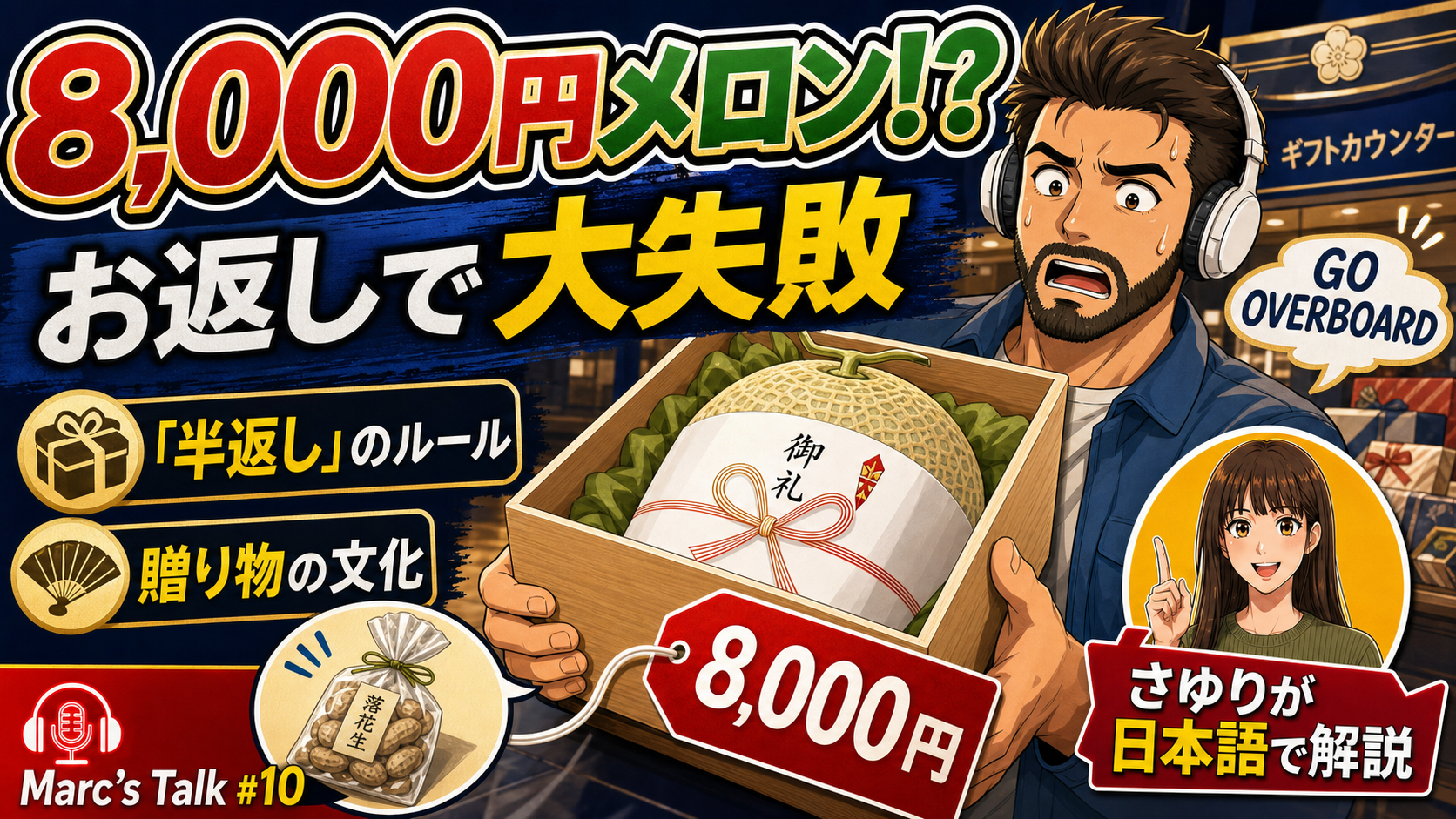
【日常英会話】メロン1個で相手に謝られた?マークが8,000円のメロンでやらかした話 #英語学習 #ネイティブ英語会話 #リスニング強化 #英語耳
ポッドキャスト「すきまイングリッシュ」のスクリプト。「【日常英会話】メロン1個で相手に謝られた?マークが8,000円のメロンでやらかした話 #英語学習 #ネイティブ英語会話 #リスニング強化 #英語耳」の会話全文です。

【英語学習】英語のみ | ここが変だよ日本、1月に自販機で水?温水便座・こたつ・オフィス、日本は「部屋」ではなく「人」を暖める国だった #英語学習 #ネイティブ英語会話 #リスニング強化 #英語耳
ポッドキャスト「すきまイングリッシュ」のスクリプト。「【英語学習】英語のみ | ここが変だよ日本、1月に自販機で水?温水便座・こたつ・オフィス、日本は「部屋」ではなく「人」を暖める国だった #英語学習 #ネイティブ英語会話 #リスニング強化 #英語耳」の会話全文です。

【英語学習】英語のみ | ここが変だよ日本、1月に自販機で水?温水便座・こたつ・オフィス、日本は「部屋」ではなく「人」を暖める国だった #英語学習 #ネイティブ英語会話 #リスニング強化 #英語耳
ポッドキャスト「すきまイングリッシュ」のスクリプト。「【英語学習】英語のみ | ここが変だよ日本、1月に自販機で水?温水便座・こたつ・オフィス、日本は「部屋」ではなく「人」を暖める国だった #英語学習 #ネイティブ英語会話 #リスニング強化 #英語耳」の会話全文です。

【日常英会話】英語のみ | ラーメン屋のカウンターを自分で拭く、トレー返却・スタジアム清掃、なぜ日本人は「自分の仕事じゃないこと」をやるのか #英語学習 #ネイティブ英語会話 #リスニング強化
ポッドキャスト「すきまイングリッシュ」のスクリプト。「【日常英会話】英語のみ | ラーメン屋のカウンターを自分で拭く、トレー返却・スタジアム清掃、なぜ日本人は「自分の仕事じゃないこと」をやるのか #英語学習 #ネイティブ英語会話 #リスニング強化」の会話全文です。
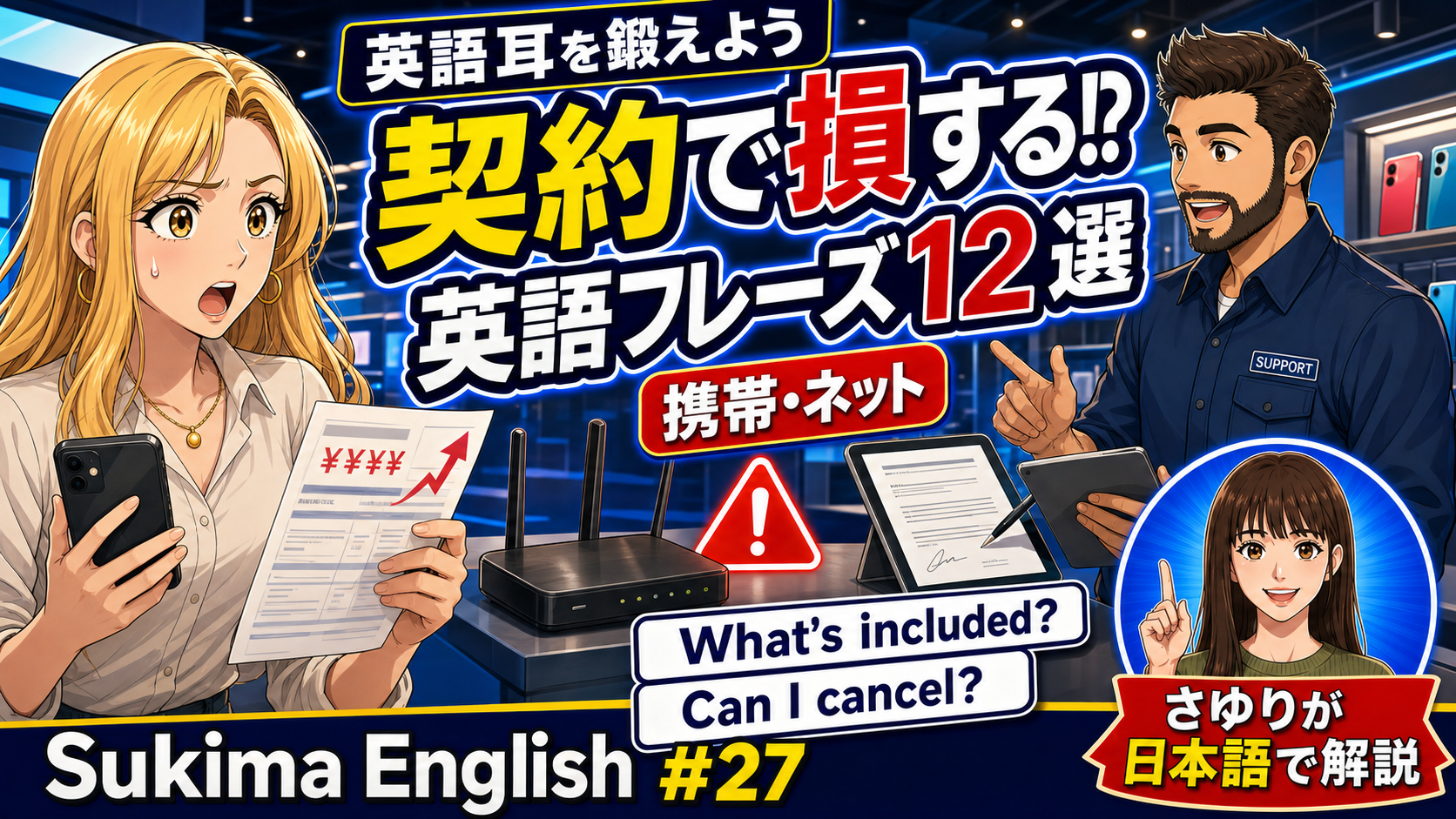
【日常の英語】日本語解説あり | 携帯・ネット契約を英語で乗り切る12フレーズ、申し込み→料金確認→つながらない時→解約・変更まで完全対応 #英語学習 #英語フレーズ #英会話 #英語耳
ポッドキャスト「すきまイングリッシュ」のスクリプト。「【日常の英語】日本語解説あり | 携帯・ネット契約を英語で乗り切る12フレーズ、申し込み→料金確認→つながらない時→解約・変更まで完全対応 #英語学習 #英語フレーズ #英会話 #英語耳」の会話全文です。
【英語学習】英語のみ | 印鑑・FAX・7枚の問診票、日本の「紙の国」で気づいたこと、印鑑がないと銀行口座も作れない #英語学習 #ネイティブ英語会話 #リスニング強化 #英語耳
ポッドキャスト「すきまイングリッシュ」のスクリプト。「【英語学習】英語のみ | 印鑑・FAX・7枚の問診票、日本の「紙の国」で気づいたこと、印鑑がないと銀行口座も作れない #英語学習 #ネイティブ英語会話 #リスニング強化 #英語耳」の会話全文です。