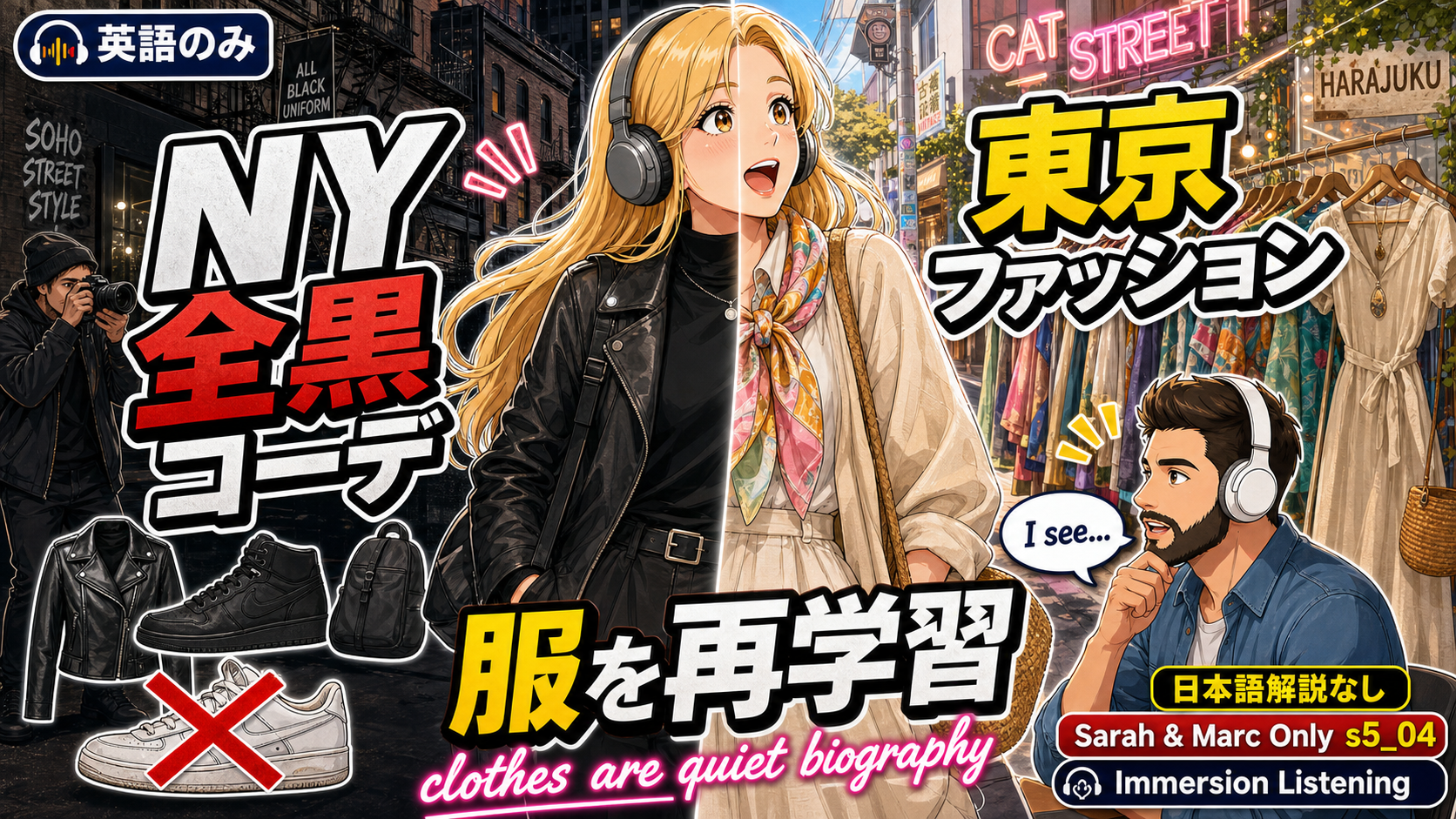
【英語学習】英語のみ | NYで5年間 "all black" だった私が、東京で服を再学習した話 #英語学習 #ネイティブ英語会話 #リスニング強化
ポッドキャスト「すきまイングリッシュ」のスクリプト。「【英語学習】英語のみ | NYで5年間 "all black" だった私が、東京で服を再学習した話 #英語学習 #ネイティブ英語会話 #リスニング強化」の会話全文です。

サラ: Marc, before we start, I need to ask you something. (日本語訳: マーク、始める前に、ちょっと聞きたいことがあるの。)
Marc: Okay, that is never a good opening, but go ahead. (日本語訳: うん、それっていつもいい前置きじゃないけど、どうぞ。)
サラ: Do I look different to you today? (日本語訳: 今日、私、なんか違う?)
Marc: Now that you say it. Yeah, something is different. Did you change your hair? (日本語訳: 言われてみれば。うん、何かが違う。髪型変えた?)
サラ: It is not my hair. Look at what I am wearing. (日本語訳: 髪じゃないよ。私が着てるものを見て。)
Marc: Beige sweater. Off-white pants. Some kind of scarf situation. You look great, but I do not know what I am supposed to notice. (日本語訳: ベージュのセーター。オフホワイトのパンツ。スカーフっぽい何か。すごく素敵だけど、何に気づけばいいのか分からないな。)
サラ: Marc. Two years ago, I would not have worn a single one of these things. Not the beige, not the off-white, definitely not the scarf. (日本語訳: マーク。2年前の私なら、このどれ一つとして着なかったよ。ベージュも、オフホワイトも、スカーフなんて絶対に。)
Marc: Wait, really? What did you used to wear? (日本語訳: え、本当に? 前は何を着てたの?)
サラ: Black. Just black. Black on black on black. For five years straight. (日本語訳: 黒。とにかく黒。黒に黒に黒。5年間ずっと。)
Marc: For five years. Like, every day. (日本語訳: 5年間も? 毎日?)
サラ: Every single day. So today I want to talk about clothes. New York fashion versus Tokyo fashion. (日本語訳: 毎日。だから今日は服の話がしたいの。ニューヨークのファッション対東京のファッション。)
サラ: And what happened to me when I moved here and my entire wardrobe stopped making sense. (日本語訳: それと、ここに引っ越してきて、手持ちの服が全部しっくりこなくなったときに、私に何が起きたか。)
Marc: Oh, this is going to be good. I have noticed things too, not as deeply as you probably, but things. (日本語訳: おお、これは面白くなりそう。僕もいくつか気づいたことがあるよ。君ほど深くはないだろうけど、いくつかね。)
サラ: I want to hear your Chicago version. But let me start with the all black uniform years. That was a religion for me. (日本語訳: あなたのシカゴ版も聞きたい。でも、まずは全身黒のユニフォーム時代から話させて。あれは私にとって宗教だったの。)
Marc: A religion. Walk me back to that. (日本語訳: 宗教か。その頃に戻って聞かせて。)
サラ: So picture college Sarah and then twenties Sarah in Manhattan. (日本語訳: 大学時代のサラと、マンハッタンにいた20代のサラを想像してみて。)
サラ: Five years in the Upper East Side, walking to the subway every morning. (日本語訳: アッパーイーストサイドで5年間、毎朝地下鉄まで歩いてた。)
サラ: My entire closet, and I am not exaggerating, was four things in different shades of one color. (日本語訳: 私のクローゼットは、大げさじゃなく、同じ一色の濃淡違いが4種類あるだけだった。)
サラ: Black T-shirts. Black jeans. Black sneakers. Black leather jacket. (日本語訳: 黒のTシャツ。黒のジーンズ。黒のスニーカー。黒のレザージャケット。)
Marc: That is it? (日本語訳: それだけ?)
サラ: That is it. Maybe a couple of black sweaters for winter. That was the whole rotation. (日本語訳: それだけ。冬用に黒のセーターが何枚かあったかも。着回しはそれで全部。)
Marc: For five years. (日本語訳: 5年間も?)
サラ: For five years. And I would die on this hill, by the way. (日本語訳: 5年間。ちなみに、これについては一歩も譲らないから。)
サラ: I thought it was the best wardrobe a person could have. (日本語訳: 人が持てる中で最高のワードローブだと思ってたの。)
Marc: Okay, you have to explain this to me. Because in Chicago, that is not a thing. People wear color. (日本語訳: よし、それは説明してもらわないと。シカゴじゃ、そんなのないよ。みんな色のある服を着る。)
サラ: It is so New York. And I think there is a real philosophy to it. (日本語訳: すごくニューヨーク的なの。で、そこにはちゃんとした哲学があると思う。)
Marc: Walk me through it. (日本語訳: 順番に聞かせて。)
サラ: Reason one. In Manhattan, you dress to disappear into the crowd. Not to stand out. (日本語訳: 理由その1。マンハッタンでは、人混みに溶け込むために服を着るの。目立つためじゃない。)
サラ: The whole point is to blend. (日本語訳: 大事なのは、なじむこと。)
Marc: Wait, blend? I thought New York was all about standing out. (日本語訳: え、馴染む? ニューヨークって、目立つことじゃないの?)
サラ: That is the misconception. (日本語訳: それが誤解だよ。)
サラ: New Yorkers do not dress to be looked at on the street. They dress to move through the street without being looked at. (日本語訳: ニューヨーカーは、通りで誰かに見られるために服を着るんじゃない。見られずに通りを歩くために服を着てるんだ。)
Marc: Huh. Okay, that is interesting. (日本語訳: へえ。それは興味深いね。)
サラ: Reason two. Black hides everything. Subway grime, coffee spills, the mystery liquid on the platform. (日本語訳: 理由その2。黒は何でも隠してくれる。地下鉄の汚れ、こぼしたコーヒー、ホームの謎の液体。)
サラ: You can wear the same shirt for three days and nobody knows. (日本語訳: 同じシャツを3日間着ても、誰も気づかない。)
Marc: That is gross, but I respect the honesty. (日本語訳: それは気持ち悪いけど、正直さはリスペクトするよ。)
サラ: Reason three. It goes with everything. You roll out of bed, you grab whatever is on the chair, and it matches. (日本語訳: 理由その3。何にでも合う。ベッドから転がり出て、椅子の上にあるものを適当につかんでも、ちゃんと合うの。)
Marc: That is actually genius. (日本語訳: それ、本当に天才的だね。)
サラ: Reason four, and this is the deeper one. (日本語訳: 理由その4。これはもっと深い話。)
サラ: In a city where everyone is screaming for attention, the most powerful thing you can do is just not. (日本語訳: みんなが注目されたくて叫んでるような街では、一番強いのは、あえてそうしないことなの。)
サラ: The all black uniform is a kind of armor. A quiet flex. (日本語訳: 全身黒のユニフォームは、一種の鎧。さりげない自己主張。)
Marc: A quiet flex. Okay, that is poetic. I am sold. (日本語訳: さりげない自己主張。なるほど、詩的だね。納得したよ。)
サラ: So that was me. For five years. And here is the embarrassing part. (日本語訳: それが私だった。5年間ね。で、ここからが恥ずかしいところ。)
サラ: The day I flew to Japan, the day I started this whole new life, I wore black on black on black to the airport. (日本語訳: 日本に飛んだ日、この新しい生活を始めたその日、私は全身黒ずくめで空港に行ったの。)
Marc: Of course you did. (日本語訳: だろうね。)
サラ: Of course I did. Black T-shirt. Black jeans. Black hoodie. Black sneakers. Black backpack. (日本語訳: 当然よ。黒のTシャツ。黒のジーンズ。黒のパーカー。黒のスニーカー。黒のリュック。)
Marc: To Narita. In summer. (日本語訳: 成田へ。夏に。)
サラ: In summer. It was thirty-two degrees. I was a heat sponge. (日本語訳: 夏に。32度だった。熱を吸いまくるスポンジ状態。)
Marc: A heat sponge. (日本語訳: 熱を吸いまくるスポンジ。)
サラ: And Mia picks me up at the arrivals gate, and she takes one look at me, and she says, Sarah. You look like you came to mug me at the arrivals gate. (日本語訳: で、ミアが到着ゲートまで迎えに来てくれたんだけど、私を一目見るなり、「サラ。到着ゲートで私を襲いに来た強盗みたい」って言ったの。)
Marc: Mia. Coming in hot. (日本語訳: ミア、初っ端から容赦ないね。)
サラ: Coming in hot. And I laughed, but inside I was like, what is wrong with this outfit? (日本語訳: 初っ端から容赦ない。笑ったけど、内心は「この服の何がいけないの?」って思ってた。)
サラ: This is just what I wear. This is what everyone wears. (日本語訳: これが私の普段着だし。みんなこういうの着てるでしょ。)
Marc: And then you got to Tokyo. And I am guessing the train ride into the city was a wake-up call. (日本語訳: それで東京に向かったわけだ。都心までの電車で、目が覚めたんじゃない?)
サラ: The train ride was the first crack in the system. (日本語訳: その電車で、私の仕組みに最初のひびが入ったの。)
サラ: I am sitting on the Narita Express, exhausted, looking out the window, and then I start looking at the people in the car. (日本語訳: 成田エクスプレスに座って、くたくたで窓の外を見てたの。それから、車内の人たちを見始めたんだ。)
Marc: Tell me what you saw. (日本語訳: 何を見たか教えて。)
サラ: Nobody was wearing what I was wearing. A woman in a long pleated skirt the color of butter. (日本語訳: 私みたいな格好の人は一人もいなかった。バター色のロングのプリーツスカートの女性。)
サラ: A man in a linen shirt and tan loafers, no socks. A teenager in a vintage hockey jersey over a midi dress. (日本語訳: リネンのシャツに茶色のローファー、素足の男性。ミディ丈のワンピースの上にヴィンテージのホッケージャージを重ねた10代の子。)
Marc: A hockey jersey over a midi dress. (日本語訳: ミディ丈のワンピースにホッケージャージ。)
サラ: A hockey jersey over a midi dress. Together. On purpose. And it looked good. (日本語訳: ミディ丈のワンピースにホッケージャージ。組み合わせて。わざと。それが似合ってたの。)
サラ: And I am sitting there in my New York uniform, and for the first time in five years, I felt like I was wearing the wrong costume. (日本語訳: で、私はニューヨークのユニフォームでそこに座ってて、5年間で初めて、間違った衣装を着てる気がしたの。)
Marc: The wrong costume. That is a strong sentence. (日本語訳: 間違った衣装。強い言葉だね。)
サラ: I did not have language for it yet, but something in me went, oh. I had to relearn what fashion means. (日本語訳: まだ言葉にはできなかったけど、心のどこかで「あ」って思った。ファッションの意味を学び直さなきゃいけなかったの。)
Marc: I had to relearn what fashion means. Big phrase. That is the whole episode right there. (日本語訳: 「ファッションの意味を学び直さなきゃいけなかった」。大きなフレーズだね。それがこの回のすべてだよ。)
サラ: That is the whole episode. Before we go into the Tokyo part, I want your Chicago side. (日本語訳: それがこの回のすべて。東京の話に入る前に、あなたのシカゴ側の話を聞かせて。)
Marc: Chicago is its own thing. Honestly, I have thought about this a lot since I moved here. (日本語訳: シカゴはシカゴで独特なんだ。正直、ここに引っ越してきてから、このことはよく考えてる。)
サラ: Tell me. (日本語訳: 聞かせて。)
Marc: Chicago dresses for the wind, not for Instagram. (日本語訳: シカゴは、インスタグラムのためじゃなくて、風のために服を着るんだ。)
サラ: Say more. (日本語訳: 詳しく。)
Marc: It is so windy and cold half the year that everything you wear has to function first. (日本語訳: 1年の半分は風が強くて寒いから、着るものは全部、まず機能ありきなんだ。)
Marc: Puffy jacket. Flannel shirt. Boots that can handle slush. Cubs cap or Bears beanie. Jeans that you can move in. (日本語訳: ダウンジャケット。ネルシャツ。雪解けのぬかるみでも平気なブーツ。カブスのキャップかベアーズのニット帽。動きやすいジーンズ。)
サラ: So practical. (日本語訳: すごく実用的。)
Marc: So practical. (日本語訳: すごく実用的。)
Marc: We are not dressing to disappear like New Yorkers, and we are not dressing to express like Tokyo people. We are dressing to survive Tuesday. (日本語訳: ニューヨークの人みたいに消えるために着てるわけでも、東京の人みたいに自分を表現するために着てるわけでもない。火曜日を生き延びるために着てるんだ。)
サラ: To survive Tuesday. That is the best one-line summary of Chicago fashion I have ever heard. (日本語訳: 火曜日を生き延びるために。今まで聞いた中で、シカゴのファッションを一番うまく一言でまとめてるよ。)
Marc: It is true. If your outfit cannot get you through a windchill of negative ten, it is not an outfit. It is a costume. (日本語訳: 本当だよ。体感温度マイナス10度を乗り切れない服は、服じゃない。ただの衣装だ。)
サラ: So you came to Tokyo without a fashion identity to break. Just a survival uniform. (日本語訳: じゃあ、あなたは壊すべきファッションのアイデンティティを持たずに東京に来たのね。あったのはサバイバル用のユニフォームだけ。)
Marc: Exactly. My Tokyo wardrobe shift is much smaller than yours. We will get there. But keep going. (日本語訳: その通り。僕の東京でのワードローブの変化は、君よりずっと小さいよ。それはあとで話す。でも、続けて。)
サラ: Okay. So I land in Tokyo. The all black uniform is starting to feel wrong, but I do not have anything else. Literally, my whole suitcase is black. (日本語訳: よし。で、東京に着いた。全身黒のユニフォームに違和感が出てきてたけど、ほかに何も持ってなかった。本当に、スーツケースの中が全部黒だったの。)
サラ: For the first six months, I just kept wearing it. Because that is what I owned, and also because changing felt scary. (日本語訳: 最初の半年は、そのまま着続けた。それしか持ってなかったし、変わるのが怖かったのもある。)
Marc: Scary how? (日本語訳: どう怖かったの?)
サラ: Like, who would I be if I wore color? It sounds dramatic, but the uniform was tied to who I thought I was. (日本語訳: 色のある服を着たら、私は何者になるんだろう、みたいな。大げさに聞こえるけど、あのユニフォームは、自分がどういう人間かっていう思いと結びついてたの。)
Marc: That is not dramatic. That is real. Clothes are tied to identity. (日本語訳: 大げさじゃないよ。本当のことだ。服はアイデンティティと結びついてる。)
サラ: They really are. And then a few things happened that slowly cracked it open. (日本語訳: 本当にそう。それから、少しずつそれをこじ開けるようなことがいくつか起きたの。)
Marc: Walk me through the cracks. (日本語訳: そのひびを一つずつ聞かせて。)
サラ: Crack number one. The first month, I am on the Yamanote line, and I look up. (日本語訳: ひびその1。最初の月、山手線に乗ってて、ふと顔を上げたの。)
サラ: Across the car there is a woman, probably in her fifties, in a buttery yellow trench coat, with a small bouquet of flowers in her shopping bag. (日本語訳: 車両の向こう側に、たぶん50代くらいの女性がいて、バターみたいな黄色のトレンチコートを着て、買い物袋に小さな花束を入れてた。)
Marc: A yellow trench. Okay. (日本語訳: 黄色のトレンチ。なるほど。)
サラ: And she looked so calm. So put together. So clearly herself. (日本語訳: すごく落ち着いてて。きちんとしてて。どう見ても、その人らしかった。)
Marc: And you are sitting there in your mugger uniform. (日本語訳: で、君は強盗みたいなユニフォームでそこに座ってた。)
サラ: I am sitting there in my mugger uniform. (日本語訳: 強盗みたいなユニフォームで座ってた。)
サラ: And for the first time, I thought, I want what she has. Not the coat. The energy. (日本語訳: そのとき初めて思ったの。あの人が持ってるものが欲しいって。コートじゃなくて。あの空気感。)
Marc: The energy. (日本語訳: あの空気感。)
サラ: Crack number two. Walking through Cat Street in Harajuku, about four months in. (日本語訳: ひびその2。原宿のキャットストリートを歩いてたとき。4か月くらい経った頃。)
Marc: Cat Street. The back streets behind Omotesando. (日本語訳: キャットストリート。表参道の裏通り。)
サラ: Yes. And I see a young guy, maybe twenty-two, in a see-through tulle top, with combat boots, walking with two friends, completely relaxed. (日本語訳: そう。それで、22歳くらいの若い男の人を見かけたの。透けるチュールのトップスにコンバットブーツで、友達二人と、すごくリラックスして歩いてた。)
Marc: A see-through tulle top. On a guy. On a Tuesday afternoon. (日本語訳: 透けるチュールのトップス。男性が。火曜の午後に。)
サラ: On a Tuesday afternoon. (日本語訳: 火曜の午後に。)
サラ: And I literally stopped walking for a second. Not because it was weird, but because I realized, wait. Men do that here? Like, openly? (日本語訳: 本当に一瞬、足が止まったの。変だからじゃなくて、気づいたから。え、ここでは男の人もこういう格好をするの? 堂々と?)
Marc: And in New York? (日本語訳: ニューヨークでは?)
サラ: In New York you would see that on a runway, or at a club, but not on Cat Street at three p.m. with no one staring. (日本語訳: ニューヨークなら、ランウェイかクラブで見るような格好。午後3時のキャットストリートで、誰にもじろじろ見られずに、なんてことはない。)
サラ: And I remember thinking, the rules I came in with are not the rules here. (日本語訳: そのとき思ったのを覚えてる。私が持ち込んだルールは、ここのルールじゃないって。)
サラ: The whole grammar of what you can wear is different. (日本語訳: 何を着ていいかの文法そのものが違うの。)
Marc: The whole grammar of what you can wear. I like that. (日本語訳: 何を着ていいかの文法そのもの。いいね。)
サラ: Crack number three was the big one. About eight months in, Mia takes me to Shimokitazawa. (日本語訳: ひびその3が大きかった。8か月くらい経った頃、ミアが下北沢に連れて行ってくれたの。)
Marc: Shimokitazawa. The vintage neighborhood. (日本語訳: 下北沢。古着の街。)
サラ: The vintage neighborhood. Narrow streets. Old buildings. Stores stacked on top of each other. (日本語訳: 古着の街。狭い路地。古い建物。お店がぎっしり重なり合ってる。)
サラ: Mia drags me into this little secondhand shop and she just starts pulling things off the rack. (日本語訳: ミアに小さな古着屋へ引っ張り込まれて、彼女がラックから次々に服を取り出し始めたの。)
Marc: What is she pulling? (日本語訳: 何を取り出したの?)
サラ: A linen dress the color of milky tea. A vintage Hawaiian shirt in soft pink and mint green. A pair of wide cream trousers. (日本語訳: ミルクティー色のリネンのワンピース。淡いピンクとミントグリーンのヴィンテージのハワイアンシャツ。クリーム色のワイドパンツ。)
サラ: None of it black. Not one item. (日本語訳: どれも黒じゃない。一つも。)
Marc: And she hands these to you. (日本語訳: それを君に渡したの?)
サラ: She hands me the linen dress and she says, just try it. (日本語訳: リネンのワンピースを渡して、「とにかく着てみて」って。)
サラ: And I said, Mia, I do not wear dresses. I do not wear beige. This is not me. (日本語訳: で、私は「ミア、私ワンピースなんて着ないし。ベージュも着ない。こんなの私じゃない」って言ったの。)
Marc: And what does she say? (日本語訳: それでミアは何て言ったの?)
サラ: She says, Sarah, you are stepping out of your comfort zone today. That is the whole point. Just try it. (日本語訳: そしたら「サラ、今日はコンフォートゾーンから一歩出るの。それが目的なんだから。とにかく着てみて」って。)
Marc: Stepping out of your comfort zone. People overuse that phrase, but in that fitting room, it meant something specific. (日本語訳: コンフォートゾーンから一歩出る。使われすぎのフレーズだけど、あの試着室では、はっきりした意味があったんだね。)
サラ: Something very specific. So I went in, put the dress on, and looked in the mirror. (日本語訳: すごくはっきりした意味。それで試着室に入って、ワンピースを着て、鏡を見たの。)
サラ: And I just stood there. For probably forty seconds. Not moving. (日本語訳: そのまま立ち尽くしてた。たぶん40秒くらい。動けずに。)
Marc: What were you thinking? (日本語訳: 何を考えてたの?)
サラ: That the person in the mirror did not look like me. She looked soft. Like she was going to a friend's wedding in the countryside. She looked, honestly, kind of happy. (日本語訳: 鏡の中の人が、私に見えなかったの。柔らかい感じで。田舎で開かれる友達の結婚式に行くみたいで。正直、なんだか幸せそうだった。)
Marc: Kind of happy. (日本語訳: なんだか幸せそう。)
サラ: And I had this moment of, who is this person? Am I playing dress-up right now? Or is this also me? (日本語訳: で、「この人、誰? 今、私、仮装ごっこしてる? それとも、これも私なの?」って思ったの。)
Marc: Playing dress-up. That is exactly the feeling. Like a kid trying on their parents' clothes. (日本語訳: 仮装ごっこ。まさにその感覚だね。子どもが親の服を着てみるみたいな。)
サラ: Exactly. And I almost took it off. I almost said no, this is not me, give me my black T-shirt back. (日本語訳: そうそう。で、もう少しで脱ぐところだった。「やっぱり違う、これ私じゃない、黒のTシャツ返して」って言いかけた。)
サラ: But Mia was on the other side of the curtain saying, just walk out. Show me. (日本語訳: でもミアがカーテンの向こうで、「とにかく出てきて。見せて」って言ってたの。)
サラ: And I walked out. And she just looked at me and said, yeah. That. (日本語訳: それで出ていったら、彼女は私を見て、「うん。それ」って言ったの。)
Marc: Yeah. That. (日本語訳: 「うん。それ」か。)
サラ: That is all she said. (日本語訳: 彼女が言ったのはそれだけ。)
Marc: Did you buy the dress? (日本語訳: そのワンピース、買ったの?)
サラ: I bought the dress. I wore it home on the train. And I felt naked. But also, weirdly, more myself. (日本語訳: 買った。電車で着て帰ったの。裸みたいな気分だった。でも同時に、不思議と、前より自分らしかった。)
Marc: I felt naked but more myself. Now that is a Sarah sentence. (日本語訳: 裸みたいなのに、前より自分らしい。それこそサラらしいセリフだね。)
サラ: The black was a layer of armor that I had not realized was so heavy. Taking it off was uncomfortable, but also lighter. (日本語訳: 黒は、自分でも気づかないくらい重い鎧だったの。脱ぐのは落ち着かなかったけど、軽くもなった。)
Marc: Because in New York, you said it yourself. You wore your toughness on the outside. (日本語訳: だってニューヨークでは、君自身が言ってたよね。強さを外側にまとってたって。)
サラ: I wore my toughness on the outside. Exactly. The black was the armor. The dress was, I do not know, just me. (日本語訳: 強さを外側にまとってた。そう。黒は鎧だった。ワンピースは、なんていうか、ただの私。)
サラ: And the first real piece I picked out for myself, no Mia, was about six months after that. In a tiny secondhand shop on a side street in Shimo. (日本語訳: で、ミアなしで、自分で初めて本当に選んだ服は、それから半年くらい後。下北の裏通りにある小さな古着屋で。)
Marc: What did you find? (日本語訳: 何を見つけたの?)
サラ: A vintage Hawaiian shirt. Soft pink and mint green. Eighteen hundred yen. (日本語訳: ヴィンテージのハワイアンシャツ。淡いピンクとミントグリーン。1800円。)
サラ: I tried it on, looked at myself, and thought, this is ridiculous. And then I thought, I want it. (日本語訳: 着てみて、鏡を見て、「ばかみたい」って思った。それから、「これ欲しい」って思ったの。)
Marc: You bought the Hawaiian shirt. (日本語訳: ハワイアンシャツ買ったんだ。)
サラ: I bought the Hawaiian shirt. And I have worn it constantly for almost a year now. (日本語訳: ハワイアンシャツを買ったの。で、もう1年近く、しょっちゅう着てる。)
Marc: Okay. What about me. You want my Tokyo wardrobe story. (日本語訳: よし。僕のほうは? 僕の東京ワードローブの話も聞きたいんでしょ。)
サラ: I want it. Even if it is small. (日本語訳: 聞きたい。たとえ小さな変化でも。)
Marc: It is so small. I am still Cubs cap, jeans, sneakers, sweater in winter. I have not had a Shimokitazawa moment. (日本語訳: 本当に小さいよ。今もカブスのキャップにジーンズ、スニーカー、冬はセーター。下北沢みたいな瞬間はなかった。)
サラ: Not one shift? (日本語訳: 一つも変化なし?)
Marc: One shift. White sneakers. I cannot wear them anymore. (日本語訳: 一つだけ。白いスニーカー。もう履けない。)
サラ: How come? (日本語訳: なんで?)
Marc: The trains, the rainy season, the amount of walking in Tokyo. White sneakers last me about a month before they look like I dragged them through a parking lot. (日本語訳: 電車、梅雨、それに東京で歩く量。白いスニーカーは1か月くらいで、駐車場を引きずり回したみたいになっちゃう。)
サラ: So what do you wear now? (日本語訳: じゃあ今は何を着てるの?)
Marc: Black or dark gray. Same shape, different color. My own small clothes-meet-Tokyo lesson. Just way less dramatic than yours. (日本語訳: 黒か濃いグレー。形は同じで、色だけ変えた。服と東京が出会って学んだ、僕なりの小さな教訓。君のよりずっと地味だけどね。)
サラ: Yours is honest, though. Yours is about function, like Chicago always is. (日本語訳: でも、あなたのは正直だよ。いつものシカゴらしく、機能の話だもん。)
サラ: Okay. Now here is the part of the story that surprised me even more. (日本語訳: さて。ここからが、もっと驚いた部分なの。)
サラ: Because I did not realize the wardrobe shift was a real shift until I went back to New York. (日本語訳: ワードローブの変化が本当の変化だったって、ニューヨークに戻るまで気づかなかったから。)
Marc: When was this? (日本語訳: いつ?)
サラ: Last month. First trip back in about a year. I flew into JFK, dropped my bag at my parents' place, and the next morning went down to Soho to meet a college friend for coffee. (日本語訳: 先月。1年ぶりくらいの里帰り。JFKに着いて、実家に荷物を置いて、次の朝、大学時代の友達とコーヒーを飲みにソーホーまで出かけたの。)
Marc: Soho. The classic walking-around neighborhood. (日本語訳: ソーホー。定番のお散歩エリアだね。)
サラ: The classic. And I am walking down Lafayette Street, wearing what feels normal to me now. (日本語訳: 定番よ。で、ラファイエット通りを歩いてたの。今の私にとって普通の格好で。)
Marc: Describe the outfit. (日本語訳: その格好を説明して。)
サラ: A pale beige linen set, top and pants, basically the same color. A soft silk scarf at the neck. Leather sandals. A small canvas tote. (日本語訳: 淡いベージュのリネンのセットアップ。トップスもパンツも、ほぼ同じ色。首元には柔らかいシルクのスカーフ。革のサンダル。小さなキャンバス地のトートバッグ。)
Marc: That is so Tokyo Sarah. (日本語訳: それ、すごく「東京のサラ」っぽいね。)
サラ: That is so Tokyo Sarah. I did not even think about it when I got dressed. It was just what I owned now. (日本語訳: すごく東京のサラっぽい。着替えるときは何も考えてなかった。今持ってるのがそういう服だっただけ。)
Marc: And what happened. (日本語訳: それで、どうなったの?)
サラ: I am walking down Lafayette, and a guy with a camera, the kind of guy who clearly does street style for some magazine or some account, he stops me. (日本語訳: ラファイエット通りを歩いてたら、カメラを持った男の人、どう見ても雑誌か何かのアカウントでストリートスナップを撮ってる感じの人に、呼び止められたの。)
Marc: He stops you in the street. (日本語訳: 道で呼び止められたの?)
サラ: He stops me. He says, hey, can I get a quick photo of your fit? (日本語訳: 呼び止められたの。「ねえ、そのコーデ、ちょっと写真撮らせてもらえる?」って。)
Marc: Your fit. (日本語訳: 「そのコーデ」ね。)
サラ: Your fit. And I said sure, kind of confused, and he takes the photo, and then he says the thing that broke my brain. (日本語訳: 「そのコーデ」。私はちょっと戸惑いながら「いいよ」って答えて、彼が写真を撮って、それから、私の頭をぐちゃぐちゃにしたあの一言を言ったの。)
サラ: He said, you are not from around here, are you? (日本語訳: 「君、このへんの人じゃないよね?」って。)
Marc: He said that to a New Yorker. To someone who grew up thirty blocks north of where you were standing. Oh, that is rough. (日本語訳: ニューヨーカーにそう言ったのか。立ってた場所から30ブロック北で育った人に。うわ、それはきついね。)
サラ: In my head, in maybe one second, I had four reactions stacked on top of each other. (日本語訳: 頭の中で、たぶん1秒の間に、4つの反応が積み重なったの。)
サラ: First, I am from here, what are you talking about. Second, wait, what am I wearing that makes him say that. (日本語訳: 1つ目、「ここの人なんですけど、何言ってるの」。2つ目、「待って、私、何を着てるからそう言われるの」。)
サラ: Third, oh. He can see something I cannot see. And then the real one came out of my mouth. (日本語訳: 3つ目、「ああ。この人には、私に見えないものが見えてるんだ」。それから、本当の反応が口から出たの。)
Marc: What did you say? (日本語訳: 何て言ったの?)
サラ: I said, actually, I am. I just do not live here anymore. (日本語訳: 「実はここの出身なんです。ただ、もう住んでないだけで」って。)
Marc: That is the answer. (日本語訳: それが答えだね。)
サラ: That is the answer that came out without me planning it. (日本語訳: 考えもせずに、口から出てきた答えだったの。)
Marc: Sarah. Come on. That is the whole episode. (日本語訳: サラ、ほら。もうそれがエピソード全部だよ。)
サラ: That was the moment I realized the clothes had moved before the rest of me caught up. (日本語訳: そのとき気づいたの。私の中身が追いつく前に、服のほうが先に移動してたんだって。)
Marc: The clothes had moved before the rest of you caught up. Wow. (日本語訳: 中身が追いつく前に、服のほうが先に移動してた。すごいね。)
サラ: When I got back from that trip, I told Mia the story. (日本語訳: その旅行から帰ってきて、ミアにその話をしたの。)
Marc: What did Mia say? (日本語訳: ミアは何て言ってたの?)
サラ: She just laughed, and then she said the thing that stuck with me the most. She said, Sarah, you used to wear your toughness on the outside. Now you wear something softer. (日本語訳: ただ笑って、それから、一番心に残ったことを言ったの。「サラ、昔のあなたは強さを外側にまとってた。今は、もっと柔らかいものをまとってるね」って。)
Marc: Now you wear something softer. That is brutal, in a good way. (日本語訳: 「今は、もっと柔らかいものをまとってる」か。いい意味で、容赦ないね。)
サラ: It is brutal in a good way. And it is true. The black was armor. The beige and the silk scarf is not armor at all. It is just me. (日本語訳: いい意味で容赦ないの。しかも本当のこと。黒は鎧だった。ベージュとシルクのスカーフは、全然鎧じゃない。ただの私。)
Marc: It is just you. (日本語訳: ただの君、だね。)
サラ: And I have been thinking a lot about what clothes actually are. (日本語訳: それで、服って本当は何なんだろうって、ずっと考えてるの。)
Marc: What are they? (日本語訳: 何なの?)
サラ: I think clothes are quiet biography. They tell the story of who you are right now, without you having to say a word. (日本語訳: 服は、静かな自伝なんだと思う。一言も話さなくても、今の自分がどういう人なのかを語ってくれる。)
サラ: Mine used to say, do not look at me, I am moving through this city. Now they say, this is one specific version of who I am today. (日本語訳: 昔の私の服は「こっち見ないで、この街を通り抜けてるところだから」って言ってた。今は「これが、今日の私の一つのバージョン」って言ってる。)
Marc: Clothes are quiet biography. Sarah, write that down somewhere. (日本語訳: 服は静かな自伝。サラ、どこかに書き留めておいて。)
サラ: It is already written down. In my notes app. With about forty other phrases I am saving for someday. (日本語訳: もう書き留めてある。メモアプリにね。いつか使うために取ってある40個くらいのフレーズと一緒に。)
Marc: So if I am tracking this. In Manhattan, you dressed to disappear into the crowd. (日本語訳: 話を整理すると、マンハッタンでは、人混みに消えるために服を着てた。)
サラ: To disappear into the crowd. (日本語訳: 人混みに消えるために。)
Marc: And in Tokyo, you dress to show one specific version of who you are today. And the version changes. (日本語訳: で、東京では、今日の自分の一つのバージョンを見せるために服を着てる。しかも、そのバージョンは変わる。)
サラ: The version changes. Some days I want quiet beige Sarah. Some days I want vintage Hawaiian shirt Sarah. (日本語訳: バージョンは変わる。静かなベージュのサラでいたい日もあれば、ヴィンテージのハワイアンシャツのサラでいたい日もある。)
サラ: Some days, honestly, I still want black T-shirt Sarah. She still exists. She just is not the only one anymore. (日本語訳: 正直、今でも黒いTシャツのサラでいたい日もある。彼女はまだいるの。ただ、もう唯一の私じゃないってだけ。)
Marc: So it is the two operating systems thing again. But for clothes. (日本語訳: また、二つのオペレーティングシステムの話だね。服バージョンの。)
サラ: For clothes. Exactly. New York me is still in the closet. She is just not the only one wearing the closet anymore. (日本語訳: 服バージョン。そう。ニューヨークの私は、今もクローゼットの中にいる。ただ、そのクローゼットを着てるのが、もう彼女だけじゃないってこと。)
Marc: That is a beautiful way to put it. My reflection is way less profound. I just wanted to make sure my sneakers do not look like they died on the way to work. (日本語訳: すごく素敵な言い方だね。僕の気づきはずっと浅いよ。通勤中にスニーカーが死んだみたいにならないようにしたかっただけ。)
サラ: A noble goal. (日本語訳: 立派な目標よ。)
Marc: A noble goal. But hearing you talk, I am wondering if I have a hidden wardrobe shift I have not noticed. (日本語訳: 立派な目標。でも君の話を聞いてたら、僕にも気づいてないワードローブの変化があるのかもって思えてきた。)
サラ: Maybe you will find a non black sneaker and a story behind it. (日本語訳: もしかしたら、黒じゃないスニーカーと、その裏にある物語が見つかるかもね。)
Marc: Maybe I will. (日本語訳: そうなるかも。)
サラ: Okay, the takeaway today. If you move to a new city, eventually your clothes will move too. And it is okay to let them. (日本語訳: さて、今日の持ち帰りポイント。新しい街に引っ越したら、いずれ服も一緒に移っていく。そうさせてあげていいの。)
サラ: I had to relearn what fashion means. I stepped out of my comfort zone. I felt naked but more myself. And somewhere along the way, I stopped wearing my toughness on the outside. (日本語訳: 私はファッションの意味を学び直さなきゃいけなかった。コンフォートゾーンから一歩出た。裸みたいなのに、前より自分らしかった。そしていつの間にか、強さを外側にまとうのをやめてた。)
Marc: And now you just wear your story. (日本語訳: そして今は、自分の物語をまとってるんだね。)
サラ: I just wear my story. Clothes are quiet biography. (日本語訳: 自分の物語をまとってるの。服は静かな自伝。)
Marc: That is a wrap. Thanks for listening, everyone. See you next time. (日本語訳: 今回はここまで。みんな、聞いてくれてありがとう。また次回。)
サラ: See you next time. (日本語訳: また次回。)

関連記事

【日常英会話】「感謝していることを一つずつ」アメリカの感謝祭とネイティブの本音 #英語学習 #ネイティブ英語会話 #リスニング強化 #英語耳
ポッドキャスト「すきまイングリッシュ」のスクリプト。「【日常英会話】「感謝していることを一つずつ」アメリカの感謝祭とネイティブの本音 #英語学習 #ネイティブ英語会話 #リスニング強化 #英語耳」の会話全文です。

【日常英会話】英語のみ | ニューヨークと東京のハロウィンを英語で語ると? #英語学習 #ネイティブ英語会話 #リスニング強化
ポッドキャスト「すきまイングリッシュ」のスクリプト。「【日常英会話】英語のみ | ニューヨークと東京のハロウィンを英語で語ると? #英語学習 #ネイティブ英語会話 #リスニング強化」の会話全文です。

【日常の英語】元気のない同僚にかける英語フレーズ12選|声かけから励ましまで #英語学習 #英語フレーズ #英会話 #英語耳
ポッドキャスト「すきまイングリッシュ」のスクリプト。「【日常の英語】元気のない同僚にかける英語フレーズ12選|声かけから励ましまで #英語学習 #英語フレーズ #英会話 #英語耳」の会話全文です。

【日常英会話】住所と道案内を英語で話すと?日本の住所には通りの名前がない #英語学習 #ネイティブ英語会話 #リスニング強化 #英語耳
ポッドキャスト「すきまイングリッシュ」のスクリプト。「【日常英会話】住所と道案内を英語で話すと?日本の住所には通りの名前がない #英語学習 #ネイティブ英語会話 #リスニング強化 #英語耳」の会話全文です。

【日常の英語】日本語解説あり | 席を譲ろうとして、断られた |申し出る英語と、断られたときの英語6つ #英語学習 #英語フレーズ #英会話 #英語耳
ポッドキャスト「すきまイングリッシュ」のスクリプト。「【日常の英語】日本語解説あり | 席を譲ろうとして、断られた |申し出る英語と、断られたときの英語6つ #英語学習 #英語フレーズ #英会話 #英語耳」の会話全文です。

【日常英会話】カウンターには、向かいの椅子がない、「お一人ですか」と聞かれる国 #英語学習 #ネイティブ英語会話 #リスニング強化 #英語耳
ポッドキャスト「すきまイングリッシュ」のスクリプト。「【日常英会話】カウンターには、向かいの椅子がない、「お一人ですか」と聞かれる国 #英語学習 #ネイティブ英語会話 #リスニング強化 #英語耳」の会話全文です。