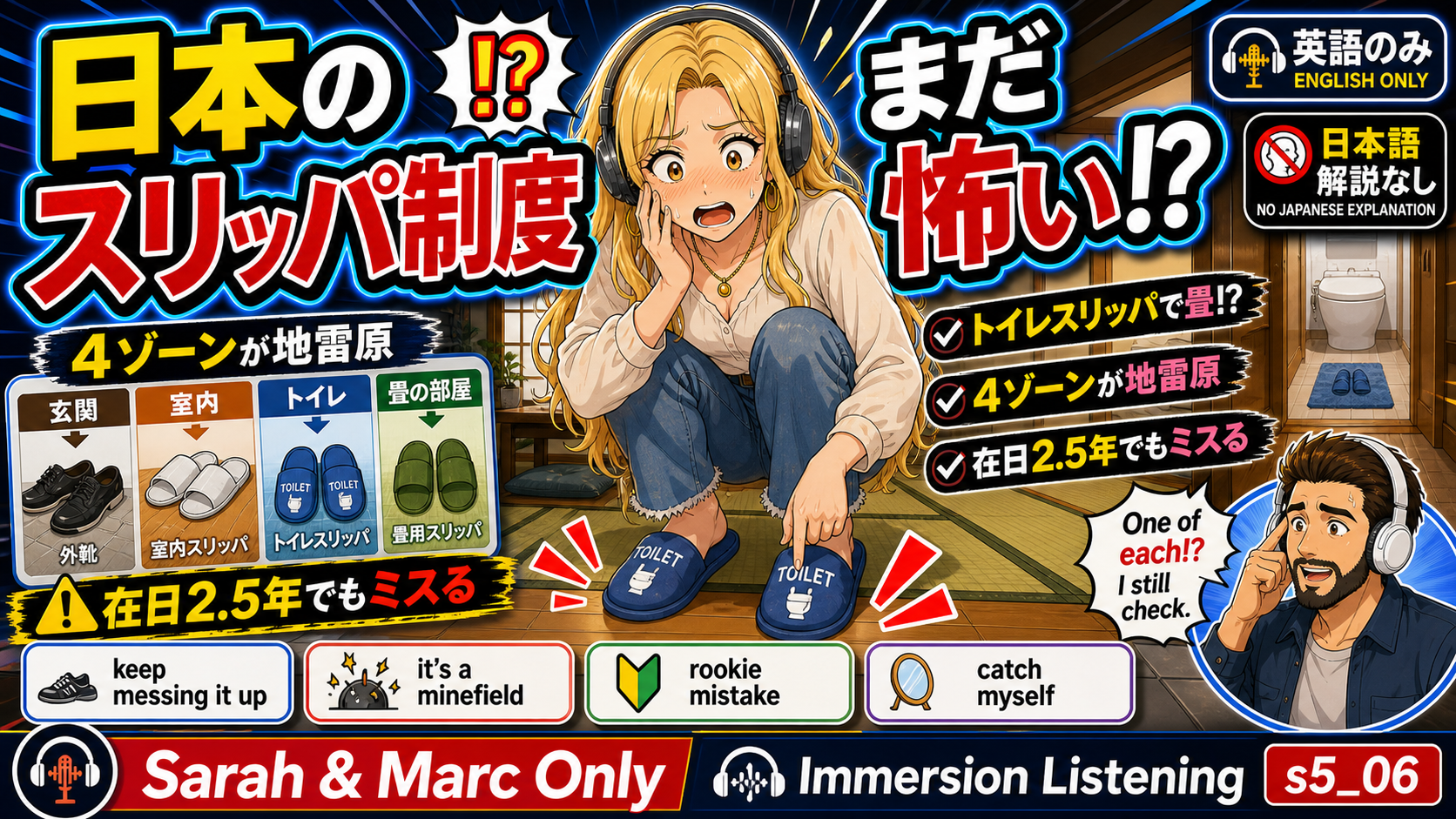
【英語学習】英語のみ | 日本のスリッパ制度がまだ怖い話 | 玄関・室内・トイレ・畳の"4ゾーン"をネイティブが英語だけで話したら #英語学習 #ネイティブ英語会話 #リスニング強化 #英語耳
ポッドキャスト「すきまイングリッシュ」のスクリプト。「【英語学習】英語のみ | 日本のスリッパ制度がまだ怖い話 | 玄関・室内・トイレ・畳の"4ゾーン"をネイティブが英語だけで話したら #英語学習 #ネイティブ英語会話 #リスニング強化 #英語耳」の会話全文です。

サラ: Marc. I need to confess something. (日本語訳: マーク、告白があるんだ。)
Marc: This is already a great opening. (日本語訳: もう最高じゃん、その始まり方。)
サラ: I committed the slipper crime last week. (日本語訳: この前、スリッパ犯罪を犯しちゃった。)
Marc: Oh no. How bad? (日本語訳: えー、マジで。どれくらいひどかったの?)
サラ: Watanabe-san's apartment. I went downstairs to return a Tupperware she had left outside my door. She offered tea, I sat down, we talked. (日本語訳: 渡辺さんのマンション。彼女が私のドアの外に置いておいたタッパーを返しに、階下に降りたの。お茶を出してくれて、座って、話したんだ。)
Marc: And? (日本語訳: それで?)
サラ: Three minutes later I looked down and I was still wearing the toilet slippers. On her tatami. (日本語訳: 3分後、下を見たら、まだトイレのスリッパを履いてた。彼女の畳の上で。)
Marc: Sarah. (日本語訳: サラ、まさか。)
サラ: I know. (日本語訳: 知ってる。)
Marc: On her tatami. (日本語訳: 彼女の畳の上で?)
サラ: I know. She never said a word. She just kept pouring tea. And at some point she said "daijoubu" and smiled. (日本語訳: 知ってる。彼女は何も言わなかった。ただお茶を注ぎ続けて。それで、ある時点で「大丈夫」って言って笑ったんだ。)
Marc: Which is somehow worse than a reaction. (日本語訳: それは、リアクションするより、なぜかたちが悪いね。)
サラ: So much worse. I aged ten years in that moment. (日本語訳: すごくたちが悪い。その瞬間、10歳年取った気分だった。)
Marc: I know that feeling exactly. (日本語訳: その気持ち、すごくよくわかるよ。)
サラ: Today we are talking about the slipper system. Because two and a half years in, I am still getting it wrong. (日本語訳: 今日はスリッパシステムについて話すよ。なぜなら、2年半住んでるのに、まだ間違ってるんだから。)
Marc: Let me walk through the full system. Because for people who have never encountered this — it is a real, multilevel institution. Not a quirk. A structure. (日本語訳: その完全なシステムを説明させて。これに遭遇したことのない人のために言うと、これは本物の、多層的な制度なんだ。ちょっとした奇行じゃなくて、構造だよ。)
サラ: Explain it to me like I am in year one. I clearly need it. (日本語訳: 1年生に教えるみたいに説明して。明らかに私、必要としてる。)
Marc: Four zones. Zone one: outdoor shoes come off at the genkan. Most people learn this fast because the genkan has a physical ledge. Your body reads the ledge. (日本語訳: 4つのゾーンがある。ゾーン1:外靴は玄関で脱ぐ。ほとんどの人はすぐにこれを覚える。なぜなら玄関には物理的な段差があるから。体で段差を認識するんだ。)
サラ: The genkan is good design. I understood the genkan from week one. (日本語訳: 玄関は良いデザインだよね。1週目から玄関は理解してた。)
Marc: Zone two: indoor slippers for the rest of the house. Zone three: a separate pair specifically for the toilet room. You swap at the door, you swap back when you leave. (日本語訳: ゾーン2:家の中用のスリッパ。ゾーン3:トイレ専用の別のスリッパ。ドアで履き替えて、出るときにまた戻す。)
Marc: And sometimes zone four — if there is a separate bathing area — a different situation again. (日本語訳: で、時々ゾーン4、もし独立したバスルームエリアがある場合、また別の状況ですね。)
サラ: Four zones. All of it communicated through the placement of slippers. No sign. No explanation. (日本語訳: 4つのゾーン。全てスリッパの配置で伝えられる。何の表示も、説明もない。)
Marc: The slippers are the explanation. (日本語訳: スリッパが説明なんだよ。)
サラ: In New York, I grew up taking shoes off at the door because my mother insisted on it. But after that, one floor. The whole apartment was the same surface. I walked everywhere in socks. (日本語訳: ニューヨークでは、母親がうるさく言うものだから、玄関で靴を脱ぐようにして育ったんだけど、それ以降は、1つのフロア。アパート全体が同じサーフェスだった。靴下でどこにでも歩き回ってた。)
Marc: Chicago was exactly the same. Shoes off in winter because of slush. After that, everything was the same floor. (日本語訳: シカゴも全く同じだったよ。冬は泥で靴を脱ぐ。それ以降は、全部同じフロアだった。)
サラ: So I arrived here with zero framework for this. I had no frame of reference. My mental map of an apartment had one transition: outside to inside. Japan has four. (日本語訳: だから、私はこのことに関しては全く知識がない状態でここに来たんだ。参照枠がなかった。私の頭の中のアパートの地図は、1つの移行しかなかったんだ:外から内へ。日本には4つある。)
Marc: And nobody explicitly teaches you the system. You figure it out by watching, or by someone explaining it to you. (日本語訳: そして、誰もそのシステムを明確には教えてくれない。見たり、誰かに説明してもらったりして、自分で理解していくんだ。)
サラ: Mia was my education. She sat me down in year one and walked through the whole hierarchy. I thought I understood. (日本語訳: ミアが私の教育係だった。1年目の時に私を座らせて、その階層全体を説明してくれた。理解したと思った。)
Marc: Understanding and execution are two different muscles. (日本語訳: 理解と実行は、違う筋肉なんだよ。)
サラ: Very different muscles. I keep messing it up on the execution side. (日本語訳: 全く違う筋肉。実行の面では、私はずっと間違えてる。)
Marc: The trap is the exit swap. Entry swap is fine. You arrive at the bathroom, you see the slippers, you make the switch. But then you finish, and your brain has already filed "slipper swap: complete." It does not flag the return swap. (日本語訳: 落とし穴は、出口での履き替えだ。入り口での履き替えは大丈夫。バスルームに着いて、スリッパを見て、履き替える。でも、終わった後、脳はすでに「スリッパ交換:完了」と記録してる。帰りの履き替えにはフラグを立てないんだ。)
サラ: The brain says done and moves on. (日本語訳: 脳は「終わった」と言って、次に進む。)
Marc: Exactly. And you walk back into the living room in the wrong footwear. (日本語訳: まさに。そして、間違った履物でリビングに戻ってしまう。)
サラ: In New York, if someone had a house rule, they told you. "Shoes off at the door." Directly. You did not have to read the slippers. (日本語訳: ニューヨークでは、もし家庭のルールがあったら、教えてくれたよ。「玄関で靴を脱いで」。直接ね。スリッパを読まなくてもよかった。)
Marc: Japan operates on a lot of assumed shared knowledge. Things that seem obvious once you know them. But you have to know them first. (日本語訳: 日本は、多くの暗黙の共通認識で成り立ってる。一度知れば当たり前のこと。でも、まず知らなければならないんだ。)
サラ: The first time I saw bathroom slippers in someone's home, I thought they were a spare pair. Backup slippers for extra guests. I did not understand they were a different category entirely. (日本語訳: 初めて誰かの家でバスルームのスリッパを見た時、予備だって思ったんだ。追加のゲストのための、バックアップのスリッパだって。それが全く違うカテゴリーだとは理解してなかった。)
Marc: I thought the same. Overflow slippers. For when you had more visitors than house slippers. (日本語訳: 私もそう思ったよ。余分なスリッパ。家にあるスリッパよりも訪問客が多い時のための。)
サラ: Nobody walking through a house is thinking "why are there two separate pairs of slippers." You are focused on the conversation, whether you are being polite enough. The slippers register as furniture. (日本語訳: 家の中を歩いてる人が「なぜスリッパが2足あるんだろう」なんて考えてるわけない。会話に集中してるし、失礼じゃないかどうかに気を遣ってる。スリッパは家具として認識される。)
Marc: Until you are wearing the wrong pair. (日本語訳: 間違ったスリッパを履くまでね。)
サラ: Until you are wearing the wrong pair. And then they are the only thing in the room. (日本語訳: 間違ったスリッパを履くまで。そして、その時だけ、部屋の中でそれが全てになるんだ。)
Marc: There is also the reading process when you first walk into a new house. Every home is a different setup. (日本語訳: 新しい家に初めて入った時の読み込みプロセスもあるよね。家ごとにセットアップが違うから。)
サラ: I do a silent assessment the moment I walk in. I scan for the bathroom location immediately. I want to know where it is before I need it. (日本語訳: 入った瞬間に静かに査定してる。すぐにお手洗いの場所をスキャンするの。必要になる前にどこにあるか知っておきたいんだ。)
Marc: The reconnaissance mission. (日本語訳: 偵察任務だな。)
サラ: Standing in someone's entryway quietly mapping the slipper infrastructure. (日本語訳: 誰かの玄関に立って、スリッパのインフラを静かにマッピングしてる。)
Marc: That is year two behavior. Year one you do not think to do it. (日本語訳: それは2年目の行動だな。1年目はそんなことしようと思わない。)
サラ: Year one me would have just walked in and hoped for the best. (日本語訳: 1年目の私だったら、そのまま入って運を天に任せてた。)
Marc: That is exactly what happened. (日本語訳: まさにそうなった。)
サラ: Even with reconnaissance, there are surprises. Sometimes the bathroom slippers are on one side of the door, sometimes the other. Other times the colors are close to the house slippers and you have to check the design carefully to be sure. (日本語訳: 偵察しても、驚きはあるよ。時々、トイレのスリッパがドアの片側にあったり、反対側だったりする。あるいは、家のスリッパと色が似ていて、どっちか確かめるためにデザインをじっくり見なきゃいけないこともある。)
Marc: I once spent a full thirty seconds at a bathroom door not entirely certain which pair was which. (日本語訳: 一度、どっちのペアがどっちか確信が持てなくて、トイレのドアの前で30秒も立ち止まったことがあるよ。)
サラ: What did you do? (日本語訳: どうしたの?)
Marc: I went with the ones that looked slightly more worn. On the logic that house slippers get more daily use. (日本語訳: 少しだけくたびれてる方にしました。家のスリッパの方が毎日使うだろう、という論理で。)
サラ: That is either brilliant or a complete guess. (日本語訳: それは天才的か、完全な当てずっぽうかだな。)
Marc: Sixty percent guess. Forty percent logic. It worked. (日本語訳: 6割当てずっぽう。4割論理。うまくいったけど。)
サラ: My crime at Watanabe-san's was the exact trap you described. I went down to return the Tupperware. I was focused on the handoff, on saying thank you the right way. She offered tea and I sat down. (日本語訳: 渡辺さんの家での私の失態は、まさにあなたが説明した罠だった。タッパーウェアを返しに行ったんだ。手渡しと、きちんと感謝を伝えることに集中してた。彼女がお茶を出してくれたから、座った。)
Marc: The conversation took over. (日本語訳: 会話がそうさせたんだな。)
サラ: Completely. I had made the entry swap correctly. I remember being briefly proud of myself for it. Then I sat down, she asked about work, we started talking. The exit swap fell off the list. (日本語訳: 完全に。入り口の履き替えは正しくできてた。それでちょっと誇らしかったのを覚えてる。それで座って、彼女が仕事について聞いてきて、話し始めた。出口の履き替えはリストから外れた。)
Marc: Three minutes on tatami in toilet slippers. (日本語訳: 3分間、トイレスリッパで畳の上を歩き回ったわけだ。)
サラ: And she could see my feet from where she was sitting. She knew the entire time. (日本語訳: そして彼女は座ってた場所から私の足を見ることができた。ずっと知ってたんだ。)
Marc: And said nothing. (日本語訳: そして何も言わなかった。)
サラ: She said nothing, poured more tea, and eventually said "daijoubu." Which — Marc, she has spent two and a half years being patient with me while I learn how to live in Japan. This is not the first incident. (日本語訳: 何も言わずに、もっとお茶を注いでくれて、最後には「大丈夫」って言ったの。それはね――マーク、彼女は私が日本での生活を学ぶのに2年半も忍耐強く付き合ってくれたんだ。これは初めての出来事じゃないんだから。)
Marc: No? (日本語訳: いや?)
サラ: Year one. I walked out of her apartment in my indoor slippers and got all the way to the genkan before I noticed. I was trying to put my shoes on over the slippers. That is when I caught myself. (日本語訳: 1年目ね。彼女のアパートから、スリッパのまま外に出て、玄関まで行って初めて気づいたの。スリッパの上から靴を履こうとしてたんだ。そこで我に返った。)
Marc: The genkan discovery. That is a classic year one move. (日本語訳: 玄関での発見。それは古典的な1年目のミスだね。)
サラ: What is your year one crime? (日本語訳: あなたの1年目の罪は何?)
Marc: Dinner party. Someone from my office. First time at their home. I was tracking everything — shoes off, slippers on, I felt good. Then I used the bathroom. Entry swap, perfect. Exit swap — I grabbed one house slipper and one bathroom slipper. (日本語訳: ある時、職場の人の家でのホームパーティーだった。初めてその家に行ったんだ。靴を脱いで、スリッパに履き替えて、完璧だと思った。それで、トイレに行ったんだ。入るときに履き替えて、完璧。出る時の履き替えで… 家用のスリッパと、トイレ用のスリッパを片方ずつ履いちゃったんだ。)
サラ: You walked out wearing one of each. (日本語訳: 片方ずつ違うスリッパを履いてたってこと?)
Marc: One from each zone. For several minutes. The host kept glancing downward. I caught his eyes going to my feet, I followed his gaze, I looked at my own feet, and I saw two completely different slippers. One of each. (日本語訳: それぞれのゾーンから1つずつ。数分間。ホストは何度も下を見てた。彼の視線が俺の足元に行ってるのに気づいて、俺も視線に気づいて、自分の足元を見て、全く違う2つのスリッパが目に入ったんだ。片方ずつ。)
サラ: The instant aging. (日本語訳: 即時の老い。)
Marc: Ten years, minimum. I said "one moment," corrected it, and came back. Neither of us ever mentioned it. (日本語訳: 10年は老けたね。それに、「ちょっと待って」って言って、直して、戻った。二人ともそのことには触れなかった。)
サラ: That is very Japan. (日本語訳: それはすごく日本的。)
Marc: The unspoken acknowledgment. We both knew exactly what happened. And neither of us looked back. (日本語訳: 暗黙の了解。何が起こったか、二人とも正確にわかってた。そして、どちらもそのことには触れなかった。)
サラ: Mia was the kind version of that correction. When I made the mistake at her apartment in year one, she just laughed and said "no no, go back, go back." She walked me through the whole rule calmly that afternoon. (日本語訳: ミアは、それの穏やかなバージョンだった。1年目のアパートでの間違いに気づいた時、彼女はただ笑って「いやいや、戻って、戻って」と言った。その午後、彼女は私にそのルールを落ち着いて説明してくれた。)
Marc: The kind correction versus the gracious silence. Both end the same way. (日本語訳: 親切な訂正か、寛大な沈黙か。どちらも同じ結末だ。)
サラ: Both end with the New Yorker standing there quietly embarrassed. (日本語訳: どちらも、ニューヨークの人間が静かに恥ずかしそうに立っているという結末だ。)
Marc: Is the quiet embarrassment worse here than it would be somewhere else? (日本語訳: その静かな恥ずかしさは、他の場所よりもここではもっとひどいの?)
サラ: Yes. In New York, if I made a social mistake, there was usually immediate feedback. Someone would say something directly. Here the correction is so gentle that the embarrassment has nowhere to go. (日本語訳: ええ。ニューヨークでは、もし私が社会的な間違いをしたら、すぐにフィードバックがあった。誰かが直接何かを言った。ここでは訂正がとても丁寧だから、恥ずかしさをどこにもやり場がない。)
Marc: It turns inward. (日本語訳: 内側に向かうんだ。)
サラ: It turns inward and stays there for a week. (日本語訳: 内側に向かって、1週間そこに留まる。)
サラ: Two and a half years in, I still do a mental runthrough before I ring the bell at any new house. Genkan. Slippers. Note the bathroom location. Find the bathroom slippers. Remember there are two swaps, not one. (日本語訳: 2年半住んでるけど、まだ新しい家に行く前には、頭の中でシミュレーションするんだ。玄関。スリッパ。トイレの場所を確認。トイレのスリッパを探す。1回じゃなくて2回履き替えることを思い出す。)
Marc: That is the correct protocol. You are doing it right. (日本語訳: それが正しい手順だ。君はちゃんとできてる。)
サラ: But it should be automatic by now. The genkan feels automatic. Some things here feel automatic. But the slipper transition — I still have to consciously manage it. It is still a minefield. (日本語訳: でも、もう自動化されてるはずなんだけどね。玄関は自動化されてる気がする。こっちで自動化されてるなって思うこともある。でもスリッパの履き替えだけは、まだ意識的に管理しなきゃいけないんだ。まだ地雷原だよ。)
Marc: It is genuinely a minefield. I am five years in and I still check at every new house. (日本語訳: 本当に地雷原だよ。5年目だけど、新しい家には毎回チェックしちゃう。)
サラ: You still check. (日本語訳: まだチェックするんだ。)
Marc: Every time. I identified what I call my known failure conditions. New place. Carrying something. Distraction. Rushing. If two of those overlap, I slow down specifically at the bathroom threshold. (日本語訳: 毎回だよ。俺が「既知の失敗条件」と呼んでるものを特定したんだ。新しい場所、何かを持ってるとき、気が散ってるとき、急いでるとき。そのうち2つが重なったら、特にトイレの敷居では、わざとゆっくり歩くんだ。)
サラ: Known failure conditions. That is a very useful frame. (日本語訳: 「既知の失敗条件」、すごく役に立つ考え方だね。)
Marc: It took me three years to build it. Year one, I did not even know the field had mines. I was just walking through it getting caught. (日本語訳: それを構築するのに3年かかったよ。1年目は、この分野に地雷があるってことすら知らなかった。ただ歩き回って、引っかかっていただけなんだ。)
サラ: That is my year one exactly. I had no idea what I was doing wrong. I would make a mistake and not even register it. (日本語訳: それ、まさに私の1年目だよ。何が間違ってたのか全然わからなかった。ミスをしても、それに気づきもしなかった。)
Marc: Now you catch yourself within three minutes. That is real progress. (日本語訳: 今じゃ3分以内に自分で気づけるようになった。それが本当の進歩だ。)
サラ: Horrifying progress. (日本語訳: 恐ろしい進歩。)
Marc: Progress. (日本語訳: 進歩だよ。)
サラ: The thing I keep landing on is that I understand the system completely. On paper it makes no sense — you have additional footwear specifically for a bathroom, and you must swap in and out at the door. That description sounds strange. (日本語訳: 私がずっと考えてるのは、システムは完全に理解してるってこと。頭の中では、バスルーム専用の履き替え用の靴があって、ドアでそれに履き替えるっていうのは、全く理にかなってないように思えるんだ。その説明、変に聞こえるでしょ。)
Marc: But the logic underneath is very clear. You have a clean zone and a toilet zone. You do not want those floors to touch. The slipper is the physical boundary between categories. (日本語訳: でも、その根底にあるロジックはすごく明確なんだ。清潔なゾーンとトイレのゾーンがある。その床同士を接触させたくない。スリッパはカテゴリー間の物理的な境界線なんだよ。)
サラ: And once you understand it, you cannot go back. The idea of toilet floor and living room being the same surface feels wrong to me now. Genuinely wrong. I have been converted. (日本語訳: そして一度理解したら、元には戻れない。トイレの床とリビングの床が同じ表面っていう考え方が、もう間違ってるって感じるんだ。本当に間違ってる。改宗したよ。)
Marc: But the system has variations, which makes it harder. Not every home runs the same setup. Some have bathroom slippers outside the toilet door, some inside. Some homes have no dedicated pair at all. (日本語訳: でも、そのシステムにもバリエーションがあって、それが難しくしてるんだ。全ての家が同じ設定ってわけじゃない。トイレのドアの外にバスルーム用スリッパがある家もあれば、中にある家もある。専用のスリッパがない家もあるんだ。)
サラ: And then you are standing there wondering if you missed the slippers or if there are none. Doing the calculation while trying to make polite conversation. (日本語訳: それで、スリッパがなかったのか、それとも単にないだけなのか、そこに立って迷うことになる。丁寧な会話をしようとしながら、計算してるんだ。)
Marc: And then there are tatami rooms. A separate zone within the house. You go in with slippers, and then there is a tatami space, and the slippers come off again. (日本語訳: それに、畳の部屋もある。家の中の別のゾーンだ。スリッパを履いて入って、そこで畳スペースがあって、またスリッパを脱ぐんだ。)
サラ: I stand at tatami thresholds and read the floor and read the host's face at the same time. Trying to figure out the correct footwear. I have been wrong going both directions. (日本語訳: 畳の敷居で立ち止まって、床とホストの顔を同時に読んでる。適切な履き物を判断しようとしてね。どちらの方向にも間違ったことがあるんだ。)
サラ: The tatami situation also has a second layer. Tatami is delicate. You are not just worrying about the footwear category. You want to avoid putting unnecessary pressure on the surface. (日本語訳: 畳の状況にも、さらにレイヤーがあるんだ。畳はデリケートだからね。単に履き物のカテゴリーを気にするだけじゃなくて、表面に不必要な圧力をかけないようにしたいんだ。)
Marc: Which the Japanese four-year-old understands without being told. (日本語訳: それを日本の4歳児は言われなくても理解してるってことだね。)
サラ: Which I learned by doing it wrong and then researching why it mattered afterward. (日本語訳: 私はそれを間違ってやって、後でなぜそれが重要なのかを調べて初めて学んだことだよ。)
Marc: The manual nobody gives you. (日本語訳: 誰も教えてくれないマニュアルだね。)
サラ: Every lesson delivered after the fact. (日本語訳: 後出しで教えられるレッスン。)
Marc: Reading two things at once is exhausting. (日本語訳: 一度に2つ読むのは疲れる。)
サラ: It is. And I keep reminding myself: I understand this system. I agree with it. I think it is good design. And then I keep messing it up anyway. (日本語訳: そうだよ。で、自分に言い聞かせてるんだ。「このシステムは理解してる。同意してる。良いデザインだと思う」って。それでも、やっぱり間違えちゃうんだよね。)
Marc: The gap between understanding a rule and executing it automatically is a specific gap. It closes through repetition and failure, not through understanding alone. (日本語訳: ルールを理解することと、それを自動的に実行することの間には、特定のギャップがある。それは理解だけじゃなくて、反復と失敗を通して埋まっていくものなんだ。)
サラ: I am still deep in the failure phase. (日本語訳: 私はまだ失敗の段階の真っ只中だよ。)
Marc: Halfway through. Which means you know what went wrong immediately. Year one failure, you do not even register the mistake. Now you catch yourself. (日本語訳: ちょうど半分ってことだね。つまり、何が間違ってたかがすぐに分かるってこと。1年目の失敗だと、間違いに気づきもしない。今は自分で気づけるようになった。)
サラ: I look down at my feet at Watanabe-san's table and I catch myself. I just wish I had caught myself three minutes earlier. (日本語訳: 渡辺さんのテーブルで、自分の足元に目を落として、それに気づくんだ。3分早く気づけてたらなって思うだけだよ。)
サラ: The other thing about Japan is that the people watching you often know before you do. (日本語訳: 日本で他のこととして、見てる人たちは、あなたより先に気づいてることが多いってこと。)
Marc: And they frequently give you the window to figure it out yourself. Rather than pointing. (日本語訳: そして、指摘するんじゃなくて、自分でそれに気づくための猶予をくれることが多い。)
サラ: Which is either very gracious or very slow torture, depending on how fast you figure it out. (日本語訳: それは、すごく親切か、すごくゆっくりな拷問かのどっちかだね。どれだけ早く気づけるかによるけど。)
Marc: Usually you catch yourself. The feeling of something being off registers even before you can name it. (日本語訳: 大抵は自分で気づく。何かがおかしいっていう感覚は、名前をつけられる前でも感じるんだ。)
サラ: Something felt slightly wrong at her table. I just did not look down for three minutes. (日本語訳: 彼女のテーブルで何かが少しおかしいって感じた。3分間、それに気づかなかっただけ。)
Marc: The calibration improves. Two and a half years from now, you will catch it in thirty seconds. (日本語訳: その調整能力は向上する。2年半後には、30秒でそれに気づけるようになるよ。)
サラ: And two and a half years after that? (日本語訳: じゃあ、そのまた2年半後は?)
Marc: You will catch it before you sit down. (日本語訳: 座る前に気づけるようになるよ。)
サラ: That is the goal. Catch it at the threshold. (日本語訳: それが目標だね。入り口で気づくこと。)
サラ: What do we actually take from this? (日本語訳: じゃあ、ここから何が学べる?)
Marc: I take that Watanabe-san is a person of remarkable patience. I would like to thank her on behalf of everyone she has ever quietly endured. (日本語訳: 渡辺さんは驚くほど忍耐強い人だってこと。彼女が静かに耐えてきたすべての人を代表して、感謝の気持ちを伝えたい。)
サラ: She deserves something excellent. I am working on what that is. (日本語訳: 彼女には何か素晴らしいものをあげるべきだよ。それが何であるか、今考えてるところ。)
Marc: I also take that this is one of the invisible systems Japan runs. A system that everyone raised here absorbed before they could form sentences. And we are trying to catch up as adults with completely different baseline assumptions. (日本語訳: 日本を支えている見えないシステムの一つがこれ、ってことだよね。ここで育った人なら、言葉を覚える前から身についてるシステム。で、僕らは全く違う前提知識を持って大人になってから追いつこうとしてるわけだ。)
サラ: In New York, I had zero framework for footwear zones. My brain had no file for this information at all. I built the file from scratch and it is not fully installed yet. (日本語訳: ニューヨークにいた頃、靴を脱ぐ場所なんて全く意識したことなかった。私の頭には、そういう情報用のファイルが一切なかったんだ。ゼロからファイルを作ってるところで、まだ完全にインストールされてない感じ。)
Marc: Five years in, I am still careful at thresholds. And I think that carefulness is the correct response. The moment you stop attending to the system is the moment it catches you. (日本語訳: 5年経っても、僕はいまだに境目で慎重になってるよ。それが正しい反応だと思うんだ。そのシステムを意識しなくなったら、その瞬間に捕まる。)
サラ: The attention is the practice. (日本語訳: 意識こそが実践なんだ。)
Marc: The practical thing I would tell anyone coming to Japan: slow down at thresholds. Every threshold is a decision point. The genkan, the bathroom door, the tatami room edge. Slow down there. (日本語訳: 日本に来る人に僕がアドバイスするなら、境目ではゆっくり進め。全ての境目は決断のポイントだ。玄関、バスルームのドア、畳の部屋の縁。そこではゆっくり進め。)
サラ: Slow down at thresholds. That is the actual lesson. (日本語訳: 境目ではゆっくり進む。それが本当の教訓だね。)
Marc: That, and accept the rookie mistake. Everyone makes it. Everyone has a story. (日本語訳: それと、ルーキーのミスは受け入れること。誰でもする。みんな、そういう話を持ってる。)
サラ: What is the point of the mistake if you do not have the story. (日本語訳: ストーリーがなかったら、ミスの意味なんてないじゃない。)
Marc: Exactly. (日本語訳: その通り。)
サラ: Japan has these systems that sound strange on paper. And then you live in them, and you understand them, and you realize they are not strange at all. They are thoughtful. More thoughtful than what I came from. (日本語訳: 日本には、紙の上で聞くと奇妙に聞こえるシステムがたくさんある。でも、実際に暮らしてみて、理解してみて、全然奇妙じゃないって気づくんだ。むしろ、思いやりがある。私が育ったところよりずっと思いやりがある。)
Marc: The packaging system, the slipper system, the trash separation system. They all have this quality. Strange from the outside, logical from the inside. (日本語訳: パッケージのシステム、スリッパのシステム、ゴミの分別システム。全部そういう質がある。外からは奇妙でも、内側からは論理的。)
サラ: And the inconvenience is never random. There is always a reason. I just have to find the reason before I can stop getting caught. (日本語訳: そして、その不便さは決してランダムじゃない。いつも理由がある。捕まえられ続けるのをやめる前に、その理由を見つけなきゃ。)
Marc: The series point. (日本語訳: シリーズのポイントだよ。)
サラ: The series point. I still have not mastered the execution. But I completely understand why the system exists, and I would not want to live without it. (日本語訳: シリーズのポイント。まだ実行はマスターしてないけど、システムが存在する理由は完全に理解してるし、これなしの生活は考えられない。)
Marc: Keep slowing down at the thresholds. (日本語訳: 境目ではゆっくり進み続けるんだ。)
サラ: I will be very careful at Watanabe-san's next visit. (日本語訳: 渡辺さんの次に訪問するときは、すごく気をつけるわ。)
Marc: She will appreciate it. (日本語訳: 彼女はそれを感謝するだろうね。)
サラ: She deserves it. Take care, everyone. (日本語訳: そうするべきよ。じゃあ、みんなまたね。)
Marc: See you next time. (日本語訳: また次回。)

関連記事

【日常英会話】英語のみ | なぜ日本人は10分前に着くのか?時間に正確な国の、終わらない会議 #英語学習 #ネイティブ英語会話 #リスニング強化
ポッドキャスト「すきまイングリッシュ」のスクリプト。「【日常英会話】英語のみ | なぜ日本人は10分前に着くのか?時間に正確な国の、終わらない会議 #英語学習 #ネイティブ英語会話 #リスニング強化」の会話全文です。

【日常英会話】日本語解説あり | 二年半、顔を知らない隣人|六時十分の目覚ましが鳴りやまなかった朝 #英語学習 #英語フレーズ #英会話 #英語耳
ポッドキャスト「すきまイングリッシュ」のスクリプト。「【日常英会話】日本語解説あり | 二年半、顔を知らない隣人|六時十分の目覚ましが鳴りやまなかった朝 #英語学習 #英語フレーズ #英会話 #英語耳」の会話全文です。

【日常英会話】アドバイスが通じなかった話|口を挟む・そっけなくあしらう・胸にこたえる #英語学習 #ネイティブ英語会話 #リスニング強化 #英語耳
ポッドキャスト「すきまイングリッシュ」のスクリプト。「【日常英会話】アドバイスが通じなかった話|口を挟む・そっけなくあしらう・胸にこたえる #英語学習 #ネイティブ英語会話 #リスニング強化 #英語耳」の会話全文です。

【日常の英語】日本語解説あり | 友達の家に招かれたときの英語12選|手土産・断り方・帰り際のあいさつ #英語学習 #英語フレーズ #英会話 #英語耳
ポッドキャスト「すきまイングリッシュ」のスクリプト。「【日常の英語】日本語解説あり | 友達の家に招かれたときの英語12選|手土産・断り方・帰り際のあいさつ #英語学習 #英語フレーズ #英会話 #英語耳」の会話全文です。

【日常の英語】日本語解説あり | 友達の家に招かれたときの英語12選|手土産・断り方・帰り際のあいさつ #英語学習 #英語フレーズ #英会話 #英語耳
ポッドキャスト「すきまイングリッシュ」のスクリプト。「【日常の英語】日本語解説あり | 友達の家に招かれたときの英語12選|手土産・断り方・帰り際のあいさつ #英語学習 #英語フレーズ #英会話 #英語耳」の会話全文です。
【日常英会話】英語のみ | 会社の健康診断、会社が自分の体の数値を持っている国——ネイティブが英語で語る健康診断 #英語学習 #ネイティブ英語会話 #リスニング強化
ポッドキャスト「すきまイングリッシュ」のスクリプト。「【日常英会話】英語のみ | 会社の健康診断、会社が自分の体の数値を持っている国——ネイティブが英語で語る健康診断 #英語学習 #ネイティブ英語会話 #リスニング強化」の会話全文です。