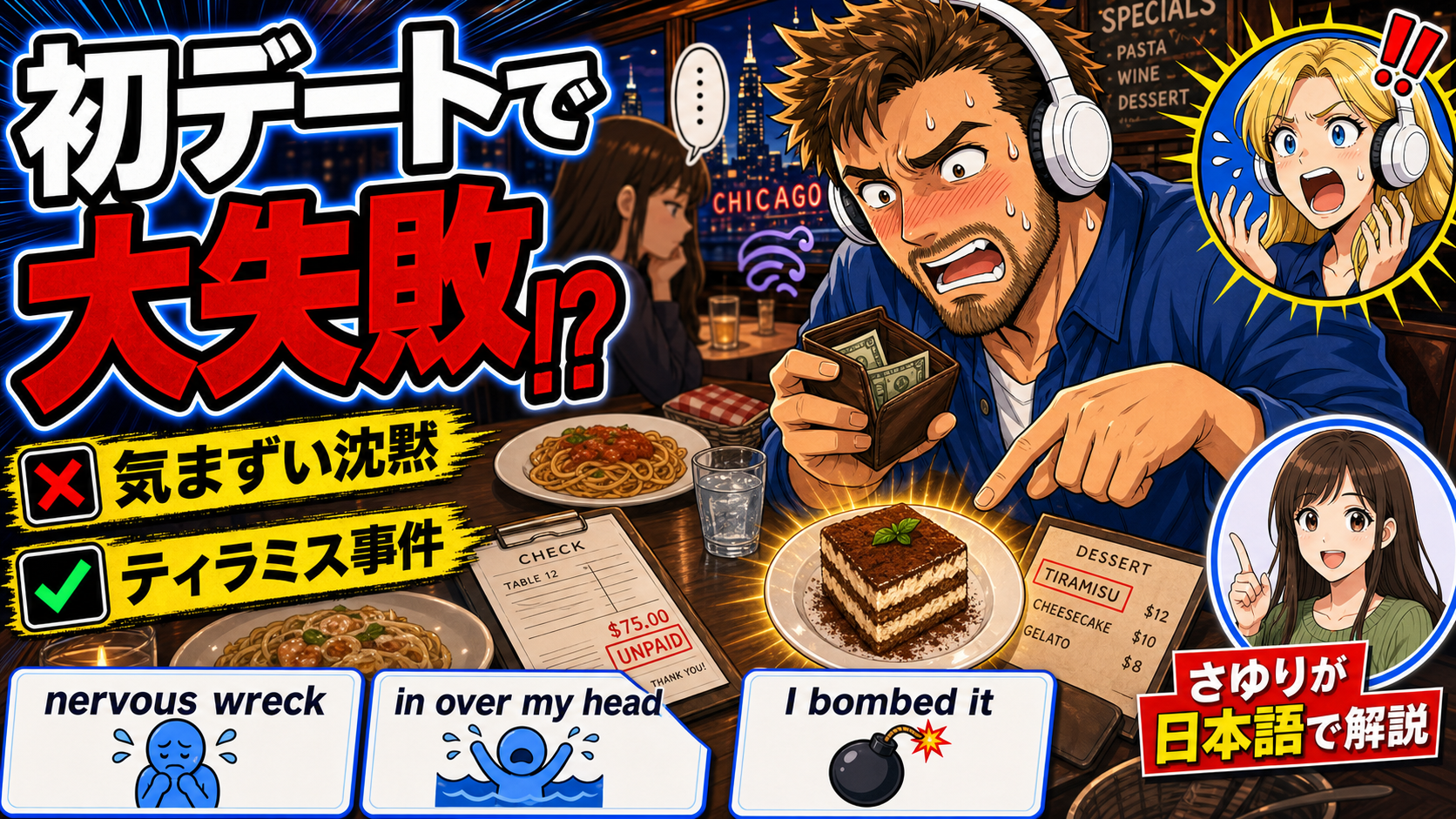
【日常英会話】日本語解説あり | 初デートで大失敗した16歳の時の話|ティラミス事件・6つの英語フレーズ #英語学習 #ネイティブ英語会話 #リスニング強化 #英語耳
ポッドキャスト「すきまイングリッシュ」のスクリプト。「【日常英会話】日本語解説あり | 初デートで大失敗した16歳の時の話|ティラミス事件・6つの英語フレーズ #英語学習 #ネイティブ英語会話 #リスニング強化 #英語耳」の会話全文です。

さゆり: 今日はマークの高校時代の話。 16歳のシカゴで、人生で初めて好きな人をデートに誘った、あの日の完全な失敗談です。
サラ: Marc. I heard today is a very personal story. (日本語訳: マーク。今日はすごく個人的な話だって聞いたよ。)
Marc: It is. For the record, I have made peace with this story. I can laugh at it now. (日本語訳: そうなんだ。一応言っておくと、この話とはもう折り合いがついてる。今なら笑えるよ。)
サラ: How bad was it? (日本語訳: どれくらいひどかったの?)
Marc: On a scale of one to ten — eleven. (日本語訳: 1から10で言うなら…11だね。)
サラ: Okay. From the beginning. I want everything. (日本語訳: わかった。最初から聞かせて。全部知りたい。)
Marc: Junior year of high school. I was sixteen. Her name was Emma Sullivan. She sat two rows behind me in third period English. (日本語訳: 高校2年生、16歳の時。エマ・サリバンっていう子がいて、3限の英語の授業で僕の2列後ろに座ってたんだ。)
サラ: Okay, already. Emma Sullivan. Tell me about Emma Sullivan. (日本語訳: もう始まったね。エマ・サリバン。エマ・サリバンのこと教えて。)
Marc: She was smart. She was funny in a dry, quiet way. She used to leave these little notes in the margins of her textbook in blue pen. Every class. I noticed that for some reason. I do not know why that detail stuck. (日本語訳: 賢い子だった。淡々とした、静かなユーモアがあって。青いペンで教科書の余白に小さなメモを書き込むんだ。毎回の授業で。なぜかそれが気になったんだ。なんでその細かいところが記憶に残ってるのか分からないけど。)
サラ: The blue pen specifically. (日本語訳: 特に青いペンってところが?)
Marc: The blue pen. Everyone else used pencil. Mr. Becker required pencil for his class. She used blue pen and did not seem to think about it. (日本語訳: 青いペン。他の子はみんな鉛筆だった。ベッカー先生のクラスでは鉛筆を使うことになってたんだ。彼女は青いペンを使ってて、全然気にしてない様子だった。)
Marc: At thirty-three I would just register that and move on. At sixteen I had a whole theory about what it meant. (日本語訳: 33歳の今なら、それに気づいても流すだけだろうね。でも16歳の僕は、それが何を意味するのか、あれこれ理論を立ててたんだ。)
サラ: That is extremely sixteen. (日本語訳: それ、すごく16歳っぽいね。)
Marc: Completely, embarrassingly sixteen. But at the time it felt like important data. (日本語訳: 完全に、恥ずかしいくらい16歳だった。でも当時はそれが大事な情報だと感じてたんだ。)
サラ: That is actually a very sweet detail. (日本語訳: それはすごく甘酸っぱいエピソードだね。)
Marc: I spent about six weeks just — being aware of her existence. In a very intense sixteen-year-old way. I talked to her occasionally. Nothing more. (日本語訳: 6週間くらい、ただ彼女の存在を意識して過ごしてた。16歳らしい、ものすごく真剣なやり方でね。時々話すこともあった。それ以上は何も。)
サラ: Did you ever actually have a real conversation with her? Before you asked. (日本語訳: 誘う前に、ちゃんと話したことはあったの?)
Marc: A few times. There was one day when we both stayed late to get books from the library for one of Mr. Becker's essays. We walked out of the building together. Maybe twenty minutes. (日本語訳: 何度か。ある日、ベッカー先生のエッセイの課題で、二人とも遅くまで残って図書館で本を借りたんだ。一緒に校舎を出て、たぶん20分くらい話したかな。)
サラ: And? (日本語訳: それで?)
Marc: She said she actually liked writing. I said I did too. We talked about books for a while. It was the best conversation I had had in weeks. (日本語訳: 彼女が書くのが好きだって言ってた。僕も好きだって言った。しばらく本の話をした。ここ何週間かで一番いい会話だったよ。)
サラ: And then you did nothing with it. (日本語訳: そして、何もしなかった、と。)
Marc: Derek told me the next morning: that was your window. You walked through the door and then walked right back out. So I spent the next two weeks looking for another one. (日本語訳: 翌朝、デレクに言われたよ。「あれがチャンスだったのに。せっかくドアを通ったのに、そのまま引き返したな」って。だから次の2週間、僕は別のチャンスを探してた。)
サラ: Six weeks of doing nothing. And then one day you just went for it. (日本語訳: 何もしないまま6週間。で、ある日ついに行動したんだね。)
Marc: Not exactly. I had been trying to do it for two weeks. I backed out at least four times. There was one afternoon where I was standing directly behind her at the water fountain. I had the words ready. I walked away. (日本語訳: ちょっと違う。2週間ずっと誘おうとしてたんだ。少なくとも4回は尻込みした。ある日の午後なんて、水飲み場で彼女のすぐ後ろに立ってたんだ。言うことも準備してた。でも、立ち去った。)
サラ: You walked away from the water fountain. (日本語訳: 水飲み場から立ち去ったんだ。)
Marc: I told myself I needed a better moment. That evening Derek texted me: "I saw what you did at the water fountain." (日本語訳: もっといいタイミングが必要だ、って自分に言い聞かせたんだ。その夜、デレクから「水飲み場でお前がしたこと、見たぞ」ってメッセージが来た。)
サラ: Derek was watching. (日本語訳: デレクが見てたんだ。)
Marc: Apparently Derek was watching. I still do not know why he was positioned to see that. So the next week, I waited for her outside class. I asked if she wanted to hang out that weekend. (日本語訳: どうやらデレクは見てたらしい。どうして彼があそこにいたのか、今でも分からない。それで次の週、教室の外で彼女を待って、その週末に遊ばないかって誘ったんだ。)
サラ: And? (日本語訳: それで?)
Marc: She said yes. No hesitation. Immediately yes. (日本語訳: 彼女は「いいよ」って言った。ためらいもなく。即答だよ。)
サラ: Which should have been great. (日本語訳: それは素晴らしいことだったはずなのにね。)
Marc: It was great. For about four seconds. Then I walked around the corner and had a complete internal meltdown. I was a nervous wreck. (日本語訳: 素晴らしかったよ。4秒くらいはね。でも角を曲がった途端、頭の中が完全にパニックになったんだ。緊張でボロボロだった。)
サラ: That exact feeling. You got what you wanted and suddenly you are terrified by it. (日本語訳: まさにその感覚。欲しいものが手に入った途端、それに怯えるんだ。)
Marc: I went home and spent three days planning. I would borrow my mom's car. I found a restaurant near Lincoln Park with good reviews. I had a backup plan if the restaurant fell through. (日本語訳: 家に帰って3日間計画を練った。母の車を借りるつもりだった。リンカーンパークの近くで評判の良いレストランを見つけた。もしそのレストランがダメだった時のためのバックアッププランもあった。)
サラ: A backup plan? (日本語訳: バックアッププラン?)
Marc: A second restaurant. And a third. I had researched every option within twenty minutes of her house. (日本語訳: 2軒目のレストラン。それに3軒目も。彼女の家から車で20分圏内の選択肢は全部調べ上げた。)
サラ: Marc. (日本語訳: マーク。)
Marc: I was so far in over my head. I did not know it yet. But I was completely in over my head from the moment she said yes. (日本語訳: 僕は完全にキャパオーバーだった。まだ気づいてなかったけどね。彼女が「いいよ」と言ったその瞬間から、完全にキャパオーバーだったんだ。)
サラ: Did you tell anyone? (日本語訳: 誰かに言った?)
Marc: I told my older brother Mike. That was a mistake. (日本語訳: 兄のマイクに話したんだ。それが間違いだった。)
サラ: What did he say? (日本語訳: なんて言ってた?)
Marc: He said, "Wear the blue shirt. Not the striped one. Do not try to be funny. You are not as funny as you think you are." (日本語訳: 「青いシャツを着ていけ。ストライプのはやめとけ。笑いを取ろうとするな。お前は自分で思ってるほど面白くない」って。)
サラ: Brutal. (日本語訳: ひどいね。)
Marc: He was right on every count. The piece of advice I thought I understood: do not try to be funny. I heard that. I thought I understood it. I did not understand it. (日本語訳: 全部そのとおりだった。分かったつもりでいたアドバイスが、「笑いを取ろうとするな」。聞いてたし、分かったつもりだった。でも分かってなかったんだ。)
サラ: You thought it meant do not tell a bad joke. (日本語訳: つまらないジョークを言うなって意味だと思ったんでしょ。)
Marc: I thought it meant: save the funny for the right moment. I had a joke ready. I had been sitting on it since Tuesday. Something about Mr. Becker. I thought: if there is a long pause, I will throw it. It will land. Everything will reset. (日本語訳: いや、面白いことは最適なタイミングまで取っておけって意味だと思ったんだ。ジョークを用意してた。火曜日からずっと温めてたんだ。ベッカー先生ネタ。長い沈黙があったら、それを投げよう。ウケる。それで全部リセットされる、って考えてた。)
サラ: The fact that you planned the joke is exactly why it did not land. (日本語訳: ジョークを計画してたって事実こそが、ウケなかった理由だね。)
Marc: One hundred percent. You cannot schedule spontaneous. That is what Mike was actually saying and I could not hear it yet. (日本語訳: 100%。自然なノリは予定に組み込めない。マイクが本当に言ってたのはそれなのに、僕にはまだそれが聞こえてなかったんだ。)
Marc: Saturday came. I picked her up at six. Blue shirt. Hands slightly shaking on the steering wheel the entire drive. (日本語訳: 土曜日になった。6時に彼女を迎えに行った。青いシャツ。運転中ずっと、ハンドルの上で手が少し震えてた。)
Marc: I had also rehearsed what to say when she opened the door. Two days of thinking about this. Multiple versions. (日本語訳: ドアを開けた時に言うことも練習してたんだ。2日間も考えてた。複数のバージョンをね。)
Marc: What I actually said: "you look really nice." Which is fine. But I said it the second the door opened. Before she had fully stepped out. (日本語訳: 実際に言ったのは、「すごく素敵だね」。それはそれでいいんだけど。ドアが開いた瞬間に言っちゃったんだ。彼女が完全に外に出る前に。)
サラ: Fast. (日本語訳: 早すぎ。)
Marc: Her mom was standing right behind her. Her mom said "thank you, that is very sweet." And I said "of course." To her mom. About her daughter. (日本語訳: 彼女のお母さんがすぐ後ろに立ってたんだ。お母さんが「ありがとう、優しいのね」って言って、僕は「もちろんです」って返した。お母さんに。娘さんのことで。)
サラ: You said of course. (日本語訳: 「もちろんです」って言ったんだ。)
Marc: As if that was the expected response. And then we walked to the car and I thought: good start, Marc. (日本語訳: それが当然の返事みたいにね。それから車まで歩きながら思ったんだ。「いいスタートだぞ、マーク」って。)
サラ: Did she notice? (日本語訳: 彼女は気づいた?)
Marc: I hope she did not. She probably did. (日本語訳: 気づいてないといいけど。多分気づいてたと思う。)
サラ: She definitely did. (日本語訳: 絶対気づいてたって。)
Marc: We got to the restaurant and it was — fine. But I had made an error in judgment. I wanted somewhere "nice." I did not account for what a quiet, formal restaurant does to a conversation between two sixteen-year-olds who barely know each other. (日本語訳: レストランに着いたんだけど、まあ、普通だった。でも判断ミスをしてたんだ。「ちゃんとした」場所にしたかった。静かでフォーマルなレストランが、お互いをほとんど知らない16歳同士の会話をどうしてしまうか、考えてなかったんだ。)
サラ: Oh no. (日本語訳: あーあ。)
Marc: Silences. Long, loud silences. I asked questions, she answered. She asked questions, I answered. Technically there was conversation happening. But the pauses in between were — enormous. (日本語訳: 沈黙。長くて、耳に痛い沈黙。僕が質問して、彼女が答える。彼女が質問して、僕が答える。一応、会話はしてた。でも、その合間の間が、ものすごく長かったんだ。)
サラ: I can feel this. (日本語訳: これ、わかる気がする。)
Marc: And then there was a pause, and I thought — this is the moment. Say something interesting. Something charming. (日本語訳: それで、しばらく沈黙があって、「今だ。何か面白いこと、気の利いたことを言うんだ」って思ったんだ。)
サラ: Do not do it. (日本語訳: やめときな。)
Marc: I made a joke about Mr. Becker. Our English teacher. A very flat joke. Not mean, just — nothing. It landed nowhere. She gave me a polite smile. And then we both looked at our food. (日本語訳: ベッカー先生、僕らの英語の先生なんだけど、その先生についてジョークを言ったんだ。すごくつまらないやつ。意地悪じゃないけど、ただ…何もない。まったくウケなかった。彼女は丁寧な笑顔を返してくれて、それから二人とも自分の料理に目を落とした。)
サラ: The polite smile is worse than a laugh. (日本語訳: 丁寧な笑顔って、笑ってくれるよりタチ悪いよね。)
Marc: So much worse. A laugh you can build on. A polite smile ends the sentence entirely. (日本語訳: 本当にそう。笑ってくれたら、そこから話を広げられるけど、丁寧な笑顔は会話を完全に終わらせるからね。)
サラ: In New York that silence would have lasted about two seconds before someone talked over it. High energy is the default. (日本語訳: ニューヨークなら、その沈黙も2秒で誰かが話し始めて、かき消されるよ。デフォルトでハイテンションだから。)
Marc: In Chicago we just — sat with the silence. Very Midwestern. We acknowledged the awkwardness by not acknowledging it. (日本語訳: シカゴだと、ただ沈黙と一緒に座ってるんだ。すごく中西部っぽいよね。気まずさに触れないことで、気まずさを認めるんだよ。)
サラ: The dignified freeze. (日本語訳: 堂々たるフリーズ、だね。)
Marc: I played it cool eventually. I said something like "so, how is the pasta?" and somehow that reset the table. We got back on track. (日本語訳: 最終的には、クールに振る舞えた。「で、パスタはどう?」みたいなことを言ったら、なぜかそれでテーブルの空気がリセットされて、また軌道に戻れたんだ。)
サラ: The pasta pivot. (日本語訳: パスタ・ピボット。)
Marc: The pasta pivot. And after that we actually had a real conversation. She mentioned she liked horror movies. I said I had never watched one all the way through. (日本語訳: パスタ・ピボット。それから、ちゃんとした会話ができるようになったんだ。彼女がホラー映画が好きだって話になって。僕は全部通して観たことがないって言ったんだ。)
Marc: She said I was missing out. We went back and forth about it for a while. She was funny about it. (日本語訳: 彼女は「損してる」って言った。それでしばらくその話でやり取りしたんだ。彼女も面白く話してくれたよ。)
サラ: So it genuinely came back. (日本語訳: それで、本当に持ち直したんだね。)
Marc: For about ten minutes it was a normal, good conversation. I remember thinking: okay. You are fine. This is going well. (日本語訳: 10分くらいは、普通で良い会話ができたよ。それで「よし。大丈夫だ。うまくいってる」って思ったんだ。)
サラ: And then. (日本語訳: で、そのあと。)
Marc: And then the waiter came back and asked about dessert. But I was rattled. And a rattled Marc makes worse decisions. (日本語訳: それで、ウェイターがデザートはどうかって聞きに来たんだ。でも僕は動揺してた。動揺したマークは、もっと悪い決断をするんだ。)
サラ: What happened next. (日本語訳: それで、どうなったの?)
Marc: She said she wanted dessert. I immediately said yes. The waiter came. I looked at the menu. The cheapest dessert was twelve dollars. I was sixteen. I had brought exactly enough for dinner plus a small tip. (日本語訳: 彼女はデザートが欲しいって言った。僕は即座に「いいよ」って言ったんだ。ウェイターが来た。メニューを見た。一番安いデザートが12ドルだった。僕は16歳。ディナー代とちょっとしたチップ代しか持ってなかったんだ。)
サラ: No. (日本語訳: うそでしょ。)
Marc: I had thirty-eight dollars in my wallet. The entire meal had been thirty-four. I had not planned for dessert. (日本語訳: 財布に38ドル入ってたんだ。食事全体で34ドルだった。デザートの計画はしてなかった。)
サラ: Marc. (日本語訳: マーク。)
Marc: I said "actually, I think we are okay on dessert" and she said "oh, okay." And I could tell. I could tell she had wanted the tiramisu. (日本語訳: それで「あの、デザートはいいかな」って言ったら、彼女は「あ、そっか」って。でも、分かったんだ。彼女がティラミスを食べたかったのが。)
サラ: She had looked directly at the tiramisu. (日本語訳: ティラミスをまっすぐ見てたんだね。)
Marc: She had looked right at it. And I said no to the tiramisu. I should have quit while I was ahead. I should have said yes, put the dessert on whatever card I had, figured it out later. Instead I said no. (日本語訳: まさにそれを見てた。なのに僕はティラミスを断った。勝っているうちにやめておけばよかった。「いいよ」って言って、デザートは手持ちのカードで払って、あとでなんとかすればよかったんだ。なのに、断った。)
サラ: Sixteen dollars standing between you and a completely different outcome. (日本語訳: 君と、まったく違う結末の間にあったのは、16ドルだったんだね。)
Marc: I still think about the tiramisu. Seventeen years later. I still think about it. (日本語訳: 今でもティラミスのこと考えるよ。17年経った今でも。今でも考えてる。)
サラ: How did the night end? (日本語訳: その夜はどう終わったの?)
Marc: I drove her home. Music on. I had built a playlist for the drive back. I had thought about that too. Eight songs. I had planned for every detail except how to actually be present with someone. (日本語訳: 彼女を家まで車で送った。音楽をかけて。帰り道のプレイリストも作ってた。それも考えてたんだ。8曲。人とちゃんと向き合う方法以外は、細かいところまで全部計画してた。)
サラ: A return playlist. (日本語訳: 帰りのプレイリスト。)
Marc: I had a playlist. I had three restaurant options. I had a prepared opening line. I had analyzed every conversation we had ever had. (日本語訳: プレイリストはあった。レストランの選択肢も3つ。用意した最初のセリフもあった。今までした会話は全部分析した。)
Marc: I had prepared for everything except the actual date. She thanked me when I dropped her off. Said she had a nice time. She was always kind. (日本語訳: 実際のデート以外は、全部準備してたんだ。家まで送ったら、彼女はお礼を言ってくれた。楽しかったって。彼女はいつも優しかったから。)
サラ: Did she have a nice time? (日本語訳: 楽しかったの?)
Marc: She was being kind. She was always kind. But I knew. I had bombed it. (日本語訳: 気を遣ってくれただけだよ。彼女はいつも優しかった。でも分かってた。大失敗したんだ。)
Marc: Monday at school everything was fine. She was never weird about it, I was never weird about it. We talked in class like normal. (日本語訳: 月曜日の学校では、全部普通だった。彼女も僕も、その件で変な態度は取らなかった。授業でも普通に話した。)
サラ: That is good, at least. (日本語訳: それは少なくとも良かったね。)
Marc: She started dating someone else about three weeks later. (日本語訳: 3週間後くらいに、彼女は別の人と付き合い始めたんだ。)
サラ: Oh. (日本語訳: あー。)
Marc: Three weeks. Which — I was not surprised, but the timeline was swift. (日本語訳: 3週間。まあ…驚きはしなかったけど、展開は早かったな。)
サラ: And you had to sit in third period English and watch that. (日本語訳: それで、3限の英語の授業でそれを見なきゃいけなかったんだ。)
Marc: Every day until the end of the year. Waving across the classroom. (日本語訳: 学年が終わるまで毎日。教室の向こうから手を振られながらね。)
サラ: That is a very specific kind of pain. (日本語訳: それはまた、ものすごく特殊な痛みだね。)
サラ: Did you ever talk to her again? After that semester? (日本語訳: その学期の後、また彼女と話したことはあった?)
Marc: We stayed friendly. Junior year she asked to borrow my notes for an essay. Very casual. Like nothing had happened. (日本語訳: 仲のいいままだったよ。高校2年の時、彼女がエッセイのためにノートを貸してって言ってきた。すごく気軽にね。何もなかったみたいに。)
サラ: She was completely over it. (日本語訳: 彼女は完全に吹っ切れてたんだね。)
Marc: She was absolutely over it. I was the only one still carrying that date. She had moved on before the car was cold. I am certain of that now. (日本語訳: 彼女は完全に吹っ切れてたよ。あのデートを引きずってたのは僕だけだった。車のエンジンが冷める前に、彼女はもう次に進んでた。今ならそう確信できる。)
サラ: That is sixteen. You are the only one who remembers. (日本語訳: それが16歳だよ。覚えてるのは自分だけ。)
Marc: Looking back, the real problem was: I had spent three weeks planning logistics and zero minutes thinking about how to actually be present with someone. I had restaurant research. I had a backup restaurant. I had zero conversation. (日本語訳: 今になって思うと、本当の問題はこうだったんだ。3週間かけて段取りを計画して、誰かと一緒にいる時間をどう過ごすかについてはゼロ分しか考えてなかった。レストランのリサーチはした。予備のレストランも用意した。会話はゼロだった。)
サラ: All planning, no presence. (日本語訳: 計画ばっかりで、心はそこになかったんだね。)
Marc: Exactly. At thirty-three I can say that clearly. At sixteen I had no idea what I was doing. Not even close. (日本語訳: まさにそれ。33歳になった今ならはっきり言える。16歳だった僕は自分が何をしてるかなんて全く分かってなかった。全然。)
サラ: My first date disaster — New York version — the guy took me somewhere he described as "a vibe." It was a sports bar. Two different games on at full volume. We had to shout at each other across the table for two hours. (日本語訳: 私の初デートの失敗談、ニューヨーク版なんだけど、相手が「バイブスがいい」って言う店に連れて行ってくれたの。それがスポーツバーで。違う試合が2つ、大音量で流れてて、2時間ずっとテーブル越しに叫び合わなきゃいけなかった。)
Marc: That is objectively worse. (日本語訳: それは客観的に見てもっとひどいね。)
サラ: By the end I had a slight headache and had learned nothing about him except that he was a Jets fan. I kept trying, though. I asked about his job. He said finance. I asked what he liked about it. He said: the money. That was his full answer. (日本語訳: 結局、軽い頭痛がしただけで、彼についてはジェッツファンだってこと以外何も分からなかった。でも、私も努力はしたの。仕事について聞いたら、金融だって。仕事の何が好きかって聞いたら、お金だって。それが彼の答えの全部だった。)
Marc: The money. (日本語訳: お金。)
サラ: Not "I like the challenge" or "it is interesting work." Just: the money. Then a game went to overtime and he ordered another round without asking if I wanted anything. By minute ninety I was reading the menu again just to have something to do. (日本語訳: 「やりがいがある」とか「面白い仕事」とかじゃなくて、ただ「お金」。それから試合が延長戦に入って、彼は私に何か要るかも聞かずに、また飲み物を注文したの。90分経つ頃には、やることがなくて、メニューをまた読み返してた。)
Marc: You memorized the menu. (日本語訳: メニューを暗記したんだ。)
サラ: I knew every item and the price by the time the check came. That is how I spent my first date. Memorizing nachos prices. (日本語訳: お会計が来る頃には、メニューの全品と値段を覚えてた。それが私の初デートの過ごし方。ナチョスの値段の暗記。)
Marc: The Jets. (日本語訳: ジェッツか。)
サラ: Which should have been a signal. (日本語訳: それもサインだったはずなのにね。)
Marc: The things that are obvious in hindsight. (日本語訳: 後になってみれば、明らかなことばかりだよね。)
サラ: Everything is obvious in hindsight. You just survive sixteen. (日本語訳: 何でも後になってみれば明らかなんだよ。16歳は、とにかく乗り切るしかないの。)
サラ: What would you actually tell him. Sixteen-year-old Marc. (日本語訳: 実際、彼に何て言う? 16歳のマークに。)
Marc: Order the tiramisu. That is the first thing. (日本語訳: ティラミスを頼みな。それがまず一つ目。)
サラ: And the second. (日本語訳: で、二つ目は?)
Marc: Stop trying to say the right thing. You already got the yes. That was the hard part. The rest of the date is just: be curious about her. Ask questions. Actually hear what she says. (日本語訳: 正しいことを言おうとするな。もう「いいよ」はもらってるんだから。それが一番難しいところだったんだ。デートの残りは、ただ彼女に興味を持てばいい。質問して、彼女の言うことをちゃんと聞け。)
サラ: Could sixteen-year-old Marc have heard that. (日本語訳: 16歳のマークに、それが届いたかな。)
Marc: No. You cannot hear advice you have no context for. You earn the context by going through it. By bombing the date. (日本語訳: いや。経験のないことについてのアドバイスは、耳に入らないんだ。それは実際に経験して、デートで大失敗して、初めて身につくものなんだよ。)
Marc: By watching her wave at you from across the classroom every day for the rest of the year. That is the tuition. You pay it whether you want to or not. (日本語訳: 学年が終わるまで毎日、教室の向こうから彼女に手を振られることでね。それが授業料だ。望もうと望むまいと、払うことになる。)
サラ: That is a long way to learn to order dessert. (日本語訳: デザートを頼むことを学ぶには、ずいぶん遠回りだね。)
Marc: Seventeen years. But I know now. (日本語訳: 17年かかった。でも、今なら分かる。)
Marc: The one thing I will say for past-me: I wore the blue shirt. I got that right. (日本語訳: 過去の自分のために一つ言うなら、青いシャツを着ていったこと。そこだけは正解だった。)
サラ: You got the blue shirt right. (日本語訳: 青いシャツは正解だったんだね。)
Marc: One for one. (日本語訳: 1勝0敗。)
さゆり: 今日のキーフレーズをまとめていきましょう。
Marc: Alright. "I was a nervous wreck." — When you are so anxious that you feel like you are falling apart. Everything is shaking. Your thoughts are scattered. (日本語訳: さて。「極度に緊張していた」。不安すぎて、自分がバラバラになりそうな時のこと。何もかも震えて、考えもまとまらない。)
サラ: "I was a nervous wreck before my first work presentation. Completely gone on the inside." (日本語訳: 「初めての仕事のプレゼンの前、極度に緊張していた。内心は完全にボロボロだった。」)
さゆり: 「nervous wreck」は、緊張しすぎてぐちゃぐちゃな状態のこと。日本語なら「気が気でない」「不安でいっぱいいっぱい」という感覚です。
Marc: "I was in over my head." — The situation was beyond what you could actually handle. You thought you could manage it. You could not. (日本語訳: 「手に負えない状況だった」。実際に対処できる範囲を超えていた、ということ。できると思ってたのに、できなかった。)
サラ: "She asked me to lead the whole project. I said yes. I was in over my head from day one." (日本語訳: 「彼女にプロジェクト全体のリーダーを頼まれて、引き受けた。初日から手に負えなかった。」)
さゆり: 「in over my head」は「深みにはまりすぎた、手に負えない」という意味。頭まで水に沈んでしまった、そのイメージです。
Marc: "I should have quit while I was ahead." — Things were going okay. You had a good moment. And then you kept going. And then it got worse. (日本語訳: 「勝っているうちにやめるべきだった」。うまくいっていて、いい瞬間があった。なのに続けてしまって、悪くなった。)
サラ: "I was winning the argument and then I kept talking. I should have quit while I was ahead." (日本語訳: 「議論に勝っていたのに、しゃべり続けてしまった。勝っているうちにやめるべきだった。」)
さゆり: 「quit while you're ahead」は「有利なうちに引く」。引き際を間違えたというときの定番フレーズです。
Marc: "I played it cool." — Something awkward happened. You stayed calm. You acted like it was not a big deal. You kept moving. (日本語訳: 「クールに振る舞った」。何か気まずいことが起きても冷静でいて、大したことじゃないふりをして、そのまま進んだ、ということ。)
サラ: "I completely forgot his name at the party. I played it cool and just said 'hey, you.'" (日本語訳: 「パーティーで彼の名前を完全に忘れた。クールに振る舞って、『やあ、君』とだけ言った。」)
さゆり: 「play it cool」は「動じないふりをして、落ち着いて乗り越えること」。気まずい場面でも冷静に振る舞うときに使います。
Marc: "I bombed it." — Simply failed. Completely. You went in hoping to do well. It did not go well. (日本語訳: 「大失敗した」。単純に、完全にダメだったってこと。うまくやるつもりで臨んだのに、うまくいかなかった。)
サラ: "I prepared all week for the interview. Walked in, fell apart in the first three questions. I bombed it." (日本語訳: 「面接のために1週間準備したのに、部屋に入って最初の3問で崩れた。大失敗した。」)
さゆり: 「bombed it」は「大失敗した」。もともとは舞台でウケなかったコメディアンの言葉で、今は試験・面接・プレゼン・デートなど何にでも使えます。
Marc: And finally: "Looking back, I had no idea what I was doing." — You understand now what you did not understand then. You can only see it clearly from a distance. (日本語訳: そして最後に「振り返ってみると、何をやっているのか全く分かっていなかったな」。つまり、その時は理解できなかったことが、今なら理解できるということ。遠くから見れば、はっきりと分かるんだ。)
サラ: "I look back at my first year here and honestly, I had no idea what I was doing. I was just surviving." (日本語訳: 「ここに来た最初の1年を振り返ると、正直、自分が何をしているのか全く分かっていなかった。ただ生き延びるので精一杯だった。」)
さゆり: 「looking back」は「振り返ってみると」。「I had no idea what I was doing」は「何をしているかまったくわかっていなかった」。時間が経ってわかること、そういう反省や発見を話すときに使えます。
Marc: To sixteen-year-old Marc: the tiramisu was twelve dollars. Just order the tiramisu. (日本語訳: 16歳の僕へ。ティラミスは12ドルだった。とにかくティラミスを頼め。)
サラ: The most specific life lesson. (日本語訳: 一番具体的な人生の教訓ね。)
Marc: Hard-won. (日本語訳: 苦労して手に入れた教訓だよ。)
さゆり: 今日はマークの16歳の初デート大失敗エピソードでした。次回もお楽しみに。
サラ: Take care, everyone. (日本語訳: みんな、気をつけてね。)
Marc: See you next time. (日本語訳: また次回。)

関連記事
【日常英会話】「感謝していることを一つずつ」アメリカの感謝祭とネイティブの本音 #英語学習 #ネイティブ英語会話 #リスニング強化 #英語耳
ポッドキャスト「すきまイングリッシュ」のスクリプト。「【日常英会話】「感謝していることを一つずつ」アメリカの感謝祭とネイティブの本音 #英語学習 #ネイティブ英語会話 #リスニング強化 #英語耳」の会話全文です。

【日常英会話】英語のみ | ニューヨークと東京のハロウィンを英語で語ると? #英語学習 #ネイティブ英語会話 #リスニング強化
ポッドキャスト「すきまイングリッシュ」のスクリプト。「【日常英会話】英語のみ | ニューヨークと東京のハロウィンを英語で語ると? #英語学習 #ネイティブ英語会話 #リスニング強化」の会話全文です。

【日常の英語】元気のない同僚にかける英語フレーズ12選|声かけから励ましまで #英語学習 #英語フレーズ #英会話 #英語耳
ポッドキャスト「すきまイングリッシュ」のスクリプト。「【日常の英語】元気のない同僚にかける英語フレーズ12選|声かけから励ましまで #英語学習 #英語フレーズ #英会話 #英語耳」の会話全文です。

【日常英会話】住所と道案内を英語で話すと?日本の住所には通りの名前がない #英語学習 #ネイティブ英語会話 #リスニング強化 #英語耳
ポッドキャスト「すきまイングリッシュ」のスクリプト。「【日常英会話】住所と道案内を英語で話すと?日本の住所には通りの名前がない #英語学習 #ネイティブ英語会話 #リスニング強化 #英語耳」の会話全文です。

【日常の英語】日本語解説あり | 席を譲ろうとして、断られた |申し出る英語と、断られたときの英語6つ #英語学習 #英語フレーズ #英会話 #英語耳
ポッドキャスト「すきまイングリッシュ」のスクリプト。「【日常の英語】日本語解説あり | 席を譲ろうとして、断られた |申し出る英語と、断られたときの英語6つ #英語学習 #英語フレーズ #英会話 #英語耳」の会話全文です。

【日常英会話】カウンターには、向かいの椅子がない、「お一人ですか」と聞かれる国 #英語学習 #ネイティブ英語会話 #リスニング強化 #英語耳
ポッドキャスト「すきまイングリッシュ」のスクリプト。「【日常英会話】カウンターには、向かいの椅子がない、「お一人ですか」と聞かれる国 #英語学習 #ネイティブ英語会話 #リスニング強化 #英語耳」の会話全文です。