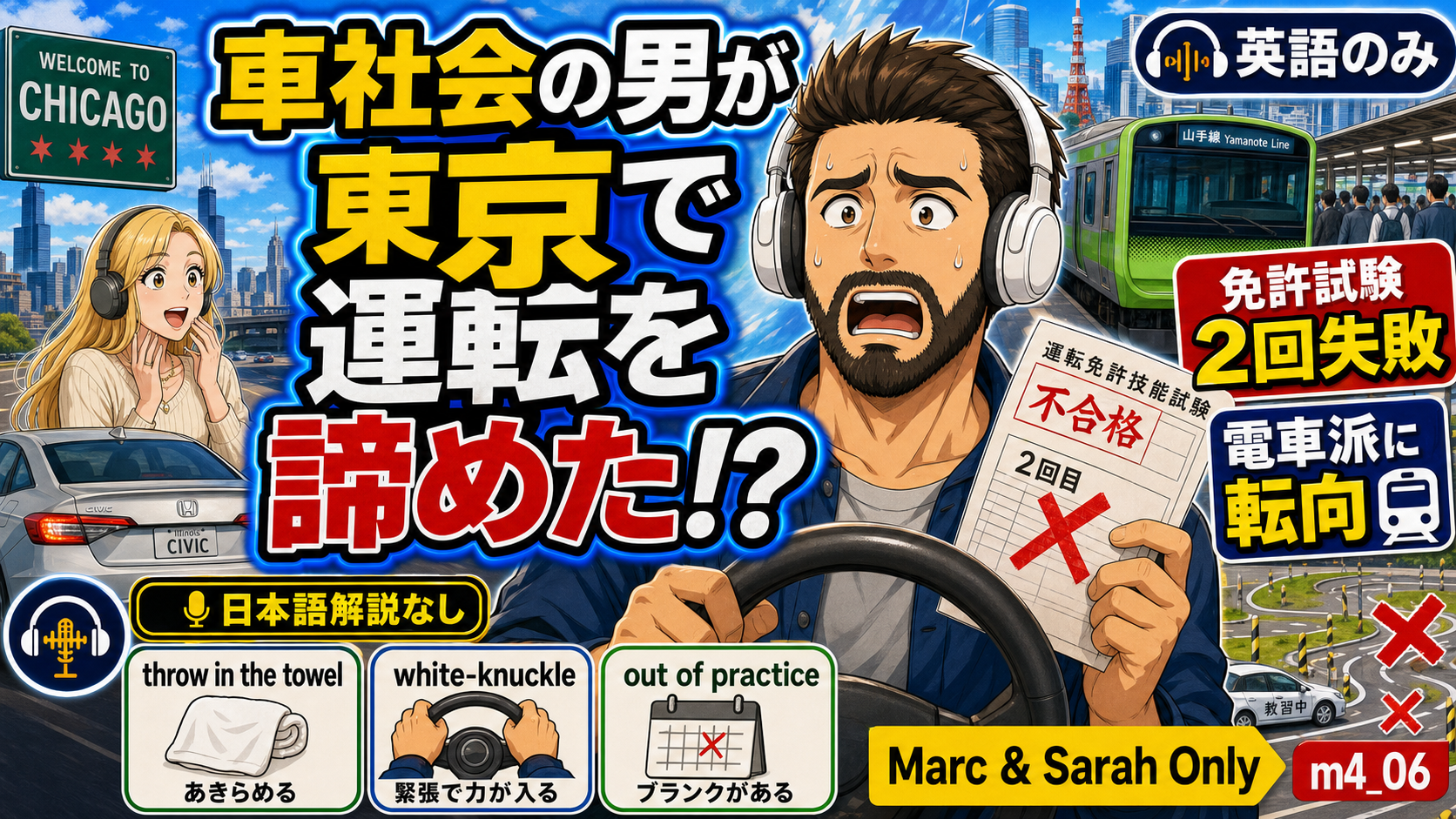
【日常英会話】英語のみ | 在日5年で運転免許に2回落ちて電車派になったアメリカ人の話 #英語学習 #ネイティブ英語会話 #リスニング強化 #英語耳
ポッドキャスト「すきまイングリッシュ」のスクリプト。「【日常英会話】英語のみ | 在日5年で運転免許に2回落ちて電車派になったアメリカ人の話 #英語学習 #ネイティブ英語会話 #リスニング強化 #英語耳」の会話全文です。

Marc: Sarah, here is a sentence I would not have believed five years ago. (日本語訳: サラ、5年前の僕だったら信じられなかったような一言があるんだ。)
サラ: Try me with it. (日本語訳: 聞かせてよ。)
Marc: I have not driven a car in over four years. (日本語訳: 4年以上運転してないんだ。)
サラ: Wait, four years? Like, behind a wheel, hands on ten and two, four years? (日本語訳: え、4年?ハンドル握って、10時2時の位置で、4年間?)
Marc: Four years. Maybe four and a half. I had to stop and count. (日本語訳: 4年。たぶん4年半。数えるのにちょっと考えちゃった。)
サラ: Marc, you are from Chicago. That is car country. (日本語訳: マーク、あなたシカゴ出身でしょ。車社会だよ。)
Marc: That is exactly the joke. I am a Chicago kid who can no longer drive. (日本語訳: まさにそれだよ。運転できなくなったシカゴっ子なんだ。)
サラ: When you say no longer, do you mean cannot legally or cannot in practice? (日本語訳: できなくなった、っていうのは、法的にできないってこと? それとも実質的に?)
Marc: In practice. If you put me behind a wheel today, I would be white-knuckle from the driveway. (日本語訳: 実質的に。今日ハンドルを握らされたら、家の前から出る時点でガチガチだよ。)
サラ: White-knuckle from the driveway. That is a sad and beautiful image. (日本語訳: 家の前からガチガチ。悲しくて美しい光景だね。)
Marc: I am completely out of practice. I am rusty in a way that scares me. (日本語訳: もう全然慣れてない。怖いくらいにサビついちゃってる。)
サラ: Okay, this story has a beginning. Walk me through it. (日本語訳: よし、この話には始まりがあるね。順を追って教えて。)
Marc: There are three chapters. Chicago kid, Tokyo attempt, and the long surrender. (日本語訳: 3つの章があるんだ。シカゴっ子時代、東京での挑戦、そして長い降参。)
サラ: I am buckled in. Drive me through it. (日本語訳: シートベルトは締めたよ。さあ、運転しながら案内して。)
Marc: Sarah. That is a pun. We have been recording for fifteen seconds. (日本語訳: サラ。それダジャレだよね。収録始まってまだ15秒だよ。)
サラ: I had to. The whole episode is about driving. (日本語訳: 言いたかったんだ。エピソード全体が運転の話だから。)
Marc: Fair. Chapter one. Chicago kid. (日本語訳: まあね。第1章。シカゴっ子時代。)
Marc: I got my license the week I turned sixteen. (日本語訳: 16歳になった週に免許取ったんだ。)
サラ: The week. Not the month. The week. (日本語訳: その週に? 月じゃなくて、週に?)
Marc: My dad took me to the DMV before my birthday cake was even cut. He had taken the day off. (日本語訳: 誕生日ケーキを切る前に、父さんが車両管理局に連れて行ってくれたんだ。わざわざ仕事を休んでね。)
サラ: That is so American Midwest dad. (日本語訳: まさにアメリカ中西部のお父さんって感じだね。)
Marc: It is. In Chicago, when your kid turns sixteen, that is the day. (日本語訳: そうだよ。シカゴでは、子どもが16歳になったら、その日が免許を取る日なんだ。)
サラ: I love that you say "in Chicago" like it is a whole country. (日本語訳: 「シカゴでは」って、まるで一つの国みたいに言うのがいいね。)
Marc: Honestly? In car culture terms, it kind of is. (日本語訳: 正直? 車文化の面から見たら、そういうところもあるよ。)
サラ: Okay so license at sixteen. Then what? (日本語訳: なるほど、16歳で免許取得。それで?)
Marc: Then immediately I drove everything. Friends to school, friends from school, late-night drives just to drive. (日本語訳: それからはすぐ、何でも運転したよ。友達を学校まで乗せて、学校から乗せて帰って、夜中にただ走るためだけのドライブもした。)
サラ: Drives just to drive. New York me does not understand that sentence. (日本語訳: ただ走るためだけのドライブ。ニューヨーク育ちの私には、意味がわからない一言だよ。)
Marc: In New York you do not even have a license, right? (日本語訳: ニューヨークだと、そもそも免許持ってないんだよね?)
サラ: I have lived my whole life on trains. My parents never owned a car in the city. (日本語訳: 私はずっと電車で暮らしてきたから。両親も、ニューヨークでは車を持ったことがないんだ。)
Marc: That is wild to a Chicago kid. We had two cars and a driveway by the time I was eight. (日本語訳: シカゴっ子には衝撃だよ。うちは僕が8歳になる頃には、車が2台と、家の前に停めるスペースがあったんだから。)
サラ: Two cars and a driveway. That is a flex you do not know you are doing. (日本語訳: 車2台に駐車スペース。自覚のない自慢だね。)
Marc: I did not know it was a flex. To me it was just life. (日本語訳: 自慢だなんて思ってなかった。僕にとっては、ただの日常だったんだ。)
サラ: Tell me about the road trip though. You mentioned a road trip earlier. (日本語訳: でも、ロードトリップの話も聞かせて。前にロードトリップについて言ってたよね。)
Marc: Summer I turned twenty-one. Chicago to Denver. Fourteen hours. Solo. (日本語訳: 21歳になった夏の時。シカゴからデンバーまで。14時間。一人で。)
サラ: Solo? Like, alone? In a car? For fourteen hours? (日本語訳: 一人で? たった一人で? 車で? 14時間も?)
Marc: One overnight in Iowa at a motel called the Travelodge. The room smelled like microwave popcorn. (日本語訳: 途中、アイオワのトラベロッジっていうモーテルに一泊した。部屋は電子レンジのポップコーンの匂いがしたよ。)
サラ: Marc. That is a movie. (日本語訳: マーク。それ、映画だよ。)
Marc: It is the most American thing I have ever done. I had a 2008 Honda Civic and a Spotify playlist. (日本語訳: 今までで一番アメリカっぽいことをしたと思う。2008年型のホンダ・シビックと、Spotifyのプレイリストでね。)
サラ: Honda Civic. The unsung hero of every twenty-something in America. (日本語訳: ホンダ・シビック。アメリカの20代みんなを支える、縁の下の力持ちだね。)
Marc: I drove that car for six years. I gave it to my brother Mike when I moved to Tokyo. (日本語訳: あの車に6年乗った。東京に来るとき、弟のマイクに渡した。)
サラ: Wait, you just handed your brother the keys? (日本語訳: 待って、鍵をそのまま渡したの?)
Marc: I handed him the keys, the title, and a half-empty pack of gum from the glove box. (日本語訳: 鍵と、車の権利書と、グローブボックスに入ってた食べかけのガムを渡した。)
サラ: That is honestly the cleanest sibling transaction I have ever heard. (日本語訳: 正直、今まで聞いた中で一番あっさりした兄弟間の取引だよ。)
Marc: Mike still drives it. He sends me photos when it hits a new mileage milestone. (日本語訳: マイクは今もあの車に乗ってる。走行距離が節目を超えるたびに、写真を送ってくるんだ。)
サラ: Aww. That is a love language. (日本語訳: わあ。それが愛情表現なんだね。)
Marc: Mike is a Midwestern guy. Photos of an odometer is how he says I miss you. (日本語訳: マイクは中西部の人間だから。走行距離計の写真が、「会いたい」の言い方なんだ。)
サラ: So you grew up basically inside a car. (日本語訳: じゃあ、ほとんど車の中で育ったようなものなんだね。)
Marc: Inside a car, washing a car, jump-starting a car, scraping ice off a car at six in the morning. (日本語訳: 車の中にいて、車を洗って、上がったバッテリーをつないでエンジンをかけて、朝6時に車の氷を削って。)
サラ: Scraping ice. Right. That is a winter thing I never had to learn. (日本語訳: 氷を削る。そうか。それは私が覚える必要のなかった冬の作業だね。)
Marc: I could scrape an entire windshield in like ninety seconds. That was a skill. (日本語訳: フロントガラス全体を90秒くらいで削れたんだ。あれは特技だった。)
サラ: Past tense. That was a skill. (日本語訳: 過去形だね。「特技だった」。)
Marc: Past tense. Exactly. Which brings us to chapter two. (日本語訳: 過去形。その通り。そこから第2章だ。)
Marc: Four months into Tokyo, I decided I was going to keep driving. (日本語訳: 東京に来て4か月で、運転は続けようって決めたんだ。)
サラ: Of course you did. You had been a driver your whole life. (日本語訳: もちろんそうするでしょ。ずっと運転してきたんだから。)
Marc: I assumed it would be a paperwork thing. Hand them my Illinois license. Get a Japanese one. (日本語訳: 書類の手続きだけで済むと思ってた。イリノイの免許を出して、日本の免許をもらうだけ。)
サラ: I am guessing it was not a paperwork thing. (日本語訳: 書類だけじゃ済まなかったんでしょ。)
Marc: It was not. I learned the hard way that Illinois is not on the reciprocal list. (日本語訳: 済まなかった。イリノイ州は、免許をそのまま切り替えられる対象に入ってないって、痛い目にあって学んだんだ。)
サラ: What does that mean in plain English? (日本語訳: それって、わかりやすく言うとどういうこと?)
Marc: It means I had to take the actual practical driving test. On a real course. In a Japanese driving school car. (日本語訳: 実際の技能試験を受けなきゃいけなかったってこと。本物のコースで。日本の教習所の車で。)
サラ: At, like, the same level as a Japanese teenager? (日本語訳: 日本の10代と同じレベルで?)
Marc: Pretty close, yes. Maybe with a small head start on the written part because of my experience. (日本語訳: ほぼ同じだね。学科は、経験があるぶん少し有利だったかもしれないけど。)
サラ: Okay so you signed up. (日本語訳: で、申し込んだんだ。)
Marc: I signed up. I studied. I bought a little booklet. I watched YouTube videos at lunch for two weeks. (日本語訳: 申し込んだ。勉強した。小さい冊子を買って、2週間、昼休みにYouTubeを見てた。)
サラ: Marc, no. You were studying for a driving test you had been doing for ten years. (日本語訳: マーク、嘘でしょ。10年もやってきた運転の試験のために勉強してたの?)
Marc: I was. Because the Japanese course test is its own thing. (日本語訳: してたよ。日本のコースでの試験は、まったくの別物だから。)
サラ: Explain. (日本語訳: 説明して。)
Marc: There is an S-curve. There is a crank turn, which is like an L-shape. There are mirror checks on a specific schedule. (日本語訳: S字カーブがある。クランクっていう、L字みたいな曲がり角もある。ミラーを確認するタイミングも決まってるんだ。)
サラ: Mirror checks on a schedule? Like, the schedule of when you look in the mirror? (日本語訳: 確認するタイミングが決まってる? いつミラーを見るかってこと?)
Marc: When you start the car, before you signal, before you change lanes, before you turn, after you turn. (日本語訳: エンジンをかけたとき、ウィンカーの前、車線を変える前、曲がる前、曲がったあと。)
サラ: After you turn? Why after? (日本語訳: 曲がったあと? なんであと?)
Marc: To confirm the lane is clear behind you in your new direction. It is a real thing. (日本語訳: 曲がった先の方向で、後ろが空いてるか確かめるためなんだ。本当にそうするんだよ。)
サラ: Marc, my brain just locked up and I am not even in the car. (日本語訳: マーク、車に乗ってもいないのに、私の頭がフリーズしちゃった。)
Marc: That was me. On the day of the first test, I forgot two of the mirror checks. (日本語訳: それがまさに僕だった。1回目の試験の日、ミラー確認を2つ忘れたんだ。)
サラ: How did you find out? (日本語訳: どうやってわかったの?)
Marc: The examiner sat in the passenger seat with a clipboard and a very polite face. He told me at the end. Through an interpreter. (日本語訳: 試験官がクリップボードを持って、すごく丁寧な顔で助手席に座ってた。最後に教えてくれたんだ。通訳を通してね。)
サラ: Through an interpreter. That is a very long sentence to receive. (日本語訳: 通訳を通して。受け止めるには長すぎる一言だね。)
Marc: It was. He said, your driving is safe. Your driving is not Japanese. (日本語訳: 長かったよ。試験官はこう言った。「あなたの運転は安全です。でも、日本の運転ではありません」。)
サラ: Wow, that is a line. (日本語訳: うわ、すごいセリフ。)
Marc: He was kind about it. He shook my hand. He said, please come back. (日本語訳: 言い方は優しかったよ。握手して、「また来てください」って。)
サラ: So you went back. (日本語訳: それで、また受けたんだ。)
Marc: I went back. Six weeks later. Same course, same examiner. Different mistake. (日本語訳: また受けた。6週間後に。同じコース、同じ試験官。違うミスで。)
サラ: What happened? (日本語訳: 何があったの?)
Marc: I clipped a curb on the crank turn. Just a tap. The right rear wheel kissed the line. (日本語訳: クランクで縁石に当てちゃったんだ。ほんの軽く。右の後輪が線にちょこっと触れた。)
サラ: That counts? (日本語訳: それでアウトなの?)
Marc: That counts. The car is supposed to stay in the lane the whole way through. (日本語訳: アウト。最初から最後まで、車は決められた幅の中にいなきゃいけないんだ。)
サラ: Oh no, after all that prep. (日本語訳: うわ、あれだけ準備したのに。)
Marc: The examiner did the same thing. Polite face. Clipboard. Told me at the end, please come back. (日本語訳: 試験官の対応も同じ。丁寧な顔。クリップボード。最後に「また来てください」。)
サラ: And did you? (日本語訳: で、また行ったの?)
Marc: I did not. That was the moment. (日本語訳: 行かなかった。そこが分かれ目だったんだ。)
サラ: That was the moment what? (日本語訳: 何の分かれ目?)
Marc: That was the moment I realized I was going to throw in the towel. (日本語訳: もう諦めようって決めた瞬間だったんだ。)
サラ: Why? You were close. Two tries is nothing. (日本語訳: なんで? あと少しだったのに。2回なんて大したことないよ。)
Marc: Two tries was a lot. Each one was a half day off work. Each one was a long train ride to a test course in the suburbs. (日本語訳: 2回でも大変だったんだ。1回ごとに仕事を半日休んだし、1回ごとに郊外の試験場まで電車で長旅だった。)
サラ: It is a whole production. (日本語訳: ひと仕事だね。)
Marc: It is a whole production. And the math was not working out. (日本語訳: ひと仕事だよ。それに、割に合わなくなってきたんだ。)
サラ: What math? (日本語訳: 割に合わないって?)
Marc: I was paying for driving school refresher lessons between tests. I was missing work. I was studying mirror schedules at night. (日本語訳: 試験の合間に教習所の補習レッスンにお金を払って、仕事を休んで、夜はミラー確認の順番を勉強してた。)
サラ: For a thing you barely used. (日本語訳: ほとんど使いもしないもののために。)
Marc: For a thing I had not actually needed once since I got there. The trains were doing the job. (日本語訳: こっちに来てから、実際には一度も必要なかったもののために。電車で十分だったんだ。)
サラ: So driving was the thing you were forcing. (日本語訳: つまり、運転は無理にやろうとしてたことだったんだね。)
Marc: Driving was the thing I was forcing. And I gave it a real shot. Two real shots. (日本語訳: 無理にやろうとしてたんだ。でも、真剣に挑戦したよ。真剣に2回。)
サラ: That is what I want to hear. You did not just give up on day one. (日本語訳: それが聞きたかった。初日で投げ出したわけじゃないんだね。)
Marc: I did not. I want to be clear about that. I was not throwing in the towel out of laziness. (日本語訳: 投げ出してない。そこははっきりさせておきたい。面倒くさくて諦めたんじゃないんだ。)
サラ: You were throwing in the towel because the cost was not worth it. (日本語訳: 割に合わないから諦めたんだね。)
Marc: That is exactly it. The cost was not worth it. Not the money. The bandwidth. (日本語訳: まさにそれ。割に合わなかった。お金じゃなくて、自分のキャパの問題。)
サラ: Bandwidth is the right word there. (日本語訳: 「bandwidth(キャパ)」って、ぴったりの言葉だね。)
Marc: My weekends. My focus. My identity, even. (日本語訳: 週末。集中力。アイデンティティまで。)
サラ: Your identity. (日本語訳: アイデンティティまで?)
Marc: For a Chicago kid, "I drive" was a sentence I used about myself. Letting it go was not nothing. (日本語訳: シカゴっ子にとって、「運転する」は自分を語る言葉だったんだ。それを手放すのは、簡単なことじゃなかった。)
サラ: Okay. So you stopped. What did you do instead? (日本語訳: なるほど。それでやめたんだね。代わりに何をしたの?)
Marc: I bought a commuter pass. I started learning train lines the way I used to learn highway exits. (日本語訳: 定期券を買った。高速の出口を覚えてたみたいに、電車の路線を覚え始めたんだ。)
サラ: Which brings us to chapter three. (日本語訳: そこで第3章だね。)
Marc: Chapter three. The long surrender. (日本語訳: 第3章。長い降参。)
Marc: So I tap out of the driving thing in month seven or eight of year one. (日本語訳: それで、1年目の7か月目か8か月目に、運転はギブアップしたんだ。)
サラ: Tap out. Like a wrestler. (日本語訳: ギブアップ。レスラーみたいに。)
Marc: Tap out. Hand on the mat. I am done, please switch the channel. (日本語訳: ギブアップ。マットを叩いて。「もう無理、チャンネル変えて」って。)
サラ: I love that you just used "tap out" in this context. (日本語訳: この話で「tap out」を使うの、すごくいいね。)
Marc: I learned it from a friend in college who watched too much MMA. It stuck. (日本語訳: 大学時代に総合格闘技を見すぎてた友達から覚えたんだ。それが染みついちゃって。)
サラ: It works perfectly. Okay. So you tapped out. Then what? (日本語訳: ぴったりだよ。で、ギブアップして、それから?)
Marc: Then I just lived in Tokyo without a car. Which, for the first month, felt like being missing a limb. (日本語訳: それからは、車なしで東京で暮らした。最初の1か月は、手足を1本なくしたみたいな感じだったよ。)
サラ: A limb. Wow. (日本語訳: 手足を1本。すごいね。)
Marc: I would walk to the station and instinctively reach for keys in my pocket. (日本語訳: 駅まで歩いてると、無意識にポケットの鍵を探しちゃうんだ。)
サラ: Phantom keys. (日本語訳: 幻の鍵。)
Marc: Phantom keys. For weeks. Like my hand had not gotten the memo. (日本語訳: 幻の鍵。何週間も。手だけが、まだ知らせを受け取ってないみたいに。)
サラ: That is a real adjustment. (日本語訳: それは慣れるのが大変だね。)
Marc: But here is the thing. Every week, the phantom keys feeling got smaller. (日本語訳: でもね、週を追うごとに、幻の鍵の感覚は小さくなっていった。)
サラ: Because you were getting used to trains. (日本語訳: 電車に慣れてきたからだね。)
Marc: I was getting really good at trains. I started learning Yamanote line stations in order. (日本語訳: 電車をすごく使いこなせるようになったんだ。山手線の駅を順番に覚え始めた。)
サラ: In order? (日本語訳: 順番に?)
Marc: I memorized them. It was a project. It was the new Spotify playlist. (日本語訳: 暗記したよ。一つのプロジェクトだった。新しいSpotifyのプレイリストみたいなもの。)
サラ: Marc, that is the most former-driver thing to do. (日本語訳: マーク、それこそ元ドライバーっぽすぎるよ。)
Marc: I know. I needed to be doing something with my brain on the way to work. (日本語訳: わかってる。通勤中に、何か頭を使うことをしてないとダメだったんだ。)
サラ: And what was the moment you knew you had crossed over? (日本語訳: それで、自分が向こう側に渡ったってわかった瞬間は?)
Marc: There was a moment. About a year and a half in. (日本語訳: あったよ。1年半くらい経った頃。)
サラ: Walk me through it. (日本語訳: 順を追って聞かせて。)
Marc: I was visiting a friend in Yokohama. He picked me up at the station in his car. (日本語訳: 横浜の友達に会いに行ったんだ。彼が駅まで車で迎えに来てくれた。)
サラ: Okay, set the scene. (日本語訳: うん、その場面を詳しく。)
Marc: I got into the passenger seat. He started driving. And I just... froze. (日本語訳: 助手席に乗った。彼が走り出した。そしたら僕は…固まっちゃった。)
サラ: Froze how? (日本語訳: 固まったって、どんなふうに?)
Marc: I had not been in a car as a passenger in months. The speed, the lane changes, the lights, all of it. It felt fast. (日本語訳: 何か月も、助手席ですら車に乗ってなかったんだ。スピード、車線変更、信号、全部。速く感じた。)
サラ: It felt fast. (日本語訳: 速く感じたんだ。)
Marc: A man who used to do fourteen-hour solo road trips was now nervous at thirty miles an hour in Yokohama. (日本語訳: 昔は一人で14時間ドライブしてた男が、横浜で時速30マイル、つまり50キロくらいでビクビクしてたんだよ。)
サラ: Marc, that is the moment. That is the conversion. (日本語訳: マーク、それがその瞬間だよ。それが転向。)
Marc: That was the moment. I knew I had become a different kind of person. (日本語訳: あれがその瞬間だった。自分が違う種類の人間になったとわかったんだ。)
サラ: How did you feel about it? (日本語訳: それって、どう感じた?)
Marc: Honestly, kind of relieved. Like I had stopped pretending I was still that other guy. (日本語訳: 正直、ちょっとホッとした。まだ昔の自分のふりをするのを、やっとやめられたみたいで。)
サラ: That is a real thing. Letting go of a version of yourself. (日本語訳: それ、本当にあるよね。昔の自分を手放すって。)
Marc: It is. And here is what surprised me. I did not really miss it. (日本語訳: あるね。それで意外だったのは、正直そんなに恋しくならなかったこと。)
サラ: You did not. (日本語訳: ならなかったんだ。)
Marc: I did not. I missed the road trip thing, the long highway, the playlist. I did not miss daily driving at all. (日本語訳: ならなかった。ロードトリップとか、長い高速道路とか、プレイリストは恋しかったけど。毎日の運転は全然恋しくなかった。)
サラ: Because daily driving in a city is mostly stress. (日本語訳: だって、街での日常の運転はほとんどストレスだからね。)
Marc: Daily driving in a city is parking, traffic, gas, and other people's bad decisions. (日本語訳: 街での毎日の運転なんて、駐車と渋滞とガソリン代と、他人のまずい判断だけだよ。)
サラ: That is the New Yorker take on it too. (日本語訳: ニューヨークの人も同じことを言うよ。)
Marc: Right. You grew up never needing a car. What is that like from your side? (日本語訳: そうだよね。君は車がいらない環境で育ったんだよね。そっちから見るとどうなの?)
サラ: I have never had a driver's license. I want to say that out loud because it surprises people. (日本語訳: 私、運転免許を持ったことがないんだ。みんな驚くから、はっきり言っておきたくて。)
Marc: I will admit, when I first met you, I assumed you had one and just never used it. (日本語訳: 正直、初めて会った時は、免許は持ってるけど使ってないだけだと思ってたよ。)
サラ: Nope. Never. I grew up on the subway. My cousins in New Jersey are the ones who drive in my family. (日本語訳: ううん。一度も。地下鉄で育ったから。うちの家族で運転するのは、ニュージャージーにいるいとこたちなんだ。)
Marc: When was the first time you were in a car for more than thirty minutes? (日本語訳: 初めて30分以上車に乗ったのはいつ?)
サラ: My cousin's wedding. I was twenty-two. We drove out to New Jersey for the rehearsal dinner. (日本語訳: いとこの結婚式だよ。22歳だった。リハーサルディナーのためにニュージャージーまで車で行ったんだ。)
Marc: Twenty-two. (日本語訳: 22歳?)
サラ: Twenty-two. I just sat in the passenger seat learning the difference between a freeway and a tollway. (日本語訳: 22歳。助手席に座って、フリーウェイと有料道路の違いを教わってたよ。)
Marc: That is a sentence I cannot imagine saying. (日本語訳: 僕には絶対に言えないセリフだな。)
サラ: And that is fine. That is why this conversation is funny. Our defaults are so different. (日本語訳: それでいいんだよ。だからこの会話は面白いの。私たちの当たり前が全然違うから。)
Marc: And now my default has shifted toward yours. (日本語訳: で、今は僕の当たり前が君の方に寄ってきた。)
サラ: Welcome to the train club. Membership is permanent. (日本語訳: 電車クラブへようこそ。会員資格は一生ものだよ。)
Marc: I do still drive sometimes, though. Once or twice a year. (日本語訳: でも、今でもたまに運転はするんだ。年に1、2回。)
サラ: Tell me. (日本語訳: 聞かせて。)
Marc: My friend Kenji and I will rent a car and drive out of the city. He does most of the driving. I do a little. (日本語訳: 友達のケンジとレンタカーを借りて、街の外に出るんだ。運転はほとんど彼。僕は少しだけ。)
サラ: A little. How does a little feel? (日本語訳: 少しだけ。その「少し」ってどんな感じ?)
Marc: A little is fine. A little is, you know, ten minutes on a quiet road. I am not driving the highway. (日本語訳: 少しだけなら大丈夫。少しだけっていうのは、ほら、静かな道で10分くらいさ。高速道路を運転してるわけじゃない。)
サラ: You are not road-tripping anymore. (日本語訳: もうロードトリップはしていないんだね。)
Marc: I am not road-tripping anymore. That is gone. Maybe one day I will get it back. (日本語訳: もうロードトリップはしていない。それは終わった。いつかまたできるようになるかもしれないけど。)
サラ: Maybe a Hokkaido trip with Kenji. (日本語訳: ケンジと北海道旅行とか?)
Marc: Maybe. Honestly, even that, Kenji would drive. I would navigate. (日本語訳: かもね。正直、その時だってケンジが運転するよ。僕はナビ係。)
サラ: From driver to navigator. That is its own kind of demotion. (日本語訳: ドライバーからナビ係へ。それはそれで、一種の降格だね。)
Marc: That is a fair word. Demotion. But I am okay with it. (日本語訳: 降格。うまいこと言うね。でも、それでいいんだ。)
サラ: And what about back home? When you visit Chicago, do you drive there? (日本語訳: じゃあ、アメリカに帰った時は? シカゴに行ったら、向こうで運転する?)
Marc: My partner drives when we are at her family's place in California. I just sit in the passenger seat. (日本語訳: カリフォルニアにあるパートナーの実家にいる時は、彼女が運転してる。僕は助手席に座ってるだけ。)
サラ: Right. (日本語訳: なるほどね。)
Marc: My mom asked me last spring if I wanted to drive her car around the neighborhood. I said no. (日本語訳: 去年の春、母さんに、近所を車で走ってみないかって聞かれたんだ。断ったよ。)
サラ: She must have looked at you sideways. (日本語訳: きっと怪訝な顔をされたでしょ。)
Marc: She looked at me like I had said no to pizza. (日本語訳: ピザを断ったみたいな顔をされたよ。)
サラ: Karen does not understand a son who turns down keys. (日本語訳: カレンには、車のキーを断る息子なんて理解できないんだね。)
Marc: She does not. She mentioned it twice that week. Both times with the same face. (日本語訳: できないんだよ。その週に2回も言われた。2回とも同じ顔で。)
サラ: That face is the face of a Midwestern mom watching her son lose his car-ness. (日本語訳: それは、息子から「車好きっぽさ」が抜けていくのを見守る、中西部のお母さんの顔だね。)
Marc: My car-ness is gone, Sarah. It really is. (日本語訳: 僕の「車好きっぽさ」は消えたんだよ、サラ。本当に。)
サラ: It really is. (日本語訳: 本当にね。)
サラ: Okay. Phrases. Let us walk through the ones we used today. (日本語訳: よし。フレーズ。今日使ったものを振り返ろう。)
Marc: We used a lot. Good kit for anyone who needs to talk about giving something up. (日本語訳: たくさん使ったね。何かを諦めた話をしたい人には、いい道具箱だよ。)
サラ: Number one. Throw in the towel. (日本語訳: 1つ目。「Throw in the towel」。)
Marc: To throw in the towel is to give up on something, usually after trying hard. From boxing. (日本語訳: 「throw in the towel」は、たいていは頑張った末に、何かを諦めること。ボクシングから来てるんだ。)
サラ: I love that the literal origin is so visible. A boxing coach throwing a towel in the ring. (日本語訳: 元の場面がそのまま目に浮かぶのがいいね。ボクシングのコーチが、リングにタオルを投げ込む。)
Marc: Right. It means, my fighter is done. Stop the fight. (日本語訳: そうそう。「もううちの選手はダメだ。試合を止めろ」って意味だ。)
サラ: Number two. White-knuckle. Or white-knuckled. (日本語訳: 2つ目。「White-knuckle」。または「white-knuckled」。)
Marc: White-knuckle is when your hands grip something so hard your knuckles go pale. A white-knuckle ride, a white-knuckle drive. (日本語訳: 「white-knuckle」っていうのは、指の関節が白くなるほど何かを強く握りしめている状態。「white-knuckle ride」とか「white-knuckle drive」って言うね。)
サラ: It is the perfect adjective for tense driving. Or a roller coaster. (日本語訳: 緊張する運転とか、ジェットコースターにぴったりの形容詞だよ。)
Marc: Number three. Learn the hard way. (日本語訳: 3つ目。「Learn the hard way」。)
サラ: To learn the hard way is to learn through a bad experience instead of advice. (日本語訳: 「learn the hard way」は、アドバイスではなく、悪い経験を通して学ぶこと。)
Marc: I learned the hard way that Illinois is not on the reciprocal list. Classic. (日本語訳: イリノイ州が切り替え対象に入ってないって、痛い目にあって学んだ。典型的な例だね。)
サラ: Number four. Give it a shot. Or, give it a real shot. (日本語訳: 4つ目。「Give it a shot」。または「give it a real shot」。)
Marc: To give it a shot is to try something. To give it a real shot is to try seriously, not casually. (日本語訳: 「give it a shot」は何かを試すこと。「give it a real shot」は、気軽にじゃなく、真剣に試すこと。)
サラ: This is great for self-defense. "I did not just quit. I gave it a real shot." (日本語訳: これは自分を弁護するのにいいね。「ただやめたんじゃない。真剣にやってみたんだ」って。)
Marc: Number five. Rusty. As an adjective for skills. (日本語訳: 5つ目。「Rusty」。スキルについて使う形容詞。)
サラ: If you are rusty at something, you used to be good but you have not done it in a while. (日本語訳: 何かが「rusty」っていうのは、昔は上手だったけど、しばらくやってないということ。)
Marc: My French is rusty. My driving is rusty. My karaoke is rusty. (日本語訳: 僕のフランス語はさびついてる。運転もさびついてる。カラオケもさびついてる。)
サラ: Number six. Make a production of something. Or, it is a whole production. (日本語訳: 6つ目。「Make a production of something」。または「it is a whole production」。)
Marc: If something is a whole production, it is more elaborate and exhausting than it should be. (日本語訳: 何かが「a whole production」っていうのは、本来よりも手間がかかっていて、うんざりするもの。)
サラ: Tokyo wedding gift etiquette is a whole production. I can confirm. (日本語訳: 東京の結婚祝いのマナーは、まさに「a whole production」。私が保証する。)
Marc: Half a day off work for one driving test is a whole production. (日本語訳: 運転の試験1回のために仕事を半日休むのは、「a whole production」だよ。)
サラ: Number seven. Out of practice. (日本語訳: 7つ目。「Out of practice」。)
Marc: To be out of practice is to be rusty because you have not done the thing recently. (日本語訳: 「out of practice」は、最近やってないせいで腕が落ちてること。)
サラ: Often paired with rusty in a sentence. "I am rusty. I am completely out of practice." (日本語訳: よく「rusty」とセットで使うよね。「I am rusty. I am completely out of practice.」(腕がさびついてる。すっかり練習不足)みたいに。)
Marc: Number eight. Tap out. (日本語訳: 8つ目。「Tap out」。)
サラ: Tap out comes from wrestling and MMA. You tap the mat to surrender. (日本語訳: 「tap out」はレスリングや総合格闘技から来てるんだ。マットを叩いて降参する。)
Marc: In daily English now it means to quit because you cannot keep going. Often used casually. (日本語訳: 今の日常英語では、もう無理でギブアップするっていう意味。よくカジュアルに使われるよ。)
サラ: "I tapped out of that group chat after about three days." Very modern usage. (日本語訳: 「3日くらいで、あのグループチャットから抜けちゃった」。すごく今っぽい使い方だね。)
Marc: Eight phrases. Throw in the towel. White-knuckle. Learn the hard way. Give it a shot. Rusty. A whole production. Out of practice. Tap out. (日本語訳: 8つのフレーズ。「Throw in the towel」「White-knuckle」「Learn the hard way」「Give it a shot」「Rusty」「A whole production」「Out of practice」「Tap out」。)
サラ: Every single one usable in a real American conversation tomorrow. (日本語訳: どれも、明日からアメリカ人との実際の会話で使えるよ。)
Marc: And they all hang together around one theme. Trying, struggling, and stepping back. (日本語訳: しかも全部、一つのテーマでつながってる。挑戦して、苦労して、一歩引くこと。)
サラ: A real kit for talking honestly about something you stopped doing. (日本語訳: 何かをやめちゃったことについて、正直に話すための、まさにキットだね。)
Marc: Which, I think, is a thing more learners want to talk about than people realize. (日本語訳: これって、思ってるより多くの学習者が話したいことなんじゃないかな。)
サラ: Agreed completely. (日本語訳: 全く同感。)
サラ: Marc, before we wrap, one last thought. (日本語訳: マーク、終える前に、もう一つだけ。)
Marc: Go for it. (日本語訳: どうぞ。)
サラ: Do you think you will ever drive again, really drive, like the old you? (日本語訳: もう一度運転すると思う?昔みたいに、本気で。)
Marc: Honestly? Probably not. Not in the way I used to. (日本語訳: 正直に?たぶん、ないな。昔みたいには。)
サラ: Not even for a road trip in the States? (日本語訳: アメリカでのロードトリップでも?)
Marc: Maybe a short one. A weekend. But not a fourteen-hour solo Honda Civic thing. (日本語訳: 短いのなら。週末くらい。でも、ホンダ・シビックで一人で14時間、みたいなのは無理。)
サラ: That guy retired. (日本語訳: あの頃のマークは引退したんだね。)
Marc: That guy retired. He sold his car to his brother. He took the train. (日本語訳: あの頃の僕は引退した。車は弟に売って、電車に乗ったんだ。)
サラ: Marc, I want to leave the listeners with one line from earlier. Say it again. (日本語訳: マーク、さっきのセリフをリスナーに届けたいな。もう一回言って。)
Marc: In Chicago, the car was who I was. In Tokyo, the car was something I had to let go of. (日本語訳: シカゴでは、車は僕そのものだった。東京では、車は手放さなきゃいけないものだった。)
サラ: That is your sentence. (日本語訳: それがあなたの言葉だね。)
Marc: That is my sentence. And I think a lot of you out there have your own version of that car. (日本語訳: 僕の言葉だよ。それに、聞いてくれてる皆さんの多くにも、自分なりの「車」があるんじゃないかな。)
サラ: Maybe it is not a car. Maybe it is a habit, a job, a hobby, a city. (日本語訳: 車じゃなくてもいい。習慣、仕事、趣味、街かもしれない。)
Marc: Tell us about it. What did you have to throw in the towel on? (日本語訳: ぜひ教えて。あなたが諦めなきゃいけなかったものは何?)
サラ: We read every comment. We will see you next time. (日本語訳: コメントは全部読んでます。それでは、また次回。)
Marc: Take care. (日本語訳: じゃあね。)

関連記事
【日常英会話】「感謝していることを一つずつ」アメリカの感謝祭とネイティブの本音 #英語学習 #ネイティブ英語会話 #リスニング強化 #英語耳
ポッドキャスト「すきまイングリッシュ」のスクリプト。「【日常英会話】「感謝していることを一つずつ」アメリカの感謝祭とネイティブの本音 #英語学習 #ネイティブ英語会話 #リスニング強化 #英語耳」の会話全文です。

【日常英会話】英語のみ | ニューヨークと東京のハロウィンを英語で語ると? #英語学習 #ネイティブ英語会話 #リスニング強化
ポッドキャスト「すきまイングリッシュ」のスクリプト。「【日常英会話】英語のみ | ニューヨークと東京のハロウィンを英語で語ると? #英語学習 #ネイティブ英語会話 #リスニング強化」の会話全文です。

【日常の英語】元気のない同僚にかける英語フレーズ12選|声かけから励ましまで #英語学習 #英語フレーズ #英会話 #英語耳
ポッドキャスト「すきまイングリッシュ」のスクリプト。「【日常の英語】元気のない同僚にかける英語フレーズ12選|声かけから励ましまで #英語学習 #英語フレーズ #英会話 #英語耳」の会話全文です。

【日常英会話】住所と道案内を英語で話すと?日本の住所には通りの名前がない #英語学習 #ネイティブ英語会話 #リスニング強化 #英語耳
ポッドキャスト「すきまイングリッシュ」のスクリプト。「【日常英会話】住所と道案内を英語で話すと?日本の住所には通りの名前がない #英語学習 #ネイティブ英語会話 #リスニング強化 #英語耳」の会話全文です。

【日常の英語】日本語解説あり | 席を譲ろうとして、断られた |申し出る英語と、断られたときの英語6つ #英語学習 #英語フレーズ #英会話 #英語耳
ポッドキャスト「すきまイングリッシュ」のスクリプト。「【日常の英語】日本語解説あり | 席を譲ろうとして、断られた |申し出る英語と、断られたときの英語6つ #英語学習 #英語フレーズ #英会話 #英語耳」の会話全文です。

【日常英会話】カウンターには、向かいの椅子がない、「お一人ですか」と聞かれる国 #英語学習 #ネイティブ英語会話 #リスニング強化 #英語耳
ポッドキャスト「すきまイングリッシュ」のスクリプト。「【日常英会話】カウンターには、向かいの椅子がない、「お一人ですか」と聞かれる国 #英語学習 #ネイティブ英語会話 #リスニング強化 #英語耳」の会話全文です。