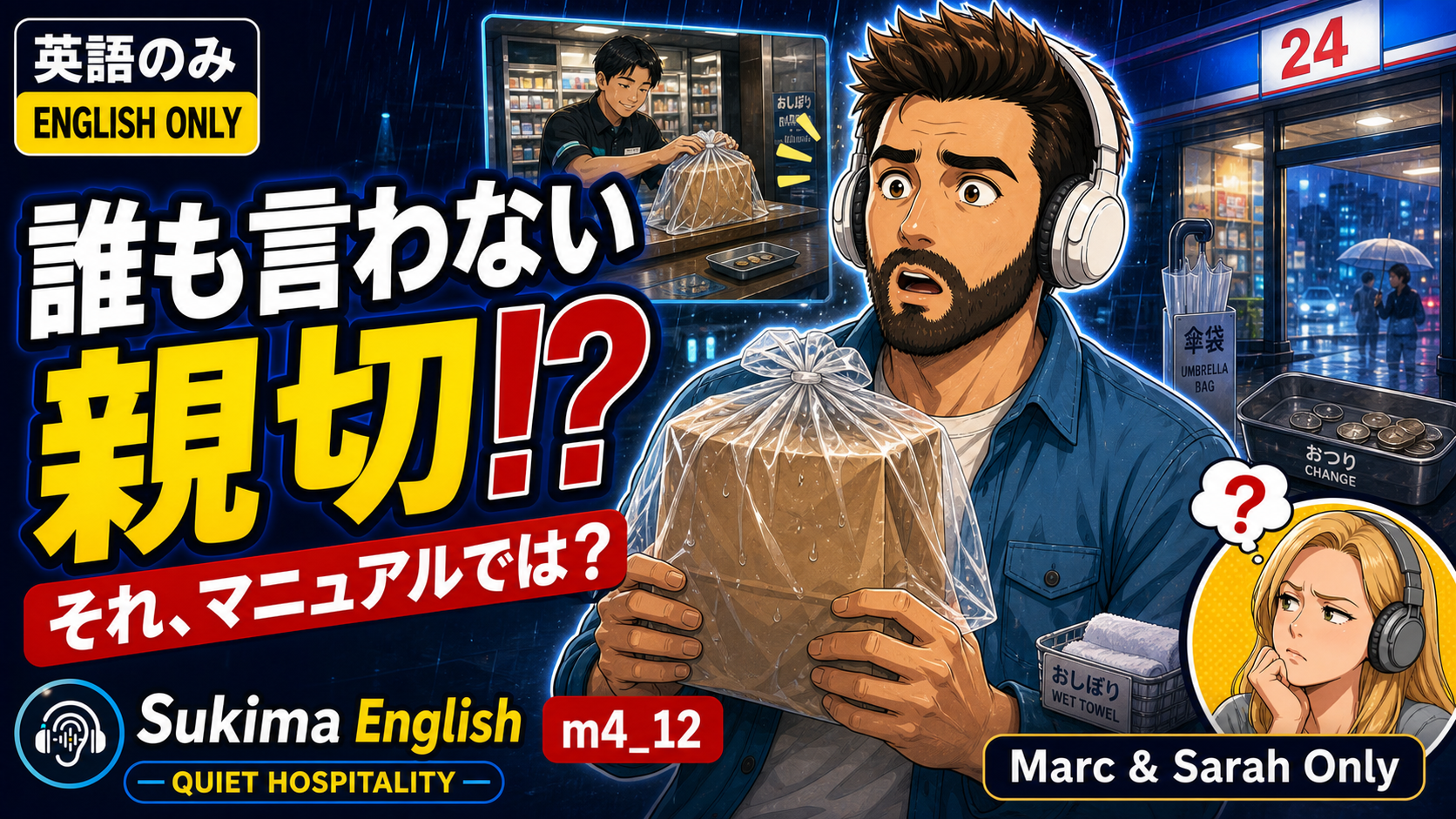
【日常英会話】英語のみ | なぜ日本の親切は「言わない」のか?その言葉、本当はそういう意味じゃない——ネイティブが英語で語る日本の接客 #英語学習 #ネイティブ英語会話 #リスニング強化
ポッドキャスト「すきまイングリッシュ」のスクリプト。「【日常英会話】英語のみ | なぜ日本の親切は「言わない」のか?その言葉、本当はそういう意味じゃない——ネイティブが英語で語る日本の接客 #英語学習 #ネイティブ英語会話 #リスニング強化」の会話全文です。

Marc: Sarah, I want to start with something small and stupid that happened to me on Tuesday. (日本語訳: サラ、火曜日にあった小さくてくだらない出来事から始めたいんだけど。)
サラ: My favorite category. (日本語訳: 私の大好きなカテゴリーね。)
Marc: I bought a coffee and a sandwich near the office, and it was raining. The guy behind the counter put the hot drink in one bag and the cold food in another. (日本語訳: オフィス近くでコーヒーとサンドイッチを買ったんだけど、雨が降ってたんだ。カウンターの店員さんが、温かい飲み物をひとつの袋に、冷たい食べ物を別の袋に入れたんだ。)
サラ: Two bags. (日本語訳: 二つの袋。)
Marc: Two bags. And then he took the paper bag and slid a thin plastic cover over the whole thing, so the rain would not soak through the bottom. (日本語訳: 二つ。それから、その紙袋全体に薄いビニールのカバーをすっとかぶせて、雨で底が濡れないようにしてくれたんだ。)
サラ: Okay, that is genuinely thoughtful. (日本語訳: うん、それは本当に気が利いてるわね。)
Marc: And here is the part I want to talk about. He did not say anything. He did not point at it. He did not go, hey, I put a cover on that for you. (日本語訳: で、ここからが話したいところなんだけど。彼は何も言わなかった。指さしもしなかった。「カバーをかけておきましたよ」なんて言わなかったんだ。)
サラ: He did it and handed it over. (日本語訳: やってくれて、渡しただけ。)
Marc: Handed it over, said thank you, and looked at the next customer. Zero credit taken. (日本語訳: 渡して、ありがとうって言って、次のお客さんの方を見た。手柄にする気はゼロ。)
サラ: And you noticed because? (日本語訳: で、それに気づいたのはなんで?)
Marc: Because I did not notice. That is the whole thing. I was halfway to the office before my brain went, wait, somebody solved a problem for me back there and never mentioned it. (日本語訳: 気づかなかったからだよ。それがすべてなんだ。オフィスまで半分くらい来たところで、頭が「待てよ、さっき誰かが僕の代わりに問題を解決してくれたのに、何も言わなかったな」って気づいたんだ。)
サラ: So today is one of those. (日本語訳: じゃあ、今日はそういう話なんだね。)
Marc: Today is completely one of those. And the point is not that the service is good here. Plenty of places have good service. (日本語訳: 完全にそういう話だよ。で、言いたいのは、ここのサービスがいいってことじゃない。サービスがいい場所はたくさんある。)
サラ: New York has incredible service when it feels like it. (日本語訳: ニューヨークだって、その気になればすごいサービスをしてくれるよ。)
Marc: It does. The difference is that here, nobody tells you they did it. No announcement, no line on the bill, and no tip. (日本語訳: そうだね。違うのは、ここでは誰も「やりました」って言わないこと。アピールもないし、請求書に項目もないし、チップもない。)
サラ: Nobody is collecting. (日本語訳: 誰も見返りを受け取ってないんだね。)
Marc: Nobody is collecting. It is a whole system of small kindnesses with no one standing there waiting to be thanked for them. (日本語訳: 誰も受け取ってない。感謝されるのを待って立ってる人が誰もいない、小さな親切の仕組み全体なんだ。)
サラ: Hidden in plain sight. (日本語訳: 目の前にあるのに見えていない、ってやつね。)
Marc: Right on cue. (日本語訳: 待ってました。)
サラ: Today, the favors nobody tells you about. (日本語訳: 今日は、誰も「やったよ」とは言わない親切の話。)
Marc: Let's get into it. (日本語訳: やっていこう。)
サラ: Start with the smallest one you can think of. (日本語訳: 思いつく一番小さいものから始めて。)
Marc: The wet towel. You sit down in almost any restaurant here and before you have opened the menu, somebody puts a rolled-up damp towel in front of you. (日本語訳: 濡れたタオル。ここではほとんどどのレストランでも、座ってメニューを開く前に、丸めた湿ったタオルが目の前に置かれるんだ。)
サラ: Oshibori. (日本語訳: おしぼり。)
Marc: And in summer it comes out cold, and in winter it comes out hot. Same restaurant, same towel, opposite temperature, because of the month. (日本語訳: 夏は冷たくて、冬は熱いんだ。同じレストランで、同じタオルが、月によって逆の温度で出てくる。)
サラ: Nobody asked for that. (日本語訳: 誰も頼んでないのにね。)
Marc: Nobody asked, nobody is charged, and nobody explains it. It arrives without any fuss and then it is just part of sitting down. (日本語訳: 頼んでないし、お金も取られないし、説明もない。騒ぎ立てることもなく出てきて、あとはもう席に着くことの一部になってる。)
サラ: Did you know what to do with it the first time? (日本語訳: 最初どうすればいいかわかった?)
Marc: I did not. My first week here I was in an izakaya, somebody handed me this hot rolled towel, and I had no idea what the rules were. So I wiped the table with it. (日本語訳: わからなかったよ。ここに来て最初の週、居酒屋にいたんだけど、熱いタオルを渡されて、ルールが全然わからなかった。だからテーブルをそれで拭いたんだ。)
サラ: Marc, you did not. (日本語訳: まさか、マーク。)
Marc: I wiped the table. And the staff member came back, took it away without a word, and put a fresh one down in front of me. No lesson, no face made, nothing. (日本語訳: テーブルを拭いたんだ。そしたら店員さんが、何も言わずにそれを持って行って、新しいのを目の前に置いてくれた。注意も、顔色も、何もなし。)
サラ: They corrected you by quietly fixing it. (日本語訳: 静かに直すことで、間違いを正してくれたんだね。)
Marc: Which is about the most Japanese correction possible. I only worked out what I had done wrong a week later, watching somebody else. (日本語訳: それって、いかにも日本らしい直し方だよね。自分が何を間違えたのかわかったのは、1週間後に他の人がやってるのを見てからだった。)
サラ: Where does the towel even come from? It does not exist back home. (日本語訳: そもそも、そのタオルってどこから来たの?アメリカにはないよ。)
Marc: It goes back a long way. The old inns left a bucket of water and a cloth at the entrance, so travelers could wipe down after the road. You wrung the cloth out yourself. (日本語訳: すごく昔からあるんだ。昔の宿では、入口に水の入った桶と布が置いてあって、旅人が道中の汚れを拭けるようになってた。布は自分で絞ってたんだよ。)
サラ: And the name comes from the wringing. (日本語訳: で、名前はその「絞る」から来てるんだね。)
Marc: It does. And then one of the Japanese airlines started handing them out before takeoff on international flights, passengers loved it, and other airlines picked it up. (日本語訳: そうだよ。それで、日本の航空会社の一つが、国際線で離陸前に配り始めたら、乗客にすごく気に入られて、他の航空会社も真似し始めたんだ。)
サラ: So the hot towel I get on a long flight? (日本語訳: じゃあ、長時間のフライトで出るホットタオルも?)
Marc: Came from here. That one got exported. (日本語訳: ここから来たんだよ。あれは海外に広まったんだ。)
サラ: I had no idea. Give me another. (日本語訳: 全然知らなかった。もう一つ教えて。)
Marc: The umbrella sleeve. It rains, you walk into a building, and there is a machine by the door. You push your wet umbrella in and it comes out wrapped in thin plastic. (日本語訳: 傘袋。雨の日に建物に入ると、入口に機械がある。濡れた傘を差し込むと、薄いビニールに包まれて出てくるんだ。)
サラ: So you do not drip across the floor. (日本語訳: 床を濡らさないためでしょ。)
Marc: So nobody slips on the way to the elevator. Free, unattended, nobody thanking you for it. (日本語訳: エレベーターに向かう途中で誰も滑らないようにね。無料で、係の人もいなくて、誰かに感謝されるわけでもない。)
サラ: That is a nice touch. (日本語訳: あれ、いい心遣いだよね。)
Marc: A nice touch is exactly the phrase. A small detail nobody had to add, that makes the whole thing better. (日本語訳: 「a nice touch」、まさにその言葉だよ。誰も付け加える必要はなかったのに、全体をよくしてくれる、ちょっとした工夫。)
サラ: And the water. You sit down, cold water appears, and it keeps appearing. (日本語訳: あと、お水。席に着くと、冷たいお水が出てきて、それがずっと出てくる。)
Marc: Never on the bill. In New York, water is a negotiation. (日本語訳: お会計にも載らない。ニューヨークじゃ、水は交渉ごとだよ。)
サラ: Still or sparkling, and one of those is nine dollars. (日本語訳: 「普通の?それとも炭酸?」って聞かれて、どっちか9ドルだったりする。)
Marc: Then there is the little basket. Almost every counter seat has one underneath for your bag, so you are not putting it on the floor. (日本語訳: あと、あの小さなカゴ。ほとんどのカウンター席の下に、カバンを床に置かなくていいように付いてるよね。)
サラ: I had forgotten the baskets. They are everywhere. (日本語訳: カゴのこと、忘れてた。どこにでもあるよね。)
Marc: So normal that I stopped seeing them. Then I go home, and I am at a lunch counter in Chicago with my bag between my feet, weirdly annoyed about it. (日本語訳: 普通すぎて、目に入らなくなってた。で、地元に帰ると、シカゴのランチカウンターで足の間にカバンを置いて、なんだかイラッとしてるんだ。)
サラ: Can I give you my version? Because mine made me angry. (日本語訳: 私のバージョンも話していい? 私のは腹が立った話なんだけど。)
Marc: Go ahead. (日本語訳: どうぞ。)
サラ: I was back in New York, I bought a few things at a department store, and it was pouring. They handed me a paper bag. A paper bag, into the rain. (日本語訳: ニューヨークに帰ってた時、デパートでいくつか買い物をしたら、どしゃ降りだったの。渡されたのは紙袋。雨の中に、紙袋だよ。)
Marc: And paper does what paper does. (日本語訳: で、紙は紙らしいことになった、と。)
サラ: By the time I got to the corner the bottom had gone soft and the whole thing was about to give out. And I stood there thinking, somebody in Tokyo would have covered this. (日本語訳: 角まで来る頃には、底がふやけて、今にも破れそうだった。そこに立ったまま、東京なら誰かがカバーをかけてくれてたのにって思ったの。)
Marc: You had been quietly upgraded and you did not know it. (日本語訳: 知らないうちに、こっそりアップグレードされてたんだね。)
サラ: I did not know until it was taken away. Which might be the whole point of this conversation. (日本語訳: なくなるまで気づかなかった。それが、今日の話のポイントなのかもしれないね。)
サラ: So far this is all objects. Towels, sleeves, baskets. What about actual behavior? (日本語訳: ここまでは全部モノだね。タオル、傘袋、カゴ。実際の振る舞いはどう?)
Marc: The behavior is stranger, because a lot of it is choreographed and nobody mentions the choreography. (日本語訳: 振る舞いの方がもっと不思議なんだ。多くは振り付けが決まってるのに、誰もその振り付けについて口にしないから。)
サラ: Give me the clearest one. (日本語訳: 一番わかりやすいのを教えて。)
Marc: Paying for something. You do not hand cash to the person. There is a small tray on the counter, and you put your money in the tray. (日本語訳: 何かにお金を払うときね。直接手で渡すんじゃないんだ。カウンターに小さなトレイがあって、そこにお金を置くんだよ。)
サラ: And they take it out of the tray. (日本語訳: で、店員がそこから取るんだ。)
Marc: They take it, count it where you can see it, and the change comes back in the same tray, bills flat with the receipt on top. (日本語訳: 取って、見えるところで数えてくれて、お釣りも同じトレイに、お札は平らに、レシートを上に乗せて返してくれるんだ。)
サラ: Why the tray? What problem is it solving? (日本語訳: なんでトレイを使うの?どういう問題を解決してるわけ?)
Marc: Coins do not skid off a hand. Nobody is fumbling change into somebody's palm. And the count is visible, so neither person has to take the other one's word for it. (日本語訳: 小銭が手から滑り落ちることもないし、相手の手のひらにお釣りをもたもた渡す人もいない。それに数えるところが見えるから、どっちも相手の言葉をうのみにしなくていいんだ。)
サラ: Polite and practical at the same time. (日本語訳: 丁寧で、しかも実用的なんだね。)
Marc: The tray has a name here. It came over from Europe a long time ago, the banks and the shops picked it up, and it never left. (日本語訳: このトレイには名前があるんだ。ずっと昔にヨーロッパから来て、銀行とかお店がそれを取り入れて、定着したんだよ。)
サラ: I assume you took that habit home with you. (日本語訳: その習慣、シカゴに持ち帰ったんじゃないの?)
Marc: I did the reverse of it in Chicago. I put my cash down on the counter, and the cashier looked at me and said, you can just hand it to me. (日本語訳: シカゴでは逆のことをしちゃったんだ。カウンターにお金を置いたら、レジの人に「手渡しでいいですよ」って言われた。)
サラ: Because with no tray, putting it down reads as slightly cold. (日本語訳: トレイがないと、置くのはちょっと冷たい感じがするからだね。)
Marc: In Chicago, setting money down instead of handing it over looks like you do not want to touch the person. Here it is the polite version. Same action, opposite meaning. (日本語訳: シカゴでは、お金を手で渡す代わりに置くと、相手に触りたくないって思ってるみたいに見えるんだ。ここでは丁寧なやり方なんだよ。同じ行動でも、意味が逆なんだ。)
サラ: What else? (日本語訳: 他には?)
Marc: The taxi door. You walk up to a taxi here and the back door swings open before you touch it. The driver opens it from the front seat. (日本語訳: タクシーのドア。ここでタクシーに近づくと、触る前に後ろのドアがパッと開くんだ。運転手さんが運転席から開けてくれるんだよ。)
サラ: I still have no natural reaction to that. (日本語訳: 私、まだそれに自然に反応できないんだよね。)
Marc: My first day in the country, coming in from the airport, I reached out and hauled the door shut behind me, and the driver made a small pained sound. (日本語訳: この国に来た初日、空港からタクシーに乗った時、手を伸ばしてドアを自分で閉めたら、運転手さんが小さく苦しそうな声を出したんだ。)
サラ: You are not supposed to close it either. (日本語訳: 閉めるのもダメなんだ?)
Marc: You do not touch it at all. Get in, sit, and it closes for you. And that whole system started here. This was the first country to put it in taxis. (日本語訳: 一切触らないんだ。乗って、座れば、閉めてくれる。しかも、この仕組みは全部ここで始まったんだよ。タクシーにこれを取り入れたのは、この国が最初なんだ。)
サラ: That is a genuine Japanese invention. (日本語訳: 正真正銘、日本の発明なんだね。)
Marc: And the driver is very often wearing white gloves. The seats have covers on them with a bit of lace. It is a specific look. (日本語訳: それに、運転手さんは白い手袋をしてることがすごく多い。座席にはレースの飾りがついたカバーがかかってる。独特のスタイルだね。)
サラ: The gloves get me. There is no functional reason for the gloves. (日本語訳: 手袋が引っかかるんだよ。手袋をする機能的な理由がないんだ。)
Marc: There is none. It is a signal. It says, this is a professional vehicle and I am at work. (日本語訳: ないね。あれはシグナルだよ。プロの車で、仕事中だってことを示してるんだ。)
サラ: See, this is where my skepticism kicks in. (日本語訳: ほら、ここで私の疑り深さが出てくるんだよ。)
Marc: I was waiting for this. (日本語訳: 待ってたよ。)
サラ: At some point I have to ask whether a lot of this is for show. The gloves, the lace, the bowing at the register. (日本語訳: どこかで、これの多くは見せるためのものなんじゃないかって聞かずにはいられないんだよね。手袋とか、レースとか、レジでのお辞儀とか。)
Marc: Say more. (日本語訳: もっと聞かせて。)
サラ: For show, meaning it is done for appearance rather than because anybody feels anything. It is not kindness. It is a uniform, and skipping it gets you in trouble. (日本語訳: 見せるため、っていうのは、誰かが何かを感じてるからじゃなくて、見た目のためにやってるってこと。親切じゃなくて、制服みたいなもの。やらなかったら叱られる。)
Marc: That is a fair point, and I am not going to pretend the manual does not exist. Plenty of it is trained behavior. The phrases are standardized. New staff practice them out loud. (日本語訳: それはもっともな点だね。マニュアルが存在しないなんて嘘はつけないよ。その多くは訓練された行動だ。決まり文句は標準化されてる。新人は声に出して練習するんだ。)
サラ: So calling it hospitality feels generous. It is a job description. (日本語訳: だから、それを「おもてなし」って呼ぶのは好意的すぎる気がする。ただの仕事内容だよ。)
Marc: Here is what makes me push back, though. If it were only the manual, it would stop the second the manual stopped. (日本語訳: でも、僕が反論したくなるのはここなんだ。もしそれがマニュアルだけだったら、マニュアルがなくなったらすぐに終わるはずだ。)
サラ: Meaning outside of work. (日本語訳: 仕事以外では、ってこと?)
Marc: Off the clock, nobody watching, nobody grading anybody. And it does not stop. (日本語訳: オフの時、誰も見てなくて、誰も評価してない時。それでも終わらないんだ。)
Marc: The guy at the hardware store near my place walks me to the aisle, and it is not because a manual tells him to. He finds the thing, hands it to me, and goes back to work. (日本語訳: うちの近くの金物屋の店員さんは、売り場の通路まで連れて行ってくれる。マニュアルに書いてあるからじゃない。品物を見つけて、僕に渡して、仕事に戻っていくんだ。)
サラ: Which he could have pointed at from the register. (日本語訳: レジから指差すこともできたのにね。)
Marc: He could have pointed. He went out of his way instead. And when I have asked for directions on the street, more than once the person has simply started walking with me. (日本語訳: 指させたのにね。でも、わざわざ手間をかけてくれたんだ。それに、道で道を聞いた時も、一度ならず、相手が何も言わずに一緒に歩き出してくれたことがあるんだよ。)
サラ: Go out of your way. To make a special effort for somebody else. (日本語訳: 「go out of your way」。誰かのためにわざわざ手間をかけること。)
Marc: A stranger walking four blocks in the wrong direction so I do not get lost is not in anybody's job description. (日本語訳: 知らない人が、僕が迷わないように4ブロックも逆方向に歩いてくれるなんて、誰の仕事内容にも入ってないよ。)
サラ: Okay, that is the part I cannot explain away. (日本語訳: なるほど、そこは私にも言い逃れのしようがないね。)
Marc: That is the part that is not for show. No audience, no reward. (日本語訳: それは見せかけじゃない部分だ。観客もいない、報酬もない。)
サラ: And no tip, which I think is the part that actually explains it. (日本語訳: それにチップもない。実はそこが一番の説明になってると思う。)
Marc: Say it, because you know this side better than I do. (日本語訳: 聞かせて。そっち側のことは、君の方がよく知ってるから。)
サラ: I waited tables in Manhattan through university. When you are working for tips, being extra warm is a business decision. Not fake, exactly, but it is aimed at something. (日本語訳: 大学時代、マンハッタンでウェイトレスをしてたんだ。チップで稼ぐ時は、とびきり感じよくするのはビジネス上の判断なんだよ。嘘ってわけじゃないけど、狙いがあるの。)
Marc: You are working the room, one table at a time. (日本語訳: 一テーブルずつ、お客さんの心をつかんでいくんだね。)
サラ: One table at a time. You check in, you learn a name, you remember what somebody ordered last time. Some of that is real, and all of it is also money. (日本語訳: 一テーブルずつね。声をかけて、名前を覚えて、前回何を頼んだかを覚えておく。本心の部分もあるけど、全部お金のためでもあるんだよ。)
Marc: And here that lever does not exist. You cannot tip. Leave money on the table and somebody will chase you down the street to give it back. (日本語訳: で、ここではそのテコが効かない。チップは渡せない。お金をテーブルに置いといたら、追いかけてきて返そうとする人がいるくらいだから。)
サラ: So extra effort cannot be about the money, because the money does not move. (日本語訳: つまり、余計な努力は金のためではありえないってことだね、お金が動かないんだから。)
Marc: Which means when somebody goes the extra mile here, they are doing more than the job requires and getting nothing for it. (日本語訳: ってことは、ここで誰かが「go the extra mile」するとき、つまりひと手間多くかけるときは、仕事で求められる以上のことをして、何の見返りももらってないってこと。)
サラ: Go the extra mile. More than is expected of you. (日本語訳: 「go the extra mile」。期待されてる以上のことをする。)
Marc: More than expected, with no upside for the person doing it. (日本語訳: 期待以上で、やってる人に何のメリットもない。)
サラ: But hold on, because I want to push the other way. There is a real cost to this, and I do not want us sitting here admiring the country for an hour. (日本語訳: でも待って、逆の方向にも突っ込みたいの。これには本当のコストがあるし、ここで1時間この国を褒めてるだけにはしたくないんだ。)
Marc: Please. This is the part I think about most. (日本語訳: どうぞ。僕が一番考えてるのはそこなんだ。)
サラ: If the baseline is that high, and every customer knows it is that high, customers start to expect it. Expectation turns into entitlement pretty fast. (日本語訳: 基準がそこまで高いと、客はそれを知ってる。知ってると、期待し始める。期待は、すぐ「あって当然」になる。)
Marc: It does. (日本語訳: そうなるね。)
サラ: And somebody is behind a counter absorbing whatever a bad customer hands them, with a script that says keep smiling. (日本語訳: で、カウンターの向こうでは、嫌な客に何をぶつけられても受け止めなきゃいけない人がいる。笑顔を絶やすなっていう台本を持たされて。)
Marc: You are describing something that has a name here now. There is a specific word for customers abusing staff, and it comes up constantly. (日本語訳: 今君が言ってるものには、今ここで名前がついてるんだ。客が店員に嫌がらせをすることを指す言葉があって、しょっちゅう話題になってる。)
サラ: There is a word for it. (日本語訳: そういう言葉があるんだ。)
Marc: There is a word, and the city here passed a rule about it, the first in the country. Some companies have taken the name tags off their staff so nobody can single them out by name. (日本語訳: 言葉がある。しかもこの街では、それについて全国初のルールができた。店員の名札を外した会社もある。名前で個人を狙われないようにね。)
サラ: That is not a small problem, then. That is a recognized workplace issue. (日本語訳: じゃあ、小さな問題じゃないんだね。職場の問題として認められてるんだ。)
Marc: A recognized one. People leave jobs over it. (日本語訳: 認められてる問題だよ。それで仕事を辞める人もいる。)
サラ: So the same standard that produces the umbrella sleeve also produces a customer who thinks he is owed anything he asks for. (日本語訳: つまり、傘袋を生んだのと同じ基準が、頼めば何でもしてもらえると思ってる客も生んでるんだね。)
Marc: Same source, two very different results. And there is a line people quote to justify the bad one. The customer is god. (日本語訳: 出どころは同じなのに、結果はまるで違う。しかも、悪い方を正当化するのに持ち出される決まり文句がある。「お客様は神様です」。)
サラ: I have heard that one attached to this country a lot. (日本語訳: それ、この国の言葉としてよく聞くよ。)
Marc: It gets quoted constantly, and the story behind it is nothing like the way it gets used. Kenji told me this one and I have never forgotten it. (日本語訳: それはしょっちゅう引用されるけど、その元になった話は、今使われているような意味とは全然違うんだ。ケンジが教えてくれて、忘れられないんだ。)
サラ: Your coworker who explains where things come from. (日本語訳: 物事の由来を説明してくれる同僚のこと?)
Marc: He is very good at it. It came from a singer. Decades ago, on stage, the host asked him how he saw his audience, and he said they were gods to him. (日本語訳: そういうのが得意なんだよ。元は、ある歌手の言葉なんだ。何十年も前、ステージで司会者に観客のことをどう思っているか聞かれて、神様だと答えたんだ。)
サラ: He was talking about performing. (日本語訳: 舞台に立つことについて話してたんだね。)
Marc: He was talking about his own head before walking out there. You have to clear your mind the way you would before praying, or the performance is not real. He meant it about himself. (日本語訳: ステージに出ていく前の、自分の心構えの話をしてたんだ。祈る前のように心を澄ませないと、本物の芸にならないって。自分自身のことを言ってたんだよ。)
サラ: Not about a man yelling at a cashier. (日本語訳: レジで怒鳴ってる男の話じゃなくて。)
Marc: Nowhere near it. And his own family has said so publicly. Anyone using that phrase to abuse a shop worker is not the kind of person the word applies to. (日本語訳: 全然違う。本人の家族も公にそう言ってる。その言葉を盾に店員に当たる人は、その言葉が指してる人じゃない、って。)
サラ: The family had to come out and correct the record. (日本語訳: 家族が出てきて、訂正しなきゃいけなかったんだね。)
Marc: Because the sentence got away from him, and it has been used against staff ever since. (日本語訳: その言葉が本人の手を離れて、それ以来ずっと店員に向けて使われてきたからね。)
サラ: One remark from a stage, and it is still doing damage now. (日本語訳: ステージでの一言が、今もずっと傷を残してるんだね。)
サラ: So where does this leave you? We went from a plastic bag cover to a national labor problem pretty fast. (日本語訳: じゃあ、結局どう考えてるの? ビニールの袋カバーから、あっという間に国全体の労働問題まで来ちゃった。)
Marc: We did, and I think both ends are honest. What I keep landing on is that the good version of this is not really about service. It is about noticing. (日本語訳: 来たね。でも、どっちの面も本当のことだと思う。僕が結局たどり着くのは、この良い面は、実はサービスの話じゃないってこと。気づくことの話なんだ。)
サラ: Noticing what the other person is about to need. (日本語訳: 相手が次に何を必要とするかに気づくこと。)
Marc: Somebody looked at a paper bag in the rain and thought about what it would look like four blocks later. That is the entire skill. (日本語訳: 誰かが雨の中の紙袋を見て、4ブロック先でそれがどうなってるかを考えた。スキルっていうのは、それに尽きるんだ。)
サラ: And then saying nothing about it. (日本語訳: で、それについて何も言わない。)
Marc: And then saying nothing, which is the part I would actually steal. (日本語訳: で、何も言わない。僕が本当に真似したいのはそこなんだ。)
サラ: Because back home, if I do something thoughtful, I want it on the record. (日本語訳: だって地元では、気の利いたことをしたら、ちゃんと気づいてもらいたいもん。)
Marc: You want it logged. So do I. There is a real urge to make sure the other person knows what you did. (日本語訳: 気づいてもらいたいよね。僕もそうだよ。自分が何をしたか、相手にちゃんと知っておいてほしいって、本気で思っちゃうんだ。)
サラ: Does it matter, though? If nobody registers the umbrella sleeve, what is it doing? (日本語訳: でも、それって大事? 誰も傘袋に気づかないなら、それは何の役に立ってるの?)
Marc: It goes a long way toward making an ordinary day easier, and you cannot point to the moment it happened. That is why it stays invisible. (日本語訳: 普通の一日を楽にするのに大きく役立ってるのに、それがいつ起きたのかは指させない。だから見えないままなんだ。)
サラ: It quietly takes the small irritations out of a day. (日本語訳: 一日の中の小さなイライラを、静かに取り除いてくれるんだね。)
Marc: All day, in twenty places, none of which you would list if somebody asked about your day. (日本語訳: 一日中、20か所くらいでね。誰かに今日どうだったって聞かれても、どれも挙げないような場所で。)
サラ: And the cost side is real. I am not letting go of that. (日本語訳: それに、コストの面も本当にある。そこは譲らないよ。)
Marc: You should not. Take the small kindnesses and turn them into a right you can demand, and the whole thing breaks. It only works while it is given rather than owed. (日本語訳: 譲らなくていいよ。小さな親切を、要求できる権利に変えたら、全部壊れる。義務じゃなくて、好意で与えられてる間だけ成り立つんだ。)
サラ: Which is close to something we already say. It is the thought that counts. (日本語訳: それって、私たちがもう言ってることに近いね。「It is the thought that counts」、気持ちが大事、って。)
Marc: It is the thought that counts. The intention is the thing, not the size of the gesture. (日本語訳: 気持ちが大事。大切なのは意図で、行動の大きさじゃないんだ。)
サラ: A plastic cover on a paper bag is worth about nothing. (日本語訳: 紙袋にかぶせたビニールカバーなんて、ほとんど何の価値もないよ。)
Marc: It costs nothing, and it means somebody was thinking about my walk to the office. That is not small at all. (日本語訳: お金はかからないし、しかも誰かが僕のオフィスまでの道のりを考えてくれてたってことなんだ。それは全然小さなことじゃないよ。)
サラ: And nobody here would ever describe it as hospitality. They would look at you like you were being odd about a bag. (日本語訳: しかも、ここの人は誰もそれを「おもてなし」なんて呼ばない。袋ごときで何を大げさな、って変な顔をされるよ。)
Marc: They would have no idea what you were talking about. Hidden in plain sight, one more time. (日本語訳: 何の話かさっぱりわからないだろうね。目の前にあるのに見えていない、またしてもね。)
サラ: So here is the thing to try. Next time somebody does one of these for you, notice it in the moment. (日本語訳: だから、試してみてほしいことがあるんだ。今度、誰かがそういうことをしてくれたら、その瞬間に気づいてみて。)
Marc: In the moment, not four blocks later like I did. (日本語訳: その瞬間にね、僕みたいに4ブロック先で気づくんじゃなくて。)
サラ: And then do one yourself. Do the small thing for somebody and do not tell them you did it. (日本語訳: そして、あなたも何か一つやってみて。誰かのために小さなことをして、それを誰にも言わない。)
Marc: Not telling is the hard part. I still want the credit. I am working on it. (日本語訳: 言わないのが難しいんだよね。僕はまだ褒められたい。練習中だよ。)
サラ: If there is a version of this where you live, something small that everybody does and nobody mentions, we want to hear about it. (日本語訳: もし、あなたの住んでいるところに、そういうみんながやっていて、誰も話題にしないような小さなことがあるなら、ぜひ教えてほしい。)
Marc: Because the ones you grew up with are the ones you cannot see. (日本語訳: 自分が育った環境にあるものほど、自分では見えないからね。)
サラ: Thanks for listening. (日本語訳: 聴いてくれてありがとう。)
Marc: See you next time. (日本語訳: また次回。)

関連記事
【日常英会話】「感謝していることを一つずつ」アメリカの感謝祭とネイティブの本音 #英語学習 #ネイティブ英語会話 #リスニング強化 #英語耳
ポッドキャスト「すきまイングリッシュ」のスクリプト。「【日常英会話】「感謝していることを一つずつ」アメリカの感謝祭とネイティブの本音 #英語学習 #ネイティブ英語会話 #リスニング強化 #英語耳」の会話全文です。

【日常英会話】英語のみ | ニューヨークと東京のハロウィンを英語で語ると? #英語学習 #ネイティブ英語会話 #リスニング強化
ポッドキャスト「すきまイングリッシュ」のスクリプト。「【日常英会話】英語のみ | ニューヨークと東京のハロウィンを英語で語ると? #英語学習 #ネイティブ英語会話 #リスニング強化」の会話全文です。
【日常の英語】元気のない同僚にかける英語フレーズ12選|声かけから励ましまで #英語学習 #英語フレーズ #英会話 #英語耳
ポッドキャスト「すきまイングリッシュ」のスクリプト。「【日常の英語】元気のない同僚にかける英語フレーズ12選|声かけから励ましまで #英語学習 #英語フレーズ #英会話 #英語耳」の会話全文です。
【日常英会話】住所と道案内を英語で話すと?日本の住所には通りの名前がない #英語学習 #ネイティブ英語会話 #リスニング強化 #英語耳
ポッドキャスト「すきまイングリッシュ」のスクリプト。「【日常英会話】住所と道案内を英語で話すと?日本の住所には通りの名前がない #英語学習 #ネイティブ英語会話 #リスニング強化 #英語耳」の会話全文です。
【日常の英語】日本語解説あり | 席を譲ろうとして、断られた |申し出る英語と、断られたときの英語6つ #英語学習 #英語フレーズ #英会話 #英語耳
ポッドキャスト「すきまイングリッシュ」のスクリプト。「【日常の英語】日本語解説あり | 席を譲ろうとして、断られた |申し出る英語と、断られたときの英語6つ #英語学習 #英語フレーズ #英会話 #英語耳」の会話全文です。

【日常英会話】カウンターには、向かいの椅子がない、「お一人ですか」と聞かれる国 #英語学習 #ネイティブ英語会話 #リスニング強化 #英語耳
ポッドキャスト「すきまイングリッシュ」のスクリプト。「【日常英会話】カウンターには、向かいの椅子がない、「お一人ですか」と聞かれる国 #英語学習 #ネイティブ英語会話 #リスニング強化 #英語耳」の会話全文です。