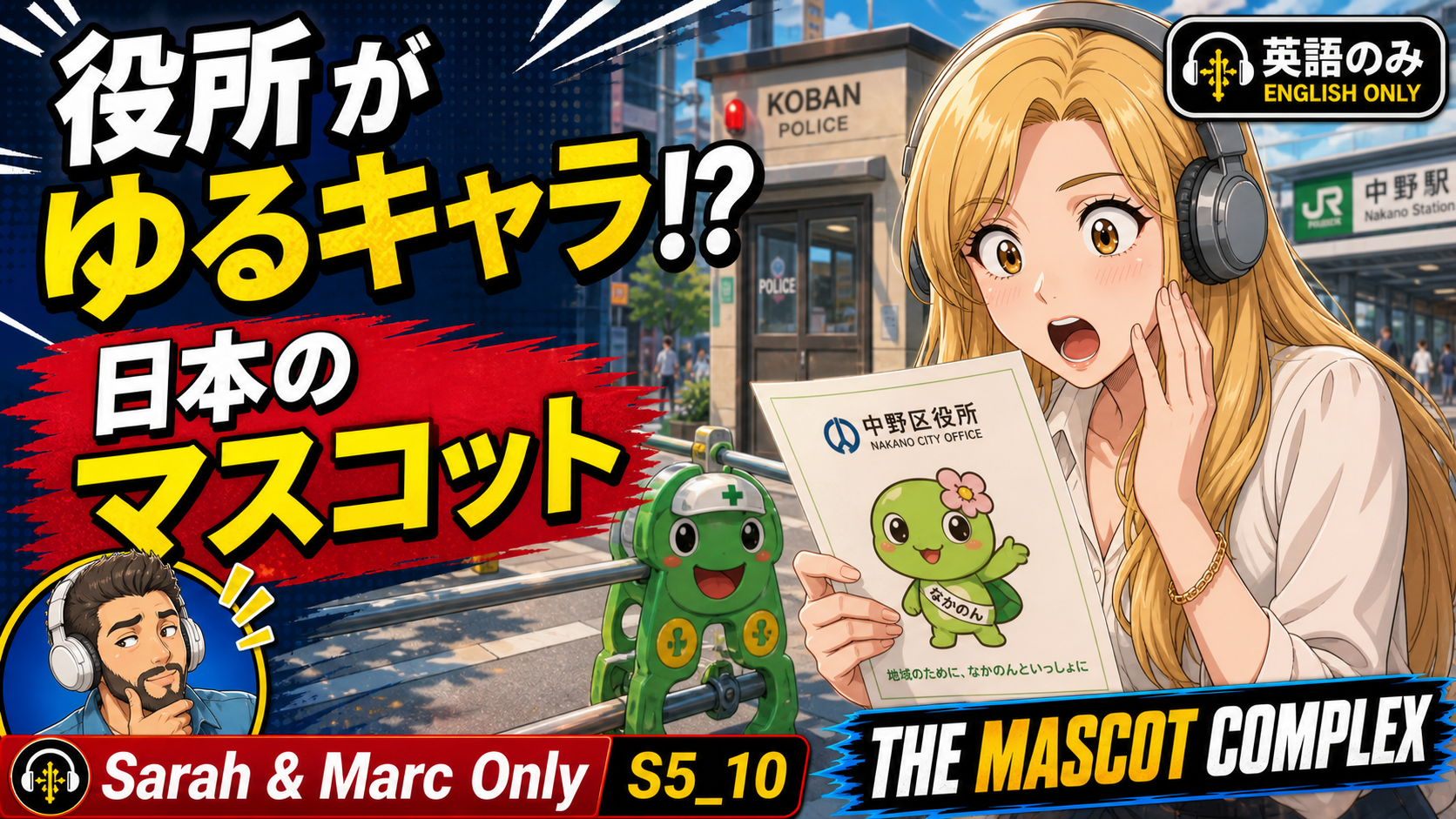
【日常英会話】英語のみ | なぜ日本は全部にキャラがいるのか?警察にも郵便局にもマスコット、ゆるキャラ大国をネイティブが英語で解説 #英語学習 #ネイティブ英語会話 #リスニング強化
ポッドキャスト「すきまイングリッシュ」のスクリプト。「【日常英会話】英語のみ | なぜ日本は全部にキャラがいるのか?警察にも郵便局にもマスコット、ゆるキャラ大国をネイティブが英語で解説 #英語学習 #ネイティブ英語会話 #リスニング強化」の会話全文です。

サラ: Marc. I opened a letter from the ward office this morning, and there was a cartoon on it. (日本語訳: サラ:ねぇ、マーク。今朝、区役所から手紙が届いたんだけど、宛名にマンガが描いてあったんだ。)
Marc: A cartoon. (日本語訳: マーク:マンガ?)
サラ: A smiling cartoon. In the corner of an official government notice about my residence records. (日本語訳: サラ:笑顔のマンガだよ。住民記録に関する行政通知の隅っこにね。)
Marc: Was it a bear, a bird, or something you could not identify? (日本語訳: マーク:クマ?鳥?それとも、何かわからないものだった?)
サラ: Why is that a normal question for you to ask? (日本語訳: サラ:なんでそんな質問が普通に出てくるわけ?)
Marc: Because those are the three options. (日本語訳: マーク:だって、その3択しかないだろ。)
サラ: It was something I could not identify. It had ears, and a hat, and it was extremely happy about paperwork. (日本語訳: サラ:何かわからないものだった。耳があって、帽子をかぶってて、書類手続きにめちゃくちゃハッピーな感じだったよ。)
Marc: Ah. Welcome to the thing you are about to see everywhere. (日本語訳: マーク:ああ。これから everywhere で目にするものにようこそ。)
サラ: I have already started seeing it. That is the problem. I cannot stop. (日本語訳: サラ:もう既に見始めてるんだよ。それが問題なんだ。止められない。)
Marc: So what are we calling this one? (日本語訳: マーク:それで、このキャラクターは何て呼ぶことにする?)
サラ: The Mascot Complex. (日本語訳: サラ:マスコット・コンプレックス。)
Marc: The Mascot Complex. Good, because once you notice them, that is it. You are finished. (日本語訳: マーク:マスコット・コンプレックス。いいね。だって、一度気づいたら、もう終わりだ。完全にハマる。)
サラ: I have been here two and a half years, and I only really looked at this on Tuesday. (日本語訳: サラ:ここに2年半いるけど、火曜日にちゃんと見たのは初めてなんだ。)
Marc: That is how they work. They hide by being everywhere. (日本語訳: マーク:それが彼らのやり方なんだ。どこにでもあることで隠れてる。)
Marc: So what did you do after the letter? (日本語訳: マーク:それで、手紙の後はどうしたの?)
サラ: I decided to count. One normal Tuesday. Walk to the station, go to work, come home, and count every official cartoon character I passed. (日本語訳: サラ:数えることにしたんだ。普通の火曜日。駅まで歩いて、仕事に行って、家に帰って、通りすがった公的なキャラクターを全部数えるって。)
Marc: This is going to be a large number. (日本語訳: マーク:それはすごい数になりそうだね。)
サラ: I gave up before I got to work. (日本語訳: サラ:会社に着く前に諦めたよ。)
Marc: Start at your front door. (日本語訳: マーク:玄関から始めればよかったのに。)
サラ: Okay. The letter, obviously. Then the police box on my corner. There is a poster there with a yellow character with enormous ears. (日本語訳: サラ:わかった。手紙はもちろん。それから、角にある交番。そこに、巨大な耳をした黄色いキャラクターのポスターがあるんだ。)
Marc: That is Peepo-kun. He is the Tokyo police mascot. (日本語訳: それはピーポくん。東京の警察のマスコットなんだ。)
サラ: The police have a mascot. (日本語訳: 警察にマスコットがいるの?)
Marc: The police have a mascot, a family for the mascot, and a theme song. (日本語訳: 警察にはマスコットがいて、そのマスコットには家族がいて、テーマソングまであるんだよ。)
サラ: Wait, what? A family? (日本語訳: ちょっと何だって?家族?)
Marc: Parents, a little sister, a little brother, grandparents. They are all on the police website. You can hear their voices. (日本語訳: 両親、妹、弟、祖父母。全部警察のウェブサイトに載ってる。声も聞けるんだ。)
サラ: So somebody built a fictional extended family for the police department. And then wrote a song about it. (日本語訳: つまり、誰かが警察のために架空の大家族を作って、それについて歌を書いたってことね。)
Marc: Since nineteen eighty-seven. (日本語訳: 1987年からね。)
サラ: That character is older than I am. Okay, keep me moving. What comes next? (日本語訳: そのキャラクター、私より年上じゃん。よし、次は何?)
Marc: The station. (日本語訳: 駅。)
サラ: The station is covered. Do not run for the train. Mind the doors. Do not stand there with your umbrella. Every warning is delivered by a small round guy with a worried face. (日本語訳: 駅はもうやったでしょ。電車に駆け込まないで。ドアに注意して。傘を持ったままそこに立たないで。あらゆる警告が、困った顔をした丸っこいキャラクターによって伝えられてる。)
Marc: And that is one rail company. They all have their own. (日本語訳: それは一つの鉄道会社の話だよ。全部の会社がそれぞれ持ってるんだ。)
サラ: Then the bank has one. The pharmacy has one. And there was road work on my street with a plastic barrier shaped like a frog. (日本語訳: そしたら銀行にもいるし、薬局にもいる。で、私の通りでは道路工事でカエルみたいな形のプラスチックのバリケードがあったんだ。)
Marc: The frog barriers. Everybody hits the frog barriers eventually. (日本語訳: カエルのバリケード。誰だっていつかはカエルのバリケードにぶつかるんだ。)
サラ: A green frog, standing up, holding a fence around a hole in the road. (日本語訳: 緑のカエルが立ってて、道路の穴の周りにフェンスを抱えてる。)
Marc: In Chicago that is an orange barrel and a sign telling you the fine is doubled. (日本語訳: シカゴだと、それはオレンジ色のバレルと、罰金が倍になるって知らせる看板なんだ。)
サラ: Right. Back home a construction site is trying to frighten you. Here it is trying to be adorable at you. (日本語訳: そうね。地元だと工事現場はあなたを怖がらせようとしてる。こっちはあなたを可愛がろうとしてる。)
Marc: And it works on people. You slow down for the frog. You do not slow down for the orange barrel. (日本語訳: それで、それが人々に効くんだ。カエルの前ではスピードを落とす。オレンジ色のバレルではスピードを落とさない。)
サラ: That is annoyingly true. I noticed the frog. I have never once noticed a barrel. (日本語訳: それは腹立たしいほど本当ね。私はカエルに気づいた。バレルに気づいたことなんて一度もないわ。)
Marc: What was the final count? (日本語訳: 最終的にいくつだった?)
サラ: Eleven. Eleven official characters between my front door and my desk, before nine in the morning. (日本語訳: 11個。家からオフィスまで、朝9時前までに、11個の公式キャラクターがいたわ。)
Marc: Then here is the number that will finish the job for you. There was a survey a few years ago that went out to every prefecture and hundreds of cities and wards. (日本語訳: それで、この仕事を完遂してくれる数字があるんだ。)
サラ: Counting mascots. (日本語訳: 数年前に、すべての都道府県と数百の市町村を対象にした調査があったんだ。)
Marc: Counting mascots. A little over seven hundred local characters ten years earlier. More than fifteen hundred by twenty twenty-one. (日本語訳: ゆるキャラの数だよ。)
サラ: It doubled? (日本語訳: ゆるキャラの数だよ。10年前は700体ちょっとだったのが、2021年には1500体を超えた。)
Marc: It doubled. In ten years. (日本語訳: 倍になったの?)
サラ: So somewhere, in a government office, a person sat down in a meeting and said, we need one too. (日本語訳: 倍になった。10年でね。)
Marc: Hundreds of those meetings. All over the country. (日本語訳: それで、どこかの役所の人が会議で、「うちも必要だ」って座ったわけね。)
サラ: Prefectures, cities, police departments, the post office — you name it, there is a character standing in front of it. (日本語訳: 全国で何百ものそういう会議があったんだ。)
Marc: That is the part outsiders never expect. It is not a trend that came and went. It is more like infrastructure. (日本語訳: 都道府県、市、警察署、郵便局…数え上げたらきりがないけど、とにかくそういうものの前にキャラクターが立ってるんだ。)
サラ: Okay, but here is where I got stuck. I assumed this was decoration. Somebody in the design department has fun with a poster, everyone moves on. (日本語訳: それが、部外者が絶対に予想しない部分なんだ。流行り廃りがあったわけじゃなくて、もっとインフラみたいなものなんだよ。)
Marc: And then you looked into it. (日本語訳: なるほどね。でも、ここが引っかかったところ。私はこれを装飾だと思ってたんだ。デザイン部門の誰かがポスターで遊び心を発揮して、それで終わり、と。)
サラ: And then I looked into it, and I found out there used to be a national election. (日本語訳: それで、調べてみたと。)
Marc: There did. It ran for about ten years and it ended in twenty twenty. (日本語訳: それで調べてみたら、国政選挙みたいなものがあったことがわかったんだ。)
サラ: A country-wide popularity vote. For mascots. (日本語訳: あったよ。10年くらい続いて、2020年に終わったんだ。)
Marc: With a live final. And a trophy. (日本語訳: 全国規模の人気投票。ゆるキャラの。)
サラ: How many entries are we talking about? (日本語訳: 最終選考は生放送で、トロフィーもあったんだ。)
Marc: At its peak, more than seventeen hundred characters in a single year. (日本語訳: 何エントリーくらいの話?)
サラ: Seventeen hundred. Competing. (日本語訳: ピーク時には、1年間で1700体以上がエントリーしてた。)
Marc: Competing hard. Towns ran real campaigns for their own character. (日本語訳: 1700体。競い合ってたんだ。)
サラ: Campaigned how? What does a campaign for a cartoon actually look like? (日本語訳: 激しく競い合ってたよ。町は自分たちのキャラクターのために、本気のキャンペーンを張ってたんだ。)
Marc: Posters everywhere. Local news coverage. Mayors turning up in person. Shops putting a sign in the window asking customers to go and vote. (日本語訳: 至る所にポスター。地元のニュース番組。市長までが直接会場に。お店は客に投票をお願いするサインを窓に貼って。)
サラ: Asking them once, or asking them constantly? (日本語訳: 一度だけお願いするの?それともしつこく?)
Marc: One vote per person per day. So a town would remind people every single morning for weeks. (日本語訳: 一人一日一票。だから、町は数週間、毎朝毎朝、皆に思い出させたんだ。)
サラ: That is so far over the top that I do not have a comparison for it. (日本語訳: それは比較対象がないくらい、やりすぎだよ。)
Marc: There is no comparison. That is the point. (日本語訳: 比較なんてない。それがポイントなんだ。)
サラ: And then you told me about the cheating. (日本語訳: それで、不正の話をしてくれたんだっけ。)
Marc: Right. So in twenty eighteen it comes out that staff at one city hall had created about twenty thousand free email addresses. (日本語訳: そうだね。それで、2018年に、ある市役所の職員が約2万個のフリーメールアドレスを作っていたことが判明したんだ。)
サラ: For what? (日本語訳: 何のために?)
Marc: To vote for their own town's mascot. Over and over. (日本語訳: 自分たちの町のキャラクターに、何度も投票するためだよ。)
サラ: No way. City employees. On the clock. (日本語訳: まさか。公務員が。勤務時間中に?)
Marc: And more than one city, once people started looking. (日本語訳: それに、一都市だけじゃなかったんだ。皆が調べ始めたら。)
サラ: Let me make sure I understand this. Public servants committed organized ballot stuffing. In a cartoon animal popularity contest. (日本語訳: ちょっと確認させて。公僕が組織的な不正投票をしたってこと?それも、カートゥーンの動物の人気コンテストで?)
Marc: That is what happened. (日本語訳: そういうことだよ。)
サラ: That is not a country that finds this cute. That is a country that finds this important. (日本語訳: それは、それを可愛いと思う国じゃない。それを重要だと思う国だ。)
Marc: Now you are getting somewhere. (日本語訳: そっちは分かってきてるね。)
サラ: Because in New York, the joke would be the whole thing. You would make the mascot, put it on a poster, and everybody would understand it was a joke. (日本語訳: だってニューヨークだったら、ジョークにするだろうね。そのキャラクターを作って、ポスターにして、それがジョークだって皆が分かるようにする。)
Marc: And here nobody is joking. There are no half measures. If a town is going to have a character, that character gets a budget, a schedule, a costume, appearances, and someone whose actual job is looking after it. (日本語訳: ここでは誰もジョークにしていない。中途半端なことはしない。町にキャラクターがいるなら、そのキャラクターには予算があって、スケジュールがあって、着ぐるみがあって、出演があって、それを見るための専任の担当者がいる。)
サラ: Which brings me to the bear. (日本語訳: それで、クマの話になるわけだ。)
Marc: I wondered how long that would take. (日本語訳: どれくらいでそうなるかと思ってたよ。)
サラ: The black bear with the red cheeks. He is from Kumamoto, he was made around twenty ten, and I looked up what happened next and I had to read it twice. (日本語訳: あの、頬が赤いクロクマのことだよ。熊本県出身で、2010年頃に作られたんだけど、その後どうなったか調べて、二度読まなくちゃいけなかった。)
Marc: The sales figure. (日本語訳: 売上高。)
サラ: More than one trillion yen of related products in about a decade. One prefecture. One character. (日本語訳: 10年で関連商品が1兆円超え。一つの県で。一つのキャラクターで。)
Marc: Give that a second to sink in. (日本語訳: ちょっと、その数字をかみしめてみて。)
サラ: It has not sunk in. I am not sure it is going to. A local government drew a cartoon bear and it makes more money than most companies do. (日本語訳: 全然かみしめられてないよ。たぶん一生されないと思う。地方自治体が描いたクマのキャラクターが、ほとんどの会社よりも儲けてるんだよ。)
Marc: And they gave the bear a job title. (日本語訳: で、そのクマに役職を与えたんだ。)
サラ: They gave him a job title? (日本語訳: クマに役職を?)
Marc: Sales manager for the prefecture. That is his official position. (日本語訳: 県知事の営業部長だよ。それが正式な肩書き。)
サラ: A bear is the sales manager of a prefecture of Japan. (日本語訳: クマが日本の県をまとめる営業部長なんだ。)
Marc: With business cards. He hands them out. (日本語訳: 名刺もあるんだぜ。配ってるんだ。)
サラ: I want to be annoyed and I am just impressed. (日本語訳: 腹が立つと同時に、ただただ感心しちゃう。)
Marc: There is a survey where they compared social media followers. Mascots against the actual governors of their own prefectures. (日本語訳: ある調査で、ソーシャルメディアのフォロワー数を比較したんだ。マスコットと、その県知事本人の。)
サラ: Please do not tell me. (日本語訳: 言わないで。)
Marc: In about twenty of them, the mascot has more followers than the governor. (日本語訳: 20くらいの県で、マスコットの方が知事よりもフォロワーが多いんだ。)
サラ: The bear is more famous than the elected official. In his own prefecture. (日本語訳: そのクマは、自分の県でさえ、選出された公務員よりも有名なんだ。)
Marc: The bear is more famous than most elected officials anywhere. (日本語訳: そのクマは、どこにいても、ほとんどの選出された公務員よりも有名だよ。)
サラ: So this is the part where I have to admit something. I came in ready to make fun of all of it. (日本語訳: だから、ここでちょっと告白しなきゃいけないことがあるんだけど。全部バカにしてやるぞって意気込んでたの。)
Marc: Everybody does. I did. (日本語訳: みんなそうだよ。俺もそうだった。)
サラ: And then I read about the one that people hated. (日本語訳: そしたら、みんなが嫌ってたキャラクターの話を読んだんだ。)
Marc: The Nara one. (日本語訳: 奈良のやつ。)
サラ: The Nara one. Tell me if I have this right, because it sounds made up. (日本語訳: 奈良のやつ。合ってるか教えて、だって、なんか作り話みたいなんだもん。)
Marc: Go ahead. (日本語訳: どうぞ。)
サラ: Nara has a big anniversary coming, so they commission a character. It comes out in two thousand eight. It is a small child figure, sort of Buddhist looking, with deer antlers growing out of its head. (日本語訳: 奈良で大きな記念があるから、キャラクターを依頼したんだ。2008年に発表されたんだけど、子供のフィギュアで、ちょっと仏像っぽいんだけど、頭から鹿の角が生えてるの。)
Marc: Because Nara has the deer. (日本語訳: 奈良には鹿がいるからね。)
サラ: Because Nara has the deer. And the country loses its mind. (日本語訳: そう、奈良には鹿がいるから。そしたら国中が大騒ぎ。)
Marc: It was not close, either. (日本語訳: 全然接戦じゃなかったんだよね。)
サラ: One poll had seventy-eight percent against it. There was a citizens' group collecting signatures to have it scrapped. Temples said putting antlers on a figure like that was disrespectful. (日本語訳: ある世論調査では78%が反対だったんだ。署名を集めて廃止にしようとする市民団体もいたし。お寺は、あんなフィギュアに角をつけるのは不敬だと言ってた。)
Marc: And then the counter-mascots. (日本語訳: で、対抗マスコットも出てきたんだ。)
サラ: That is the part I could not believe. Angry local designers made their own rival character. A group of monks made a third one. There were three competing mascots for one anniversary. (日本語訳: そこが信じられなかったところなんだよね。怒った地元のデザイナーが自分たちのライバルのキャラクターを作ったの。僧侶のグループは3つ目のを作った。一つの記念のために3つものマスコットが競ってたんだよ。)
Marc: Which is very Japanese, if you think about it. Nobody threw anything. Everybody just built a better one. (日本語訳: これって、よく考えるとすごく日本的だよね。誰も何も投げつけなかった。ただ、みんなもっと良いものを作ったんだ。)
サラ: And here is the ending. A few years later the prefecture adopts the hated one as its official mascot. And an economist puts out an estimate that over ten years it was worth a couple hundred billion yen to Nara. (日本語訳: で、結末はこう。数年後、奈良県はその嫌われたキャラクターを公式マスコットに採用したんだ。そしたら、ある経済学者が10年間で奈良に数千億円の価値をもたらしたと試算した。)
Marc: It won people over. (日本語訳: 人々を魅了したんだね。)
サラ: It completely won them over. The thing that seventy-eight percent of the country wanted deleted. (日本語訳: 完全に魅了したわ。国中で78%が削除したがってたあの子がね。)
Marc: The same thing happened, in a smaller way, with the cat. (日本語訳: それと似たようなことが、もっと小規模だけど、あの猫でもあったんだ。)
サラ: The one with the helmet? At the castle? (日本語訳: ヘルメットをかぶったやつ?お城の?)
Marc: That one. Two thousand seven, four hundredth anniversary of Hikone castle. He is built out of an old legend where a white cat waves a lord in out of the rain, and a second later lightning hits the tree the lord was standing under. (日本語訳: そうそう。2007年、彦根城築城400年祭のこと。白い猫が雨の中、殿様を招き入れて、その直後に殿様が立っていた木に落雷があったっていう古い伝説に基づいたキャラクターなんだ。)
サラ: So the cat saved him. (日本語訳: それで猫が殿様を助けたんだね。)
Marc: The cat saved him. They put a war helmet on the cat and put him at the castle. (日本語訳: 猫が助けたんだ。その猫に甲冑を着せて、お城に置いたんだ。)
サラ: And that is the one everybody says started it. (日本語訳: で、それが火付け役だって誰もが言ってるやつ?)
Marc: That is the one that caught on. He still turns up at the castle nearly every day. (日本語訳: それが定着したやつだね。今でもほとんど毎日お城に現れるよ。)
サラ: Nearly every day. For almost twenty years. (日本語訳: ほぼ毎日ね。もう20年近くも。)
Marc: That kind of consistency is a big part of why it stuck. (日本語訳: そういう一貫性こそが、定着した大きな理由なんだよ。)
サラ: That is the thing I keep walking into here. Somebody decides on a small thing, and then they just do it for twenty years without stopping. (日本語訳: それがここでずっとぶつかってることなんだ。誰かが小さなことを決めて、それから20年間ずっと、止まることなくそれを続けるんだ。)
Marc: And that is exactly why it stops reading as a gimmick. (日本語訳: そして、まさにそれが、それが「ギミック」として読まれなくなる理由なんだ。)
サラ: Okay. But none of that is what actually changed my mind. (日本語訳: なるほどね。でも、それが私の考えを変えた本当の理由じゃないんだ。)
Marc: What did? (日本語訳: 何が?)
サラ: Peepo-kun. The one on my corner. I went and read what the police actually wrote about him when they made him. (日本語訳: ピーポくんよ。角にいるやつ。警察が彼を作ったときに、実際に彼について書いたことを読んだんだ。)
Marc: This is my favorite part and you found it yourself. (日本語訳: これが一番好きな部分だよ。自分で見つけたんだね。)
サラ: The name comes from two words. People, and police. That is it. That is the whole name. (日本語訳: 名前は二つの単語から来てるんだ。ピープルとポリス。それだけ。それが名前のすべて。)
Marc: And the ears. (日本語訳: そして耳。)
サラ: The ears are not a joke. The ears are big because the police are supposed to be listening to what people say. (日本語訳: 耳はジョークじゃないんだ。警察は人々の言うことを聞くことになっているから、耳は大きいんだよ。)
Marc: There is a design reason for every part of him. (日本語訳: 彼のすべての部分にデザイン上の理由があるんだ。)
サラ: And the name was chosen out of sounds a small child can pronounce easily. Somebody sat in that meeting and argued about which syllables a four-year-old could say. (日本語訳: そして、小さい子供が簡単に発音できる音から名前が選ばれたんだ。誰かがその会議に座って、4歳児が言える音節はどれかについて議論したんだ。)
Marc: In nineteen eighty-seven. (日本語訳: 1987年にね。)
サラ: And that is when it turned for me. Because think about what an institution looks like back home. The police, a courthouse, a government building — every design choice says the same thing. (日本語訳: そしてそこで私の中で何かが変わったの。だって、故郷の制度ってどんなものか考えてみてよ。警察、裁判所、政府の建物――すべてのデザインの選択が同じことを言ってるんだ。)
Marc: Do not argue with us. (日本語訳: 我々に反論するな、と。)
サラ: Do not argue with us. Stone, columns, badges, capital letters. The building is designed to be a little intimidating, and that is not an accident. (日本語訳: 我々に反論するな、と。石、柱、バッジ、大文字。建物は少し威圧的であるようにデザインされてて、それは偶然じゃない。)
Marc: And here? (日本語訳: そしてここでは?)
サラ: Here they hand you a yellow guy with big ears and a name a child can say. It is the exact opposite instruction. It is saying, you are allowed to come talk to us. (日本語訳: ここでは、彼らはあなたに大きな耳を持つ黄色い男と、子供が言える名前を渡すんだ。これは全く逆の指示だ。それは「私たちに話しかけてもいいんですよ」と言ってるんだ。)
Marc: That is it. That is the whole thing. It is not decoration. It is the institution telling you how to approach it. (日本語訳: それだ。それがすべてだよ。装飾じゃない。制度があなたにどうアプローチすべきかを伝えているんだ。)
サラ: A government office cannot smile at you. So it hires something that can. (日本語訳: 役所の建物はあなたに微笑みかけることができない。だから、できるものを雇うんだよ。)
Marc: And once you see that, you cannot unsee it. The ward office, the tax notice, the hospital, the water bureau. (日本語訳: それがわかっちゃうと、もう見えなくならないんだ。区役所とか、税金の通知とか、病院とか、水道局とか。)
サラ: The frog on the construction barrier. (日本語訳: 工事現場のバリケードにあったカエル。)
Marc: Even the frog. Sorry about your street, here is a frog. (日本語訳: カエルまで。大変だったね、でもカエルだよ、ってことか。)
サラ: I have been thinking about that letter all week. The one that started this. It was a boring notice about paperwork, and somebody decided it should not arrive at my door feeling cold. (日本語訳: この件のきっかけになった手紙のことを一週間ずっと考えてたんだ。ただの書類の通知なんだけど、それが私の家に届くとき、冷たい感じがしないように誰かが工夫したんだと思う。)
Marc: So where does that leave you? (日本語訳: それで、どうなったの?)
サラ: It leaves me in a slightly embarrassing position. I went to the Kumamoto shop in Ginza last weekend and I bought a small bear keychain. (日本語訳: それで、ちょっと恥ずかしい状況になっちゃった。この前、銀座のくまモンショップに行って、小さなクマのキーホルダーを買っちゃったの。)
Marc: You did not. (日本語訳: まさか。)
サラ: I did. And I want to say clearly that I have never been to Kumamoto. I have no connection to Kumamoto. Until last weekend I had no reason to think about the place at all. (日本語訳: 買っちゃった。で、はっきり言っておきたいんだけど、私は熊本に行ったこともないし、熊本と何のつながりもない。先週末まで、その場所のことを全く考える理由なんてなかったんだ。)
Marc: And it is on your bag right now. (日本語訳: で、それが今あなたのカバンについてるんだね。)
サラ: It is on my bag right now. And Keiko-san at work saw it on Monday and lit up and told me about the one from her hometown, and we talked about it for ten minutes. (日本語訳: 今カバンについてる。で、職場のケイコさんが月曜日にそれを見て、パッと顔を輝かせて、自分の故郷のものについて話してくれて、10分くらいそれについて話したんだ。)
Marc: And there it is. (日本語訳: それで、そこにたどり着いたわけだ。)
サラ: There it is. Two and a half years of thinking this was silly, and a plastic bear got me a real conversation with a colleague. (日本語訳: たどり着いた。2年半、これがバカバカしいって思ってたのに、プラスチックのクマで同僚と本当の会話ができたんだ。)
Marc: I have a soft spot for the whole thing now, and I am not embarrassed about it anymore. (日本語訳: 俺はもう、そういうのが全部好きになっちゃったよ。もう恥ずかしくない。)
サラ: I am still a little embarrassed. Give me another year. (日本語訳: 私はまだちょっと恥ずかしい。もう1年くらいください。)
Marc: The Mascot Complex. Where did you land? (日本語訳: マスコット・コンプレックス。どういう結論になった?)
サラ: I landed somewhere I did not expect. I came in thinking this was a country being childish, and I left thinking it was a country being deliberate. (日本語訳: 予想してなかったところにたどり着いた。最初は、国が幼稚になってるって思ってたんだけど、思慮深くなってる国なんだって思うようになった。)
Marc: The police family? (日本語訳: 警察一家?)
サラ: Still ridiculous. I love it, and it is still ridiculous. A grandmother mascot for a police department is over the top and nobody can tell me otherwise. (日本語訳: やっぱりおかしいよ。大好きだし、それでもおかしい。警察署のおばあちゃんマスコットはやりすぎだし、それは誰にも否定できない。)
Marc: The national election? (日本語訳: 国政選挙?)
サラ: Seventeen hundred entries and a cheating scandal. That is not a hobby. That is a country with no half measures. (日本語訳: 1700もの応募があって、不正スキャンダルまで。それは趣味じゃない。それは、中途半端なことをしない国だよ。)
Marc: The trillion-yen bear? (日本語訳: 1兆円のクマ?)
サラ: That one has still not sunk in. Ask me again next year. (日本語訳: それはまだピンとこないな。来年もう一回聞いて。)
Marc: And the one everybody hated? (日本語訳: で、みんなが嫌ってたやつ?)
サラ: That is the one that stayed with me. Seventy-eight percent against, and it still won them over. Sometimes you just have to survive the first reaction. (日本語訳: あれは私に刺さった方だったな。反対が78%だったのに、それでも彼らを納得させたんだ。時には最初の反応を乗り越えないといけないんだよ。)
Marc: And your own bear? (日本語訳: じゃあ、君自身のクマは?)
サラ: On my bag. Not going anywhere. (日本語訳: 私のバッグについてるやつ。どこにも行かないよ。)
Marc: You know what usually happens with something like this. The novelty wears off after a few months. (日本語訳: こういうのって、普通どうなるか知ってるだろ。数ヶ月したら目新しさがなくなるんだ。)
サラ: That is the strange part. It did not wear off. It went the other way. (日本語訳: それが不思議なところなんだ。失われなかった。逆に行ったんだよ。)
Marc: For me too. Year one I thought it was for kids. (日本語訳: 俺もだよ。1年目は子供向けだと思ってた。)
サラ: And now? (日本語訳: で、今は?)
Marc: Now I think it is a country that decided being approachable is worth paying for. Every ward office, every rail line, every police box. (日本語訳: 今は、アプローチしやすさにお金を払う価値があるって決めた国だと思うよ。どの区役所も、どの鉄道線も、どの交番も。)
サラ: And I have a soft spot for a bear from a place I have never visited. (日本語訳: そして私は、行ったことのない場所のクマには弱いんだ。)
Marc: Two and a half years. That is fast. (日本語訳: 2年半。それは早いな。)
サラ: I know. That is the part I did not plan for. (日本語訳: でしょ。それが計画してなかった部分なんだ。)
Marc: If there is a mascot that got you, tell us in the comments. A prefecture, a train line, a government office, a bank. (日本語訳: もし君を惹きつけたマスコットがいたら、コメントで教えてね。都道府県でも、鉄道線でも、役所でも、銀行でも。)
サラ: We want to know which one you have never been able to explain to anyone back home. (日本語訳: あなたが故郷の人に誰にも説明できなかったものも知りたいな。)
Marc: And which one you secretly own something of. (日本語訳: そして、あなたがこっそり何か持ってるものも。)
サラ: Be honest. That is the important one. (日本語訳: 正直にね。それが大事な方だよ。)
Marc: See you next time. (日本語訳: また次回。)
サラ: See you next time. (日本語訳: また次回。)

関連記事
【日常英会話】英語のみ | 台風と計画運休を英語で語ると?台風が来る前の二日間 #英語学習 #ネイティブ英語会話 #リスニング強化
ポッドキャスト「すきまイングリッシュ」のスクリプト。会話全文です。
【日常の英語】日本語解説あり | 財布をなくしたときの英語フレーズ12選|駅・警察・カード会社への電話まで #英語学習 #英語フレーズ #英会話 #英語耳
ポッドキャスト「すきまイングリッシュ」のスクリプト。「【日常の英語】日本語解説あり | 財布をなくしたときの英語フレーズ12選|駅・警察・カード会社への電話まで #英語学習 #英語フレーズ #英会話 #英語耳」の会話全文です。

【日常英会話】英語のみ | なぜ日本人は10分前に着くのか?時間に正確な国の、終わらない会議 #英語学習 #ネイティブ英語会話 #リスニング強化
ポッドキャスト「すきまイングリッシュ」のスクリプト。「【日常英会話】英語のみ | なぜ日本人は10分前に着くのか?時間に正確な国の、終わらない会議 #英語学習 #ネイティブ英語会話 #リスニング強化」の会話全文です。

【日常英会話】日本語解説あり | 二年半、顔を知らない隣人|六時十分の目覚ましが鳴りやまなかった朝 #英語学習 #英語フレーズ #英会話 #英語耳
ポッドキャスト「すきまイングリッシュ」のスクリプト。「【日常英会話】日本語解説あり | 二年半、顔を知らない隣人|六時十分の目覚ましが鳴りやまなかった朝 #英語学習 #英語フレーズ #英会話 #英語耳」の会話全文です。
【日常英会話】アドバイスが通じなかった話|口を挟む・そっけなくあしらう・胸にこたえる #英語学習 #ネイティブ英語会話 #リスニング強化 #英語耳
ポッドキャスト「すきまイングリッシュ」のスクリプト。「【日常英会話】アドバイスが通じなかった話|口を挟む・そっけなくあしらう・胸にこたえる #英語学習 #ネイティブ英語会話 #リスニング強化 #英語耳」の会話全文です。

【日常の英語】日本語解説あり | 友達の家に招かれたときの英語12選|手土産・断り方・帰り際のあいさつ #英語学習 #英語フレーズ #英会話 #英語耳
ポッドキャスト「すきまイングリッシュ」のスクリプト。「【日常の英語】日本語解説あり | 友達の家に招かれたときの英語12選|手土産・断り方・帰り際のあいさつ #英語学習 #英語フレーズ #英会話 #英語耳」の会話全文です。